
Last updated: September 21, 2026
By Home Repair Genie
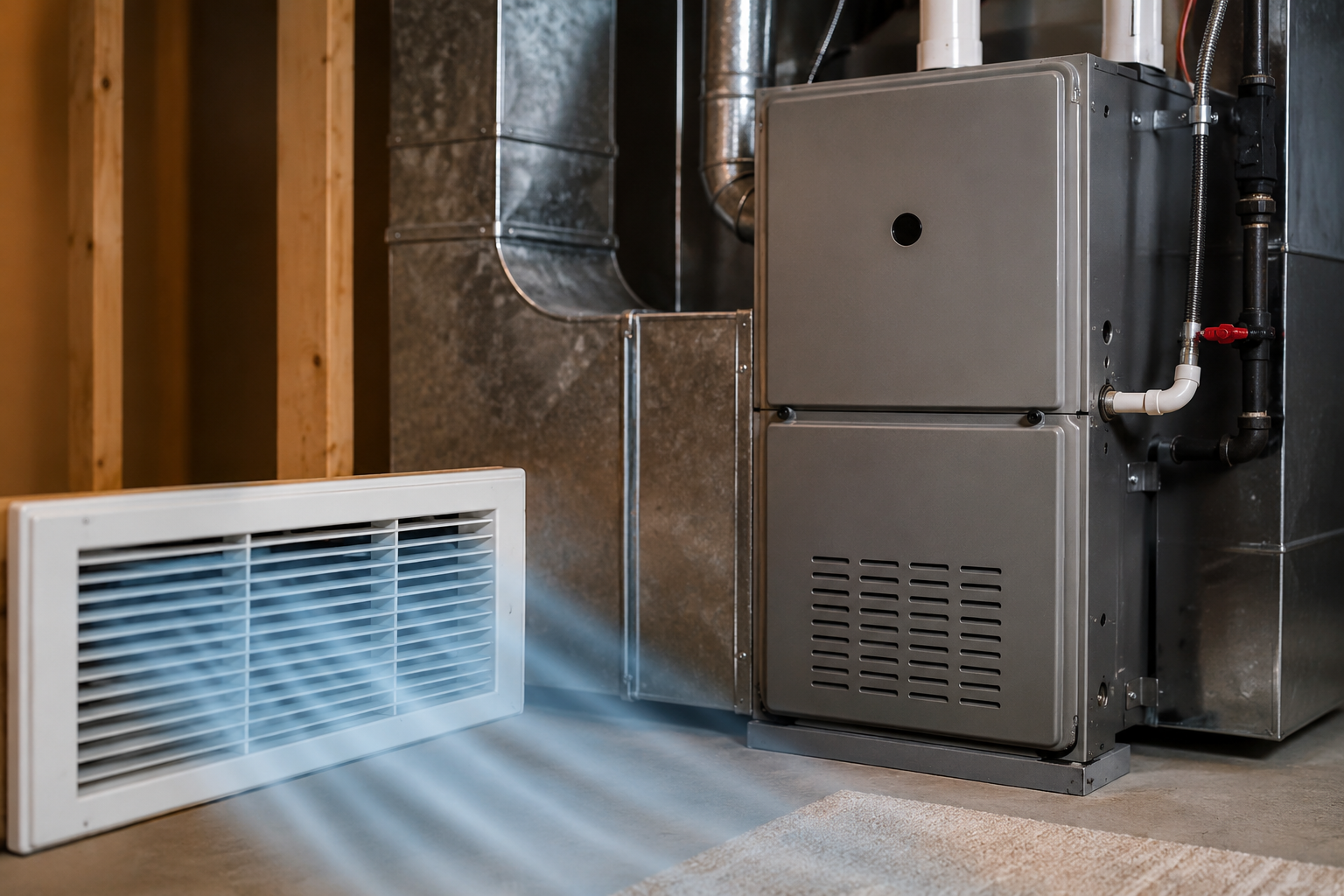
If your furnace blowing cold air problem is preventing your home from heating properly, the fix may be simpler than you think. Dirty filters, thermostat settings, pilot light issues, or airflow problems are some of the most common causes. Before calling an HVAC technician, try these easy troubleshooting steps to get your heat working again.
Why Is Your Furnace Blowing Cold Air?
A furnace may blow cold air when:
- The thermostat settings are incorrect
- The air filter is clogged
- The pilot light or ignition system has failed
- The furnace overheated and triggered a safety shutdown
- The condensate line is clogged
- The gas supply is interrupted
Many of these issues can be fixed in under 30 minutes with basic tools.
Tools and Materials You May Need
- New furnace filter
- Flashlight
- Vacuum cleaner
- Screwdriver
- Soft cloth
- Drain cleaning brush
- Owner’s manual
Step 1: Check the Thermostat Settings
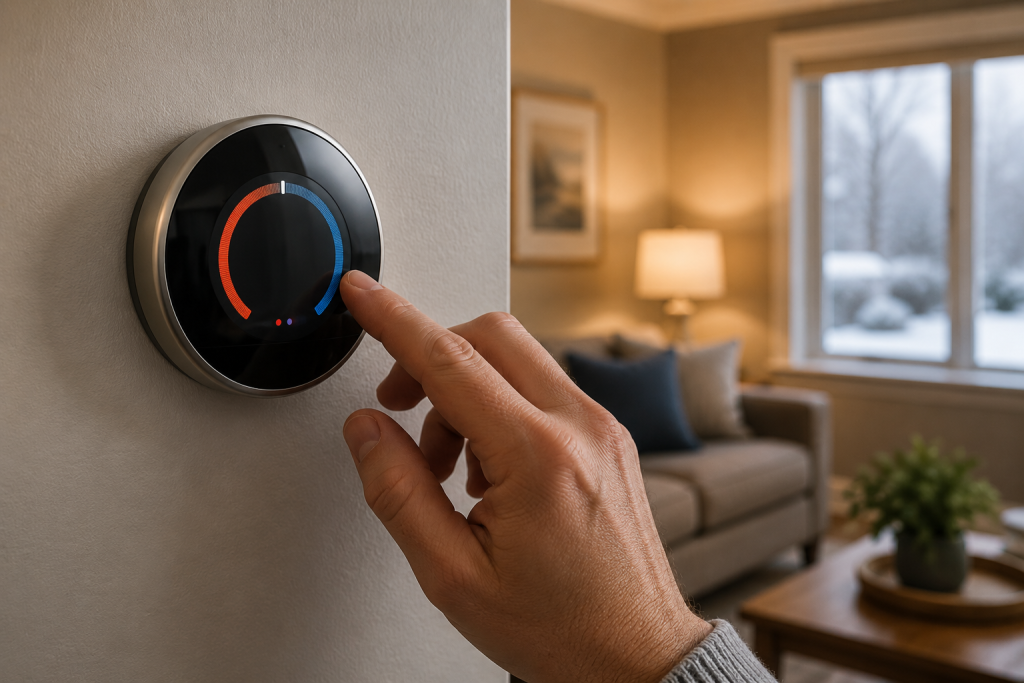
Before assuming the furnace is broken, verify the thermostat settings.
Make sure:
- The thermostat is set to “HEAT”
- The fan is set to “AUTO” instead of “ON”
- The temperature is set higher than the room temperature
If the fan is set to “ON,” the blower may run constantly even when the furnace is not producing heat.
If your thermostat screen is blank, replace the batteries if applicable.
You may also want to read our article on AC Not Turning On But Thermostat Is Working if your HVAC system has thermostat-related issues year-round.
Step 2: Replace a Dirty Furnace Filter
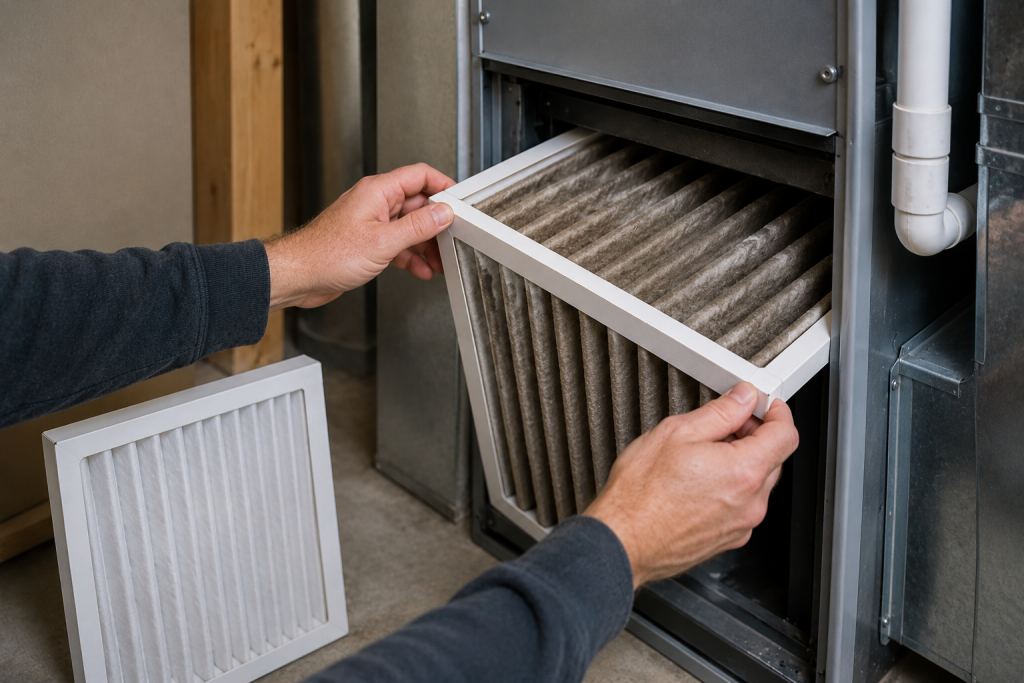
A clogged filter is one of the most common causes of a furnace blowing cold air during winter.
Locate the furnace filter and inspect it:
- If it looks gray or packed with dust, replace it
- Make sure the airflow arrow points toward the furnace
A clean filter improves airflow and helps prevent overheating.
For best performance, most filters should be replaced every 1–3 months.
Step 3: Check the Furnace Pilot Light or Ignition System
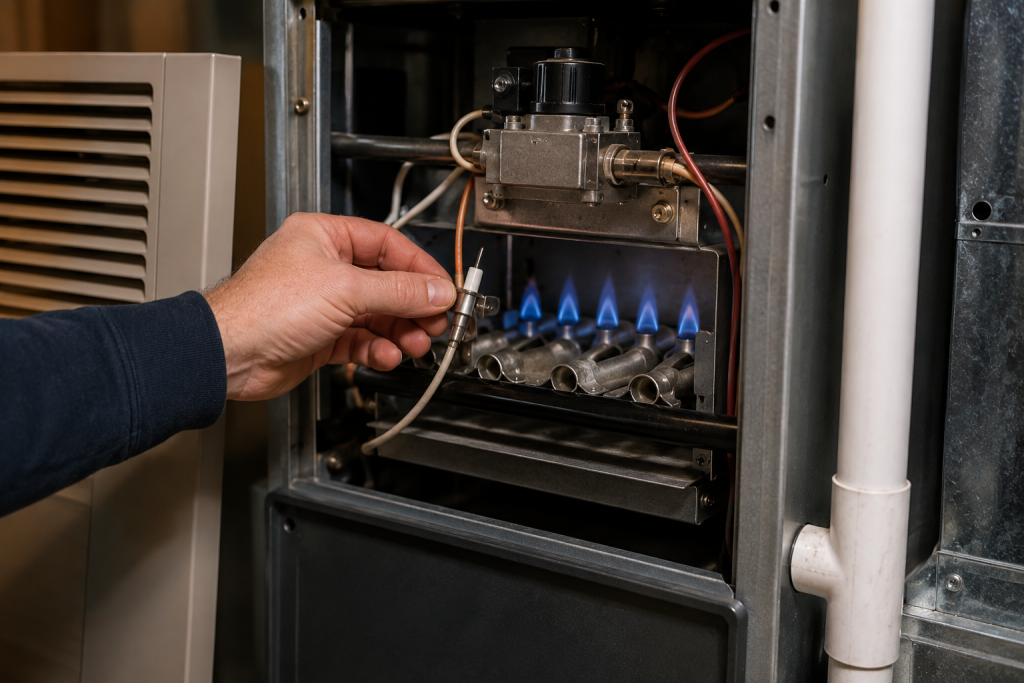
Older furnaces use a standing pilot light, while newer systems use electronic ignition.
If you have an older furnace:
- Remove the access panel
- Look for the pilot flame
- Relight it according to the manufacturer instructions if it is out
If you smell gas, stop immediately and contact your gas company or HVAC professional.
Modern furnaces with electronic ignition may require professional diagnosis if the igniter fails.
Step 4: Inspect the Furnace Air Vents
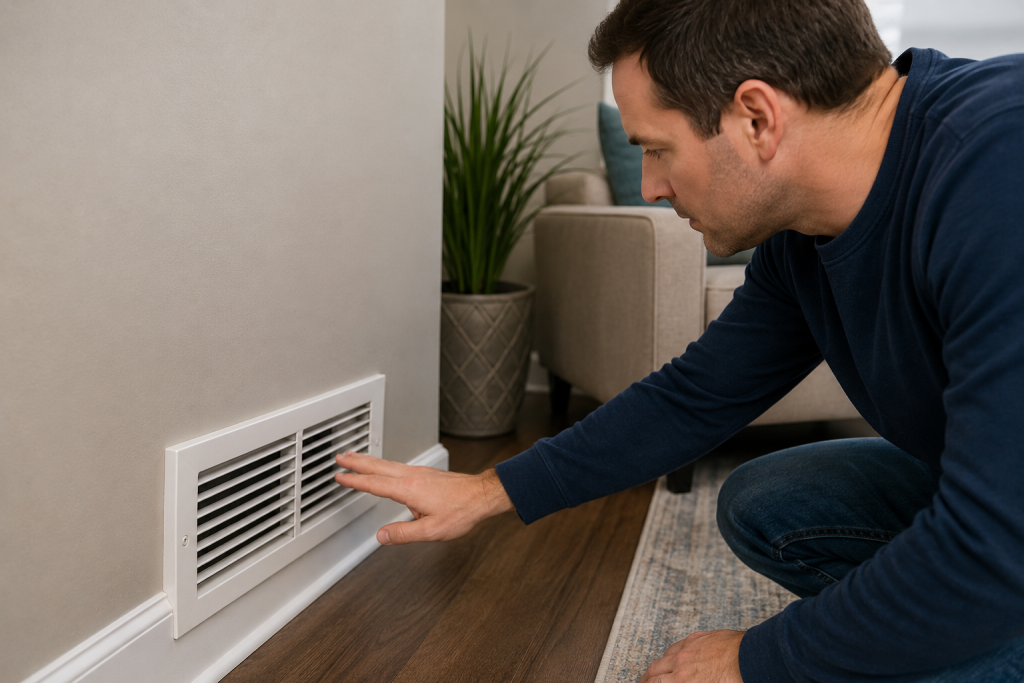
Blocked supply or return vents can restrict airflow and cause heating problems.
Walk through your home and:
- Open all supply vents
- Remove furniture blocking vents
- Vacuum dust buildup from vent covers
Poor airflow can cause your furnace to overheat and cycle improperly.
If airflow problems continue, your ductwork may need inspection.
Step 5: Check the Condensate Drain Line
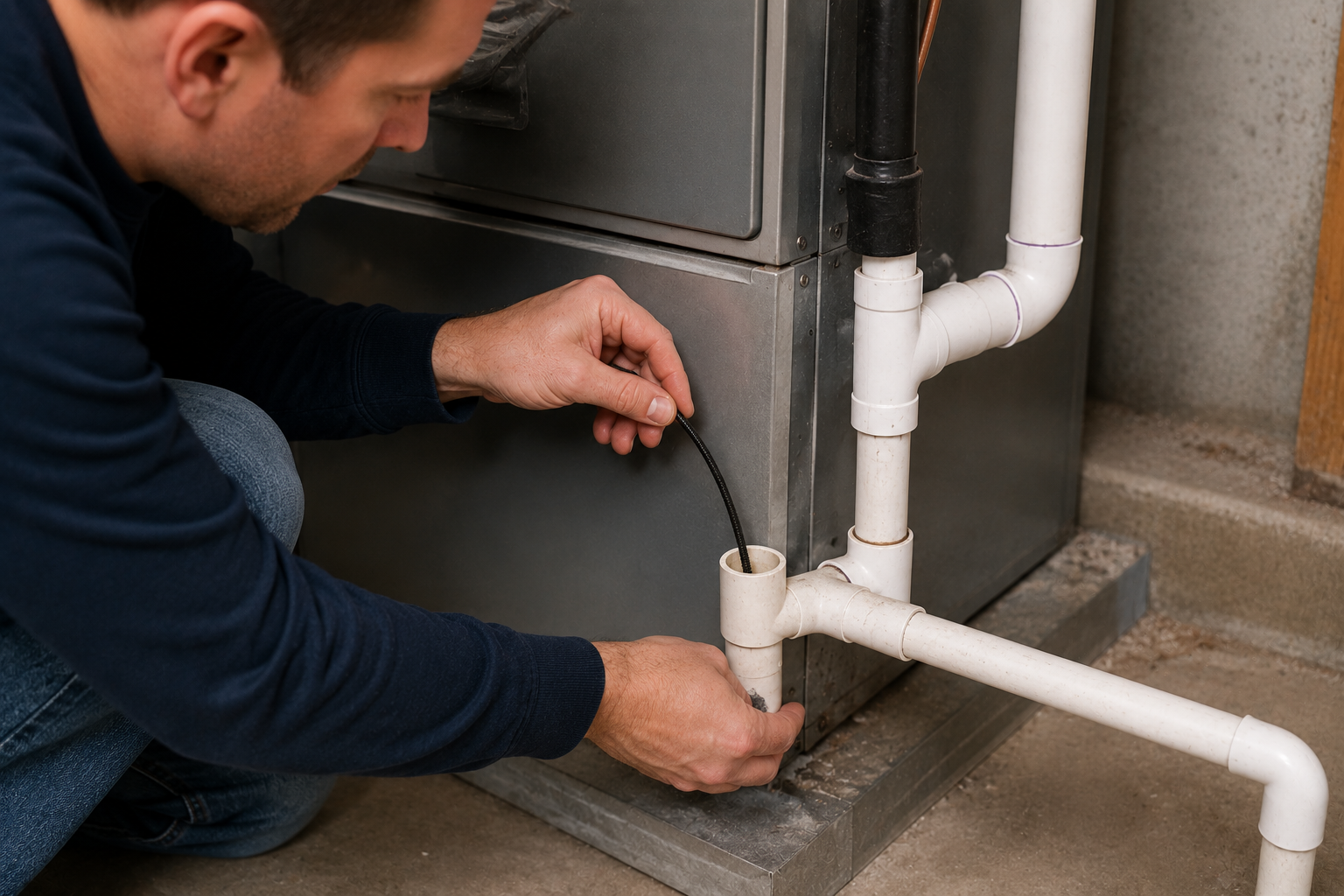
High-efficiency furnaces create condensation during operation. If the drain line clogs, the furnace may shut down as a safety measure.
Look for:
- Water pooling near the furnace
- A clogged PVC drain pipe
- Moisture around the unit
You can often clear minor clogs using warm water or a wet/dry vacuum.
Step 6: Reset the Furnace
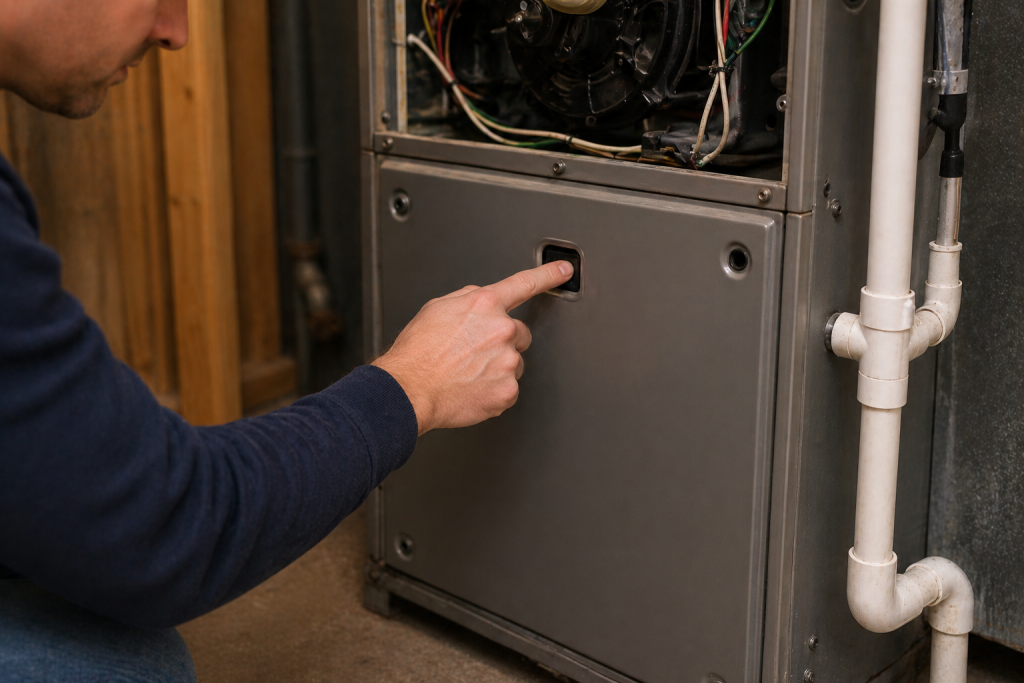
Sometimes the furnace control board simply needs a reset.
To reset the furnace:
- Turn off power at the furnace switch or breaker
- Wait about 5 minutes
- Restore power
- Restart the system
If the furnace briefly works and then starts blowing cold air again, there may be an underlying issue such as overheating or a faulty flame sensor.
You may also find our guide on 9 Proven Fixes for AC Not Cooling (Step-by-Step) helpful for additional HVAC troubleshooting tips.
Step 7: Clean the Flame Sensor
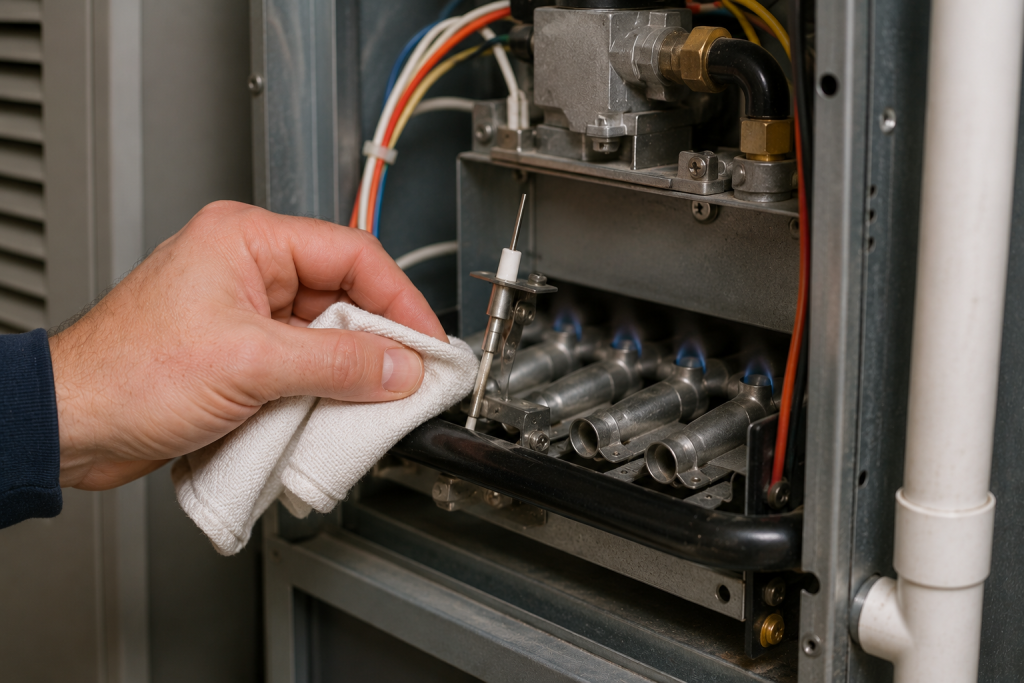
A dirty flame sensor can shut off the burners shortly after ignition, causing cold air to blow through the vents.
To clean the flame sensor:
- Turn off power to the furnace
- Remove the sensor carefully
- Lightly clean it with fine sandpaper or steel wool
- Reinstall the sensor
If the problem continues after cleaning, the sensor may need replacement.
For additional furnace troubleshooting and maintenance tips, see this helpful guide from Trane.
When to Call an HVAC Professional
Contact an HVAC technician if:
- You smell gas
- The furnace repeatedly shuts off
- The blower motor will not run
- The igniter will not activate
- The system trips the breaker
- The furnace is more than 15–20 years old and frequently fails
Professional diagnosis may be needed for gas valve, control board, or blower motor problems.
How to Prevent Furnace Problems
To keep your furnace running efficiently:
- Replace filters regularly
- Schedule annual furnace maintenance
- Keep vents open and unobstructed
- Clean around the furnace area
- Test the thermostat seasonally
Routine maintenance can extend the life of your heating system and reduce expensive repairs.
Looking for help with another heating or cooling problem? Browse our complete collection of HVAC repair and troubleshooting guides.
Frequently Asked Questions
Why is my furnace blowing cold air but the thermostat is set correctly?
The issue is often caused by a dirty filter, ignition failure, overheating, or a dirty flame sensor.
Can a clogged filter cause a furnace to stop heating?
Yes. Restricted airflow can overheat the furnace and trigger a safety shutdown.
Should the furnace fan be set to ON or AUTO?
For normal heating operation, set the fan to “AUTO.” The “ON” setting runs the blower continuously and may circulate cool air.
Why is my furnace blowing cold air after changing the filter?
If your furnace blowing cold air issue continues after replacing the filter, the problem may involve the flame sensor, ignition system, thermostat, or condensate drain line.
How often should I replace my furnace filter?
Most homes should replace furnace filters every 1–3 months depending on filter type, pets, and dust levels.