
Last updated: October 4, 2026
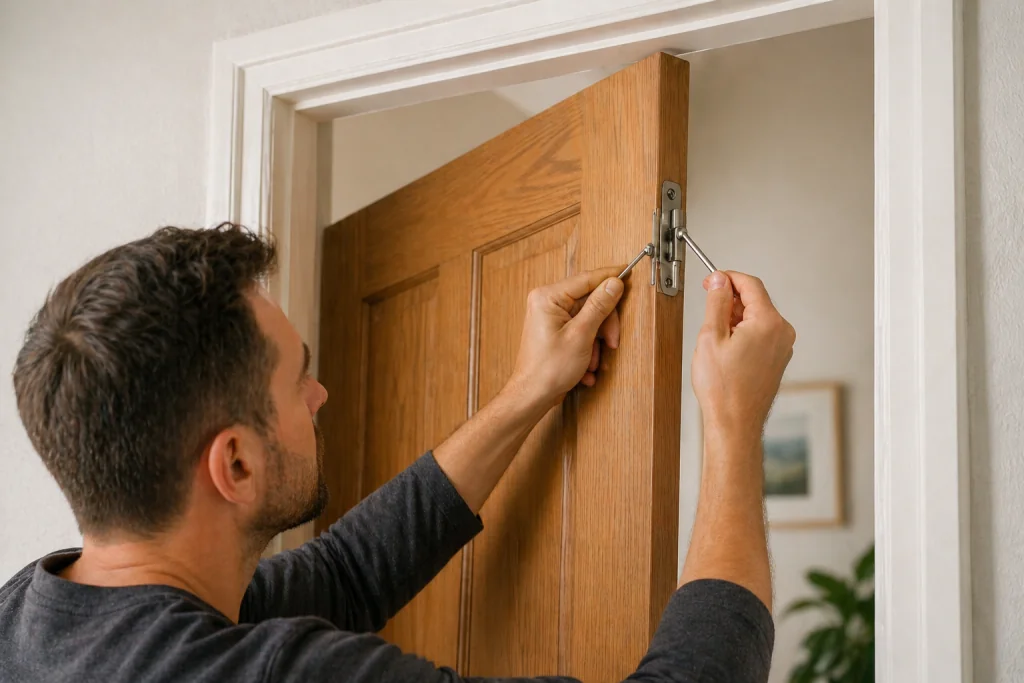
A sagging door can be incredibly frustrating—dragging across the floor, refusing to latch, or leaving uneven gaps that let in drafts. The good news? You don’t need to take the door off its hinges to fix it.
A sagging door is one of the most common reasons you end up with a door that sticks when closing.
In this guide, you’ll learn how to fix a sagging door without removing it using simple tools and proven techniques. Whether you’re dealing with loose hinges, stripped screws, or minor frame shifts, these fixes are quick, affordable, and beginner-friendly.
Common Signs Your Door Is Sagging
Before jumping into repairs, confirm the issue:
- The door rubs against the floor or frame
- The latch doesn’t line up with the strike plate
- Uneven gaps around the door
- Visible tilt or misalignment
If the latch no longer lines up, you may also need to fix a door that won’t latch properly.
Sagging often causes a door rubbing at the top corner, especially near the hinge side.
Tools You’ll Need
As an Amazon Associate I earn from qualifying purchases.
- Screwdriver (Phillips or flathead)
- Drill (optional but helpful)
- Wood glue
- Toothpicks or wooden dowels
- 3-inch screws
- Hammer
Method 1: Tighten the Hinge Screws (Quick Fix)

Why it works
Loose screws are the #1 cause of sagging doors.
Steps
- Open the door fully
- Tighten all screws on the hinges
- Start with the top hinge—it carries the most weight
- Test the door after tightening
If screws spin without tightening, move to Method 2.
Method 2: Replace Short Screws with Long Screws

Why it works
Long screws anchor the hinge into the wall stud, pulling the door back into alignment.
Steps
- Remove one screw from the top hinge
- Replace it with a 3-inch #9 or #10 wood screw long enough to reach the framing behind the door jamb.
- Drive it in tightly (use a drill if possible)
- Repeat for 1–2 more screws
This often fixes the problem instantly.
Method 3: Fix Stripped Screw Holes

Why it works
Stripped holes prevent screws from gripping properly.
Steps
- Remove the loose screw
- Coat two or three wooden toothpicks with wood glue and press them firmly into the stripped hole.
- Fill the hole completely
- Break off the excess and allow the glue to dry according to the manufacturer’s instructions before reinstalling the screw.
- Reinsert the screw
Method 4: Adjust the Hinge Position

Why it works for How to Fix a Sagging Door Without Removing It
Slight hinge adjustments can realign the door without major work.
Steps
- Remove the hinge pin
- Slightly bend the hinge knuckle inward
- Reinsert the pin
- Test the door
Use gentle pressure—small changes make a big difference.
Method 5: Shim the Hinge (Advanced Fix)

Why it works
Adding a shim repositions the door angle.
Steps
- Unscrew the hinge from the frame
- Place a thin plastic door-hinge shim behind the hinge leaf, then reinstall the screws and test the alignment.
- Screw the hinge back in place
- Test alignment
Method 6: Sand the Door Edge (For Minor Sagging)

Why it works
If the door is slightly misaligned, sanding removes friction points so it closes smoothly.
Steps
- Close the door slowly to find where it rubs
- Mark the sticking area with a pencil
- Remove a small amount of material using a 120-grit sanding sponge, then test the door before sanding further.
- Test the door and repeat if needed
Focus on the top edge or latch side where sagging usually causes contact.
Method 7: Tighten or Replace the Strike Plate

Why it works
A sagging door can cause the latch to miss the strike plate—even if hinges are fixed.
Steps
- Check where the latch hits the strike plate
- Loosen screws and slightly adjust position
- Retighten screws and test
- Replace the strike plate if it’s worn or bent
This is often the final adjustment that makes everything line up perfectly.
Quick Fix Checklist
Try these in order:
- Tighten screws
- Install longer screws
- Repair stripped holes
- Adjust hinge
- Add shim
When to Call a Professional
Sometimes DIY isn’t enough. Call a pro if:
- The door frame is cracked or warped
- Hinges are pulling out of the frame
- The door itself is warped
- Multiple fixes didn’t work
A professional can assess structural issues and prevent further damage.
FAQs About How to Fix a Sagging Door Without Removing It
Why is my door sagging all of a sudden?
Humidity, loose screws, or worn hinges can cause sudden sagging.
Can I fix a sagging door without removing it?
Yes! Most fixes in this guide are designed specifically to avoid removing the door.
What is the fastest fix?
Tightening or replacing hinge screws—especially with longer screws—is usually the quickest solution.
Will this work on exterior doors?
Yes, but exterior doors are heavier, so you may need stronger screws or multiple fixes.
How long does it take for How to Fix a Sagging Door Without Removing It
Most methods take 10–30 minutes.
Looking for help with another door or window problem? Browse our complete collection of door and window repair guides.
Final Thoughts
Fixing a sagging door doesn’t have to be complicated or time-consuming. With just a few tools and the right approach, you can restore smooth operation in under an hour—without ever taking the door off.
By following these steps, you now know exactly how to fix a sagging door without removing it—saving time, money, and frustration.
For more detailed guidance on hinge adjustments and door repairs, check out this helpful guide from Family Handyman.