
Last updated: October 9, 2026
By Home Repair Genie
Window drafts in winter can make your home uncomfortable, increase heating costs, and allow cold air to leak inside during freezing weather. Fortunately, many window draft problems can be fixed with simple DIY solutions before you spend money on full window replacement.
In many homes, window drafts in winter become more noticeable during extreme cold temperatures and high winds.
This guide covers the most common causes of drafty windows and the best step-by-step fixes homeowners can try to improve comfort and energy efficiency.
Get ahead of cold weather with our guide Fall Home Maintenance Checklist: 25 Tasks Before Winter
Window Drafts in Winter: Common Causes
Window drafts are commonly caused by:
- Worn weatherstripping
- Cracked caulk
- Loose window locks
- Gaps around the frame
- Damaged seals
- Poor insulation
- Old or warped windows
Even small gaps can allow significant cold air into your home during winter.
Getting ready for winter? Make sure you check out our helpful guide on: Winter Home Maintenance Checklist: 25 Proven Tasks to Prevent Costly Damage.
As an Amazon Associate I earn from qualifying purchases.
Tools and Materials You May Need
- Caulk gun
- Exterior-grade caulk
- Weatherstripping
- Utility knife
- Flashlight
- Foam insulation tape
- Screwdriver
- Thermal curtains
Step 1: Check for Air Leaks Around the Window
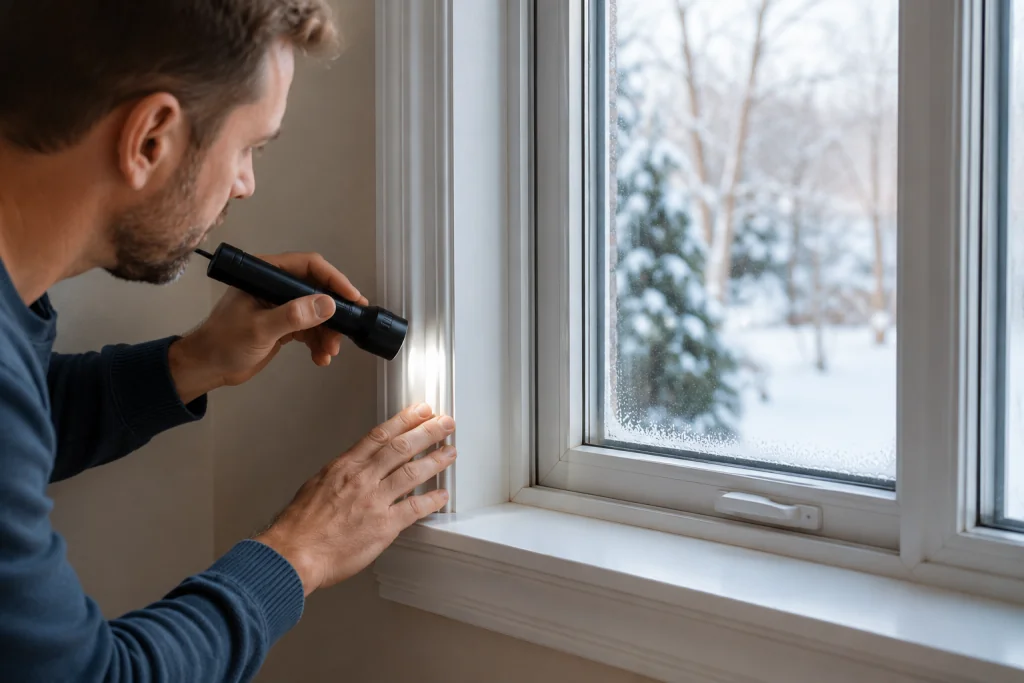
Before making repairs, locate where the cold air is entering.
On a windy day:
- Slowly move your hand around the window edges
- Feel for cold airflow
- Use a flashlight to inspect visible gaps
- Check corners and trim carefully
Common leak areas include:
- Window sash edges
- Frame corners
- Locking points
- Trim gaps
Identifying the exact source makes repairs much easier.
Step 2: Replace Worn Weatherstripping
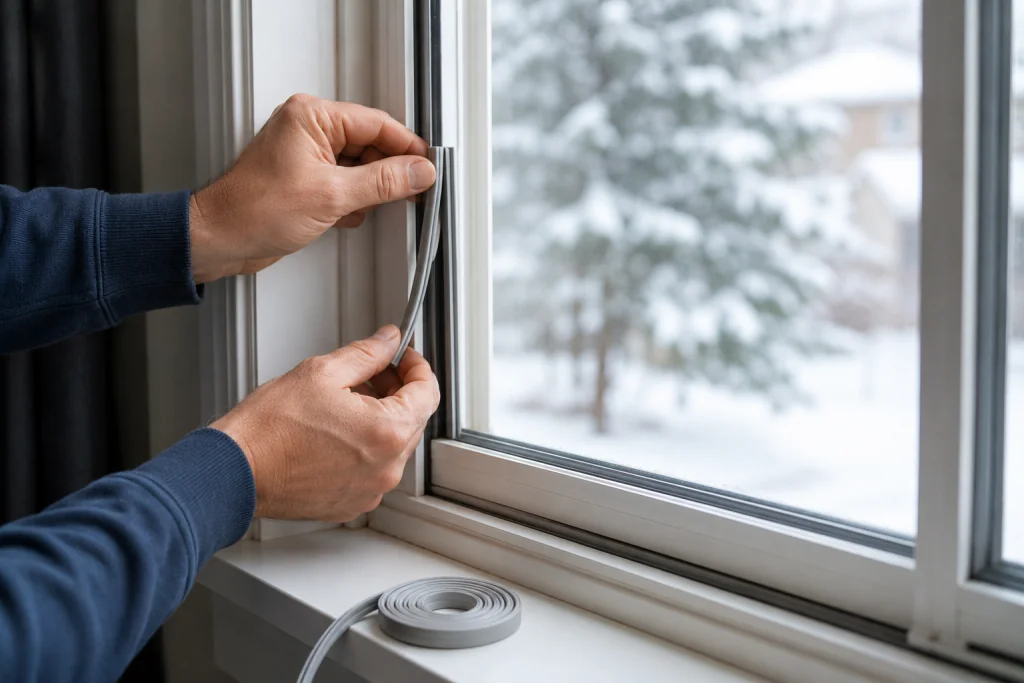
Old weatherstripping becomes brittle and loses its seal over time.
Inspect the weatherstripping around:
- Window sash edges
- Sliding surfaces
- Locking sections
If it appears cracked, flattened, or missing, replace it with new material.
Foam tape weatherstripping is inexpensive and easy for most homeowners to install.
Replacing damaged seals is one of the easiest ways to reduce window drafts in winter and improve comfort.
If your windows also struggle to stay in position, you may want to read our guide on Window Won’t Stay Open? 7 Easy Fixes That Actually Work.
Step 3: Reapply Exterior Caulk
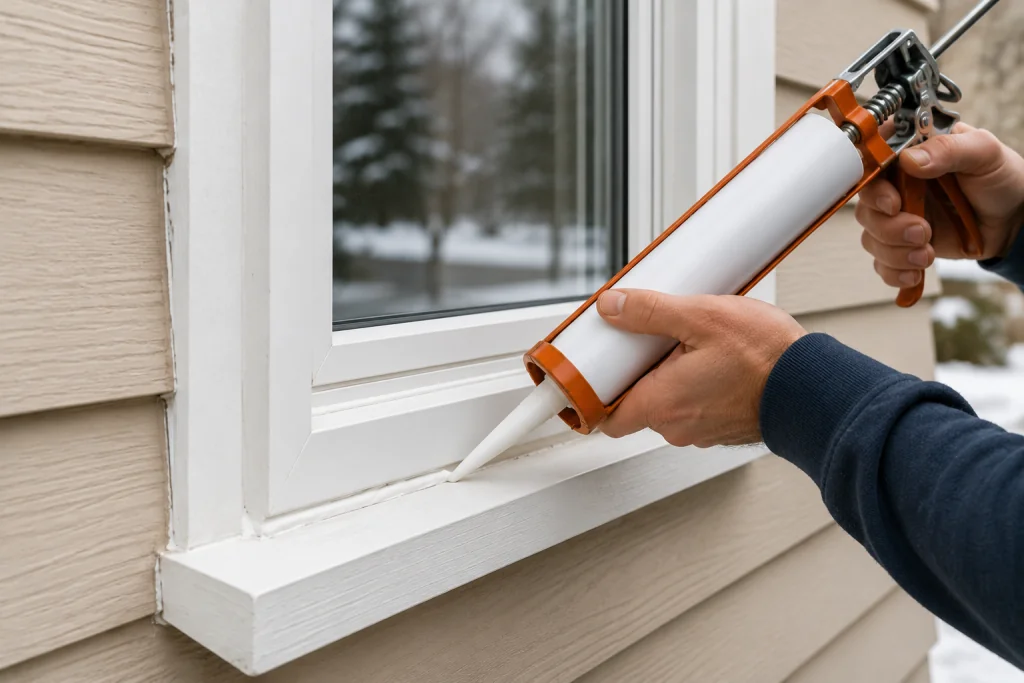
Cracked or missing caulk around the outside frame can allow cold air and moisture inside.
To recaulk the window:
- Remove loose old caulk
- Clean the surface thoroughly
- Apply a smooth bead of exterior-grade caulk
- Allow it to cure fully
Pay special attention to:
- Frame corners
- Trim joints
- Siding connections
Proper caulking improves both insulation and moisture protection.
Step 4: Tighten the Window Locks
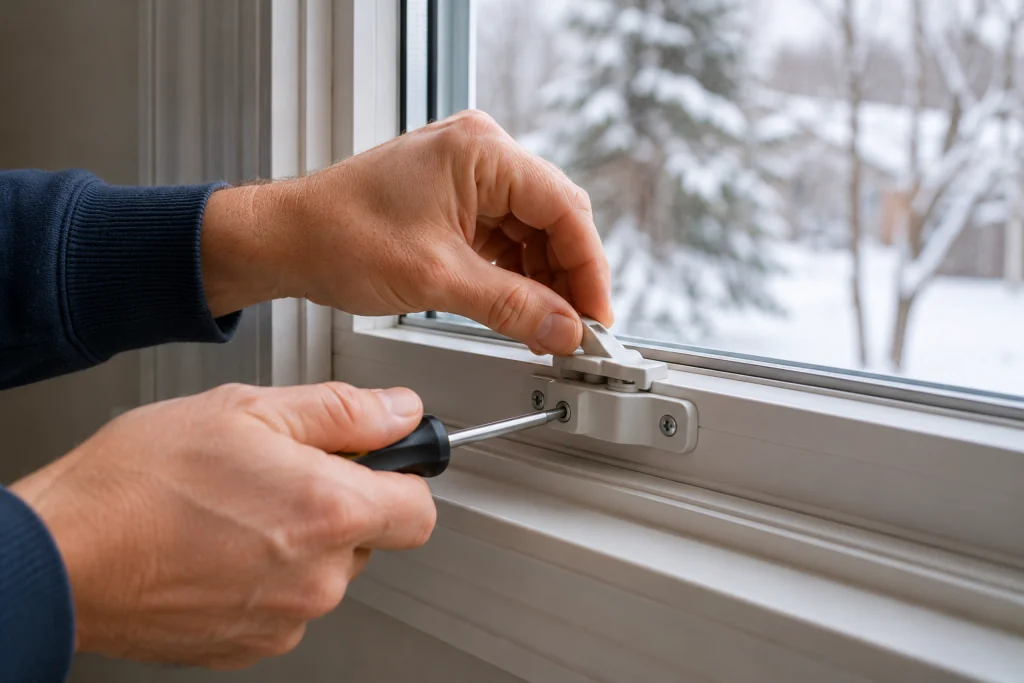
Loose window locks may prevent the sash from sealing tightly against the frame.
Close and lock the window fully, then inspect:
- Alignment
- Lock engagement
- Gaps between the sash and frame
Tightening loose hardware can significantly reduce drafts.
A properly locked window compresses the weatherstripping more effectively.
Step 5: Install Window Insulation Film
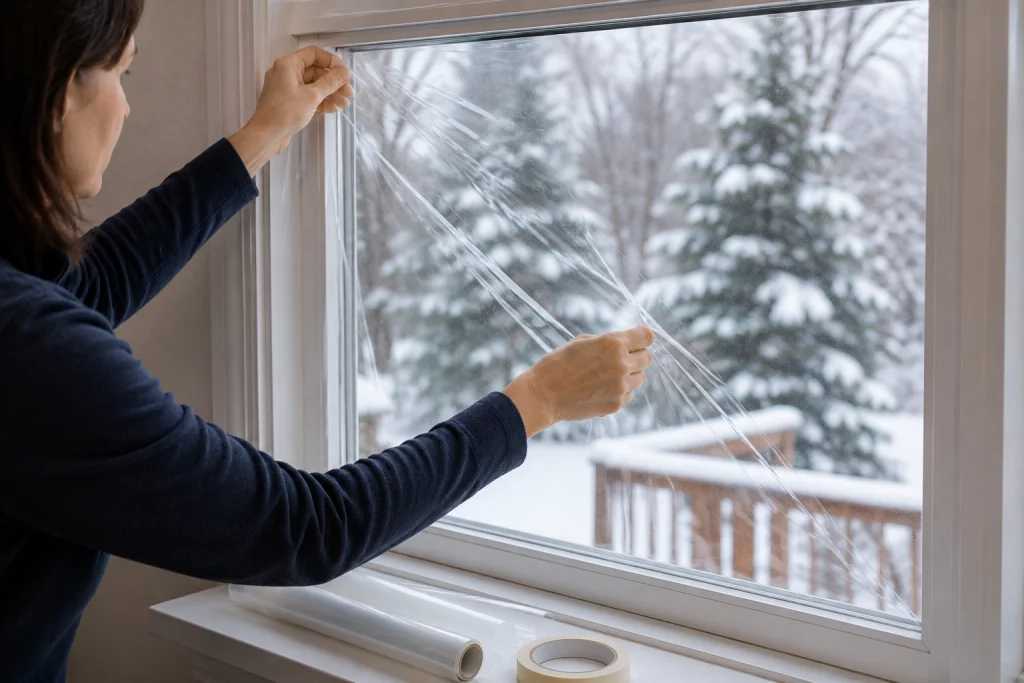
Window insulation kits create an additional barrier against cold air.
Most kits include:
- Clear plastic film
- Double-sided tape
Apply the film tightly across the interior frame and shrink it using a hair dryer.
This inexpensive solution can noticeably improve comfort during winter months and prevent window drafts in winter.
You may also find our article on How to Fix a Door That Won’t Latch Properly helpful since alignment problems can also affect window sealing.
Step 6: Add Thermal Curtains
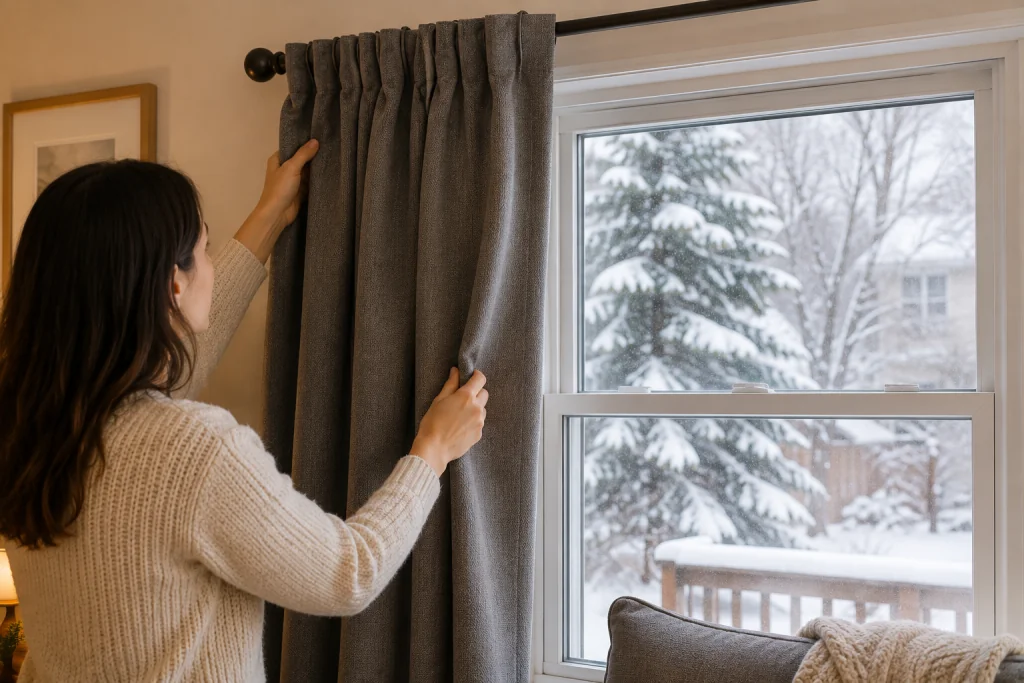
Thermal curtains help reduce heat loss through older windows.
Benefits include:
- Improved insulation
- Reduced drafts
- Better energy efficiency
- Lower heating costs
For best results:
- Use floor-length curtains
- Keep them closed during cold nights
- Open them during sunny daytime hours
Thermal curtains are especially helpful for older single-pane windows.
Step 7: Inspect for Failed Window Seals
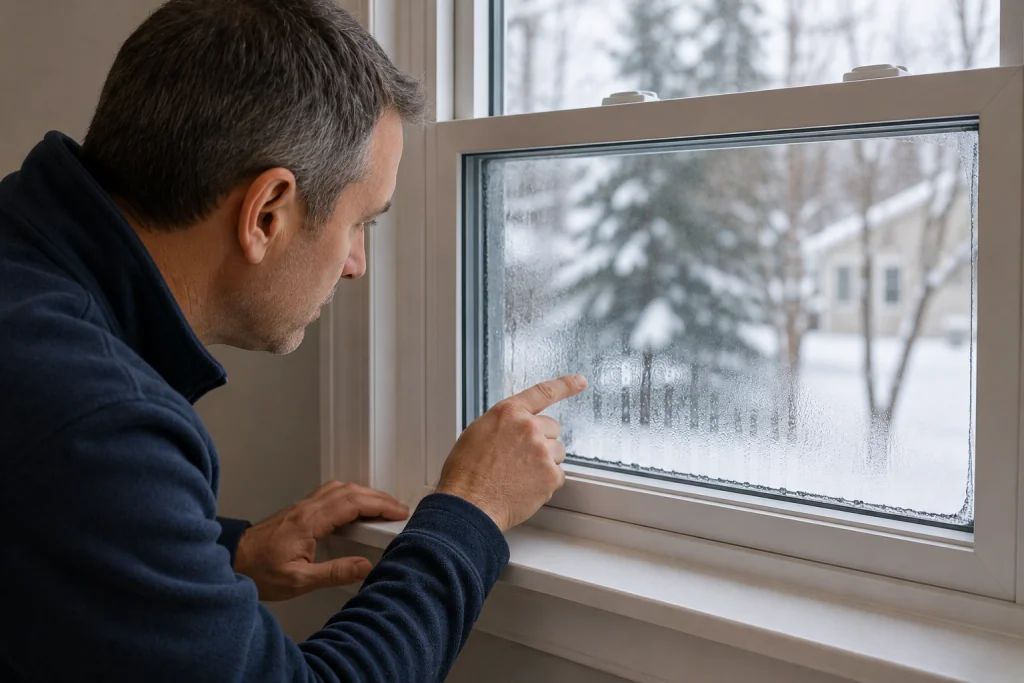
Double-pane windows with failed seals may allow cold air and moisture between the glass panes.
Signs of seal failure include:
- Foggy glass
- Condensation between panes
- Persistent drafts
- Reduced insulation performance
Unfortunately, failed insulated glass seals often require professional repair or window replacement.
For additional energy-saving window tips, see this helpful guide from Energy Star.
Keeping up with home maintenance is important, make sure you check out: Easy Monthly Home Maintenance Checklist: 21 Essential Tasks Every Homeowner Should Do.
When to Call a Professional for Window Drafts in Winter
Contact a window professional if:
- The frame is warped
- Multiple windows leak heavily
- Condensation forms between panes
- The window structure is damaged
- Drafts continue after repairs
Some older windows may simply be too inefficient to repair effectively.
How to Prevent Window Drafts in Winter
To reduce future drafts:
- Inspect caulk annually
- Replace worn weatherstripping promptly
- Keep windows locked during winter
- Address moisture damage early
- Inspect frames for seasonal movement
Routine maintenance helps improve energy efficiency and indoor comfort.
Looking for help with another door or window problem? Browse our complete collection of door and window repair guides.
Frequently Asked Questions
What causes window drafts in winter?
The most common causes of window drafts in winter include worn weatherstripping, failed seals, cracked caulk, and loose window hardware.
Can plastic window film really help?
Yes. Window insulation film can noticeably reduce drafts and improve indoor comfort during winter.
Should I replace drafty windows?
Not always. Many draft problems can be solved with weatherstripping, caulk, or insulation improvements.
Why are older windows more drafty?
Older windows often have worn seals, loose frames, and outdated insulation technology.