
Last updated: October 11, 2026
By Home Repair Genie
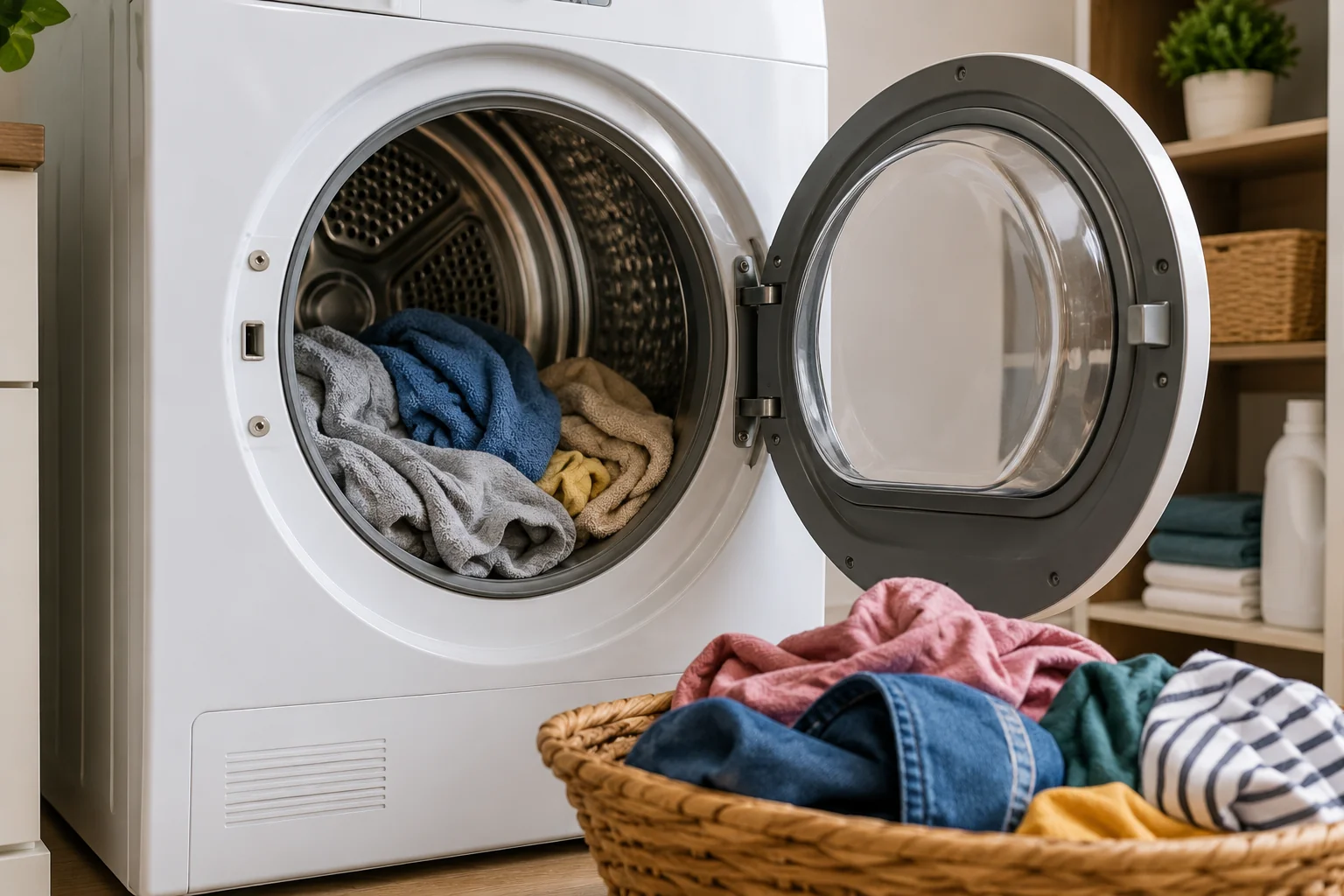
If your dryer is taking multiple cycles to dry clothes, the problem is usually caused by restricted airflow, lint buildup, or a simple maintenance issue. A slow dryer wastes energy, increases utility bills, and can even become a fire hazard if ignored.
The good news is that most dryer problems can be fixed without calling an appliance repair technician.
In this guide, you’ll learn the most common reasons a dryer takes too long to dry clothes and the easy fixes that actually work.
Why Is Your Dryer Taking Too Long to Dry Clothes?
A dryer taking too long to dry clothes usually points to an airflow or venting problem that should be fixed quickly.
A dryer taking too long to dry clothes is commonly caused by:
- Clogged lint screen
- Blocked dryer vent
- Overloaded dryer drum
- Crushed or kinked vent hose
- Dirty moisture sensors
- Poor airflow around the dryer
- Failing heating components
Many of these problems are easy DIY fixes that take less than 30 minutes.
Tools and Supplies You May Need
As an Amazon Associate I earn from qualifying purchases
- Vacuum cleaner
- Dryer vent brush
- Screwdriver
- Microfiber cloth
- Warm soapy water
- Flashlight
- Work gloves
Step 1: Clean the Lint Filter Thoroughly
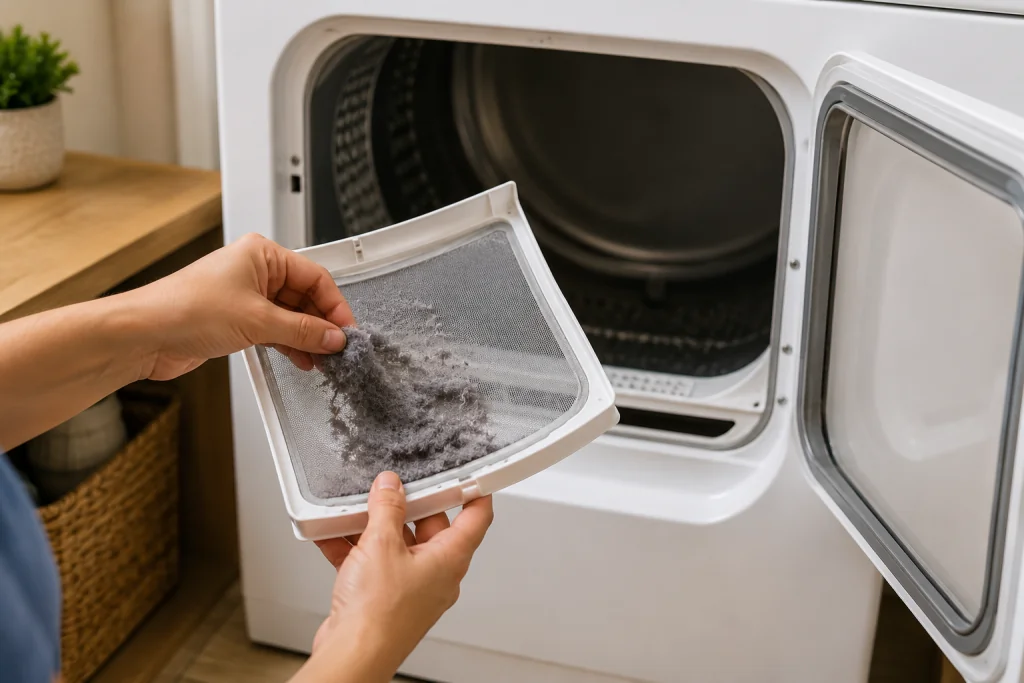
A clogged lint screen is one of the most common reasons a dryer takes too long to dry clothes. Even if the filter looks clean, fabric softener residue can block airflow.
How to Fix It
- Remove the lint screen from the dryer.
- Clean away all visible lint.
- Wash the screen with warm water and mild soap.
- Gently scrub with a soft brush if needed.
- Let the screen dry completely before reinstalling it.
A clean lint screen improves airflow and drying efficiency immediately.
For another common appliance airflow issue, read our guide on Dishwasher Not Draining? 7 Easy Fixes That Actually Work.
Step 2: Check the Dryer Vent for Blockages
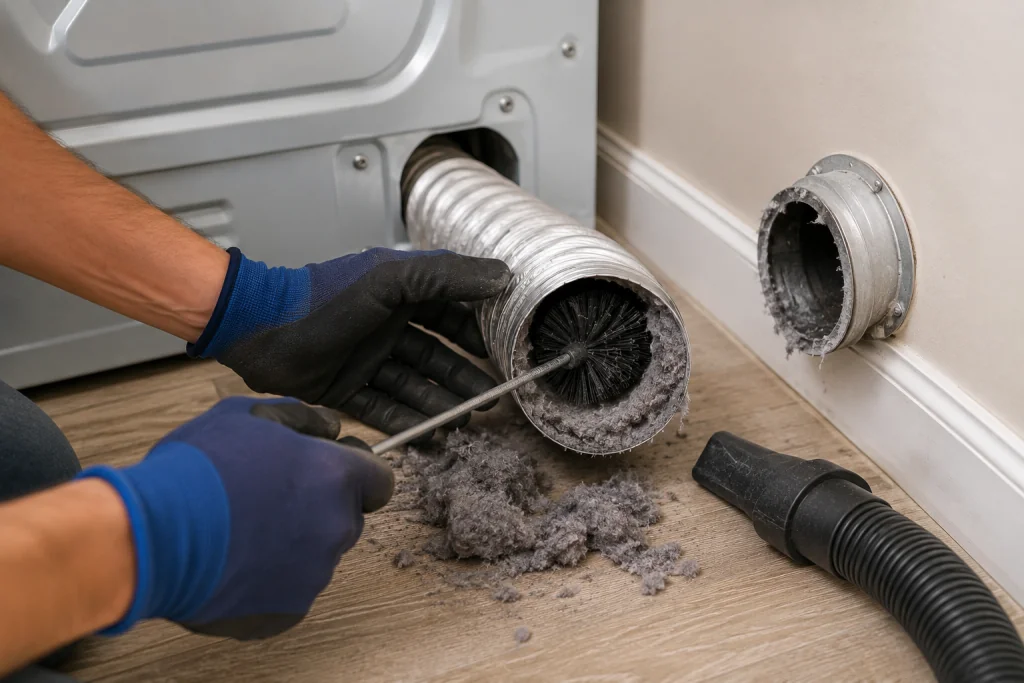
A blocked dryer vent is one of the biggest reasons clothes stay damp after a full cycle. Lint buildup inside the vent restricts hot air from escaping.
How to Fix It
- Unplug the dryer.
- Pull the dryer away from the wall carefully.
- Disconnect the vent hose.
- Use a dryer vent brush or vacuum to remove lint buildup.
- Check the outside vent opening for obstructions.
If airflow feels weak outside the home, the vent likely needs additional cleaning. In many homes, a dryer taking too long to dry clothes is caused by heavy lint buildup inside the dryer vent.
If lint has built up beyond the short hose behind the dryer, a dryer vent cleaning brush kit can help clean an accessible duct run. Choose a kit suited to your vent’s length and layout; use a professional for a run you cannot clean fully.
Step 3: Avoid Overloading the Dryer
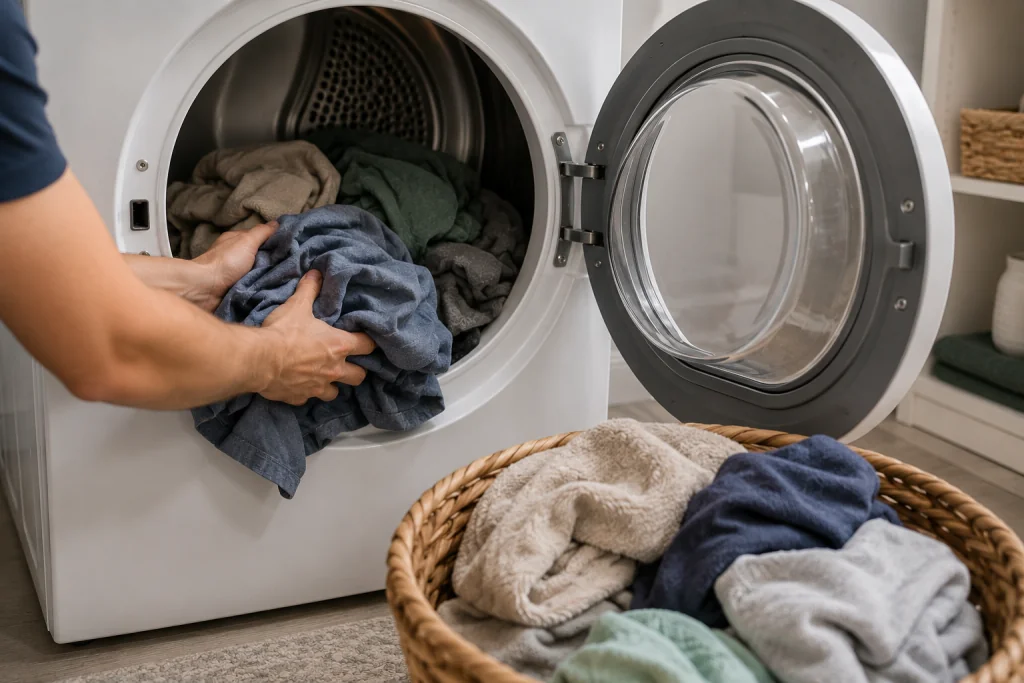
Overloading prevents hot air from circulating properly around clothes.
How to Fix It
- Remove some clothing from the dryer.
- Separate heavy items like towels from lighter fabrics.
- Run another cycle with smaller loads.
Smaller loads dry faster and reduce strain on the appliance.
You may also want to read Refrigerator Leaking Water? 7 Easy Fixes That Actually Work if you are troubleshooting other appliance issues around the home.
Step 4: Inspect the Dryer Vent Hose
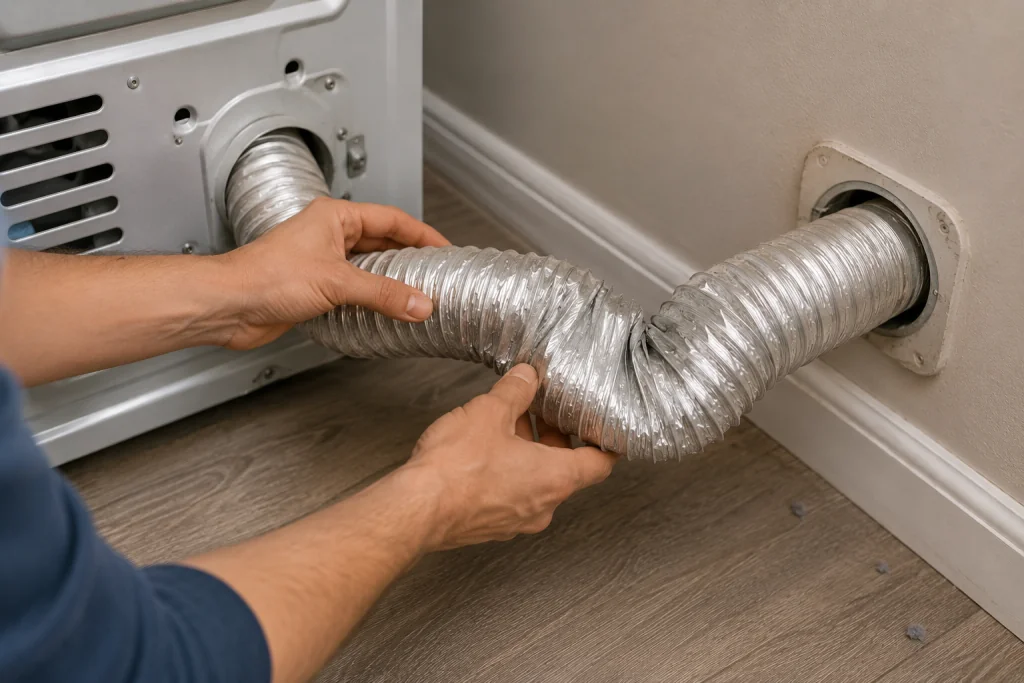
A crushed or kinked dryer vent hose can severely reduce airflow.
How to Fix It
- Inspect the vent hose behind the dryer.
- Look for bends, crushing, or lint buildup.
- Straighten the hose carefully.
- Replace damaged flexible vent tubing if necessary.
If the connector behind the dryer is crushed or damaged, replace it with a properly sized semi-rigid metal dryer vent connector and avoid sharp bends when moving the dryer back.
Rigid metal vent ducts usually perform better than flexible plastic hoses.
Step 5: Clean the Moisture Sensors
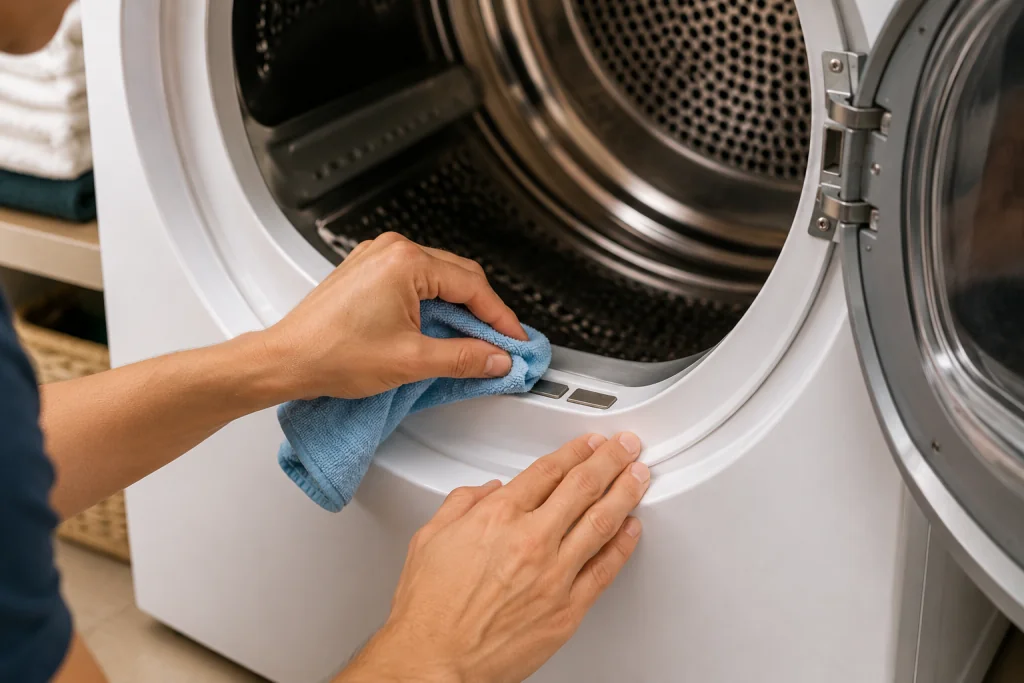
Modern dryers use moisture sensors to detect when clothes are dry. Dirty sensors can cause inaccurate readings and longer drying times.
How to Fix It
- Locate the moisture sensors inside the dryer drum.
- Wipe them clean with a microfiber cloth and rubbing alcohol.
- Remove residue carefully.
- Run a test load afterward.
Clean sensors help the dryer stop at the correct time.
For additional dryer maintenance tips, the experts at This Old House provide helpful guidance on dryer vent cleaning and fire prevention.
Step 6: Make Sure the Dryer Has Proper Airflow
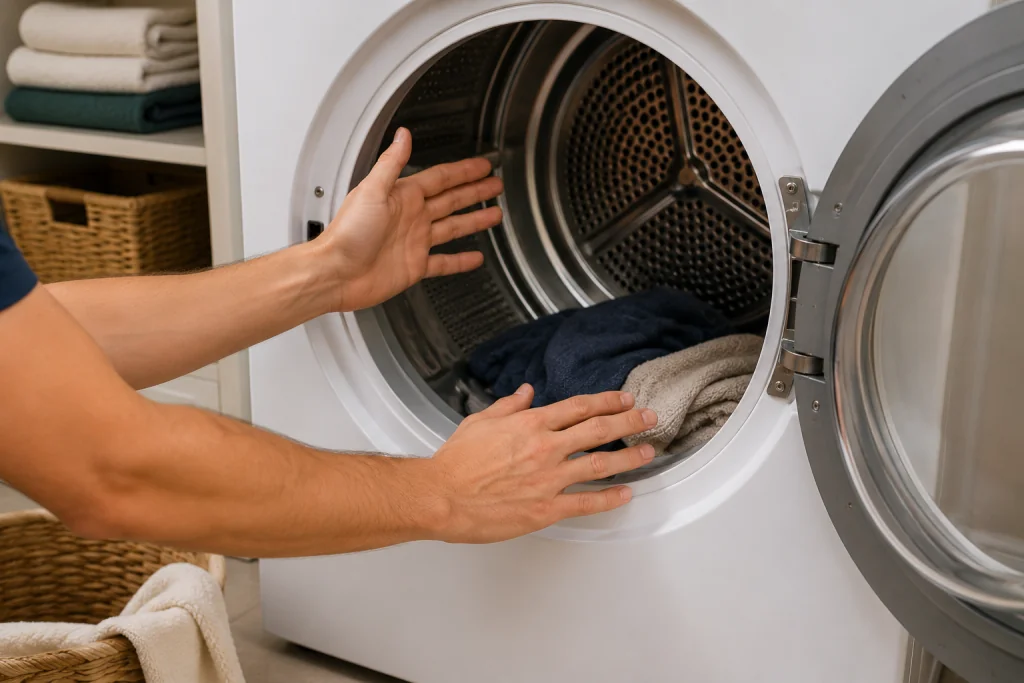
Dryers need adequate ventilation around the appliance to operate efficiently.
How to Fix It
- Leave several inches of space behind the dryer.
- Make sure the laundry room has proper ventilation.
- Avoid blocking air intake areas.
- Clean dust buildup around the appliance regularly.
Poor airflow can increase drying times significantly.
For another airflow-related repair, see AC Not Turning On But Thermostat Is Working? 9 Proven Fixes.
Step 7: Check for Heating Problems
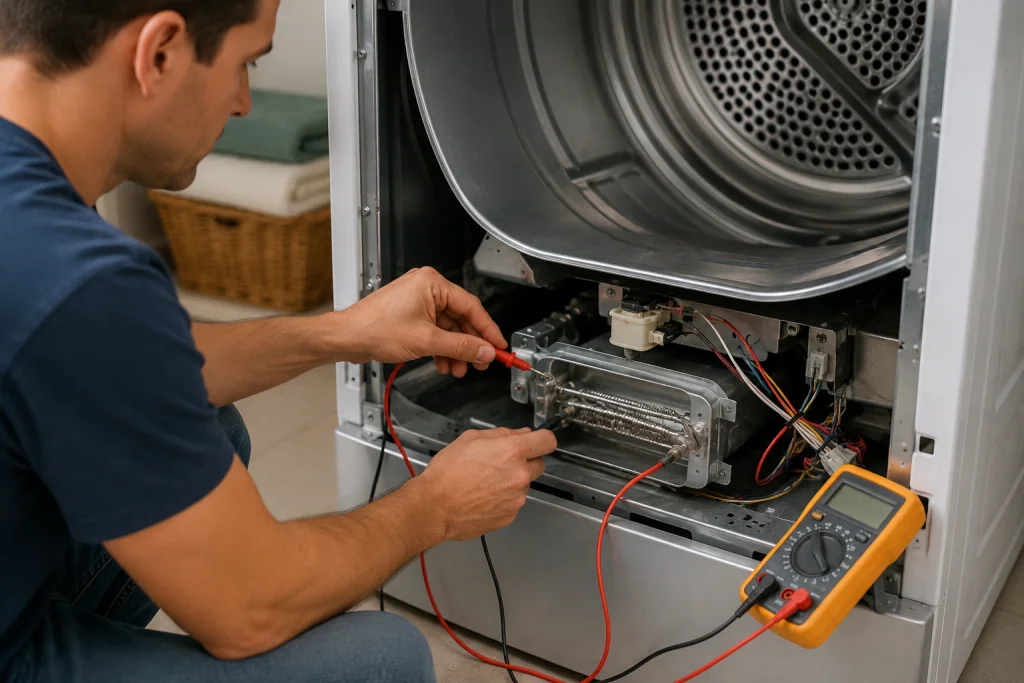
If the dryer runs but does not produce enough heat, a failing heating element, gas igniter, or thermostat may be the cause.
Signs of Heating Problems
- Clothes stay cold during the cycle
- Dryer runs but never fully dries clothes
- Burning smell
- Dryer shuts off unexpectedly
What to Do
Basic homeowners can inspect for obvious problems, but heating component repairs are often best handled by professionals.
When to Call a Professional
Contact an appliance repair technician if:
- The dryer still takes too long after cleaning the vent
- The dryer is not heating properly
- You smell burning odors
- The dryer shuts off during cycles
- You suspect electrical or gas component issues
Professional service may be necessary for heating element or motor failures.
How to Prevent Slow Dryer Problems
To keep your dryer running efficiently:
- Clean the lint screen after every load
- Clean the dryer vent at least once per year
- Avoid overloading the drum
- Inspect the vent hose regularly
- Keep the area around the dryer clean
Routine maintenance helps improve efficiency and reduce fire risks.
Frequently Asked Questions
Why is my dryer taking too long to dry clothes?
The most common causes are clogged vents, dirty lint screens, overloaded loads, or restricted airflow.
Can a clogged dryer vent cause a fire?
Yes. Excess lint buildup inside dryer vents is a major household fire hazard.
How often should I clean my dryer vent?
Most homes should clean the dryer vent at least once per year. Larger households may need more frequent cleaning.
Why are clothes still damp after one cycle?
Poor airflow, vent restrictions, or heating problems often prevent clothes from drying fully.
Looking for help with another appliance problem? Browse our complete collection of appliance repair guides and error-code fixes.
Final Thoughts
A dryer taking too long to dry clothes is usually caused by airflow restrictions or simple maintenance issues. In many cases, cleaning the lint filter and dryer vent solves the problem quickly.
By following these 7 easy fixes, you can improve drying performance, lower energy costs, and help your dryer last longer.