
Last updated: September 20, 2026
By Home Repair Genie
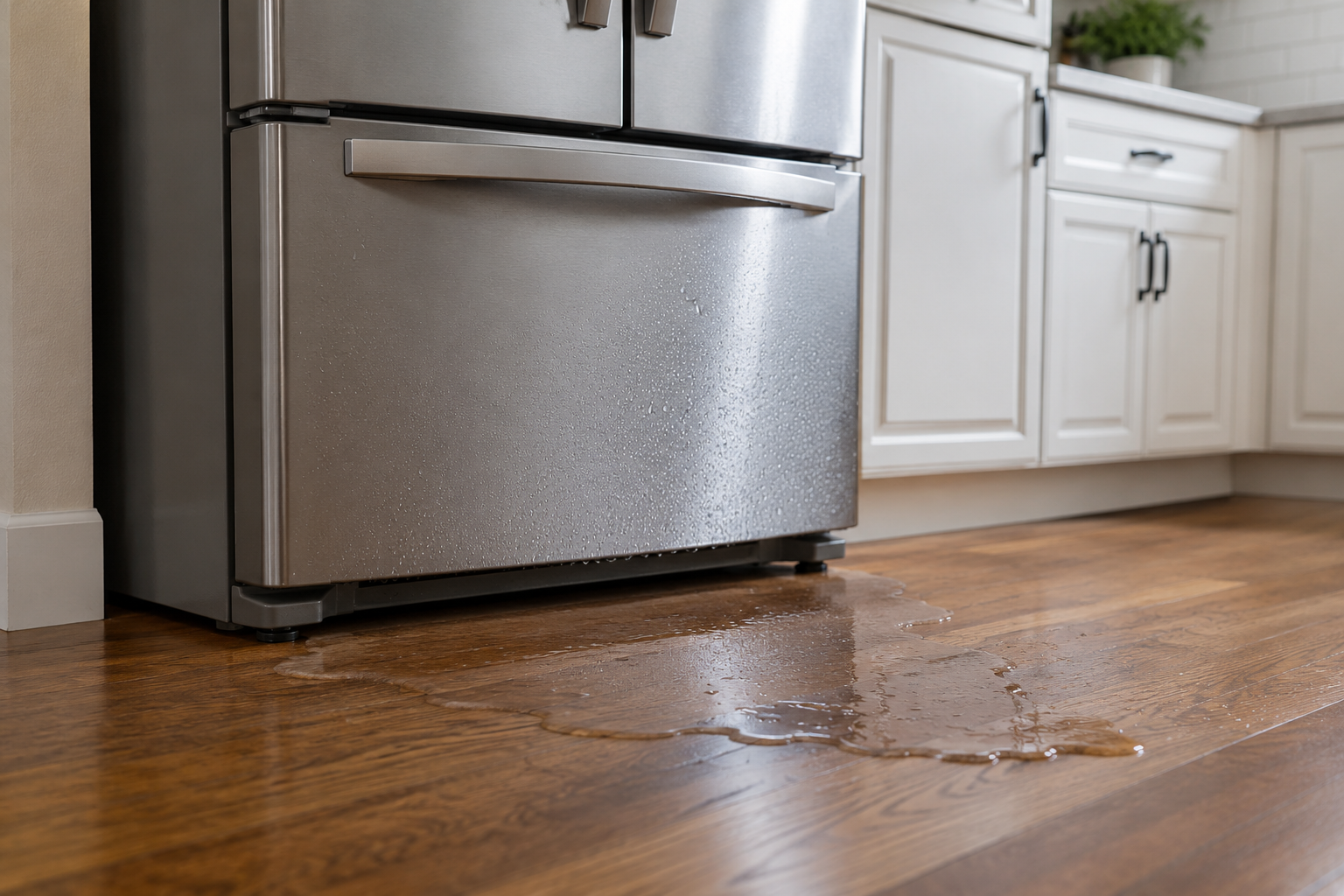
A refrigerator leaking water can quickly damage floors, cabinets, and nearby walls if ignored. The good news is that most refrigerator leaks are caused by simple issues homeowners can fix without calling a repair technician.
In this step-by-step guide, you’ll learn the most common reasons a refrigerator leaks water and the easy fixes that actually work.
Why Is Your Refrigerator Leaking Water?
A leaking refrigerator is usually caused by one of these problems:
- Clogged defrost drain
- Cracked or overflowing drain pan
- Blocked or frozen water line
- Damaged door gasket
- Improper refrigerator leveling
- Ice maker leaks
- Excess condensation buildup
If you notice your refrigerator leaking water regularly, fixing the issue early can help prevent expensive water damage. Many of these problems can be fixed in under 30 minutes with basic household tools.
Tools and Supplies You May Need
- Towels or rags
- Warm water
- Turkey baster or squeeze bottle
- Flashlight
- Screwdriver
- Mild soap
- Level
- Pipe cleaner or flexible brush
Step 1: Check the Defrost Drain for Clogs
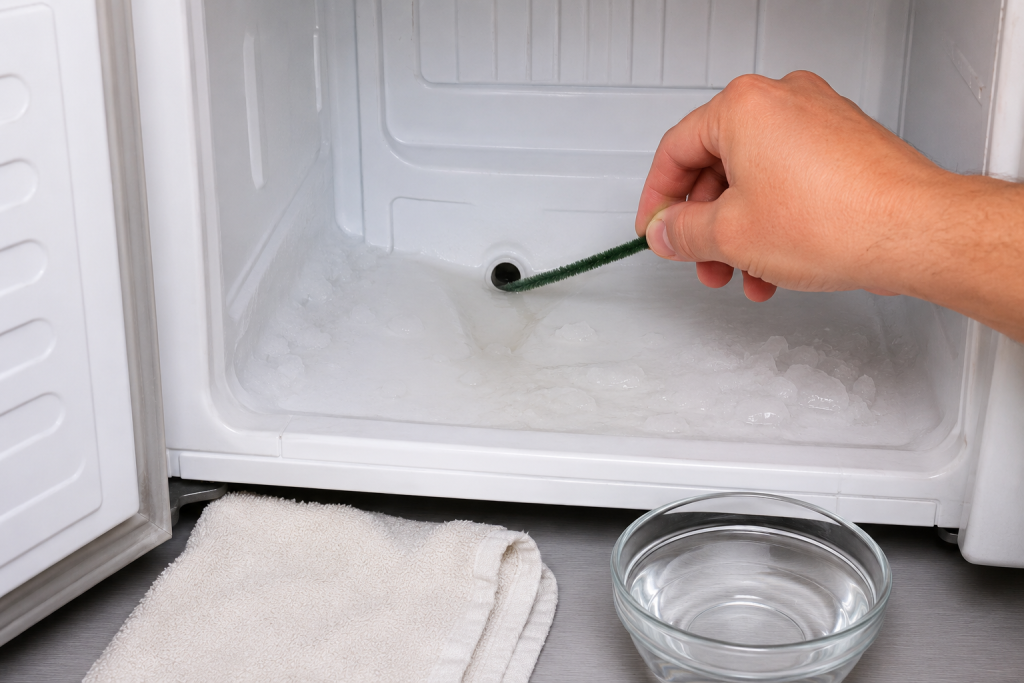
One of the most common causes of refrigerator leaks is a clogged defrost drain. Food particles and ice can block the drain, causing water to overflow onto the floor.
How to Fix It
- Unplug the refrigerator.
- Locate the defrost drain inside the freezer compartment.
- Use warm water to flush the drain.
- Clear debris using a pipe cleaner or flexible brush.
- Dry the area completely.
If the drain repeatedly freezes, warm water and careful cleaning usually solve the issue.
For another common appliance drainage problem, read our guide on Dishwasher Not Draining? 7 Easy Fixes That Actually Work.
Step 2: Inspect the Drain Pan Under the Refrigerator
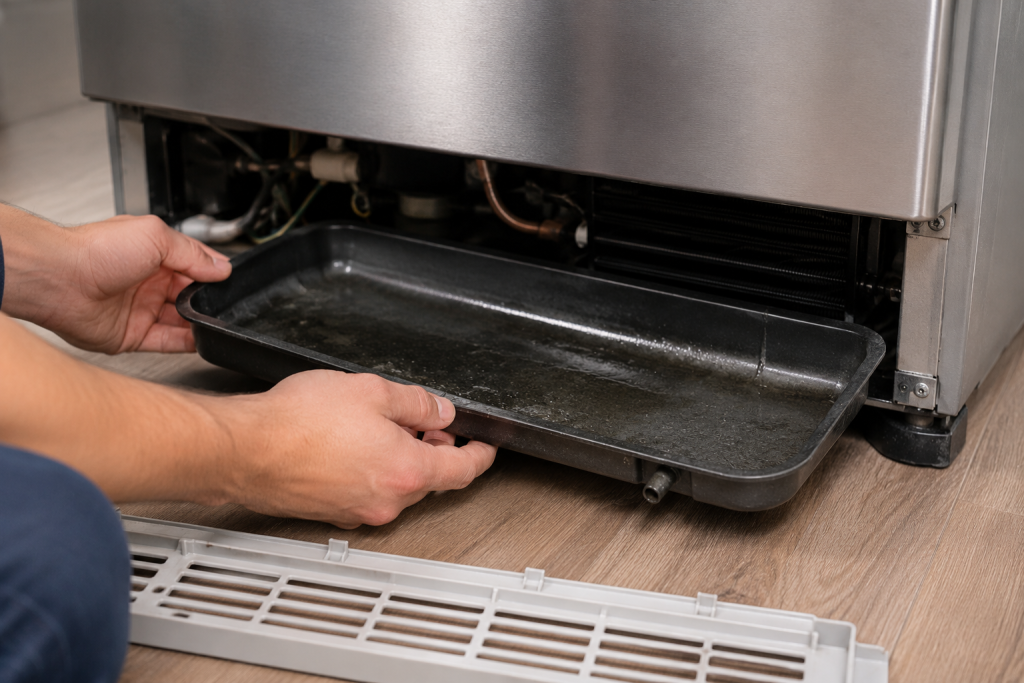
Most refrigerators have a drain pan underneath that collects condensation water. If the pan is cracked or overflowing, water can leak onto the floor.
How to Fix It
- Remove the front grille or rear access panel.
- Slide out the drain pan carefully.
- Inspect for cracks or excessive water buildup.
- Clean the pan with mild soap and water.
- Replace the pan if damaged.
A damaged drain pan is inexpensive and easy to replace.
Step 3: Check the Refrigerator Water Line
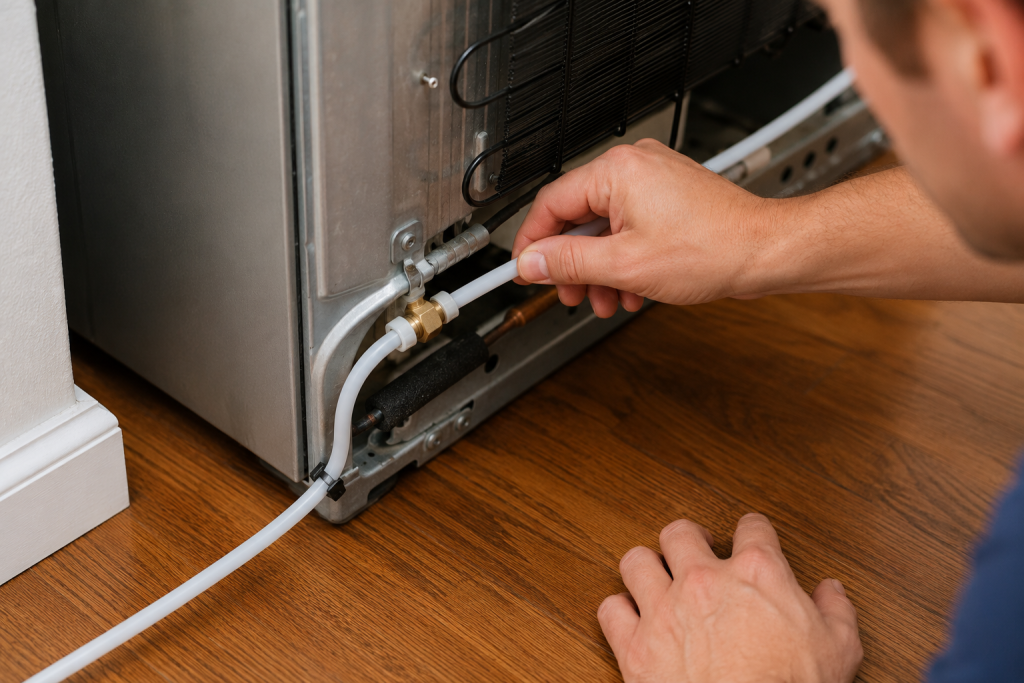
If your refrigerator has a water dispenser or ice maker, a leaking water supply line may be the problem.
How to Fix It
- Pull the refrigerator slightly away from the wall.
- Inspect the water line for cracks, loose fittings, or moisture.
- Tighten loose connections carefully.
- Replace damaged tubing if necessary.
A refrigerator leaking water from the back is often caused by a loose or damaged water supply line. Water line leaks often become worse over time, so fixing them early helps prevent floor damage.
You may also want to read Garbage Disposal Humming But Not Working? 7 Easy Fixes That Actually Work Fast if you’re troubleshooting multiple kitchen plumbing issues.
Step 4: Make Sure the Refrigerator Is Level
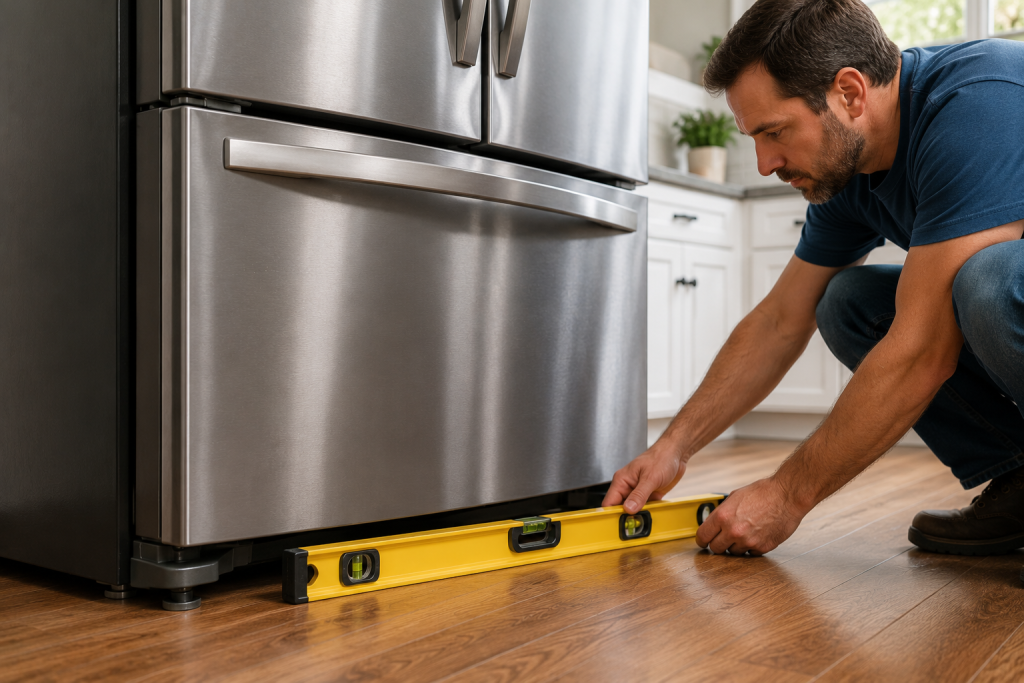
An unlevel refrigerator may prevent proper drainage, causing water to pool inside or underneath the appliance.
How to Fix It
- Place a level on top of the refrigerator.
- Adjust the front leveling legs as needed.
- Slightly tilt the refrigerator backward so doors close properly.
- Recheck for leaks over the next several hours.
Proper leveling also helps improve door sealing and cooling efficiency.
Step 5: Inspect the Door Gasket for Damage
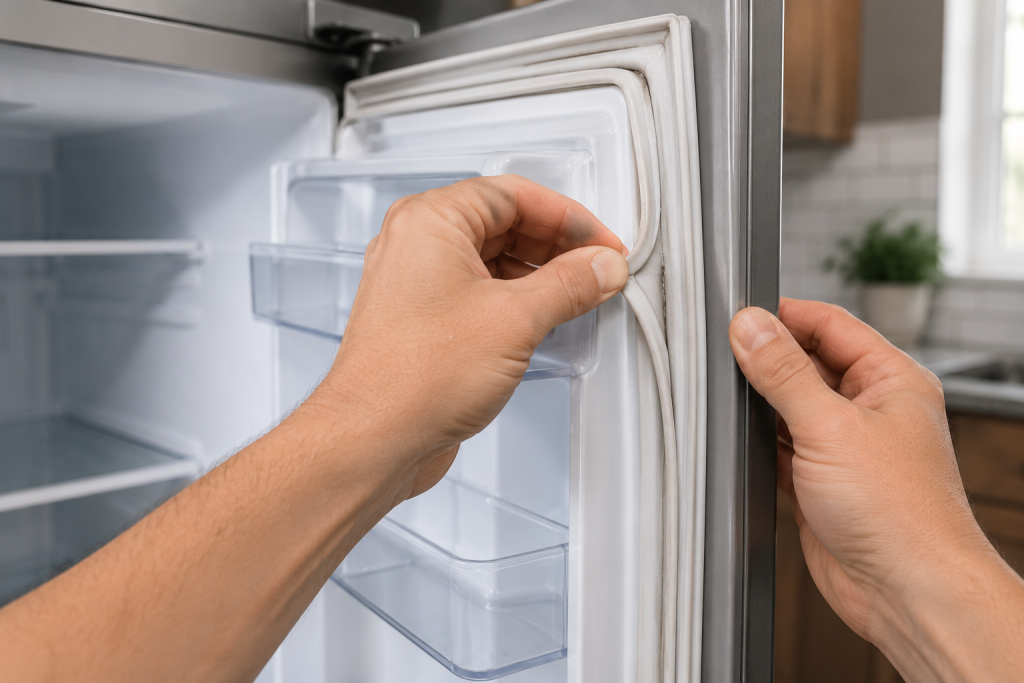
A worn or dirty refrigerator door gasket can allow warm air inside, creating excess condensation and water leaks.
How to Fix It
- Inspect the gasket for cracks, tears, or gaps.
- Clean the gasket with warm soapy water.
- Dry thoroughly.
- Replace damaged gaskets if necessary.
If the refrigerator door does not seal tightly, moisture problems can continue even after cleaning.
For more door repair help, see How to Fix a Door That Won’t Latch Properly.
Step 6: Check the Ice Maker for Leaks
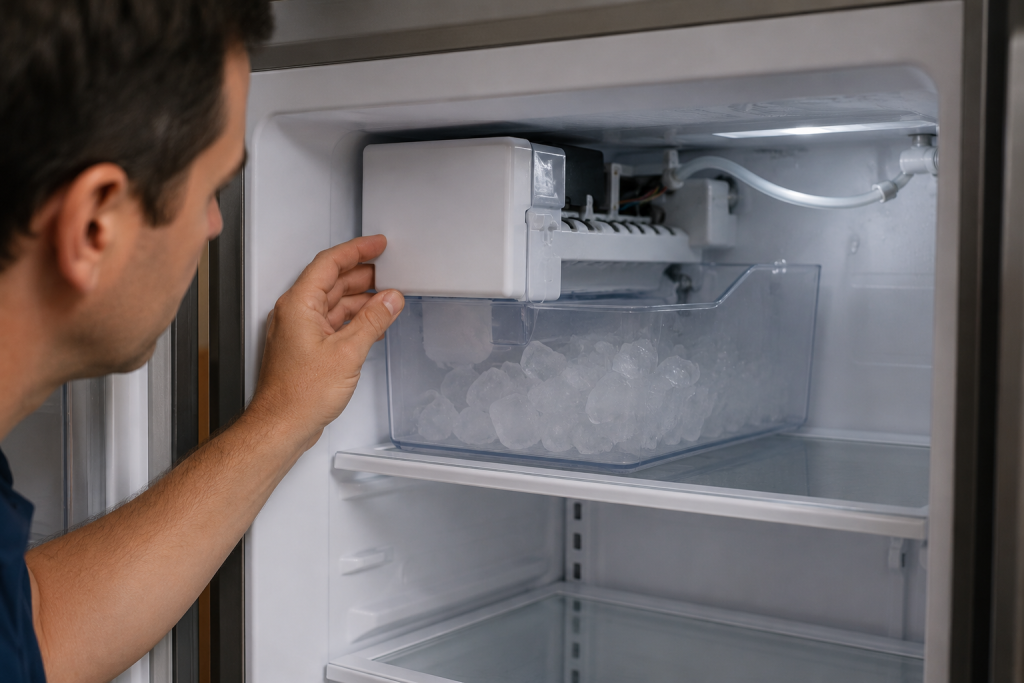
Ice makers can develop leaks from loose connections, cracked fill tubes, or frozen components.
How to Fix It
- Inspect the ice maker assembly carefully.
- Look for dripping water or ice buildup.
- Tighten loose fittings.
- Replace damaged tubing or components if needed.
- Make sure the freezer temperature is set correctly.
Small ice maker leaks can create large puddles over time.
For additional refrigerator maintenance tips, the experts at This Old House offer helpful appliance troubleshooting advice.
Step 7: Reduce Excess Condensation
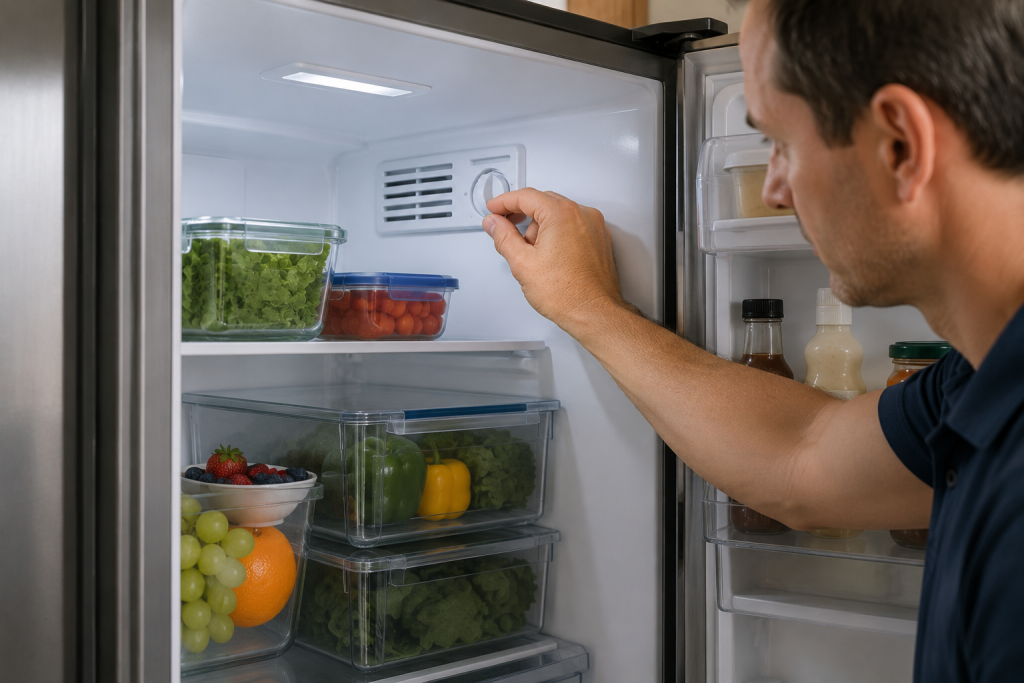
High humidity or frequently opening the refrigerator door can create excess moisture that eventually leaks onto the floor.
How to Fix It
- Avoid leaving refrigerator doors open too long.
- Check that food containers are sealed.
- Reduce humidity levels in the kitchen if possible.
- Clean moisture buildup regularly.
- Verify the refrigerator temperature is properly set.
Most refrigerators perform best between 37°F and 40°F.
When to Call a Professional
Contact an appliance repair technician if:
- The refrigerator continues leaking after troubleshooting
- You suspect an internal crack or damaged evaporator
- The compressor area becomes excessively hot
- Water leaks are causing electrical concerns
- You notice refrigerant odors or cooling failure
Professional repairs may be necessary for sealed system issues.
How to Prevent Refrigerator Water Leaks
To help prevent future refrigerator leaks:
- Clean the defrost drain regularly
- Inspect water lines every few months
- Keep the refrigerator level
- Clean door gaskets frequently
- Avoid overloading shelves and door bins
- Replace worn parts early
Simple maintenance can prevent costly water damage later.
Frequently Asked Questions
Why is my refrigerator leaking water onto the floor?
The most common causes are a clogged defrost drain, leaking water line, damaged drain pan, or excess condensation.
Is a leaking refrigerator dangerous?
It can be. Water near electrical components creates a shock hazard and may damage flooring or cabinets.
Can I use my refrigerator while it’s leaking?
You can temporarily use it if the leak is minor, but the issue should be fixed quickly to avoid water damage.
How much does it cost to repair a leaking refrigerator?
Minor DIY fixes may cost little or nothing. Professional repairs typically range from $100 to $400 depending on the problem.
Looking for help with another appliance problem? Browse our complete collection of appliance repair guides and error-code fixes.
Final Thoughts
A refrigerator leaking water is frustrating. Most refrigerator leaking water problems are caused by simple maintenance issues homeowners can fix themselves. In most cases, clearing a clogged drain, tightening a water line, or cleaning the door gasket solves the problem quickly.
By following these 7 easy fixes, you can often stop refrigerator leaks before they turn into expensive repairs or water damage.