
Last updated: September 20, 2026
By Home Repair Genie
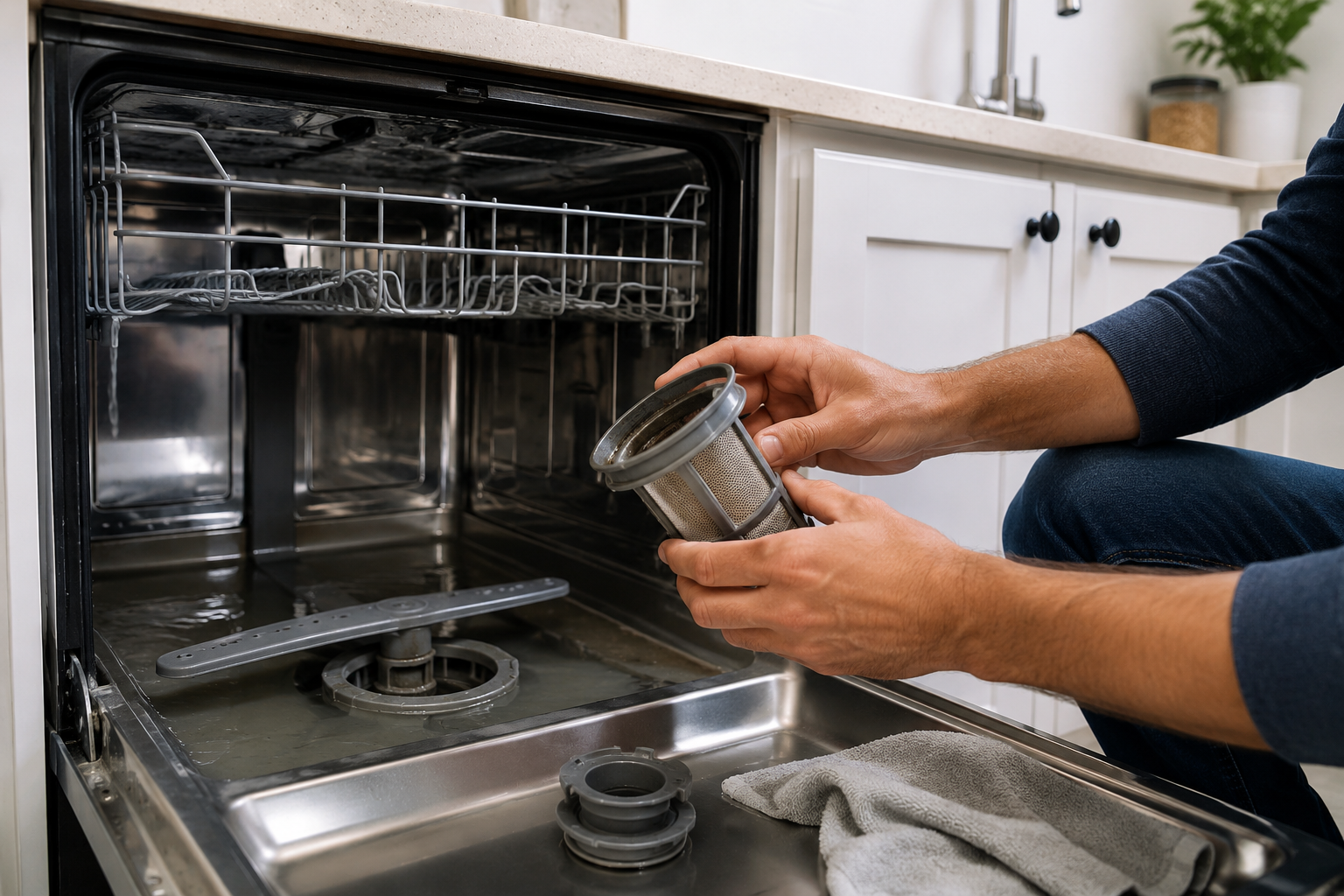
Dishwasher not draining? Standing water at the bottom of your dishwasher can leave dishes dirty, create unpleasant odors, and signal a clog or drainage problem. The good news is that most dishwasher drainage issues are caused by simple problems homeowners can fix themselves without calling a plumber.
This step-by-step guide will walk you through the most common reasons your dishwasher is not draining and the easy fixes that actually work.
Dishwasher Not Draining? Common Causes
Dishwashers usually fail to drain because of:
- A clogged filter
- Blocked drain hose
- Garbage disposal connection problems
- Food debris buildup
- Air gap blockages
- Faulty drain pump
- Kinked or damaged hoses
Before starting, always disconnect power to the dishwasher or turn off the breaker for safety.
Tools You May Need
- Towels or rags
- Bucket or shallow pan
- Screwdriver
- Flashlight
- Needle-nose pliers
- Wet/dry vacuum (optional)
- Baking soda and vinegar
You may also want to review our article on Garbage Disposal Humming But Not Working? 7 Easy Fixes That Actually Work Fast if your dishwasher connects to a disposal.
Step 1: Remove Standing Water
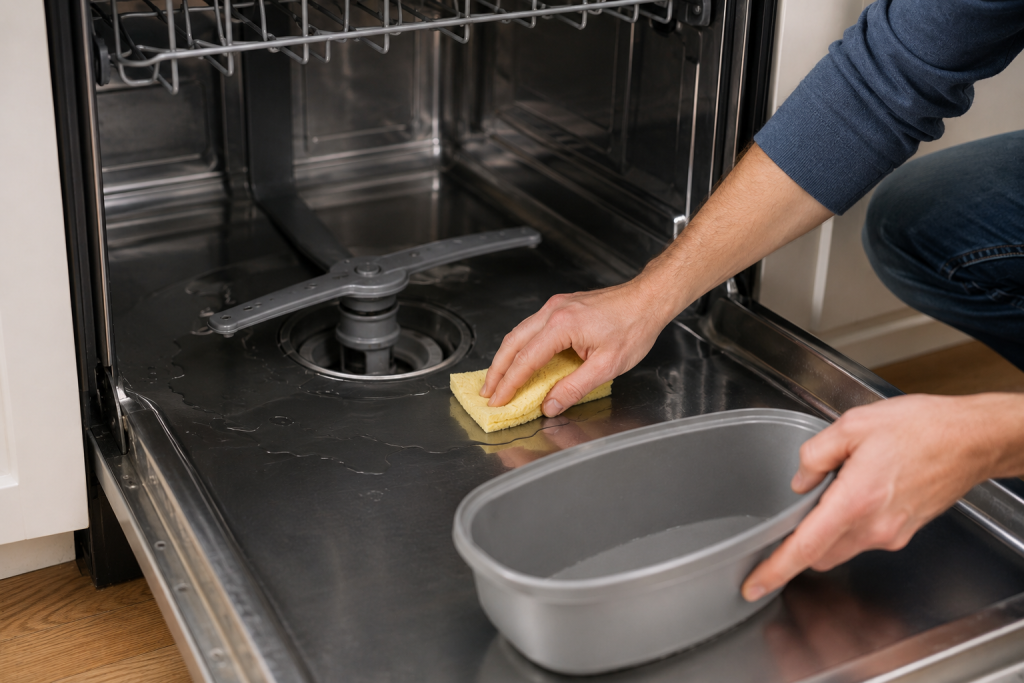
Start by removing as much standing water as possible from the bottom of the dishwasher.
How to Do It
- Open the dishwasher door.
- Use towels or a cup to scoop out excess water.
- Place towels around the base of the appliance to catch spills.
Removing water makes it easier to inspect the drain area and prevents a mess during repairs.
Step 2: Clean the Dishwasher Filter
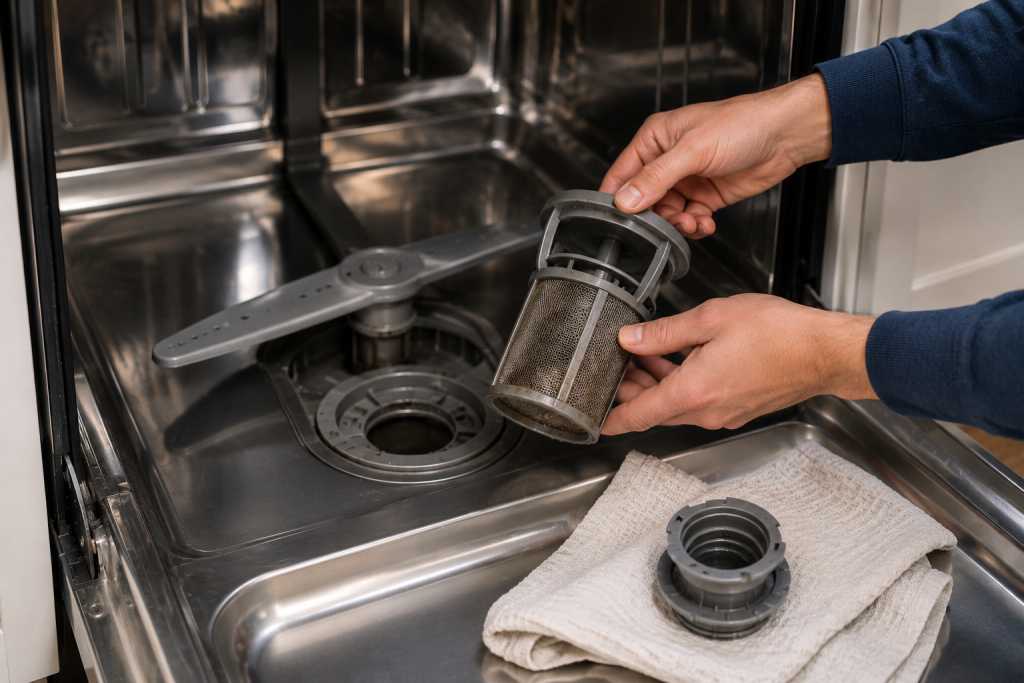
A clogged filter is one of the most common reasons a dishwasher not draining issue occurs.
How to Clean It
- Remove the bottom dish rack.
- Locate the filter at the bottom of the tub.
- Twist and lift the filter out.
- Rinse it thoroughly under warm water.
- Use a soft brush to remove grease and debris.
Food buildup can restrict water flow and prevent proper draining.
If your dishwasher also smells bad, check out our guide on Dishwasher Smells Bad? 7 Easy Fixes That Actually Work.
Step 3: Check the Drain Hose for Clogs
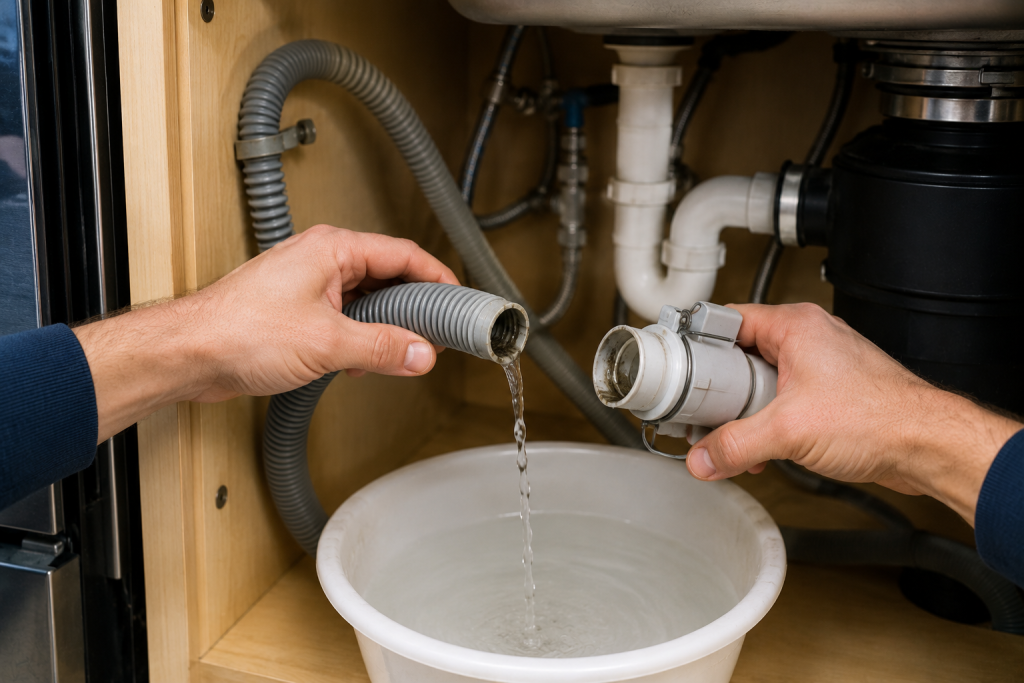
If your dishwasher not draining problem continues, the drain hose may be clogged or kinked.
How to Inspect It
- Turn off power to the dishwasher.
- Locate the drain hose under the sink.
- Check for kinks or bends.
- Disconnect the hose carefully.
- Flush water through the hose to remove clogs.
A blocked hose can completely stop the dishwasher from draining.
Step 4: Inspect the Garbage Disposal Connection
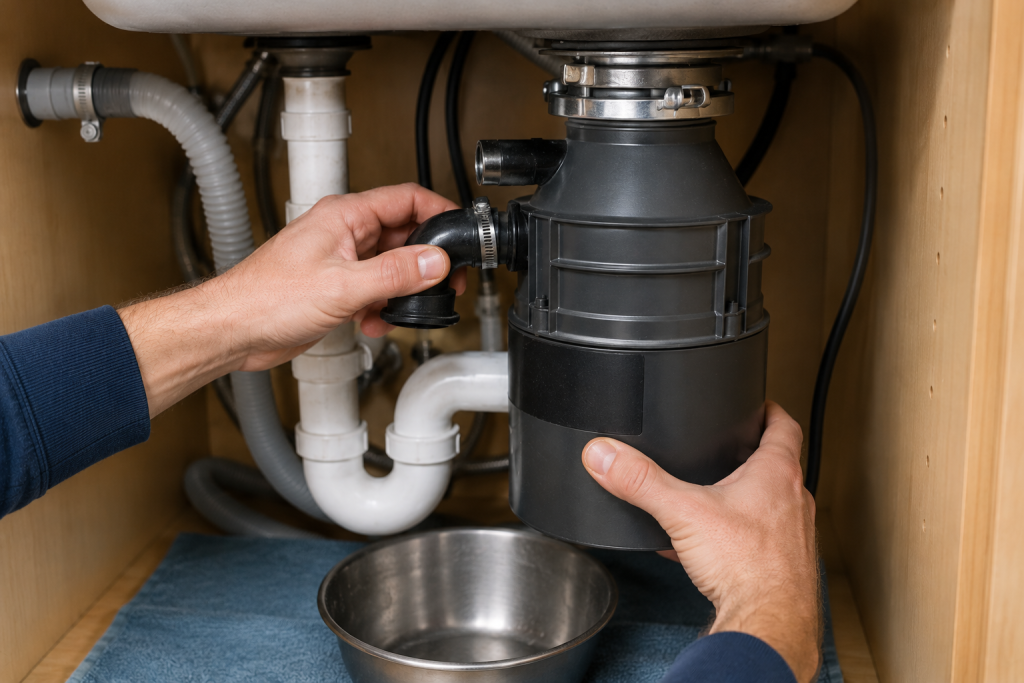
If your dishwasher drains through a garbage disposal, the disposal connection may be clogged.
What to Check
- Food buildup inside the disposal
- A blocked dishwasher inlet
- A knockout plug that was never removed on new disposal installations
Run the disposal for several seconds and test the dishwasher again afterward.
For additional troubleshooting, see our article on How to Unclog a Drain: 7 Easy Fixes That Actually Work Fast.
Step 5: Clean the Air Gap (If Equipped)
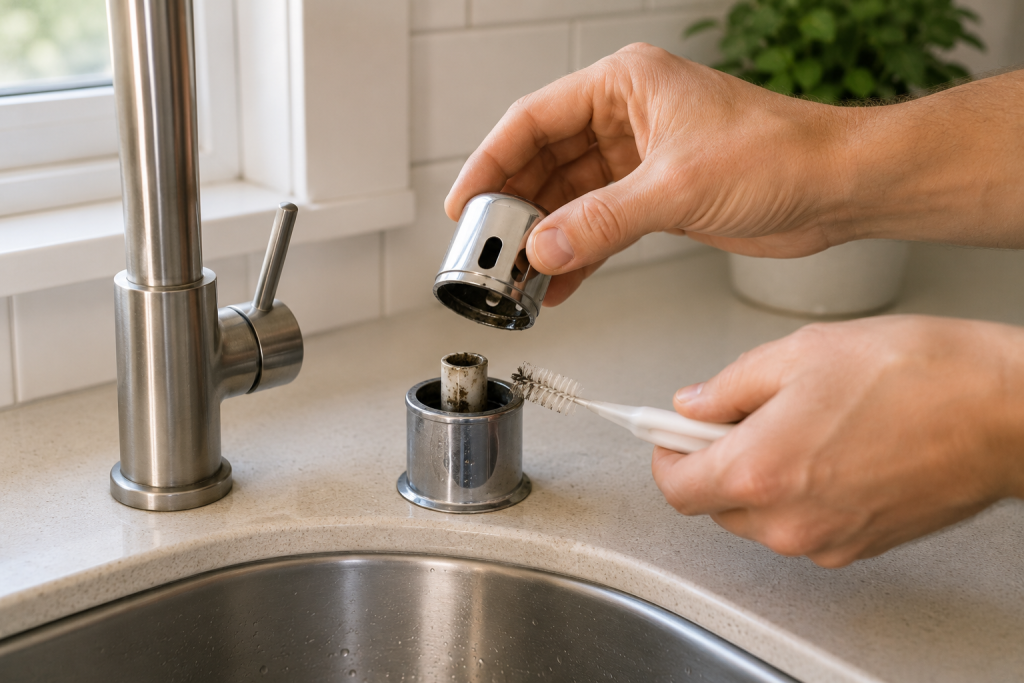
Some kitchens have an air gap mounted near the sink faucet that prevents dirty water from flowing back into the dishwasher.
How to Clean It
- Remove the air gap cover.
- Unscrew the cap underneath.
- Clean out food debris or buildup.
- Rinse thoroughly and reinstall.
A clogged air gap can cause water to back up into the dishwasher.
For additional dishwasher maintenance tips, the experts at This Old House provide a helpful guide.
Step 6: Check the Drain Pump
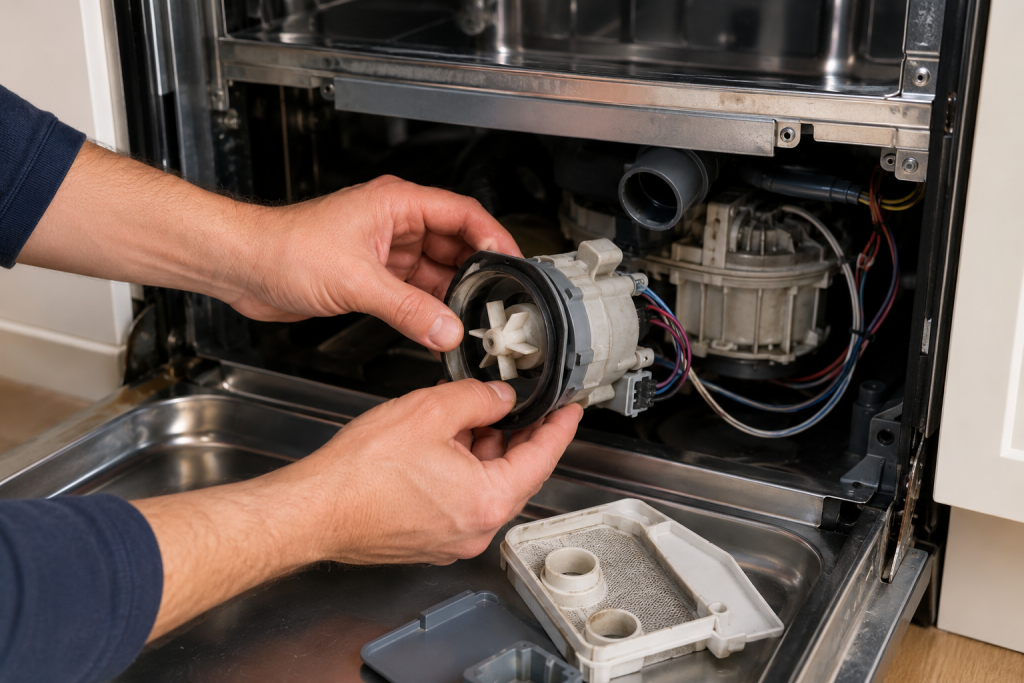
If the dishwasher still won’t drain, the drain pump may be blocked or failing.
Signs of a Drain Pump Problem
- Humming noises
- Grinding sounds
- Standing water after every cycle
- Dishwasher stopping mid-cycle
What to Do
- Disconnect power.
- Access the pump area beneath the filter.
- Remove debris carefully.
- Inspect the impeller for damage.
If the pump motor has failed, replacement may be necessary.
Step 7: Run a Cleaning Cycle
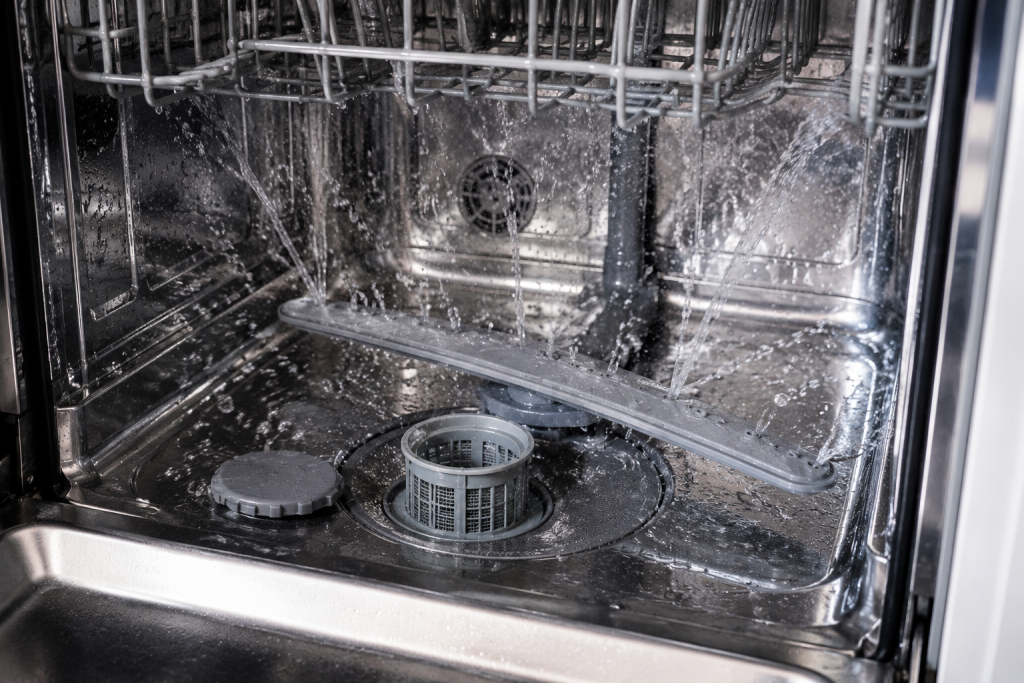
After fixing the issue, run a cleaning cycle to clear out leftover residue and buildup.
Cleaning Method
- Place a cup of white vinegar on the top rack.
- Run a hot water cycle.
- Sprinkle baking soda across the bottom.
- Run a short second cycle.
This helps eliminate odors and improves overall dishwasher performance.
When to Call a Professional
You should contact an appliance repair technician if:
- The dishwasher still won’t drain after these fixes
- The drain pump has failed
- Water leaks underneath the unit
- Electrical components appear damaged
- The dishwasher repeatedly stops mid-cycle
Ignoring persistent drainage issues can lead to water damage and mold growth.
Tips to Prevent Dishwasher Drain Problems
- Scrape large food particles off dishes before loading
- Clean the filter monthly
- Run hot water in the sink before starting the dishwasher
- Avoid pouring grease into the sink
- Clean the garbage disposal regularly
Preventive maintenance can keep your dishwasher running efficiently for years.
Frequently Asked Questions
Why is there standing water in the bottom of my dishwasher?
Standing water is usually caused by a clogged filter, blocked drain hose, or garbage disposal issue.
Can I run the dishwasher if it won’t drain?
It’s best not to continue using it until the issue is fixed because water can overflow or damage components.
How often should I clean my dishwasher filter?
Most dishwasher filters should be cleaned about once per month.
Can a garbage disposal cause dishwasher drain problems?
Yes. Since many dishwashers drain through the garbage disposal, clogs in the disposal can block water flow.
Is it expensive to repair a dishwasher drain pump?
Drain pump replacement costs vary, but many repairs are less expensive than replacing the entire dishwasher.
What is the most common cause of a dishwasher not draining?
The most common cause of a dishwasher not draining is a clogged filter or blocked drain hose.
Looking for help with another appliance problem? Browse our complete collection of appliance repair guides and error-code fixes.
Final Thoughts
Most dishwasher not draining problems are caused by simple clogs or buildup that homeowners can fix themselves in under an hour. Cleaning the filter, checking the drain hose, and inspecting the garbage disposal often solve the issue quickly.
Regular maintenance can also help prevent future draining problems and keep your dishwasher working efficiently.