
Last updated: October 4, 2026
By Home Repair Genie
Quick Answer
A clogged drain can usually be fixed in minutes using simple tools. Start by removing visible debris, then try a plunger. If that doesn’t work, use baking soda and vinegar, boiling water, or a drain snake to break up the clog.
Why Drains Get Clogged
How to unclog a drain is one of the most common home repair issues—and the good news is, most can be fixed without calling a plumber.
Clogged drains can be a significant inconvenience, affecting your daily routines and even leading to more severe plumbing issues if not addressed promptly. Understanding the importance of maintaining clear drains is crucial for every homeowner. Clogs can cause backups that may lead to flooding and water damage, which can be costly to repair. Therefore, knowing how to unclog a drain effectively is a valuable skill that can save you time and money.
Let’s delve deeper into some common causes that lead to clogged drains. In the bathroom, hair is often the primary culprit. Regularly brushing your hair over the sink or shower can result in strands falling into the drain, where they can accumulate and cause blockages. A simple solution is to use a hair catcher, which can be easily placed over the drain to capture hair before it goes down.
In the kitchen, grease and food waste are frequent offenders. When washing dishes, greasy residue can cling to the sides of the pipes, eventually leading to a buildup that restricts water flow. It’s advisable to scrape plates thoroughly before washing them and to pour boiling water down the drain after cooking to help dissolve any grease.
Common causes include:
- Hair buildup (bathroom drains)
- Grease and food waste (kitchen sinks)
- Soap scum and residue
- Foreign objects or debris
Grease buildup is especially common in kitchens. According to Environmental Protection Agency, fats, oils, and grease can harden inside pipes and restrict water flow over time.
If your sink is also dripping, you may want to learn how to fix a leaky faucet to stop constant water waste and prevent further plumbing issues.
Tools & Materials You’ll Need for How to Unclog a Drain
Additionally, soap scum can build up in bathroom drains, creating a thick layer that can significantly slow down water drainage. To prevent this, consider using liquid soap alternatives instead of bars, which tend to leave more residue. Installing a drain screen can also catch soap pieces before they enter the plumbing.
As an Amazon Associate I earn from qualifying purchases.
Before starting, gather these items:
- Plunger
- Drain snake or zip tool
- Baking soda + vinegar
- Rubber gloves
- Bucket (optional)
Before You Start (Quick Safety Tips)
- Avoid mixing chemical cleaners (they can be dangerous)
- Wear gloves to protect your hands
- If water is backing up badly, stop and assess before proceeding
- If you have already used a chemical drain cleaner, follow its label before attempting another method.
Step-by-Step: How to Unclog a Drain
Step 1: Remove Visible Debris
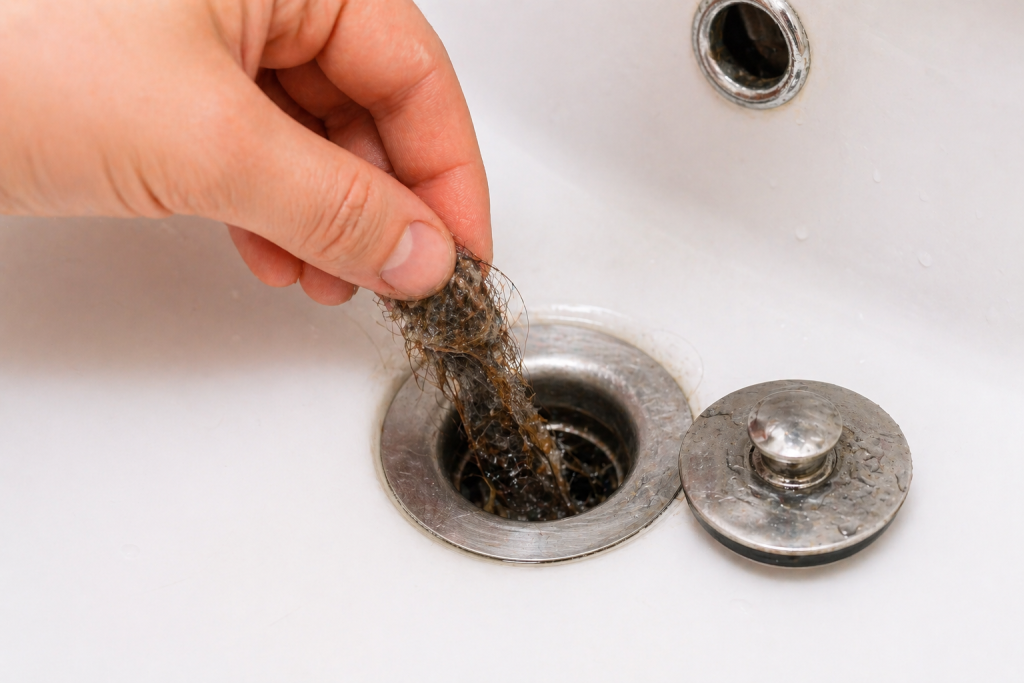
- Take off the drain cover or stopper
- Pull out any visible hair or debris
- Rinse with hot water
For hair caught just below the drain opening, a flexible drain hair-removal tool can help pull out debris that you cannot reach by hand. Check that it fits your drain, and don’t force it past resistance.
This alone can solve many minor clogs
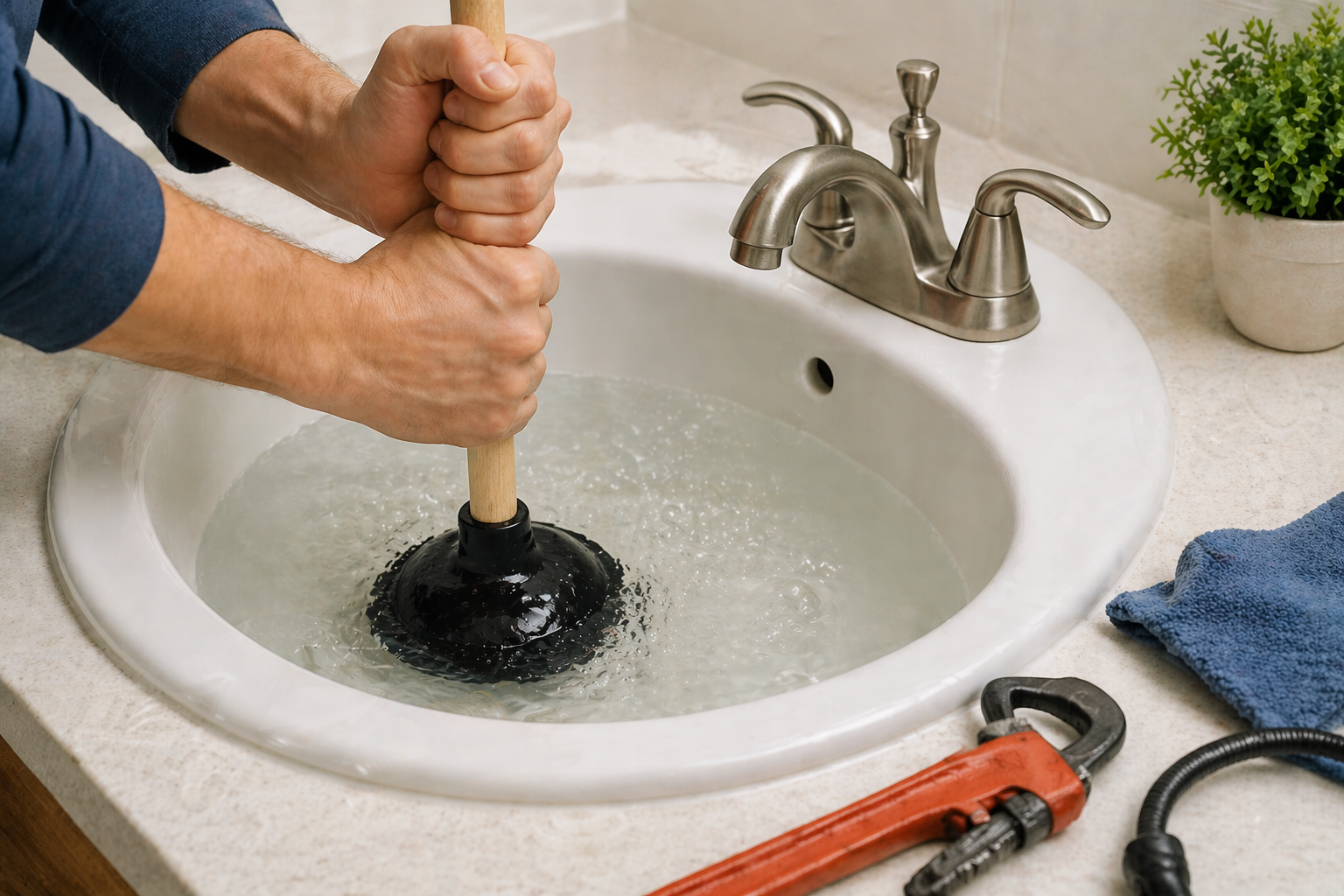
Step 2: Use a Plunger
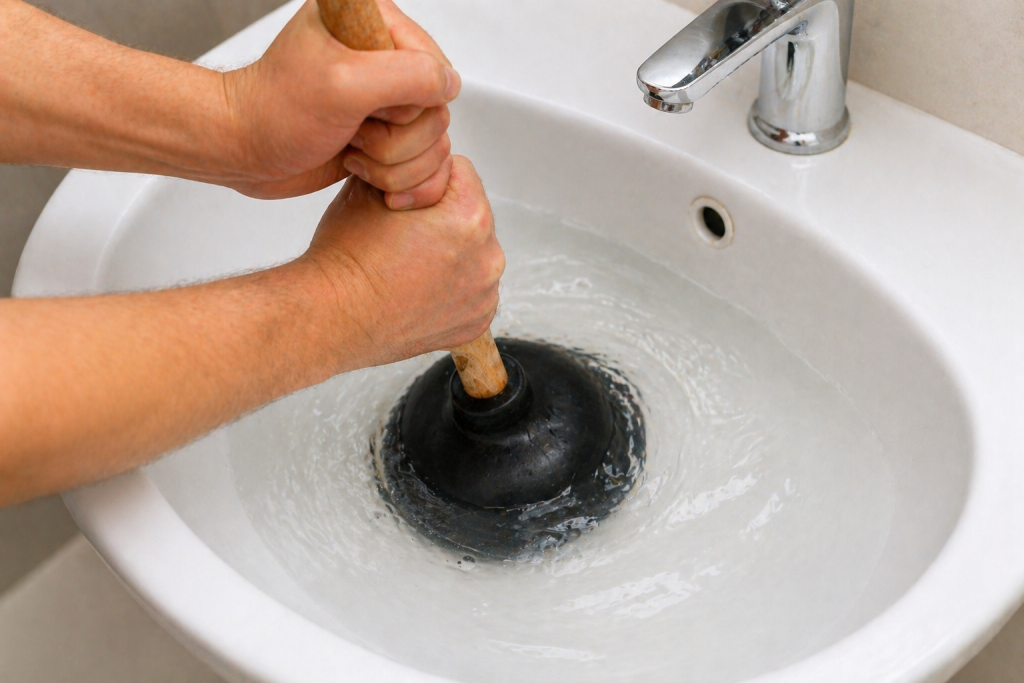
- Fill the sink/tub with a little water
- Place the plunger over the drain
- Pump firmly 10–15 times
Use a flat-cup sink plunger that seals around the drain opening. Cover the overflow opening with a damp rag, and block the other drain if you have a double-basin sink.
Creates pressure to loosen the clog
Step 3: Try Baking Soda + Vinegar
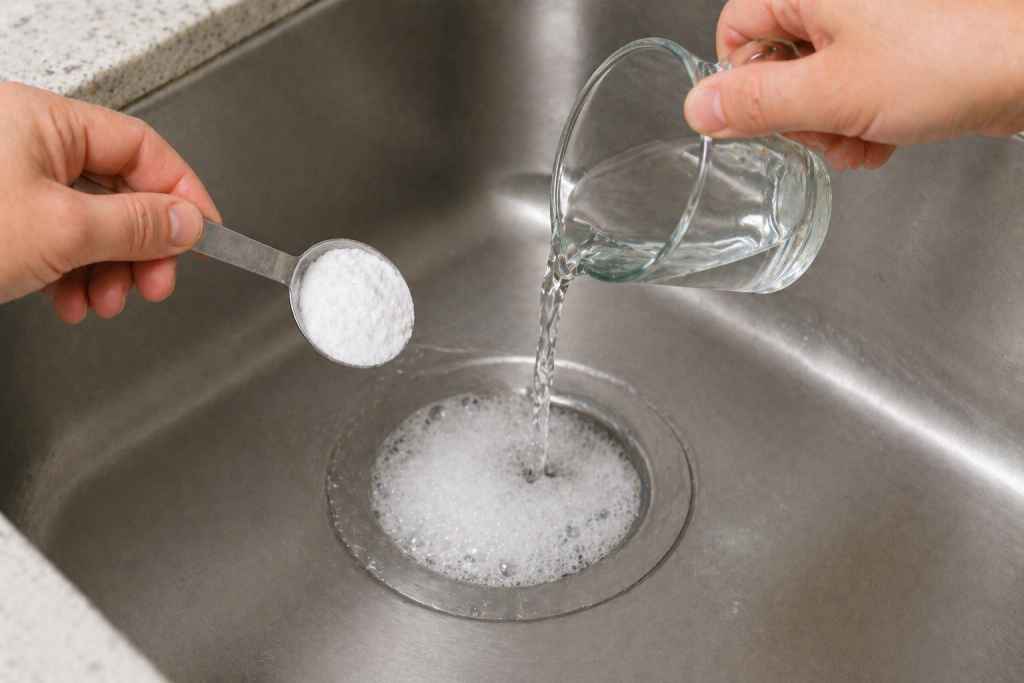
- Pour ½ cup baking soda into the drain
- Add 1 cup vinegar
- Let it fizz for 10–15 minutes
- Flush with hot water
Great for grease and buildup
Step 4: How to Unclog a Drain Using a Drain Snake
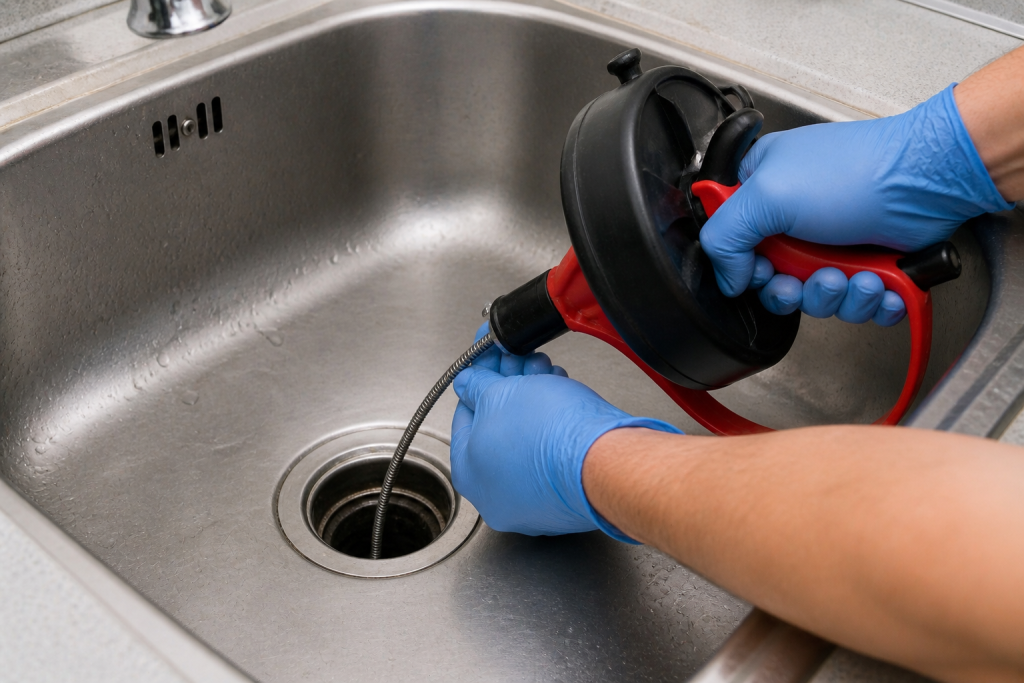
- Insert the snake into the drain
- Twist and push until you hit resistance
- Pull out the clog
For a clog beyond the reach of a short hair-removal tool, a manual drain snake is another option. Choose one intended for your drain type and follow its operating instructions.
Best for stubborn blockages
Step 5: Flush with Hot Water
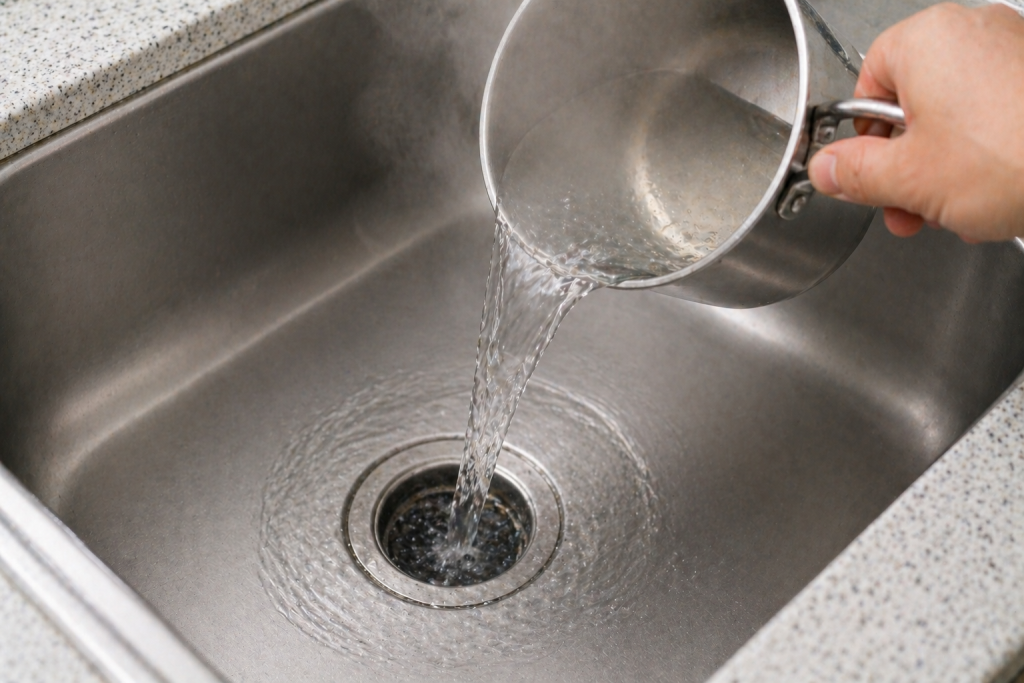
- Run hot water for several minutes
- Check if the drain is flowing normally
This clears any remaining residue
Step 6: Clean the P-Trap (Under the Sink)
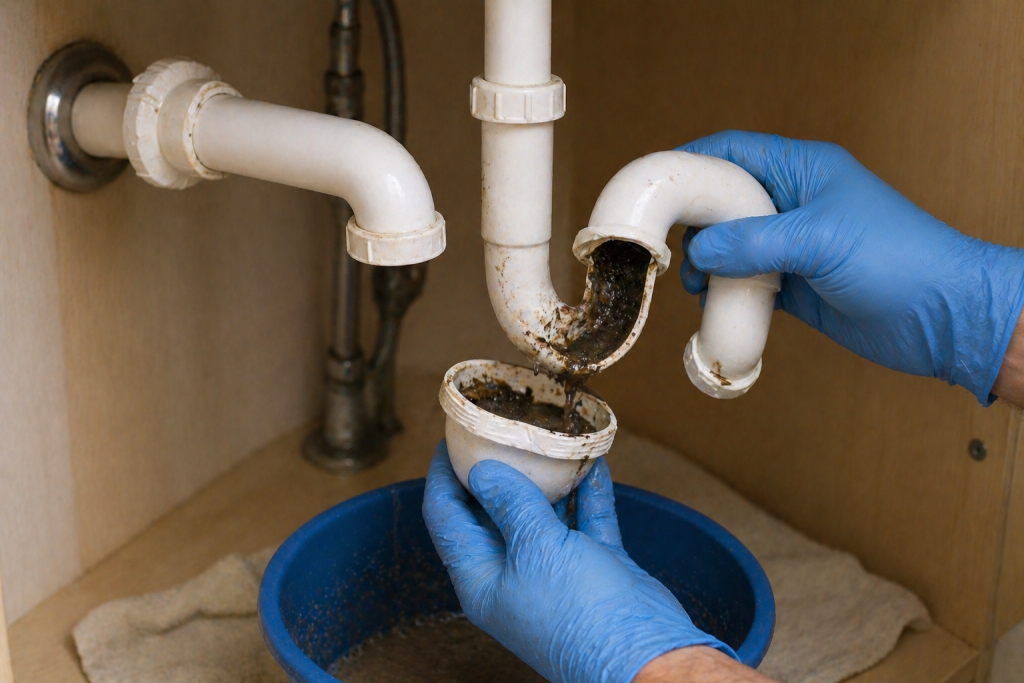
- Place a bucket under the sink to catch water
- Unscrew the P-trap (curved pipe) by hand or with pliers
- Remove any debris, buildup, or blockage inside
- Rinse thoroughly and reattach the pipe securely
Best for clogs that are deeper and not cleared by basic methods
Step 7: Use a Wet/Dry Vacuum (Advanced Fix)
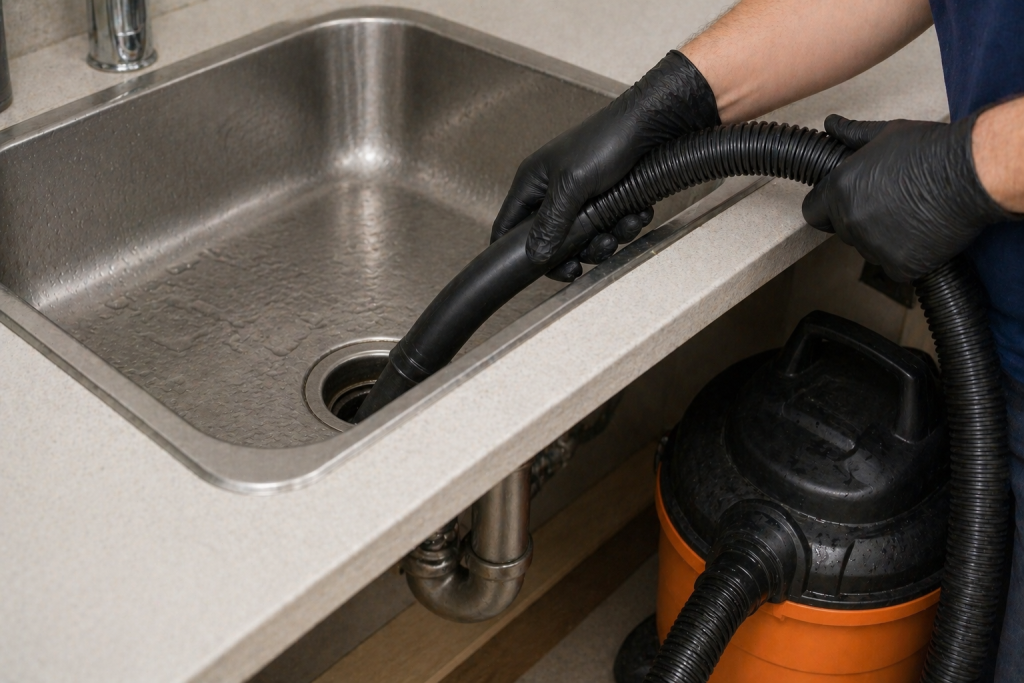
- Set your wet/dry vacuum to liquid mode
- Create a tight seal over the drain opening
- Turn on the vacuum to pull out the clog
- Check the drain flow and repeat if needed
When to Call a Plumber for How to Unclog a Drain
If none of the steps work, the issue may be deeper in your plumbing system.
Call a professional if:
- Multiple drains are clogged
- You hear gurgling sounds
- Water backs up repeatedly
If water keeps running or backing up, you may also want to learn how to fix a running toilet to rule out related plumbing issues.
Tips to Prevent Future Clogs
- A drain strainer or hair catcher helps catch debris before it enters the plumbing. Choose a style that fits your sink, shower, or bathtub, and empty it regularly.
- Clean drains weekly
- Never pour grease down the sink
- Flush with hot water regularly
Regular maintenance can prevent bigger issues—like needing to fix a tripped circuit breaker after water exposure.
FAQs for How to Unclog a Drain
How to unclog a drain fast?
Start with a plunger, then try baking soda and vinegar. These methods work quickly for most clogs.
What is the best homemade drain cleaner for how to unclog a drain?
A mix of baking soda and vinegar followed by hot water is effective and safe.
Can I use boiling water if I want to succeed in how to unclog a drain?
Yes—especially for grease clogs—but avoid boiling water on PVC pipes.
Looking for help with another plumbing problem? Browse our complete collection of plumbing repair and troubleshooting guides.
Final Thoughts
In essence, knowing how to unclog a drain is not just about addressing immediate issues; it’s about understanding the underlying causes and preventative measures that can be taken. Regular inspections and maintenance are vital, and with the right tools and knowledge, most drain problems can be managed without professional help. Remember to stay proactive in your approach to drain care to ensure a smooth plumbing system.
Home Repair Genie Tip:
Regular maintenance is the secret—don’t wait for a full clog before taking action.
Using a drain snake is a great way to tackle more challenging clogs. These tools can reach deep into the pipes and grab obstructions that your other methods might miss. If you’re unsure about using one, many online tutorials can guide you through the process step-by-step, ensuring you use the snake correctly and safely.
Recognizing when to call a plumber is equally important. For instance, if you notice multiple drains clogging at once, this might indicate a larger issue with your plumbing system. Gurgling sounds can suggest air trapped in the pipes, while persistent backups may signal a blockage downstream that a homeowner’s tools cannot reach.
To prevent future clogs, consider implementing regular maintenance schedules. Monthly checks using hot water flushes or baking soda and vinegar treatments can keep your drains clear. Additionally, teaching family members about drain safety can help prevent issues from arising in the first place.
Home Repair Genie Tip:
If you find yourself frequently facing drain issues, consider using enzyme-based drain cleaners as a preventive measure. These cleaners break down organic matter and can be a great way to keep your pipes clean without harsh chemicals.