Last updated: May 21, 2026
By Home Repair Genie
If your Bosch dishwasher is displaying the E15 error code, this Bosch Dishwasher E15 Error Code Fix guide will help you troubleshoot the problem step by step. The E15 code usually means water has collected in the dishwasher’s base pan and triggered the leak protection system.
Quick Answer
The Bosch dishwasher E15 error code means the anti-flood protection system has detected water in the bottom base tray. To fix it, unplug the dishwasher, remove standing water, inspect for leaks, clean the filters, check the door seal, and reset the unit. If the error returns, a leaking hose, pump, or inlet valve may need repair.
What Does the Bosch Dishwasher E15 Error Code Mean?
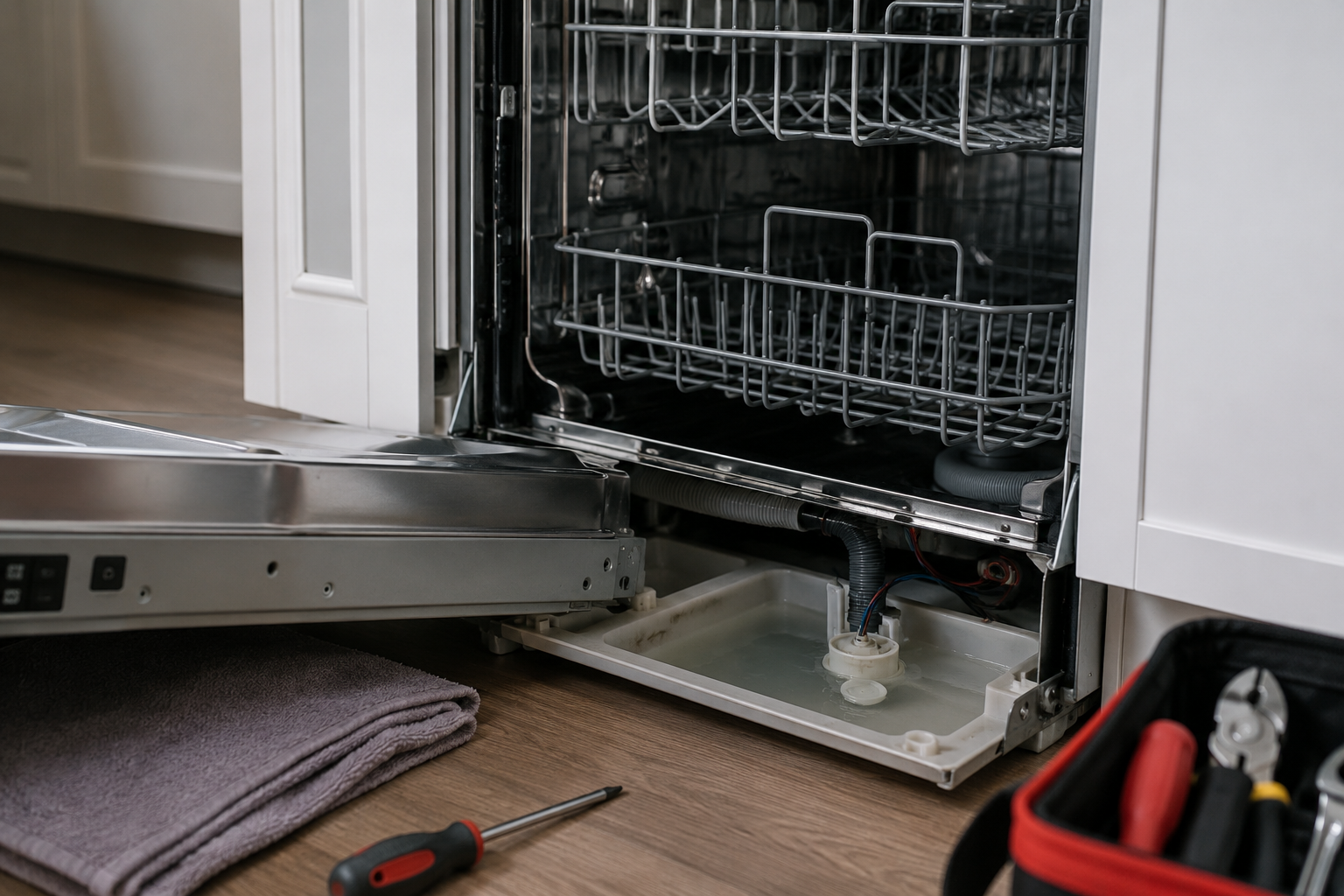
The E15 error code on a Bosch dishwasher indicates the AquaStop leak protection system has activated. Bosch dishwashers include a float switch in the bottom base pan that detects water leaks.
When water enters the base tray, the dishwasher shuts down to help prevent flooding and water damage.
Common causes include:
- Clogged or dirty filters
- Loose or leaking hoses
- Damaged door gasket
- Excess detergent suds
- Faulty water inlet valve
- Cracked sump or circulation pump leak
If your dishwasher is also not draining correctly, you may want to read our guide on dishwasher not draining properly.
Step 1: Turn Off Power to the Dishwasher
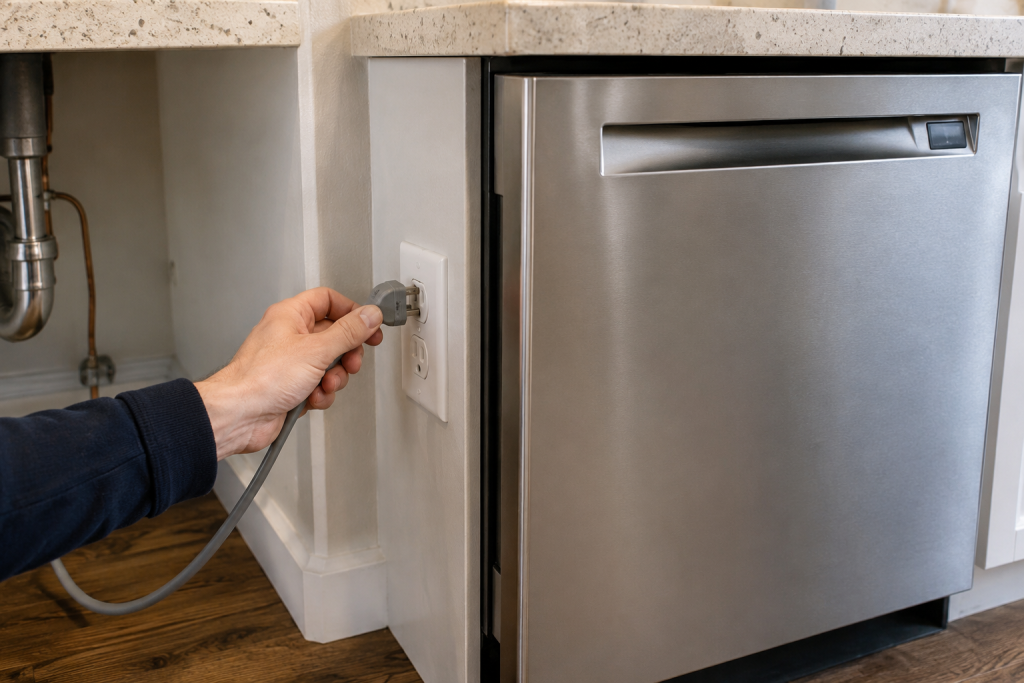
Before troubleshooting, disconnect power to the dishwasher for safety.
How to Shut Off Power
- Turn off the dishwasher at the control panel.
- Unplug the unit if accessible.
- If hardwired, switch off the dishwasher breaker.
- Turn off the water supply valve under the sink.
Allow the dishwasher to sit for several minutes before proceeding.
Step 2: Remove Standing Water From the Base Pan
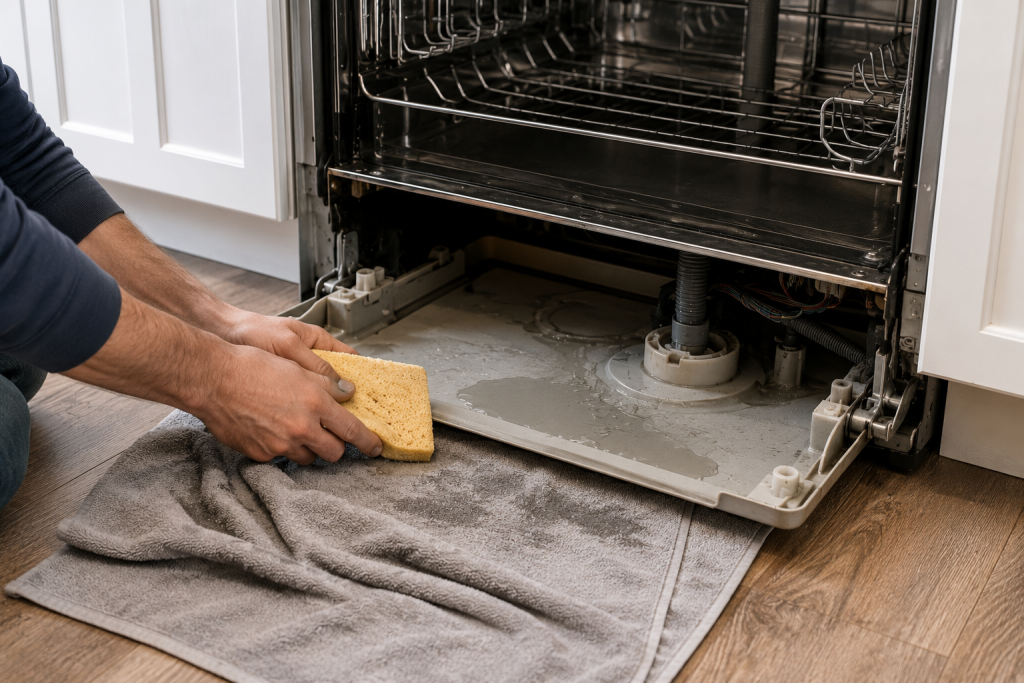
The E15 code often clears after removing the water trapped underneath the dishwasher.
How to Drain the Base Tray
- Pull the dishwasher slightly forward if possible.
- Carefully tilt the dishwasher backward about 45 degrees.
- Allow trapped water to drain out onto towels.
- Dry the bottom area thoroughly.
Some homeowners use a wet/dry vacuum or towels to absorb remaining moisture.
After drying the base, reconnect power and test the dishwasher.
If you’re dealing with a smelly dishwasher, check out our guide: Dishwasher Smells Bad? 7 Easy Fixes That Actually Work Fast (Step-by-Step Guide)
Step 3: Clean the Dishwasher Filter and Drain Area
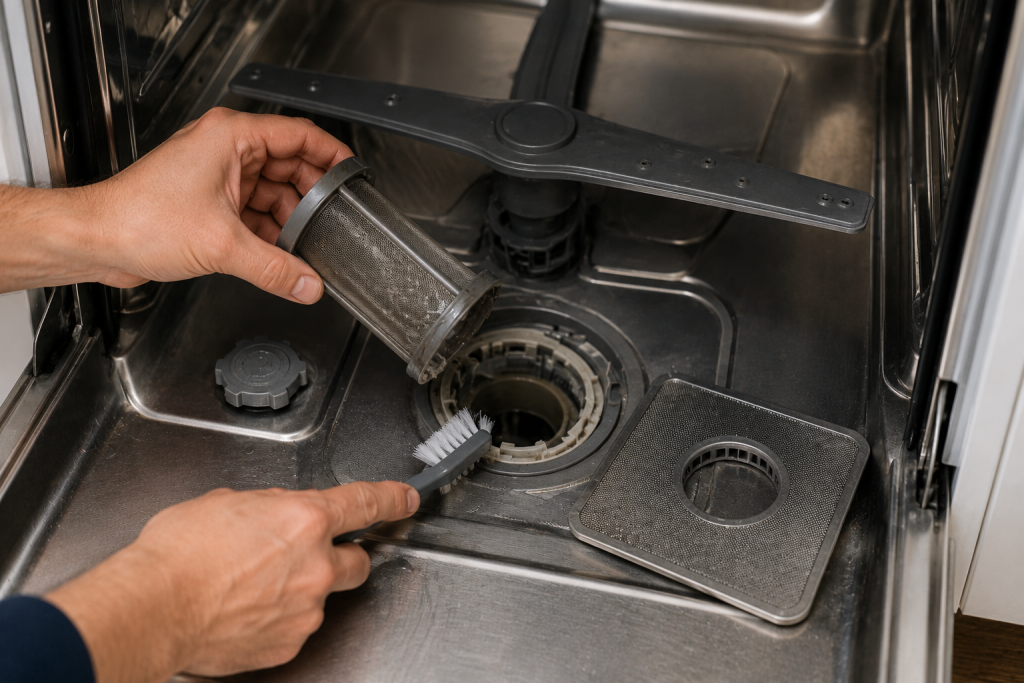
A clogged filter can cause water backup that eventually leaks into the base tray.
How to Clean the Filter
- Remove the bottom rack.
- Twist and remove the cylindrical filter.
- Wash the filter under warm water.
- Clean debris from the drain area below.
- Reinstall the filter securely.
Step 4: Inspect the Door Gasket for Leaks
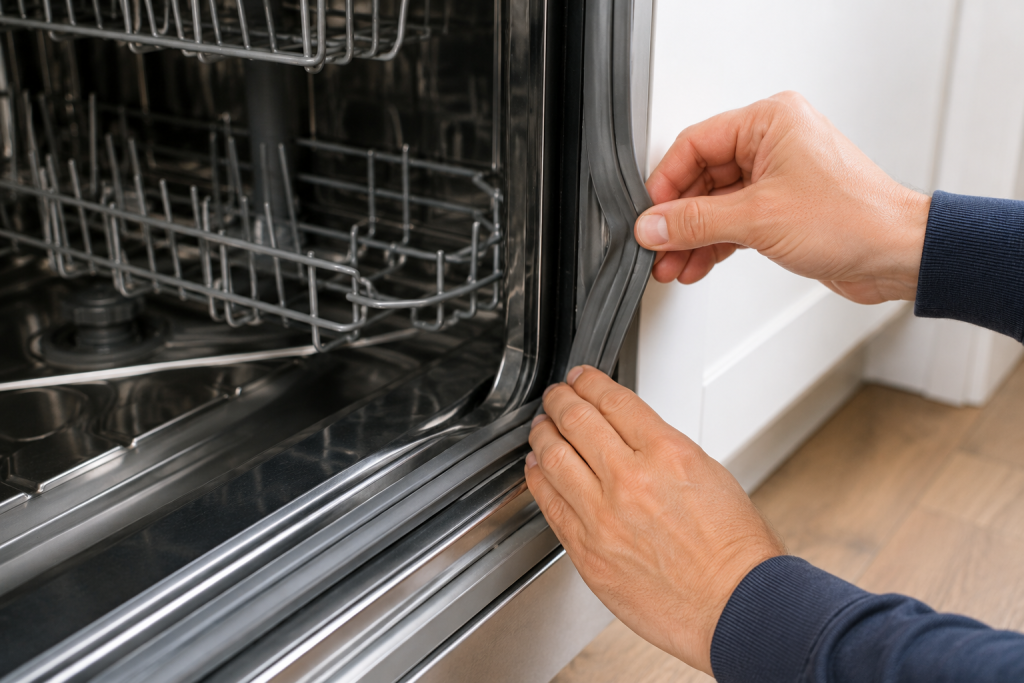
A damaged or dirty door seal can allow water to escape during the wash cycle.
How to Check the Door Seal
- Open the dishwasher door fully.
- Inspect the rubber gasket around the perimeter.
- Look for cracks, gaps, or hardened areas.
- Clean the gasket using warm water and mild soap.
- Replace the gasket if damaged.
Make sure dishes are not blocking the door from sealing properly.
Step 5: Check for Excess Soap Suds
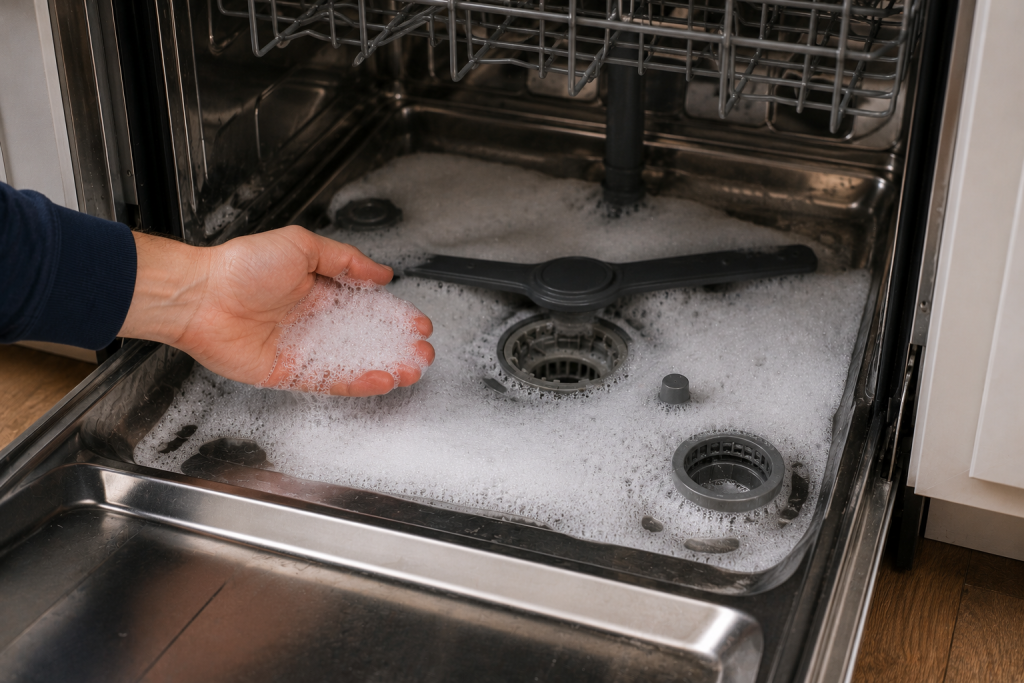
Using too much detergent or the wrong detergent can create excessive suds that leak into the base pan.
How to Reduce Sudsing Problems
- Use only dishwasher-safe detergent.
- Avoid regular dish soap completely.
- Reduce detergent quantity if needed.
- Run a rinse cycle to clear excess suds.
Bosch specifically recommends using high-efficiency dishwasher detergents. You can review Bosch dishwasher care recommendations on Bosch Home Appliances Support.
Step 6: Inspect the Water Inlet and Drain Hoses
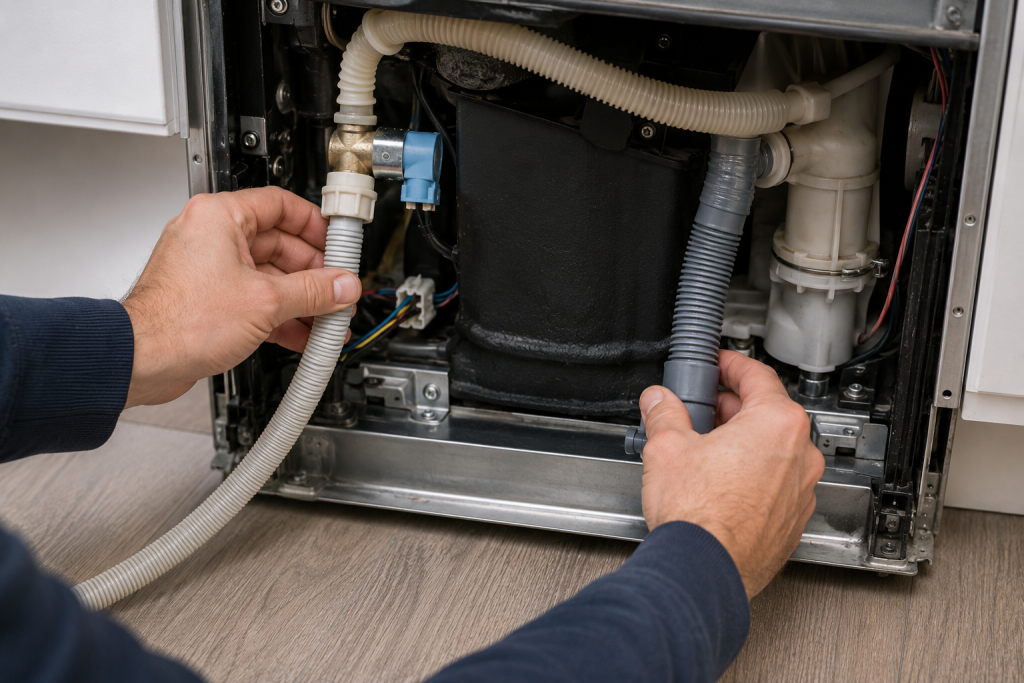
Loose or cracked hoses are another common cause of the E15 error.
How to Inspect Dishwasher Hoses
- Remove the lower kick plate panel.
- Inspect the drain hose for leaks.
- Check the water inlet hose connections.
- Tighten loose clamps or fittings.
- Replace damaged hoses if necessary.
Pay close attention to slow drips around hose joints.
Step 7: Test the Float Switch and Leak Sensor
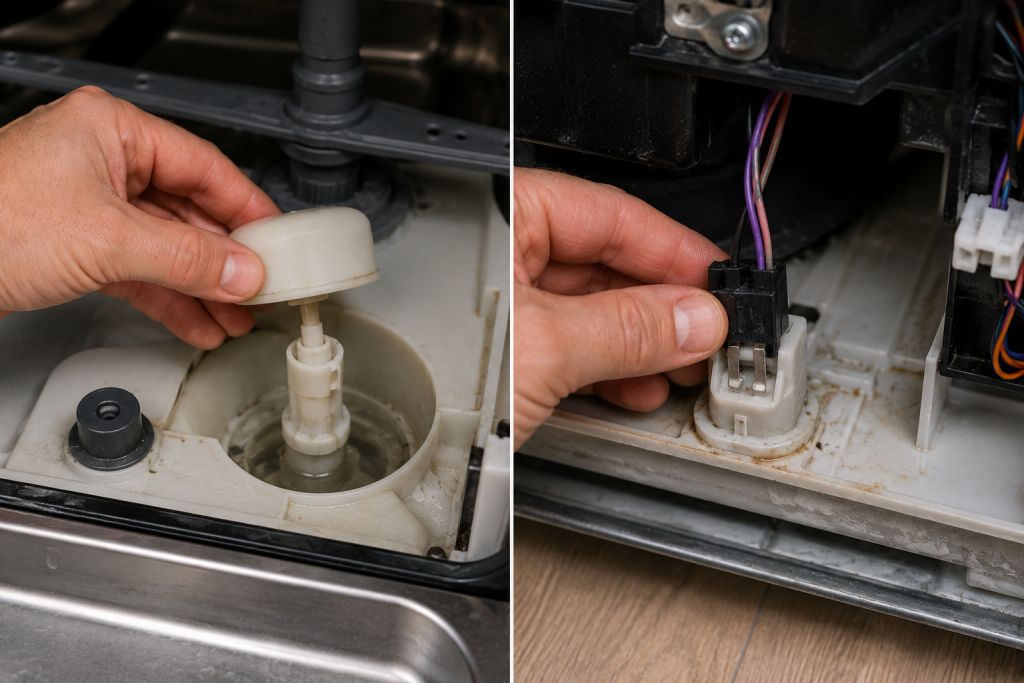
If no visible leak exists, the float switch may be stuck or faulty.
How to Inspect the Float Switch
- Disconnect power to the dishwasher.
- Access the bottom base area.
- Locate the float switch assembly.
- Check for debris preventing movement.
- Test the switch continuity with a multimeter if needed.
A defective float switch may continue triggering the E15 code even after the leak is resolved.
When to Call a Professional
You may need professional repair if:
- The E15 code returns repeatedly
- Water leaks from underneath the unit
- The circulation pump is leaking
- The dishwasher will not start after resetting
- Electrical components appear damaged
Persistent leaks can eventually damage flooring or cabinets if ignored.
How to Prevent Bosch Dishwasher E15 Errors
Preventive maintenance can help avoid future leak detection problems.
Tips to Prevent E15 Errors
- Clean the filter monthly
- Avoid overloading dishes
- Use the correct detergent
- Inspect hoses annually
- Wipe the door gasket regularly
- Address small leaks immediately
Routine maintenance helps improve dishwasher performance and extend appliance life.
FAQ for Bosch Dishwasher E15 Error Code Fix
Why does my Bosch dishwasher keep showing E15?
The dishwasher likely still detects water in the base tray or an active leak remains somewhere inside the unit.
Can I reset the Bosch E15 error code?
Yes. Drying the base pan and disconnecting power for several minutes often resets the error temporarily.
Is the Bosch E15 error serious?
It can be. The error protects your home from flooding, so recurring leaks should be repaired promptly.
Can a clogged filter cause the E15 code?
Yes. A blocked filter can cause water overflow that leaks into the base tray.
Will tilting the dishwasher fix the E15 error?
Tilting may temporarily drain trapped water and clear the code, but you still need to identify the original leak source.
Final Thoughts
The Bosch dishwasher E15 error code usually indicates water has entered the dishwasher’s leak protection tray. In many cases, cleaning the filter, drying the base pan, checking the door seal, and inspecting hoses can solve the problem quickly.
If the error keeps returning after troubleshooting, a failing pump, hose, or sensor may require replacement before the leak worsens.