
Last updated: October 3, 2026
By Home Repair Genie
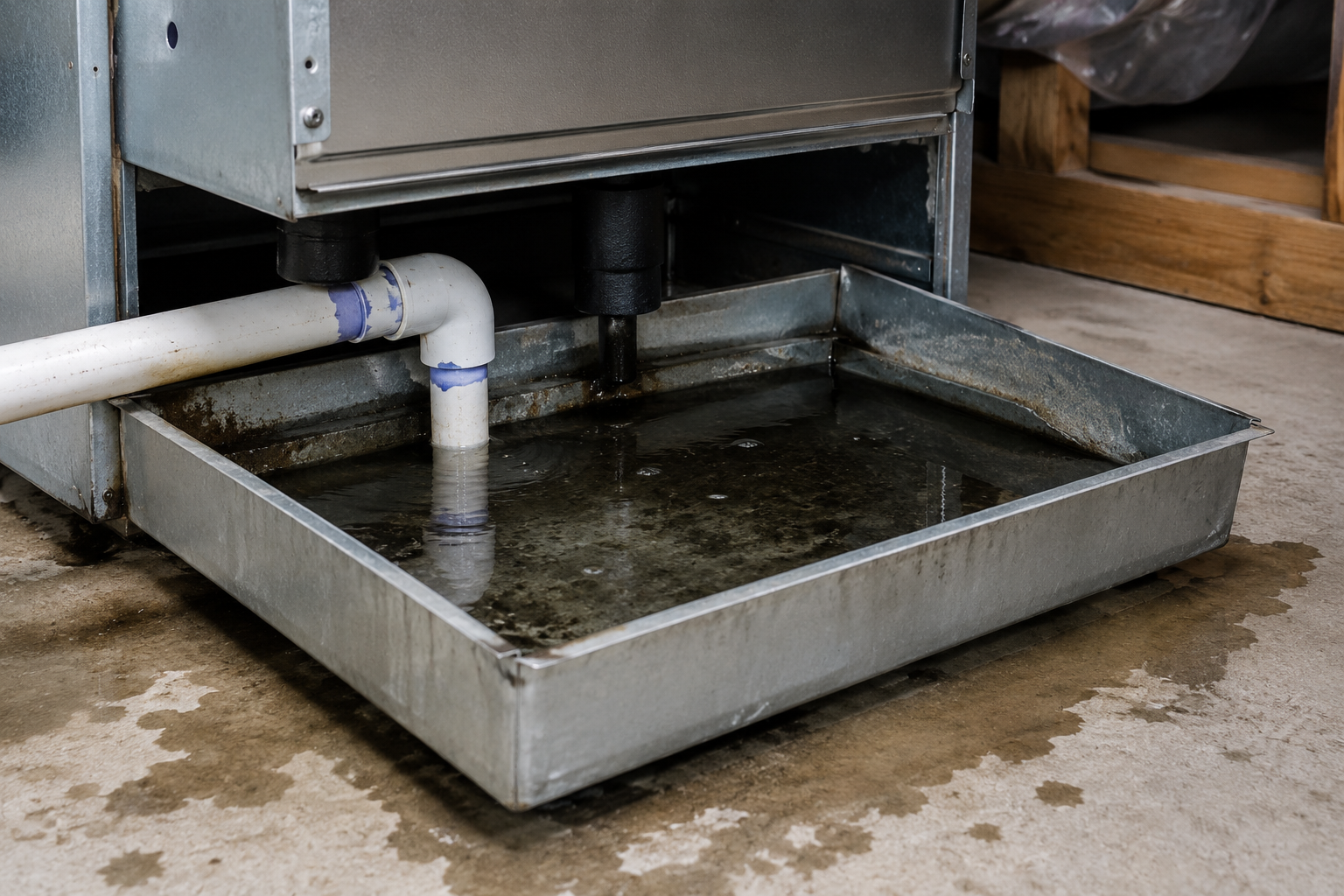
An AC drain pan filling with water can be difficult to diagnose because some condensation is normal while standing water can indicate a drainage problem.
Your air conditioner naturally produces water while it runs. However, that water should normally flow through the condensate drain system and safely away from the unit. A drain pan that keeps filling with water—especially a secondary pan underneath the unit—can indicate a clogged drain line, frozen evaporator coil, damaged drain pan, or another drainage problem.
Ignoring the problem can eventually lead to water damage around your HVAC system.
Quick Answer
If you have an AC drain pan filling with water, a clogged condensate drain line is one of the first things to check.Dirt, algae, and other debris can restrict the drain line and cause condensation to back up into the pan.
Other possible causes include:
- A dirty air filter
- A frozen evaporator coil that is thawing
- A cracked or rusted drain pan
- An improperly sloped drain pan
- A clogged condensate trap
- A failed condensate pump
- Improper installation or drainage
- Excessive condensation caused by high humidity
A small amount of moisture in the primary drain pan while the AC is operating isn’t necessarily a problem. However, standing water that remains in the pan or water accumulating in the secondary drain pan should be investigated.
If the pan is close to overflowing, turn the air conditioner off until you determine why the water isn’t draining properly.
Why Is My AC Drain Pan Filling With Water?
Before troubleshooting the drain pan, it helps to understand where the water comes from.
Your air conditioner doesn’t just cool your home. It also removes moisture from the indoor air.
Warm indoor air passes across the cold evaporator coil. As the air cools, moisture condenses on the coil in much the same way water forms on the outside of a cold glass.
The condensation drips into the primary drain pan and then travels through the condensate drain line.
During hot and humid weather, an air conditioner can remove a significant amount of moisture from the air. Seeing water flowing from the condensate drain is therefore normal.
The problem occurs when that water can’t leave the HVAC system as intended.
Primary Drain Pan vs. Secondary Drain Pan
It’s important to determine which AC drain pan contains the water.
The primary drain pan is located directly underneath the evaporator coil. Its job is to collect condensation from the coil and direct it into the condensate drain line.
The secondary drain pan, sometimes called an emergency or auxiliary drain pan, is usually positioned underneath the entire air handler or evaporator coil assembly.
The secondary pan is essentially a backup.
If you’re seeing water in the secondary drain pan, there’s a good chance something isn’t working correctly with the primary condensate drainage system.
Water in the secondary pan should not simply be emptied and forgotten. You need to determine why the water got there.
1. Clogged AC Condensate Drain Line
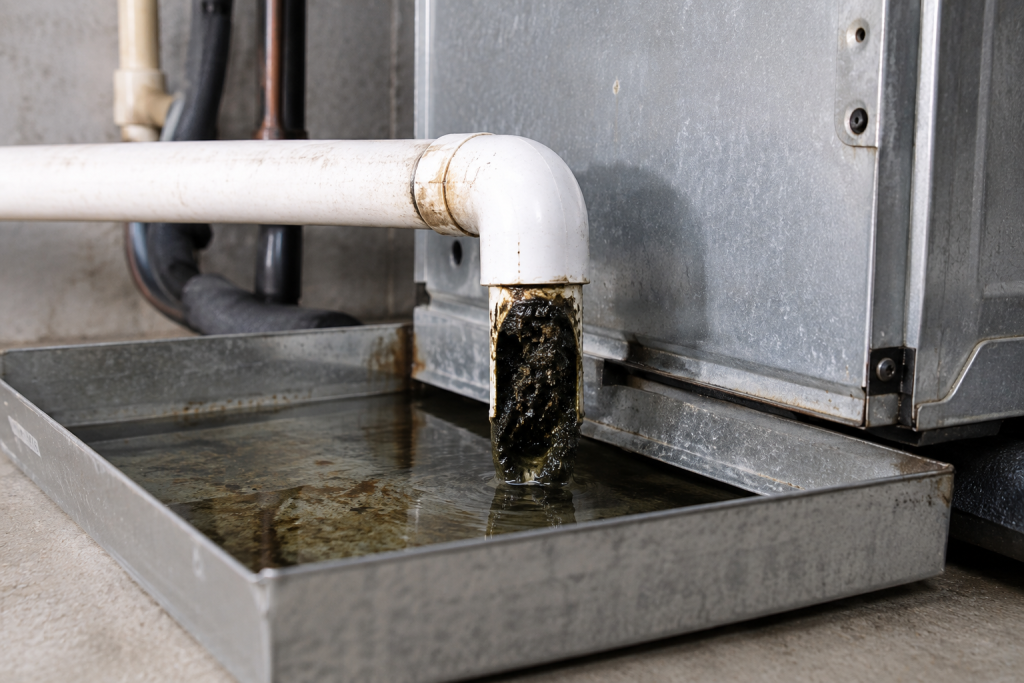
When an AC drain pan is filling with water, checking the condensate line for a blockage is a good first troubleshooting step. A clogged condensate drain line is one of the most common reasons an AC drain pan fills with water.
Over time, the drain system can accumulate:
- Algae
- Slime
- Dust
- Dirt
- Mold or microbial growth
- Debris
Eventually, this buildup can restrict or completely block the line.
The air conditioner continues producing condensation, but the water has nowhere to go. It begins backing up into the drain pan.
A severe blockage can eventually cause the pan to overflow.
Step 1: Turn Off the AC
Turn the HVAC system off before working around the drain pan or condensate line.
If water is already approaching electrical components, shut the system down immediately and consider having an HVAC technician inspect it.
Step 2: Locate the Condensate Drain
Look for a PVC pipe coming from the evaporator coil or air handler.
Many systems have a cleanout or access point near the HVAC equipment.
Step 3: Check the Drain Outlet
Find where the condensate line terminates.
Depending on your home’s HVAC configuration, it may drain outside, into a floor drain, or through another approved drainage arrangement.
If the AC has been operating for a while during humid weather but you don’t see any drainage, a blockage may be present.
Step 4: Clear the Drain Line
A wet/dry vacuum is often one of the easiest ways for a homeowner to attempt to clear a condensate drain clog.
Connect the vacuum to the end of the condensate drain line and create as tight a seal as practical.
Run the vacuum briefly and check whether water and debris are pulled from the line.
If the drain repeatedly clogs or you can’t clear it, have an HVAC technician inspect the system rather than forcing high pressure through the drain piping.
2. Dirty Air Filter
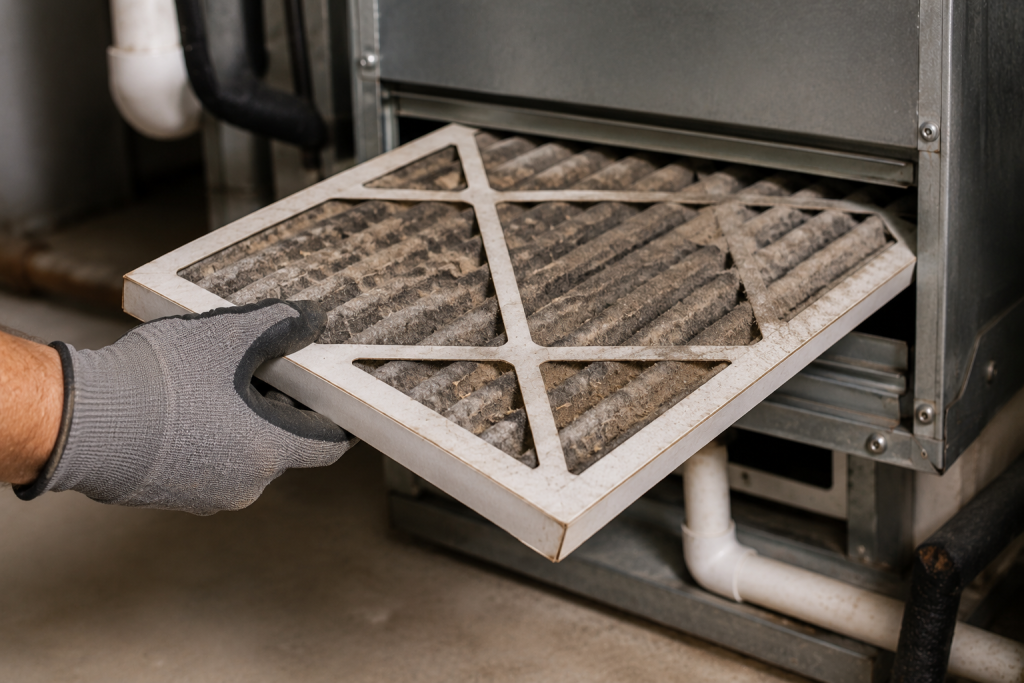
A dirty HVAC filter may seem unrelated to water in the drain pan, but the two problems can be connected.
When an air filter becomes severely restricted, airflow across the evaporator coil decreases.
Insufficient airflow can cause the evaporator coil to become excessively cold and potentially freeze.
Once the ice melts, the resulting water can overwhelm the normal condensate drainage system or reveal an existing drainage problem.
As an Amazon Associate I earn from qualifying purchases.
Check the filter if you haven’t replaced it recently.
If your filter is dirty, you can find replacement HVAC air filters on Amazon. Check the dimensions printed on your current filter and choose a filtration rating recommended for your system. A higher MERV rating isn’t always better if it restricts airflow.
For help choosing the appropriate filter, see our guide to MERV 8 vs. MERV 11 vs. MERV 13 furnace filters.
3. Frozen Evaporator Coil
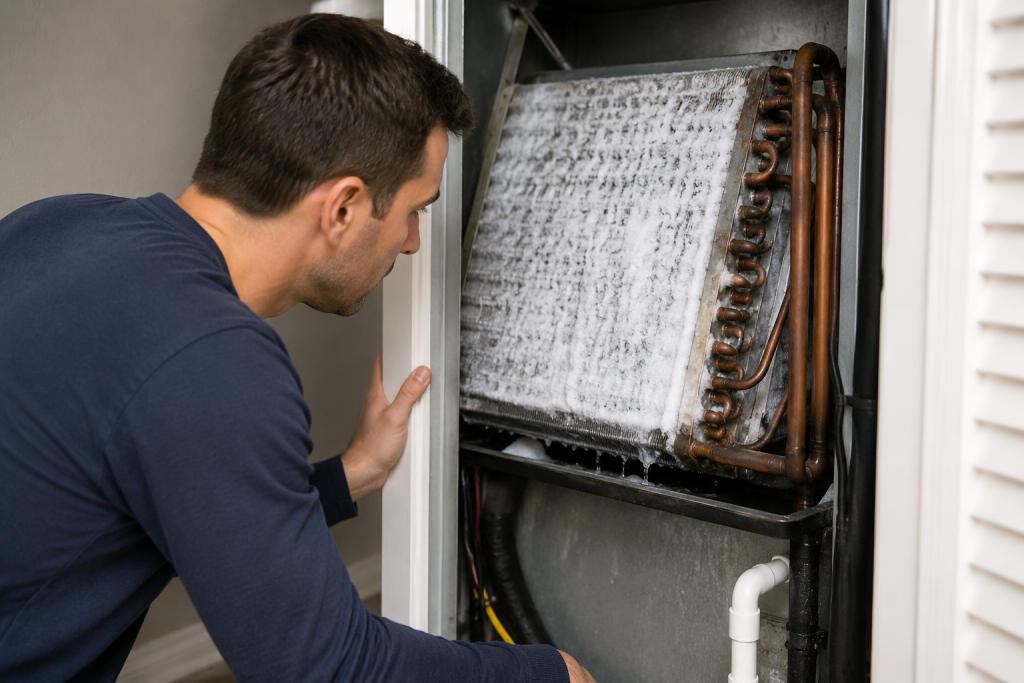
A frozen evaporator coil can produce much more water than usual when the accumulated ice begins melting.
Common reasons an evaporator coil freezes include:
- Restricted airflow
- Dirty air filter
- Blocked return vents
- Dirty evaporator coil
- Blower problems
- Refrigerant problems
If you see ice on the refrigerant lines or evaporator coil, don’t simply keep running the AC.
Turn the cooling system off and allow the ice to thaw.
Because thawing ice can produce a considerable amount of water, monitor the area around the furnace or air handler.
If the coil freezes again after replacing a dirty filter and confirming that vents aren’t blocked, it’s time to call an HVAC technician.
4. Cracked or Rusted Drain Pan
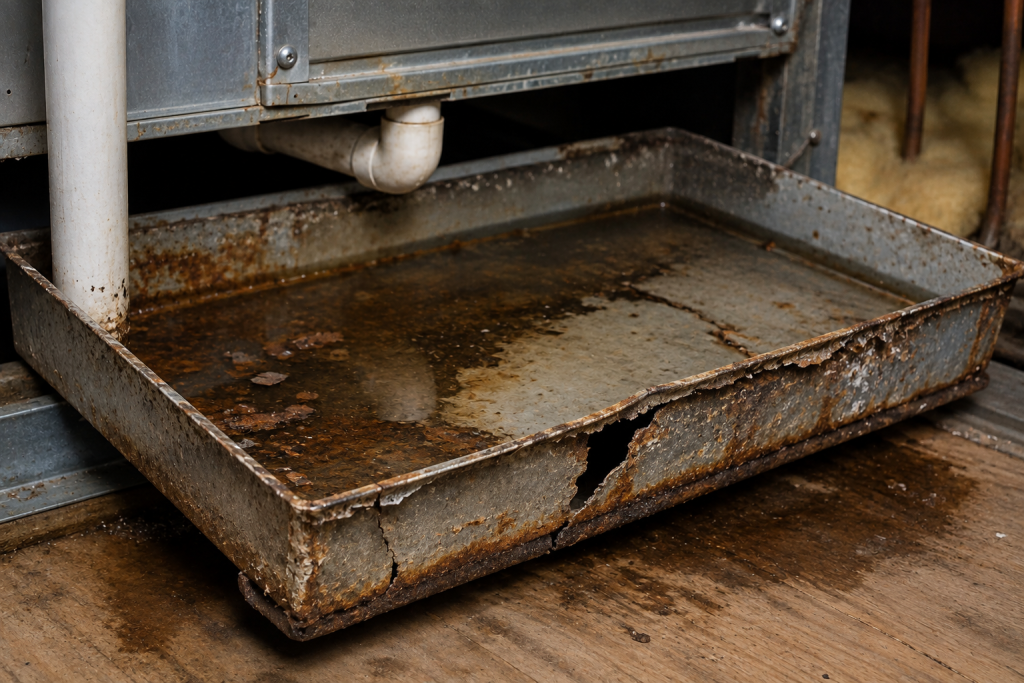
The condensate line isn’t always the problem.
Older metal drain pans can eventually corrode and develop holes.
A cracked or rusted primary drain pan may allow water to escape before it ever reaches the condensate drain.
That water may end up:
- Inside the HVAC cabinet
- In the secondary drain pan
- On the floor
- On surrounding insulation
- On a ceiling below an attic HVAC system
Inspect accessible portions of the drain pan with a flashlight.
If you see significant corrosion, cracking, or obvious leakage, the pan may need to be repaired or replaced.
Replacing a primary pan can require partial disassembly of the evaporator coil assembly, so this is often better left to an HVAC professional.
5. Drain Pan Isn’t Sloped Correctly
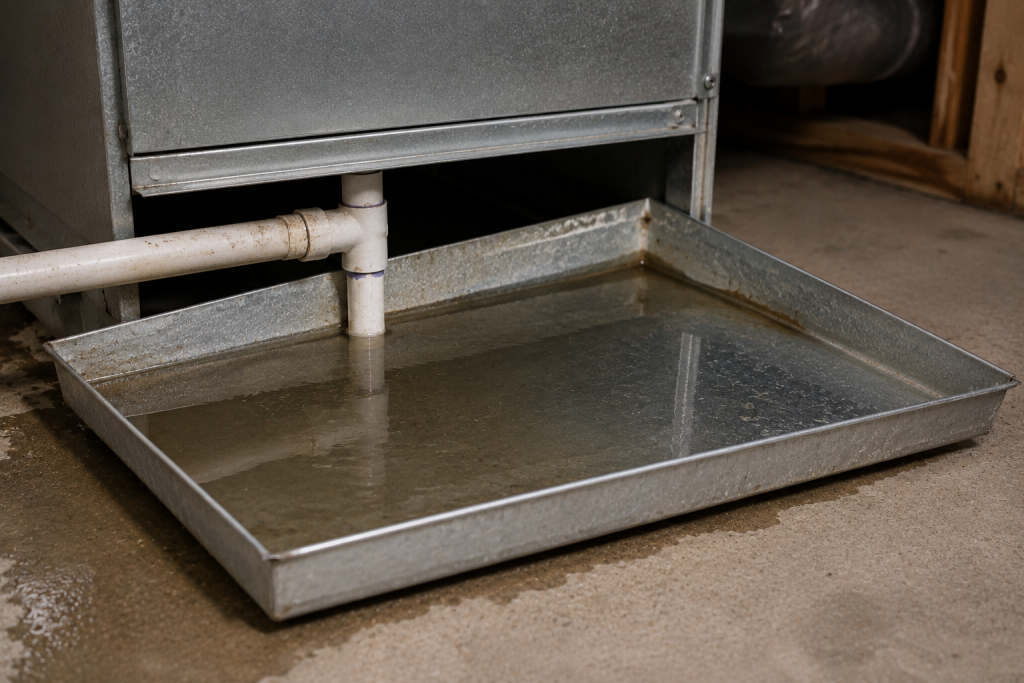
Condensate needs gravity to move toward the drain opening on many HVAC systems.
If the drain pan or air handler isn’t positioned correctly, water can collect in low areas rather than flowing toward the drain.
The U.S. Environmental Protection Agency recommends ensuring that condensate pans drain properly and notes that substantial standing water can indicate a problem requiring attention. You can read more in the EPA’s guidance on HVAC moisture and drain pans.
If the pan has always held water, improper installation or leveling could be contributing to the problem.
6. Clogged Condensate Trap
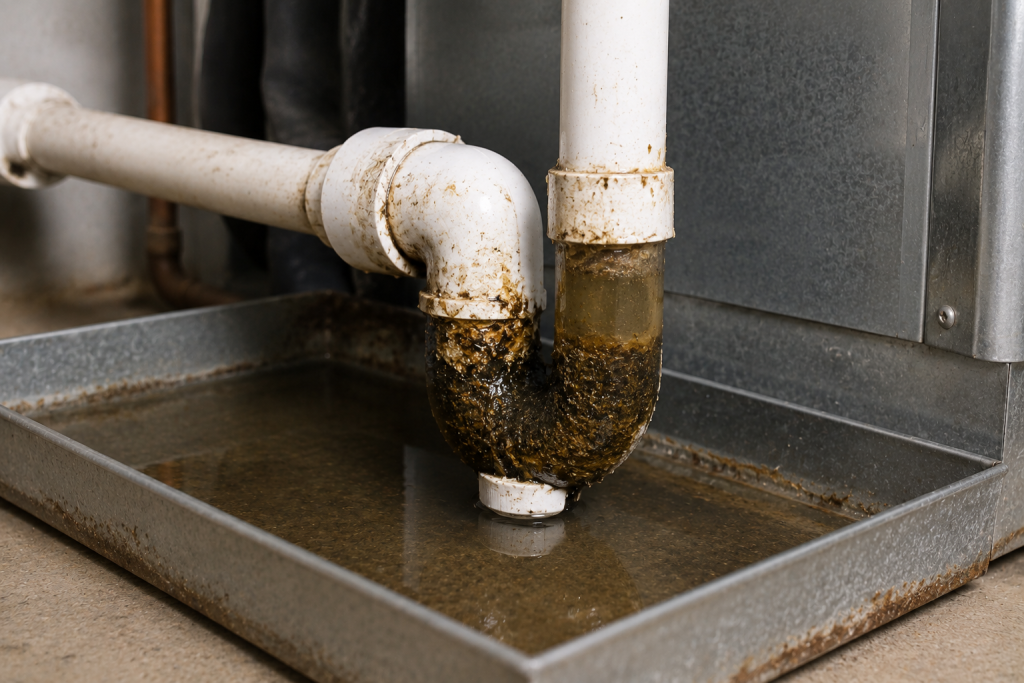
Some HVAC condensate systems include a P-trap or similar trap in the drain line.
The trap itself can become clogged with debris and biological buildup.
In that situation, the rest of the drain line might be relatively clear while water still backs up near the air handler.
If you’re troubleshooting a recurring drainage problem, inspect accessible portions of the trap and nearby drain piping.
7. Failed Condensate Pump
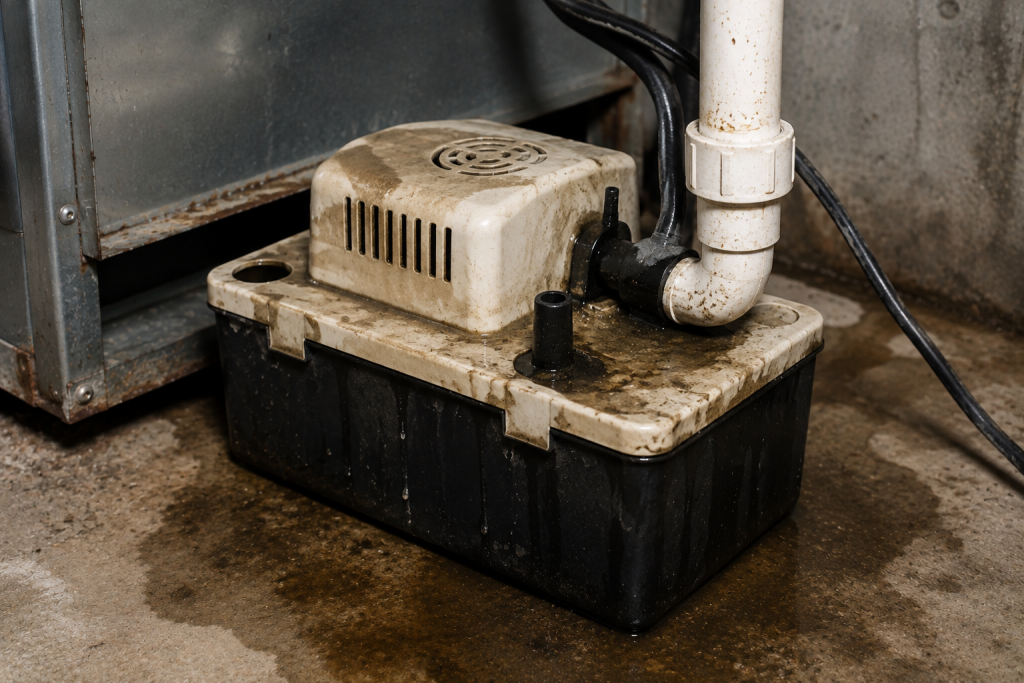
Not every HVAC system can drain condensation using gravity.
Basement systems and other installations may use a small condensate pump to move water to a suitable drain.
If your system has a condensate pump, verify that it’s operating.
A failed pump can cause its reservoir to fill and potentially overflow.
Possible condensate pump problems include:
- Loss of electrical power
- Stuck float
- Clogged tubing
- Failed pump motor
- Blocked discharge line
If the pump isn’t operating when its reservoir fills, it may need cleaning, troubleshooting, or replacement.
8. Excessive Condensation During Humid Weather
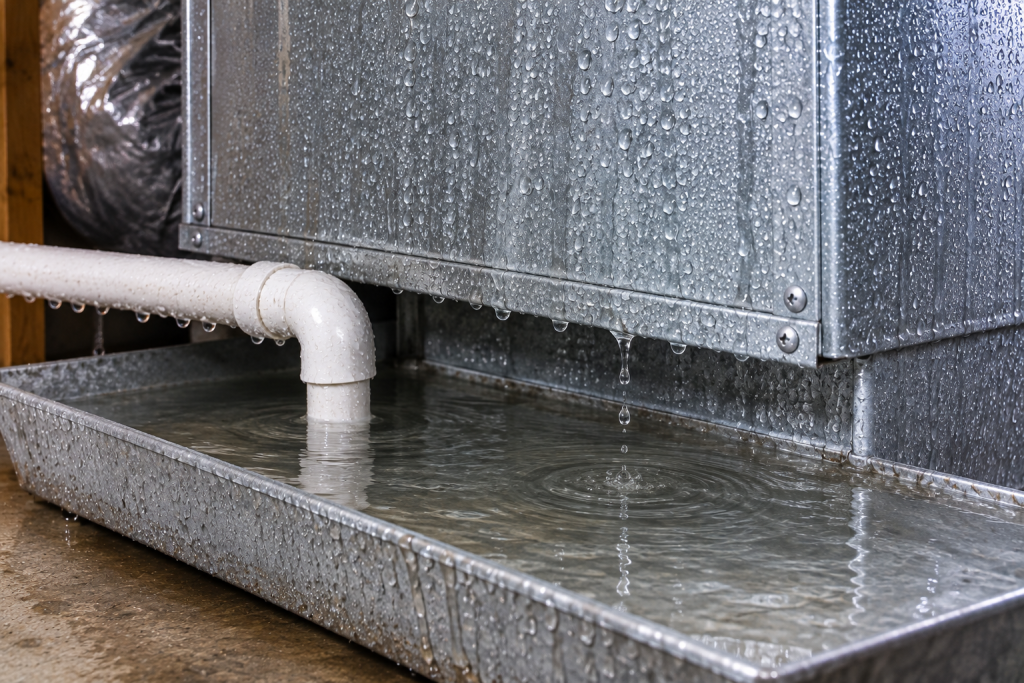
Hot, humid weather can dramatically increase how much condensate your air conditioner produces. An AC drain pan filling with water primarily during extremely humid weather may indicate that a partially restricted drain can’t keep up with the increased condensation.
This doesn’t necessarily mean something is wrong.
However, increased condensate production can expose a partially clogged drain that seemed to work normally during milder weather.
For example, a restricted drain might keep up when the AC produces a small amount of water but back up during a long cooling cycle on a humid afternoon.
High indoor humidity can also contribute to other moisture issues around HVAC equipment. If you’re noticing condensation elsewhere, see our guide on why AC vents sweat and how to stop condensation.
How to Fix an AC Drain Pan Filling With Water
If you’re comfortable performing basic HVAC maintenance, you can work through the problem systematically.
Step 1: Shut Off the HVAC System
Turn the system off before inspecting the drain pan.
If water is near electrical components, shut off power at the appropriate breaker as well.
Step 2: Inspect the Air Filter
Remove the filter and check its condition.
Replace it if it’s heavily coated with dust and debris.
Don’t operate the HVAC system without the proper filter installed.
Step 3: Look for Ice
Inspect accessible refrigerant lines and the evaporator coil area for signs of frost or ice.
If the coil is frozen, don’t continue running the AC in cooling mode.
Let it thaw completely before further troubleshooting.
Step 4: Inspect the Drain Pan
Look for:
- Standing water
- Rust
- Cracks
- Sludge
- Algae
- Debris
- Evidence of previous overflow
Remove accessible standing water if necessary so you can determine whether it returns.
Step 5: Check the Condensate Drain
Inspect the PVC condensate line and cleanout.
If you suspect a blockage, use a wet/dry vacuum at the drain outlet to attempt to remove the clog.
Step 6: Test the Drain
Once the line is clear, you can carefully add a modest amount of clean water through an appropriate condensate drain cleanout, if your system has one.
The water should move freely through the drain.
Don’t pour water into electrical or mechanical portions of the HVAC equipment.
Step 7: Run the AC and Monitor It
After everything is dry and the drain appears clear, restore power and run the AC.
Watch the drain pan and condensate line.
Water should collect from the evaporator coil and leave through the condensate drain without accumulating in the secondary pan.
Should There Be Water in the AC Drain Pan?
This depends on which pan you’re looking at.
The primary drain pan naturally receives condensation while the AC operates. However, it should be designed so that the water drains away rather than leaving substantial standing water.
The secondary drain pan is different.
Under normal operation, an emergency drain pan underneath the HVAC equipment should generally remain dry.
Water appearing in the secondary pan is a warning that you should investigate the primary drainage system.
What Happens If the AC Drain Pan Overflows?
An overflowing AC drain pan can cause surprisingly expensive damage.
Depending on where your HVAC system is installed, overflowing water could damage:
- Drywall
- Ceilings
- Flooring
- Insulation
- Wood framing
- HVAC components
An attic air handler can be particularly concerning because a relatively small leak can damage the ceiling underneath it before you notice the problem.
Many systems have a float switch designed to shut down the AC if water rises too high.
If your air conditioner suddenly stops working and you discover water in the drain pan, check whether a condensate safety switch has been triggered.
Don’t bypass the safety switch simply to make the AC run again. Find and correct the drainage problem first.
Can a Dirty AC Filter Cause Water in the Drain Pan?
Yes, indirectly.
A severely dirty filter can restrict airflow across the evaporator coil. Reduced airflow can contribute to coil freezing.
When that ice eventually melts, the additional water enters the condensate drainage system.
This is one reason regular filter replacement is an important part of HVAC maintenance.
If you’re also experiencing reduced cooling performance, see our guide on why your AC is running but not cooling the house.
How to Prevent Your AC Drain Pan From Filling With Water
Preventive maintenance is much easier than dealing with an overflowing drain pan.
Replace the HVAC Filter Regularly
Inspect your filter periodically and replace it when necessary.
How often you need to replace it depends on filter type, household conditions, pets, HVAC runtime, and other factors.
Inspect the Condensate Drain
Periodically check the condensate line while the AC is operating.
During humid weather, you should generally see evidence that condensation is leaving the system.
Keep the Drain Pan Clean
If the accessible drain pan contains dirt, sludge, or debris, clean it before that material reaches the drain opening.
A battery-powered water leak alarm near your HVAC equipment can provide an audible warning when water reaches its sensor. Follow the placement instructions for the model you choose. It provides an alert rather than correcting the drainage problem or replacing an HVAC overflow shutoff switch.
Schedule HVAC Maintenance
A professional HVAC technician can inspect the evaporator coil, drain pan, condensate drain, blower, refrigerant system, and other components during routine maintenance.
The EPA also recommends checking and inspecting the condensate drain as part of heating and cooling system maintenance because a plugged drain can contribute to water damage and indoor moisture problems.
When to Call an HVAC Technician
Some condensate problems are relatively simple DIY repairs. Others require professional diagnosis.
Consider calling an HVAC technician if:
- The drain pan keeps refilling after you clear the drain
- The evaporator coil repeatedly freezes
- You suspect a refrigerant problem
- The primary drain pan is cracked or rusted
- Water is entering the furnace or electrical components
- The condensate pump isn’t working
- The drain line repeatedly clogs
- You can’t determine where the water is coming from
- Water has damaged the ceiling or surrounding structure
Recurring water in the pan shouldn’t be ignored.
The goal isn’t simply to remove the water. You need to identify why the condensate isn’t draining correctly.
Frequently Asked Questions
Is It Normal for an AC Drain Pan to Have Water in It?
The primary pan collects condensation during normal AC operation, but it should drain properly and shouldn’t normally contain substantial standing water. A secondary or emergency drain pan should generally remain dry during normal operation.
Why Is My AC Drain Pan Full of Water?
A clogged condensate drain is one of the most likely causes. Other possibilities include a frozen evaporator coil, dirty air filter, clogged drain trap, damaged drain pan, failed condensate pump, or improper drainage.
Can I Run My AC With Water in the Drain Pan?
If the secondary drain pan is filling with water or the pan is close to overflowing, it’s safer to turn the AC off until you identify the cause. Continuing to operate the system could result in water damage.
How Do I Unclog an AC Drain Line?
A common homeowner method is to connect a wet/dry vacuum to the outside end of the condensate drain line and use suction to remove the blockage. If the line won’t clear or repeatedly clogs, have an HVAC technician inspect it.
Why Does My AC Drain Pan Keep Filling After I Unclogged the Drain?
The drain may still be partially blocked, but there could also be another problem. Check for a frozen evaporator coil, damaged drain pan, clogged trap, improperly sloped drain, or condensate pump failure.
Should the Secondary AC Drain Pan Be Dry?
Yes, under normal operating conditions, the secondary drain pan should generally be dry. Water in it usually indicates that condensation has escaped from or backed up in the primary drainage system.
Can High Humidity Cause an AC Drain Pan to Fill Faster?
Yes. Higher humidity means your air conditioner has more moisture to remove from the indoor air. This increases condensate production. A partially restricted drain may therefore back up during hot and humid weather even if it seemed to work normally during milder conditions.
Can a Clogged AC Drain Cause the Air Conditioner to Shut Off?
Yes. Many HVAC systems have a float switch or condensate safety switch that shuts down the system when water reaches a certain level. This helps prevent the drain pan from overflowing and causing water damage.
Looking for help with another heating or cooling problem? Browse our complete collection of HVAC repair and troubleshooting guides.
Final Thoughts
An AC drain pan filling with water is usually a sign that condensation isn’t leaving the system as quickly as it should.
Start with the simplest possibilities: check the air filter, look for a frozen evaporator coil, inspect the drain pan, and check the condensate drain for a clog.
If clearing the drain solves the problem and the pan stays dry afterward, you may have caught the issue early.
If the water returns, don’t keep emptying the pan and running the system. A recurring problem can point to a damaged drain pan, drainage installation issue, frozen coil, condensate pump failure, or another HVAC problem that needs professional attention.
Catching the problem early can help prevent a relatively minor condensate issue from turning into damaged drywall, flooring, insulation, or ceilings.