
Last updated: September 20, 2026
By Home Repair Genie
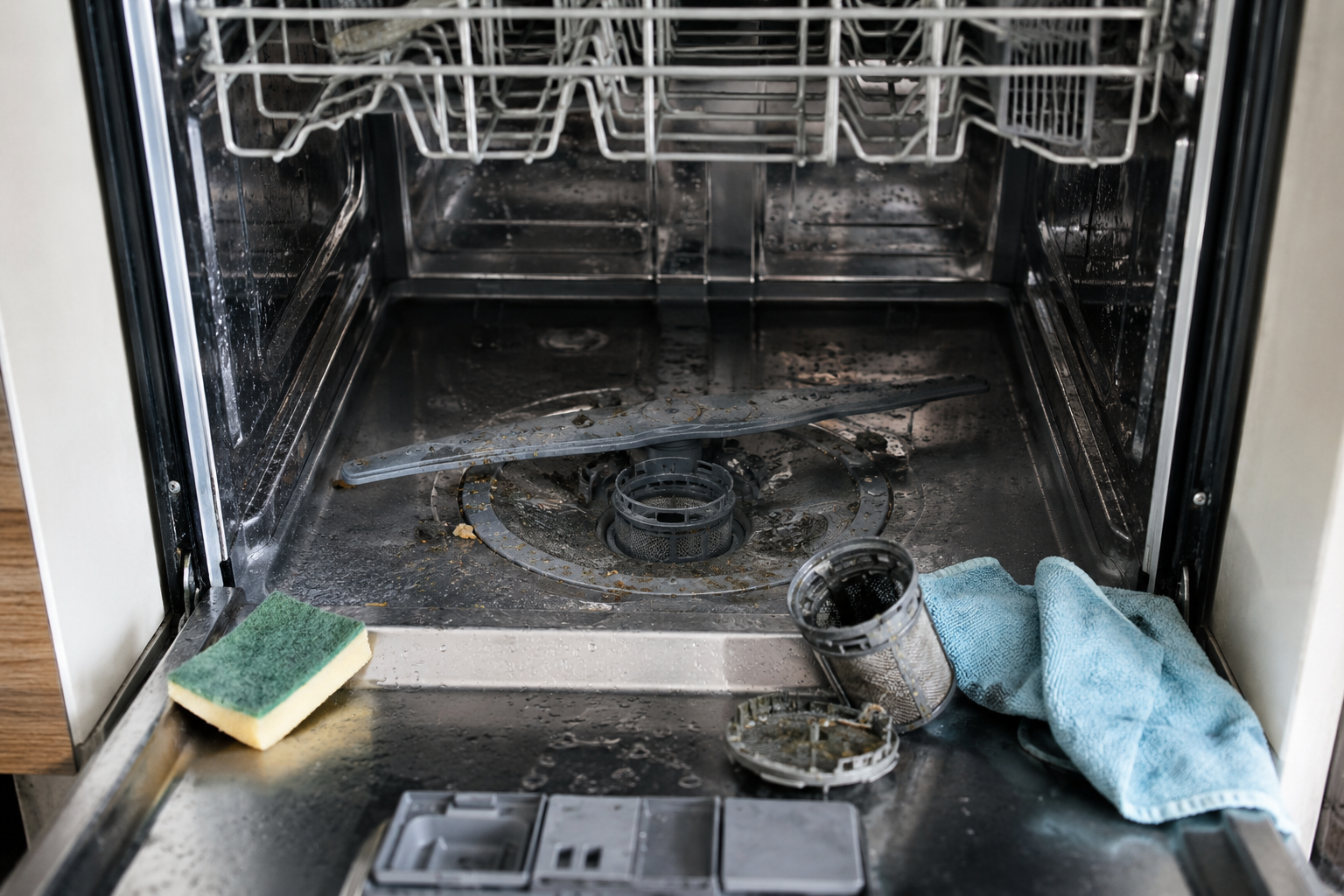
A dishwasher smells bad when food particles, grease, mold, or standing water build up inside the appliance. The good news is that most dishwasher odors can be fixed with a few simple cleaning and maintenance steps.
If your dishwasher smells bad every time you open the door, food buildup, standing water, or grease inside the appliance is usually the cause.
In this step-by-step guide, you’ll learn how to remove bad dishwasher odors and keep your dishwasher smelling fresh again.
Why Does My Dishwasher Smell Bad?
Dishwashers commonly develop odors because of:
- Food debris trapped in the filter
- Grease buildup inside the drain system
- Mold or mildew around the door gasket
- Dirty spray arms
- Standing water in the bottom of the dishwasher
- Clogs connected to the garbage disposal or drain hose
If your dishwasher smells like rotten eggs, mildew, or dirty water, one of these issues is usually the cause.
Tools and Materials You May Need
- Rubber gloves
- Soft sponge or cloth
- Old toothbrush
- White vinegar
- Baking soda
- Dish soap
- Small brush
- Toothpick or small wire
Step 1: Run a Hot Cleaning Cycle
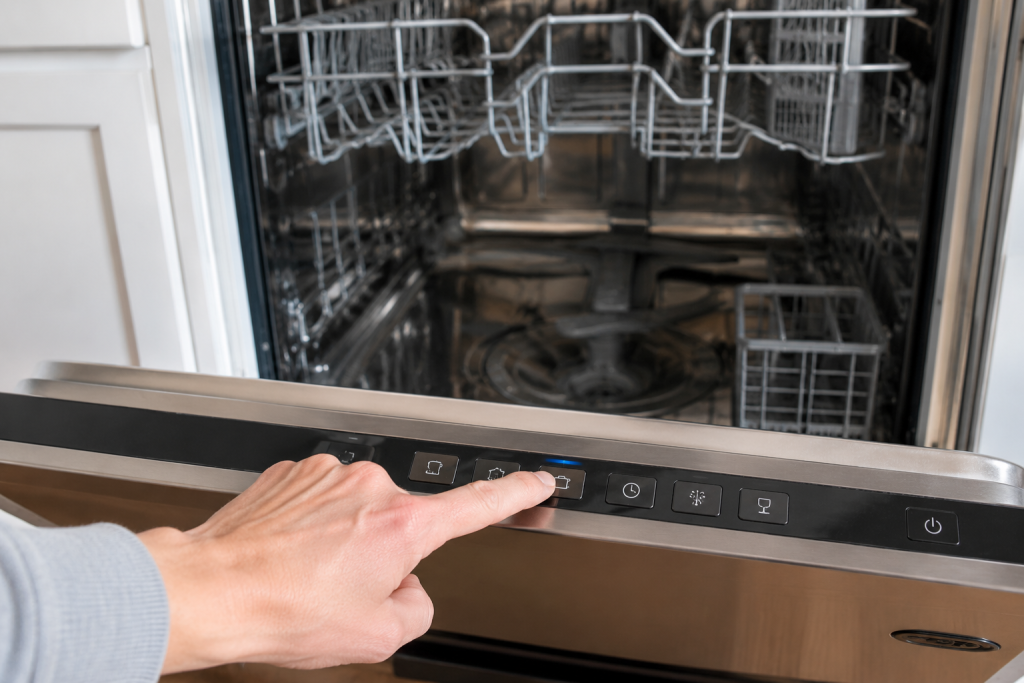
One of the easiest ways to fix a dishwasher that smells bad is to run an empty hot-water cycle.
Start by:
- Emptying the dishwasher completely
- Setting the dishwasher to the hottest cycle available
- Letting the cycle finish completely
Hot water helps loosen grease, soap residue, and odor-causing buildup.
If you notice standing water or drainage problems, you may also want to read our guide on How to Unclog a Drain.
Step 2: Clean the Dishwasher Filter
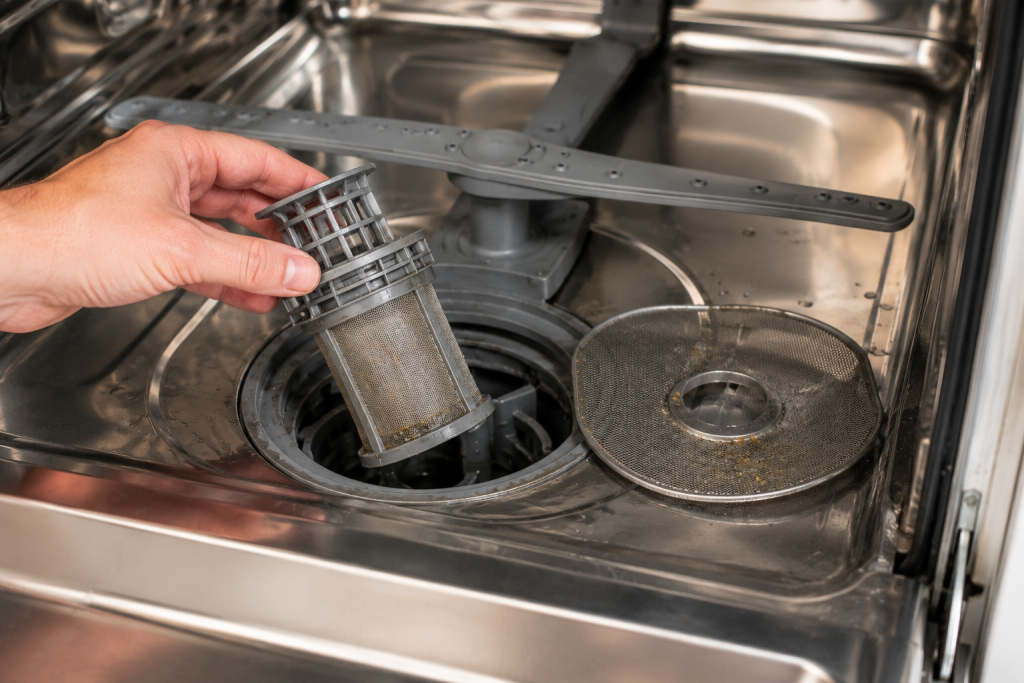
A dirty filter is one of the most common reasons a dishwasher smells bad.
Most dishwasher filters are located at the bottom of the tub.
To clean the filter:
- Remove the lower dish rack
- Twist and lift out the filter
- Rinse it under warm water
- Scrub away grease and food debris with a soft brush
- Reinstall the filter securely
A clogged filter can trap old food particles that create strong odors over time.
Step 3: Check for Food Buildup Around the Drain
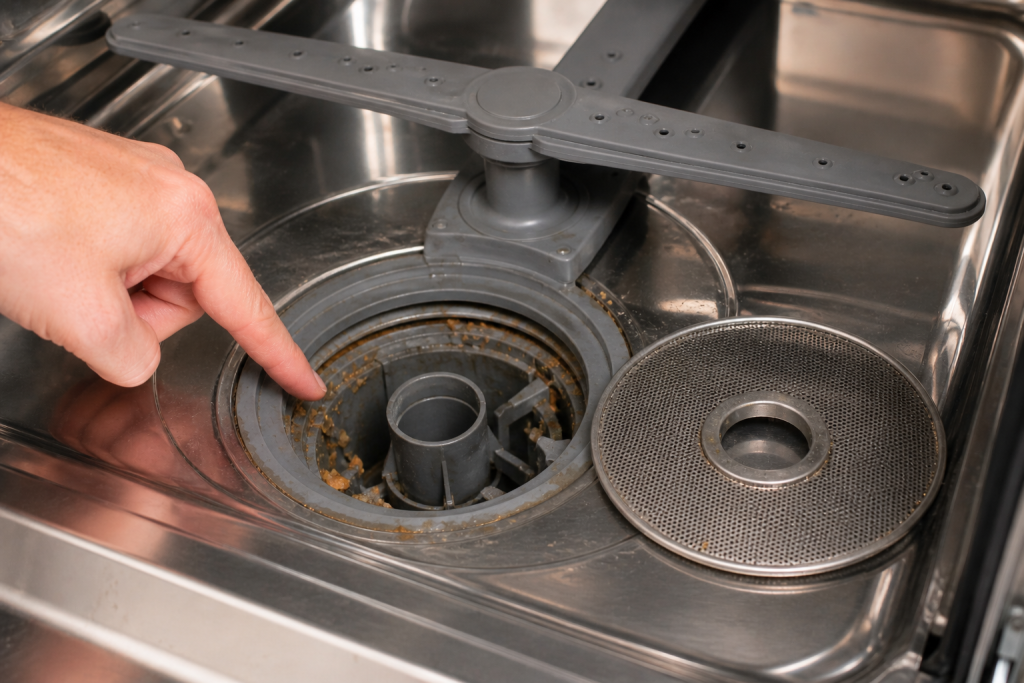
Food scraps can collect near the drain opening at the bottom of the dishwasher.
Carefully inspect the area and remove:
- Food particles
- Grease buildup
- Paper labels
- Broken glass fragments
Wipe the area clean with a damp cloth and mild dish soap.
If your sink or disposal is also having issues, check out Garbage Disposal Humming But Not Working?.
Step 4: Inspect and Clean the Door Gasket
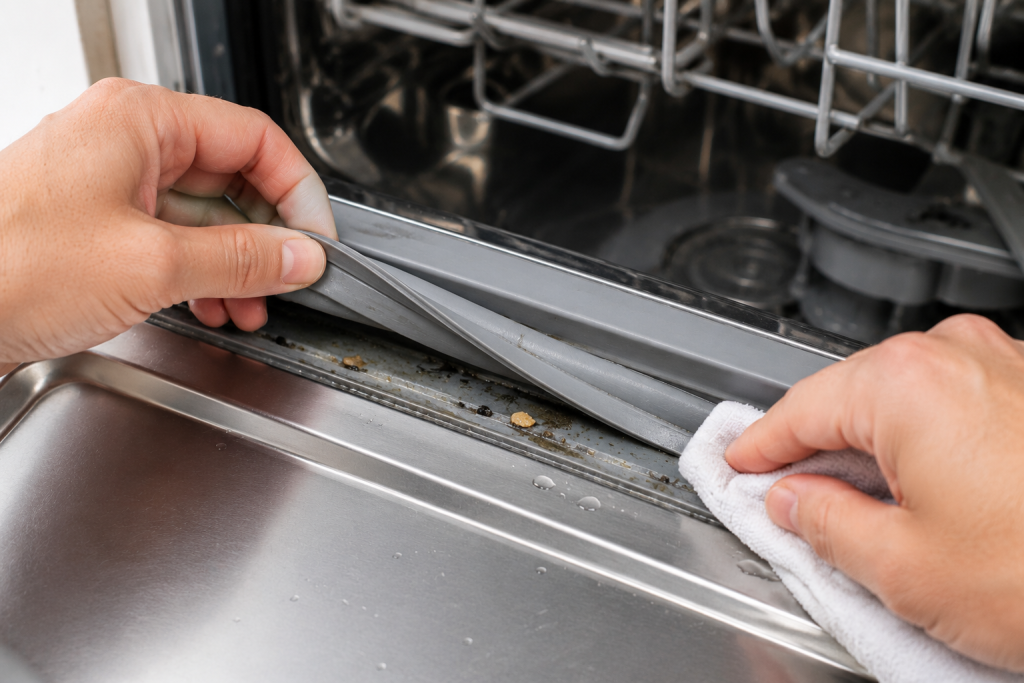
The rubber seal around the dishwasher door can trap moisture, mold, and food residue.
To clean the gasket:
- Mix warm water with a small amount of dish soap
- Wipe the gasket thoroughly with a cloth
- Use a toothbrush for tight corners
- Dry the gasket completely afterward
Mold and mildew commonly grow in this hidden area and can create a musty smell.
Step 5: Clean the Spray Arms
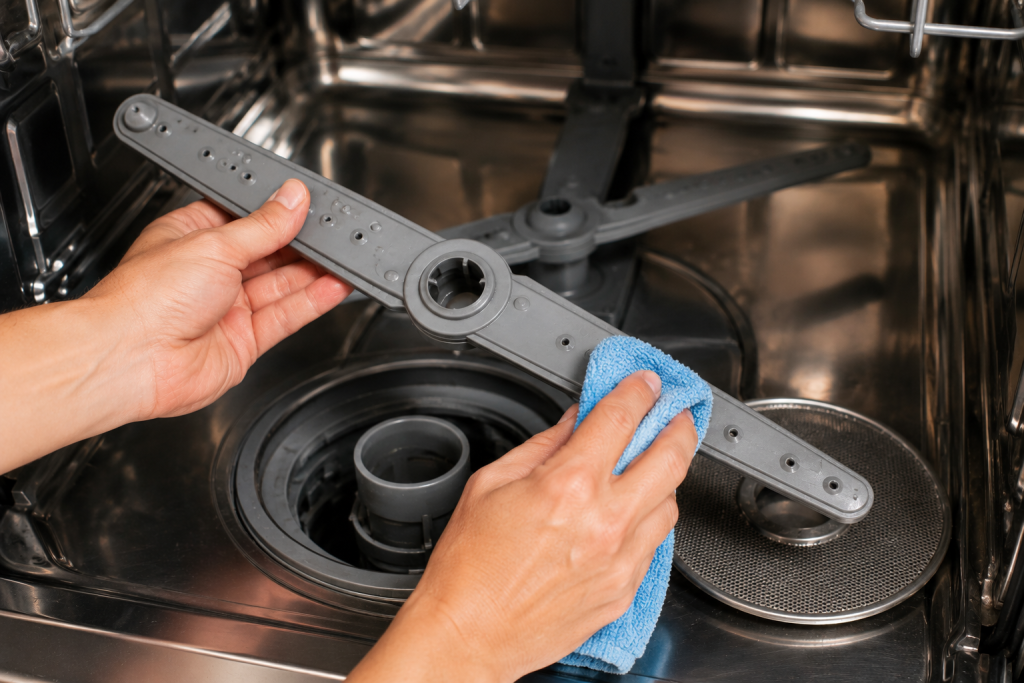
Dirty spray arms can trap food particles and reduce cleaning performance.
Remove the spray arms if your dishwasher model allows it.
Then:
- Rinse them under warm water
- Use a toothpick or wire to clear clogged spray holes
- Scrub away debris and buildup
- Reinstall the spray arms securely
Blocked spray arms can prevent proper water circulation, allowing odors to develop inside the dishwasher.
Step 6: Check the Garbage Disposal Connection
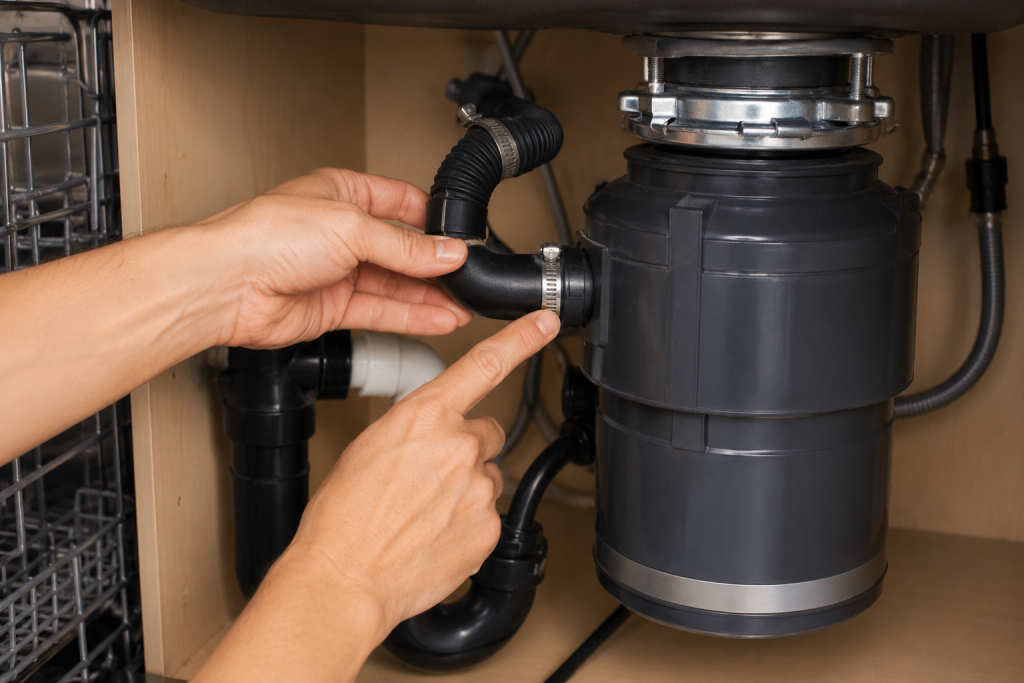
If your dishwasher drain hose connects to a garbage disposal, odors from the disposal can travel into the dishwasher.
Run the garbage disposal with cold water for about 30 seconds.
You should also inspect for:
- Food buildup
- Slow drainage
- Grease accumulation
If your sink has related plumbing problems, our article on Why Your Sink Is Dripping may also help identify other issues.
Step 7: Use Vinegar and Baking Soda to Remove Odors
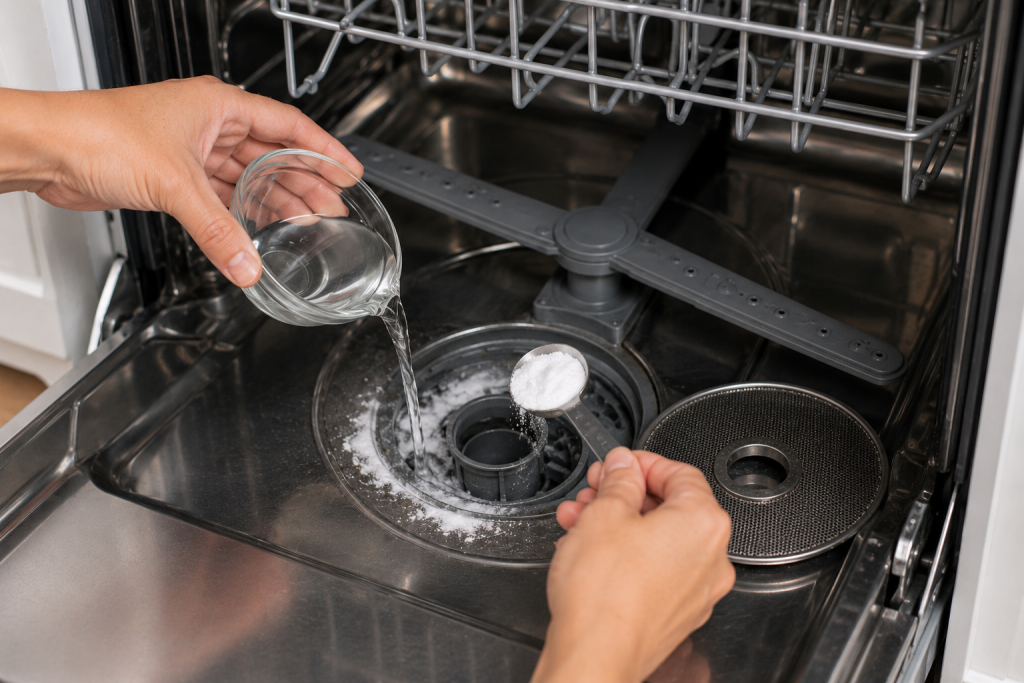
A vinegar and baking soda treatment can help eliminate lingering dishwasher odors naturally.
To do this:
- Place a dishwasher-safe bowl filled with white vinegar on the top rack
- Run a hot cycle
- After the cycle finishes, sprinkle one cup of baking soda across the bottom
- Run a short hot-water cycle
This combination helps neutralize odors and remove grease buildup safely.
For additional appliance cleaning and maintenance tips, the EPA Indoor Air Quality Guide provides helpful information about keeping household appliances clean and odor-free.
When to Call a Professional
You may need professional help if:
- The smell keeps returning quickly
- The dishwasher is not draining properly
- You notice leaking water
- There is visible mold inside inaccessible areas
- Sewer odors are coming from the dishwasher
Persistent odors can sometimes indicate plumbing or drain line problems that require repair.
How to Prevent Dishwasher Odors
To keep your dishwasher smelling fresh:
- Clean the filter regularly
- Scrape food off dishes before loading
- Run hot-water cycles weekly
- Leave the door slightly open after cycles
- Clean the gasket monthly
- Use dishwasher cleaner occasionally
Regular maintenance can prevent problems where your dishwasher smells bad after every wash cycle.
Frequently Asked Questions
Why does my dishwasher smell like rotten eggs?
A rotten egg smell is often caused by food buildup, standing water, bacteria, or a dirty drain connection.
Can vinegar damage a dishwasher?
Occasional vinegar cleaning is generally safe for most dishwashers, but excessive use may eventually affect certain rubber components.
How often should I clean my dishwasher filter?
Most homeowners should clean the dishwasher filter at least once per month.
Why does my dishwasher smell worse after running?
Heat and moisture can intensify odors caused by trapped food particles or dirty filters.
Can a garbage disposal cause dishwasher odors?
Yes. A dirty or clogged garbage disposal can send bad smells back into the dishwasher drain hose.
Looking for help with another appliance problem? Browse our complete collection of appliance repair guides and error-code fixes.
Final Thoughts
If your dishwasher smells bad, the problem is usually caused by trapped food, grease, or moisture buildup. Fortunately, most odors can be eliminated with a few simple cleaning steps.
By cleaning the filter, spray arms, drain area, and door gasket regularly, you can keep your dishwasher smelling fresh and running efficiently.