
Last updated: October 11, 2026
By Home Repair Genie
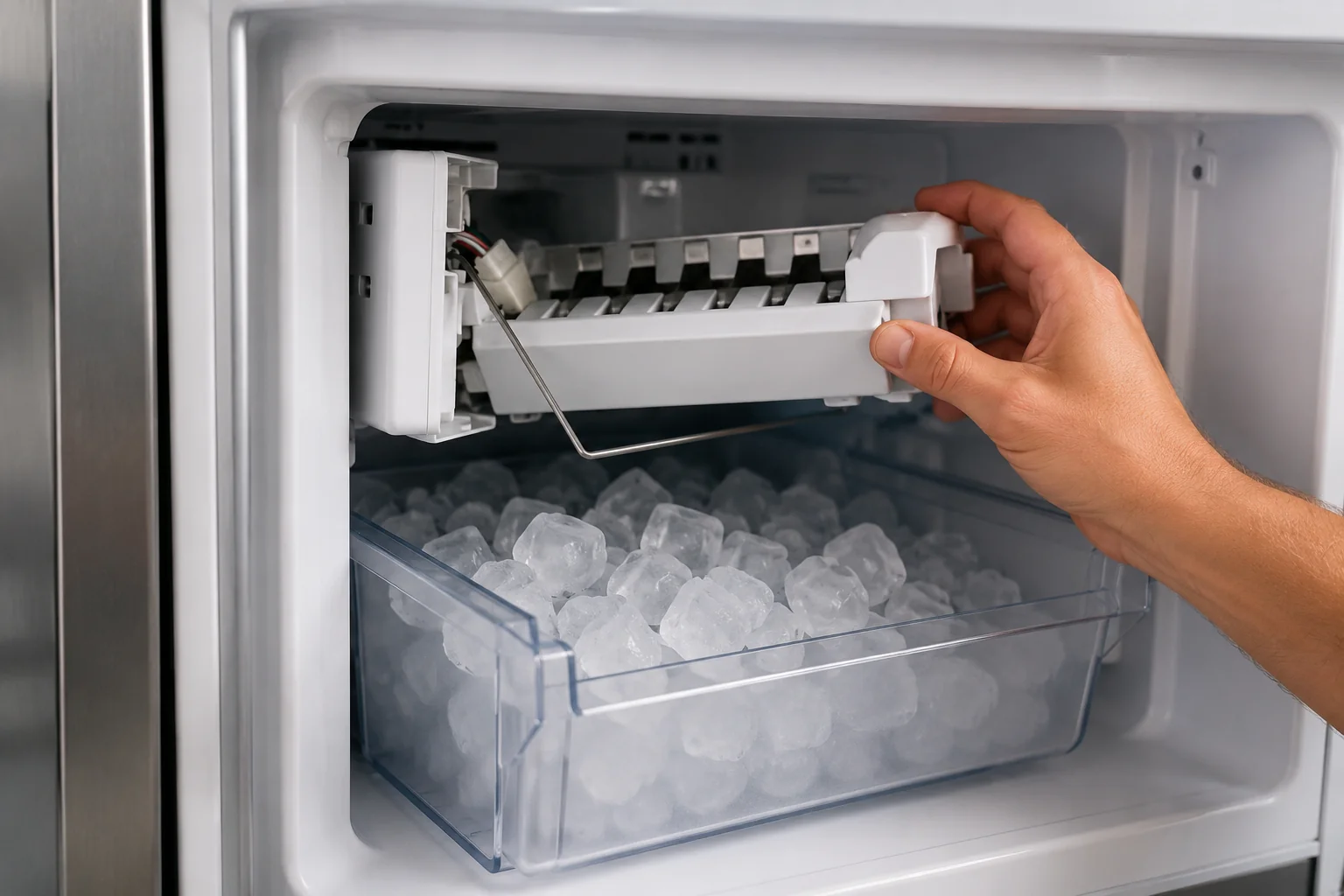
A refrigerator ice maker not working can be frustrating, especially during hot weather or when entertaining guests. In many cases, the problem is caused by simple issues like a clogged water line, incorrect freezer temperature, or a jammed ice maker arm.
The good news is that most ice maker problems can be fixed without calling an appliance repair technician.
In this guide, you’ll learn the most common reasons a refrigerator ice maker is not working and the 7 easy fixes that actually work.
Why Is Your Refrigerator Ice Maker Not Working?
A refrigerator ice maker not working is commonly caused by:
- Frozen or clogged water line
- Incorrect freezer temperature
- Jammed ice maker arm
- Dirty water filter
- Water supply problems
- Ice buildup inside the mechanism
- Faulty ice maker components
Many of these problems can be diagnosed and fixed in less than an hour.
Tools and Supplies You May Need
As an Amazon Associate I earn from qualifying purchases.
- Towels
- Flashlight
- Screwdriver
- Warm water
- Replacement water filter
- Small brush or cloth
Step 1: Check the Freezer Temperature
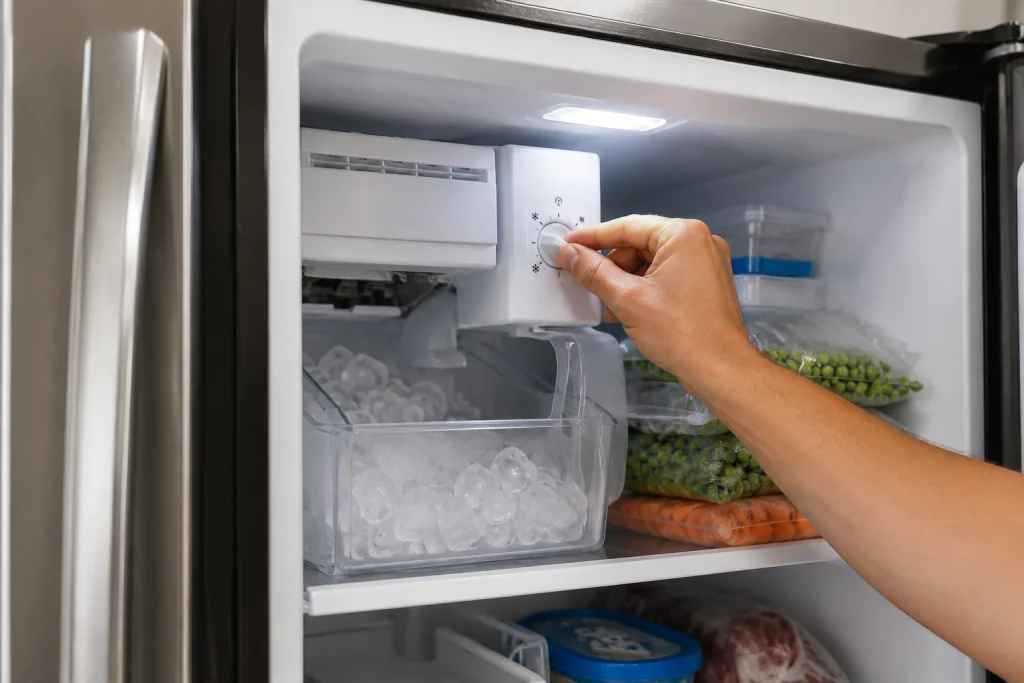
Ice makers require proper freezer temperatures to operate correctly.
How to Fix It
- Check the freezer temperature setting.
- Make sure the freezer is set between 0°F and 5°F.
- Avoid overloading the freezer with food.
- Allow several hours for temperature adjustments to stabilize.
If the freezer is too warm, the ice maker may stop producing ice completely.
The temperature setting does not always reflect the actual temperature inside the freezer. Use a refrigerator/freezer thermometer to check the temperature before assuming the ice maker has failed.
For additional cooling troubleshooting, read Refrigerator Leaking Water? 7 Easy Fixes That Actually Work.
Step 2: Inspect the Ice Maker Shut-Off Arm
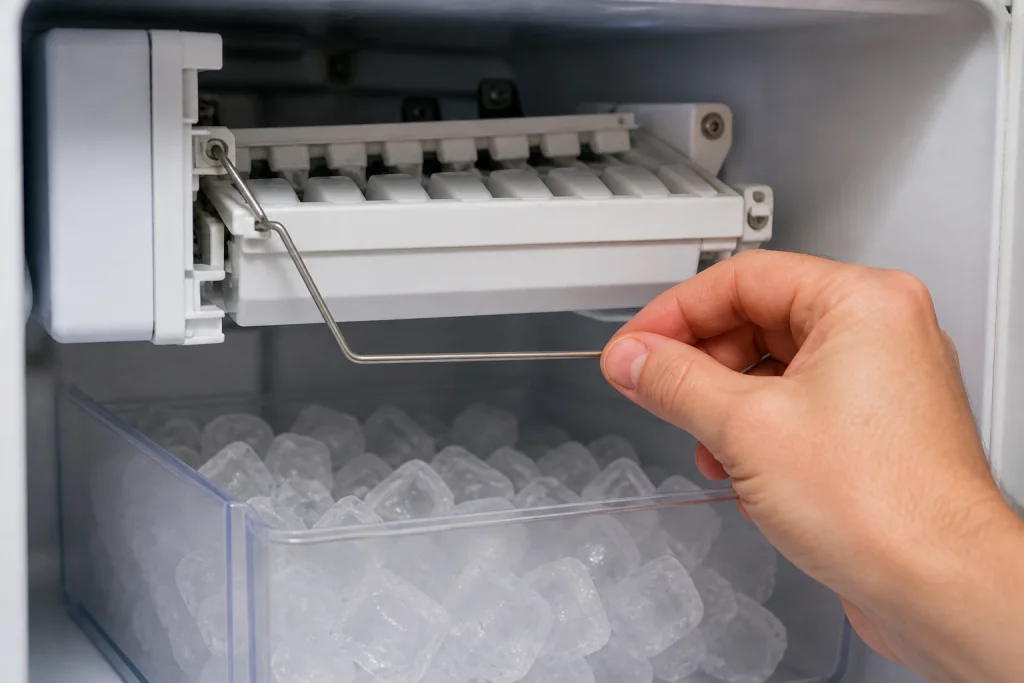
Most traditional ice makers have a metal or plastic shut-off arm that stops ice production when raised.
How to Fix It
- Locate the shut-off arm inside the ice maker.
- Make sure the arm is in the downward position.
- Remove any ice blocking its movement.
- Test the ice maker again after lowering the arm.
A stuck shut-off arm is one of the simplest refrigerator ice maker problems to fix.
Step 3: Check the Refrigerator Water Supply Line
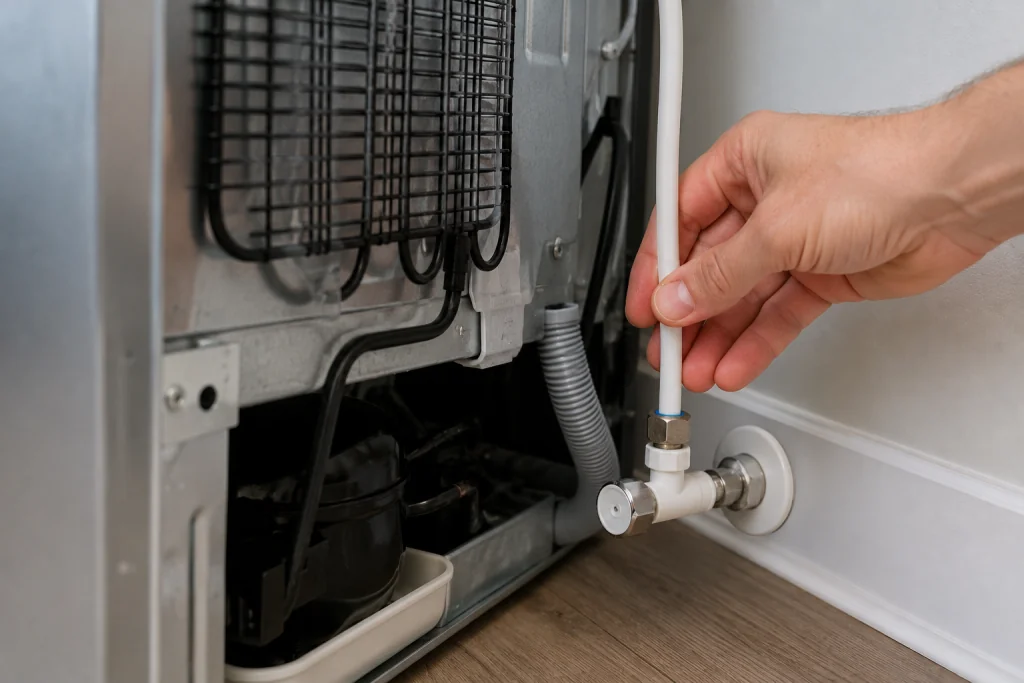
A blocked or disconnected water line can stop the ice maker from filling properly.
How to Fix It
- Pull the refrigerator away from the wall carefully.
- Inspect the water line for kinks or damage.
- Verify the water supply valve is fully open.
- Tighten loose fittings if necessary.
Low water flow can prevent the ice maker from cycling normally. In many homes, a refrigerator ice maker not working is caused by restricted water flow through the supply line.
If the supply line is damaged or remains kinked, shut off the refrigerator’s water supply before replacing it with a compatible refrigerator water supply line. Check the required fittings, length, and manufacturer’s installation instructions before ordering.
You may also want to read Refrigerator Leaking Water? 7 Easy Fixes That Actually Work if you notice water problems around the appliance.
Step 4: Replace the Water Filter
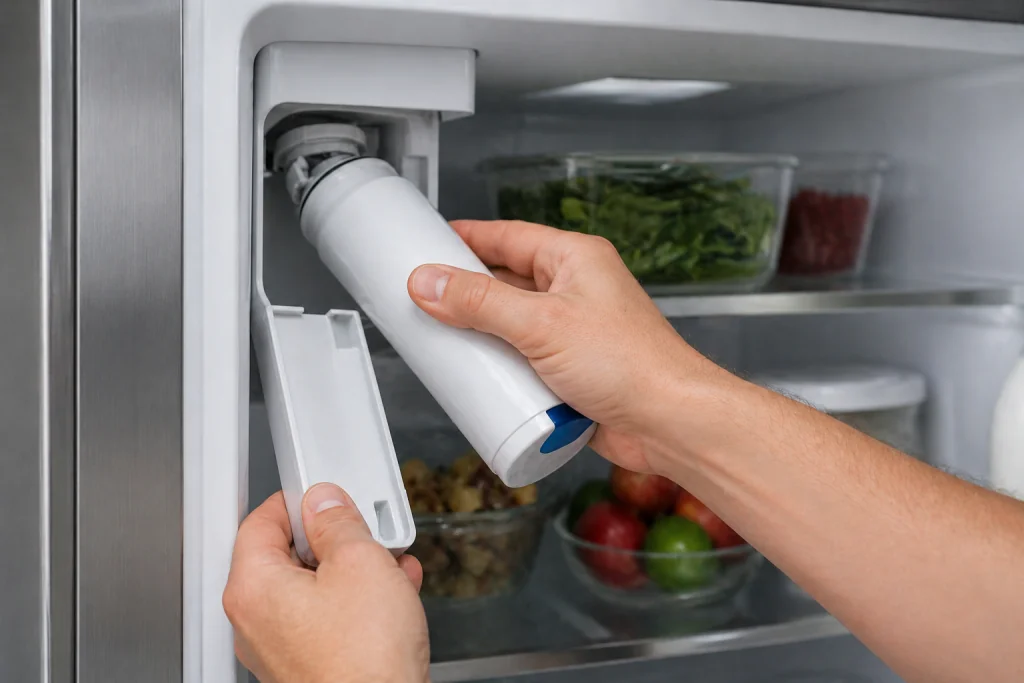
A clogged refrigerator water filter can reduce water flow to the ice maker.
How to Fix It
- Locate the refrigerator water filter.
- Remove the old filter carefully.
- Install the correct replacement filter.
- Flush water through the dispenser if applicable.
- Allow several hours for ice production to resume.
Many manufacturers recommend replacing refrigerator water filters every 6 months.
If the filter is overdue for replacement or water flow has slowed, install a replacement refrigerator water filter that matches your refrigerator model and the manufacturer’s specified filter number.
Step 5: Remove Ice Buildup Inside the Ice Maker
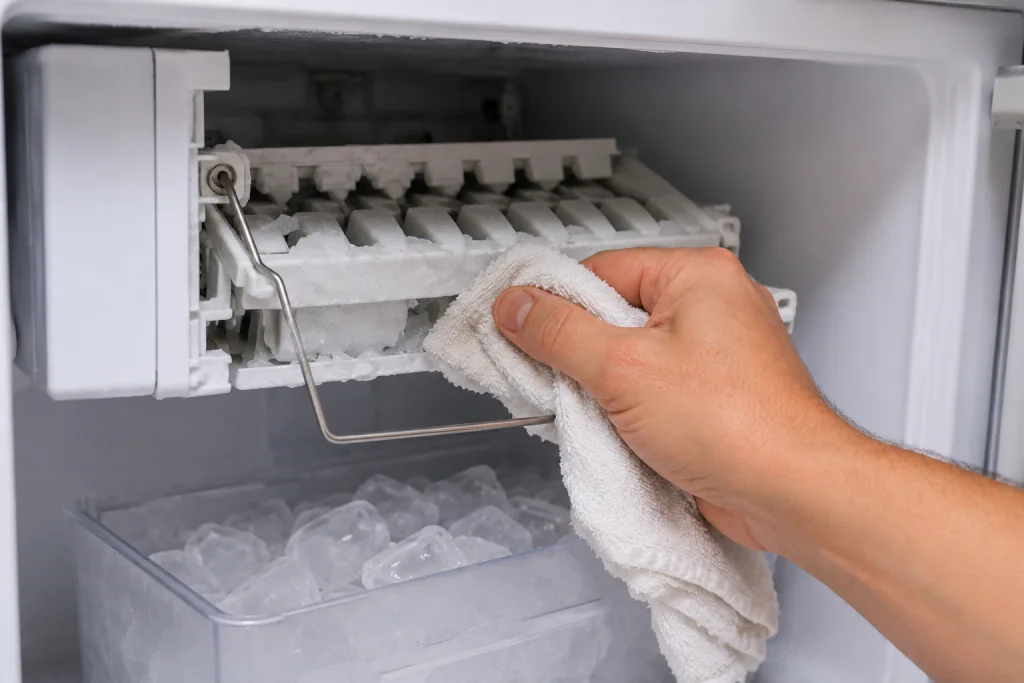
Ice buildup is another common reason for a refrigerator ice maker not working properly.
How to Fix It
- Turn off the ice maker temporarily.
- Remove excess ice carefully.
- Use warm water to melt stubborn ice.
- Dry the area thoroughly before restarting the ice maker.
Avoid using sharp tools that could damage plastic components.
For appliance maintenance advice, the experts at This Old House provide helpful refrigerator troubleshooting guidance.
Step 6: Reset the Ice Maker
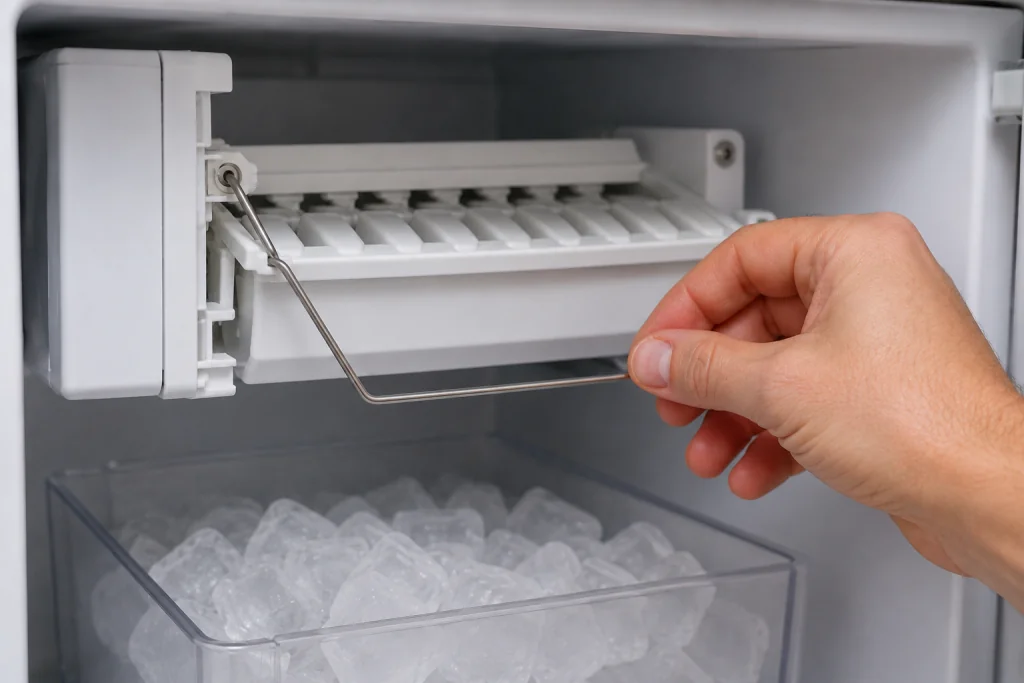
Some refrigerator ice makers have a reset button that restores normal operation.
How to Fix It
- Locate the reset button on the ice maker assembly.
- Press and hold the button according to manufacturer instructions.
- Listen for movement or cycling sounds.
- Wait several hours for new ice production.
A reset often solves minor electronic glitches.
Step 7: Check for a Failed Ice Maker Assembly
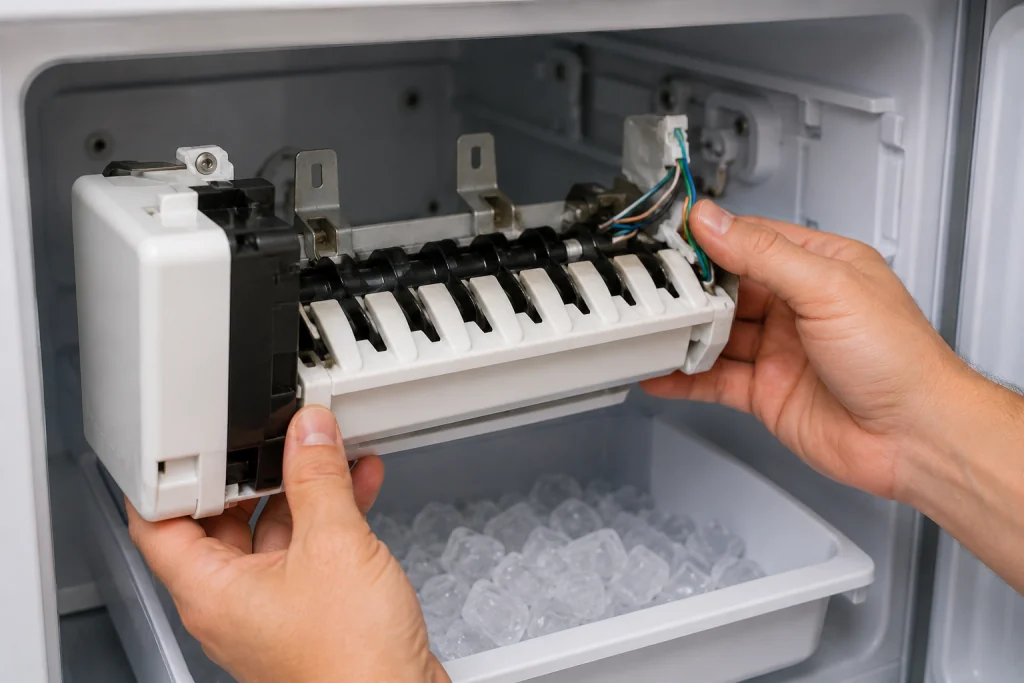
If the refrigerator ice maker still is not working, internal components may have failed.
Signs of a Bad Ice Maker
- No movement during cycles
- Loud clicking noises
- Water enters but no ice forms
- Ice maker completely unresponsive
- Visible damage or corrosion
What to Do
Replacement may be necessary if the motor, control board, or internal switches fail.
When to Call a Professional
Contact an appliance repair technician if:
- The ice maker still will not work after troubleshooting
- Water leaks develop around the refrigerator
- Electrical problems appear
- The freezer no longer stays cold
- You suspect control board failure
Professional repairs may be required for advanced electrical or sealed-system problems.
How to Prevent Ice Maker Problems
To help prevent future refrigerator ice maker problems:
- Replace water filters regularly
- Keep freezer temperatures consistent
- Avoid blocking freezer airflow
- Inspect water lines periodically
- Clean ice buildup early
Routine maintenance can extend the life of your refrigerator and ice maker.
Frequently Asked Questions
Why is my refrigerator ice maker not making ice?
The most common causes are clogged water lines, warm freezer temperatures, frozen components, or dirty water filters.
How long does it take for an ice maker to start working again?
Most ice makers begin producing ice within several hours after fixing the problem, though full production may take up to 24 hours.
Can a water filter stop the ice maker from working?
Yes. A clogged water filter can reduce water flow enough to stop ice production.
Should I turn off the ice maker if it stops working?
Yes. Turning it off temporarily can help prevent damage while troubleshooting.
Looking for help with another appliance problem? Browse our complete collection of appliance repair guides and error-code fixes.
Final Thoughts
A refrigerator ice maker not working is often caused by simple maintenance issues homeowners can fix themselves. In many cases, checking the water line, replacing the filter, or resetting the ice maker solves the problem quickly.
By following these 7 easy fixes, you can often restore ice production without an expensive repair visit.