
Last updated: September 20, 2026
By Home Repair Genie
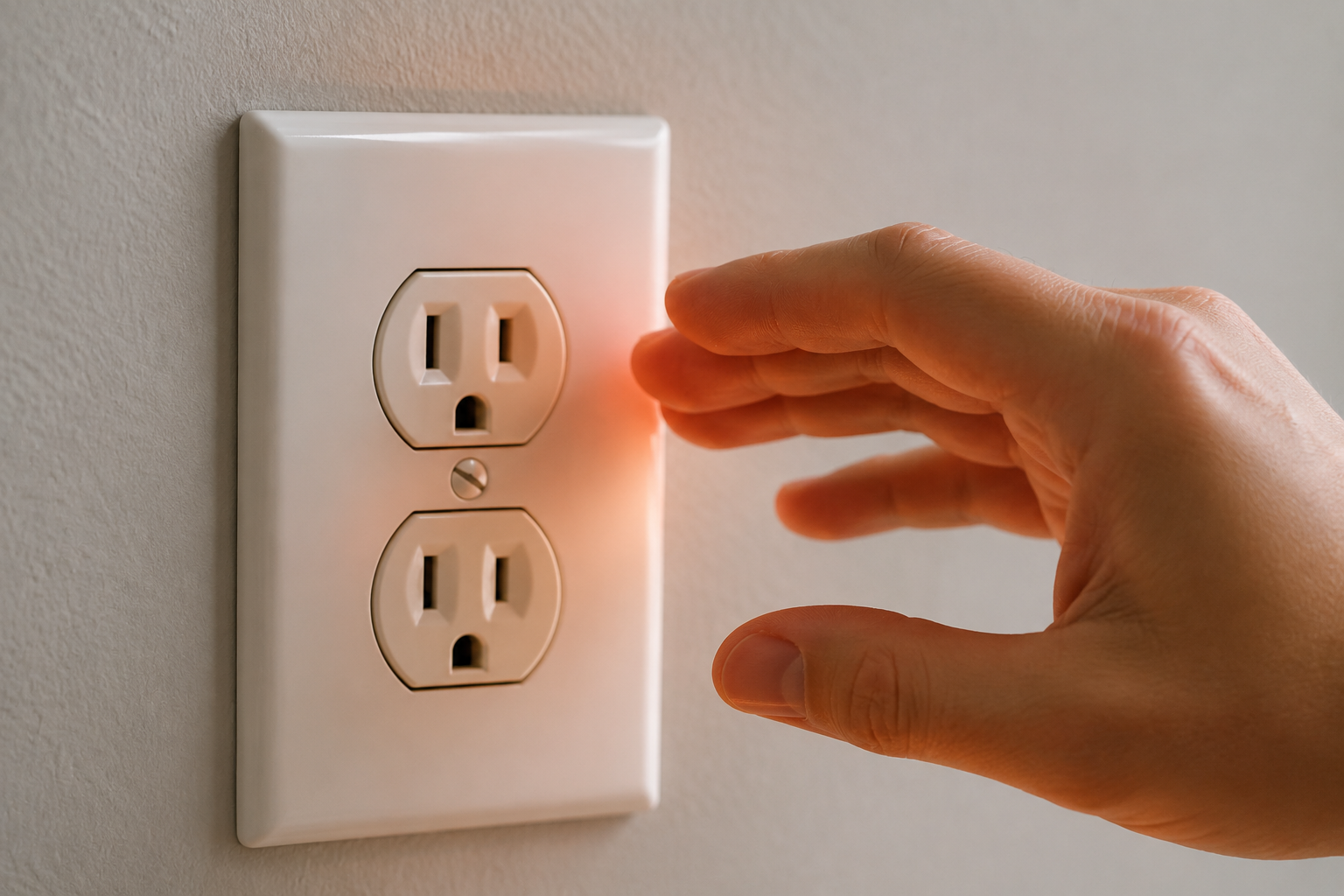
An outlet that feels warm to the touch can be alarming. While a slight amount of warmth may be normal when powering large devices, excessive heat could signal an overloaded circuit, loose wiring, or a potentially dangerous electrical issue.
Ignoring a warm outlet can increase the risk of damaged wiring, melted components, or even electrical fires.
In this guide, you’ll learn how to safely troubleshoot an outlet warm to touch problem using simple step-by-step fixes.
Is It Normal for an Outlet to Feel Warm?
A small amount of warmth is sometimes normal when using high-power appliances like:
- Space heaters
- Hair dryers
- Microwaves
- Air fryers
- Vacuum cleaners
However, an outlet should never feel:
- Hot
- Burning
- Discolored
- Loose
- Sparking
- Smelly
If any of these symptoms occur, stop using the outlet immediately.
Tools You May Need
- Flashlight
- Screwdriver
- Non-contact voltage tester
- Replacement outlet
- Electrical tape
- Wire strippers
- Circuit breaker labels
Step 1: Unplug Everything From the Outlet
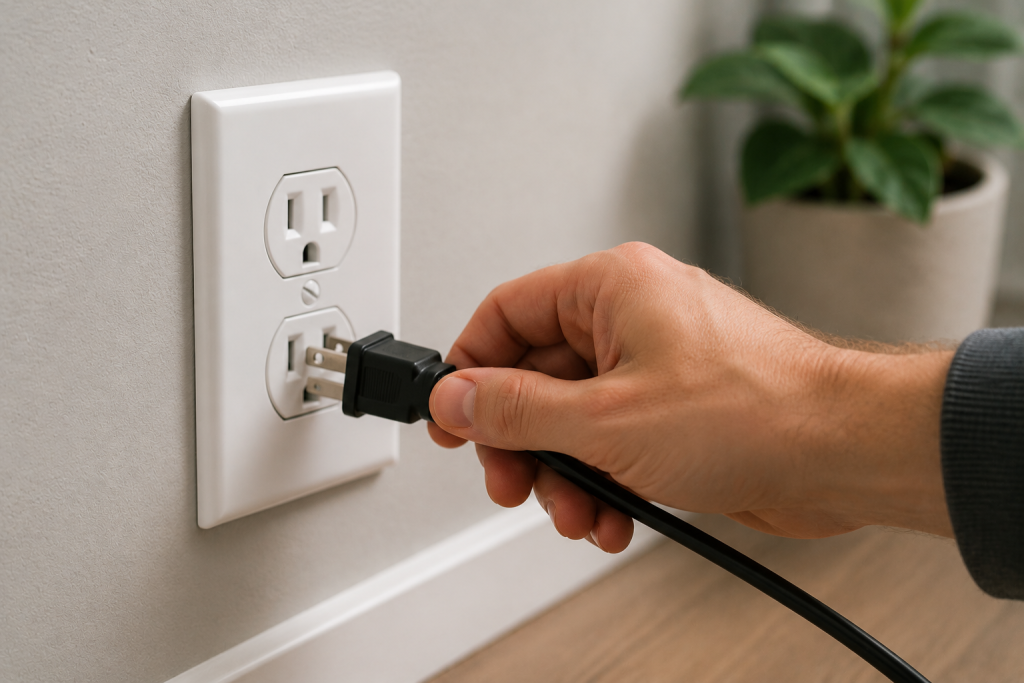
The first step is removing all devices connected to the outlet.
Some appliances draw significant electrical current and can temporarily warm the outlet during operation.
After unplugging everything, wait 15 to 30 minutes and check whether the outlet cools down.
If the outlet remains warm even with no devices plugged in, there may be an internal wiring problem.
If your outlet has stopped working completely, read our guide on How to Fix an Outlet That’s Not Working.
Step 2: Check for an Overloaded Circuit
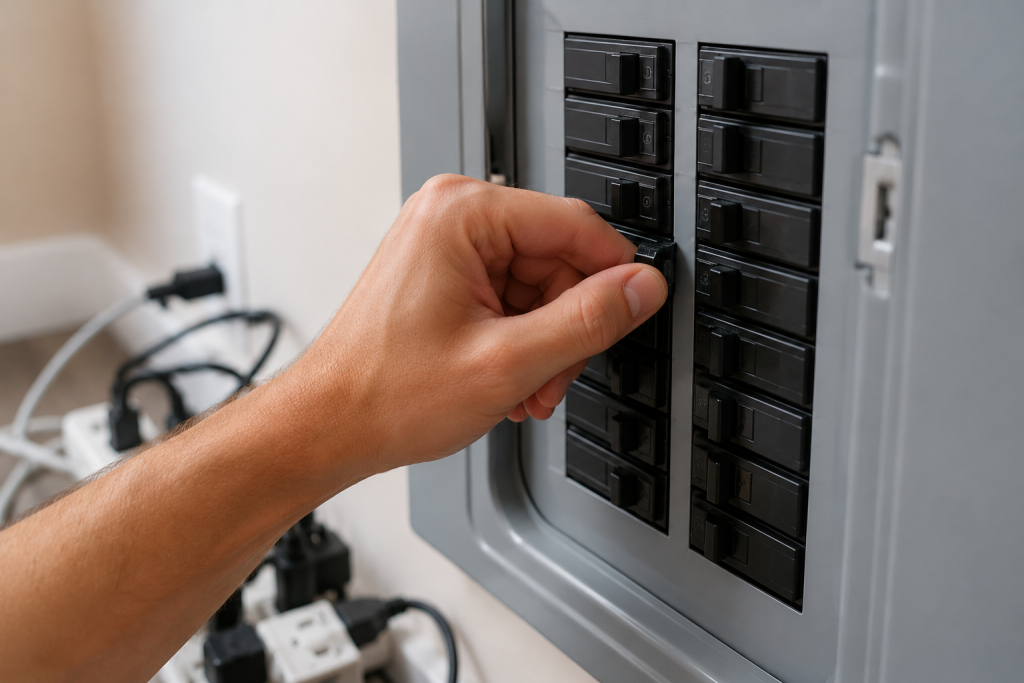
Too many devices running on the same circuit can overload the wiring and generate heat.
Common signs of overload include:
- Flickering lights
- Frequently tripped breakers
- Buzzing sounds
- Warm outlets or switches
Try moving large appliances to different outlets on separate circuits.
Avoid using extension cords or power strips for high-wattage devices whenever possible.
Step 3: Inspect the Outlet for Damage
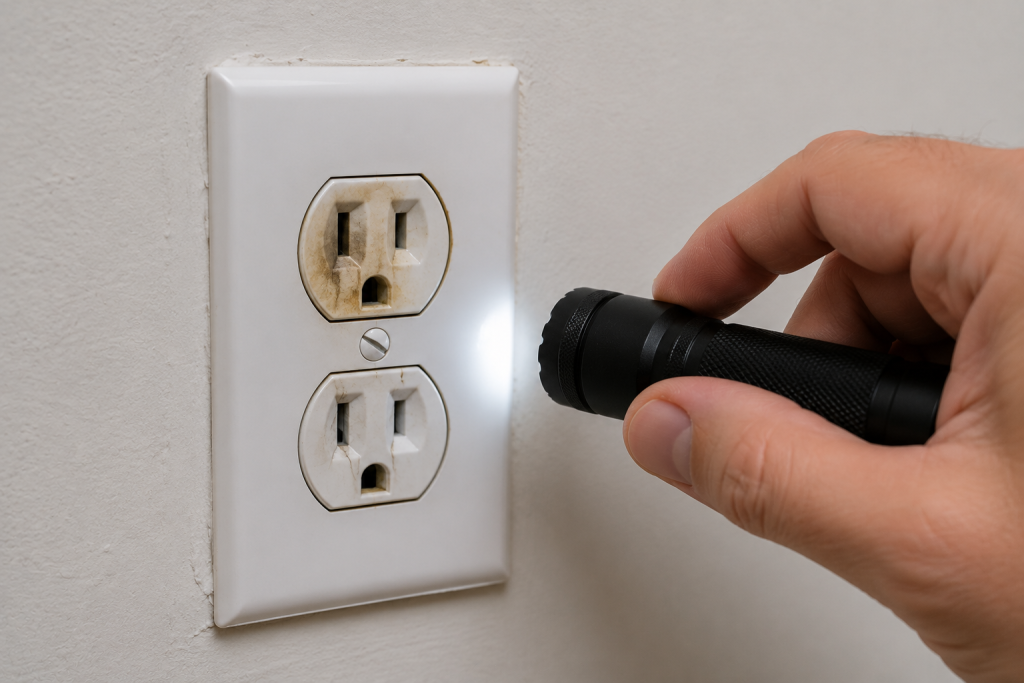
Carefully inspect the outlet cover and surrounding wall.
Look for:
- Burn marks
- Brown discoloration
- Cracked plastic
- Melted areas
- Loose outlet movement
These warning signs often indicate overheating or arcing inside the outlet.
If you notice visible damage, turn off the breaker immediately and avoid using the outlet until repairs are made.
If your outlet sparks during use, check out our article on Outlet Sparks When Plugging In.
Step 4: Test for Loose Plug Connections
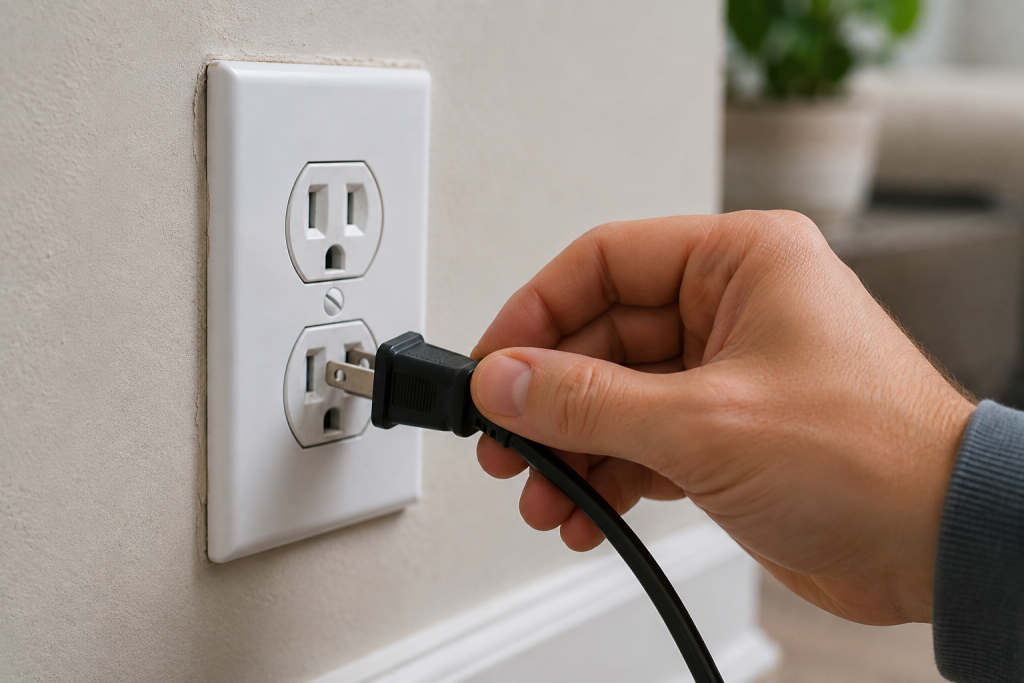
Outlets wear out over time.
If plugs slide in loosely or fall out easily, poor electrical contact may create heat buildup.
Test the outlet carefully using a small device charger or lamp.
Loose internal contacts often mean the outlet should be replaced.
Worn outlets are especially common in older homes with heavy daily usage.
Step 5: Check for Loose Wiring Connections
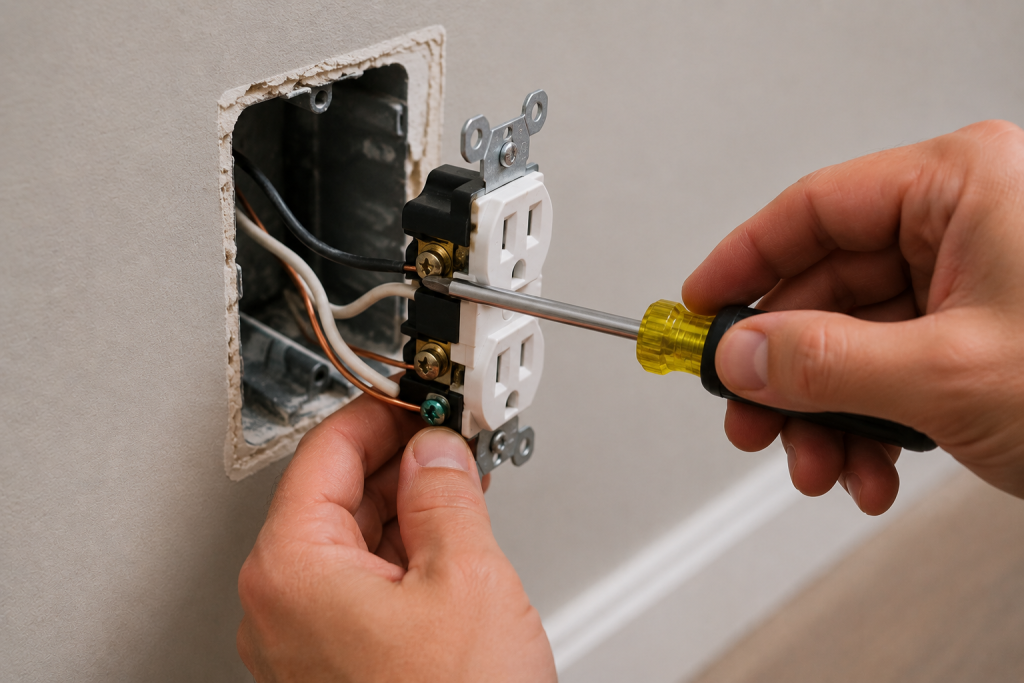
Loose wires behind the outlet can create resistance and dangerous heat buildup. This is one of the most common reasons an outlet warm to touch issue develops over time.
Before inspecting wiring:
- Turn off the breaker controlling the outlet
- Confirm power is off using a voltage tester
- Remove the outlet cover carefully
Inspect wire connections for looseness, discoloration, or damaged insulation.
Tighten loose terminal screws carefully if needed.
If you are uncomfortable working with electrical wiring, contact a licensed electrician.
If your breaker keeps tripping along with the warm outlet, read How to Fix a Tripped Circuit Breaker.
Step 6: Replace the Outlet if Necessary
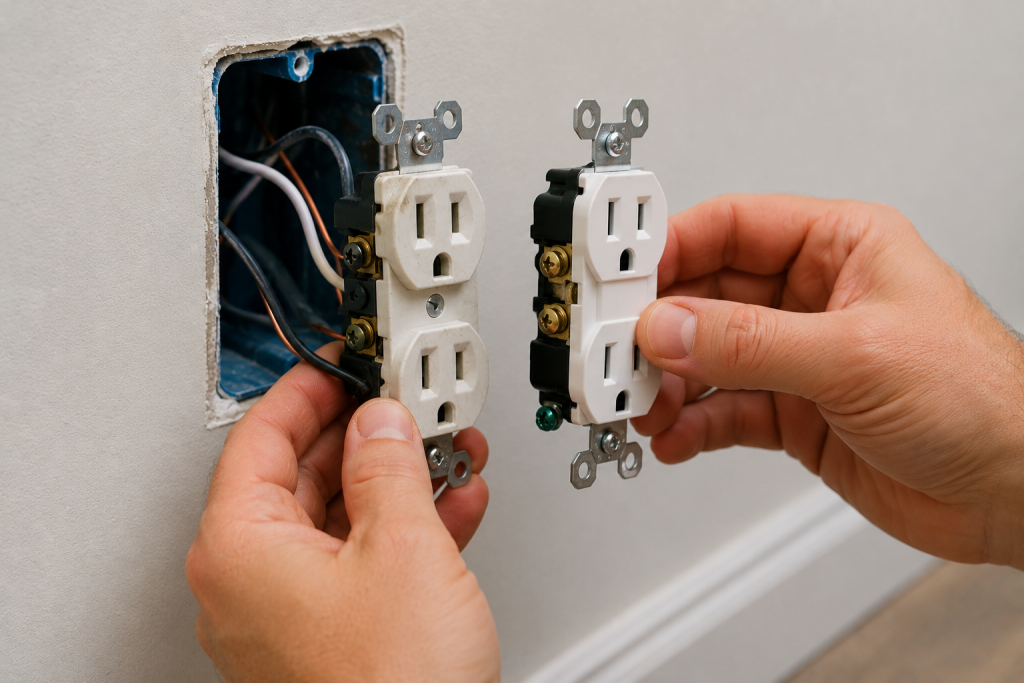
Sometimes the outlet itself has simply worn out internally.
Replacing a damaged outlet is often inexpensive and improves both safety and reliability.
Choose a replacement outlet that matches the circuit amperage properly.
For kitchens, bathrooms, garages, and outdoor areas, consider installing a GFCI outlet for additional protection.
Step 7: Call an Electrician for Persistent Heat

If the outlet remains warm after basic troubleshooting, professional inspection is recommended.
Persistent heat may indicate:
- Damaged wiring inside the wall
- Overloaded circuits
- Aluminum wiring problems
- Faulty breakers
- Improper electrical installations
Electrical overheating should never be ignored.
For additional electrical safety information, this guide from This Old House provides helpful outlet repair and replacement tips.
When an Outlet Warm to Touch Is Dangerous
Turn off the breaker and stop using the outlet immediately if you notice:
- Burning smells
- Smoke
- Sparks
- Black scorch marks
- Crackling sounds
- Extremely hot surfaces
These symptoms can indicate serious electrical hazards.
Frequently Asked Questions
Is it normal for an outlet to feel warm?
Slight warmth can be normal when using large appliances, but outlets should never feel hot or smell like burning.
Can a warm outlet cause a fire?
Yes. Loose wiring and overloaded circuits can create dangerous heat buildup that increases fire risk.
Should I replace a warm outlet?
If the outlet feels consistently warm, loose, damaged, or discolored, replacement is often recommended.
Why is my outlet warm to touch with nothing plugged in?
This may indicate loose wiring, internal outlet failure, or electrical problems behind the wall.
When should I call an electrician?
Call an electrician if the outlet stays warm, sparks, smells like burning, or repeatedly trips the breaker.
Looking for help with another electrical problem? Browse our complete collection of electrical repair and troubleshooting guides.
Final Thoughts
An outlet warm to touch problem may be caused by overloaded circuits, loose wiring, worn outlets, or damaged electrical connections.
Fortunately, many issues can be identified early by unplugging devices, checking for damage, and inspecting loose connections safely.
If the outlet continues overheating, professional electrical repair is the safest solution.