
Last updated: September 20, 2026
By Home Repair Genie
Quick Answer
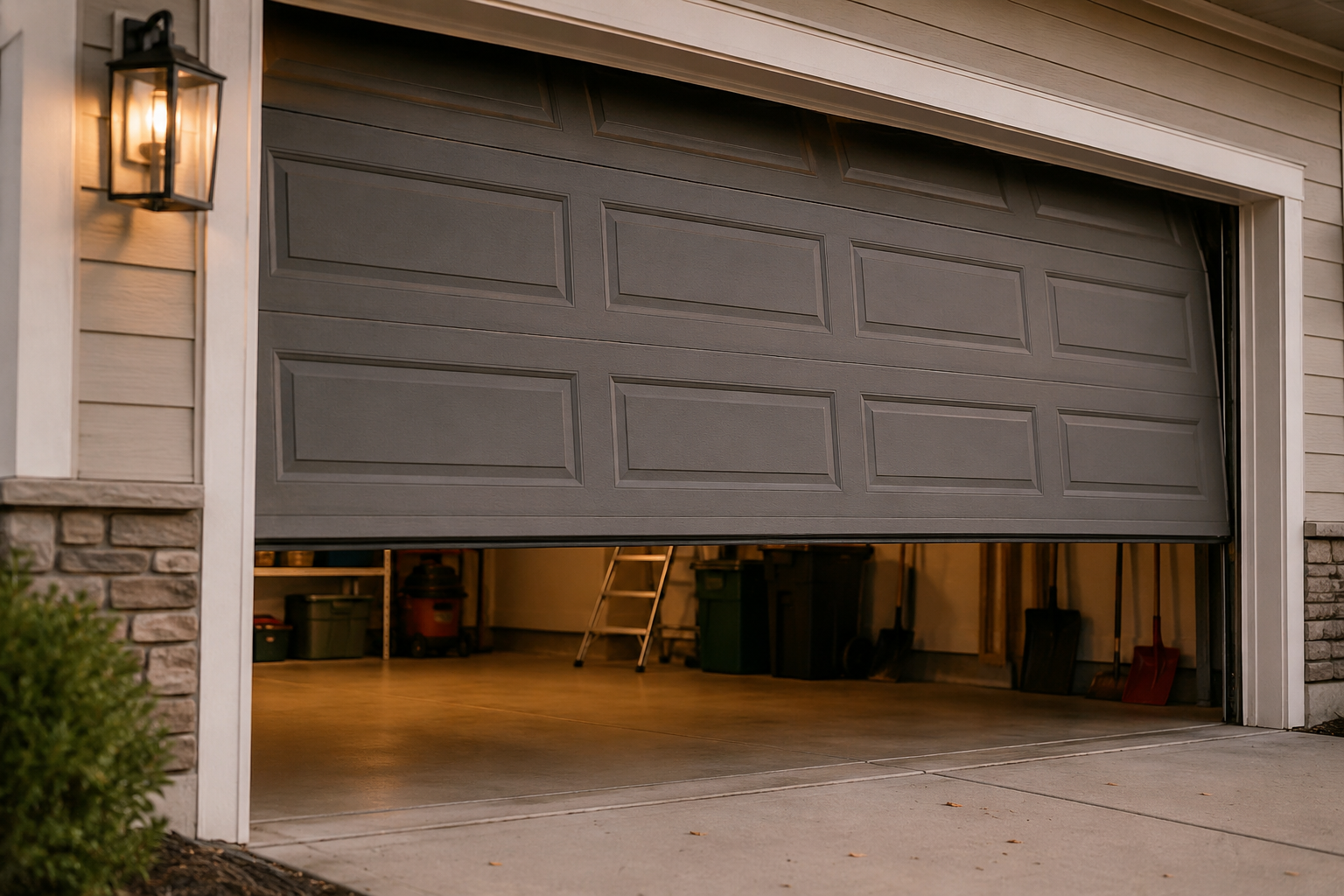
If your garage door won’t close, the most common causes are blocked safety sensors, dirty sensor lenses, misaligned tracks, remote issues, or a problem with the garage door opener settings. In many cases, homeowners can fix the issue in under 30 minutes without calling a garage door technician.
Why Your Garage Door Won’t Close and How to Fix It
Garage doors rely on several safety systems working together properly. If even one part stops working correctly, the opener may prevent the door from closing.
Common causes include:
- Dirty or blocked safety sensors
- Misaligned photo eyes
- Broken remote batteries
- Obstructions in the door tracks
- Incorrect travel limit settings
- Damaged rollers or tracks
- Garage door opener malfunctions
Before replacing parts, work through these simple troubleshooting steps.
Tools and Materials You May Need
- Microfiber cloth
- Step ladder
- Screwdriver
- Replacement batteries
- Level
- Flashlight
- Silicone garage door lubricant
Step 1: Check the Safety Sensors
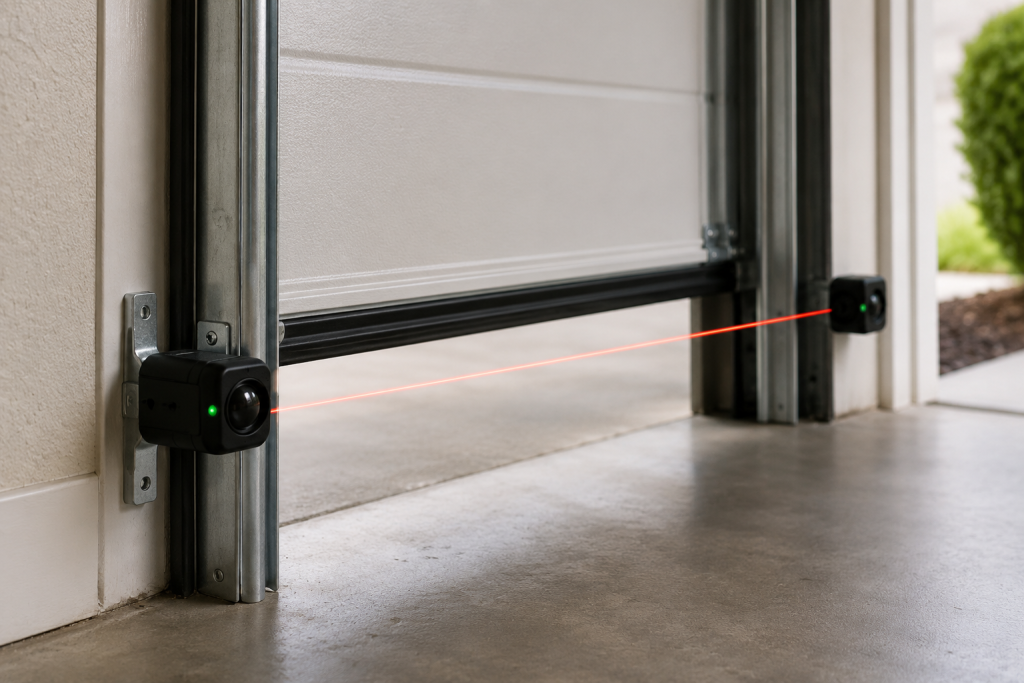
Safety sensor problems are one of the biggest reasons a garage door won’t close properly. Most modern garage doors use photo-eye safety sensors near the bottom of the tracks. If something blocks the invisible beam between the sensors, the garage door will not close.
Look for:
- Trash cans
- Leaves or debris
- Storage boxes
- Cobwebs
- Tools near the track
Remove anything blocking the beam and try closing the door again.
If the door still will not close, inspect the sensor lights. Most systems show a solid light when sensors are aligned correctly.
For more electrical troubleshooting help, read our guide on How to Fix an Outlet That’s Not Working (Step-by-Step Guide)
Step 2: Clean the Sensor Lenses
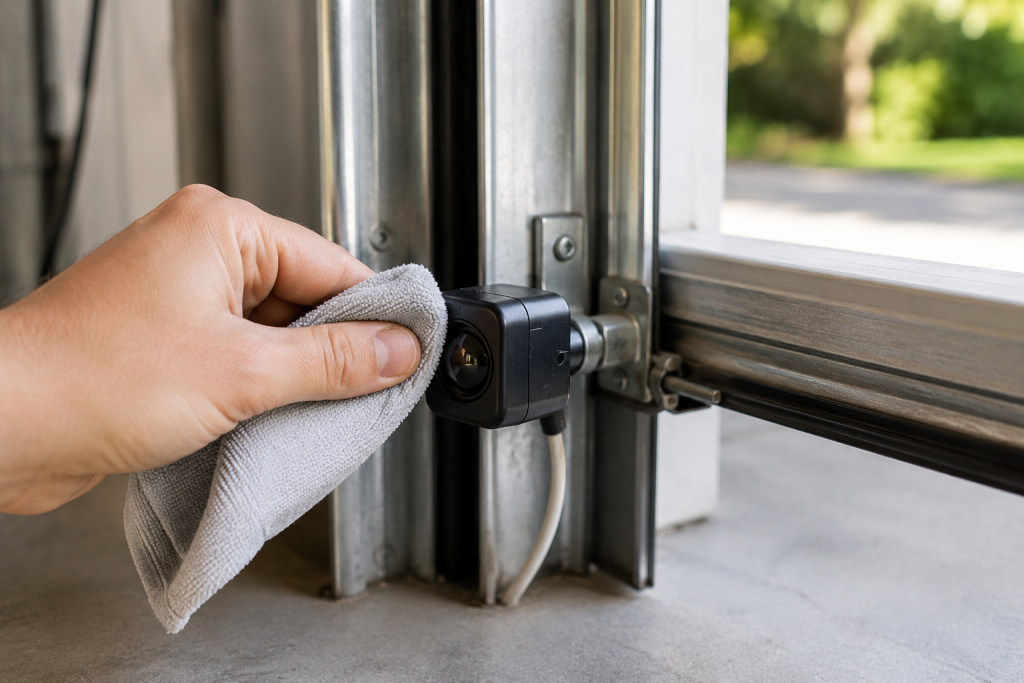
Dirty sensor lenses are one of the most overlooked garage door problems.
Dust, pollen, and spiderwebs can interfere with the beam and stop the door from closing.
Use a clean microfiber cloth to gently wipe both sensor lenses.
Avoid using harsh cleaners that could scratch the plastic.
Once cleaned, test the garage door again.
Step 3: Make Sure the Sensors Are Properly Aligned
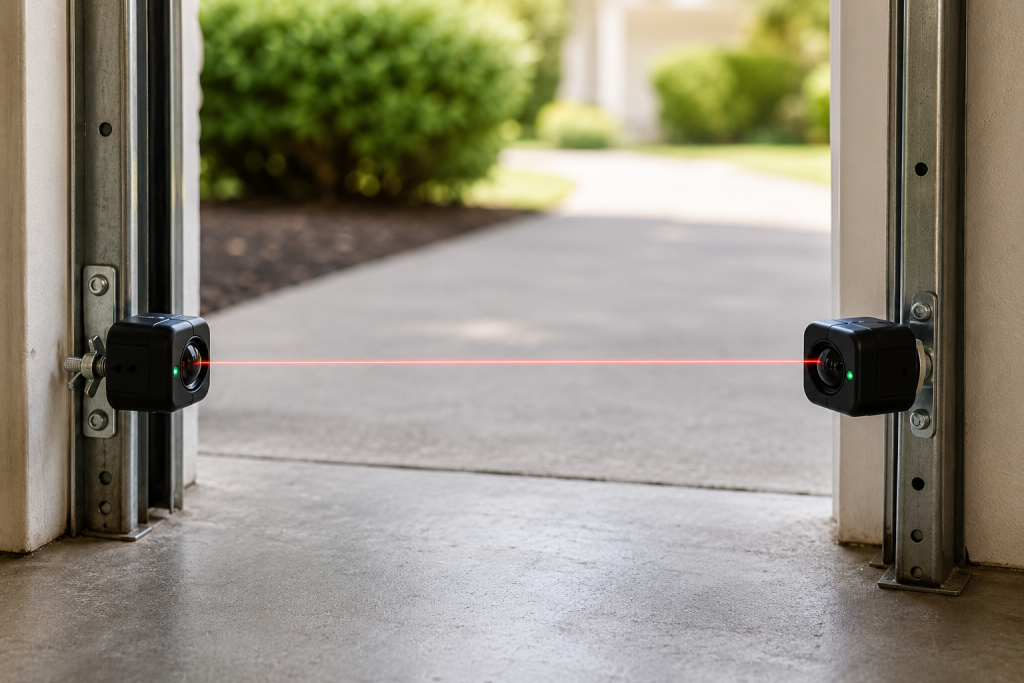
If one sensor gets bumped, the beam may no longer connect.
Signs of misaligned sensors include:
- Blinking sensor lights
- Garage door reversing immediately
- Door closing only when holding the wall button
Loosen the mounting brackets slightly and adjust the sensors until both indicator lights stay solid.
A small level can help ensure the sensors line up evenly.
Step 4: Inspect the Garage Door Tracks
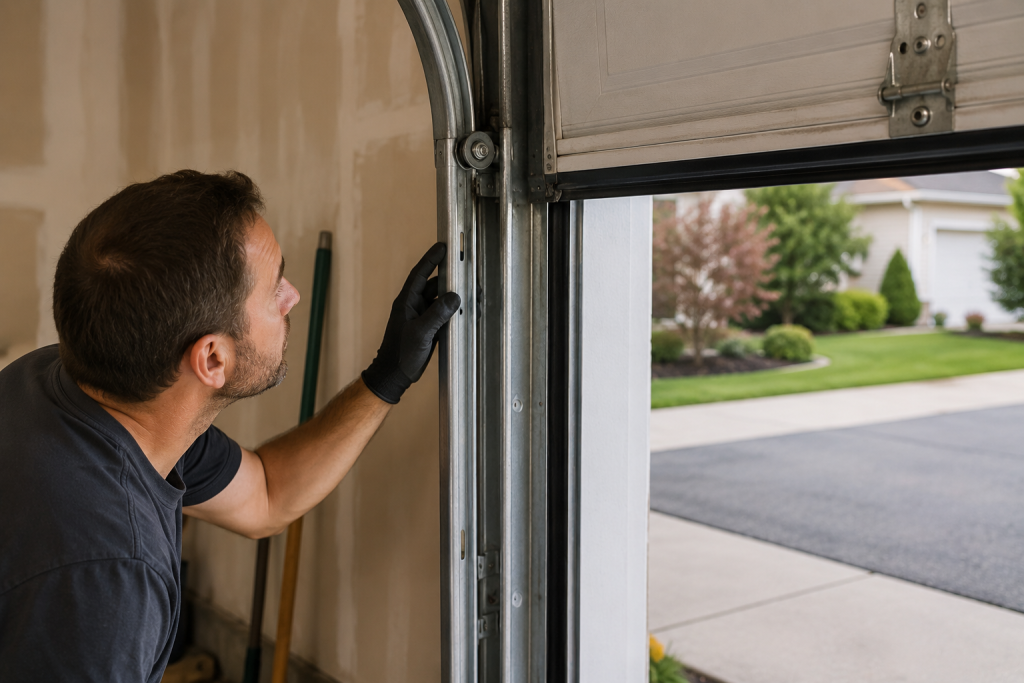
Bent tracks or debris inside the tracks can stop the door from moving properly.
Inspect both sides carefully for:
- Dirt buildup
- Small rocks
- Bent metal sections
- Loose mounting hardware
Clean the tracks using a dry cloth.
If you notice loose brackets, tighten them carefully with a screwdriver.
Do not heavily grease the tracks because excess lubricant can attract dirt.
For more home maintenance tips, visit the official garage door maintenance guide from This Old House.
Step 5: Replace the Remote Control Batteries
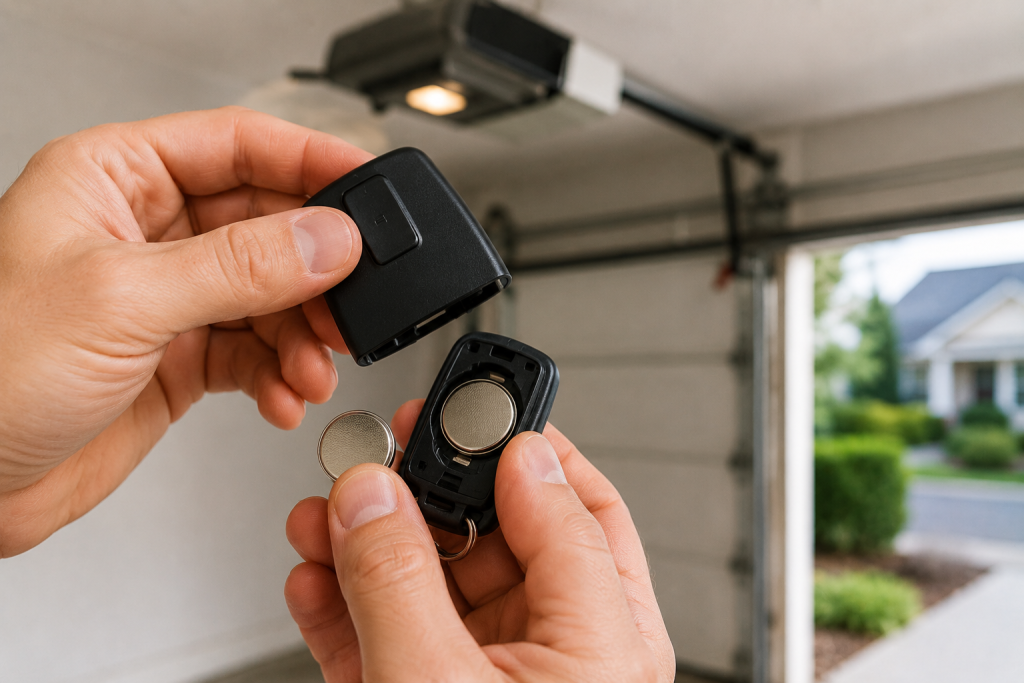
Weak batteries can cause intermittent garage door problems.
If your wall button works but the remote does not, replace the batteries first.
Many garage door remotes use:
- CR2032 coin batteries
- AA batteries
- AAA batteries
After replacing the batteries, test the remote from different distances.
Step 6: Check the Garage Door Opener Settings
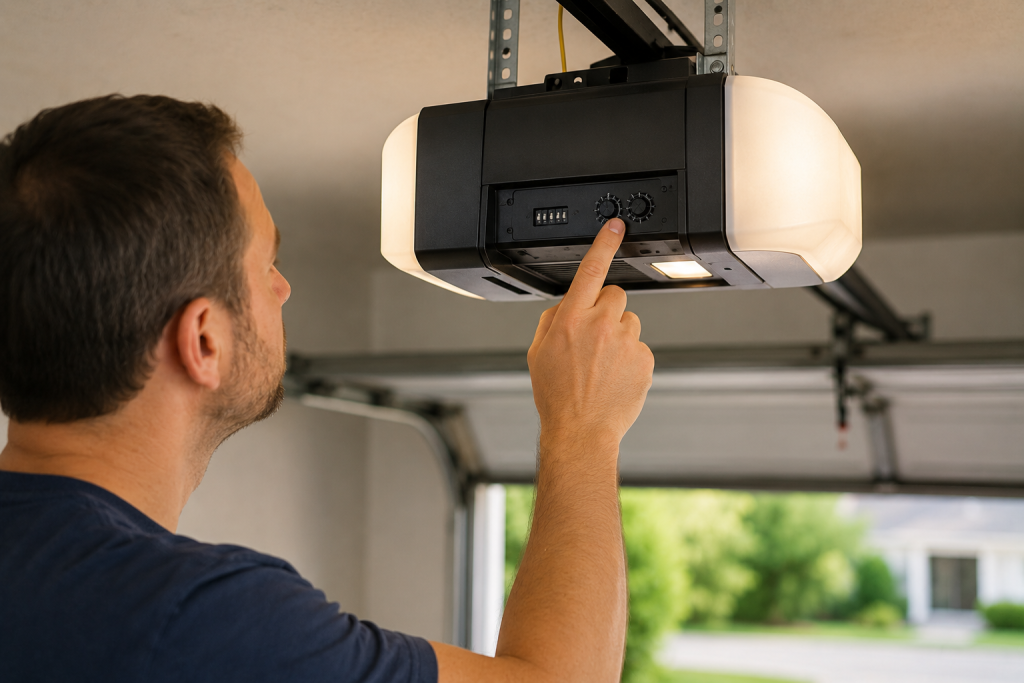
Garage door openers have travel and force adjustment settings that control how far the door closes.
If these settings are incorrect, the opener may think the door hit an obstacle and reverse automatically.
Locate the adjustment screws on the opener motor unit.
Make very small adjustments and test the door after each change.
Consult your garage door opener manual for the exact adjustment procedure.
Incorrect opener force settings are another common reason a garage door won’t close completely.
If your garage has electrical issues affecting the opener, you may also want to read: 9 Easy Steps to Fix a Tripped Circuit Breaker
Step 7: Look for Broken Springs or Damaged Rollers
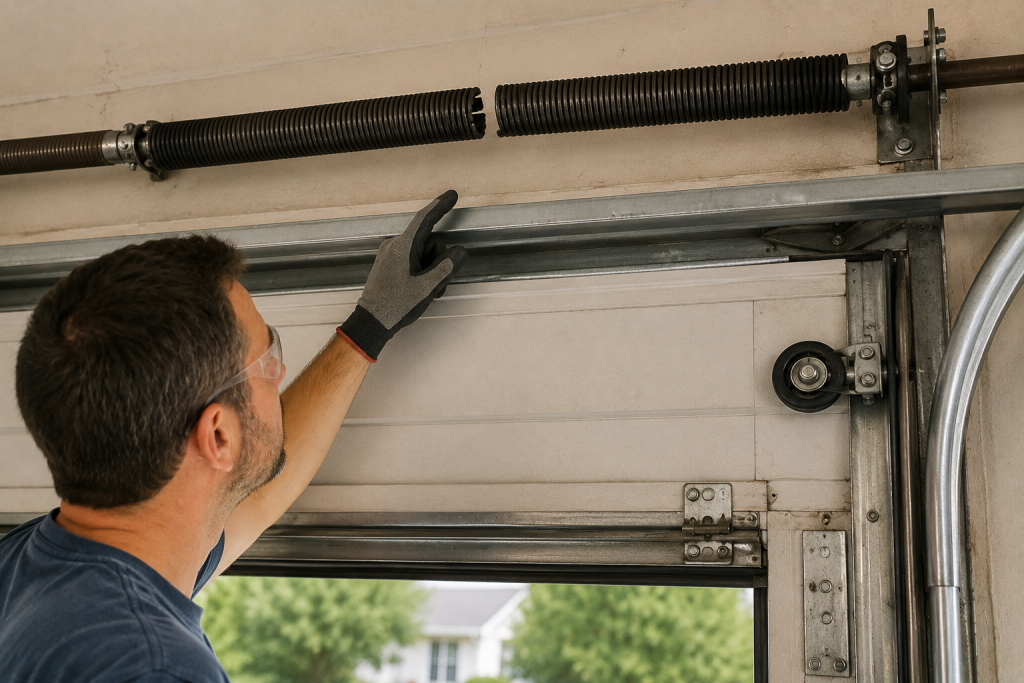
Broken garage door springs can prevent the door from operating safely.
Warning signs include:
- Loud snapping noise
- Crooked garage door movement
- Heavy manual lifting
- Loose cables
- Bent rollers
Do not attempt to repair torsion springs yourself.
Garage door springs are under extreme tension and can cause serious injury.
If you suspect spring damage, contact a professional garage door technician.
When to Call a Professional
Call a garage door professional if:
- The springs are broken
- The opener motor hums but does not move
- The tracks are severely bent
- The door falls quickly when disconnected
- The garage door comes off the tracks
Professional repairs are safer for high-tension components.
Frequently Asked Questions
Why does my garage door start closing and then reverse?
This usually happens because the safety sensors are blocked, dirty, or misaligned.
Why will my garage door close only when holding the wall button?
This is commonly caused by sensor alignment problems.
Can cold weather stop a garage door from closing?
Yes. Cold temperatures can stiffen rollers, affect lubricants, and impact opener performance.
Why your garage door won’t close after replacing the batteries?
Even after replacing batteries, a garage door won’t close if the safety sensors are blocked or misaligned.
How long do garage door openers usually last?
Most garage door openers last between 10 and 15 years with proper maintenance.
Looking for help with another door or window problem? Browse our complete collection of door and window repair guides.
Final Thoughts
If your garage door won’t close, working through these troubleshooting steps can often solve the problem without a professional repair visit. Cleaning and aligning the safety sensors solves the problem for many homeowners.
By working through these seven troubleshooting steps, you can often restore normal operation without an expensive service call.
Regular maintenance helps prevent situations where a garage door won’t close unexpectedly.