
Last updated: October 13, 2026
By Home Repair Genie
Quick Answer
AC vents sweating is usually caused by high indoor humidity, restricted airflow, dirty air filters, poor duct insulation, or leaky air ducts. In many homes, replacing the HVAC filter, lowering humidity levels, improving airflow, and sealing duct leaks can stop condensation from forming around the vents.
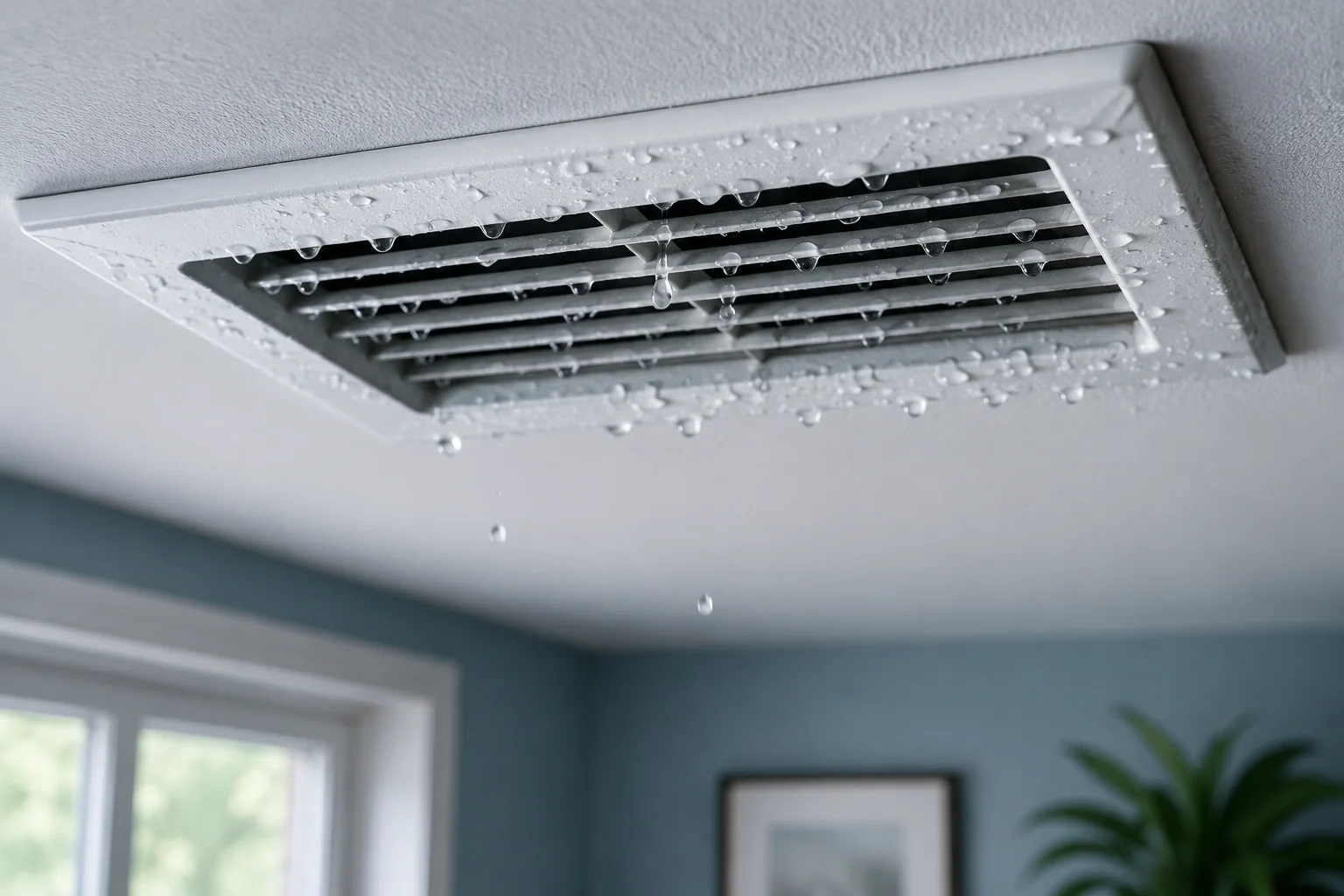
If you notice water droplets forming around your ceiling or wall vents, condensation is forming because the vent surface is cold enough for moisture in the surrounding air to collect on it.
The good news is that this problem can often be corrected without replacing your air conditioner. In this guide, we’ll walk through seven practical fixes for sweating AC vents and ductwork.
Why Do AC Vents and Ductwork Sweat?
AC vents and ductwork sweat when warm, humid air comes into contact with a cold vent or duct surface. When the surface temperature falls below the dew point of the surrounding air, moisture condenses into water droplets.
This is especially common when ductwork runs through hot, humid areas such as an attic, crawl space, basement, or garage. Missing or damaged duct insulation can make the problem worse because warm air can reach the cold metal duct surface.
If the condensation appears mainly around the vent register, high indoor humidity, restricted airflow, or gaps around the vent may be responsible. If the ductwork itself is sweating, damaged insulation, air leaks, or humid air surrounding the ducts should also be investigated.
As an Amazon Associate I earn from qualifying purchases.
Tools and Materials You May Need
- Replacement air filter
- Screwdriver
- Flashlight
- Microfiber cloth
- HVAC foil tape
- Insulation wrap
- Dehumidifier
- Vacuum with brush attachment
Step 1: Replace the Dirty Air Filter
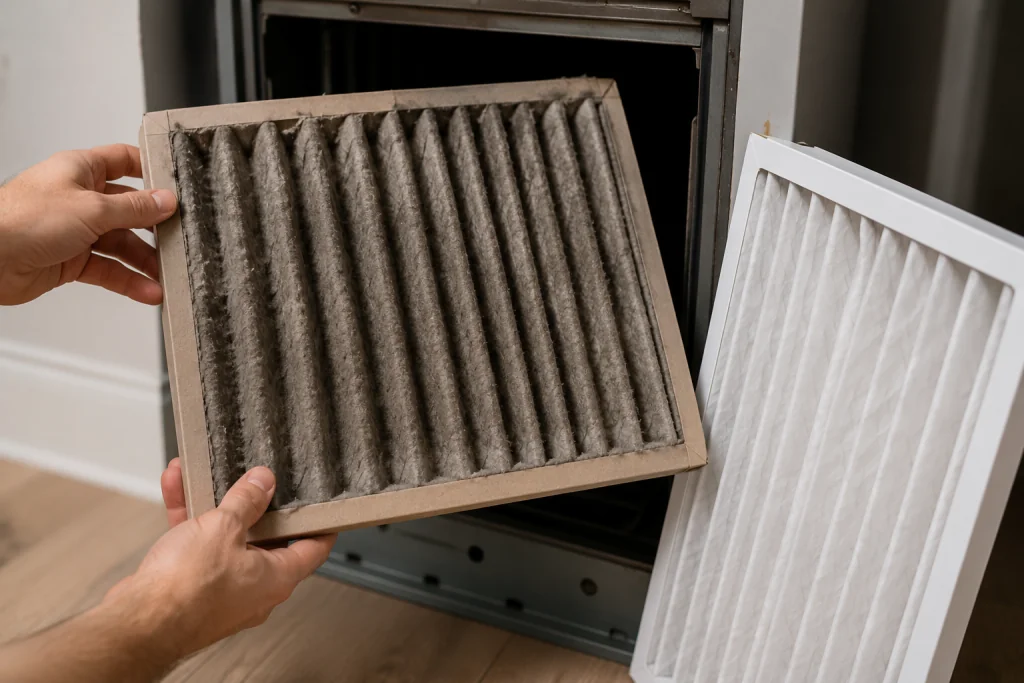
A clogged air filter restricts airflow through your HVAC system.
When airflow becomes restricted, the air inside the ducts can become too cold, increasing the chance of condensation forming around the vents.
Remove the current air filter and inspect it carefully.
If it appears dusty or clogged, replace it with a clean filter that matches the correct size and MERV rating for your HVAC system.
Most homeowners should replace HVAC filters every 1 to 3 months depending on pets, allergies, and system usage.
If airflow problems continue, you may also want to read our guide on AC Not Cooling? 9 Proven Fixes That Actually Work.
If you need help selecting the best filters, read this guide: 5 Best HVAC Air Filters for Cleaner Air and Better HVAC Performance.
Step 2: Lower Indoor Humidity Levels
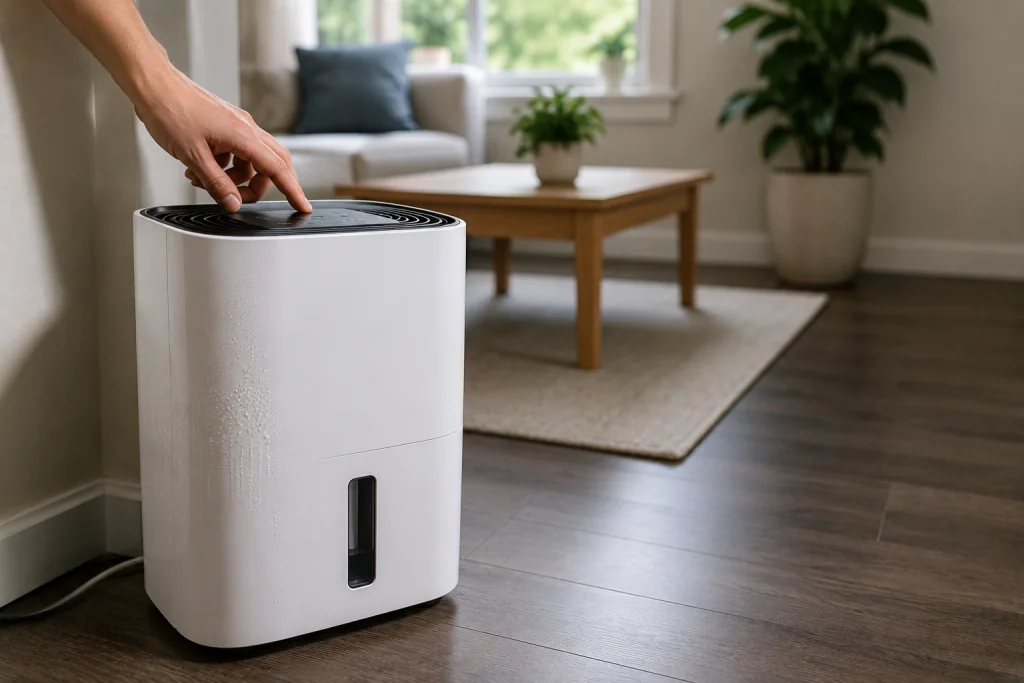
High humidity is one of the biggest causes of AC vents sweating.
When warm humid air contacts the cold metal vent, condensation forms just like water droplets on a cold drink.
Use a hygrometer to check your home’s humidity levels.
Ideally, indoor humidity should remain between 30% and 50%.
You can reduce humidity by:
- Running a dehumidifier
- Using bathroom exhaust fans
- Running kitchen exhaust fans
- Sealing air leaks around doors and windows
- Keeping windows closed during humid weather
Lower humidity levels can significantly reduce condensation around HVAC vents.
Check out our guide on: 7 Proven Tips to Choose the Best Dehumidifier for Basement Humidity.
Step 3: Inspect the Vent and Ductwork Insulation
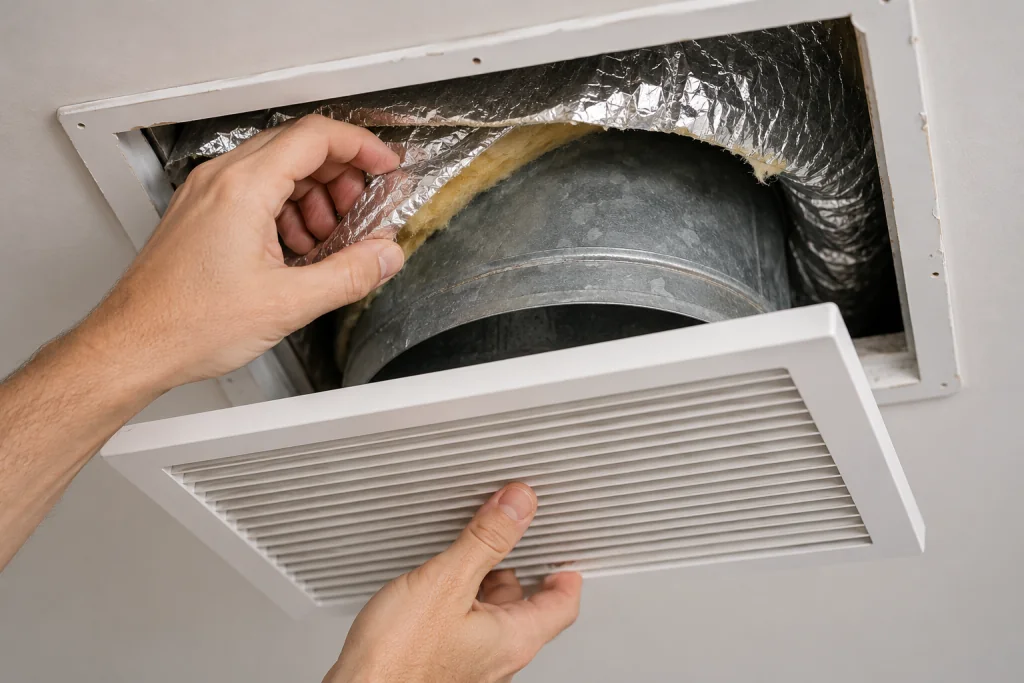
Poor insulation around air ducts or vents can allow warm air to contact cold surfaces.
This temperature difference creates condensation.
Remove the vent cover and inspect the surrounding insulation carefully.
If insulation is missing or damaged, add insulation wrap or foam insulation around the ductwork. Attic ductwork is particularly susceptible because cold supply ducts can be surrounded by hot, humid attic air.
Pay close attention to vents located in:
- Attics
- Basements
- Crawl spaces
- Exterior walls
Proper insulation helps maintain duct temperature while reducing moisture problems.
If you AC is struggling to keep up, read our guide on: AC Not Cooling Below 75 Degrees? 9 Proven Fixes That Work.
Step 4: Make Sure the Air Vents Are Fully Open
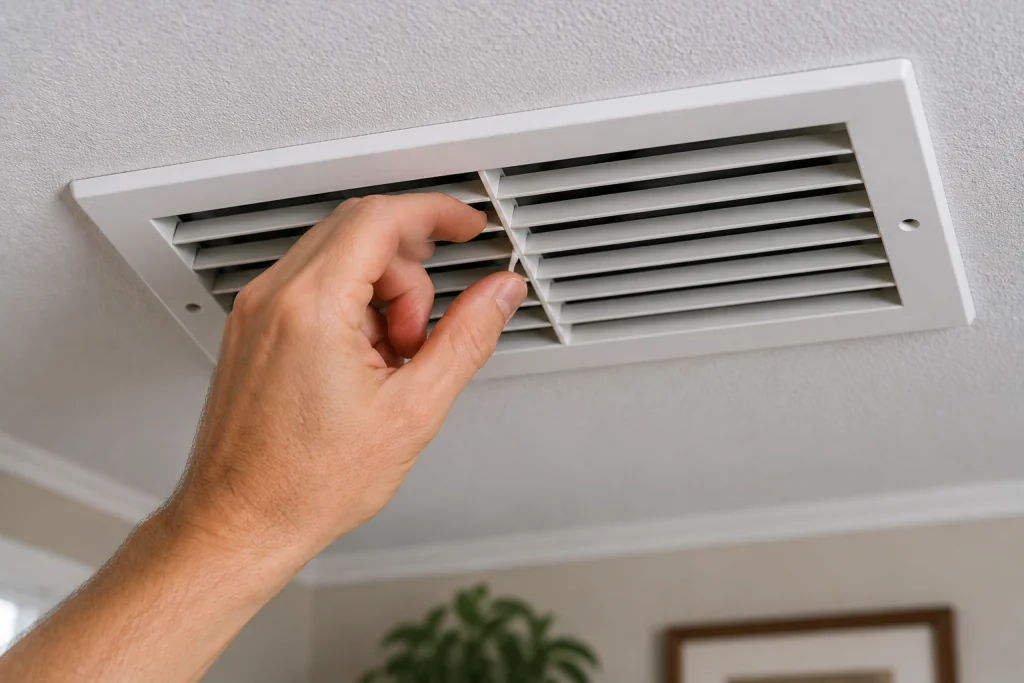
Closed or partially blocked vents can create pressure imbalances inside your HVAC system and can be a cause of your ac vents sweating.
This can reduce airflow and increase condensation around nearby vents.
Walk through your home and make sure all supply vents are fully open.
Also check for:
- Furniture blocking vents
- Rugs covering floor vents
- Curtains restricting airflow
- Dust buildup inside vent openings
Improving airflow often helps reduce sweating problems quickly.
Do your vents smell? If so, we recommend checking out: AC Smells Like Vinegar? 9 Powerful Fixes That Eliminate the Odor Fast.
Step 5: Clean Dust and Debris From the Vents
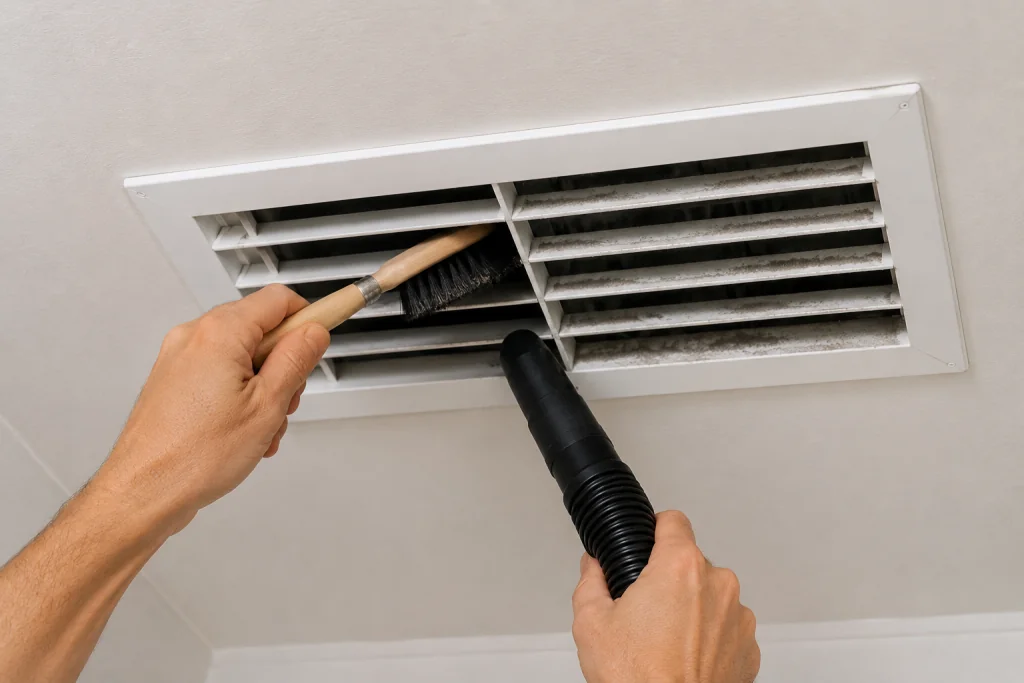
Dust buildup around vents can trap moisture and restrict airflow.
Remove the vent covers carefully and vacuum away dust and debris.
Use a microfiber cloth to clean both the vent cover and surrounding ceiling or wall area.
If the vents appear dirty inside the ducts, professional duct cleaning may also help improve airflow.
Routine vent cleaning can improve HVAC efficiency while reducing moisture accumulation.
If your HVAC system struggles to maintain airflow, you may also benefit from reading our guide on AC Not Turning On But Thermostat Is Working.
Step 6: Check for Leaky Air Ducts
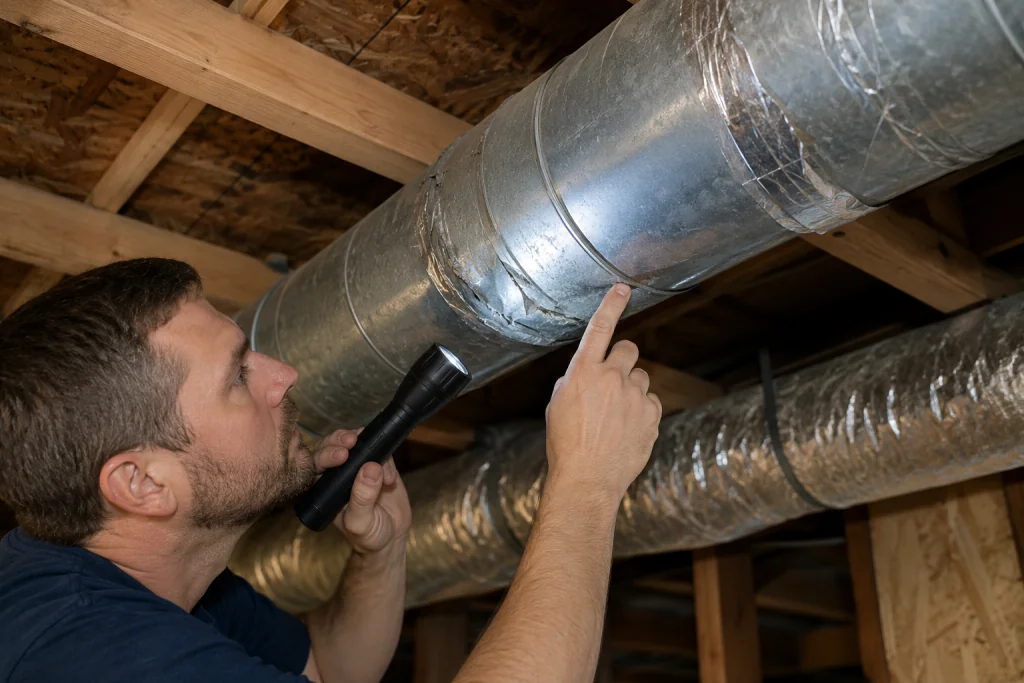
Leaky ducts can pull warm humid air into the HVAC system.
This can create major condensation problems around vents, which could be why there is a problem with your ac vents sweating.
Inspect exposed ductwork for:
- Loose joints
- Damaged insulation
- Air leaks
- Disconnected sections
Seal small leaks using HVAC foil tape or mastic sealant.
Avoid using regular cloth duct tape because it often fails over time..
Properly sealed ducts improve system efficiency and reduce humidity problems.
Does your basement have an odor? Check out: Why Does My House Smell Musty After Rain? 7 Hidden Causes.
Step 7: Call an HVAC Professional if the Problem Continues

If your AC vents sweating problem continues after these fixes, your HVAC system may have a deeper issue.
Possible professional-level problems include:
- Oversized air conditioner
- Poor duct design
- Frozen evaporator coil
- Low refrigerant levels
- Improper airflow balancing
An HVAC technician can inspect the system and identify hidden airflow or humidity issues.
For additional HVAC moisture troubleshooting tips, you can also review this helpful guide from This Old House.
Signs You Should Call a Professional Immediately for AC Vents Sweating
Contact an HVAC professional right away if:
- Water stains appear on ceilings
- Mold develops around vents
- Ice forms on HVAC components
- The AC system stops cooling properly
- Condensation drips continuously
- You smell musty odors from the vents
These issues may indicate larger airflow or moisture problems inside the HVAC system.
How to Prevent AC Vents Sweating Issues
Routine HVAC maintenance can help prevent condensation problems.
Here are a few simple prevention tips:
- Replace air filters regularly
- Keep humidity levels under control
- Seal duct leaks promptly
- Insulate exposed ductwork
- Keep vents clean
- Schedule annual HVAC maintenance
Preventive maintenance can improve comfort, efficiency, and indoor air quality.
Frequently Asked Questions
Is it normal for AC vents to sweat?
Small amounts of condensation may happen occasionally during very humid weather, but constant sweating usually signals an airflow or humidity problem.
Can dirty air filters cause AC vents sweating?
Yes. Dirty filters restrict airflow and can increase condensation around vents.
Will a dehumidifier stop AC vents sweating?
In many homes, lowering humidity with a dehumidifier can greatly reduce vent condensation.
Can AC sweating vents cause mold?
Yes. Ongoing moisture around vents can lead to mold growth on ceilings, walls, and inside ducts.
Looking for help with another heating or cooling problem? Browse our complete collection of HVAC repair and troubleshooting guides.
Final Thoughts
If you notice AC vents sweating, the problem is often caused by excess humidity, restricted airflow, insulation issues, or leaky ducts.
By following these step-by-step troubleshooting methods, you can often reduce condensation and improve your HVAC system’s performance.
However, if moisture problems continue or mold begins developing, it’s best to contact a qualified HVAC professional for a full inspection.