
Last updated: October 10, 2026
By Home Repair Genie
Quick Answer
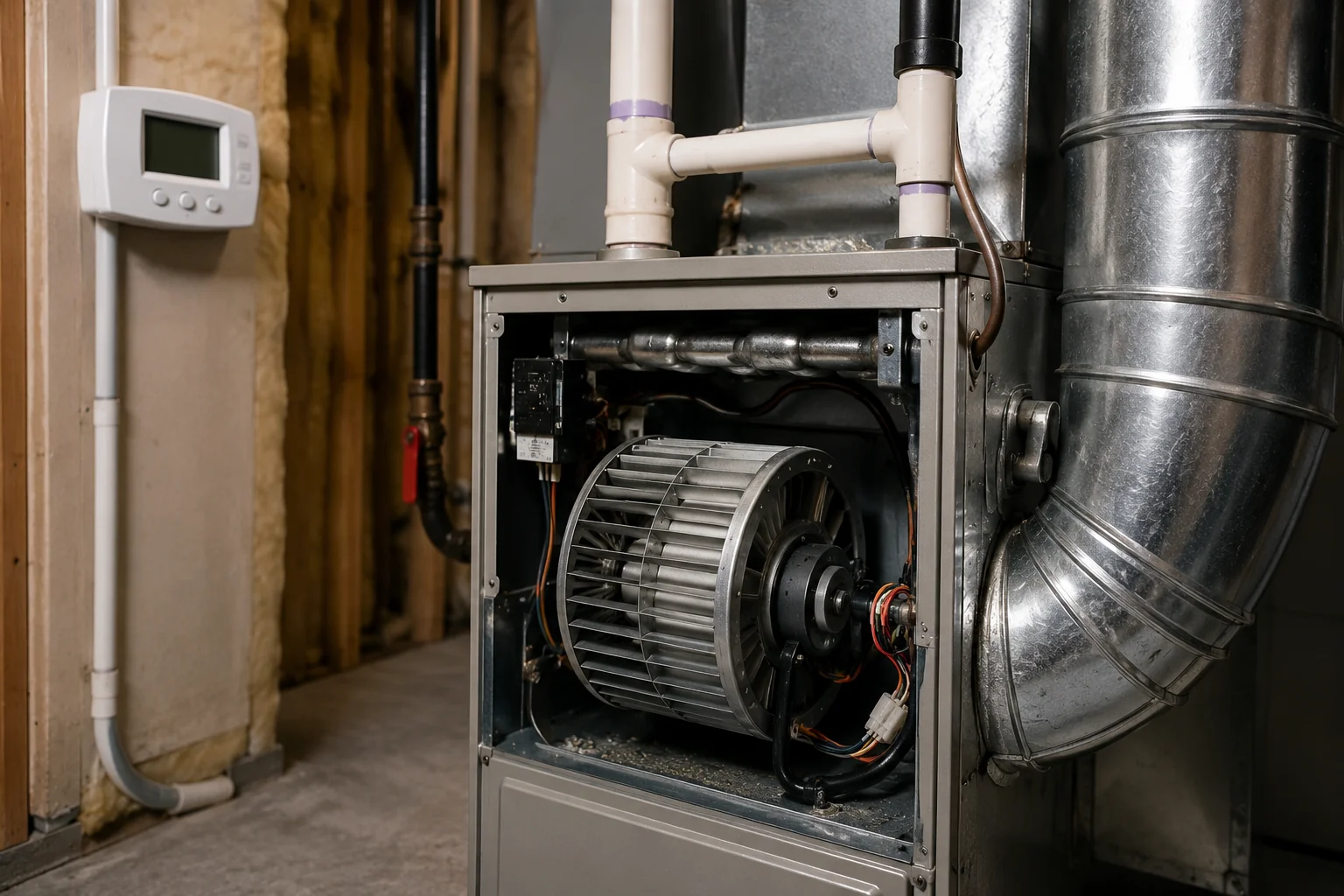
If your furnace blower runs constantly, the problem is often caused by thermostat fan settings, dirty air filters, stuck fan relays, HVAC control board problems, or overheating issues. In many homes, switching the thermostat fan from ON to AUTO and replacing the air filter can solve the issue quickly Understanding why your furnace blower runs constantly can help you prevent higher energy bills and unnecessary HVAC wear.
A furnace blower that never shuts off can increase energy bills, create unnecessary wear on your HVAC system, and make your home uncomfortable.
The good news is that many nonstop blower problems are caused by relatively simple HVAC issues that homeowners can troubleshoot themselves.
In this guide, you’ll learn the most common reasons a furnace blower runs constantly and the step-by-step fixes that actually work.
As an Amazon Associate I earn from qualifying purchases.
Tools and Materials You May Need
- Replacement HVAC air filter
- Screwdriver set
- Flashlight
- Soft brush
- Vacuum with hose attachment
- Thermostat manual
- Safety gloves
Step 1: Check the Thermostat Fan Setting
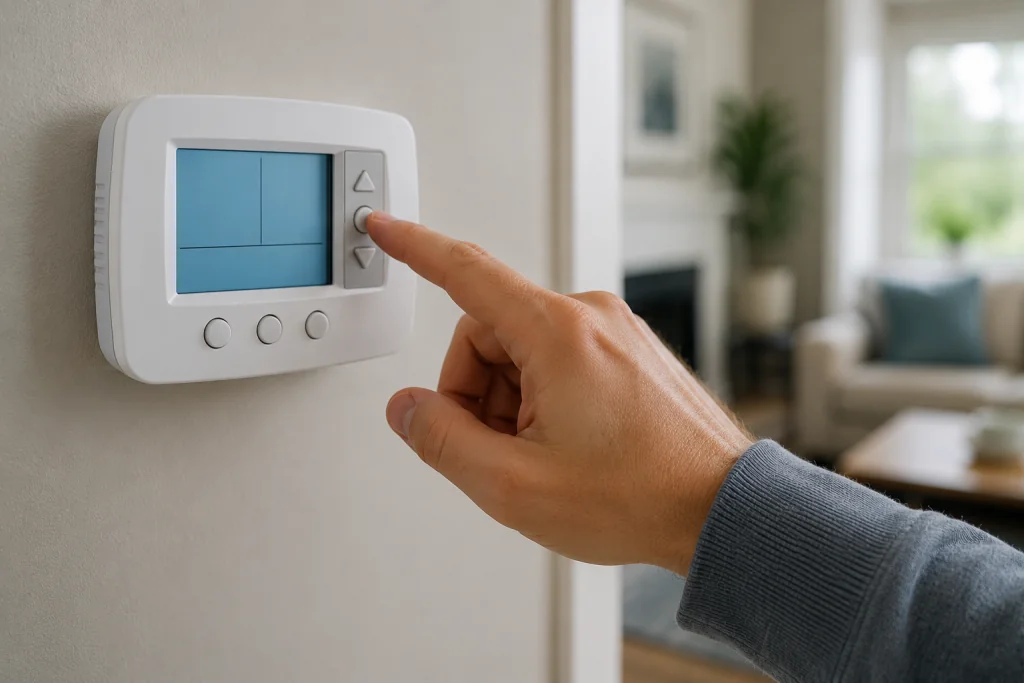
One of the most common reasons a furnace blower runs constantly is the thermostat fan setting.
Most thermostats have two fan modes:
- AUTO
- ON
If the fan is set to ON, the blower will run continuously even when the furnace is not heating.
Switch the fan setting from ON to AUTO and wait a few minutes to see if the blower shuts off normally.
This simple setting change solves the problem surprisingly often.
If your HVAC system isn’t responding properly to thermostat changes, you may also want to read our guide on AC Not Turning On But Thermostat Is Working.
Step 2: Replace the Dirty Air Filter
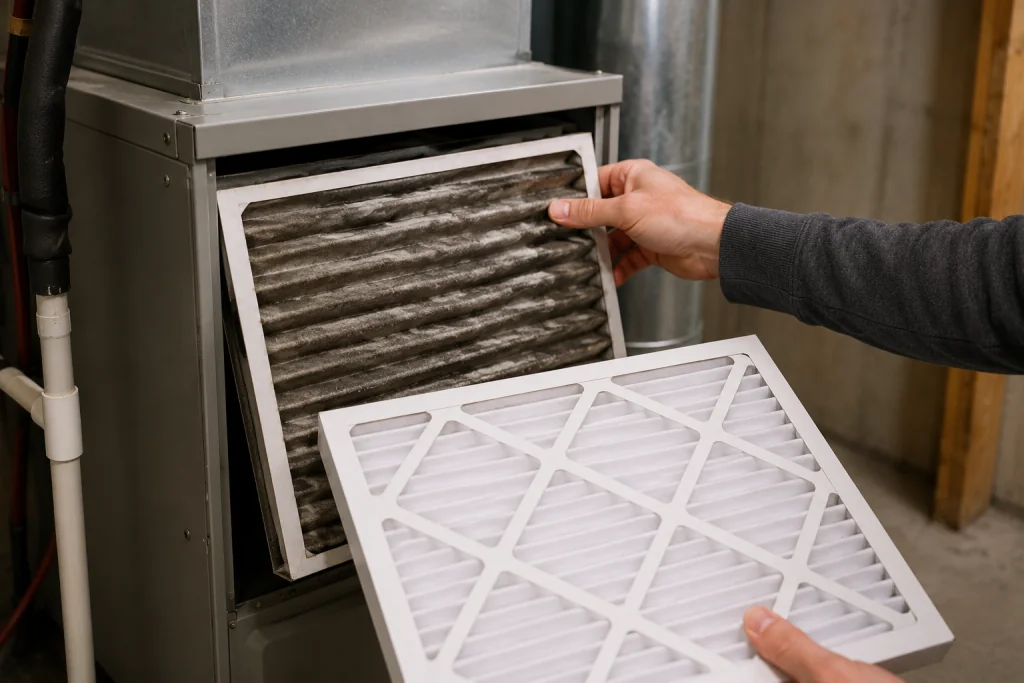
A clogged air filter can restrict airflow and cause the furnace to overheat.
When overheating occurs, some furnace systems keep the blower running continuously to cool internal components.
Locate the HVAC air filter and inspect it carefully.
If it appears dusty or clogged, replace it with a clean filter that matches the correct size and MERV rating.
Most homeowners should replace HVAC filters every 1 to 3 months depending on pets, allergies, and system usage.
Restricted airflow can create multiple HVAC problems over time.
Step 3: Check for a Stuck Thermostat
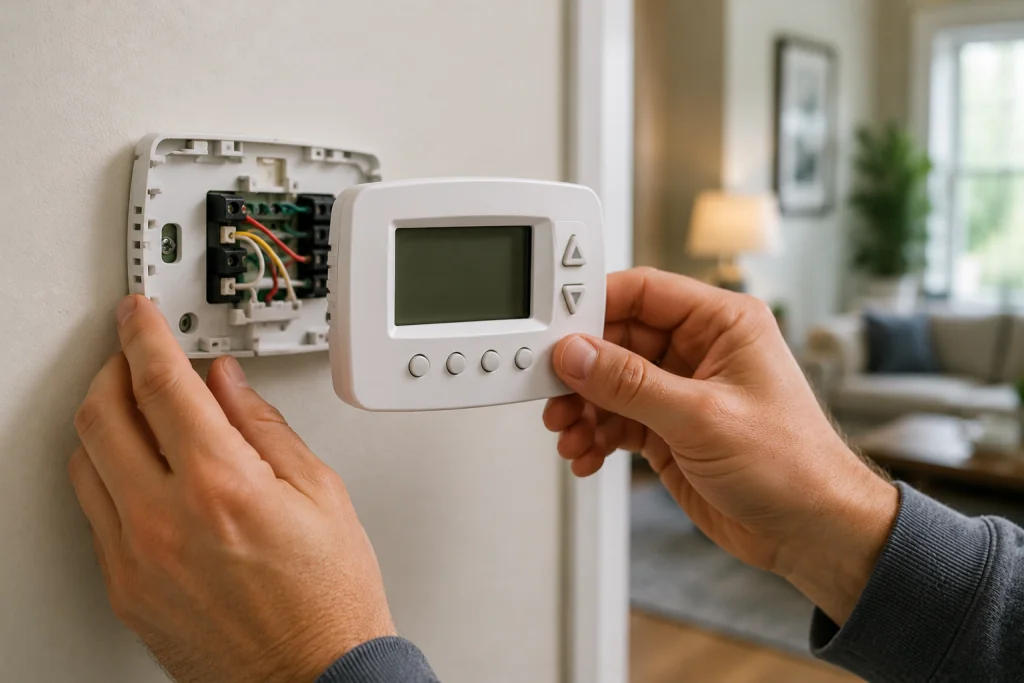
Sometimes the thermostat itself may malfunction and continuously signal the blower to run.
Try lowering the thermostat temperature below room temperature.
Then wait several minutes to see if the blower shuts off.
If the blower continues running, remove the thermostat cover and inspect for:
- Loose wiring
- Dirt buildup
- Corrosion
- Weak batteries
Replacing thermostat batteries may also help restore proper communication.
Step 4: Inspect the Furnace Limit Switch
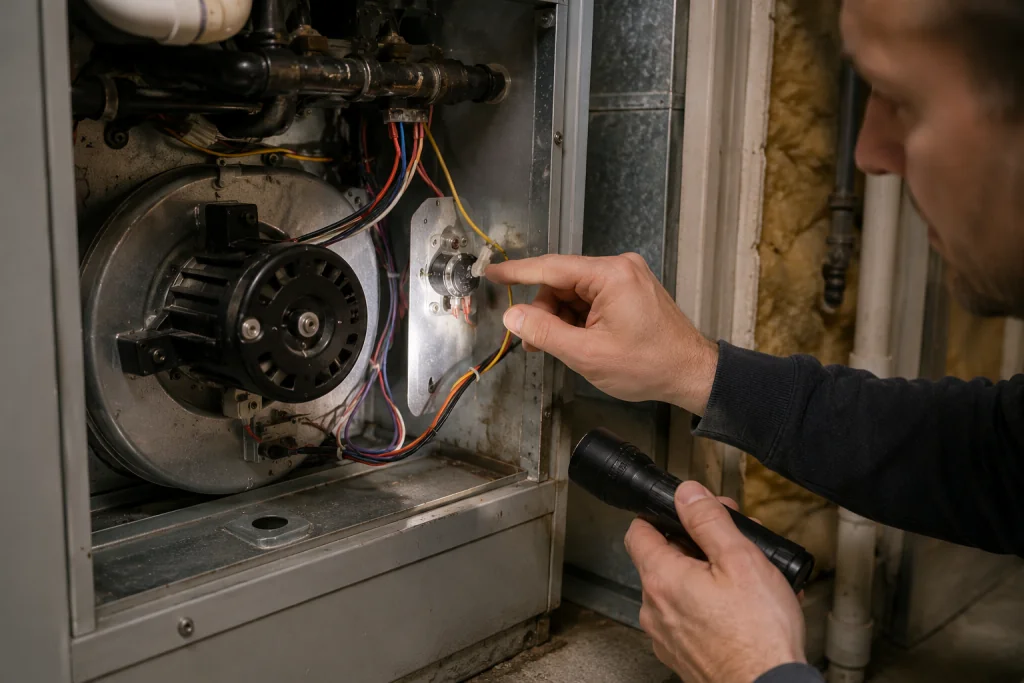
The furnace limit switch helps protect the system from overheating.
If the limit switch detects excessive heat, it may keep the blower running continuously as a safety measure.
Overheating may be caused by:
- Dirty filters
- Blocked vents
- Restricted airflow
- Dirty blower components
If your furnace repeatedly overheats, professional diagnosis may be necessary.
Do not attempt advanced electrical testing unless you are comfortable working around HVAC equipment.
Step 5: Make Sure Air Vents Are Open
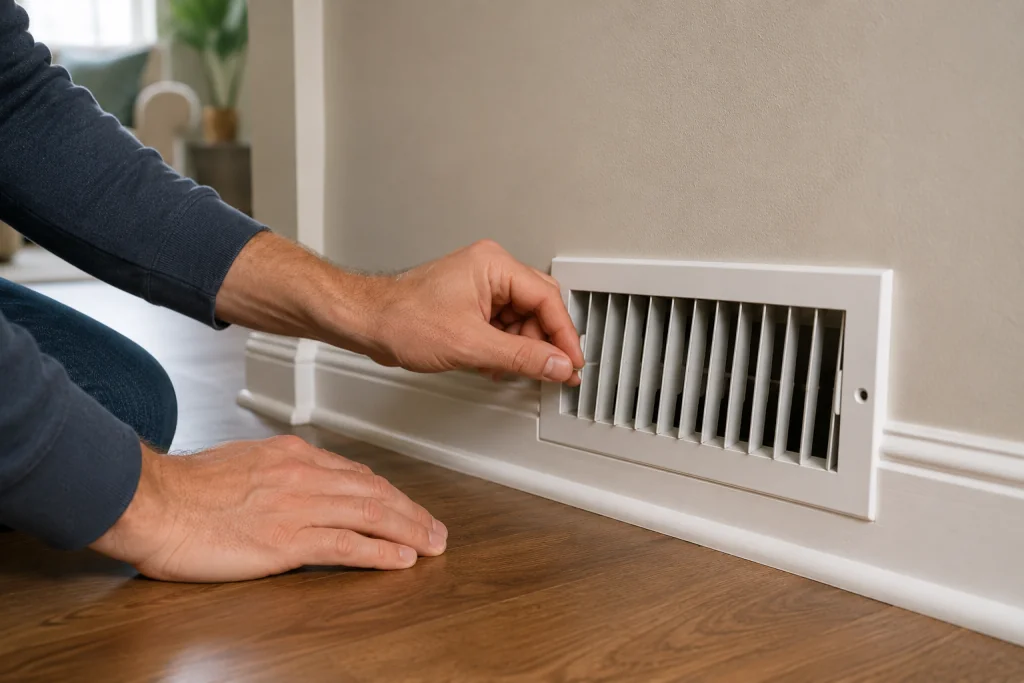
Closed vents can create airflow imbalances inside the HVAC system.
Walk through your home and make sure supply vents are fully open.
Also check for:
- Furniture blocking vents
- Rugs covering floor registers
- Dust buildup around vents
- Closed interior doors restricting airflow
Proper airflow helps the HVAC system operate more efficiently and reduces stress on the blower motor.
If you notice moisture around vents, you may also benefit from reading our guide on Why Are My AC Vents Sweating?.
Step 6: Inspect the Furnace Control Board
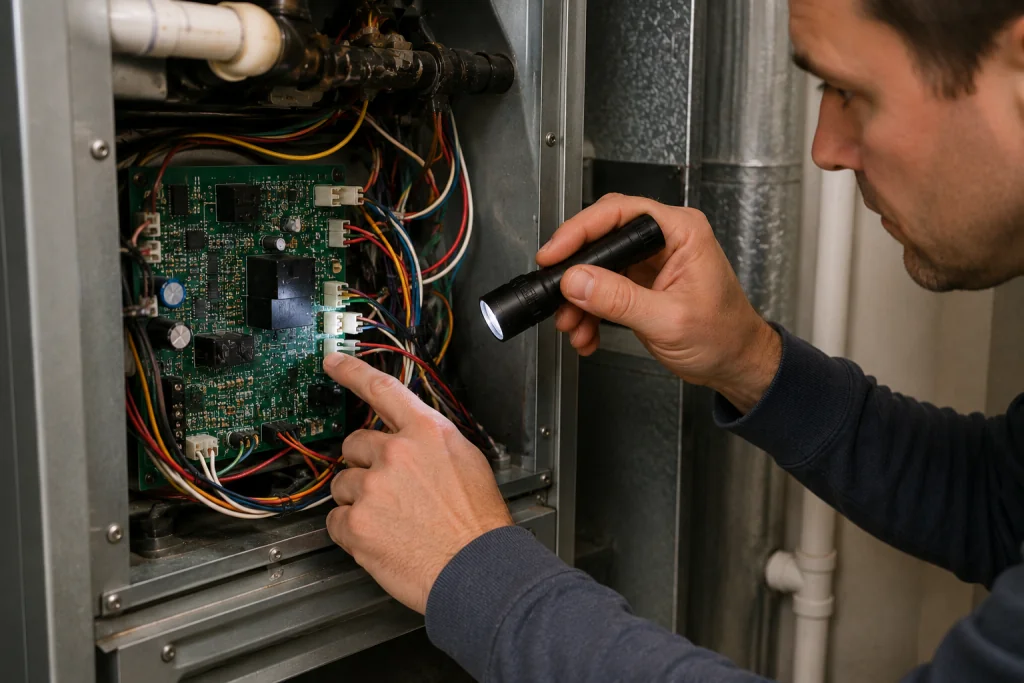
The furnace control board manages communication between major HVAC components.
If the control board develops a fault, it may continue sending power to the blower motor even when heating cycles end.
Signs of a faulty control board may include:
- Random blower operation
- Intermittent furnace behavior
- Flashing diagnostic lights
- Frequent system resets
A faulty control board is a common reason a furnace blower runs constantly even after heating cycles end. Because control boards involve electrical components, this repair is usually best left to an HVAC technician.
Step 7: Call an HVAC Professional if the Blower Still Runs Constantly
If none of these fixes solve the problem, your HVAC system may have a deeper electrical or mechanical issue.
Possible professional-level problems include:
- Failed blower relay
- Bad blower motor
- Faulty control board
- Wiring problems
- Repeated furnace overheating
An HVAC technician can safely test the system and diagnose the exact cause.
For additional HVAC maintenance guidance, you can also review this helpful information from This Old House.
Signs You Should Call a Professional Immediately
Contact an HVAC professional right away if:
- You smell burning odors
- The furnace repeatedly overheats
- The blower motor makes loud noises
- The system short cycles frequently
- You notice visible scorch marks
- The breaker trips repeatedly
These symptoms may indicate serious HVAC electrical or safety problems.
How to Prevent Furnace Blower Problems
Routine HVAC maintenance can help prevent nonstop blower operation.
Here are a few simple maintenance tips:
- Replace air filters regularly
- Keep vents fully open
- Schedule annual HVAC inspections
- Clean dust around vents and returns
- Monitor thermostat performance
- Address overheating problems quickly
Preventive maintenance can extend furnace life and improve HVAC efficiency.
Frequently Asked Questions
Why does my furnace blower keep running after the heat turns off?
Some delay is normal because the blower helps cool the furnace after heating cycles. However, nonstop operation may indicate thermostat, airflow, or control board problems.
Can a dirty air filter cause the furnace blower to run constantly?
Yes. Restricted airflow can overheat the furnace and trigger continuous blower operation.
Should my thermostat fan be set to AUTO or ON?
Most homeowners should use AUTO for normal operation. ON keeps the blower running continuously.
Can a bad thermostat cause nonstop blower operation?
Yes. Faulty thermostat wiring or internal thermostat problems can continuously activate the blower motor.
Looking for help with another heating or cooling problem? Browse our complete collection of HVAC repair and troubleshooting guides.
Final Thoughts
If your furnace blower runs constantly, the issue is often related to thermostat settings, dirty air filters, airflow restrictions, or HVAC control problems.
By following these step-by-step troubleshooting methods, you can often identify and fix the issue yourself.
However, if the blower continues running after basic troubleshooting, it’s best to contact a qualified HVAC professional for a full system inspection.