
Last updated: October 14, 2026
By Home Repair Genie
Quick Answer
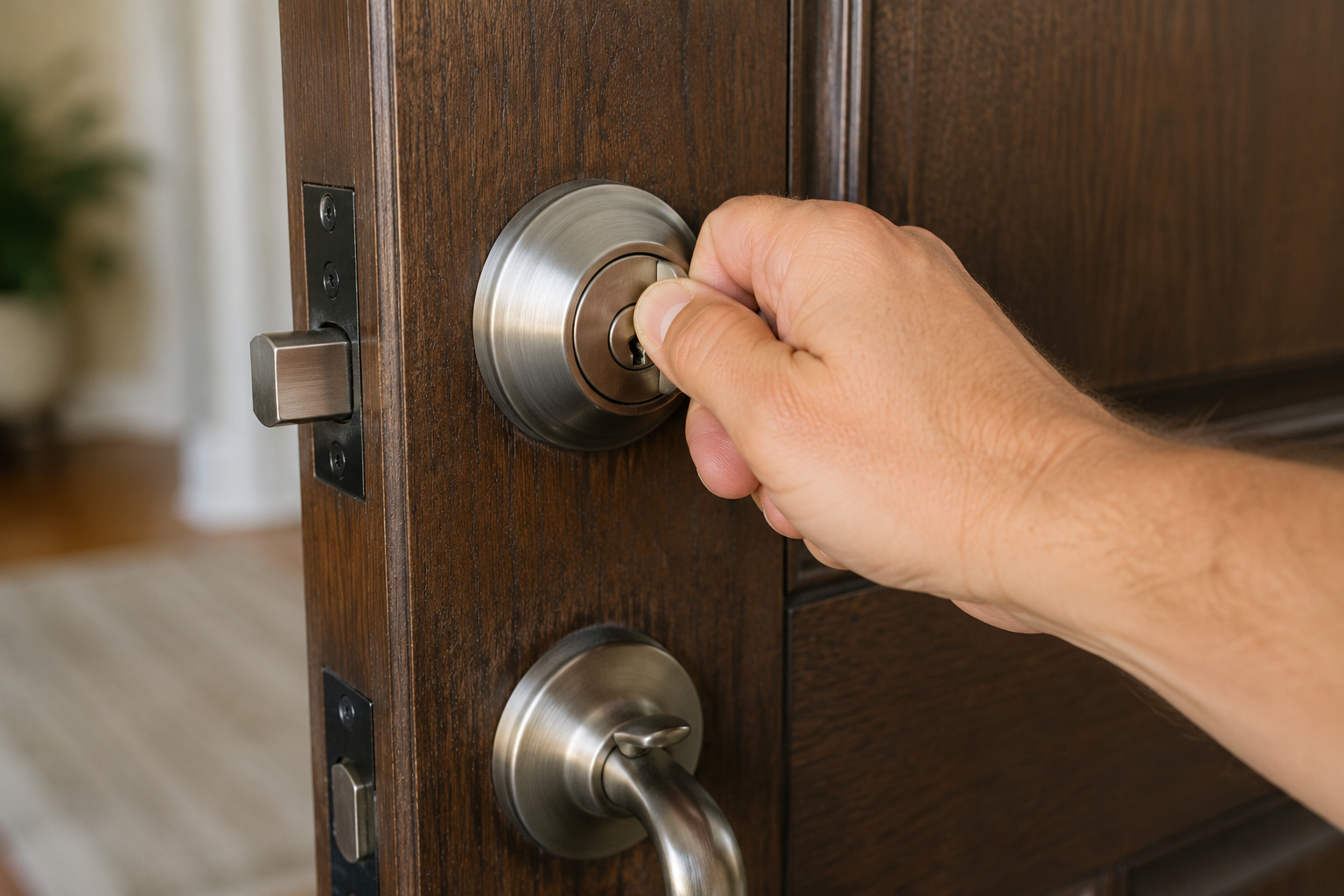
If your deadbolt won’t turn, the problem is often caused by dirt, misalignment, lack of lubrication, or a worn lock mechanism. Start by checking whether the deadbolt operates smoothly with the door open. If it does, the problem is usually alignment-related rather than a faulty lock.
Why Your Deadbolt Won’t Turn
A deadbolt should rotate smoothly with minimal effort. When it becomes difficult to lock or unlock, the issue can range from simple door alignment problems to internal lock wear.
Identifying the cause early can prevent a complete lock failure and help maintain your home’s security.
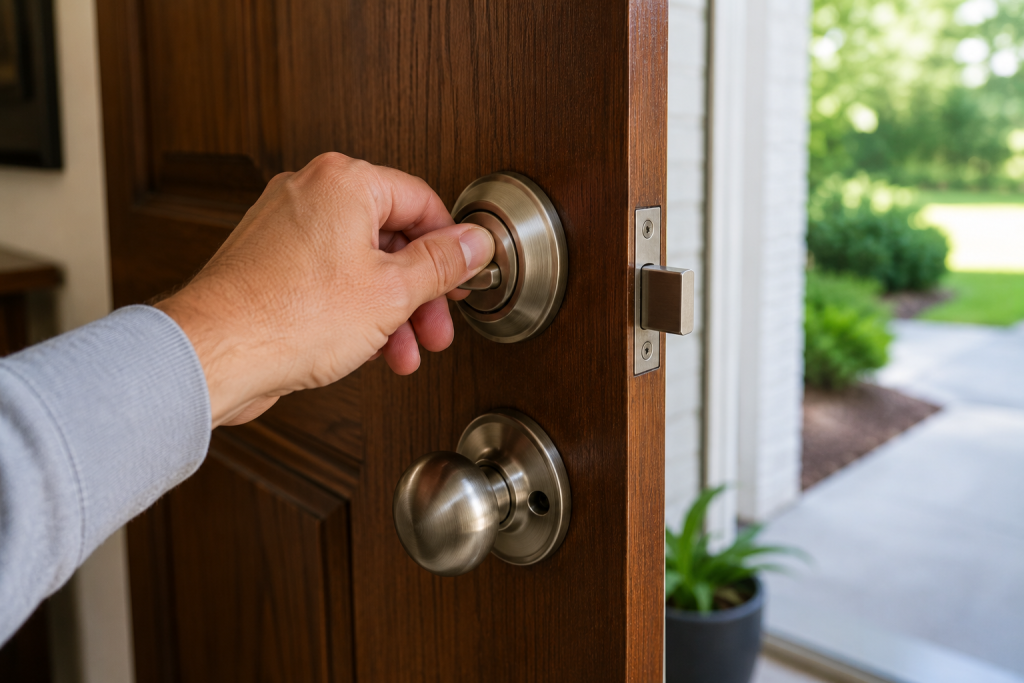
Test the Deadbolt With the Door Open
Step 1: Open the Door
Open the door fully and operate the deadbolt.
Step 2: Check for Smooth Operation
If the deadbolt turns easily with the door open, the lock itself is likely functioning properly.
Step 3: Compare Operation
If the deadbolt becomes difficult only when the door is closed, alignment is usually the problem.
This simple test helps determine whether the issue is with the lock or the door frame.
Inspect Door and Strike Plate Alignment
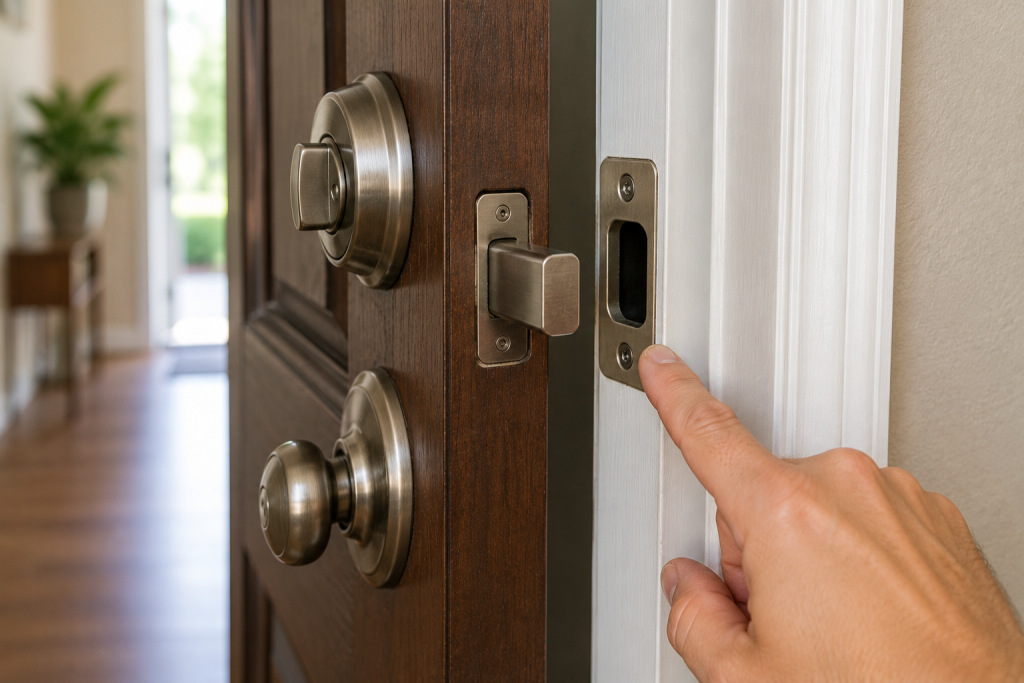
Step 1: Lock the Door Slowly
Observe whether the deadbolt rubs against the strike plate opening.
Step 2: Look for Scrape Marks
Metal scratches on the strike plate often indicate misalignment.
Step 3: Tighten or Adjust Hardware
Slight adjustments to the strike plate can restore proper alignment.
For additional door repair help, see our guide on 7 Powerful Tricks on How to Fix a Sagging Door Without Removing It (DIY Guide).
Tighten Loose Hinges
Step 1: Inspect All Hinges
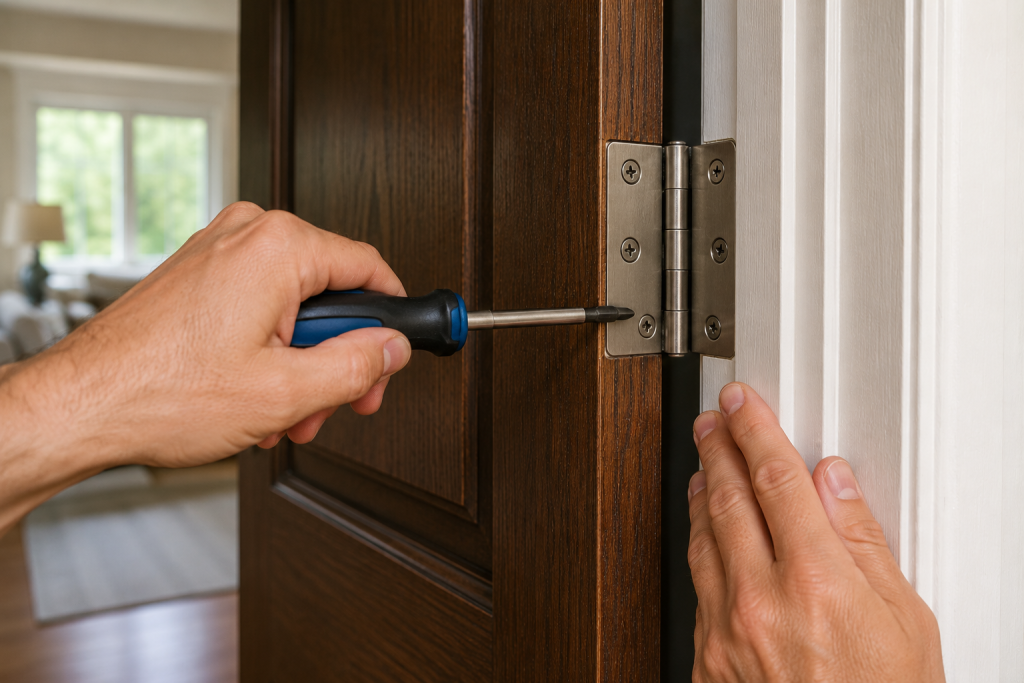
Check each hinge for loose screws.
Step 2: Tighten Fasteners
Use a screwdriver to secure loose screws.
Step 3: Replace Short Screws
As an Amazon Associate I earn from qualifying purchases.
If short hinge screws are not gripping securely, longer door-hinge screws may help secure the hinge to solid framing. Match the screw gauge and head shape to your hinge, and choose a length appropriate for the door-frame construction. Tighten gradually and recheck alignment to avoid pulling the jamb out of position.
Even minor hinge movement can affect how the deadbolt lines up with the strike plate.
Lubricate the Lock Cylinder
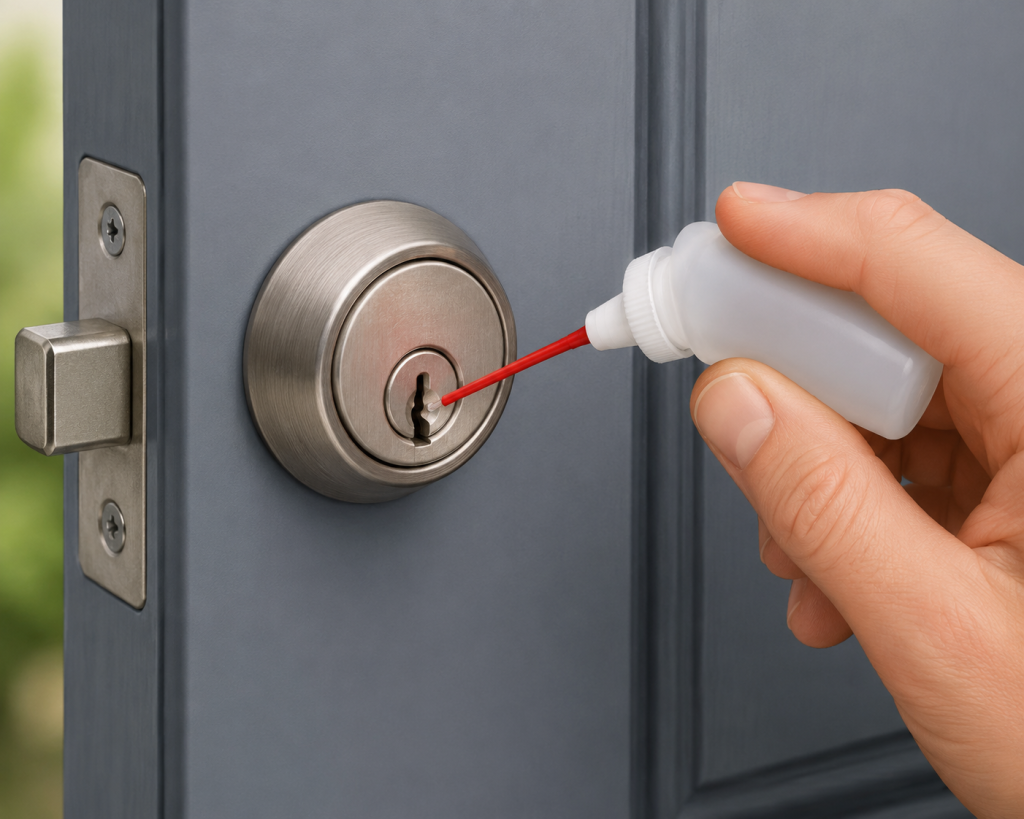
Step 1: Choose the Correct Lubricant
If the cylinder needs lubrication, browse lock-cylinder lubricants on Amazon. Choose a product recommended by your lock’s manufacturer and apply only the instructed amount. Lubrication may help a stiff cylinder, but it will not correct a misaligned door or strike plate.
Step 2: Apply Lubricant
Insert the lubricant into the keyway.
Step 3: Work the Key
Insert and remove the key several times to distribute the lubricant.
Avoid oil-based products that can attract dust and debris.
Clean Dirt and Debris From the Lock
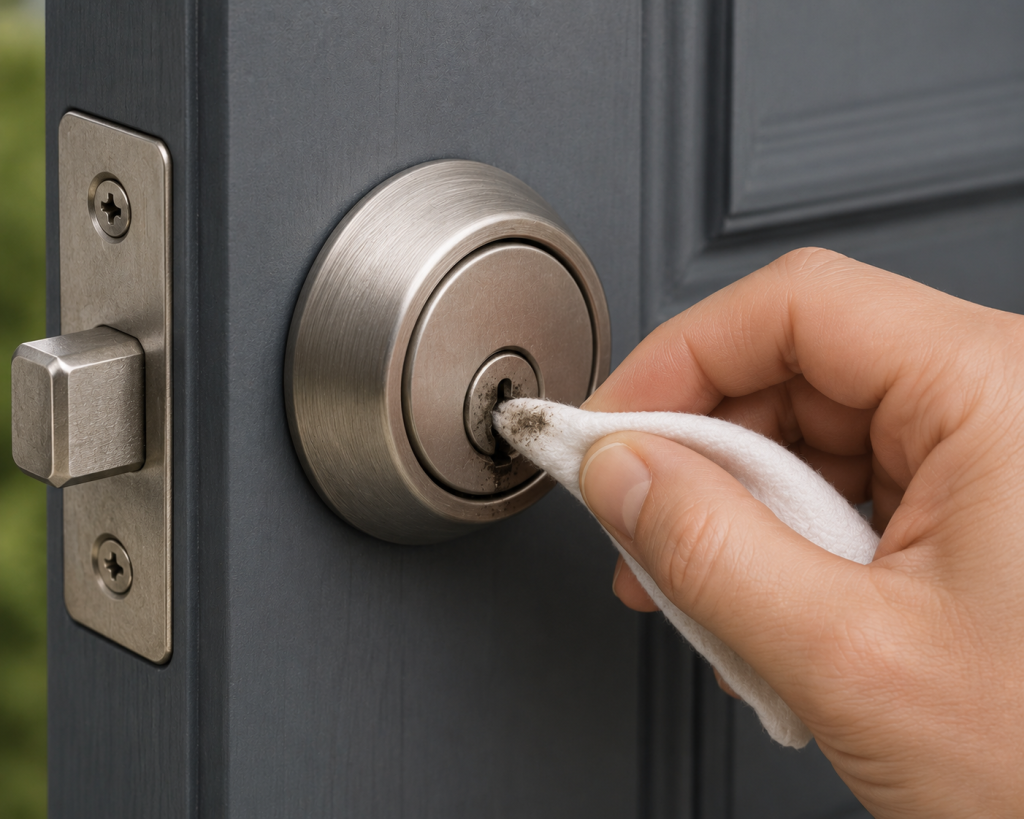
Step 1: Inspect the Keyway
Use a flashlight to look for visible debris.
Step 2: Blow Out Dust
Compressed air can help remove dirt from the cylinder.
Step 3: Retest the Lock
Check whether the deadbolt now turns more freely.
A buildup of dust and grime can make a deadbolt hard to turn over time.
Check for Seasonal Expansion
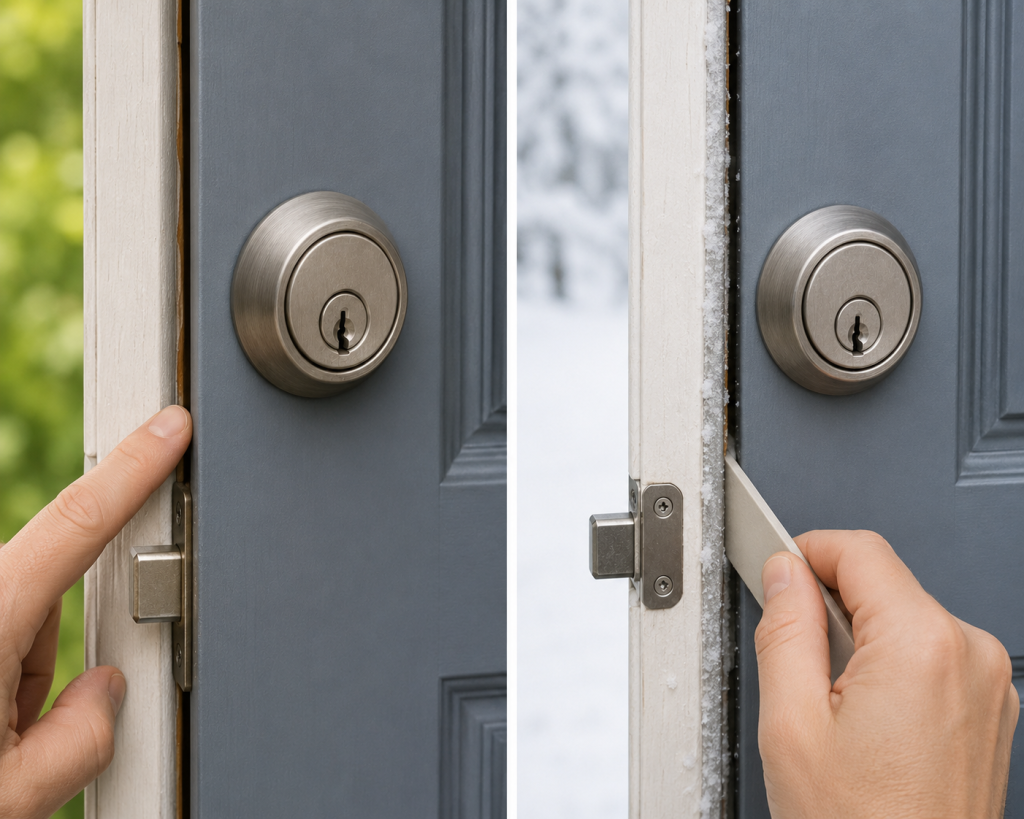
Step 1: Consider Recent Weather Changes
Wood doors and frames can expand during periods of high humidity.
Step 2: Inspect Door Gaps
Look for uneven spacing around the door.
Step 3: Monitor Changes
If the problem appears only during certain seasons, expansion may be the cause.
This issue is especially common during humid summer months.
Inspect the Deadbolt for Wear
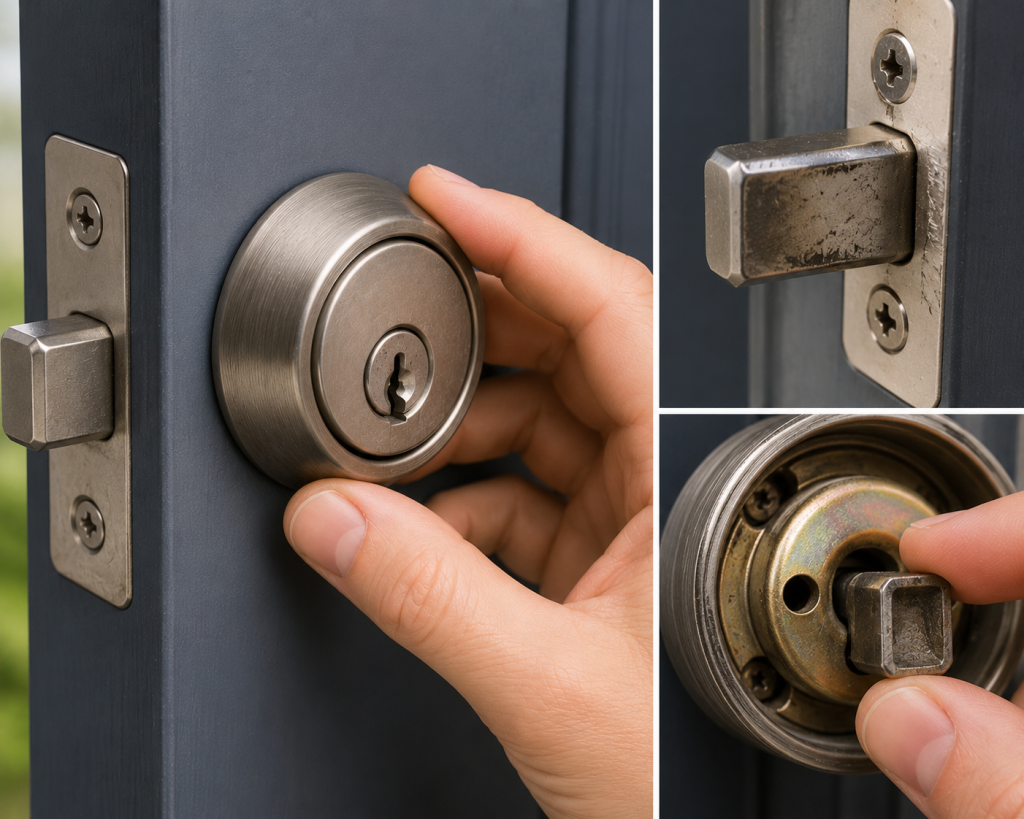
Step 1: Remove the Interior Cover
Access the lock’s internal components.
Step 2: Check for Damage
Look for worn gears, bent components, or excessive wear.
Step 3: Replace Damaged Parts
Severely worn locks are often more cost-effective to replace than repair.
Older locks may develop internal resistance that causes difficult operation.
Replace the Deadbolt if Necessary
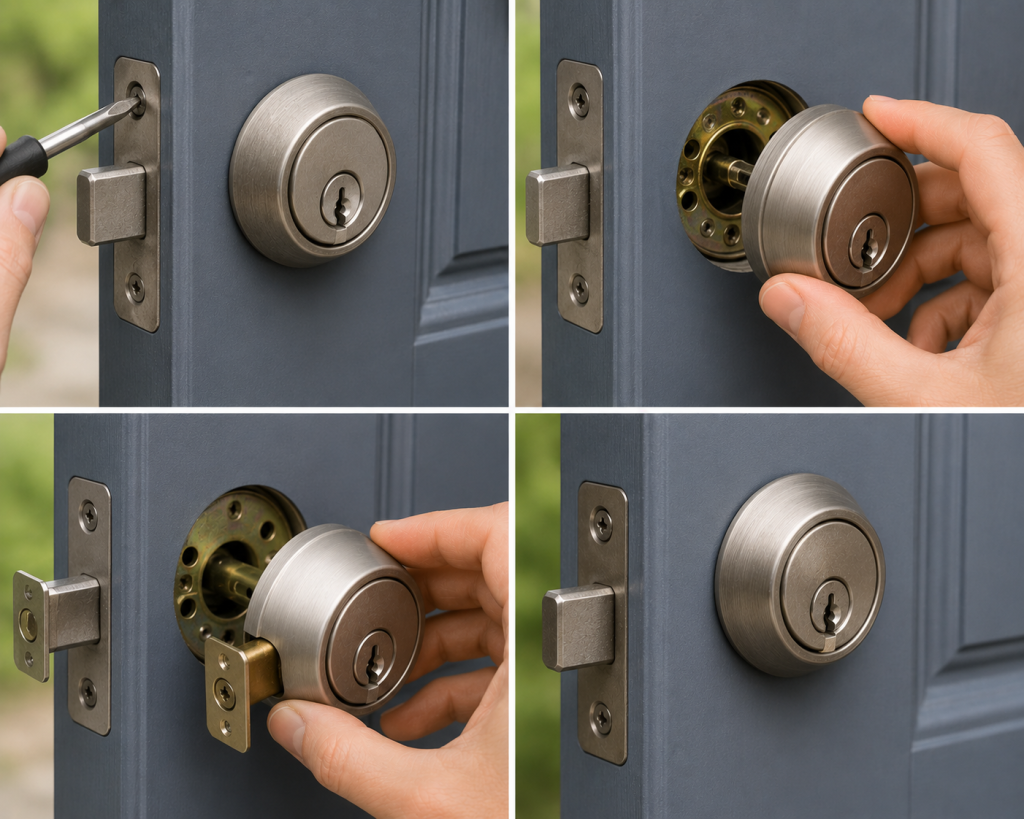
Step 1: Remove the Existing Lock
Follow the manufacturer’s removal instructions.
Step 2: Install a New Deadbolt
If the deadbolt remains stiff with the door open and diagnosis confirms internal damage, browse replacement residential deadbolts on Amazon. Check your door thickness, existing hole dimensions, and backset—the distance from the door edge to the center of the lock hole—before ordering. Also consider whether you want the new lock keyed to match your other doors.
Step 3: Test Operation
Verify smooth locking and unlocking before completing installation.
If the lock continues to bind despite alignment and lubrication efforts, replacement may be the best solution.
For additional lock and door maintenance information, visit Schlage Home Security Resources.
When to Call a Locksmith
Step 1: Rule Out Basic Issues
Check alignment, hinges, lubrication, and debris.
Step 2: Evaluate Lock Condition
If the key sticks or the cylinder binds, internal damage may be present.
Step 3: Contact a Professional
A locksmith can diagnose worn lock components and alignment issues that are difficult to identify visually.
Frequently Asked Questions
Why is my deadbolt hard to turn when the door is closed?
This is usually caused by door or strike plate misalignment rather than a problem inside the lock.
Can I use WD-40 on a deadbolt?
Most locksmiths recommend using graphite or lock-specific lubricants instead of WD-40 because oil-based products can attract dirt.
Why does my deadbolt work fine with the door open?
If the deadbolt operates normally with the door open, the lock is likely functioning correctly and the issue is usually alignment-related.
Can humidity make a deadbolt hard to turn?
Yes. High humidity can cause wood doors and frames to expand, affecting deadbolt alignment.
Should I replace a deadbolt that is difficult to turn?
Not always. Many deadbolt issues can be corrected through alignment adjustments, lubrication, or minor repairs before replacement becomes necessary.
Why won’t my deadbolt turn even with the correct key?
If your deadbolt won’t turn with the correct key, the lock cylinder may be dirty, damaged, or out of alignment with the strike plate.
Looking for help with another door or window problem? Browse our complete collection of door and window repair guides.
Final Thoughts
By following these troubleshooting steps, you can usually fix a deadbolt won’t turn problem without replacing the entire lock. A deadbolt hard to turn is often caused by door misalignment, loose hinges, dirt buildup, or normal wear inside the lock. Start with simple troubleshooting steps such as checking alignment and lubricating the cylinder before replacing the lock. Addressing the problem early can prevent a complete lock failure and help keep your home secure.