
Last updated: October 14, 2026
By Home Repair Genie
Quick Answer
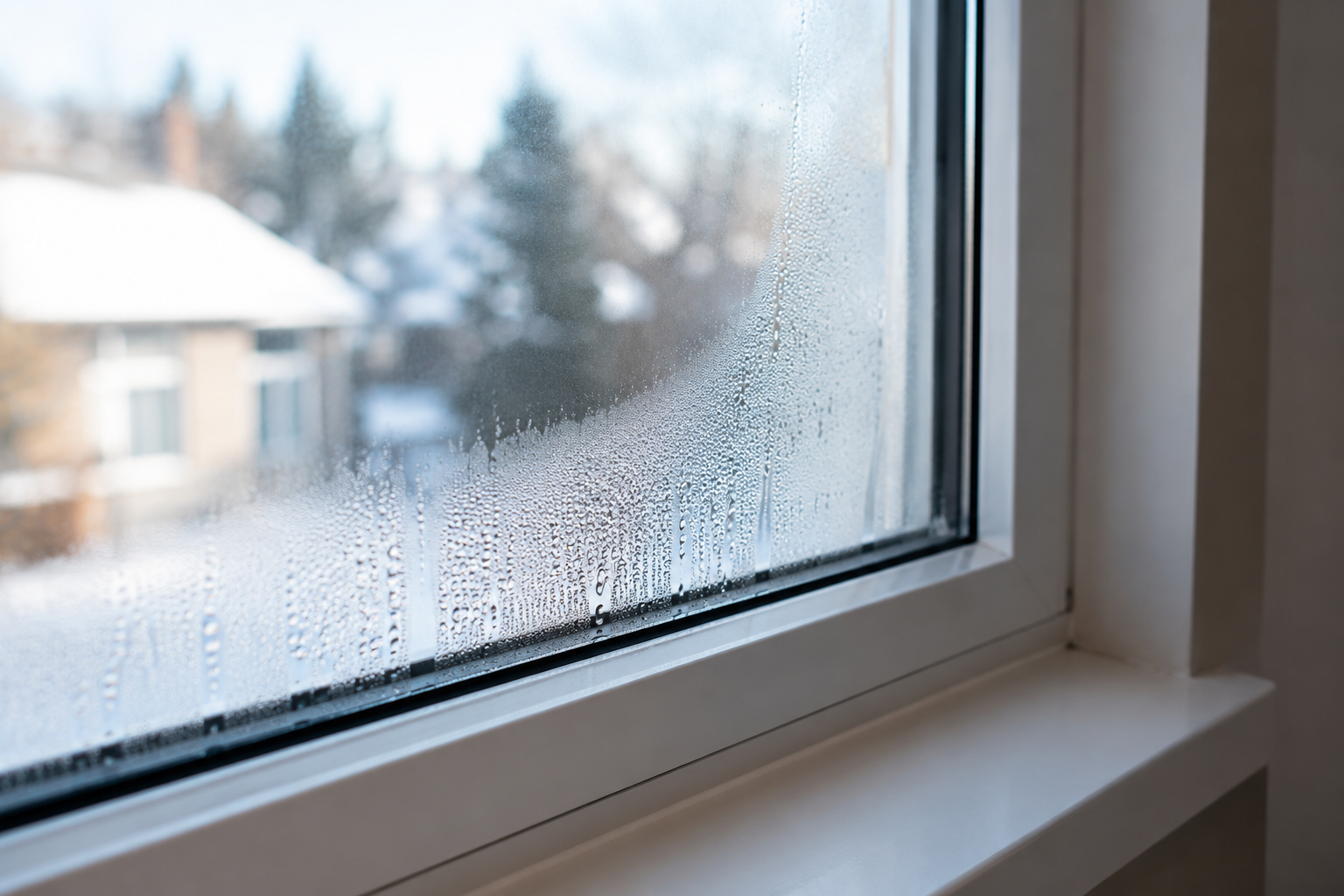
Window condensation between panes occurs when the seal on a double-pane or triple-pane window fails, allowing moisture to enter the space between the glass layers. Unlike condensation on the inside or outside surface of a window, moisture trapped between panes cannot be wiped away. In most cases, the solution involves replacing the insulated glass unit (IGU) or the entire window if the frame is damaged or outdated.
What Causes Window Condensation Between Panes?
Modern double-pane and triple-pane windows contain multiple layers of glass separated by a sealed air or gas-filled space. This design improves energy efficiency and reduces heat transfer.
When the perimeter seal fails, outside air and moisture can enter the space between the panes. As temperatures change, water vapor condenses on the interior surfaces of the glass, creating a foggy appearance.
Common causes include:
- Aging window seals
- Exposure to extreme weather
- UV damage
- Improper installation
- Frame movement and settling
- Physical damage to the window
Once the seal fails, the insulating gas typically escapes and moisture begins accumulating inside the unit.
How to Confirm Window Condensation Between Panes
Look for Moisture That Cannot Be Wiped Away
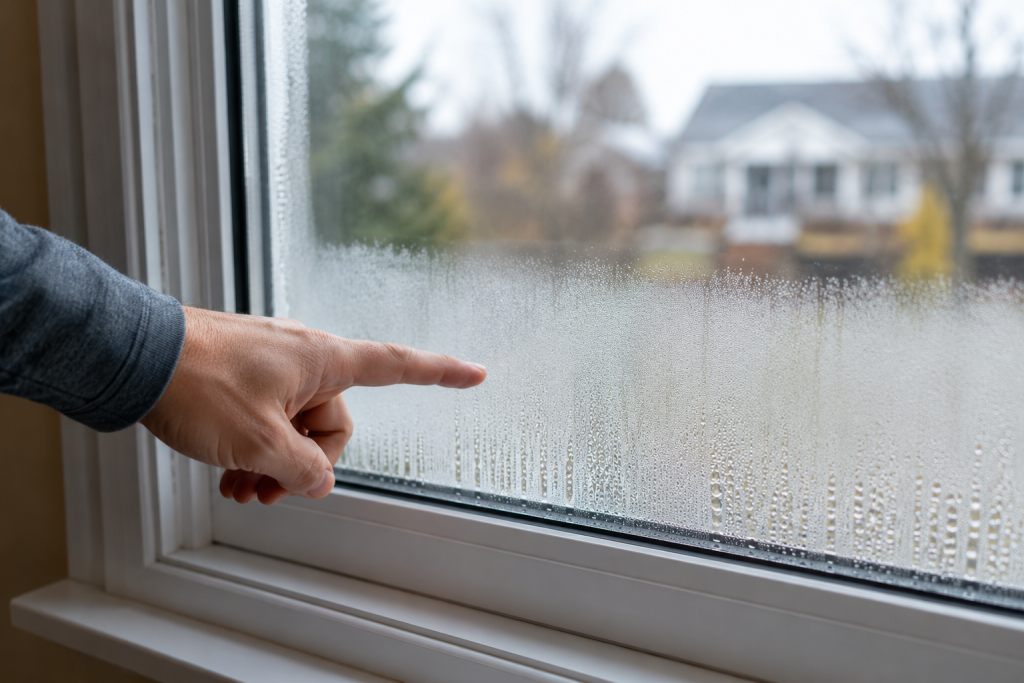
If you suspect window condensation between panes, it’s important to verify that the moisture is trapped inside the insulated glass unit rather than on the interior or exterior surface.
Try cleaning both the interior and exterior surfaces of the window.
As an Amazon Associate I earn from qualifying purchases.
Use a soft microfiber glass-cleaning cloth to wipe the accessible window surfaces, following the manufacturer’s cleaning instructions. If the moisture remains visible between the panes after both surfaces are clean and dry, surface cleaning will not remove it.
If the fog or water droplets remain visible after cleaning, the condensation is likely trapped between the glass panes.
Inspect the Window During Temperature Changes
Condensation between panes often becomes more noticeable during mornings, evenings, or periods of high humidity.
Watch for:
- Persistent fogging
- Water droplets inside the glass unit
- Hazy or cloudy areas
- Mineral deposits or streaks
Compare Other Windows in the Home
If only one or two windows show the problem, those individual seals have likely failed.
If many windows are affected, age-related seal failure may be occurring throughout the home.
Check for Visible Seal Failure
Inspect the Window Edges
Examine the perimeter where the glass meets the spacer and frame.
Look for:
- Cracked sealant
- Gaps
- Discoloration
- Warped spacer materials
Visible damage often confirms the insulating glass seal has failed.
Look for Permanent Fogging
Temporary condensation can disappear as weather conditions change.
Failed seals typically produce fogging that returns repeatedly or never fully clears.
Determine Whether the Glass Unit Can Be Replaced
Identify the Window Manufacturer
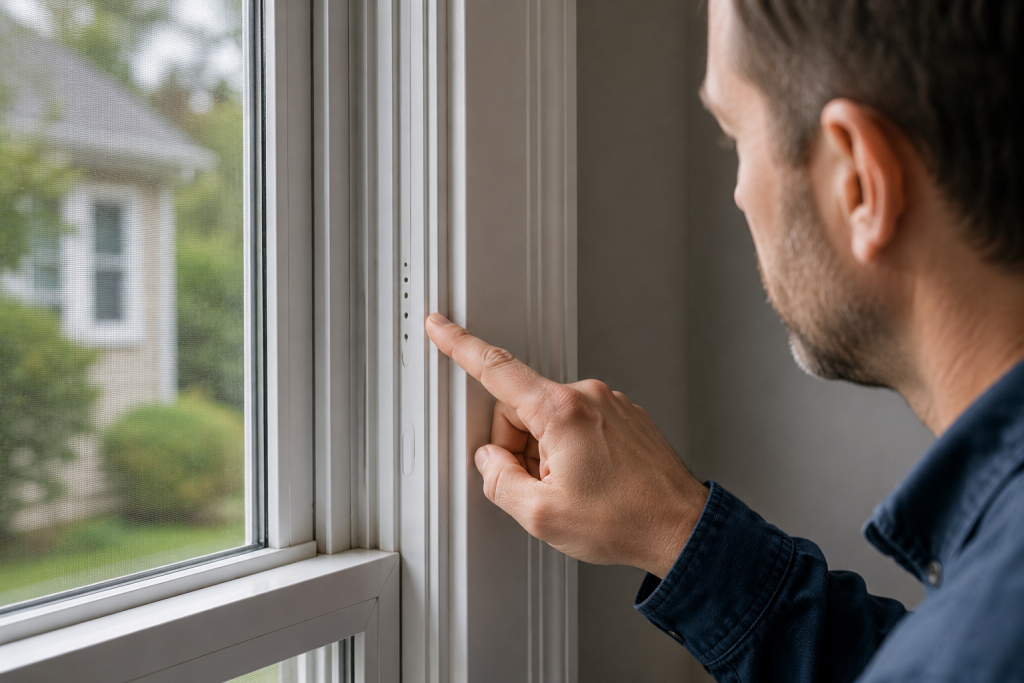
Many windows have a sticker, etching, or label located on:
- The frame
- Window sash
- Spacer between panes
The manufacturer may offer replacement insulated glass units without requiring a full window replacement.
Check Warranty Coverage
Some window warranties cover seal failures for a specific number of years.
Contact the manufacturer before paying for repairs.
Keep the following information ready:
- Manufacturer name
- Window model
- Approximate installation date
Replace the Insulated Glass Unit (IGU)
Remove the Window Stops or Sash
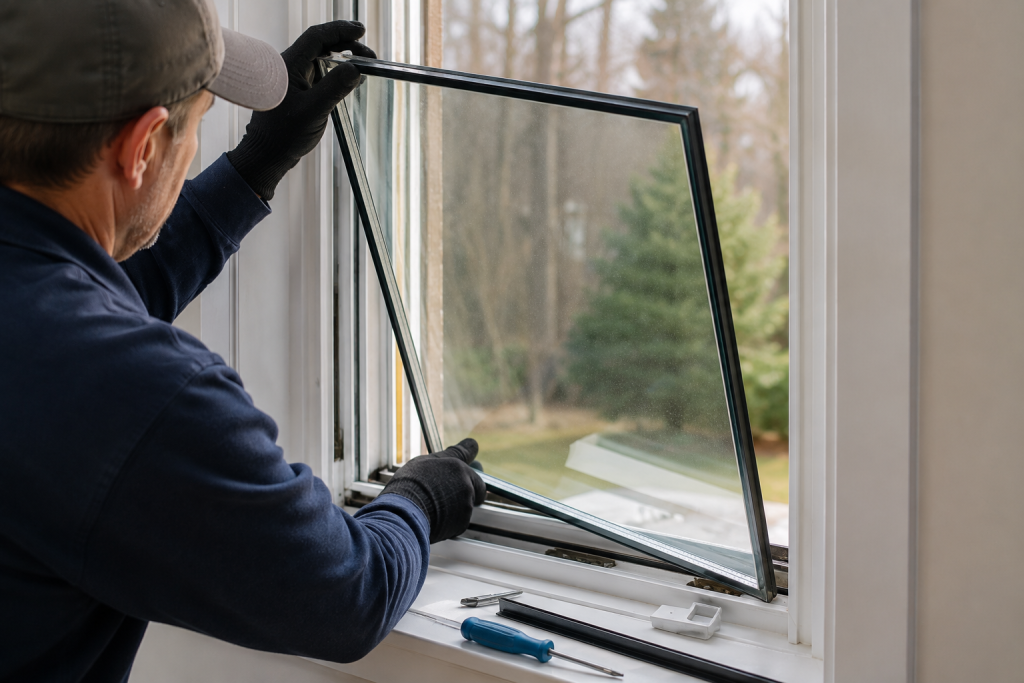
Many modern windows allow the insulated glass unit to be replaced independently of the frame.
Depending on the design, a professional may:
- Remove interior stops
- Remove the failed glass unit
- Install a new insulated glass panel
- Reinstall trim and seals
This is often the most cost-effective repair.
Verify Proper Seal Installation
A new insulated glass unit should:
- Be factory sealed
- Contain insulated air space or gas fill
- Fit tightly within the frame
Proper installation helps prevent future moisture intrusion.
For more information about preventing moisture-related issues around your home, see our guide on Bathroom Exhaust Fan Not Working.
Consider Full Window Replacement
Evaluate the Condition of the Frame
Replacing only the glass may not be worthwhile if the window frame has:
- Rot
- Structural damage
- Warping
- Significant air leaks
Older windows with poor energy efficiency may benefit from full replacement.
Compare Long-Term Costs
A new insulated glass unit is usually less expensive than replacing the entire window.
However, full replacement may provide:
- Better energy efficiency
- Improved appearance
- Enhanced comfort
- New warranty protection
Can You Fix Window Condensation Between Panes Without Replacing the Glass?
Temporary Defogging Services
Some companies offer window defogging services that involve drilling small holes into the glass unit.
These services may:
- Remove trapped moisture
- Improve visibility
- Reduce fogging temporarily
However, they generally do not restore the original insulating performance of the window.
For additional information on energy-efficient windows and home performance, visit the U.S. Department of Energy Window Guide.
Understand the Limitations
Defogging cannot:
- Restore lost insulating gas
- Recreate the factory seal
- Fully recover original efficiency
In most cases, glass replacement remains the preferred long-term solution.
How to Prevent Future Window Seal Failures
Avoid Pressure Washing Window Edges
High-pressure water can damage seals and force moisture into vulnerable areas.
Use gentle cleaning methods whenever possible.
Maintain Proper Drainage Around Windows
Inspect:
- Exterior caulking
- Flashing
- Siding connections
If inspection reveals deteriorated exterior caulking around the window frame, browse exterior window and door sealants on Amazon. Choose a product compatible with the frame and surrounding materials, and follow the window manufacturer’s application instructions. Keep weep holes and drainage openings clear. Exterior caulking does not repair a failed seal between glass panes.
Preventing water intrusion helps extend window life.
Address Excessive House Movement
Foundation settlement and structural shifting can place stress on window frames and seals.
Monitor windows that suddenly become difficult to open or close.
Inspect Windows Annually
Check for:
- Cracked caulk
- Frame damage
- Drafts
- Early signs of fogging
Identifying problems early can prevent more extensive repairs.
For other common home maintenance issues, visit our guides on Ceiling Fan Not Working and Light Switch Not Working.
Frequently Asked Questions
Is condensation between window panes a sign of a bad window?
Yes. In most cases, condensation between panes indicates the insulated glass seal has failed.
Can I wipe away condensation between the panes?
No. Moisture trapped between glass layers cannot be reached from either side of the window.
Does homeowners insurance cover failed window seals?
Usually not. Seal failure is generally considered normal wear and tear rather than sudden accidental damage.
How much does it cost to replace a failed insulated glass unit?
Costs vary by size and style, but replacing the glass unit is often significantly less expensive than replacing the entire window.
Will condensation between panes get worse over time?
Yes. Most failed seals continue to allow moisture infiltration, causing increasing fogging and reduced energy efficiency.
Should I replace the glass or the entire window?
If the frame is in good condition, replacing the insulated glass unit is often sufficient. If the frame is damaged or outdated, full window replacement may be the better investment.
Looking for help with another door or window problem? Browse our complete collection of door and window repair guides.
Final Thoughts
Window condensation between panes is one of the most common signs of a failed insulated glass seal. While temporary defogging services may improve appearance, replacing the insulated glass unit is typically the most effective long-term solution. By identifying seal failure early and evaluating the condition of the window frame, homeowners can choose the most cost-effective repair while restoring visibility and energy efficiency.