
Last updated: October 16, 2026
By Home Repair Genie
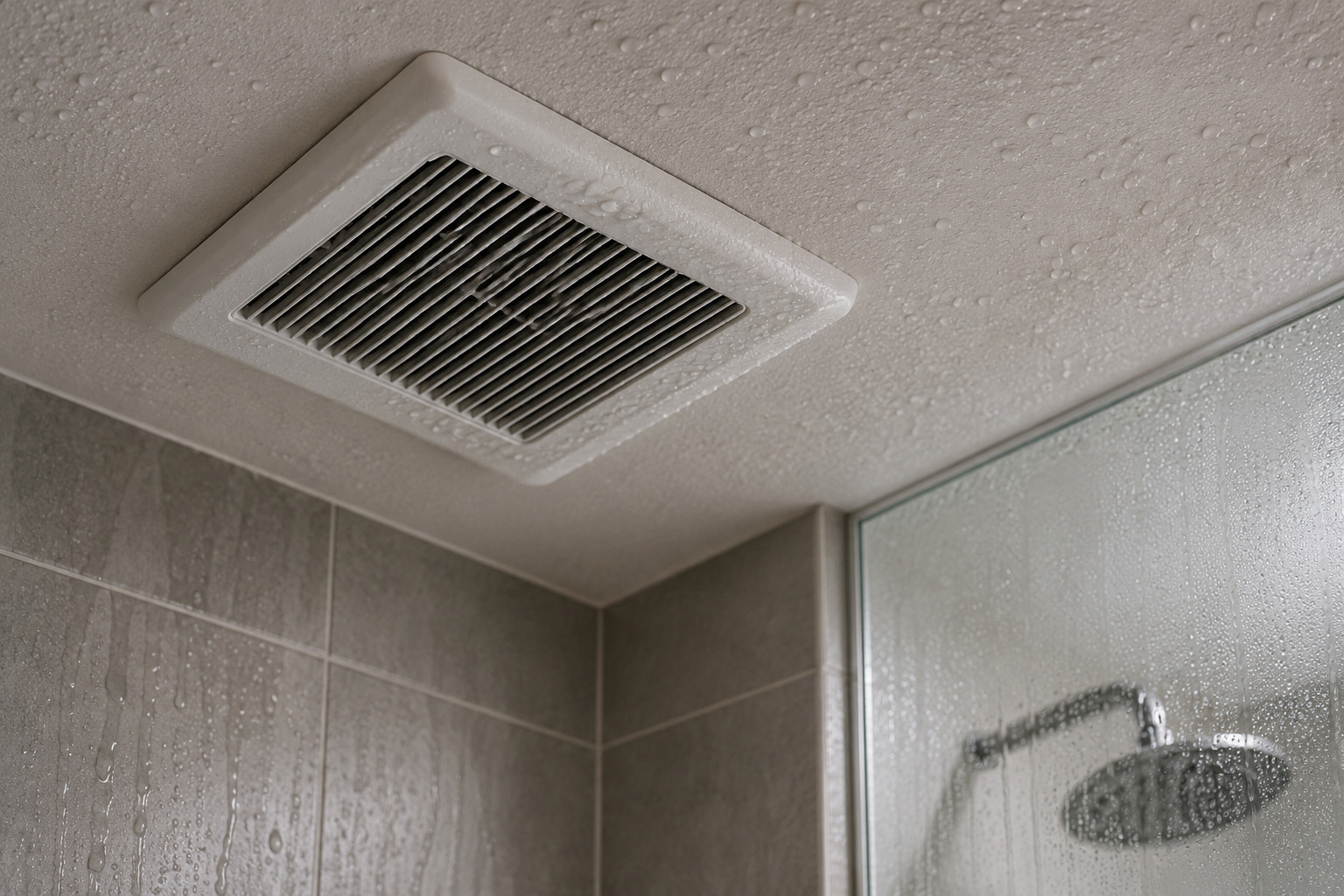
A bathroom fan not removing moisture can generate a significant amount of humidity from showers and baths. If your bathroom fan is not removing moisture effectively, you may notice fogged mirrors, peeling paint, mildew growth, or lingering dampness. Fortunately, most moisture removal problems can be fixed without replacing the entire fan.
Quick Answer
If your bathroom fan is not removing moisture, the most common causes are a dirty fan, blocked ductwork, improperly sized fan, leaking duct connections, clogged exterior vent, or inadequate run time. Cleaning the fan and checking the vent system often restores proper airflow and moisture removal.
Why Is My Bathroom Fan Not Removing Moisture?
Before troubleshooting, look for these common symptoms:
- Mirrors remain fogged long after showers
- Condensation forms on walls or ceilings
- Paint begins peeling near the shower
- Mold or mildew develops around fixtures
- Bathroom smells damp or musty
- Moisture spreads into nearby rooms
If you notice one or more of these issues, work through the following steps.
Step 1: Clean the Bathroom Exhaust Fan
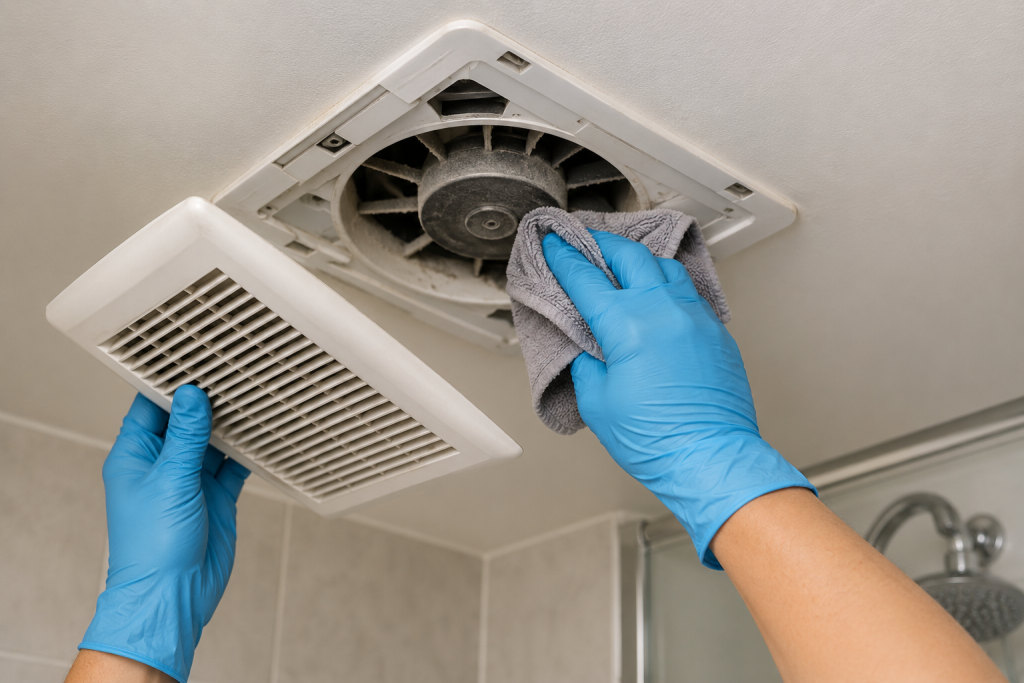
Dust buildup is one of the most common causes of poor airflow.
How to Clean the Fan
- Turn off power to the fan.
- Remove the fan cover.
- Vacuum dust from the grille and housing.
- Clean the fan blades using a soft brush.
- Wipe the cover before reinstalling.
A heavily clogged fan can lose a significant amount of its airflow capacity.
As an Amazon Associate I earn from qualifying purchases.
A soft-bristle cleaning brush can help loosen dust from the grille and fan blades before vacuuming. Keep power off at the breaker while cleaning, and avoid bending the blades or getting electrical components wet.
For additional ventilation troubleshooting, see our guide on AC Fan Not Spinning but Unit Is On (7 Easy Fixes You Can Try First).
Step 2: Verify the Fan Is Running Properly
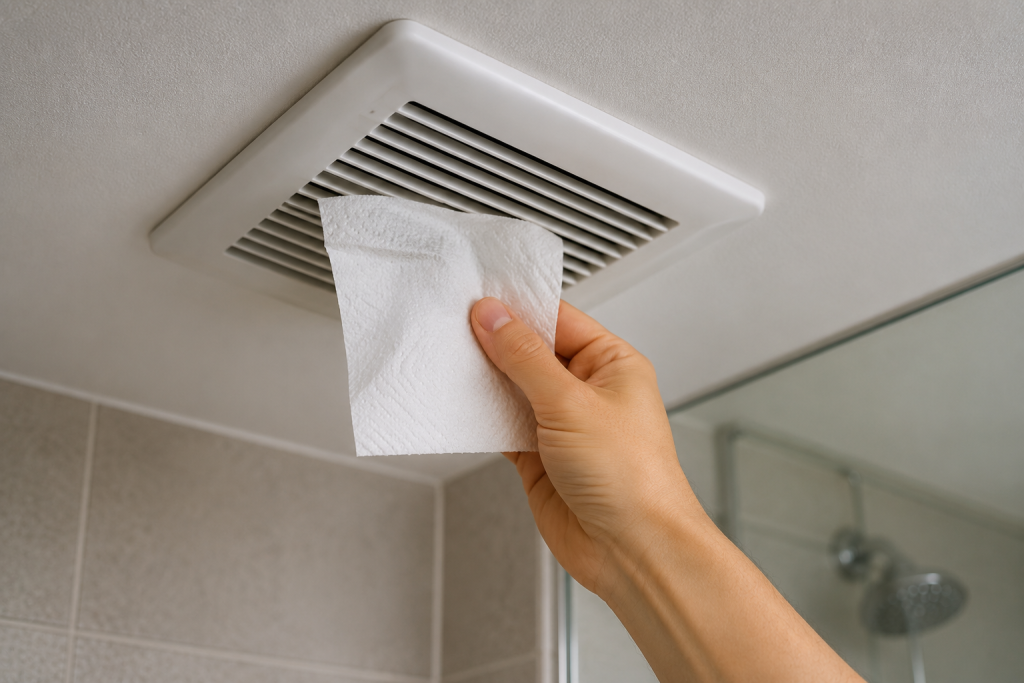
A fan may appear to operate while actually moving very little air.
How to Test Airflow
- Turn on the fan.
- Hold a single sheet of toilet paper against the grille.
- The paper should stick firmly to the fan cover.
- If it falls away, airflow may be insufficient.
Weak airflow can indicate a failing motor, dirty blades, or duct restrictions.
Step 3: Check for a Blocked Exterior Vent
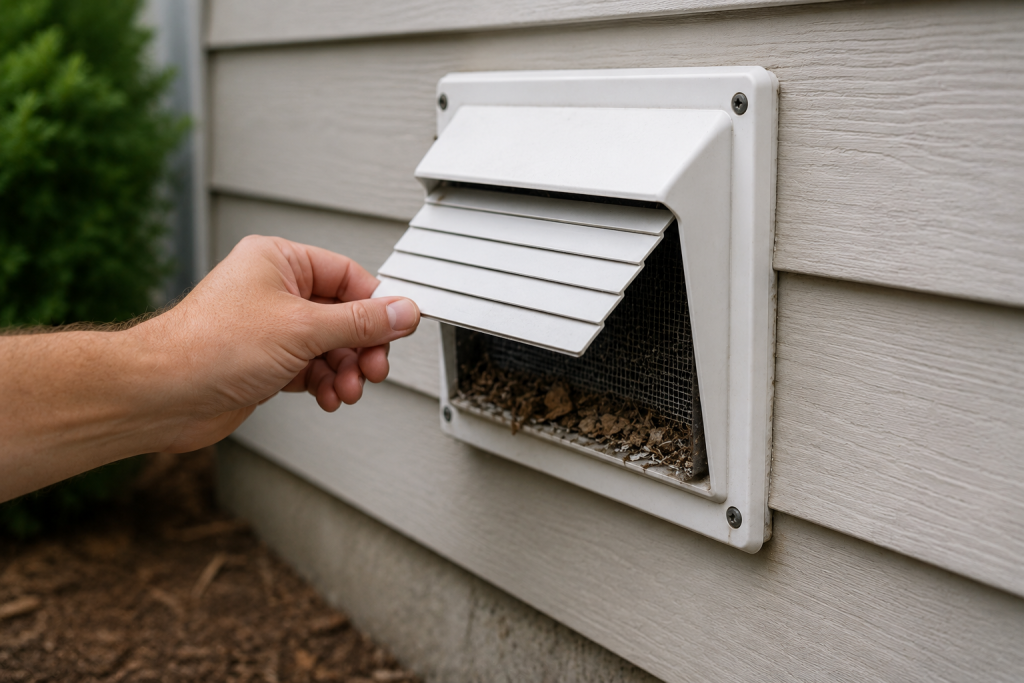
Bathroom fans exhaust moisture outdoors through a vent hood.
Inspect the Exterior Vent
- Locate the vent outside your home.
- Ensure the damper opens when the fan runs.
- Remove leaves, lint, dirt, or insect nests.
- Verify the vent flap moves freely.
A blocked vent can dramatically reduce airflow and allow moisture to remain trapped indoors.
Step 4: Inspect the Ductwork for Restrictions
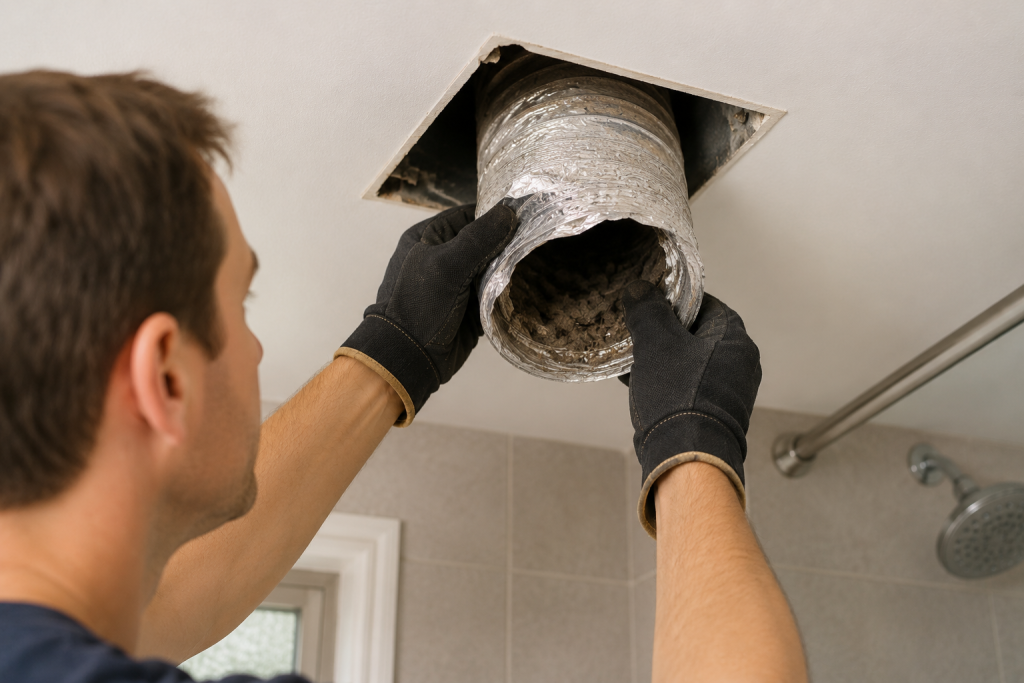
Damaged or disconnected ducts prevent moisture from reaching the exterior.
Check the Exhaust Duct
- Access the duct in the attic if possible.
- Look for crushed or kinked sections.
- Verify all duct connections remain attached.
- Check for excessive bends that restrict airflow.
Smooth metal ducts generally perform better than flexible ducting.
You can learn more about bathroom exhaust fan issues in our guide on Bathroom Exhaust Fan Not Working? 7 Easy Fixes That Actually Work (Step-by-Step Guide).
Step 5: Make Sure the Fan Is Properly Sized
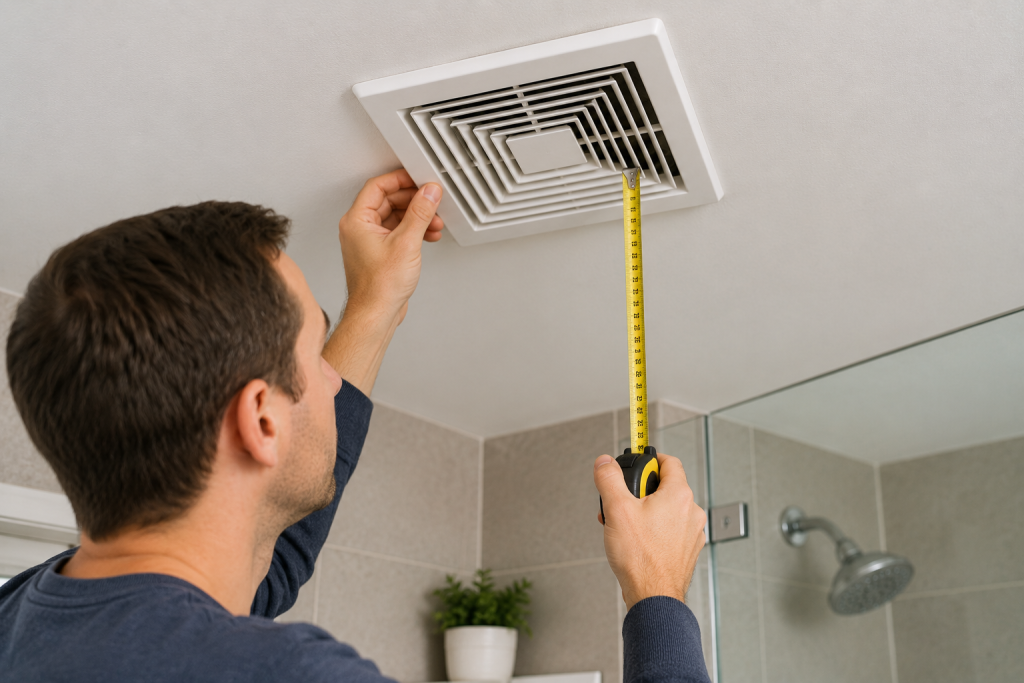
An undersized fan may never remove moisture effectively.
Determine Required Fan Size
Most bathrooms require:
- 50 CFM minimum for small bathrooms
- 80–100 CFM for average bathrooms
- 100+ CFM for large bathrooms or rooms with separate showers
A common guideline is one CFM per square foot of bathroom space.
If your fan is too small, replacement may be necessary.
Step 6: Run the Fan Long Enough
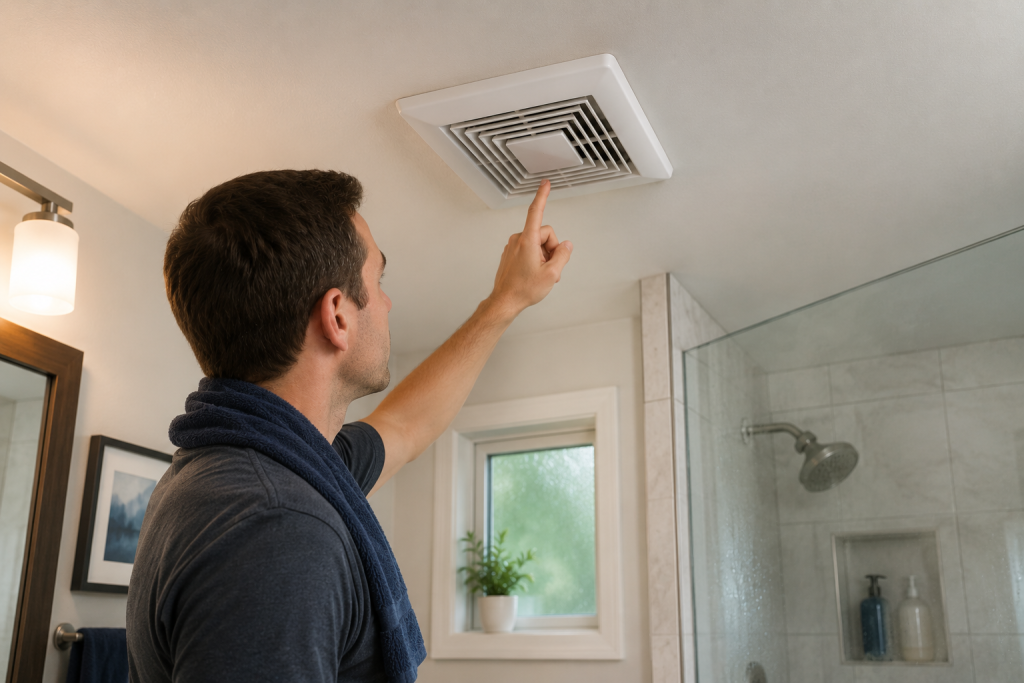
Many homeowners turn the fan off too soon.
Recommended Fan Run Time
- Turn the fan on before showering.
- Keep it running during the shower.
- Continue running it for 20 to 30 minutes afterward.
This extra run time allows lingering moisture to leave the room before it can condense on surfaces.
A bathroom exhaust fan countdown timer switch can help keep the fan running after showers without requiring you to remember to turn it off. Choose a timer rated for your fan motor and compatible with your wiring, including any neutral-wire requirement.
Step 7: Check for Excess Humidity Problems
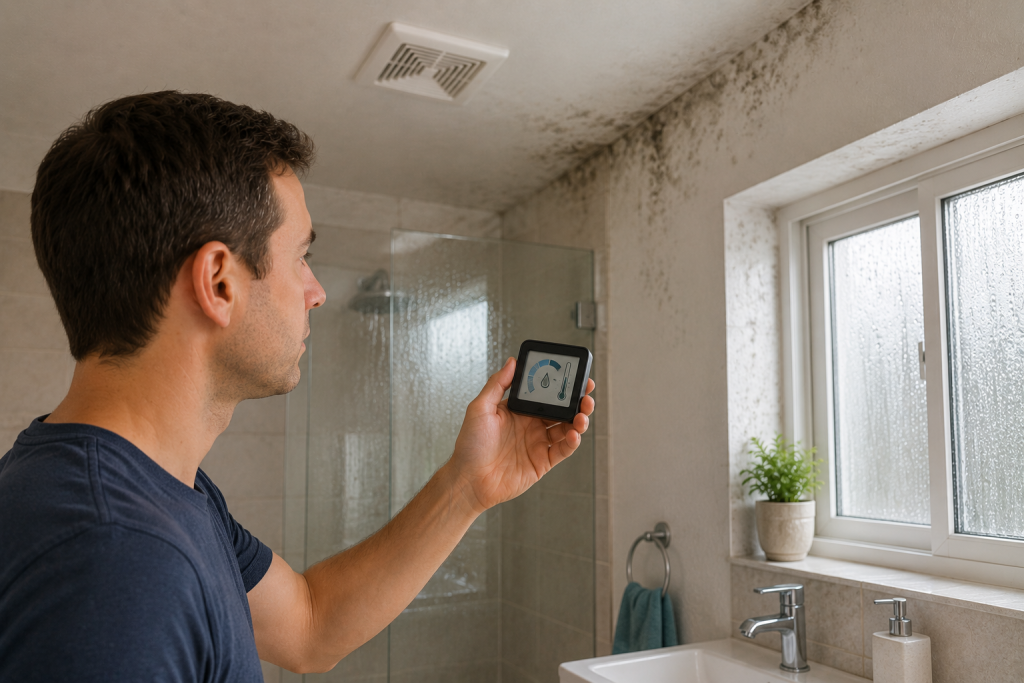
Sometimes the issue extends beyond the fan itself.
Evaluate Overall Moisture Levels
- Use a digital indoor humidity meter to compare bathroom humidity before showering and as the room dries afterward. Keep it away from direct spray and follow its placement instructions. A temporary rise during a shower is expected; watch whether humidity falls back toward the room’s usual level afterward.
- Ideal indoor humidity is typically 30% to 50%.
- Look for plumbing leaks.
- Check window seals and nearby walls for moisture intrusion.
If humidity remains high despite a functioning fan, additional ventilation or a dehumidifier may be needed.
For more information about controlling indoor humidity, visit the U.S. Environmental Protection Agency Moisture Control Guide.
When to Replace the Bathroom Fan
Replacement may be the best solution if:
- The motor is noisy or failing
- Airflow remains weak after cleaning
- The fan is over 10 to 15 years old
- The fan is undersized for the room
- Bathroom fan not removing moisture problems continue despite repairs
Modern fans are typically quieter and more energy-efficient than older models.
If the fan is undersized or failing, compare bathroom exhaust fans with airflow capacity appropriate for your room. Check the ceiling opening, housing dimensions, duct connection, and installation requirements before buying. Correct blocked or damaged ductwork as well, since a new fan alone may not solve restricted airflow.
How to Prevent Bathroom Moisture Problems
Follow these tips to keep humidity under control:
- Run the fan during every shower
- Clean the fan annually
- Keep the exterior vent clear
- Leave the bathroom door slightly open after showering
- Repair plumbing leaks promptly
- Monitor indoor humidity levels
Preventive maintenance helps reduce mold growth and protects walls, ceilings, and fixtures.
Frequently Asked Questions
Why is my bathroom fan not removing moisture?
A dirty fan, blocked duct, clogged exterior vent, undersized fan, or excessive household humidity can all prevent proper moisture removal.
How long should I run my bathroom fan after a shower?
Most experts recommend running the fan for 20 to 30 minutes after showering.
Can a bathroom fan remove mold?
A fan helps prevent mold by reducing moisture, but it will not remove existing mold growth. Existing mold should be cleaned and the moisture source corrected.
What size bathroom fan do I need?
A common rule is one CFM per square foot of bathroom area, with a minimum of 50 CFM for most bathrooms.
Should a bathroom fan vent into the attic?
No. Bathroom fans should vent directly outdoors. Venting into an attic can lead to moisture damage, mold growth, and insulation problems.
Looking for help with another heating or cooling problem? Browse our complete collection of HVAC repair and troubleshooting guides.
Final Thoughts
If you are dealing with a bathroom fan not removing moisture, start with the simplest fixes first. Cleaning the fan, checking the exterior vent, and inspecting the ductwork solve many common airflow problems. If the fan is undersized or aging, upgrading to a properly sized model can significantly improve moisture control and help prevent mold, mildew, and water damage throughout your bathroom.