
Last updated: October 14, 2026
By Home Repair Genie
Quick Answer
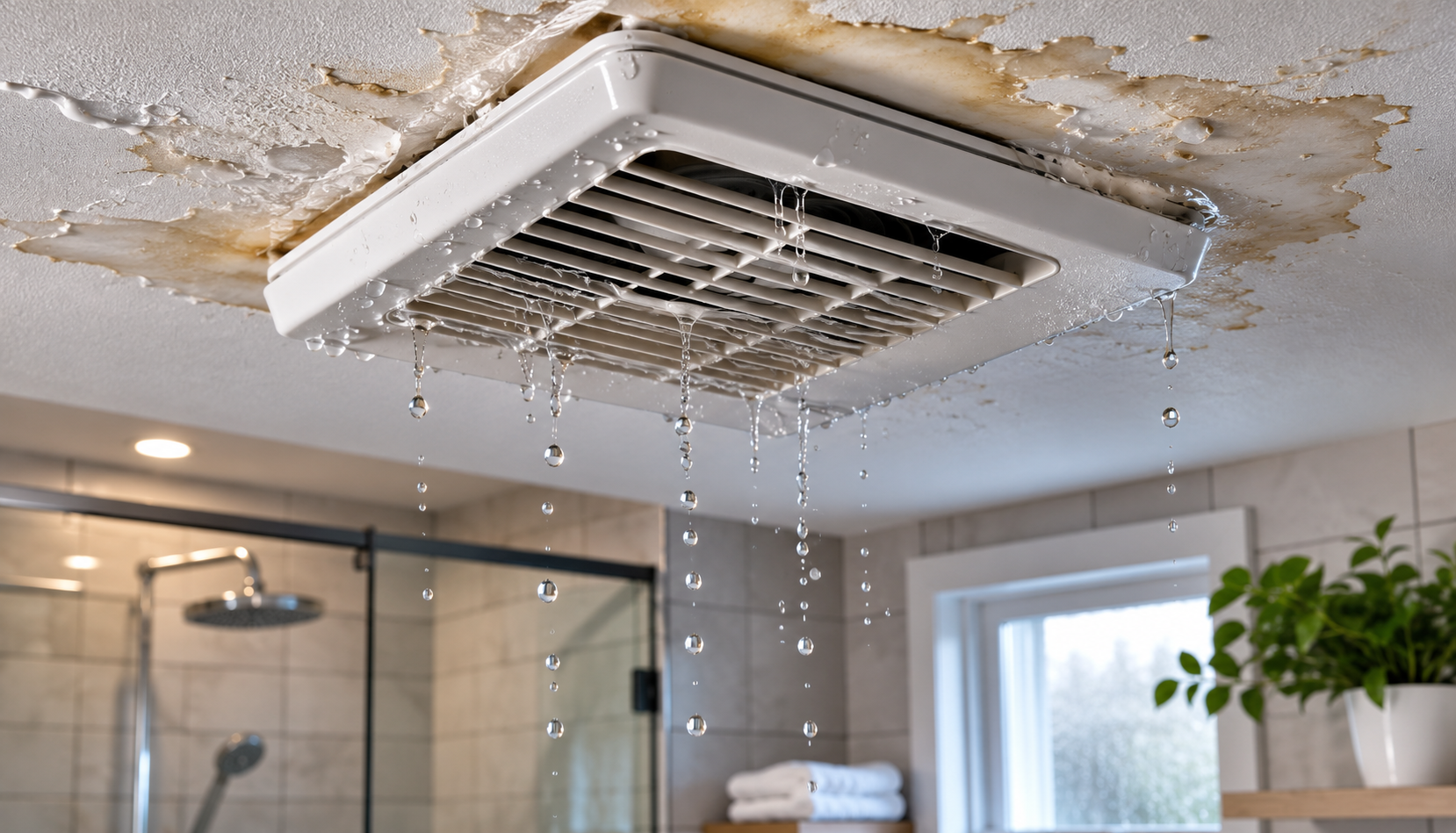
If your bathroom fan is leaking water, the most common cause is condensation forming inside an uninsulated or improperly installed vent duct. Other possible causes include a roof leak, clogged vent cap, damaged flashing, or a disconnected exhaust duct. Start by determining whether the water appears only during or after showers or if it leaks during rainstorms, as this helps identify the source.
Why Is a Bathroom Fan Leaking Water?
Finding water dripping from a bathroom exhaust fan can be alarming. While it may look like a plumbing leak, the problem is often related to moisture, ventilation, or your roof rather than the fan itself.
The key to solving the issue is determining when the leak occurs:
- Only after showers
- During cold weather
- During heavy rain
- Constantly regardless of conditions
Each situation points to a different cause.
If your bathroom fan is humming, but not spinning, check out our guide: Bathroom Fan Humming But Not Spinning: 7 Proven Fixes That Work.
Common Causes of a Bathroom Fan Leaking Water
The most common reason for a bathroom fan leaking water is condensation inside an uninsulated exhaust duct.
Warm, humid bathroom air travels through the exhaust duct into a cold attic or roof vent. If the duct is poorly insulated, moisture condenses inside the pipe and eventually drips back into the fan housing.
Signs include:
- Water appears after hot showers.
- Leaks are worse during winter.
- No signs of roof damage.
- Water is clear and odorless.
This is by far the most common cause in colder climates.
If you find that your bathroom fan is not removing moisture, check out our guide: Bathroom Fan Not Removing Moisture? 7 Easy Fixes That Actually Work.
Roof Leak Around the Vent
Roof flashing can deteriorate over time, allowing rainwater to enter around the vent opening.
Signs include:
- Leaks only during or after rain.
- Water stains on the ceiling.
- Damp attic insulation nearby.
- Moisture appears even when the fan hasn’t been used.
Blocked Exterior Vent Cap
Leaves, bird nests, insect nests, snow, or ice can block the exterior vent.
When airflow is restricted:
- Humidity cannot escape.
- Moisture builds inside the duct.
- Condensation eventually drips back into the fan.
Improperly Installed Vent Duct
Bathroom fan ducts should slope slightly toward the exterior vent.
If the duct sags or slopes back toward the fan:
- Condensation collects.
- Water pools inside the duct.
- The pooled water eventually drains into the fan.
Disconnected Exhaust Duct
Sometimes the flexible duct becomes detached from the fan or roof cap.
Instead of venting outdoors:
- Moist air enters the attic.
- Condensation forms.
- Water may drip through the ceiling around the fan.
Damaged or Cracked Vent Cap
Plastic vent caps eventually become brittle from UV exposure.
Cracks allow:
- Rainwater
- Snow
- Wind-driven moisture
to enter the duct.
How to Fix a Bathroom Fan Leaking Water
Step 1: Determine When the Leak Happens
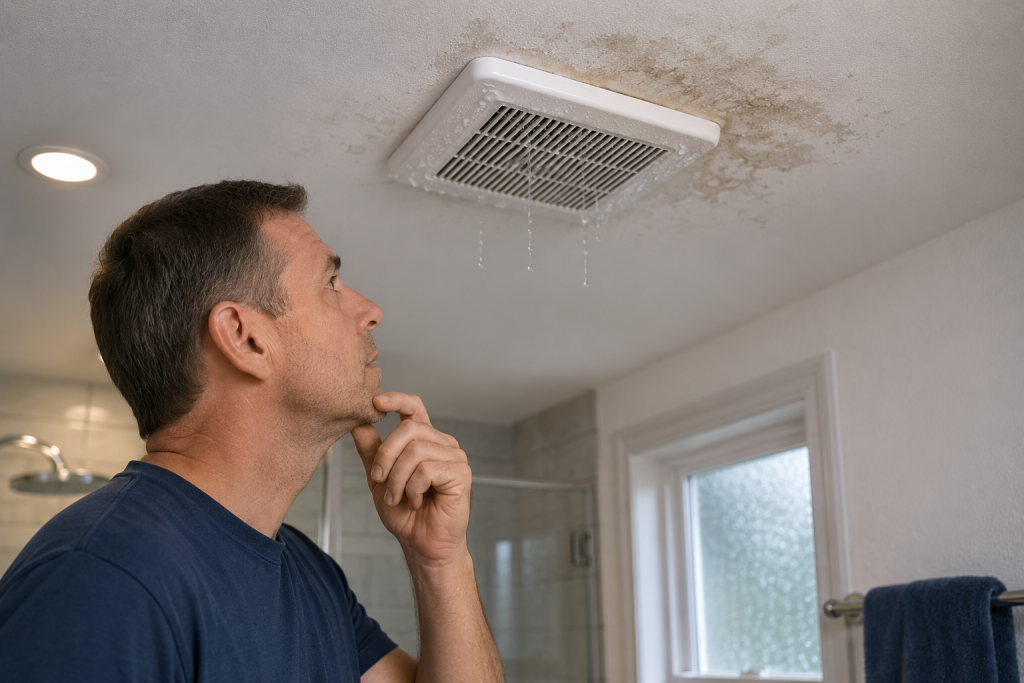
Ask yourself:
- Does it leak only after showers?
- Only during rain?
- During freezing weather?
- All the time?
This simple observation narrows the cause significantly.
Step 2: Inspect the Fan Housing
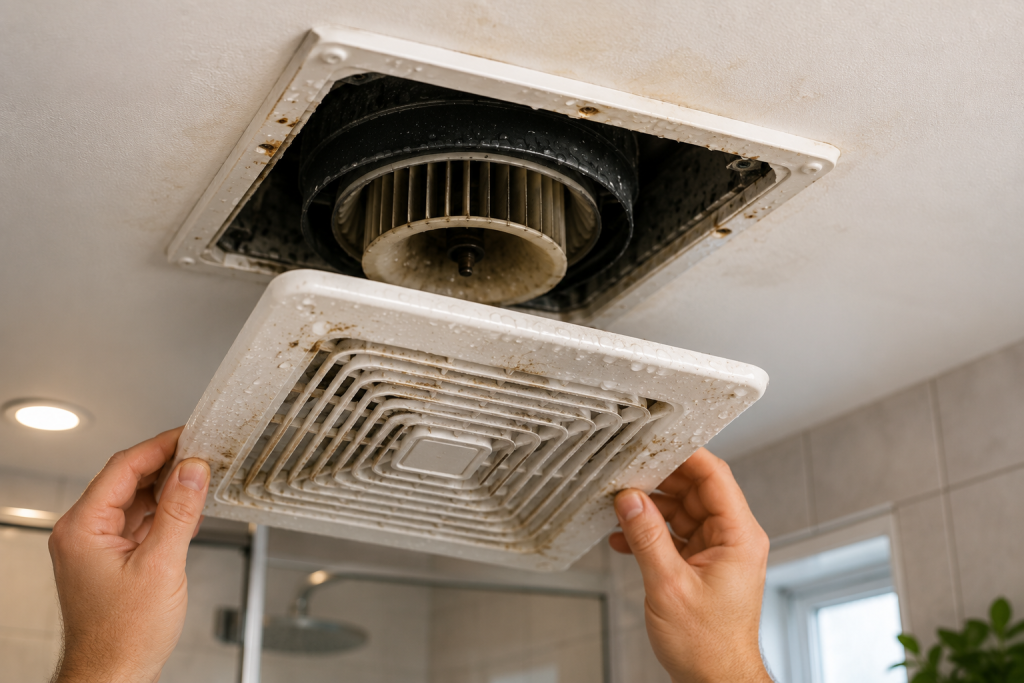
Turn off power at the breaker.
Remove the fan grille and inspect for:
- Rust
- Standing water
- Mold
- Loose duct connections
If the fan is heavily corroded, replacement may be necessary.
If your fan has stopped working altogether, read our guide on Bathroom Exhaust Fan Not Working? 8 Easy Fixes That Actually Work.
Step 3: Check the Vent Duct in the Attic
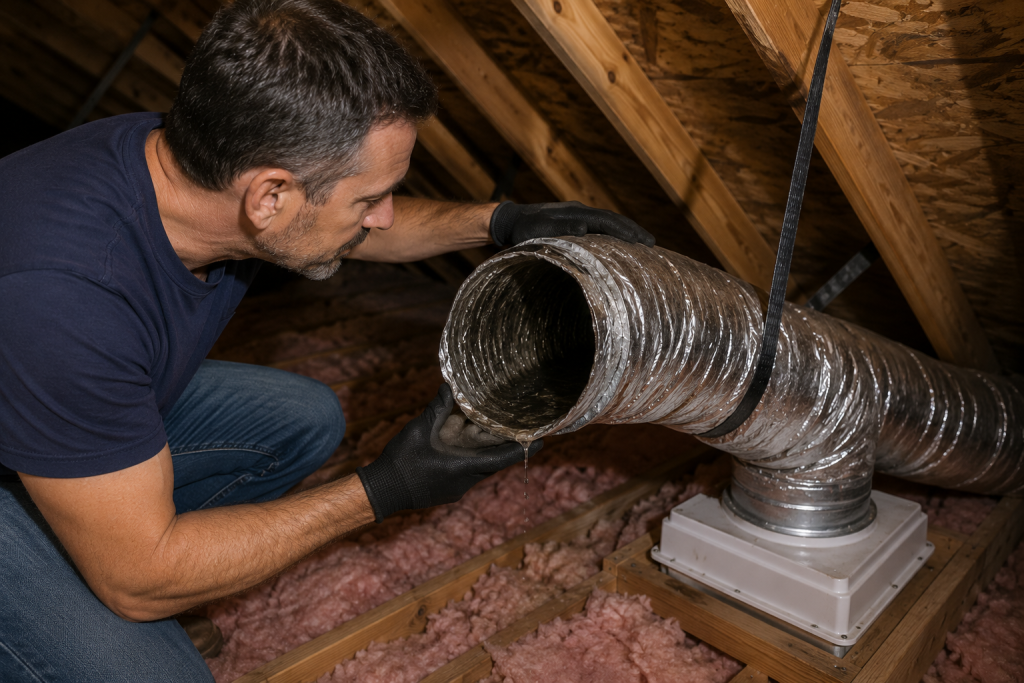
If your home has attic access:
Look for:
- Sagging ductwork
- Water inside the duct
- Disconnected joints
- Crushed flexible duct
The duct should remain as straight and short as possible.
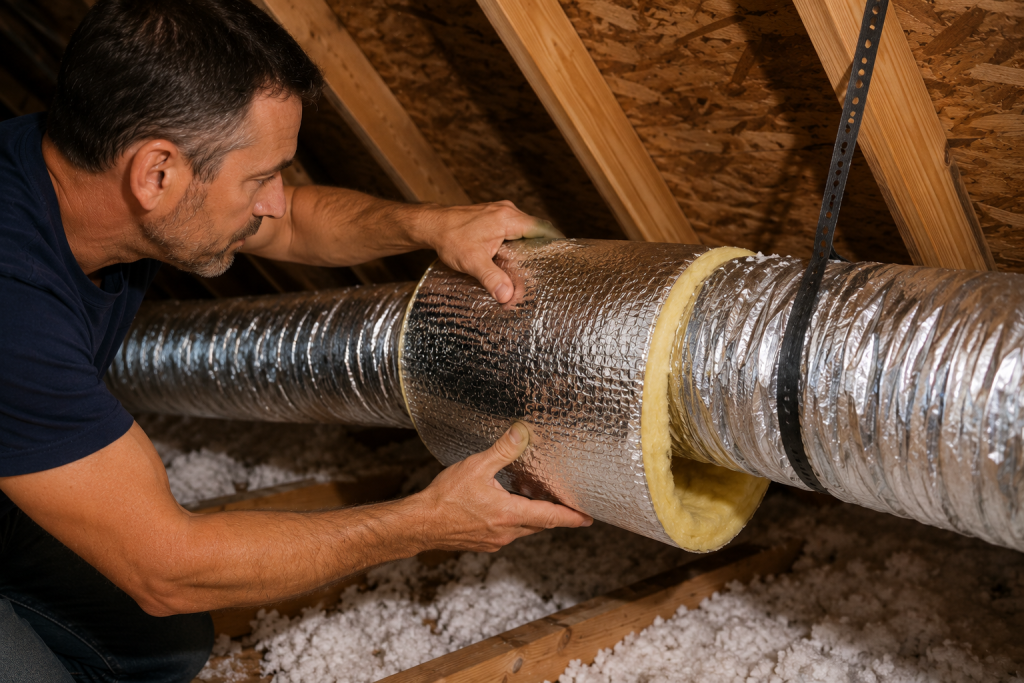
Step 4: Insulate the Exhaust Duct
As an Amazon Associate I earn from qualifying purchases.
If condensation is the issue:
- Wrap the duct with insulated duct wrap.
- For an existing uninsulated duct, foil-faced HVAC duct insulation wrap can help reduce condensation as warm bathroom air passes through a cold attic. Choose insulation intended for HVAC ductwork and follow the installation instructions.
- Seal duct joints with foil HVAC tape rated for duct sealing, following the duct manufacturer’s instructions. Secure loose connections properly before sealing them; tape alone should not hold disconnected ductwork in place.
- If the existing duct is damaged or needs replacement, insulated exhaust ducting may be an option where permitted by the fan manufacturer and local requirements. Match the required duct diameter and keep the run short, properly supported, and free of sharp bends.
Proper insulation prevents warm, moist air from cooling too quickly.
Step 5: Inspect the Roof Vent
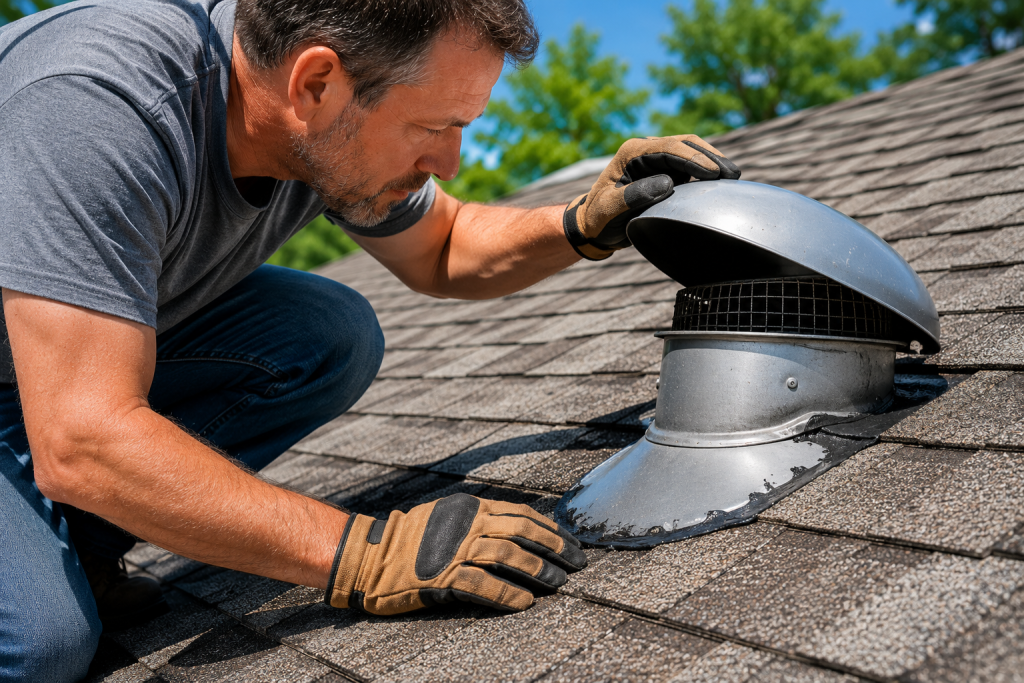
From outside, check for:
- Missing vent cap
- Cracked housing
- Bird nests
- Leaves
- Ice buildup
Clean away any obstructions.
Step 6: Check Roof Flashing
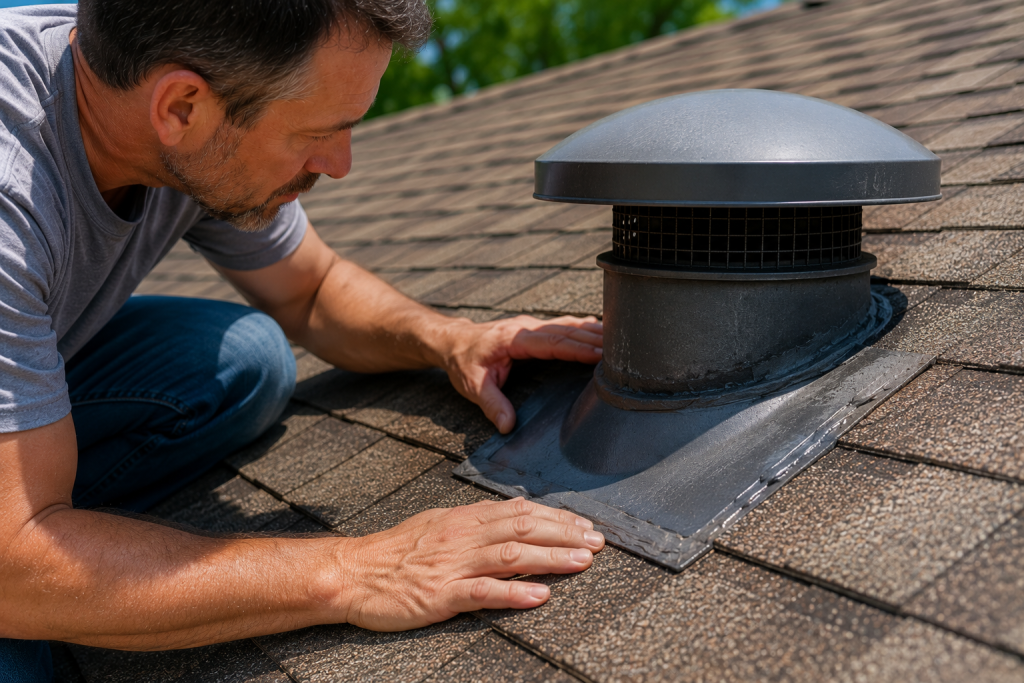
If leaking occurs during rain:
Inspect for:
- Missing shingles
- Cracked flashing
- Loose roofing nails
- Damaged roofing sealant
Roof repairs should be completed promptly to avoid structural damage.
Preventing Future Bathroom Fan Leaks
Preventative maintenance goes a long way.
You can reduce the chance of future leaks by:
- Running the fan for 20–30 minutes after showers.
- A bathroom exhaust fan countdown timer switch can help you leave the fan running after showers without having to remember to turn it off. Choose a switch rated for your fan motor and compatible with your home’s wiring.
- Cleaning the fan annually.
- Inspecting the roof vent each year.
- Keeping the duct insulated. (Proper duct insulation is one of the best ways to prevent a bathroom fan leaking water issue from returning.)
- Ensuring the duct slopes toward the outside.
- Replacing cracked vent caps.
Should I Continue Using the Fan?
Usually yes—but only if the leak is caused by condensation.
Stop using the fan if:
- Water is entering from the roof.
- Electrical components become wet.
- The breaker trips.
- You smell burning.
- Water drips directly onto wiring.
Electrical components and standing water are never a safe combination.
Can a Bathroom Fan Leak Damage My Ceiling?
Yes.
Even a slow drip can eventually cause:
- Ceiling stains
- Peeling paint
- Mold growth
- Wet insulation
- Drywall damage
- Wood rot
The sooner you identify the source, the less expensive repairs are likely to be.
When to Replace the Bathroom Fan
Replacement may be the better option if:
- The motor is rusted.
- The housing is severely corroded.
- The fan is over 15–20 years old.
- The unit is noisy and inefficient.
- Water has damaged the electrical components.
If your bathroom fan leaking water has caused severe rust or electrical damage, replacing the fan may be the safest solution. Newer fans are quieter, move more air, and are more energy efficient.
If water damage makes replacement necessary, compare bathroom exhaust fans that fit your ceiling opening, duct connection, and ventilation needs. Correct the source of the leak before installing a new fan so the replacement is not exposed to the same problem.
Is your fan making a grinding noise? You may find this guide helpful: Bathroom Fan Making Grinding Noise? 7 Causes and Easy Fixes.
Bathroom Fan Leaking Water Troubleshooting Chart
| Symptom | Most Likely Cause |
|---|---|
| Leaks after hot showers | Condensation |
| Leaks during rain | Roof leak or flashing |
| Water only in winter | Cold duct condensation |
| Ceiling stain around fan | Roof leak |
| Fan drips constantly | Standing water in duct |
| Poor airflow and dripping | Blocked vent cap |
Frequently Asked Questions
Why does my bathroom fan leak only in the winter?
Cold attic temperatures cause warm bathroom air to condense inside the exhaust duct. The collected water eventually drips back into the fan housing.
Can a bathroom fan leak because of rain?
Yes. Damaged roof flashing, cracked vent caps, or missing shingles can allow rainwater to enter the vent system.
Should there be water inside my bathroom exhaust fan?
No. A properly functioning bathroom fan should remain dry. Any standing water indicates condensation, a roof leak, or a venting problem. Can condensation damage my bathroom fan?
Yes. Over time, repeated moisture exposure can rust the motor, damage bearings, corrode electrical connections, and shorten the fan’s lifespan.
How long should I run my bathroom fan after showering?
Most experts recommend running the fan for 20 to 30 minutes after a shower to remove excess humidity.
Can I fix a leaking bathroom fan myself?
Many condensation-related issues can be fixed by insulating the duct, cleaning the vent cap, or reconnecting loose ductwork. However, roof leaks and damaged flashing may require professional repair.
Looking for help with another heating or cooling problem? Browse our complete collection of HVAC repair and troubleshooting guides.
Final Thoughts
A bathroom fan leaking water is usually caused by condensation inside the exhaust duct, but roof leaks, blocked vent caps, damaged flashing, or improper duct installation can also be responsible. Determining whether the leak occurs after showers or during rain is the fastest way to identify the cause.
Addressing the problem early can prevent mold, ceiling damage, and costly repairs. Regular maintenance, proper duct insulation, and annual roof vent inspections will help keep your bathroom ventilation system operating efficiently for years to come.
For additional guidance on bathroom ventilation and moisture control, see the U.S. Environmental Protection Agency’s indoor air quality guidance.