
Last updated: October 14, 2026
By Home Repair Genie
Quick Answer
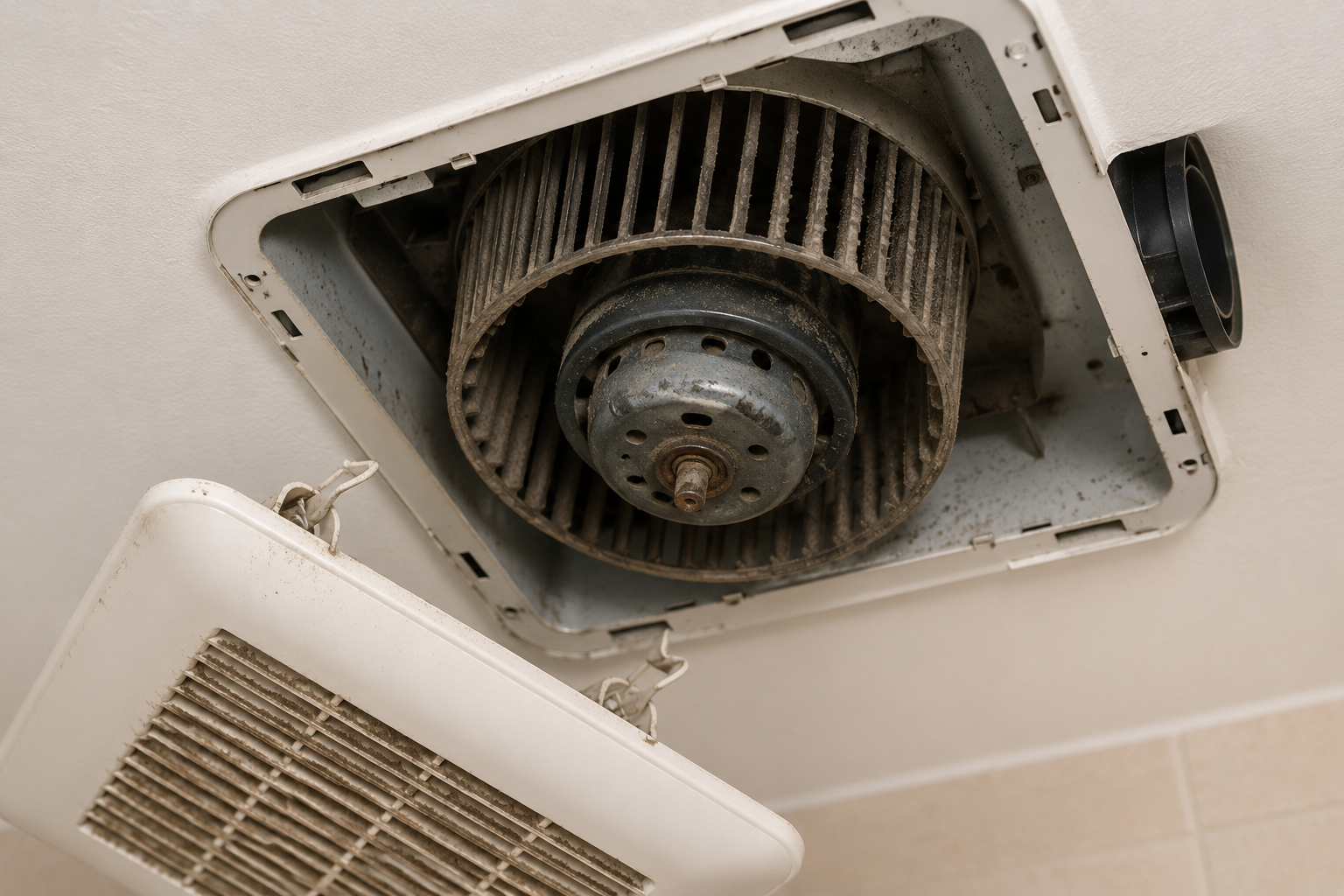
Bathroom fan making grinding noise is a common problem that usually points to worn motor bearings, a loose blower wheel, or debris inside the fan housing. Cleaning the fan, tightening loose parts, or replacing worn components may solve the issue. If the motor bearings have failed, replacing the motor or the entire fan is often the best solution.
Why Is My Bathroom Fan Making Grinding Noise?
A grinding noise is one of the most common warning signs that a bathroom exhaust fan is beginning to fail. While dust buildup is sometimes responsible, the noise often comes from moving parts that have become worn over time. A bathroom fan making grinding noise often has a blower wheel rubbing against the housing. If your bathroom fan making grinding noise continues after cleaning, inspect the motor bearings. An older bathroom fan making grinding noise may simply need a replacement motor.
Addressing the problem early can prevent complete motor failure and restore quiet operation.
Clean Dust and Debris from the Fan
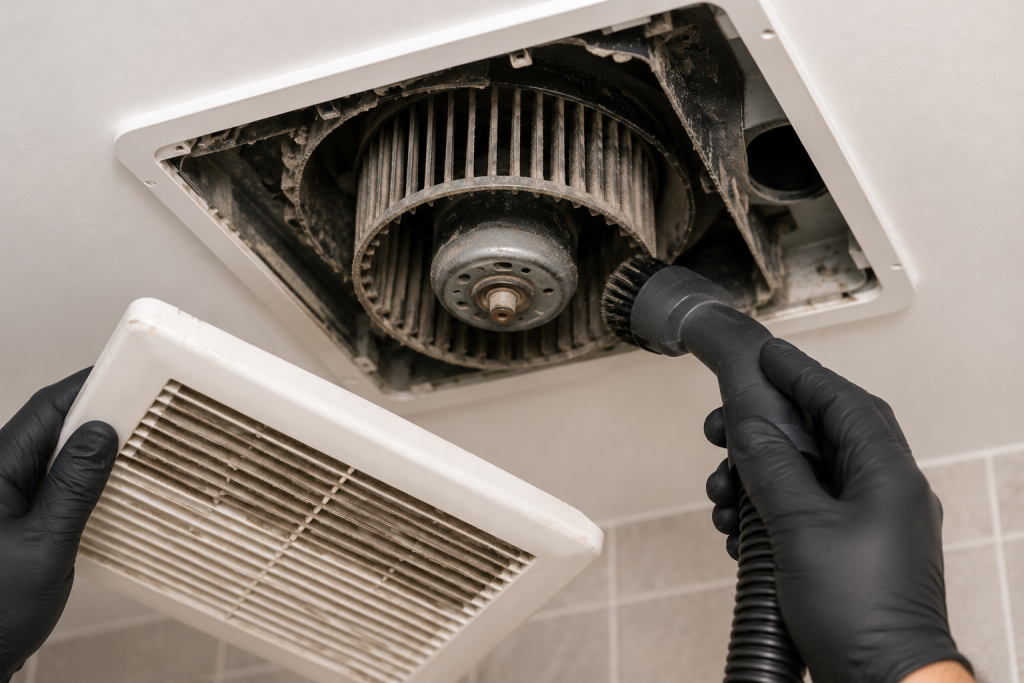
Turn Off the Power
Switch off the bathroom fan circuit breaker before removing the grille.
Dust buildup is one of the most common reasons a bathroom fan is making grinding noise during operation.
Safety should always come first when working around electrical equipment.
Remove the Fan Cover
Most fan grilles pull downward and release from two spring clips.
Inspect the fan housing for:
- Heavy dust buildup
- Hair wrapped around the blower wheel
- Insulation or debris contacting the fan
Clean the Fan Thoroughly
Use a vacuum with a soft brush attachment or compressed air to clean:
- Fan grille
- Blower wheel
- Motor housing
- Vent opening
As an Amazon Associate I earn from qualifying purchases.
A dirty blower wheel can become unbalanced and create grinding or scraping sounds.
A soft-bristle cleaning brush can help loosen dust from the grille and blower wheel before vacuuming. Keep power off at the breaker while cleaning, and avoid bending the wheel’s fins or getting electrical components wet.
If your fan hums but doesn’t spin, see our guide on Bathroom Fan Humming But Not Spinning:
Inspect the Blower Wheel
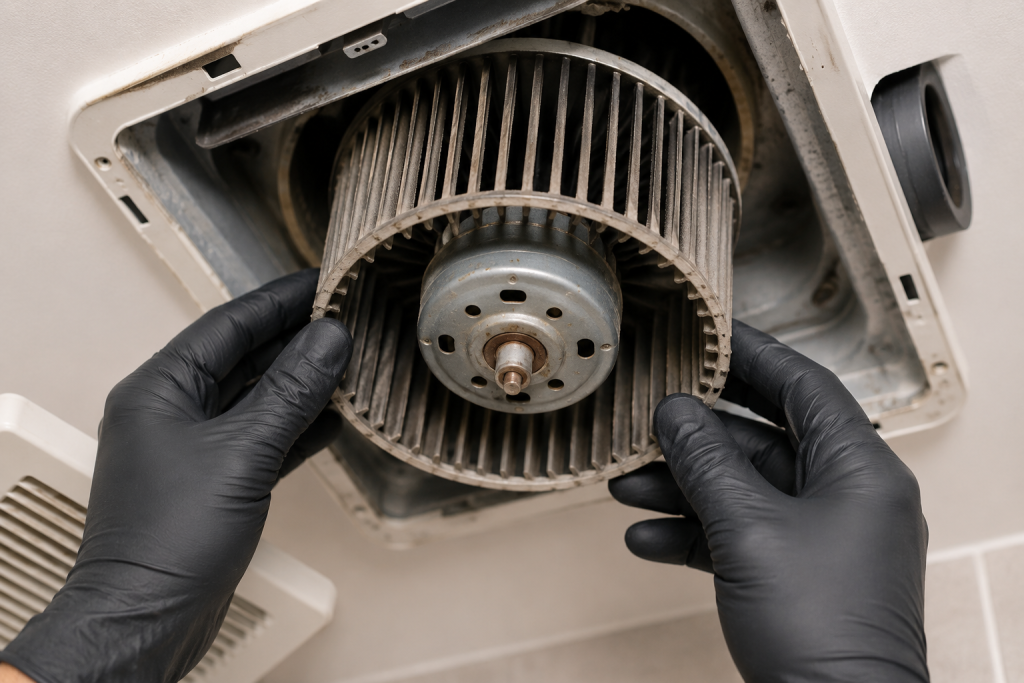
Spin It by Hand
With the power still disconnected, gently rotate the blower wheel.
It should spin freely without scraping the housing.
Check for Damage
Look for:
- Cracked plastic
- Bent fins
- Loose mounting
- Excessive wobble
A damaged blower wheel can create a grinding noise every time it rotates.
Tighten or Replace the Wheel
If the blower wheel has come loose from the motor shaft, tighten it if possible.
Replace it if it is cracked or badly warped.
If the motor is still in good condition, a replacement bathroom fan blower wheel may solve the scraping noise. Match the part to your fan’s exact model, since wheel dimensions and shaft connections vary.
Check the Motor Bearings
Listen to the Type of Noise
A failing motor bearing usually produces:
- Grinding
- Growling
- Metal-on-metal sounds
- Increasing noise as the fan speeds up
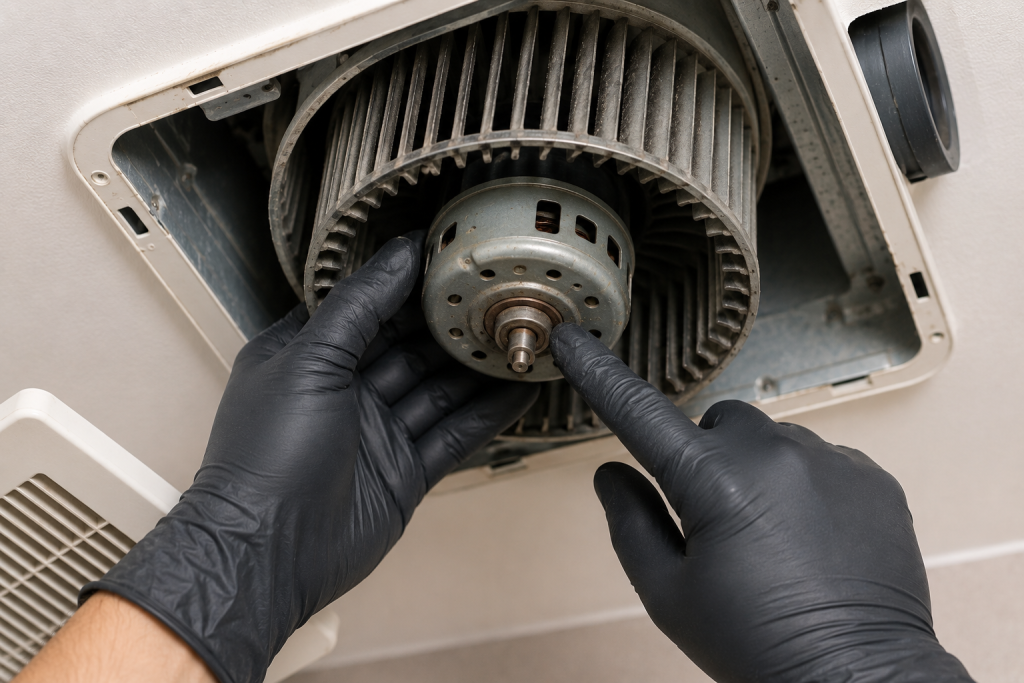
Test the Motor Shaft
Move the motor shaft gently.
If it has noticeable side-to-side movement, the bearings are likely worn.
Unfortunately, most modern bathroom fan motors use sealed bearings that cannot be lubricated or repaired.
Tighten Loose Hardware
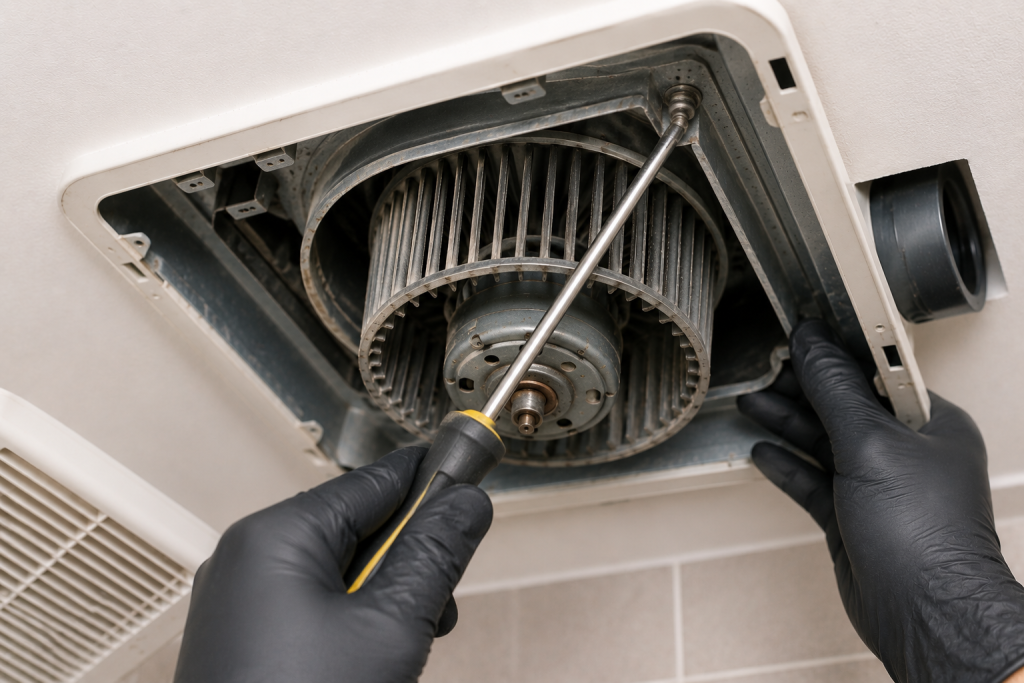
Inspect Mounting Screws
Vibration can loosen screws over time.
Check:
- Motor mounting screws
- Fan housing screws
- Blower wheel fasteners
Secure Everything
Tighten any loose hardware before restoring power.
A Phillips and flathead screwdriver set is useful for tightening accessible mounting screws. Use the correct tip size and avoid overtightening screws into plastic components.
Loose components can shift while running and produce grinding noises.
Look for Fan Housing Contact
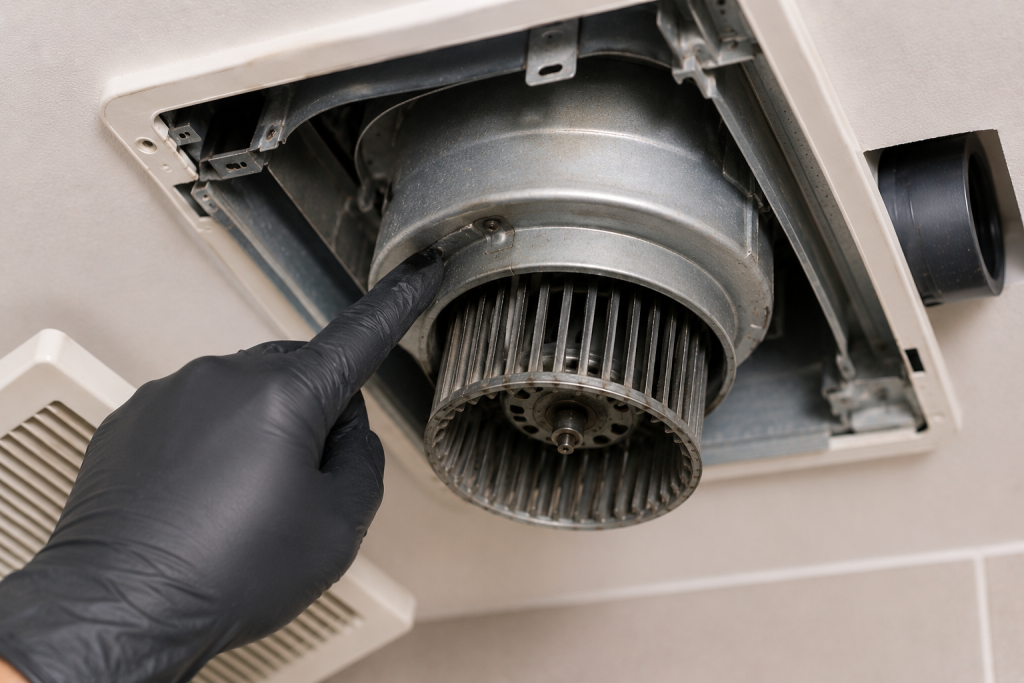
Inspect the Housing
Sometimes the blower wheel rubs against the metal housing because:
- The housing has shifted
- A mounting bracket is bent
- The motor has become loose
Reposition Components
Adjust the motor or blower wheel so there is even clearance all the way around.
The wheel should rotate without touching the housing.
If you find that your bathroom fan is not removing moisture, check out our guide: Bathroom Fan Not Removing Moisture? 7 Easy Fixes That Actually Work.
Inspect for Motor Failure
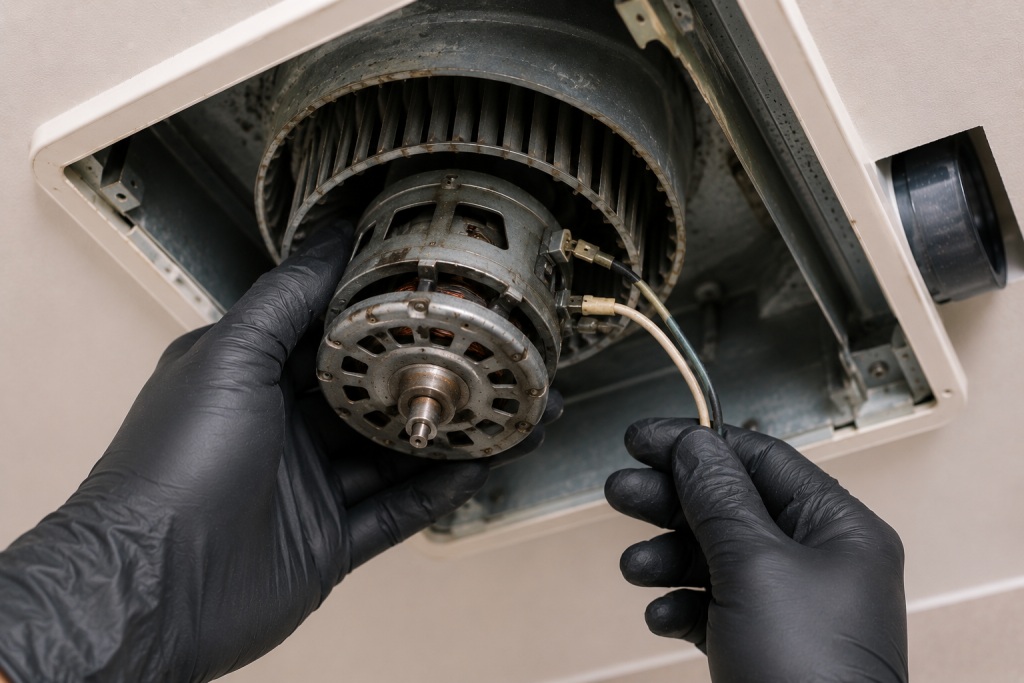
Watch for Other Symptoms
Besides grinding, a failing motor may also:
- Run slower than normal
- Overheat
- Shut off unexpectedly
- Produce a burning smell
Determine the Best Repair
If the motor has failed, replacing the motor assembly is often possible. A replacement bathroom fan motor assembly may let you repair the fan without removing the existing ceiling housing. Find your fan’s brand and model number, then confirm that the replacement is specifically listed as compatible before ordering.
However, if the fan is older than 10–15 years, replacing the complete exhaust fan may be more cost-effective.
If your fan has stopped working altogether, read our guide on Bathroom Exhaust Fan Not Working:
Should You Repair or Replace the Fan?
Repair the fan if:
- Dust buildup caused the problem
- The blower wheel is loose
- Hardware only needed tightening
- Replacement parts are inexpensive
Replace the fan if:
- Motor bearings have failed
- Replacement parts are unavailable
- The housing is damaged
- The fan is over 10 to 15 years old
If replacement is the better option, compare quiet bathroom exhaust fans that suit your bathroom’s ventilation needs. Check the ceiling opening, housing dimensions, duct size, and installation requirements before purchasing.
Newer bathroom fans are typically quieter, more energy efficient, and move more air than older models.
Prevent Bathroom Fan Grinding Noises
Clean the Fan Annually
Dust buildup is one of the leading causes of noisy bathroom fans.
Vacuum the fan at least once each year.
Run the Fan Regularly
Using the fan after every shower helps remove moisture and keeps internal parts cleaner.
Replace Worn Parts Promptly
Small problems often become expensive repairs if ignored.
Replacing a worn blower wheel or motor early can extend the life of the entire fan.
When to Call a Professional
Consider contacting an electrician or handyman if:
- The fan continues grinding after cleaning.
- The motor overheats.
- You smell burning insulation.
- The fan trips the circuit breaker.
- You are uncomfortable working with electrical equipment.
For additional guidance on bathroom ventilation and moisture control, visit the Environmental Protection Agency.
Frequently Asked Questions
Why is my bathroom fan making a grinding noise?
The most common causes are worn motor bearings, a damaged blower wheel, debris inside the housing, or loose mounting hardware.
Can I spray lubricant into the fan motor?
Most modern bathroom exhaust fan motors use sealed bearings and should not be lubricated. If the bearings fail, replacing the motor is usually necessary.
Is it dangerous to keep using a grinding bathroom fan?
Yes. Continued operation can cause additional motor damage, overheating, or complete failure.
How long do bathroom exhaust fans typically last?
Most quality bathroom exhaust fans last between 10 and 15 years with proper maintenance.
Should I replace just the motor?
If replacement motors are available and the housing is still in good condition, replacing only the motor can save money. Otherwise, replacing the entire fan is often the better long-term investment.
Looking for help with another heating or cooling problem? Browse our complete collection of HVAC repair and troubleshooting guides.
Final Thoughts
A bathroom fan making grinding noise is usually warning you that something inside the fan needs attention. Start by cleaning the fan and inspecting the blower wheel, mounting hardware, and motor. In many cases, a simple cleaning or minor repair will eliminate the noise. However, worn motor bearings or an aging fan often require replacement.
By addressing the problem promptly, you can restore quiet operation, improve bathroom ventilation, and prevent a complete fan failure.