
Last updated: November 21, 2026
Quick Answer
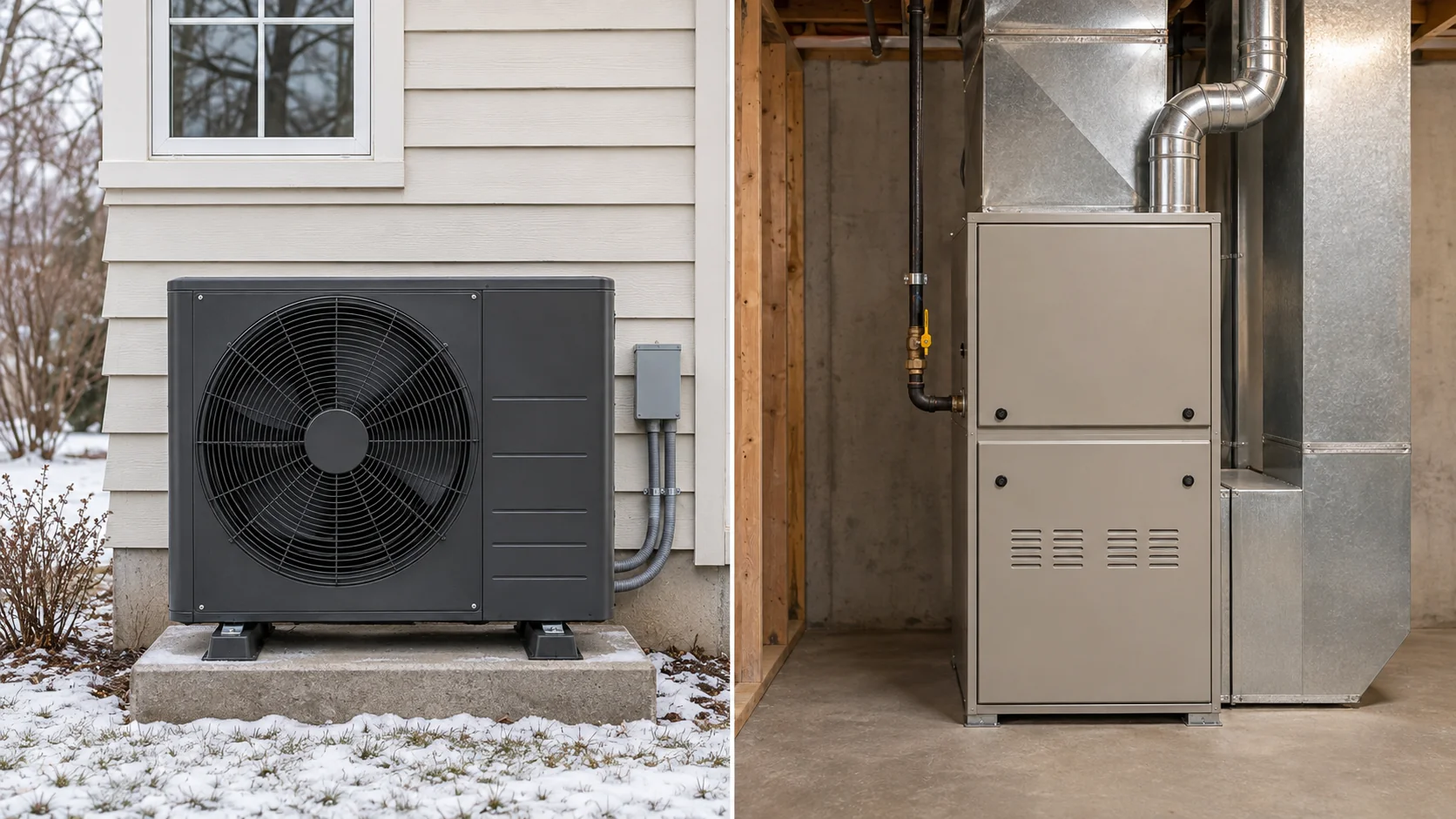
The heat pump vs gas furnace running cost comparison comes down to three things: your electricity rate, your natural gas rate, and how efficiently each system heats your home. A gas furnace can be cheaper when natural gas is inexpensive, electricity is costly, or the heat pump relies heavily on electric backup heat.
In the example below, a 95% efficient gas furnace costs about $77 to deliver the same heat that costs about $130 with a heat pump averaging a coefficient of performance (COP) of 3.0. At those same equipment efficiencies and gas rates, the two systems break even when electricity costs about 8.3 cents per kWh. Use the calculator to see where your home falls.
Heat Pump vs. Gas Furnace Running Cost Calculator
Compare both systems using the same amount of heat delivered to your home. If you know how many therms your current furnace uses for space heating, you can estimate the heating load without knowing your home’s square footage.
Step 1. Find your electricity rate
On a winter electric bill, find the charges that increase when you use another kilowatt-hour. Include applicable per-kWh delivery charges, fuel adjustments, and usage-based taxes. Leave out fixed monthly charges you’ll pay with either system.
If you’re on a time-of-use plan, use an estimate of the rates the heat pump would actually run on. The lowest overnight rate can understate costs if much of your heating happens during more expensive hours.
Step 2. Find your natural gas rate and heating usage
Add the gas supply charge, distribution charge, and other fees or taxes billed per therm. If your bill lists usage in CCF, look for the utility’s conversion to therms before entering the numbers.
To estimate how many therms went to space heating, subtract typical non-heating gas use from your winter total. If a winter bill shows 115 therms and your gas water heater and other appliances typically use 15 therms over the same number of days, enter 100 therms. Use a non-heating bill with a similar billing period or adjust the baseline by days.
Step 3. Enter your furnace efficiency and heat pump COP
- Furnace AFUE measures how much fuel energy becomes useful heat over a typical year. Enter
95for a furnace rated at 95% AFUE. - Heat pump COP measures heat delivered per unit of electricity used. A COP of
3.0means the heat pump delivers three units of heat for each unit of electricity it uses. Use an estimate for your climate and billing period. For a rough sensitivity check, compare the results at COPs of 2.0, 3.0, and 4.0. If the system uses electric resistance backup, use an effective COP that accounts for it.
Step 4. Compare the cost of delivering the same heat
| What you’re calculating | Formula |
|---|---|
| Useful heat delivered, in million BTU | Heating therms × (AFUE ÷ 100) ÷ 10 |
| Gas furnace cost | Heating therms × gas price per therm |
| Heat pump cost | Useful heat in million BTU × 293.07 ÷ COP × electricity price per kWh |
| Break-even electricity rate | Gas furnace cost ÷ estimated heat pump kWh |
The estimate covers energy for space heating. It excludes installation, maintenance, and separately billed electricity for the furnace blower. If switching to a heat pump would let you cancel gas service entirely, account for the monthly gas service charges you’d avoid when comparing annual costs.
What a Utility Bill Looks Like in the Calculator
The North Shore Gas residential sample bill shows why the gas supply charge alone can give you the wrong answer. The February 2026 sample shows 94 therms used, a fixed monthly charge of $21.87, and separate charges for gas, distribution, storage, and other items. The charges that vary directly with usage add up to about $0.77 per therm.
This heat pump vs gas furnace example uses the published sample-bill gas rate, a 100-therm heating load, and an illustrative electricity rate of 14 cents per kWh. It compares two systems delivering the same heat. It doesn’t assume that all 94 therms on the sample bill went to the furnace.
| Example input or result | Gas furnace | Heat pump |
|---|---|---|
| Efficiency | 95% AFUE | COP of 3.0 |
| Energy rate | $0.77 per therm | $0.14 per kWh |
| Energy needed for 9.5 million BTU of heat | 100 therms | About 928 kWh |
| Estimated heating cost | $77.00 | $129.93 |
The gas furnace is cheaper by about $53 in this example. If the electricity rate drops to about 8.3 cents per kWh, the heat pump and furnace cost about the same to operate at the assumed efficiencies. If gas rises to $1.50 per therm while electricity stays at 14 cents per kWh, the furnace costs $150 and the heat pump costs about $130. The cheaper system flips even though the equipment and heating load stay the same.
What Can Change the Result in Your Home?
Cold weather and backup heat
Heat pump performance varies with outdoor temperature and equipment. In a colder month, the unit may operate at a lower average COP or need help from electric resistance strips. Ask for the proposed model’s heating capacity and COP at temperatures your area regularly sees, along with an estimate of how often backup heat would run.
A brief defrost cycle is part of normal winter operation. If thick ice stays on the outdoor coil after defrost, see our guide to what to check when a heat pump freezes outside.
Fixed gas charges and other appliances
If your furnace is your only gas appliance and you can close the gas account, add the avoided monthly charges to the heat pump’s side of the annual budget. If you’ll keep gas for a water heater, range, or fireplace, you’ll generally keep paying those charges.
Ducts, insulation, and air leaks
A house that loses less heat requires less energy from either system. Duct problems can also reduce how much useful heat reaches your rooms. Before attributing a high bill to the equipment alone, review the heating and air-sealing checks in our winter home maintenance checklist.
As an Amazon Associate, I earn from qualifying purchases.
If you feel a draft around older windows, a removable window insulation film kit can help seal the gaps for winter.
Heat Pump vs. Gas Furnace Installation Costs
If both your furnace and central AC are nearing replacement, get quotes for a heat pump system and a gas furnace plus central AC. Both quotes should cover heating and cooling. If your AC is still in good shape, also price a furnace-only replacement so you can see how much you’d spend to keep the existing AC.
Ask each contractor to itemize equipment, labor, duct changes, electrical work, backup heat, and warranty coverage. If you’re considering a heat pump with a gas furnace as backup, confirm that the quote includes compatible controls and explains when the system switches from electricity to gas. Our smart thermostat buyer’s guide covers compatibility checks to make before buying a thermostat.
When weighing a heat pump vs gas furnace replacement, compare the upfront price difference with the estimated annual cost of both heating and cooling. One winter bill can show which system has the edge under those conditions. A full year gives you a better basis for a replacement decision.
Frequently Asked Questions
Is a heat pump cheaper to run than a 95% efficient gas furnace?
It can be. At an electricity rate of 14 cents per kWh and a heat pump COP of 3.0, a 95% furnace is cheaper on heating energy when gas costs less than about $1.30 per therm. Above that gas price, the heat pump is cheaper under the same assumptions.
Does a heat pump work below freezing?
Yes. Many air-source heat pumps can heat a home below freezing. The model’s heating capacity at your local winter temperatures determines how much of the load it can cover and when backup heat may be needed.
Can I use my entire winter gas bill for the comparison?
Use the portion of gas consumption attributable to heating. Subtract gas used for water heating, cooking, and other appliances. Use the applicable per-therm rate for the running-cost calculation, then account for fixed charges separately if you could cancel gas service.
What if I don’t know my heat pump’s COP?
Ask the contractor for performance data for the actual model and an estimate that reflects your climate and backup heat. In the meantime, run the calculator at several COP values. If the cheaper system changes across that range, local performance is worth checking before you commit.
Is a dual-fuel heat pump worth considering?
It can make sense if you want the heat pump to handle milder weather and a gas furnace to take over on colder days. The economics depend on the added installation cost, your utility rates, and the temperature at which the system switches fuels.