
Last updated: November 22, 2026
Quick Answer
Water heater making popping noise while it heats? Mineral buildup is a common cause in a tank-style water heater. Water trapped beneath the deposits can make a popping or rumbling sound as the heater runs. A single bang right after you close a faucet points more toward the plumbing than the tank. Start by noting when the noise happens and checking for visible leaks. If the relief-valve pipe is actively discharging hot water or you see steam coming from it, stay clear and call a plumber promptly.
What Does the Sound Tell You?
| What you hear or see | What to check next |
|---|---|
| A series of pops or a low rumble while the tank reheats | Check the heater’s age, maintenance history, and hot water performance. |
| One sharp bang when a faucet or appliance valve closes | Listen near the fixture or appliance for water hammer. |
| Popping along with a puddle or water dripping from a pipe | Look for the highest visible wet point without touching hot surfaces or opening panels. |
| Loud, unfamiliar noise from a recently installed heater | Note when it happens and contact the installer if it persists. |
5 Checks Before You Call a Plumber
1. Listen for when the popping starts
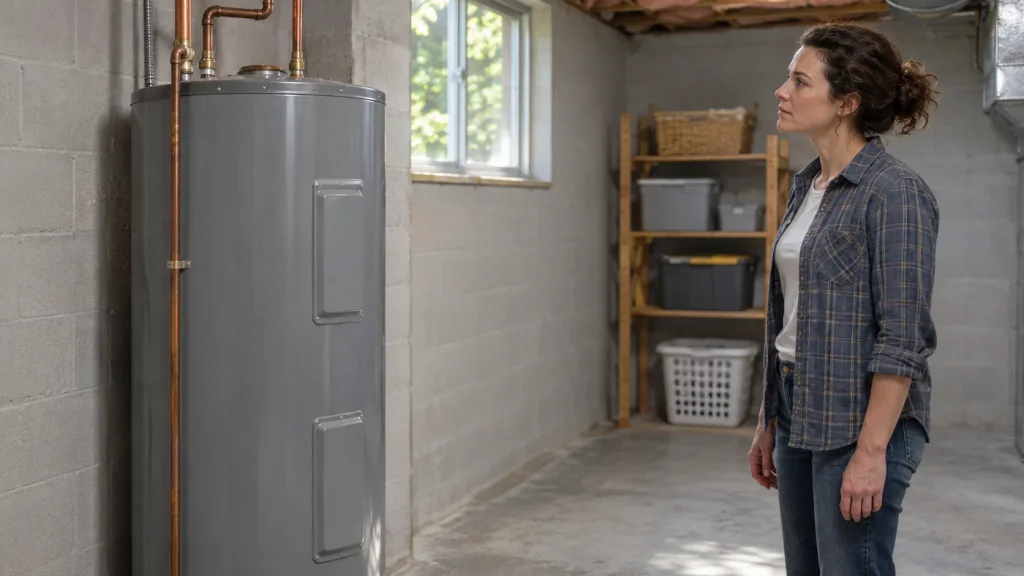
If you hear your water heater making popping noise after a shower, note whether the sound stops once the tank finishes reheating. If the popping starts as the tank reheats and fades when the heating cycle ends, mineral buildup is a possibility. A. O. Smith explains how water trapped beneath mineral deposits can cause popping.
If you hear one sharp knock the instant a faucet closes or the washing machine stops filling, the abrupt stop in water flow can make the pipes bang. That’s called water hammer. Note which fixture triggers it so you can tell a plumber where to start if it keeps happening.
2. Look for leaks around the tank and relief-valve pipe
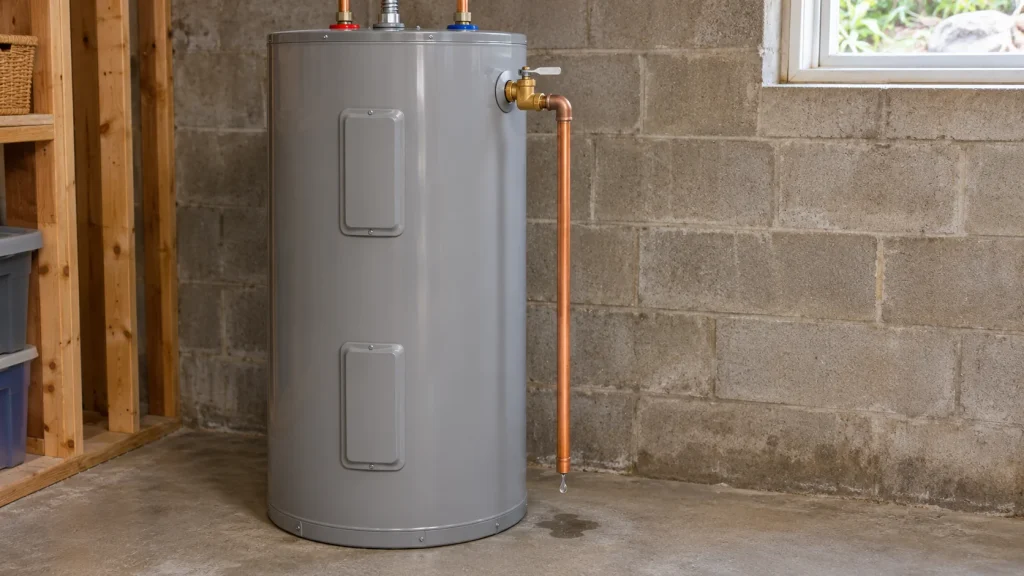
Check the floor around the tank, the visible fittings above it, and the area beneath the drain valve. Water can run down the outside of the heater, so a puddle underneath can start at a fitting higher up. Our guide to a water heater leaking from the bottom explains how to narrow down the source.
Also look for water coming from the temperature-and-pressure relief valve’s discharge pipe. Keep clear of the outlet, since the water can be very hot. Leave the pipe open and unobstructed. If it drips repeatedly, schedule service. If it’s actively releasing hot water or steam, call promptly from a safe distance.
As an Amazon Associate I earn from qualifying purchases
Once any existing leak has been fixed, place a battery-powered water leak alarm on the floor near the base of the water heater. It sounds when water reaches the sensor, which can help you catch a new leak before it spreads.
3. Check whether your hot water runs out sooner
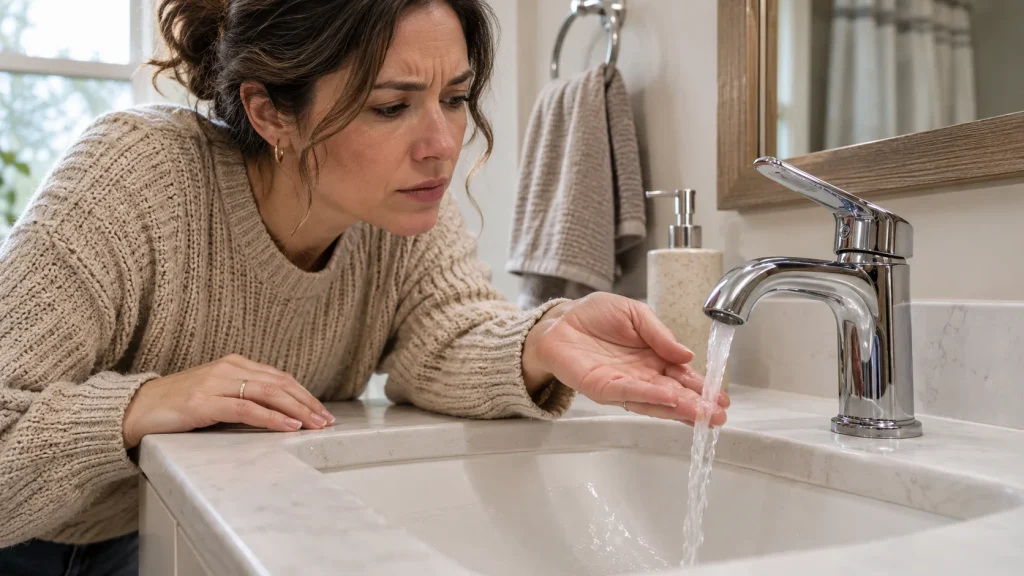
At your next normal shower or sink use, notice whether the hot water runs out sooner than it used to under similar demand. A noisy tank that still supplies its usual amount of hot water presents a different problem from one that has started delivering lukewarm water or taking longer to recover.
Write down what changed and when. If you have little or no hot water, use our guide to a water heater not producing hot water to identify the symptoms before arranging service.
4. Check the heater’s age and maintenance history
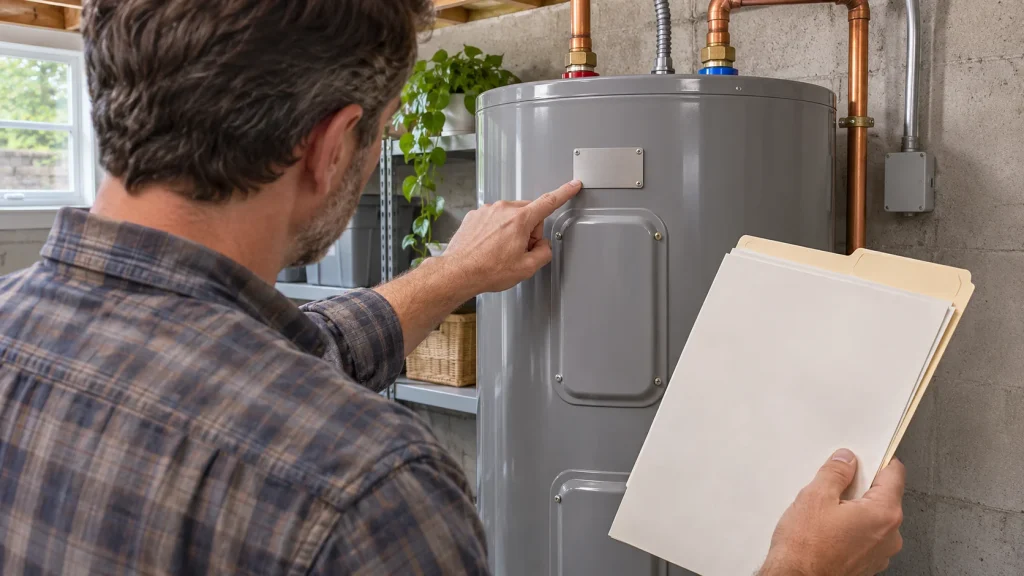
Find the model and serial number on the outside label, then check your installation records or maintenance receipts. If you have hard water and an older tank that hasn’t been serviced in years, mineral buildup is a stronger possibility. If a new heater started making noise shortly after installation, give the installer the model number and describe exactly when the sound occurs.
If you don’t know when the tank was last serviced, record that too. For other seasonal checks, see our winter home maintenance checklist.
5. Check the owner’s manual before deciding whether to flush
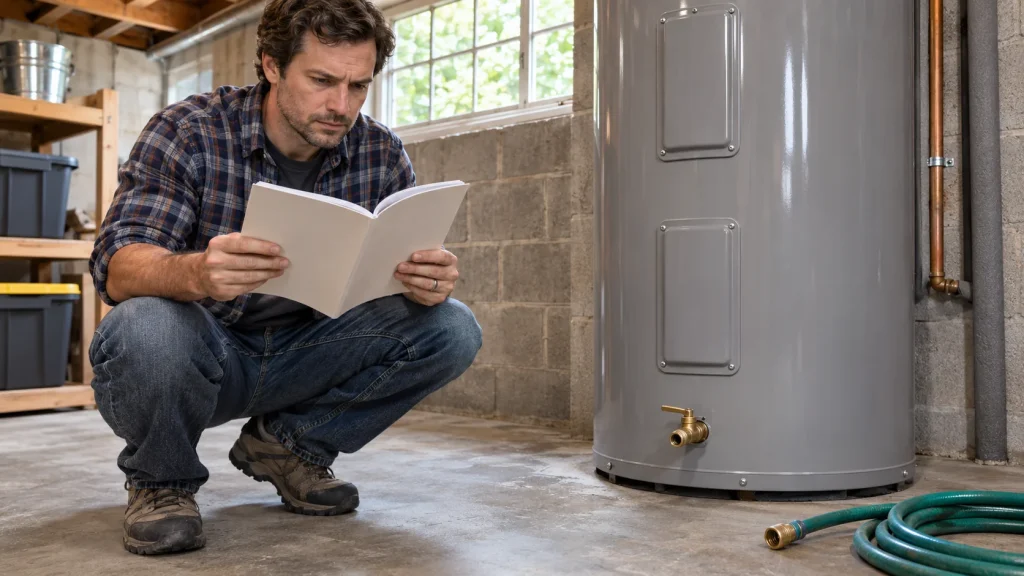
If the tank only pops during reheating and you found no signs that need service, look up the maintenance instructions for your exact model. Some manufacturers include a tank-flushing procedure for owners. A routine flush can remove loose sediment, while hardened mineral deposits can require professional service.
If the drain valve is corroded, already leaking, or won’t move easily, leave it alone and call a plumber. If you choose to flush the tank, follow the manual’s instructions for shutting off the energy supply, allowing the water to cool, and refilling the tank before restarting it.
If your owner’s manual calls for a hose and you don’t have a suitable one, look for a water heater drain hose with a fitting that matches your drain valve and a temperature rating suitable for the water you’ll drain.
When to Call a Plumber
Schedule service if the popping is getting louder, your hot water supply has dropped, or you find a recurring leak. Call promptly if the relief-valve pipe is actively releasing hot water or steam. When you call, share the model number, when the noise occurs, and where you saw water. That gives the plumber a starting point for deciding whether the problem is in the tank, a valve, or the surrounding plumbing.
Frequently Asked Questions
Is my water heater making popping noise because the tank is failing?
Popping alone does not establish that the tank has failed. If the tank still heats normally and there are no leaks, ask about maintenance first. A confirmed leak from the tank itself makes replacement the more likely outcome.
If your older tank has other problems and you’re weighing repair against replacement, check typical water heater replacement costs to see what a new unit would cost installed.
Can a water heater make noise even if it’s new?
Yes. For a newly installed unit, note whether the noise starts while the heater runs or only when a fixture shuts off. If it persists, contact the installer with those details so they can check the unit and surrounding piping.
Will flushing stop the popping?
It may help if loose sediment is responsible. Hardened mineral buildup can remain after a routine flush. If the sound persists, have a plumber confirm the source before repeating the procedure.
Why does my water heater bang when I turn off a faucet?
A single bang at shutoff often comes from water hammer. The sudden stop in water flow sends a pressure wave through the pipes, so the sound can seem to come from the heater even when it starts elsewhere.