
Last updated: October 13, 2026
By Home Repair Genie
Quick Answer
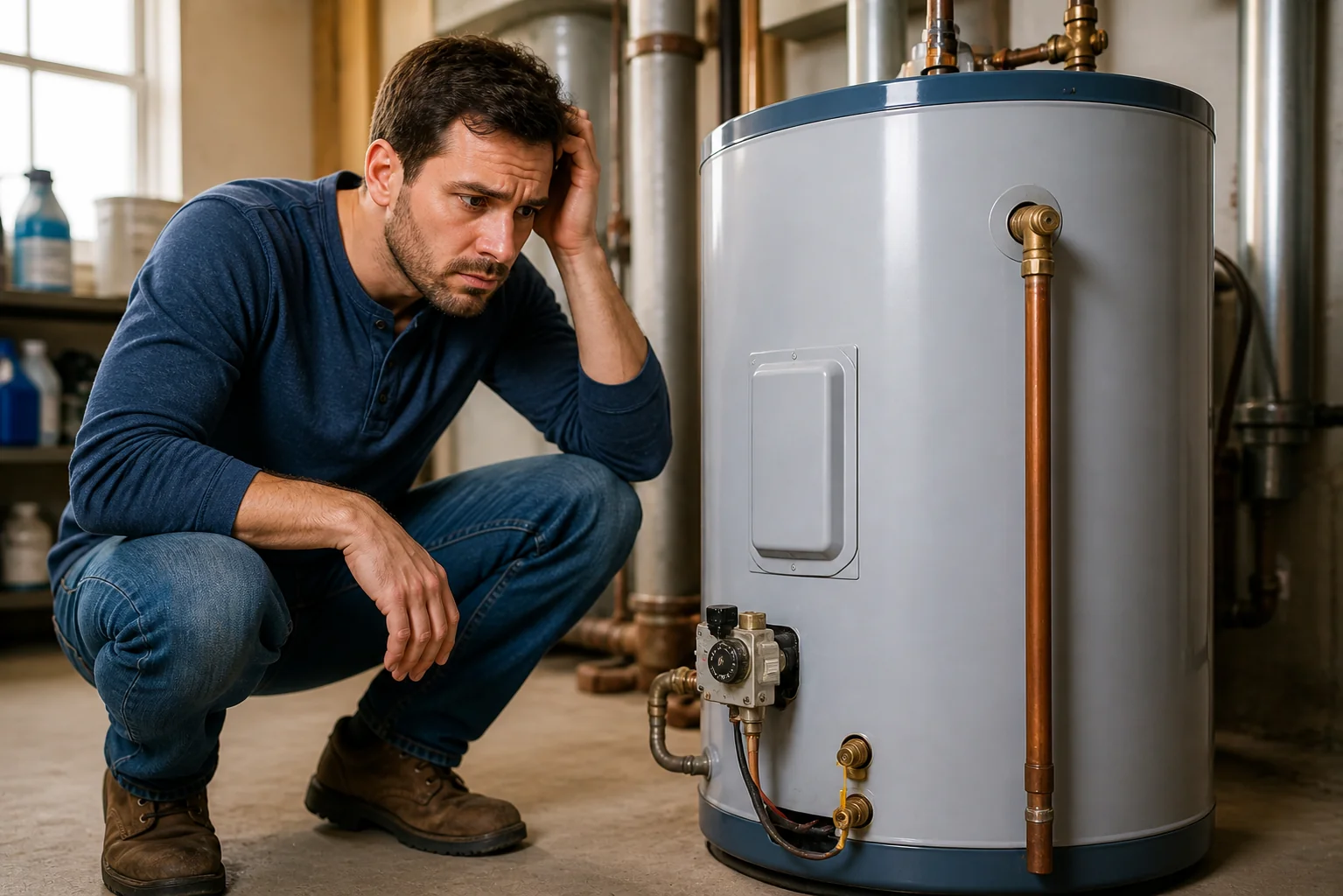
If your water heater is not producing hot water, the most common causes include a tripped breaker, faulty thermostat, broken heating element, gas supply issues, or sediment buildup.
Water heater not producing hot water is one of the most frustrating home issues—especially when you need a shower or are doing dishes. The good news is that many water heater problems are simple to diagnose and fix without calling a plumber.
In this step-by-step guide, you’ll learn the 7 most common reasons behind water heater not producing hot water and exactly how to fix each one safely and quickly.
If you’ve handled basic plumbing repairs before, like how to fix a leaky faucet, you’ll likely find many of these fixes just as manageable.
Tools & Materials You’ll Need
As an Amazon Associate I earn from qualifying purchases
Tools:
- Screwdriver
- Multimeter
- Adjustable wrench
- Garden hose
- Bucket
Materials (if needed):
- Replacement heating element
- Thermostat
- Teflon tape
Step-by-Step Instructions to Fix a Water Heater Not Producing Hot Water
Step 1: Check the Power Supply (Electric Water Heaters)
Why it matters:
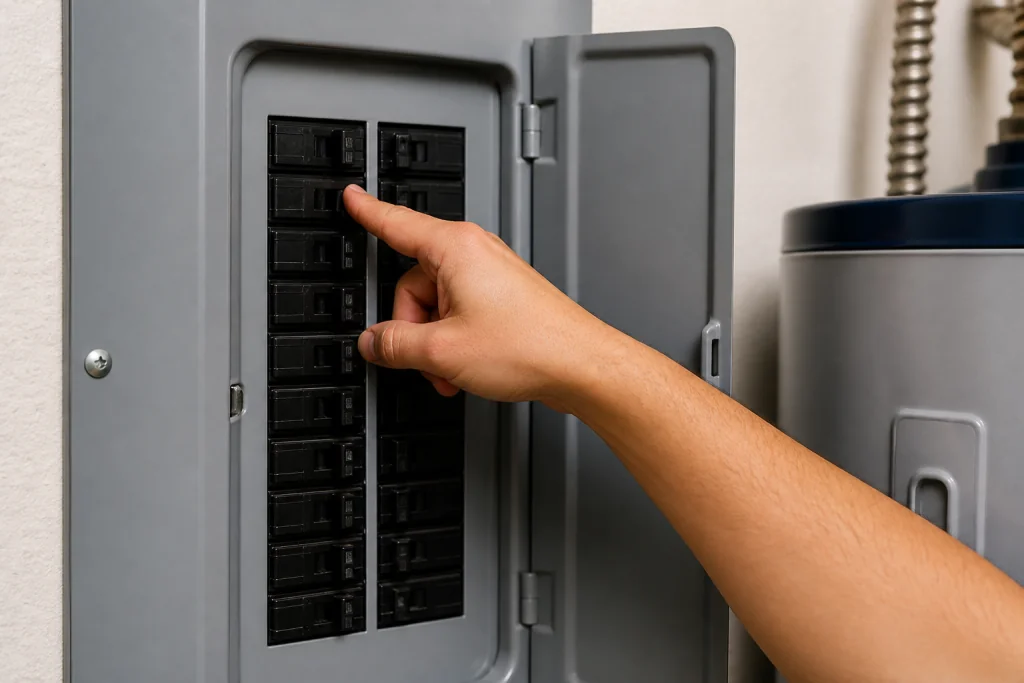
If your water heater has no power, it cannot heat water. If your water heater is not producing hot water, a tripped breaker is often the first thing to check.
What to do:
- Go to your electrical panel
- Look for a tripped breaker labeled “water heater”
- Reset it by switching it OFF, then ON
What to look for:
- If it trips again immediately, you may have a faulty heating element or wiring issue
If you’re unsure how to safely handle electrical issues, you may also want to review this guide on how to fix a tripped circuit breaker.
Step 2: Check the Pilot Light (Gas Water Heaters) for Water Heater Not Producing Hot Water
Why it matters:
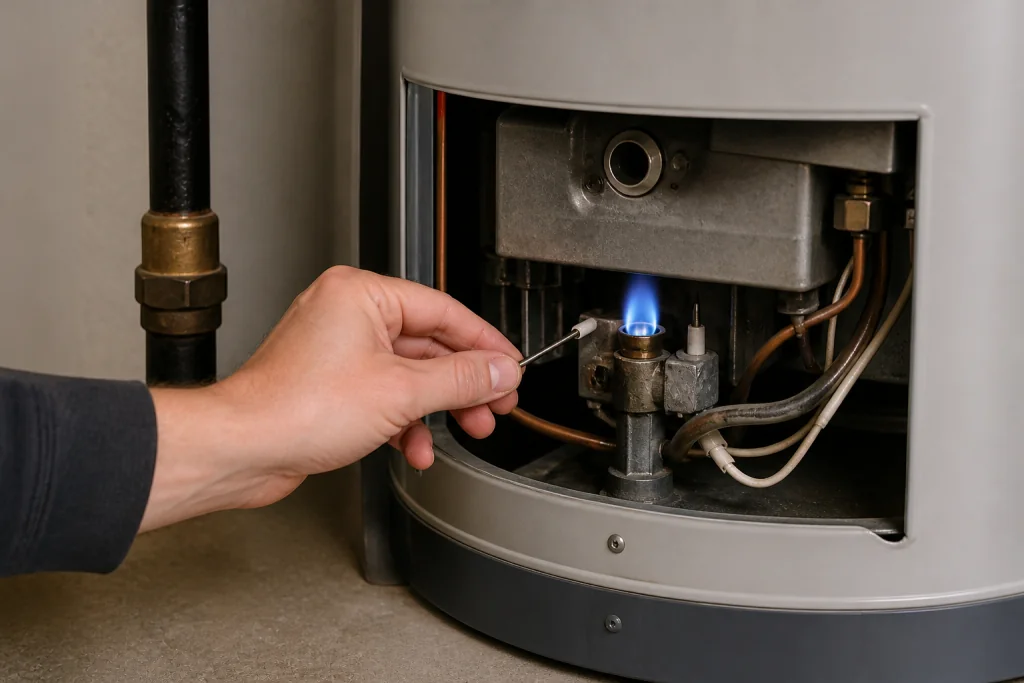
Gas water heaters rely on a pilot light to ignite the burner.
What to do:
- Locate the pilot light access panel
- Check if the flame is out
- Follow manufacturer instructions to relight it
Tip:
If the pilot won’t stay lit, the thermocouple may need replacement.
Step 3: Inspect the Thermostat Settings
Why it matters:
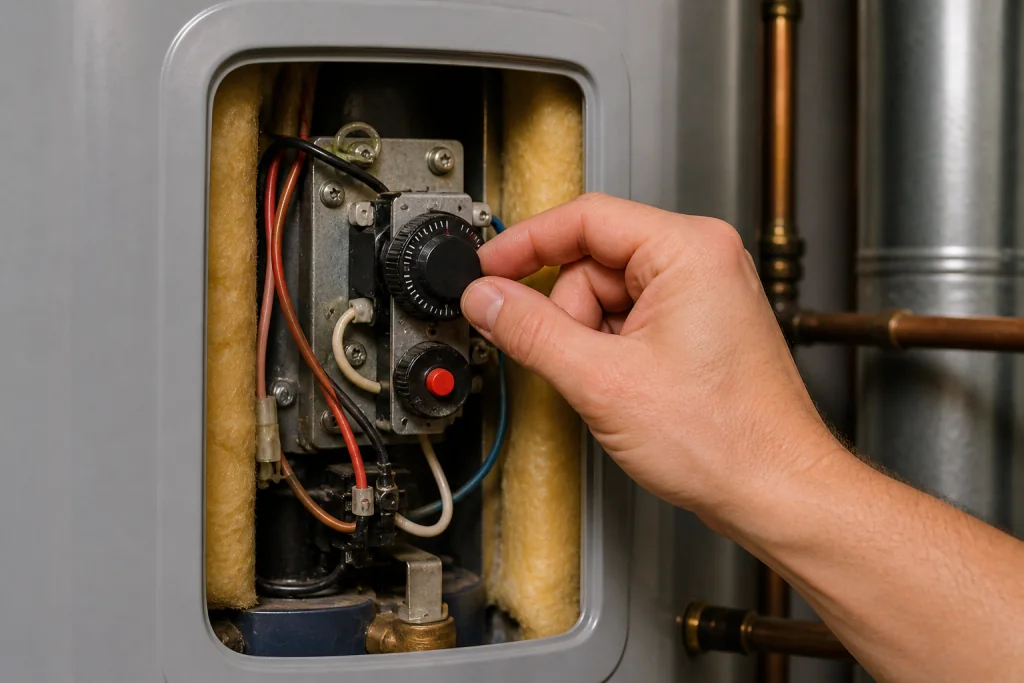
Incorrect thermostat settings can result in lukewarm or cold water.
What to do:
- Turn off power to the unit
- Remove the access panel
- Check thermostat setting (should be around 120°F)
- Adjust if necessary
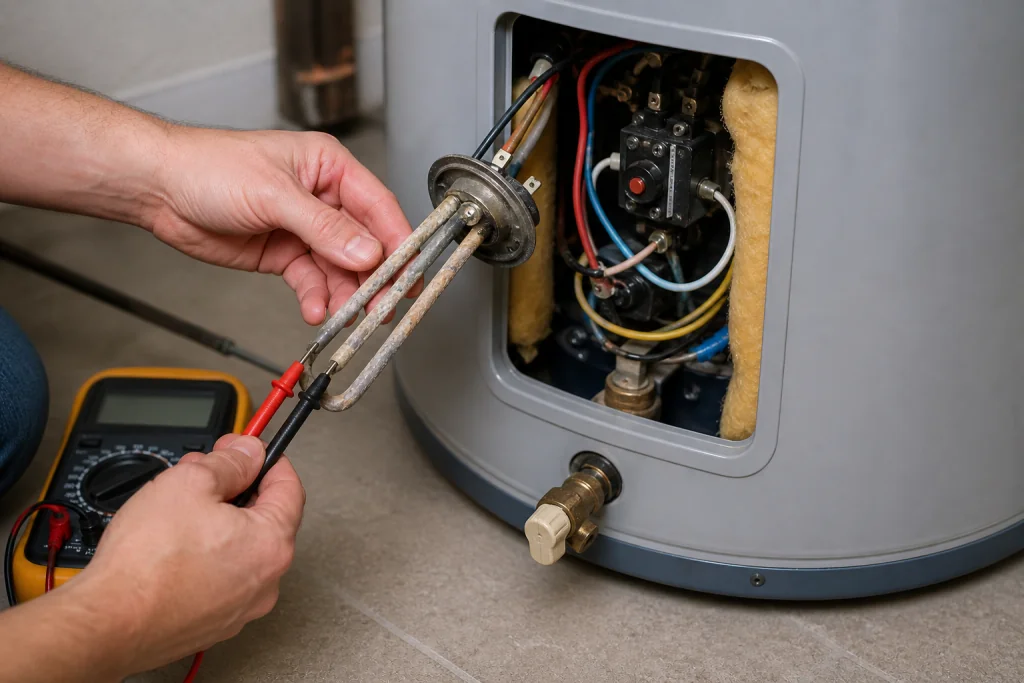
Step 4: Test the Heating Elements (Electric Units)
Why it matters:
A failed heating element is one of the most common causes of a water heater not producing hot water.
What to do:
- Turn off power at the breaker
- Remove access panels
- Use a multimeter to test continuity
After turning off power and verifying it is off, a digital multimeter can help test the heating element. Follow your water heater’s instructions for the test.
What to look for:
- No continuity = bad element → replace it
If testing confirms a failed element, check your heater’s model number and rating plate before buying a compatible replacement heating element. Match the specified voltage and wattage.
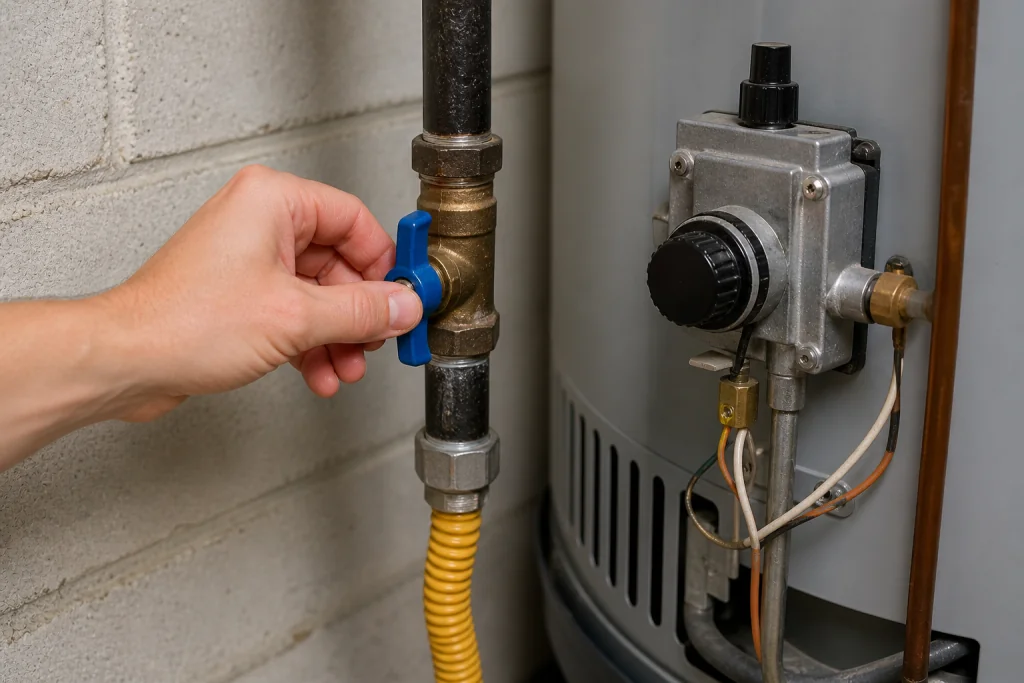
Step 5: Check the Gas Supply (Gas Units)
Why it matters:
No gas = no heat.
What to do:
- Make sure the gas valve is open
- Check if other gas appliances are working
- Look for unusual smells or signs of leaks
Important:
If you suspect a gas leak, stop immediately and call a professional.
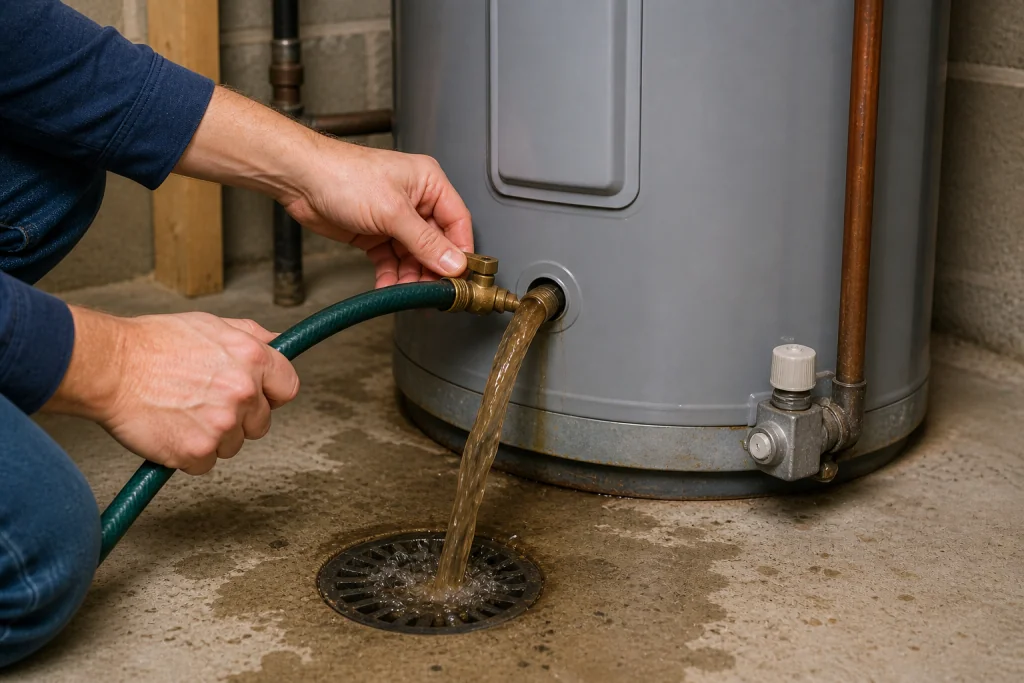
Step 6: Flush the Tank (Sediment Buildup)
Why it matters:
Sediment buildup reduces efficiency and can block heating.
What to do:
- Turn off power or gas
- Connect a garden hose for water heater draining to the drain valve and route the water to a suitable drain or outdoor location.
- Drain water into a bucket or outside
- Refill the tank
Result:
Improved heating performance and longer lifespan.
Flushing your tank helps remove sediment that can reduce heating efficiency and water flow. If you’re dealing with slow drains elsewhere in your home, you might also want to learn how to unclog a drain.
For a more detailed breakdown of proper maintenance, you can also review this guide from U.S. Department of Energy water heating tips.
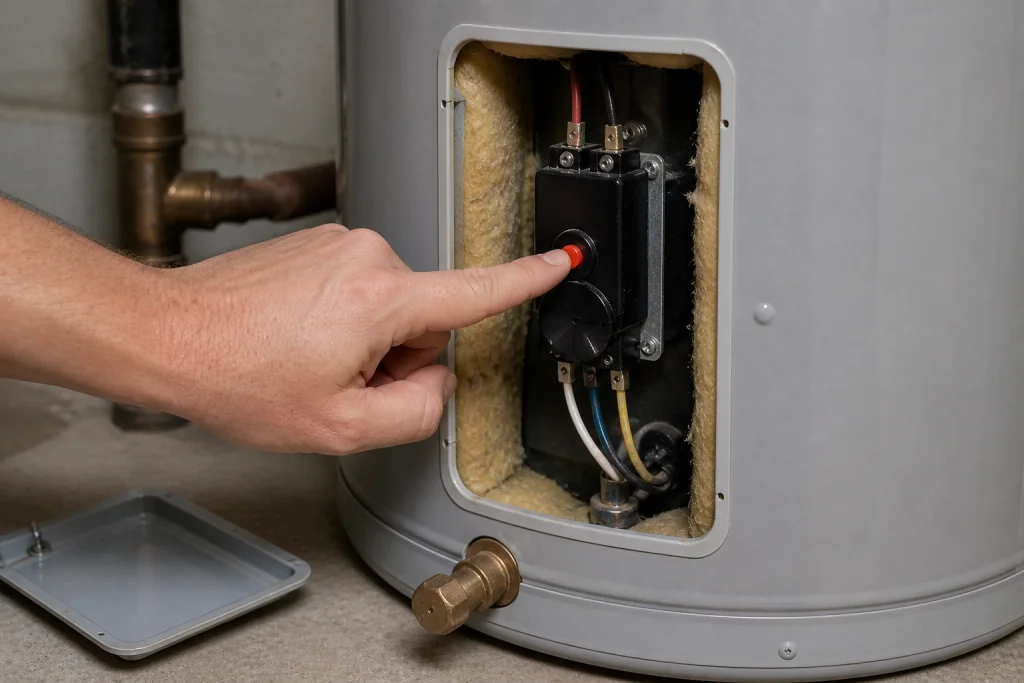
Step 7: Reset the High-Temperature Limit Switch
Why it matters:
This safety feature shuts off the heater if it overheats.
What to do:
- Turn off power
- Remove access panel
- Press the reset button (usually red)
If it keeps tripping:
You may have a thermostat or element issue.
When to Call a Professional for Water Heater Not Producing Hot Water
Call a licensed plumber or technician if:
- The breaker keeps tripping
- The pilot light won’t stay lit
- You suspect a gas leak
- The tank is leaking
- Repairs don’t restore hot water
If you’re noticing multiple plumbing issues at once, such as reduced hot water and leaks, it may be part of a larger problem. For example, understanding why your sink is dripping can help you identify related water system issues.
Pro Tips to Prevent Future Issues
- Flush your water heater once per year
- Keep thermostat at 120°F
- Inspect for leaks regularly
- Replace anode rod every 3–5 years
- Install a water softener if you have hard water
FAQs
Why is my water heater not producing hot water but the tank is full?
This is usually caused by a faulty heating element (electric) or a pilot light/gas issue (gas heater).
How long should a water heater take to heat water?
Most water heaters take 30–60 minutes to fully heat a tank.
Can a bad thermostat cause no hot water?
Yes, a faulty thermostat may prevent the heating element or burner from turning on.
Is it worth repairing a water heater?
If the unit is under 8–10 years old, repairs are usually worth it. Older units may be better replaced.
How do I know if my heating element is bad?
Use a multimeter to test for continuity. No reading typically means the element has failed.
Looking for help with another plumbing problem? Browse our complete collection of plumbing repair and troubleshooting guides.
Final Thoughts
If your water heater is not producing hot water, don’t panic—most issues come down to power, heating elements, or simple maintenance problems. By following these 7 easy steps, you can diagnose and fix the problem quickly without calling a professional.
Consistent maintenance and early troubleshooting will help keep your water heater running efficiently and extend its lifespan.