
Last updated: October 10, 2026
By Home Repair Genie
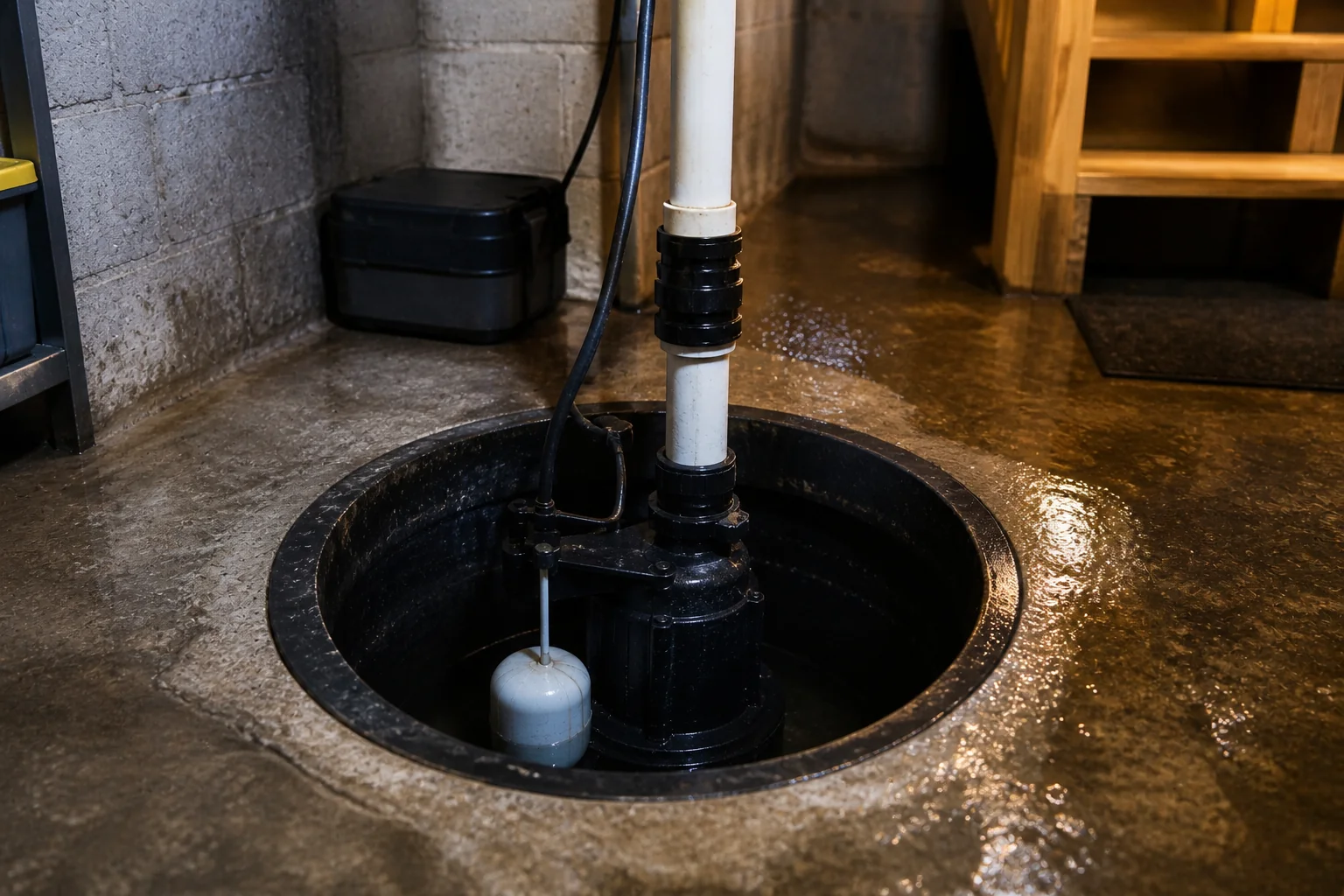
Sump pump not working? A sump pump that stops working can quickly turn into a serious problem—especially during heavy rain or flooding. The good news is that many sump pump issues are easier to fix than homeowners realize.
In this step-by-step guide, you’ll learn the most common reasons a sump pump is not working and the simple fixes you can try before calling a professional.
Common Signs of a Sump Pump Not Working
Your sump pump may need attention if you notice:
- Standing water in the sump pit
- The pump humming but not pumping water
- Loud noises or vibrations
- The pump running constantly
- Water backing up into the basement
- The sump pump failing to turn on
If you notice any of these problems, follow the troubleshooting steps below.
Tools & Materials You May Need
As an Amazon Associate I earn from qualifying purchases.
- Flashlight
- Bucket
- Wet/dry vacuum
- Adjustable wrench
- Replacement float switch
- Garden hose
- GFCI outlet tester
- Work gloves
Using the right tools makes troubleshooting safer and easier.
Step 1: Check the Power Supply
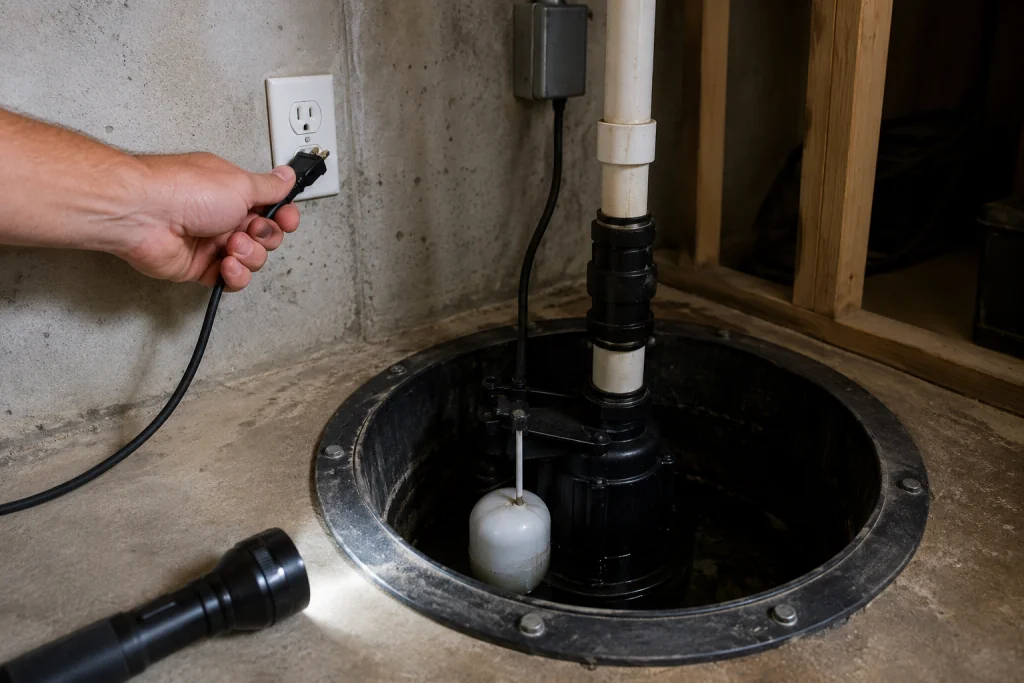
One of the most common reasons a sump pump stops working is a power issue.
What to do
- Make sure the sump pump is plugged in securely
- Check if the outlet has power
- Press the reset button on any nearby GFCI outlet
- Inspect the breaker panel for a tripped breaker
- A tripped breaker can prevent the sump pump from turning on. Here’s how to fix a tripped circuit breaker safely.
Sometimes a loose plug or tripped breaker is the only issue preventing the pump from running.
Quick Tip
If the sump pump outlet has no power, you may also need to troubleshoot an outlet not working issue.
Step 2: Inspect the Float Switch
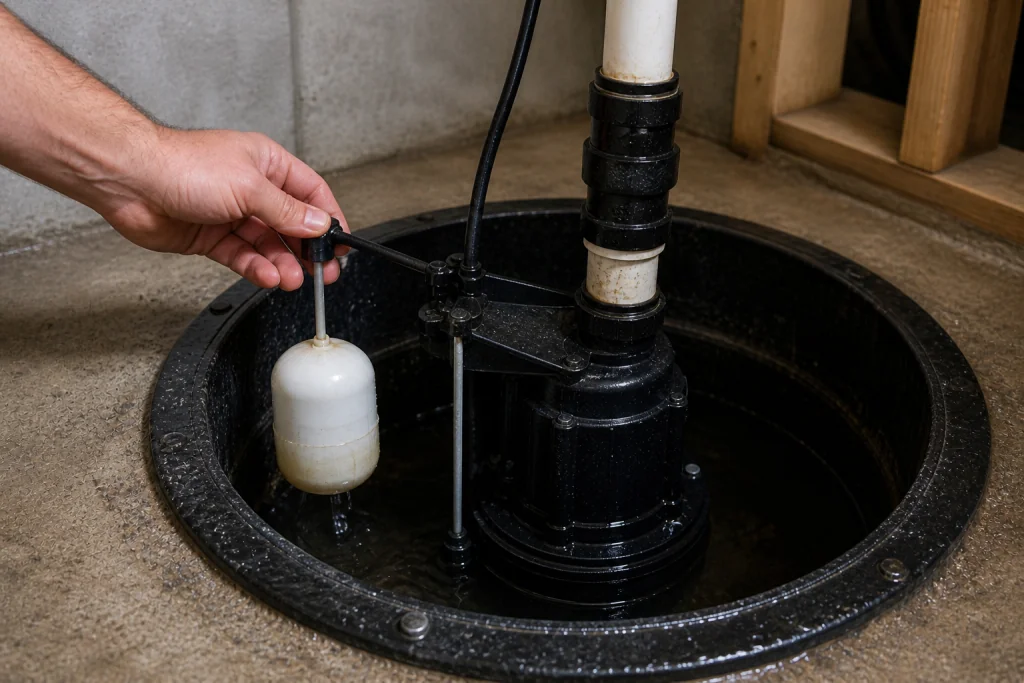
The float switch tells the sump pump when to turn on and off. If it gets stuck, the pump may not activate.
What to do
- Remove debris from the sump pit
- Check that the float moves freely
- Make sure the float is not tangled against the basin wall or discharge pipe
Common problem
Many homeowners find the float switch jammed by dirt, gravel, or wiring inside the pit.
If the float switch appears damaged, replacing it may solve the problem.
Step 3: Check for a Clogged Discharge Pipe
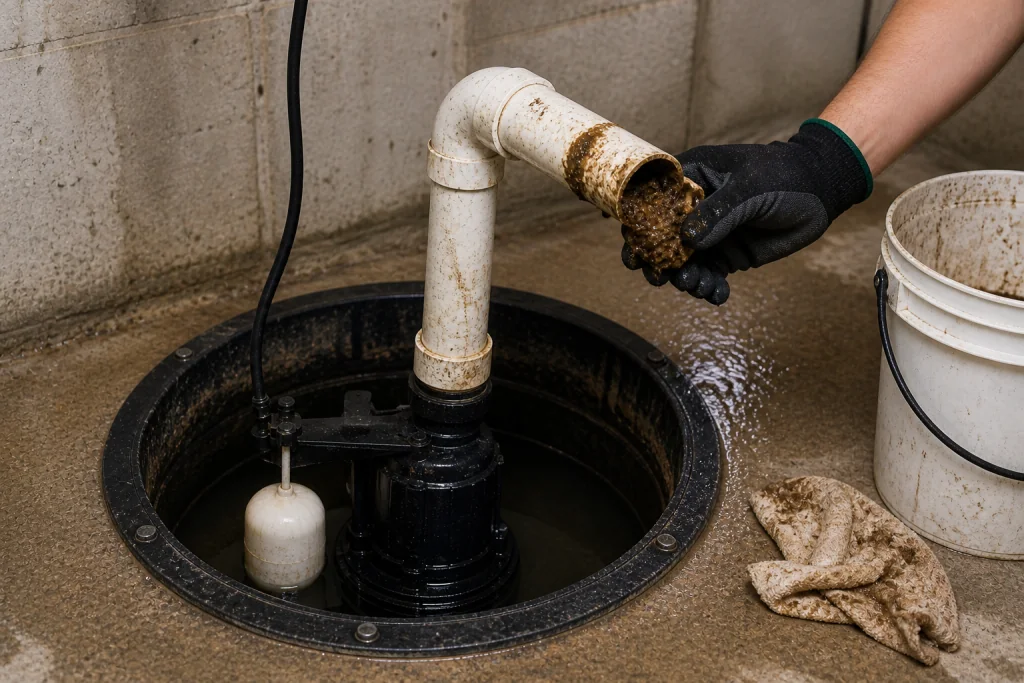
A clogged or frozen discharge pipe can stop water from leaving the basement.
What to do
- Inspect the discharge line outside your home
- Remove visible debris or blockages
- Check for ice during cold weather
- Make sure water can flow freely away from the foundation
Warning
Never allow discharged water to drain back toward the house. This can cause the sump pump to run continuously.
Get ahead of cold weather with our guide Fall Home Maintenance Checklist: 25 Tasks Before Winter
Step 4: Test the Pump Manually
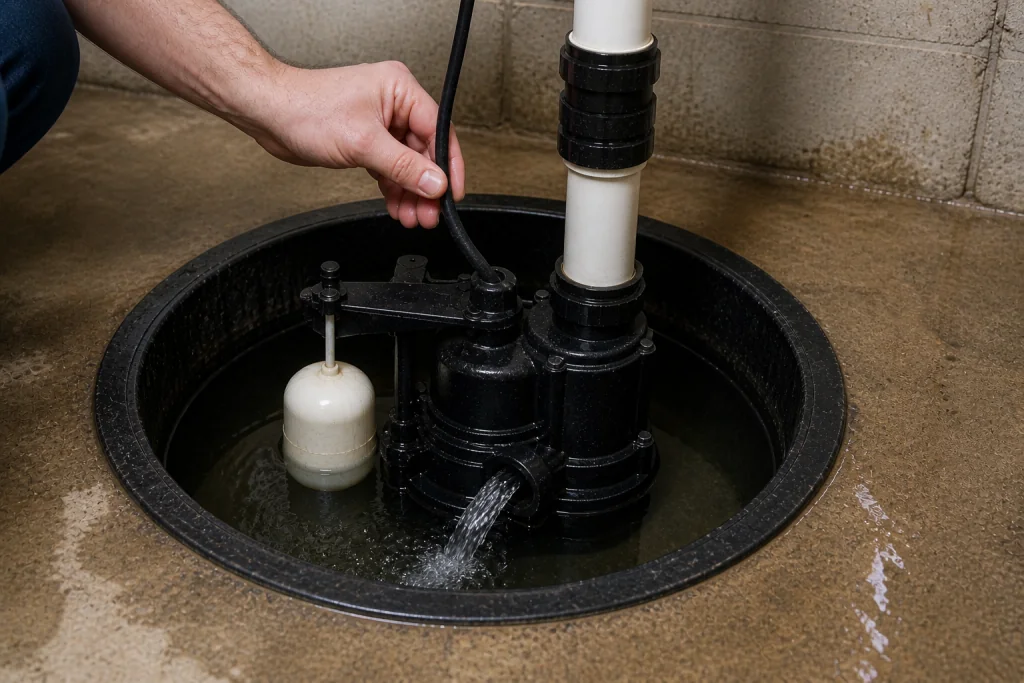
Testing the pump manually helps determine whether the motor still works.
What to do
- Slowly pour water into the sump pit using a bucket
- Watch to see if the float rises
- Listen for the motor to activate
- Confirm the pump removes water properly
If the pump hums but does not pump water
The impeller may be jammed, or the motor could be failing.
In some cases, debris inside the pump housing prevents proper operation.
Step 5: Clean the Sump Pit
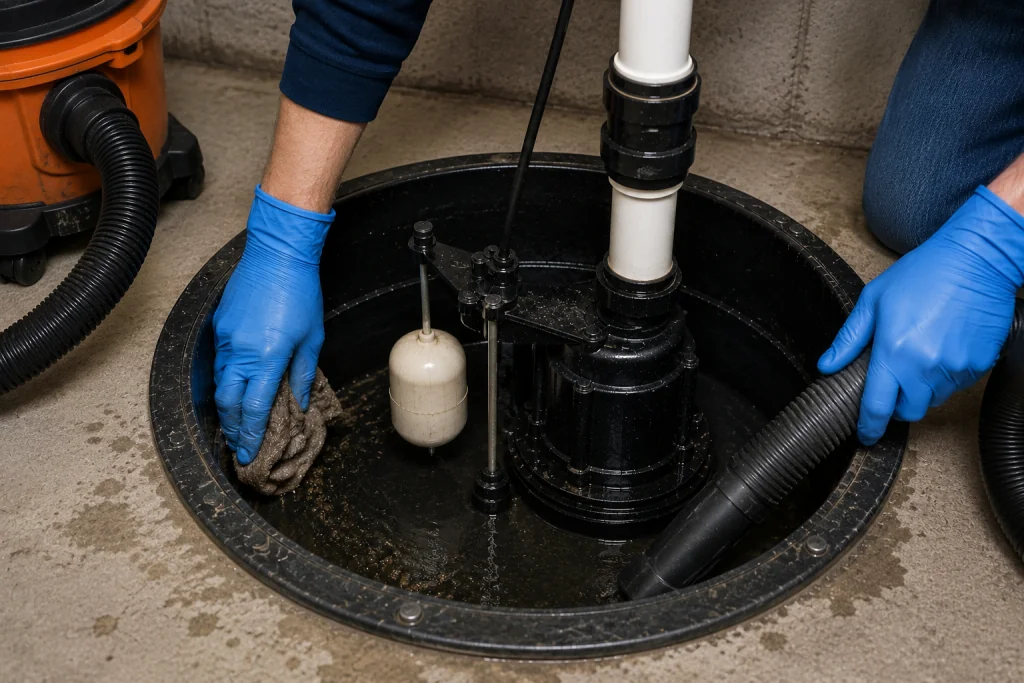
A dirty sump pit can interfere with normal pump operation.
What to do
- Disconnect power to the pump
- Remove standing water if necessary
- Clear mud, dirt, and debris from the basin
- Inspect the intake screen for blockages
Regular cleaning helps extend the life of the sump pump and improves reliability during storms.
Step 6: Inspect the Check Valve
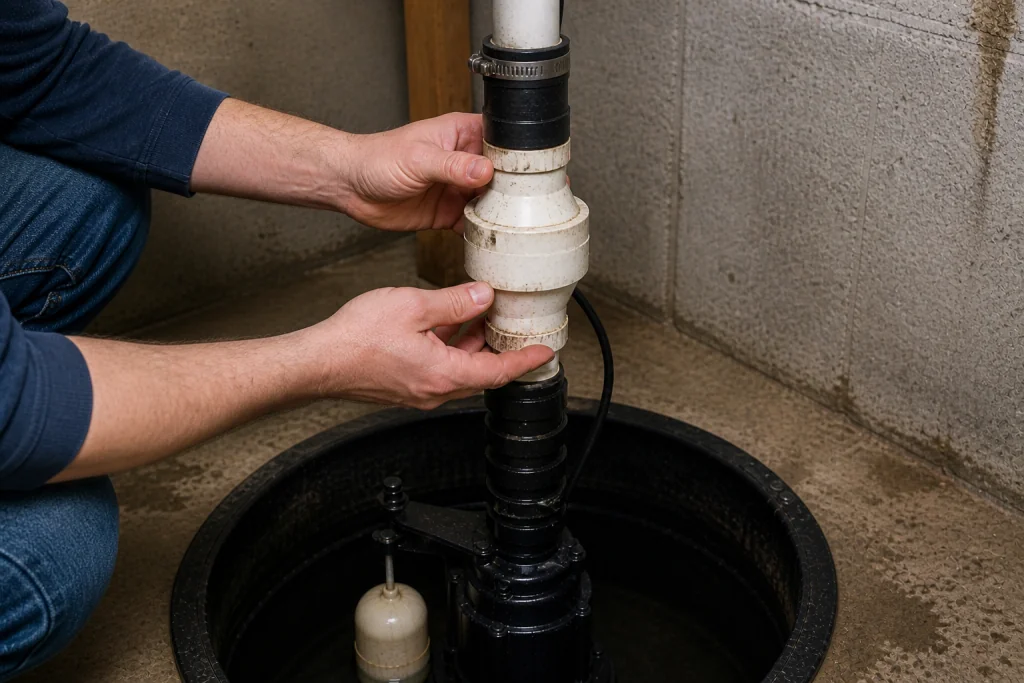
The check valve prevents water from flowing backward into the sump pit.
Signs of a bad check valve
- Constant cycling
- Water flowing back into the pit
- Excessive pump activity
What to do
- Inspect the valve for leaks or cracks
- Make sure the arrow on the valve points away from the pump
- Replace damaged valves if needed
A failed check valve can force the sump pump to work much harder than necessary.
Step 7: Know When the Pump Needs Replacement
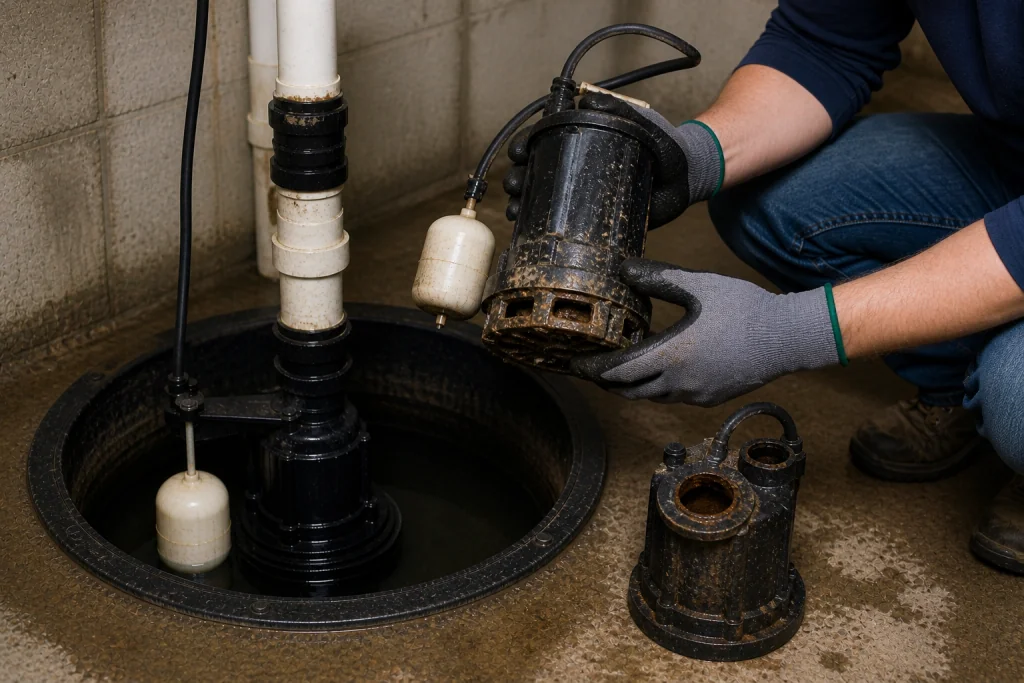
Sometimes the sump pump itself has reached the end of its lifespan.
Signs the pump may need replacement
- Frequent motor overheating
- Loud grinding noises
- Constant failure during storms
- Visible rust or corrosion
- Pump older than 7–10 years
If multiple components are failing, replacing the entire sump pump is often more cost-effective than repeated repairs.
How to Prevent Future Sump Pump Problems
To reduce the risk of basement flooding:
- Test the sump pump every few months
- Clean the sump pit regularly
- Install a battery backup system
- Inspect the discharge pipe seasonally
- Replace worn components promptly
Regular maintenance can reduce the chances of your sump pump not working when you need it most.
Frequently Asked Questions
Why is my sump pump humming but not pumping water?
This usually means the motor is running, but water cannot move properly. Common causes include a jammed impeller, clogged discharge pipe, or failed check valve. A sump pump not working during heavy rain can quickly lead to basement flooding.
How often should a sump pump be replaced?
Most sump pumps last about 7–10 years depending on usage and maintenance.
Can I replace a sump pump myself?
Some homeowners can replace a sump pump themselves, but electrical or plumbing modifications may require a professional.
Why does my sump pump run continuously?
This can happen due to a stuck float switch, failed check valve, heavy groundwater, or an undersized pump.
Should a sump pump always have water in the pit?
Yes. A small amount of water in the sump pit is normal. The pump activates when the water level rises high enough.
Looking for help with another plumbing problem? Browse our complete collection of plumbing repair and troubleshooting guides.
Final Thoughts
A sump pump not working can be stressful, but many common issues are simple to troubleshoot. By checking the power supply, float switch, discharge pipe, and pump components, homeowners can often restore normal operation quickly. Understanding the common causes of a sump pump not working can help homeowners respond faster during emergencies.
If your sump pump still fails after these steps, contacting a licensed plumber or basement waterproofing specialist may be the safest option.
Preventive home maintenance can help avoid expensive repairs later, whether you’re dealing with a sump pump or learning how to fix a running toilet.
The EPA also recommends controlling basement moisture quickly to help prevent mold and water damage.