
Last updated: October 3, 2026
By Home Repair Genie
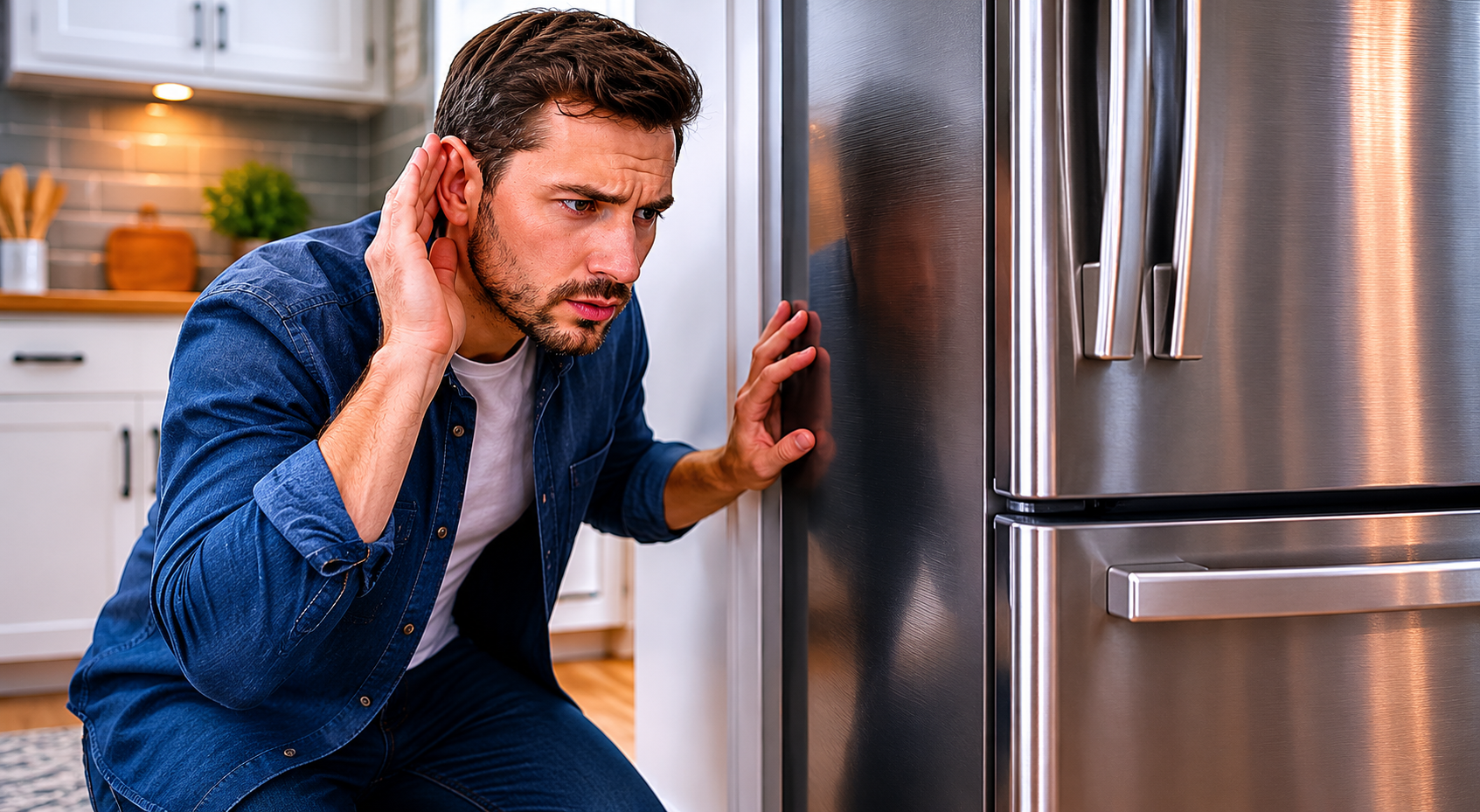
A refrigerator making a loud noise can be annoying and sometimes alarming, especially if the sound suddenly appears or becomes louder over time. Fortunately, many refrigerator noises are caused by simple issues like dirty condenser coils, loose components, or ice buildup around the fan.
Quick Answer
If your refrigerator is making a loud noise, start by identifying where the sound is coming from. A refrigerator making a loud noise is often caused by fan problems, dirty condenser coils, compressor issues, or ice buildup inside the freezer compartment. Cleaning the coils and resetting the refrigerator often resolves the problem.
Learning what causes a refrigerator making a loud noise can help prevent expensive repairs and restore quiet operation quickly.
Why a Refrigerator May Start Making Loud Noises
Modern refrigerators normally make some sounds during operation, including humming, clicking, and occasional popping noises. However, unusually loud sounds often indicate a developing problem.
Common refrigerator noises include:
- Buzzing
- Grinding
- Rattling
- Knocking
- Squealing
- Vibrating
- Loud humming
If your refrigerator is also struggling to cool, read our guide on Refrigerator Not Cooling? 7 Easy Fixes That Actually Work.
Step 1: Identify Where the Noise Is Coming From
Why This Matters
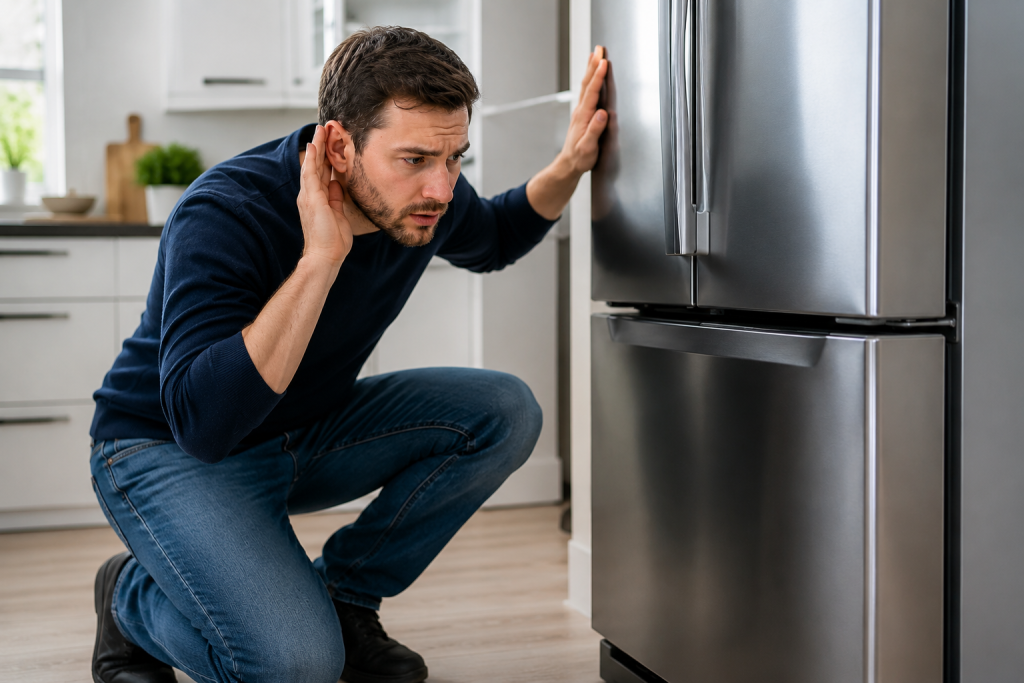
The location of the sound often reveals which component is causing the issue.
What to Listen For
- Rear of refrigerator: condenser fan or compressor
- Inside freezer: evaporator fan
- Bottom area: drain pan vibration
- Water line area: ice maker or valve noise
Open and close the freezer door while listening carefully. If the sound changes when the door opens, the evaporator fan is often responsible.
Step 2: Clean the Condenser Coils
Why Dirty Coils Cause Noise
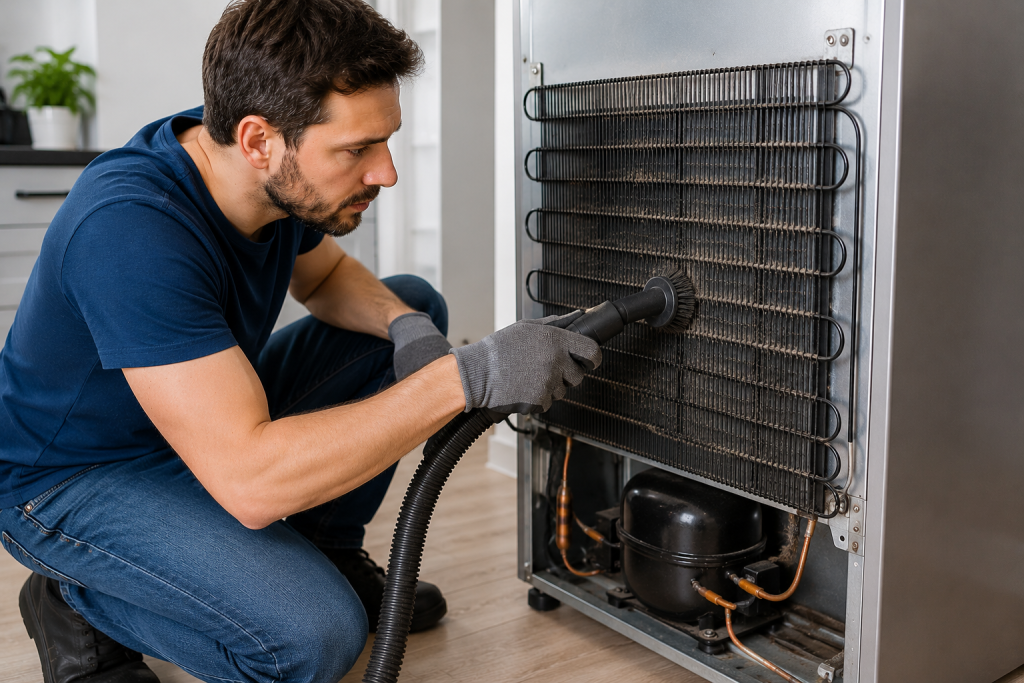
Dust-covered condenser coils force the refrigerator to work harder, which can increase humming and compressor noise. If your refrigerator making a loud noise seems to happen constantly throughout the day, dirty condenser coils are one of the first things you should inspect.
As an Amazon Associate I earn from qualifying purchases.
How to Clean the Coils
- Unplug the refrigerator.
- Locate the condenser coils behind or underneath the unit.
- Use a refrigerator coil-cleaning brush or vacuum attachment to remove dust and debris.
- Restore power after cleaning.
Cleaning the coils every 6–12 months helps improve efficiency and reduce noise.
You may also find our article on LG Refrigerator Not Cooling But Freezer Works: 7 Easy Fixes That Actually Work helpful.
Step 3: Check the Evaporator Fan Motor
Why the Fan May Become Loud
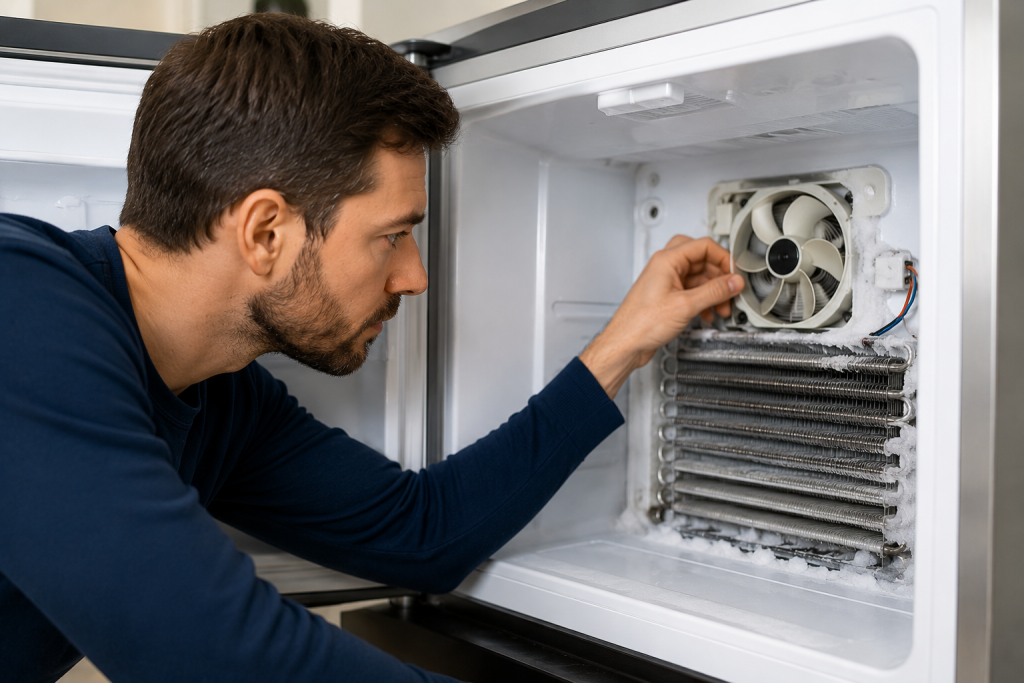
The evaporator fan circulates cold air through the refrigerator and freezer compartments. Ice buildup or worn bearings can cause grinding or squealing noises.
How to Inspect the Fan
- Open the freezer compartment.
- Listen for loud noises near the rear freezer panel.
- Check for frost buildup around the vents.
- Defrost the freezer if heavy ice is present.
If the fan motor continues making noise after defrosting, replacement may be necessary.
Step 4: Inspect the Condenser Fan
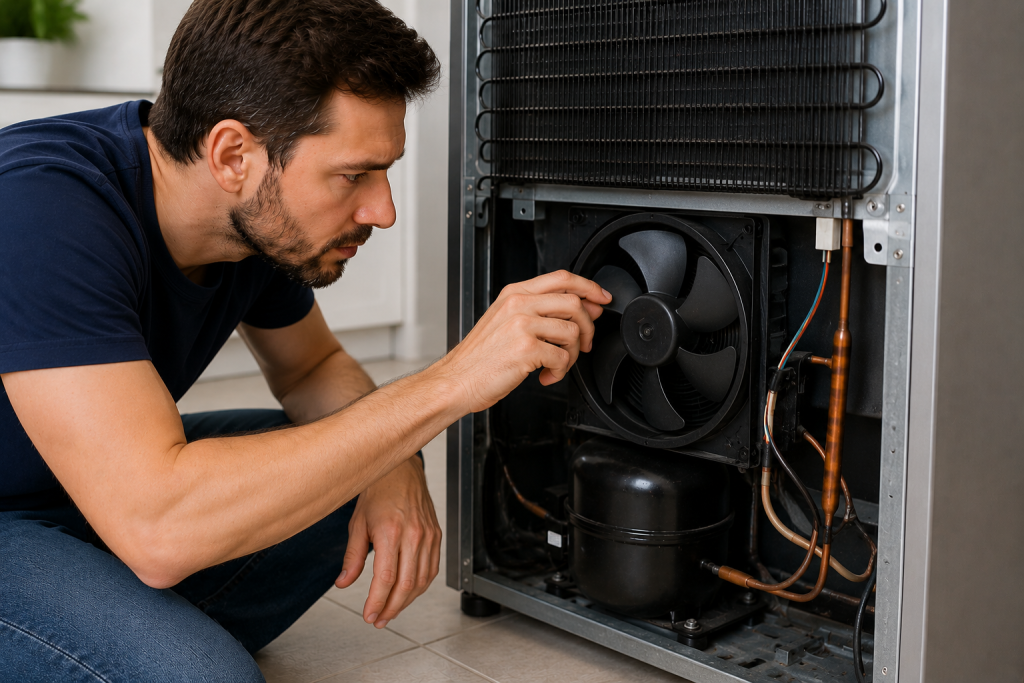
Why the Condenser Fan Matters
A condenser fan problem is another very common reason for a refrigerator making a loud noise during normal operation. The condenser fan cools the compressor and condenser coils. Dirt or debris inside the fan blades can create rattling or buzzing sounds.
What to Do
- Unplug the refrigerator.
- Remove the rear access panel.
- Inspect the fan blades for dust or obstructions.
- Spin the blades gently to check for resistance.
A damaged or wobbling fan blade may need replacement.
Step 5: Make Sure the Refrigerator Is Level
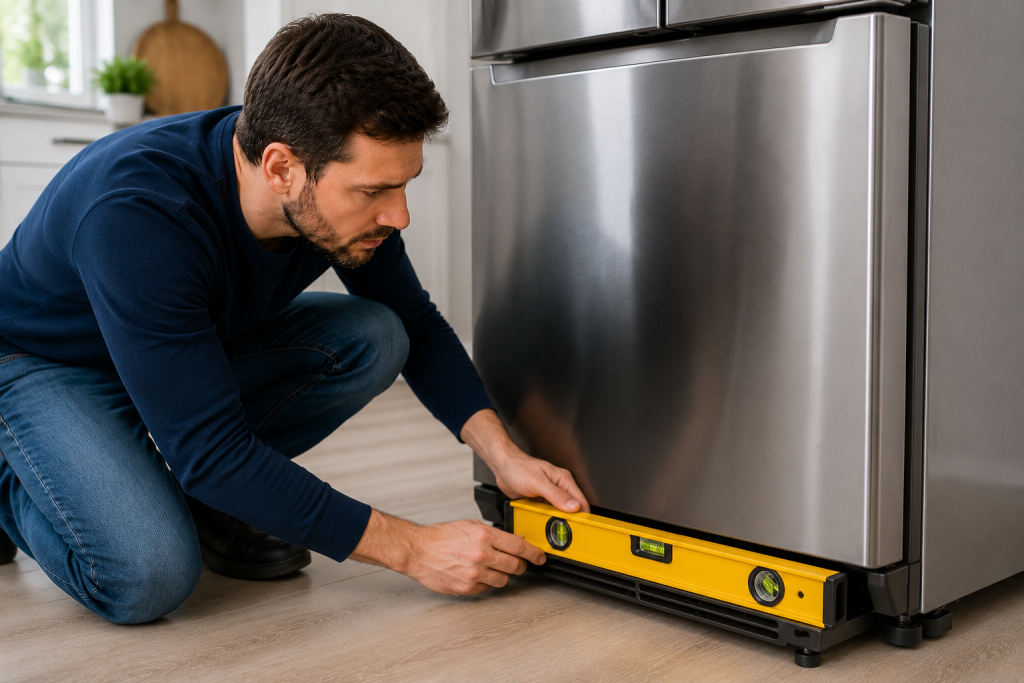
Why an Uneven Refrigerator Can Be Noisy
An unlevel refrigerator may vibrate against the floor or cabinets, creating loud rattling sounds.
How to Level the Refrigerator
Use a small bubble level to check the refrigerator from side to side and front to back. Adjust the leveling legs according to your owner’s manual until the refrigerator sits securely without rocking. Some models require a slight backward tilt to help the doors close properly, so follow your manufacturer’s instructions.
Slightly raising the front can also help doors close properly.
Step 6: Check for Ice Buildup Around the Fan
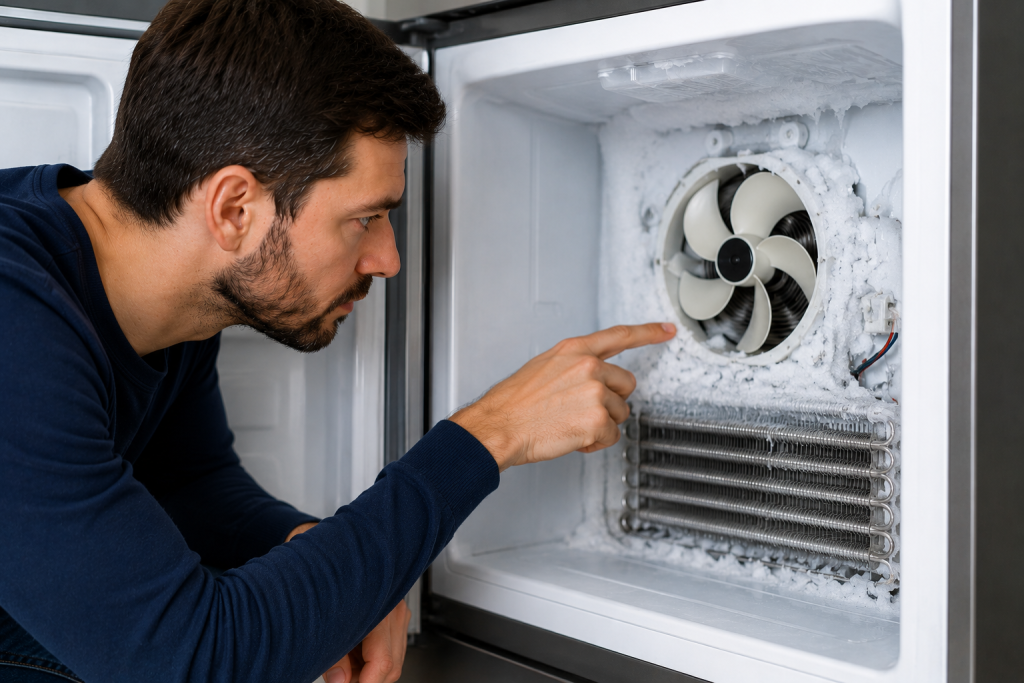
Why Ice Causes Loud Noises
Ice accumulation can interfere with the evaporator fan blades, creating scraping or knocking sounds.
How to Fix It
- Turn off and unplug the refrigerator.
- Leave the freezer doors open.
- Allow the unit to fully defrost for several hours.
- Dry excess moisture before restarting.
If ice buildup keeps returning, a defrost system problem may exist.
You can also review troubleshooting information at GE Appliances Support.
Step 7: Consider Compressor Problems
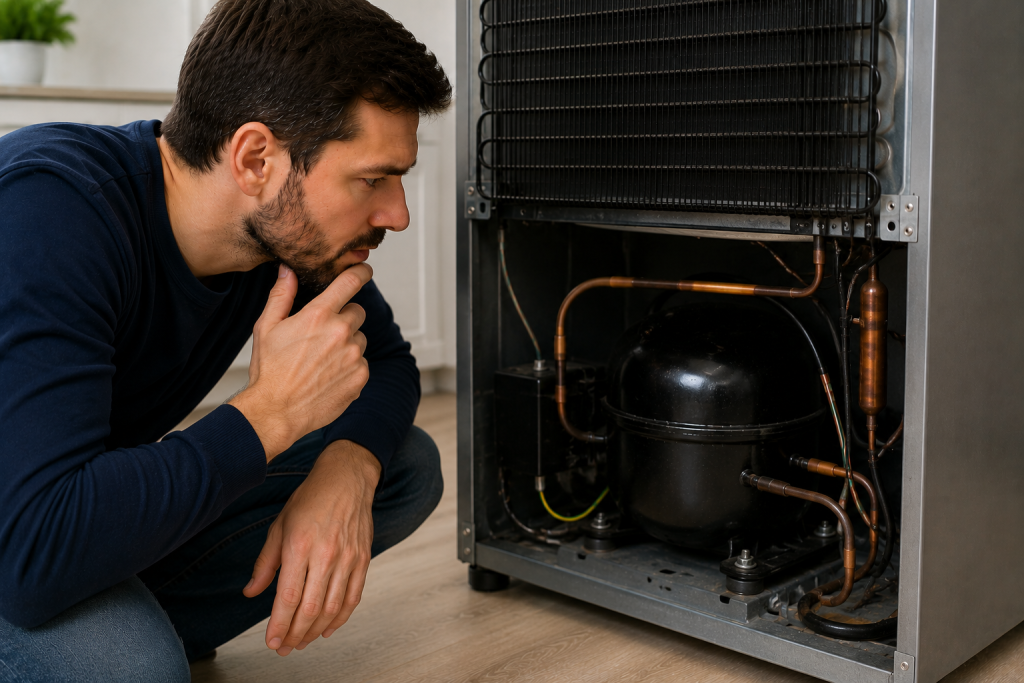
When the Compressor Is the Cause
Compressors naturally produce a low humming sound, but extremely loud buzzing, clicking, or knocking may indicate wear or failure.
Signs of Compressor Trouble
- Refrigerator not cooling properly
- Repeated clicking noises
- Overheating
- Constant loud humming
- Compressor running continuously
Compressor repairs are usually best handled by a professional appliance technician.
Learning how to diagnose a refrigerator making a loud noise can help you catch compressor issues before complete failure occurs.
Many homeowners become concerned when a refrigerator making a loud noise suddenly starts buzzing, grinding, or rattling after years of quiet performance.
Frequently Asked Questions
Is it normal for a refrigerator to make noise?
Yes. Refrigerators commonly make humming, clicking, and occasional popping sounds during normal operation. Loud grinding, squealing, or rattling noises are not normal.
Why is my refrigerator suddenly making a loud humming noise?
Dirty condenser coils, a failing fan motor, or compressor problems are common causes of loud humming sounds.
Can a noisy refrigerator be dangerous?
Sometimes. Electrical buzzing, burning smells, or overheating may indicate a serious issue that should be inspected immediately.
Why does my refrigerator make noise at night?
Refrigerator sounds often seem louder at night because the home is quieter. Automatic defrost cycles and ice makers may also activate overnight.
How do I stop my refrigerator from vibrating?
Make sure the refrigerator is level and not touching nearby walls or cabinets. Tightening loose drain pans and cleaning fans can also reduce vibration.
Looking for help with another appliance problem? Browse our complete collection of appliance repair guides and error-code fixes.
Final Thoughts
A refrigerator making a loud noise is often caused by dirty coils, fan problems, ice buildup, or vibration issues that can be fixed without major repairs. Identifying the type and location of the noise is the fastest way to narrow down the problem.
In many cases, fixing a refrigerator making a loud noise only requires simple cleaning, leveling, or fan maintenance rather than expensive repairs. However, persistent loud noises combined with cooling problems may indicate compressor or motor failure that requires professional service.