
Last updated: September 20, 2026
By Home Repair Genie
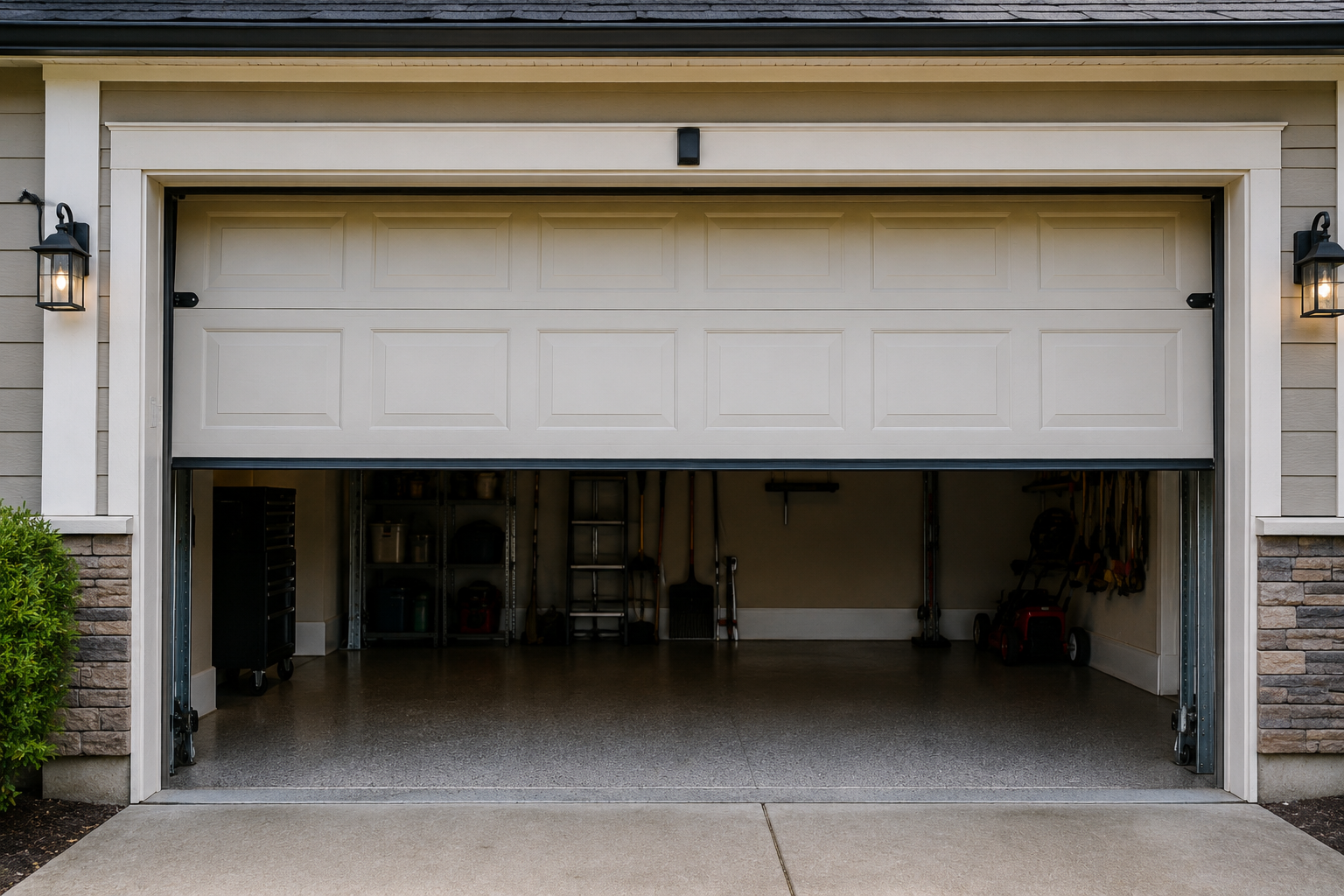
If your garage door closes then opens again immediately, you’re not alone. This is one of the most common garage door problems homeowners face.
In many cases, the issue is caused by dirty safety sensors, incorrect opener settings, track obstructions, or mechanical resistance.
The good news is that many of these problems can be fixed without replacing the entire garage door opener.
In this guide, you’ll learn the most common reasons a garage door closes then opens again and the step-by-step fixes that actually work.
Tools and Materials You May Need
- Step ladder
- Microfiber cloth
- Screwdriver set
- Tape measure
- Silicone garage door lubricant
- Flashlight
- Safety gloves
Step 1: Check the Safety Sensors
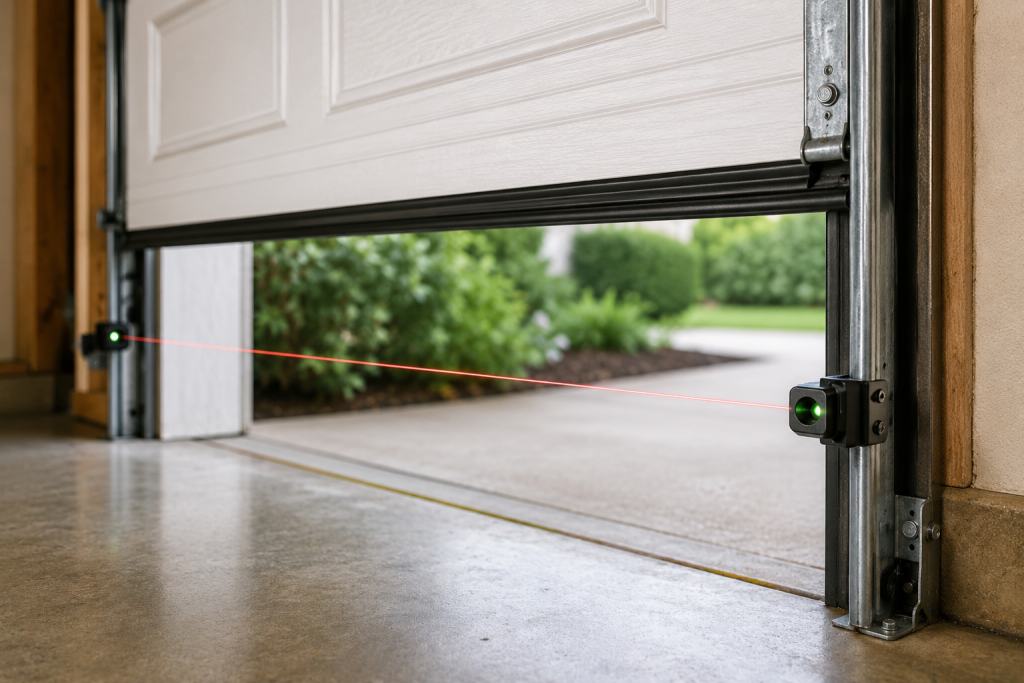
Garage door safety sensors are the most common reason a garage door closes then opens again.
These sensors are located near the bottom of the garage door tracks on both sides.
If the sensors are dirty, blocked, or misaligned, the garage door opener may think something is underneath the door and automatically reverse it.
Start by cleaning both sensor lenses using a microfiber cloth.
Next, make sure both sensors are facing directly at each other. Most garage door sensors include indicator lights. If one light is blinking, the sensors are likely out of alignment.
Carefully adjust the sensors until both lights remain solid.
If your garage door won’t open at all, you may also want to read our guide on Garage Door Won’t Open.
Step 2: Remove Any Objects Blocking the Door
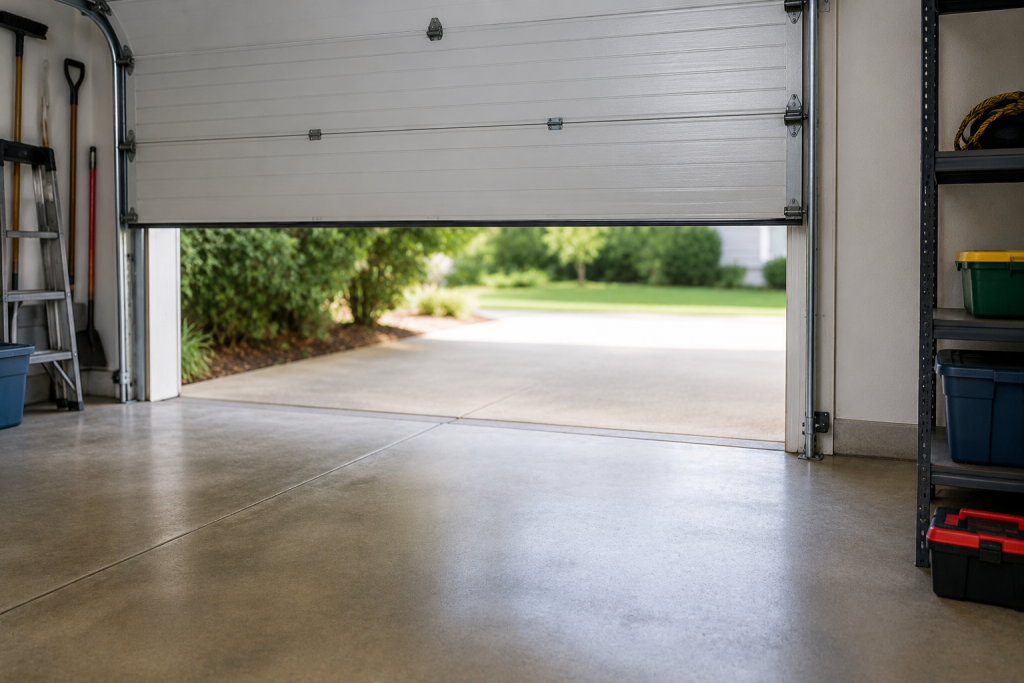
Even small objects can trigger the garage door safety system.
Inspect the area beneath the garage door for:
- Leaves
- Dirt buildup
- Small tools
- Rocks
- Storage items
- Ice during winter
If the garage door touches an obstruction while closing, it may immediately reverse direction.
Clear the area completely and test the garage door again.
Step 3: Inspect the Garage Door Tracks
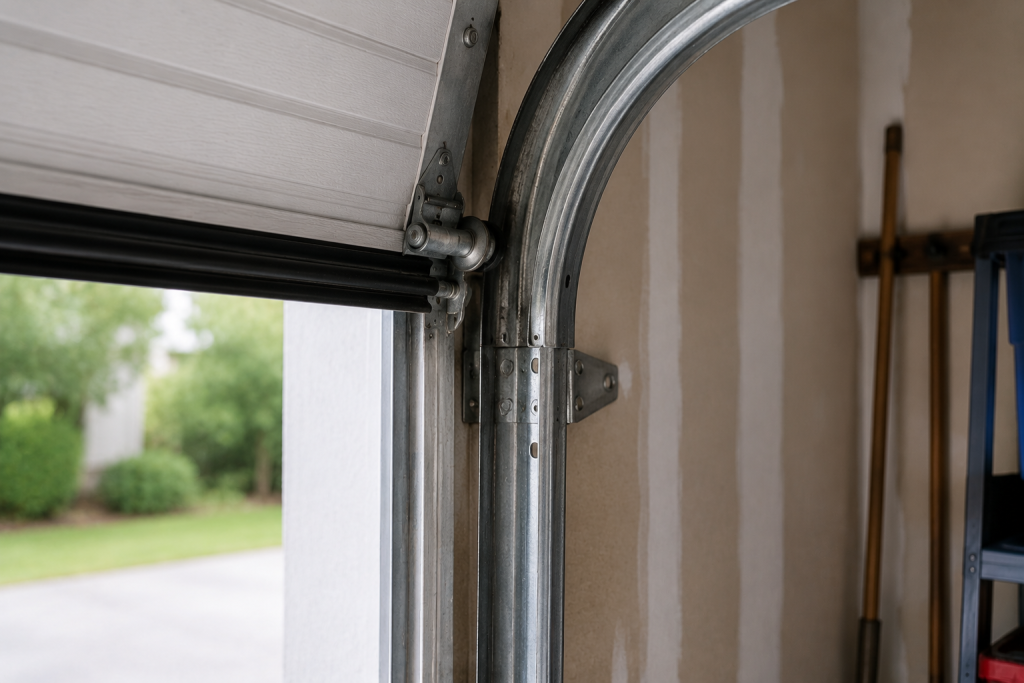
Bent or dirty tracks can create resistance that causes the garage door to reverse.
Use a flashlight to inspect both tracks carefully.
Look for:
- Dirt buildup
- Debris
- Dents
- Misaligned sections
- Loose mounting brackets
Clean the tracks using a dry cloth.
Do not apply grease directly to the tracks because it can attract dust and debris.
If you notice loose hardware, tighten it carefully using a screwdriver or socket wrench.
If your garage door makes grinding noises during operation, lubrication and track inspection are especially important.
Step 4: Adjust the Close Limit Settings
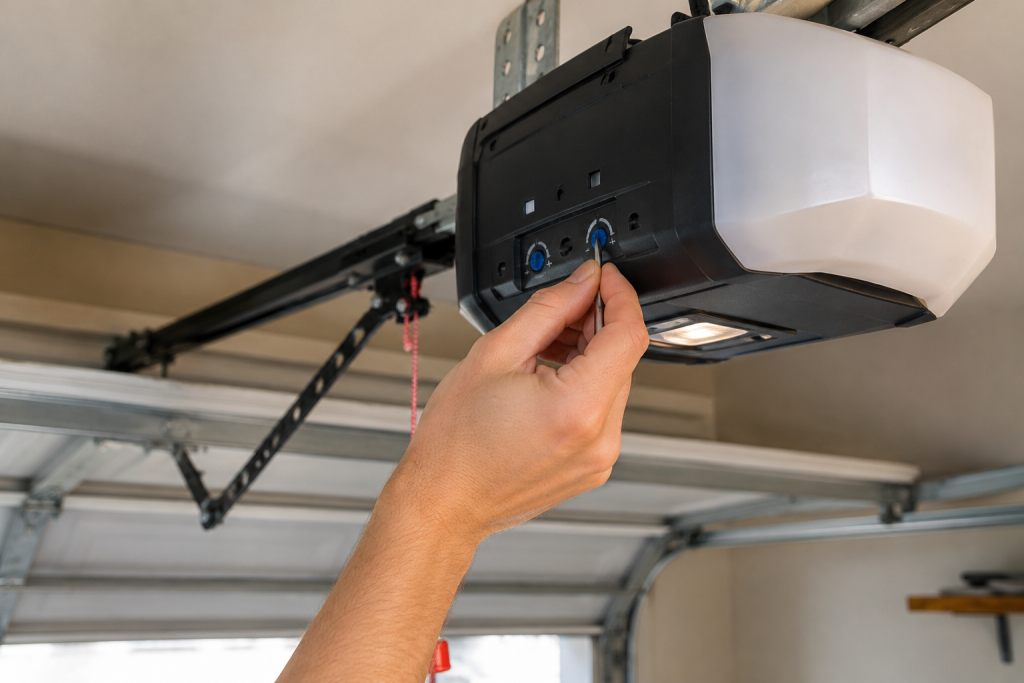
Garage door openers include travel limit settings that control how far the door closes.
If the close limit is set incorrectly, the opener may think the door hit the ground too early and automatically reverse.
Locate the adjustment screws on the garage door opener motor housing. These are often labeled:
- Up/Down
- Open/Close
- Travel Limit
Turn the close-limit adjustment slightly and test the door after each adjustment.
Small changes can make a big difference.
Check your opener manual for the exact adjustment procedure because settings vary by manufacturer.
Step 5: Lubricate the Rollers and Hinges
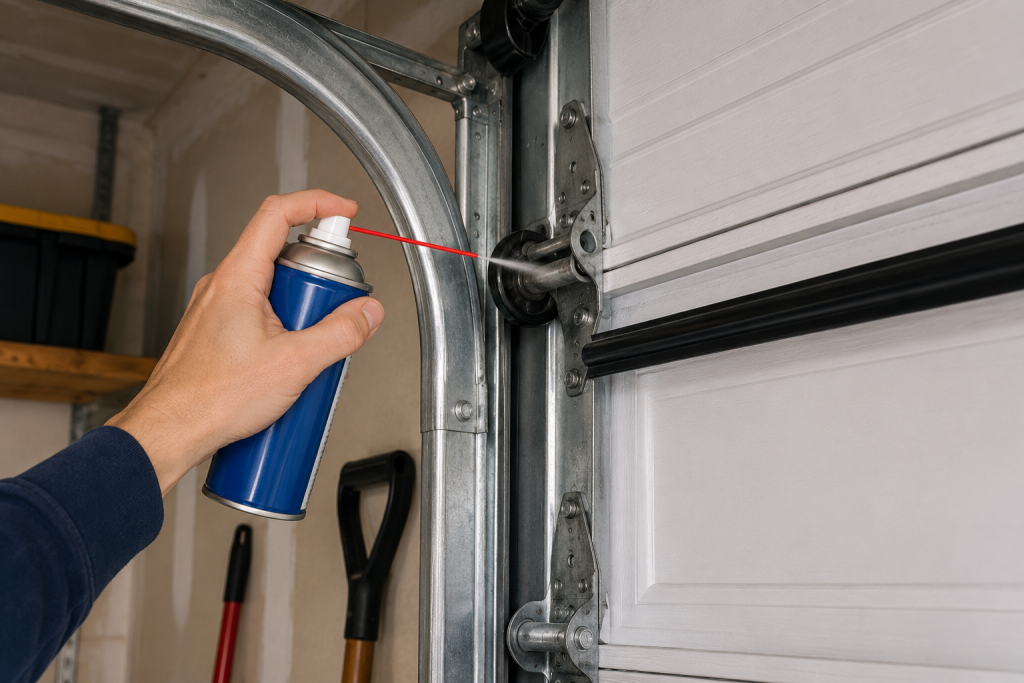
Dry rollers and hinges can create enough resistance to trigger the opener’s safety reverse system.
Apply a silicone-based garage door lubricant to:
- Rollers
- Hinges
- Bearings
- Springs
Avoid using heavy grease products because they can collect debris over time.
Routine lubrication often improves garage door movement and reduces strain on the opener.
If you notice sticking or rubbing doors elsewhere in your home, you may also find our article on How to Fix a Door That Sticks When Closing helpful.
Step 6: Check for Broken Springs or Cables
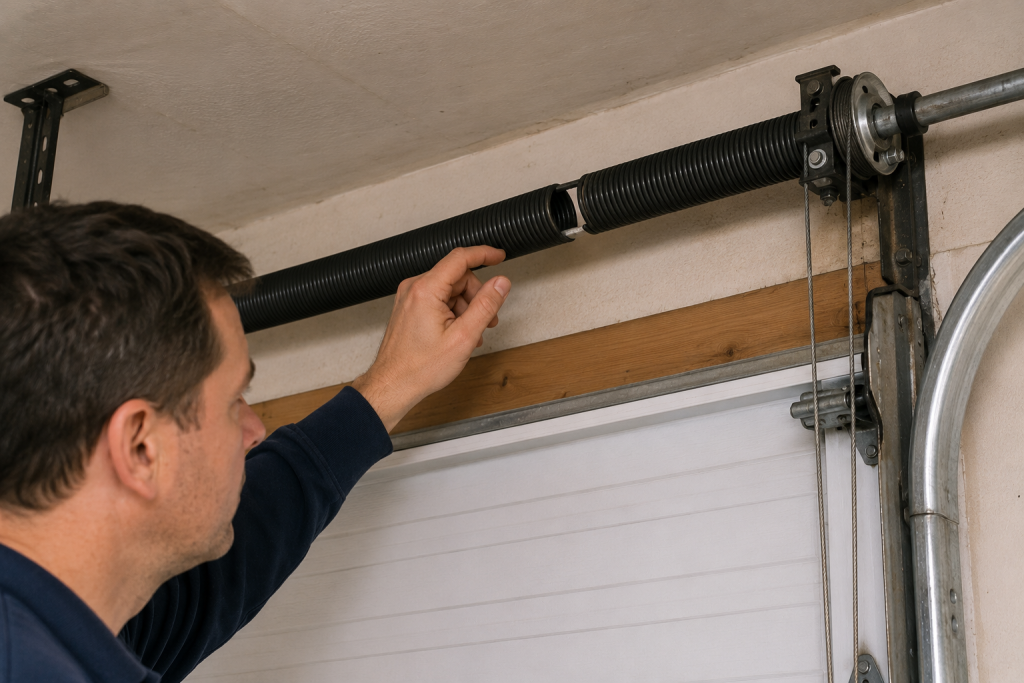
Garage door springs and cables help balance the weight of the door.
If a spring is broken or a cable becomes damaged, the opener may struggle to close the door properly.
Look above the garage door for the torsion spring.
If you see a visible gap in the spring, it is likely broken.
Also inspect the cables on both sides of the door for fraying or looseness.
Do not attempt to repair garage door springs or cables yourself unless properly trained. These components are under extreme tension and can cause serious injury.
Step 7: Reset the Garage Door Opener
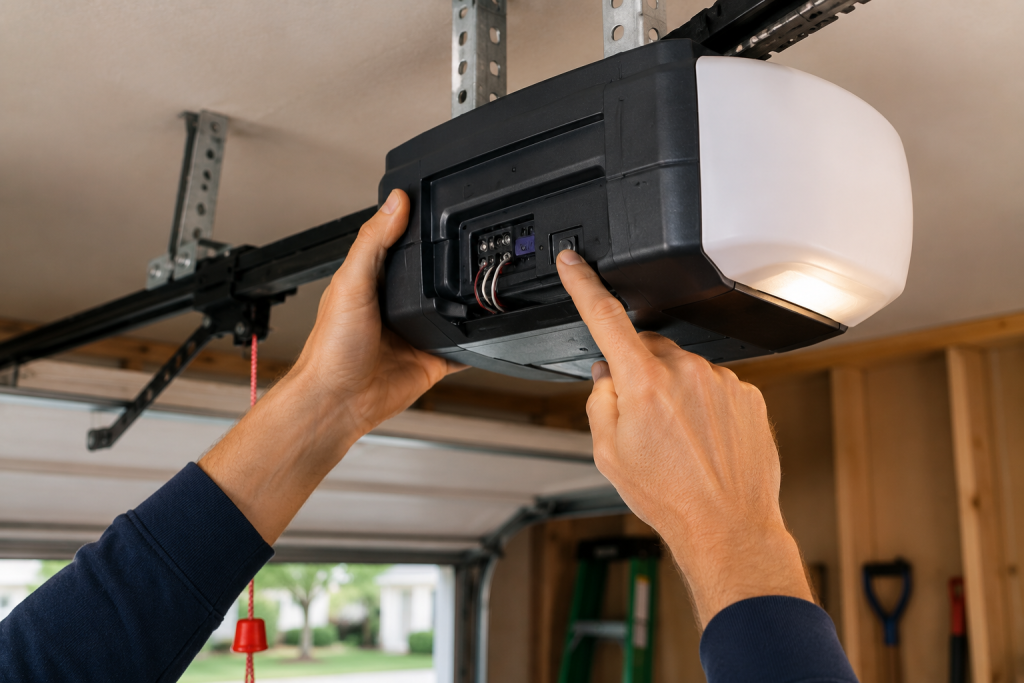
Sometimes the opener itself may experience a temporary electronic glitch.
Try unplugging the garage door opener from the ceiling outlet for about 60 seconds.
Then plug it back in and test the door again.
Some openers also include a reset or learn button that may help restore normal operation.
If the opener continues malfunctioning after resetting, the motor or internal control board may be failing.
For additional troubleshooting tips, you can also review this helpful garage door guide from This Old House.
Signs You Should Call a Professional
Contact a garage door professional if:
- The door falls suddenly
- The torsion spring is broken
- The cables are loose or damaged
- The opener motor hums but won’t move
- The tracks are bent badly
- The door appears crooked
Garage doors are extremely heavy and can become dangerous if major components fail.
How to Prevent Garage Door Reversing Problems
Routine maintenance can help prevent garage door issues in the future.
Here are a few simple maintenance tips:
- Clean safety sensors monthly
- Lubricate moving parts every 6 months
- Inspect tracks regularly
- Tighten loose hardware
- Replace remote batteries yearly
- Keep the door balanced properly
Regular maintenance can extend the life of both the garage door and the opener.
Frequently Asked Questions
Why my garage door closes then opens again?
This usually happens because the safety sensors detect an obstruction or the opener senses resistance while closing.
Can dirty sensors cause a garage door to reopen?
Yes. Dirty or misaligned safety sensors are one of the most common causes of garage door reversing problems.
How do I know if my garage door limit settings are wrong?
If the door touches the floor and immediately reverses, the close limit settings may need adjustment.
Can cold weather cause garage door reversing problems?
Yes. Ice buildup, stiff rollers, and metal contraction during cold weather can create resistance that triggers the opener’s safety system.
Looking for help with another door or window problem? Browse our complete collection of door and window repair guides.
Final Thoughts
If your garage door closes then opens again, the problem is often related to safety sensors, track resistance, opener settings, or worn mechanical components.
By following these step-by-step troubleshooting methods, you can often identify and fix the issue yourself.
However, if you suspect broken springs, damaged cables, or opener motor failure, it’s safest to contact a qualified garage door professional.