
Last updated: September 20, 2026
By Home Repair Genie
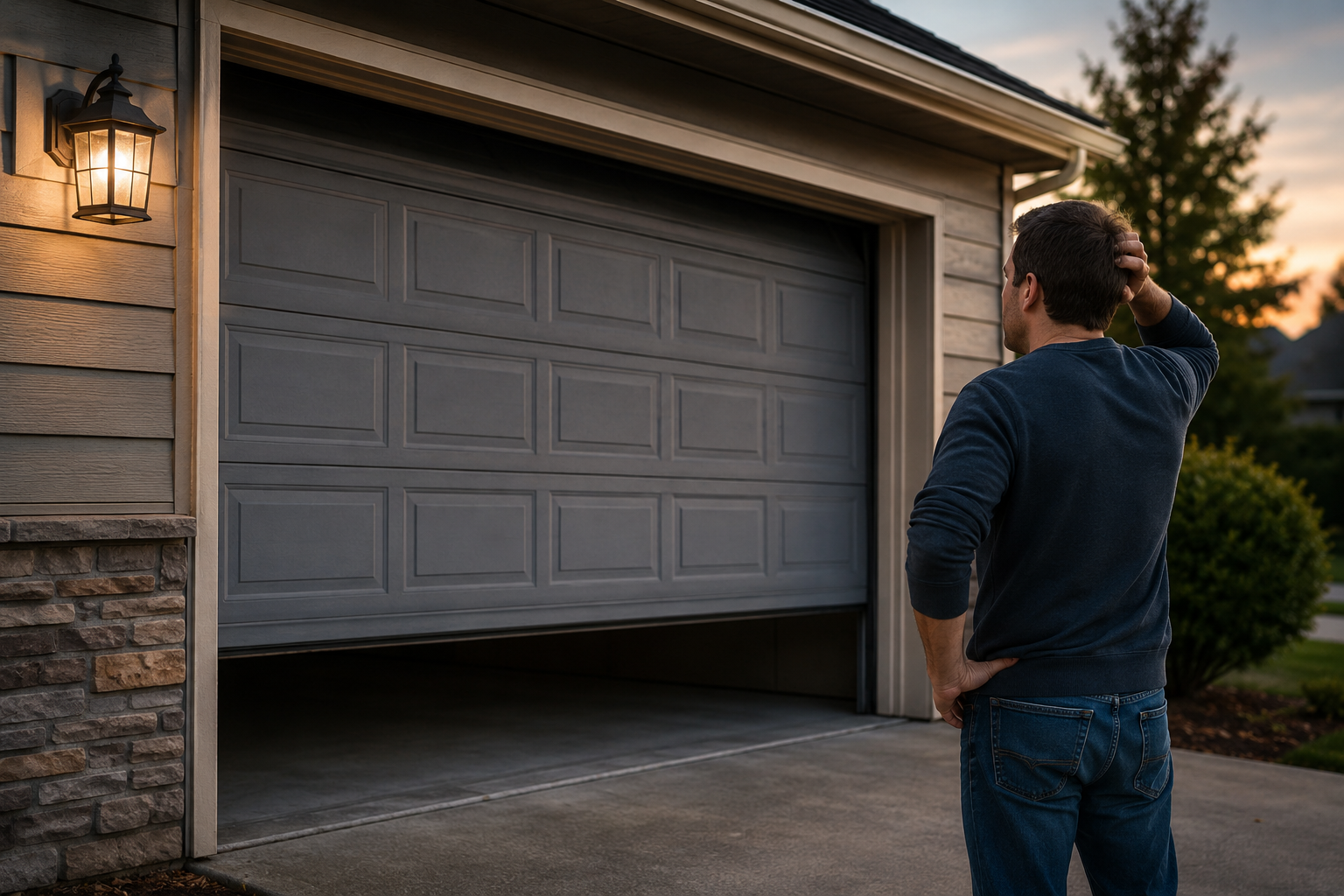
A garage door that refuses to open can quickly become frustrating, especially when you’re trying to leave for work or get inside during bad weather. The good news is that many garage door problems are caused by simple issues you can troubleshoot yourself.
In this step-by-step guide, you’ll learn the most common reasons a garage door won’t open and the practical fixes that can get it working again.
Tools and Materials You May Need
- Step ladder
- Replacement batteries
- Flashlight
- Clean microfiber cloth
- Silicone garage door lubricant
- Screwdriver set
- Safety gloves
Step 1: Check the Garage Door Opener Power if Garage Door Won’t Open
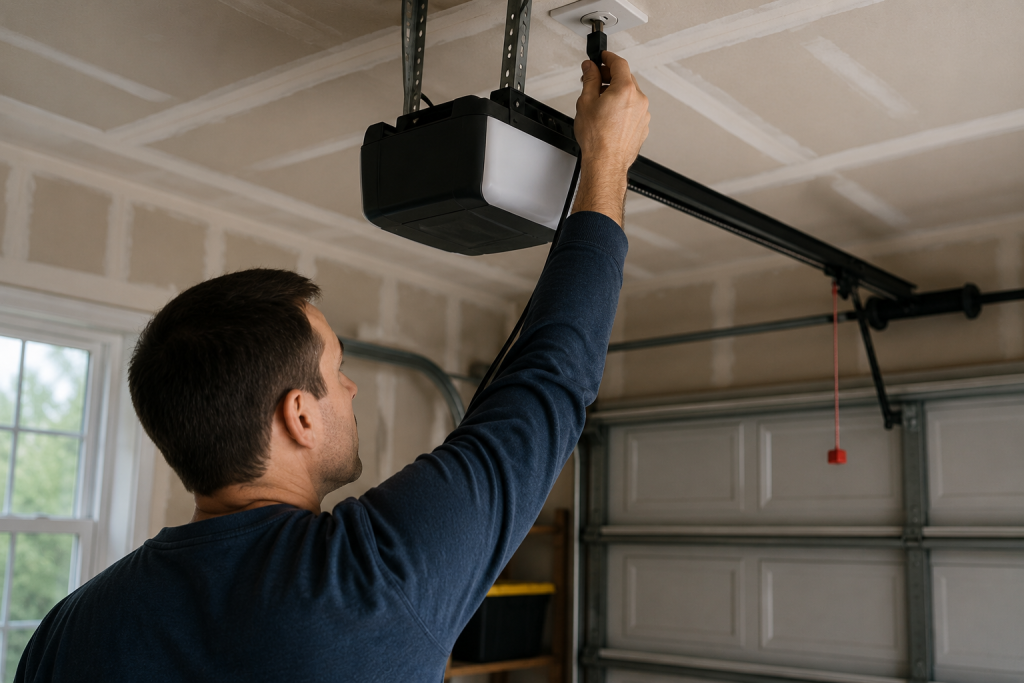
One of the most common reasons a garage door won’t open is a loss of power to the opener.
Start by checking whether the garage door opener is plugged into the ceiling outlet. Sometimes vibration from normal use can loosen the plug over time.
Next, test the outlet by plugging in another device such as a lamp or charger. If the outlet isn’t working, check your home’s electrical panel for a tripped breaker.
If you recently experienced a power outage, the opener may need to reset itself before operating normally again.
If your breaker keeps tripping, you may also want to read our guide on How to Fix a Tripped Circuit Breaker.
Step 2: Replace the Remote Control Batteries
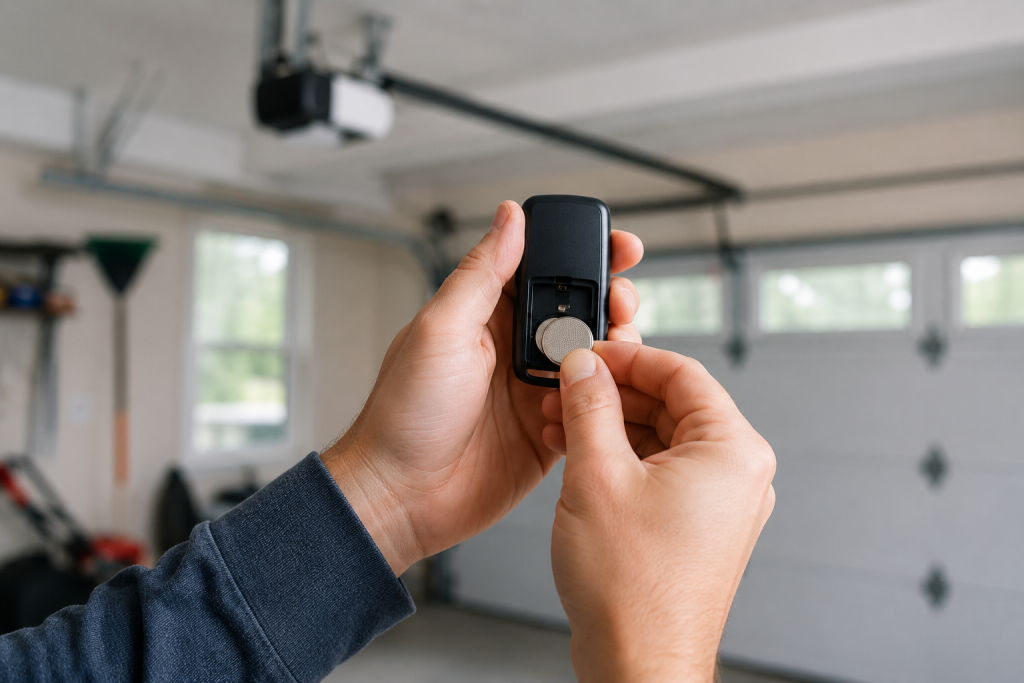
Dead remote batteries are another simple but common reason a garage door won’t open.
Stand near the garage door and try using the remote again. If nothing happens, replace the batteries with fresh ones.
You should also test the wall-mounted garage door button. If the wall button works but the remote doesn’t, the issue is likely isolated to the remote itself.
Some garage door remotes may need to be reprogrammed after battery replacement. Check the manufacturer instructions for your opener model.
Step 3: Make Sure the Manual Lock Isn’t Engaged
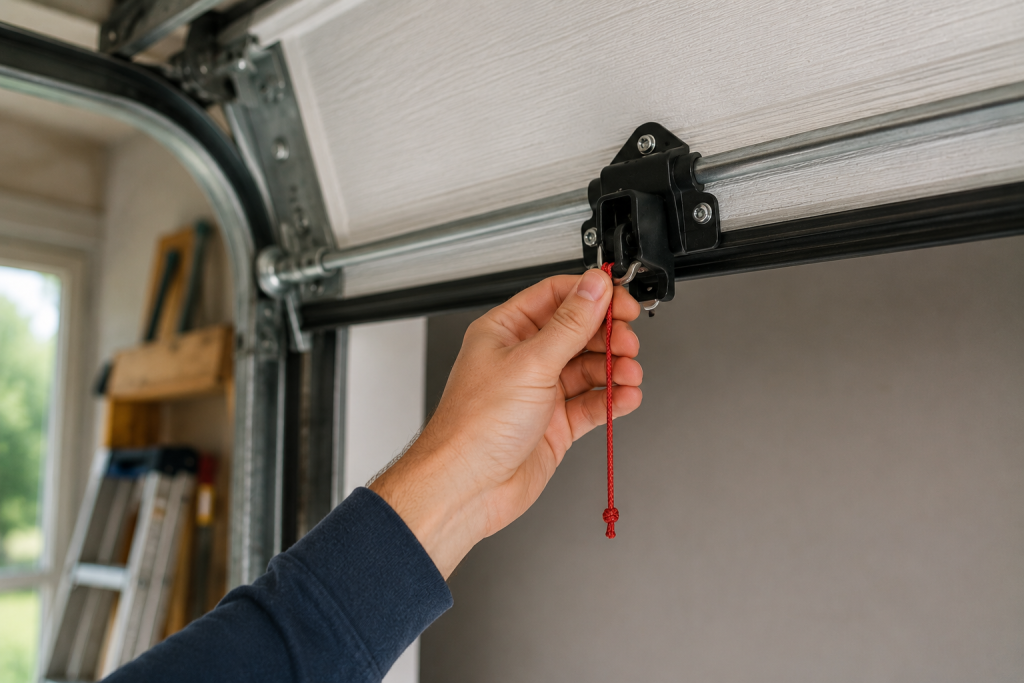
Many garage doors include a manual slide lock for extra security.
If this lock is accidentally engaged, the opener may hum or strain without opening the door.
Inspect the inside of the garage door for a sliding latch or lock bar. If it’s engaged, unlock it and try opening the door again.
This issue is especially common after someone manually locks the door during vacations or storms.
Step 4: Inspect the Safety Sensors
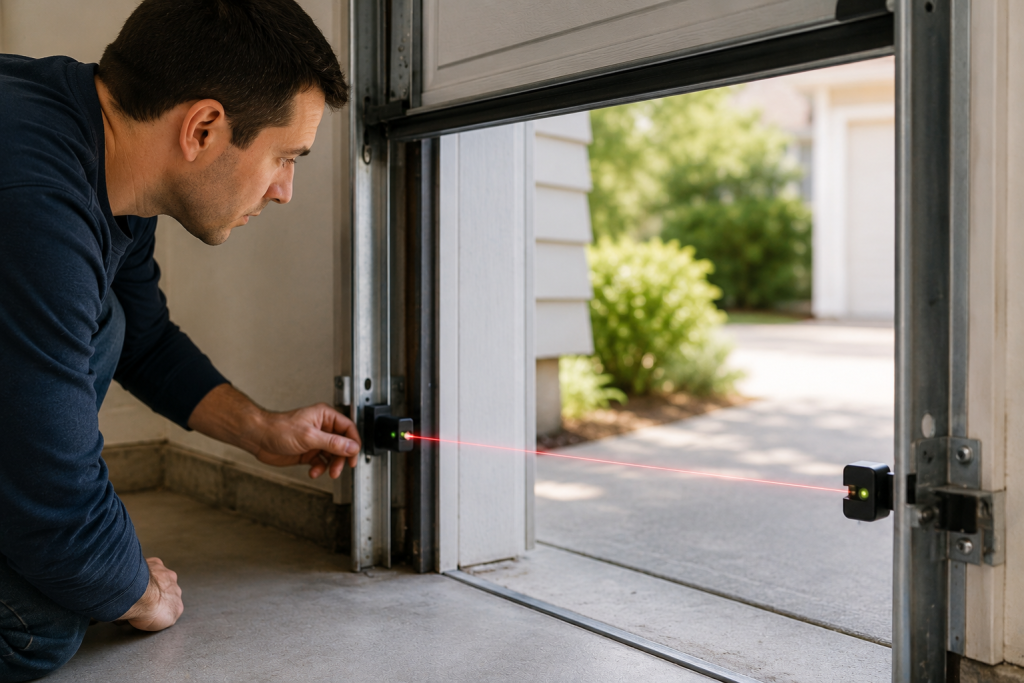
Modern garage doors include safety sensors near the bottom of the tracks. If the sensors are blocked or misaligned, the garage door may refuse to open properly.
Check both sensors for dirt, spider webs, or objects blocking the beam.
Clean the lenses gently using a microfiber cloth. Then make sure both sensors are pointed directly at each other.
Most sensors have indicator lights. A blinking light often means the sensors are out of alignment.
If your garage door starts closing and immediately reverses, you may also benefit from reading our article on Garage Door Closes Then Opens Again.
Step 5: Check for Broken Springs
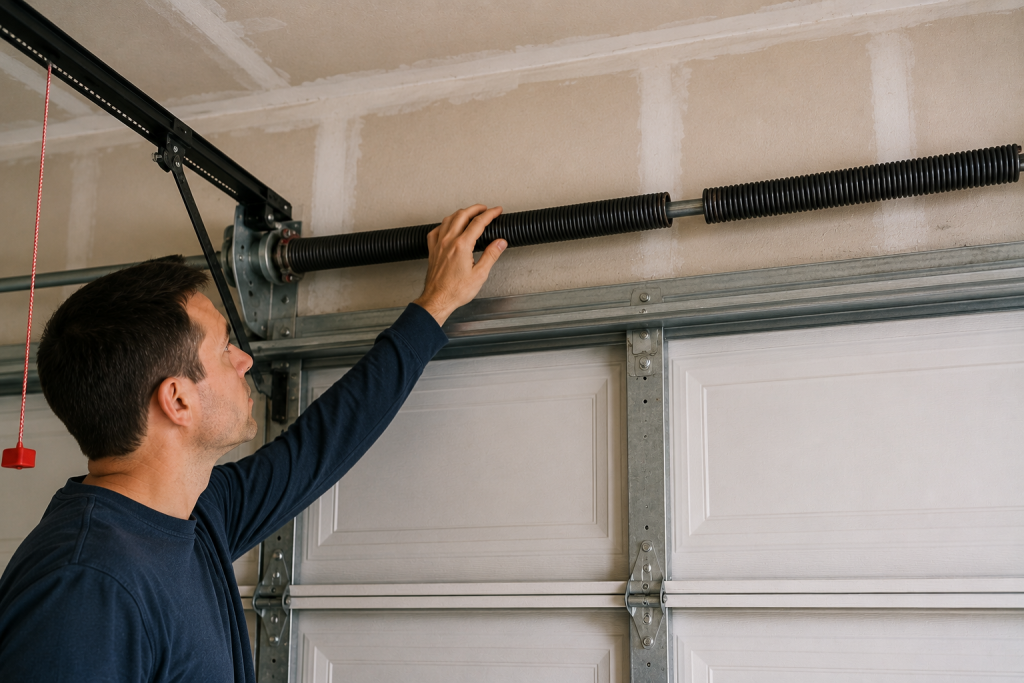
Broken garage door springs are a serious issue and one of the biggest reasons a garage door won’t open.
Look above the garage door for the large torsion spring mounted on the shaft. If you notice a visible gap in the spring, it has likely snapped.
You may also hear a loud bang when a spring breaks.
Do not attempt to repair garage door springs yourself unless you have proper training. Garage door springs are under extreme tension and can cause serious injury.
If the door feels unusually heavy or only opens a few inches before stopping, a broken spring is very likely the cause.
Step 6: Lubricate the Tracks and Rollers
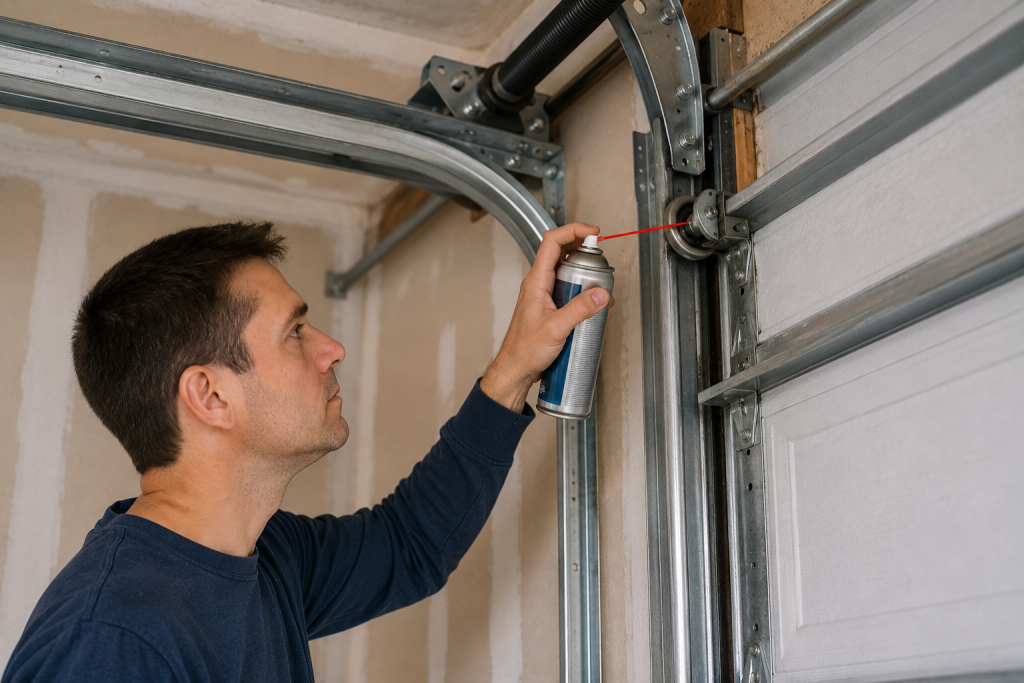
Garage doors rely on smooth-moving rollers and tracks.
Over time, dirt buildup and lack of lubrication can create friction that prevents the door from operating properly.
Apply a silicone-based garage door lubricant to:
- Rollers
- Hinges
- Bearings
- Springs
- Tracks
Avoid using thick grease products because they tend to collect dust and debris.
If you notice grinding noises during operation, lubrication can often make a major difference.
You may also want to read our guide on How to Fix a Door That Sticks When Closing for additional troubleshooting tips involving alignment and friction.
Step 7: Call a Garage Door Professional for Major Mechanical Problems
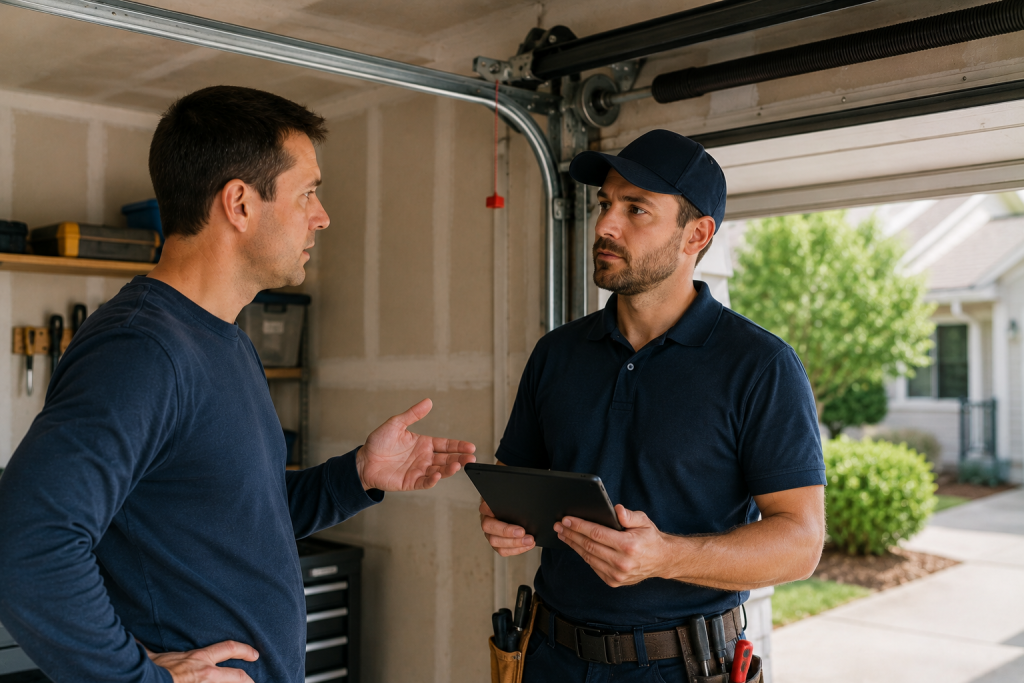
If none of the previous fixes work, the problem may involve:
- A failed garage door opener motor
- Broken cables
- Bent tracks
- Damaged rollers
- Internal gear failure
At this point, it’s safest to contact a garage door professional.
Attempting major garage door repairs without proper tools can be dangerous.
For additional garage door maintenance guidance, you can also review this helpful resource from This Old House.
Signs You Should Call a Professional Immediately
Contact a professional right away if:
- The garage door falls suddenly
- You hear snapping or popping sounds
- The torsion spring is broken
- The cables appear loose or frayed
- The opener motor smells burnt
- The door is crooked or off-track
These issues can create serious safety hazards if ignored.
How to Prevent Garage Door Problems
Routine maintenance can help prevent future issues.
Here are a few simple maintenance tips:
- Lubricate moving parts every 6 months
- Replace remote batteries yearly
- Keep the tracks clean
- Test the safety sensors monthly
- Inspect springs and cables regularly
- Tighten loose hardware when needed
Preventive maintenance can extend the life of your garage door system and reduce expensive repairs.
Frequently Asked Questions
Why does my garage door opener click but not open?
This usually points to a broken spring, stripped opener gear, or engaged manual lock.
Can I manually open a garage door with a broken opener?
Yes. Pull the emergency release cord to disconnect the opener, then carefully lift the door manually.
Why won’t my garage door open after a power outage?
Some openers need to reset after losing power. Check the breaker, outlet, and opener settings.
How much does it cost to replace a garage door spring?
Professional garage door spring replacement often costs between $150 and $400 depending on the door size and spring type.
Looking for help with another door or window problem? Browse our complete collection of door and window repair guides.
Final Thoughts
If your garage door won’t open, the issue may be something simple like dead batteries, blocked sensors, or a tripped breaker. By following these step-by-step troubleshooting methods, you can often identify the problem quickly and safely.
However, if you suspect broken springs or major mechanical damage, it’s best to contact a qualified garage door professional rather than risking injury.