
Last updated: September 20, 2026
By Home Repair Genie
Refrigerator Not Cooling? Quick Answer
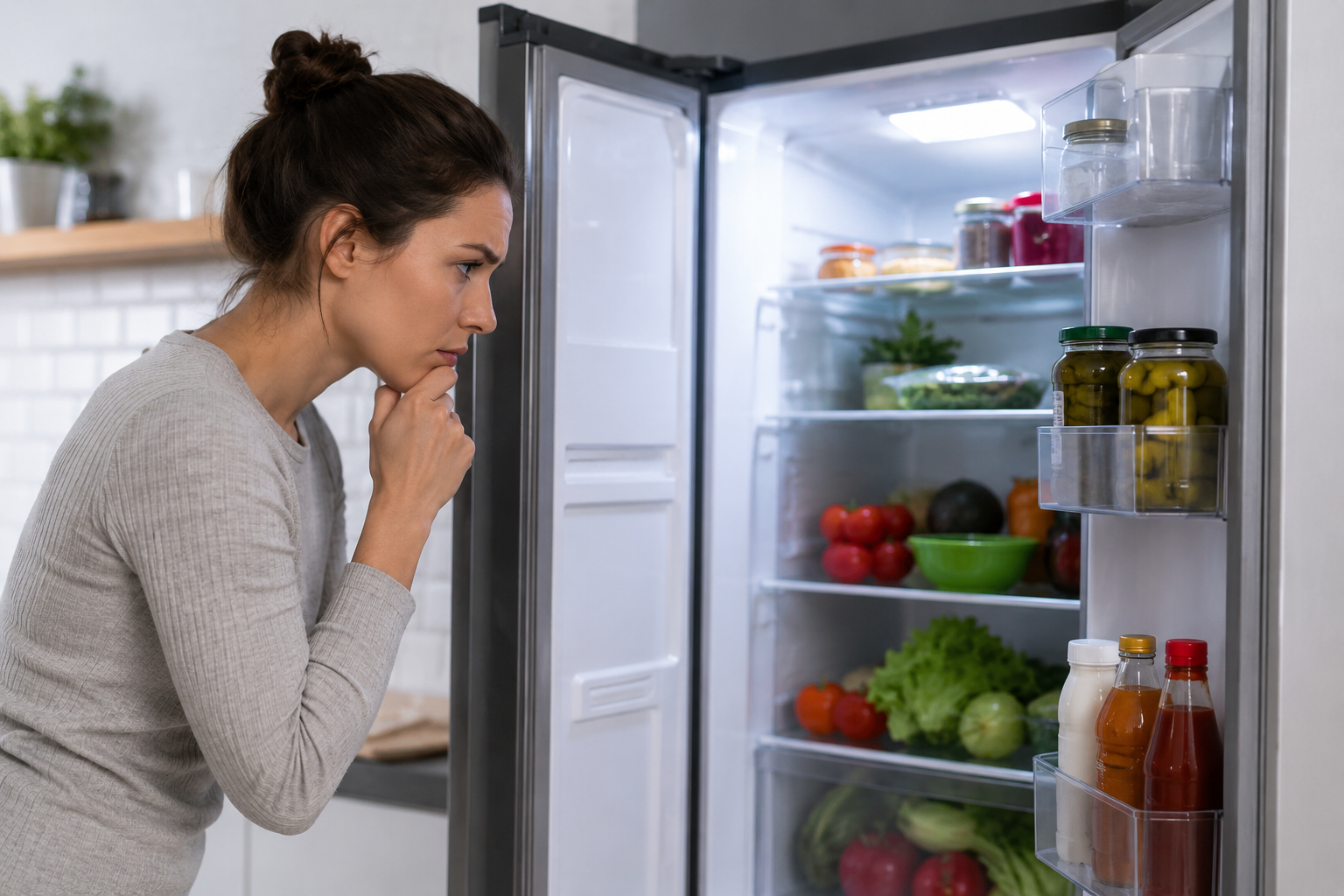
If your refrigerator is not cooling, the most common causes are dirty condenser coils, blocked airflow, incorrect temperature settings, faulty door seals, or a failing evaporator fan. Many refrigerator cooling problems can be fixed at home without expensive repairs.
A refrigerator not cooling properly can quickly turn into a major problem, especially if food starts spoiling. Fortunately, many refrigerator cooling issues are caused by simple maintenance problems or airflow restrictions that homeowners can fix themselves.
This step-by-step guide explains the most common reasons your refrigerator is not cooling and how to troubleshoot each one safely.
Step 1: Check the Temperature Settings

Sometimes the refrigerator temperature controls are accidentally adjusted.
Verify that:
- Refrigerator temperature is set between 35°F and 38°F
- Freezer temperature is set near 0°F
Incorrect settings can prevent the refrigerator from staying cold enough.
If your refrigerator water dispenser is also acting up, read about refrigerator-water-dispenser-not-working.
Step 2: Clean Dirty Condenser Coils
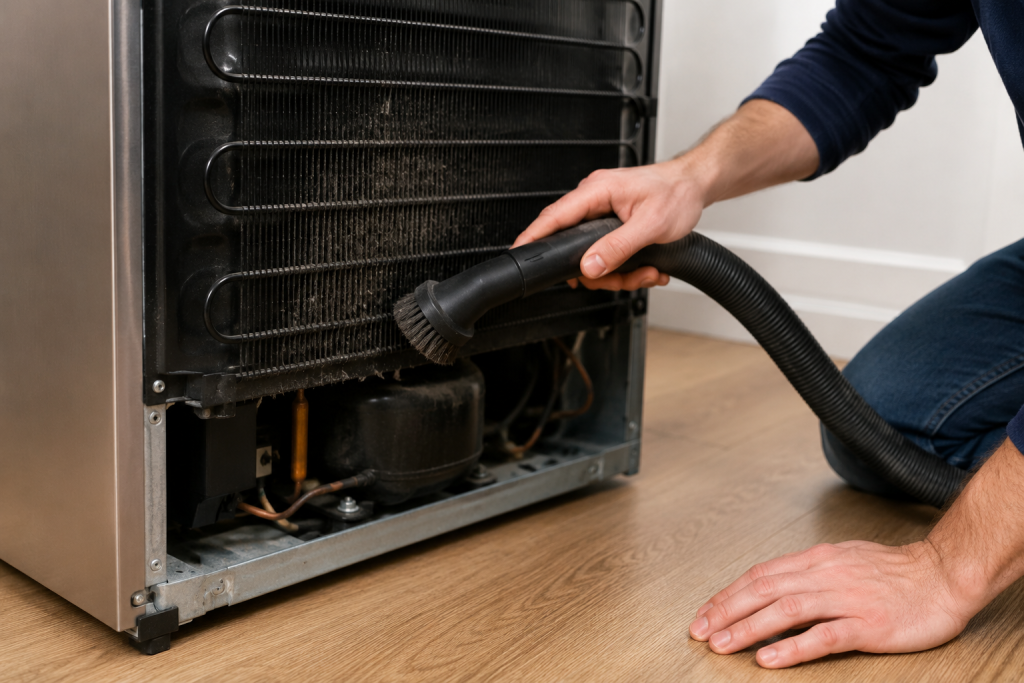
Dirty condenser coils are one of the most common reasons a refrigerator stops cooling efficiently.
Dust and pet hair buildup force the refrigerator to work harder and reduce cooling performance.
To clean the coils:
- Unplug the refrigerator
- Locate the coils underneath or behind the unit
- Use a coil brush or vacuum to remove debris
Cleaning the coils every 6–12 months can improve refrigerator efficiency significantly.
For additional refrigerator maintenance tips, this guide from This Old House offers helpful information.
Step 3: Make Sure Air Vents Are Not Blocked

Cold air must circulate freely between the freezer and refrigerator sections.
Check for:
- Food containers blocking vents
- Overpacked shelves
- Frost buildup near vents
Blocked airflow can create warm spots and uneven cooling.
Step 4: Inspect the Door Gaskets
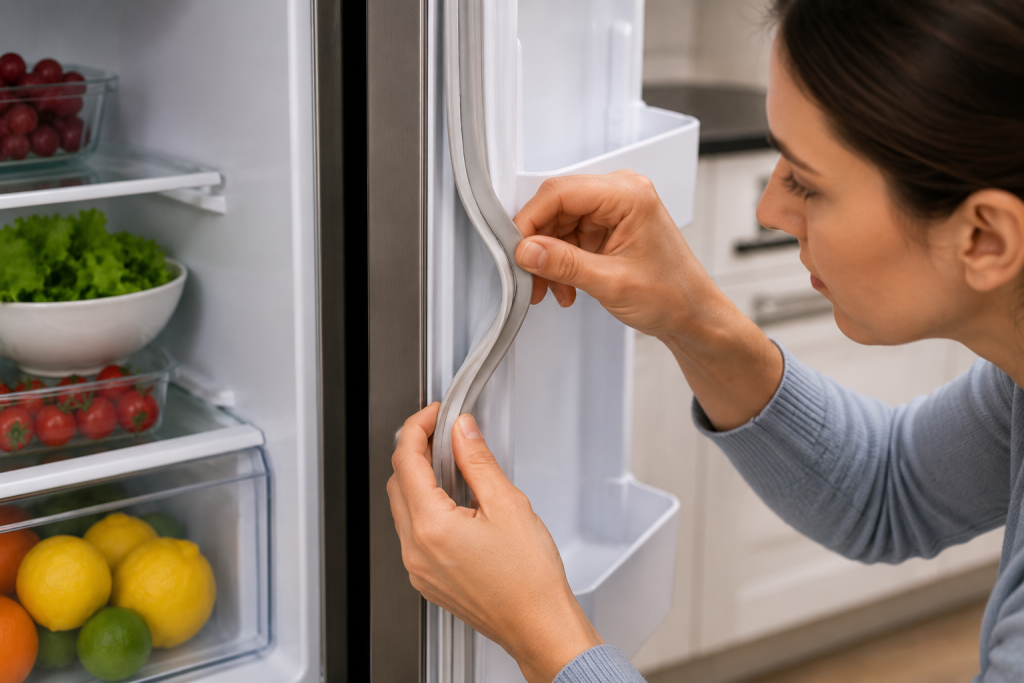
Damaged or dirty door seals can allow cold air to escape continuously.
Inspect the rubber gaskets around both doors for:
- Cracks
- Tears
- Loose sections
- Dirt buildup
Clean the seals with warm soapy water and test whether the doors close tightly.
If your refrigerator leaks water as well, read about refrigerator leaking water.
Step 5: Listen for the Evaporator Fan
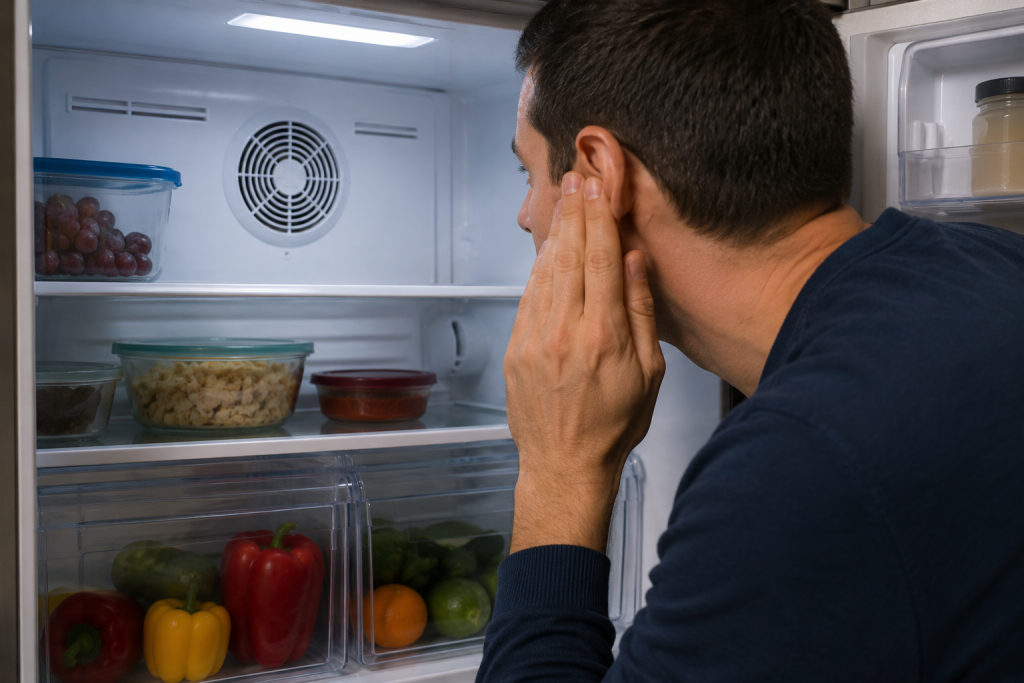
The evaporator fan circulates cold air through the refrigerator.
Signs of fan problems include:
- Refrigerator warm but freezer cold
- Unusual noises
- Weak airflow inside the refrigerator compartment
Open the freezer and listen for the fan running while the door switch is pressed.
If the fan fails, cooling performance can drop quickly.
Step 6: Check for Frost Buildup
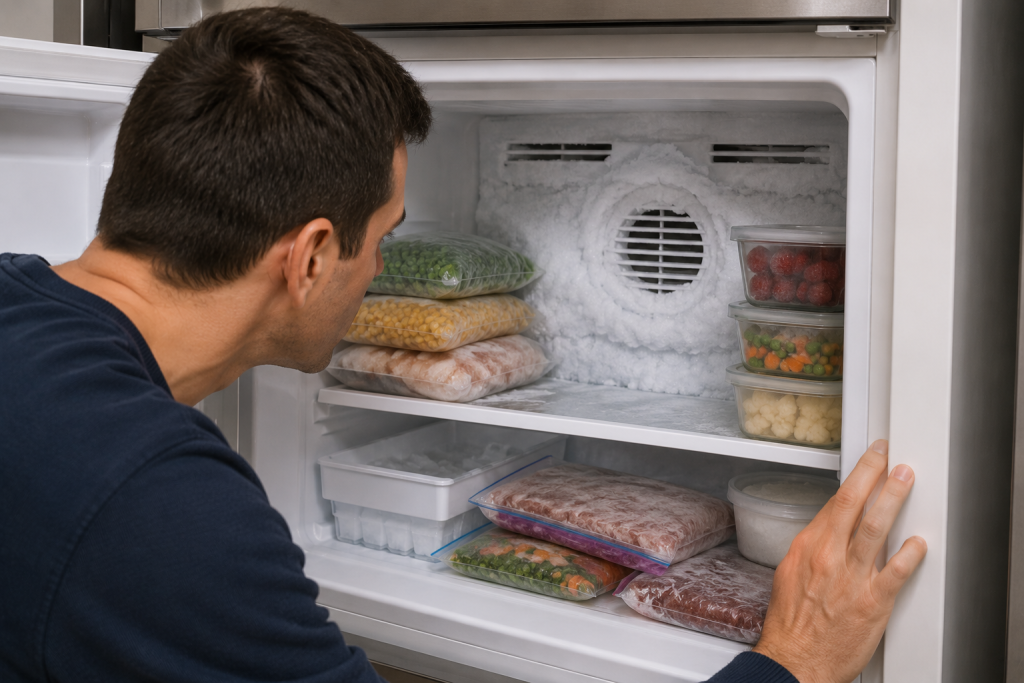
Heavy frost buildup may indicate a defrost system problem.
Too much ice around the evaporator coils can block airflow and stop cooling.
Possible causes include:
- Failed defrost heater
- Bad defrost thermostat
- Faulty control board
A temporary manual defrost may restore cooling until repairs are completed.
If your freezer also has ice problems, check out our guide about refrigerator ice maker not working.
Step 7: Inspect the Start Relay or Compressor
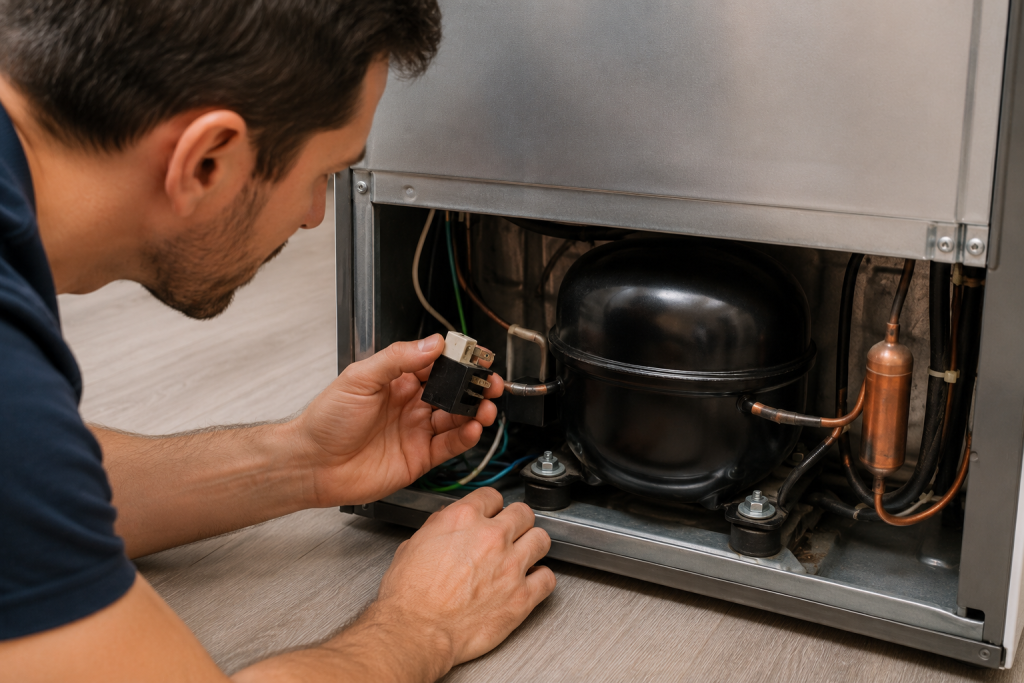
If the refrigerator is completely warm and silent, the compressor may not be starting properly.
Possible signs include:
- Clicking noises
- Compressor overheating
- Refrigerator cycling repeatedly
A failed start relay is sometimes inexpensive to replace, while compressor repairs are more serious.
At this stage, professional appliance repair may be needed.
When to Call a Professional
You may need professional repair if:
- The compressor fails
- Refrigerant lines are damaged
- Cooling problems return repeatedly
- Electrical components test bad
Some refrigerator repairs require specialized tools and refrigerant handling certifications.
Frequently Asked Questions
Why is my refrigerator not cooling but the freezer still works?
This often points to:
- evaporator fan problems,
- blocked airflow,
- or frost buildup preventing cold air circulation.
Can dirty condenser coils stop a refrigerator from cooling?
Yes. Dirty coils reduce heat transfer and force the refrigerator to work harder, often leading to poor cooling.
How long should a refrigerator last?
Most refrigerators last:
- 10–15 years
with proper maintenance and cleaning.
Is it worth repairing an older refrigerator?
That depends on:
- the age of the appliance,
- repair cost,
- and compressor condition.
Major compressor failures on older units are often expensive to repair.
Looking for help with another appliance problem? Browse our complete collection of appliance repair guides and error-code fixes.
Final Thoughts
A refrigerator not cooling can often be traced to airflow restrictions, dirty coils, or worn components. Starting with simple maintenance checks can save money and help restore proper cooling quickly.
In many cases, homeowners can fix refrigerator cooling issues themselves without replacing the appliance.