
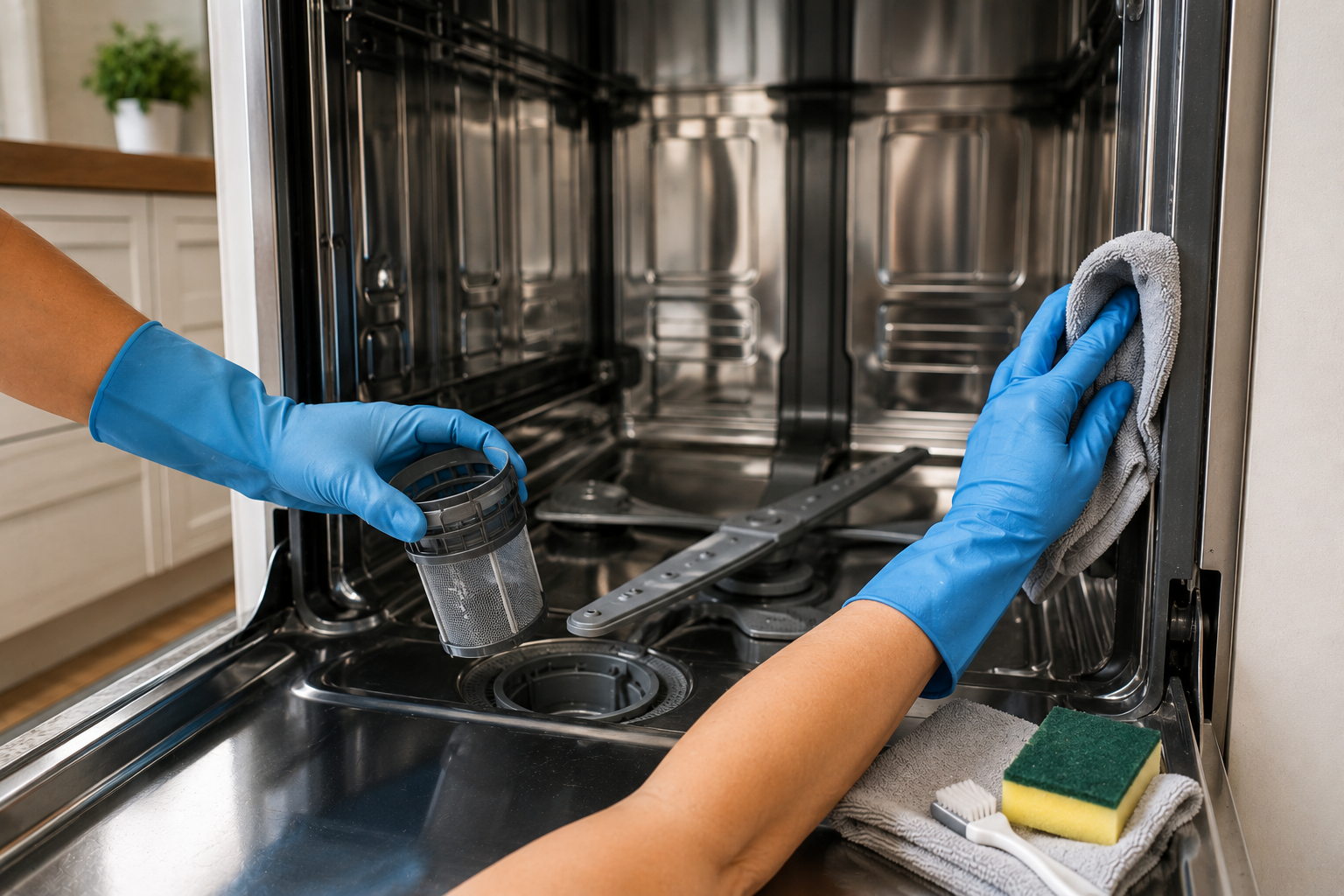
Last updated: October 16, 2026
By Home Repair Genie
A dishwasher cleans your dishes every day, but it also needs regular cleaning to remove grease, food particles, hard water deposits, and odors. Knowing how to clean a dishwasher is an important part of routine appliance maintenance. A clean dishwasher performs better, smells fresher, and can last longer than one that is neglected.
Quick Answer
How to clean a dishwasher properly starts with removing and washing the filter, cleaning the spray arms, wiping the door gasket, and running vinegar and baking soda cleaning cycles. Regular cleaning helps prevent odors, improves washing performance, and can extend the life of your dishwasher.
Why Cleaning Your Dishwasher Is Important
Many homeowners assume dishwashers stay clean because they use soap and hot water. However, food particles, grease, detergent residue, and minerals from hard water can build up over time.
A dirty dishwasher can cause:
- Bad odors
- Cloudy dishes
- Poor cleaning performance
- Drainage problems
- Reduced appliance lifespan
Cleaning your dishwasher every one to three months can help prevent these issues.
Signs Your Dishwasher Needs Cleaning
Watch for these common warning signs:
- Unpleasant odors when opening the door
- Visible food debris around the filter
- Water pooling at the bottom
- Spots or film on dishes
- Longer cycle times
- Dirty spray arms
- Mold around the door gasket
If you’re also experiencing drainage issues, see our guide on: Dishwasher Not Draining? 7 Easy Fixes That Actually Work.
Tools and Supplies Needed
Before you begin, gather:
- White vinegar
- Baking soda
- Soft cloth or sponge
- Old toothbrush
- Warm water
- Mild dish soap
- Toothpick or small brush
Most homeowners already have these supplies available.
Step-by-Step Guide to Clean a Dishwasher
Follow these simple steps if you’re wondering how to clean a dishwasher safely and effectively.
Step 1: Empty the Dishwasher
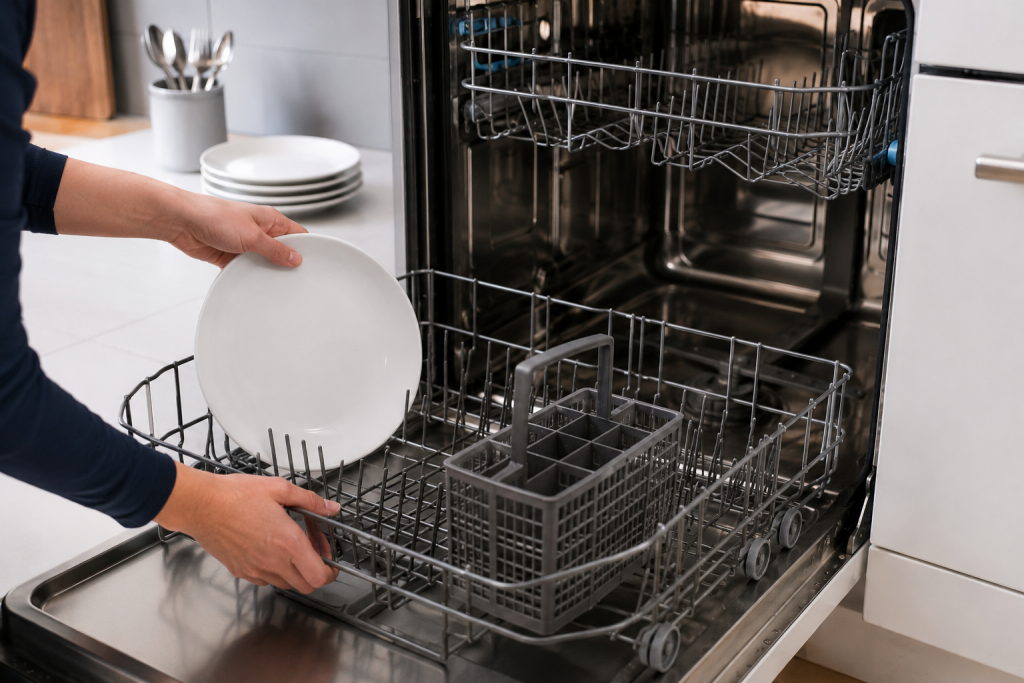
Start by removing all dishes, utensils, and racks if necessary.
What to Do
- Turn off the dishwasher.
- Remove all dishes and utensils.
- Pull out the bottom rack.
- Inspect the bottom of the tub for debris.
Removing loose food particles now makes the remaining cleaning steps easier.
Step 2: Remove and Clean the Filter
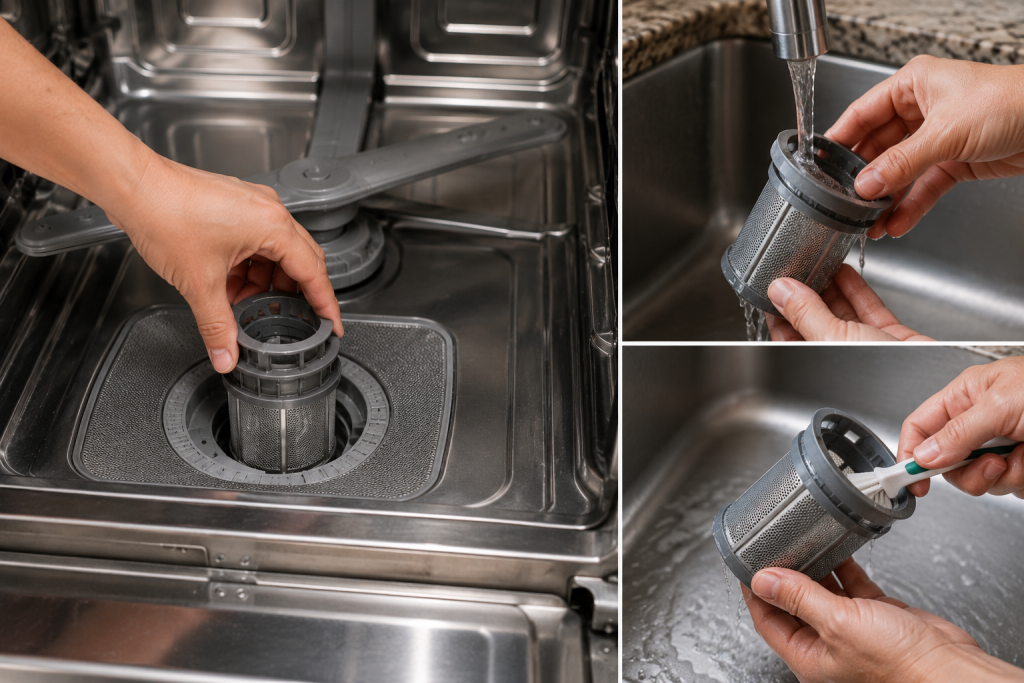
The filter is one of the most important components to clean.
As an Amazon Associate I earn from qualifying purchases.
How to Clean the Dishwasher Filter
- Locate the filter at the bottom of the tub.
- Twist and remove the filter assembly.
- Rinse under warm running water.
- Gently remove stubborn residue with a small soft-bristle cleaning brush. An old soft toothbrush also works. Avoid wire brushes and abrasive pads that could damage the filter, and follow your model’s instructions for removal and reinstallation.
- Reinstall the filter securely.
A clogged filter can lead to poor drainage and foul odors.
A clogged filter can also contribute to drainage errors and standing water. If your dishwasher is displaying an error code, see our guide on Bosch E15 Error: 7 Powerful Fixes to Stop the Leak and Restore Your Dishwasher.
If your dishwasher is showing drain-related errors, you may find this guide helpful: Whirlpool Dishwasher F9 E1 Error: 7 Powerful Fixes to Get It Draining Again.
Step 3: Clean the Spray Arms
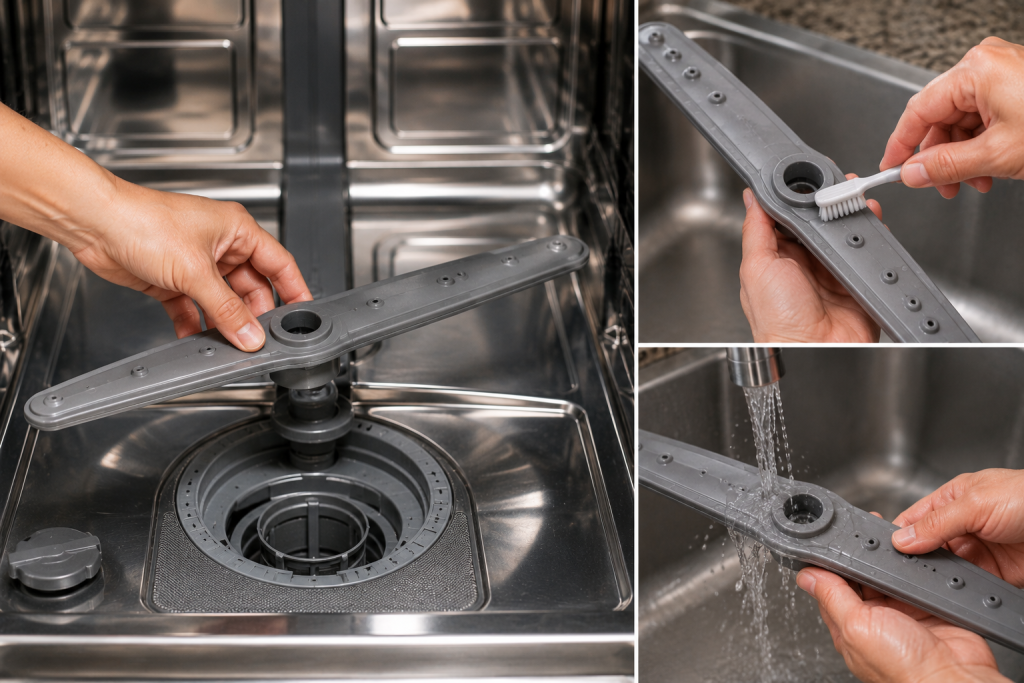
Spray arm holes can become clogged with food particles and mineral deposits.
How to Clean Spray Arms
- Remove the spray arms if your model allows.
- Inspect all spray holes.
- Use a toothpick or small brush to remove debris.
- Rinse thoroughly with warm water.
- Reinstall the spray arms.
Clean spray arms ensure water reaches every dish during the wash cycle.
Step 4: Wipe Down the Interior and Door Gasket
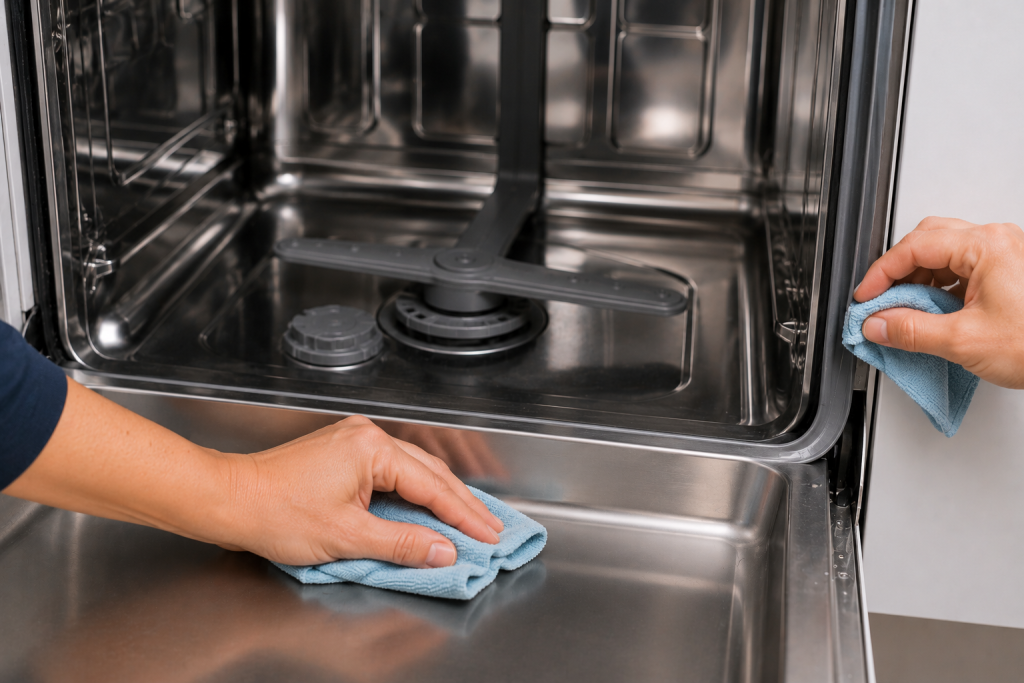
Food particles and mold often accumulate around the door seal.
Cleaning the Door Seal
- Mix warm water with mild dish soap.
- Wipe around the rubber gasket.
- Clean the inside edges of the door.
- Remove visible mold or residue.
- Dry with a clean cloth.
Pay special attention to corners and crevices where grime tends to hide.
Use soft microfiber cleaning cloths to wipe the door edges and gasket without abrasive scrubbing. Follow your manufacturer’s cleaning instructions, remove any cleaning residue, and use a separate clean cloth to dry the surfaces.
Step 5: Run a Vinegar Cleaning Cycle
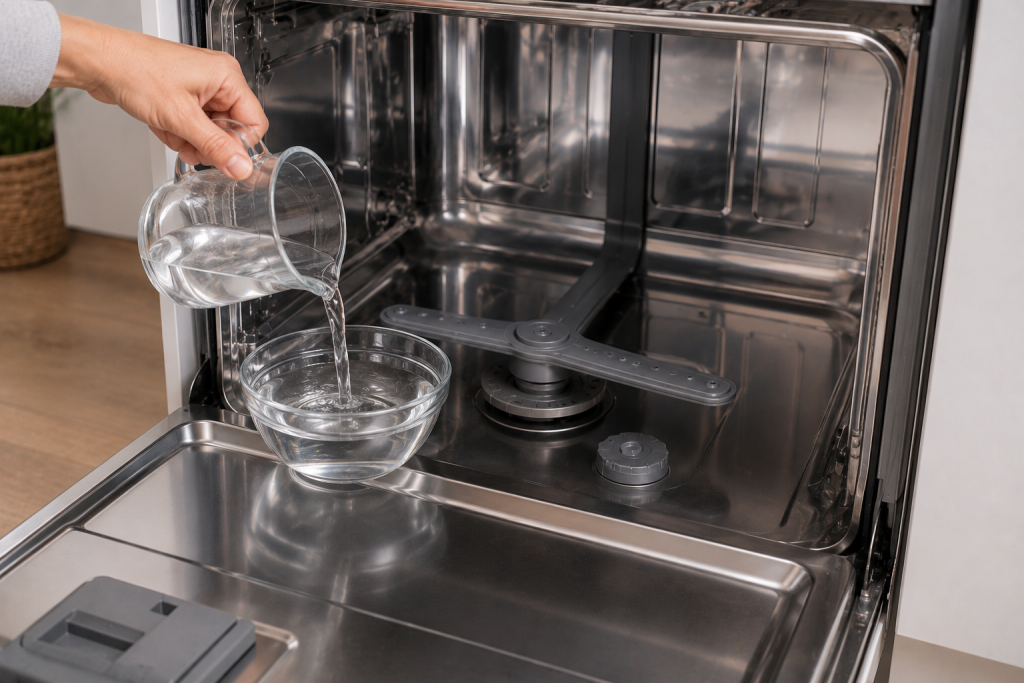
White vinegar helps dissolve grease, soap scum, and hard water buildup. One of the most effective methods for how to clean a dishwasher naturally is using white vinegar.
How to Run a Vinegar Cycle
- Place a dishwasher-safe cup filled with white vinegar on the top rack.
- Run the hottest wash cycle available.
- Allow the cycle to complete.
The vinegar will help clean internal components and remove odors.
If you prefer a purpose-made product, affresh dishwasher cleaner tablets offer an alternative to a vinegar cleaning cycle. Confirm compatibility with your dishwasher and follow the package directions. Use the cleaner separately rather than combining it with vinegar, baking soda, or other cleaning chemicals.
According to experts at This Old House, vinegar can effectively help break down mineral deposits and residue inside dishwashers.
Step 6: Run a Baking Soda Rinse
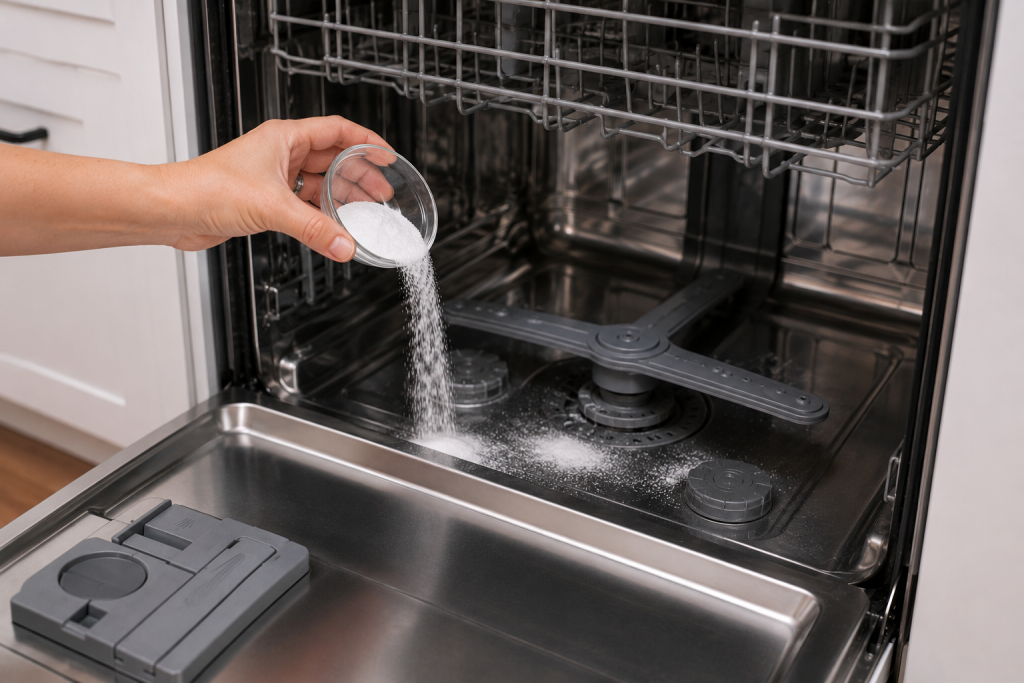
Baking soda helps neutralize odors and freshen the dishwasher interior.
How to Use Baking Soda
- Sprinkle one cup of baking soda across the bottom of the dishwasher.
- Run a short hot-water cycle.
- Allow the cycle to finish.
Your dishwasher should smell noticeably fresher afterward.
Regular cleaning can help prevent many common dishwasher problems before they start. If your dishwasher is still leaving water behind after cleaning, see our guide on How to Fix a Dishwasher That Won’t Drain.
Step 7: Clean the Exterior
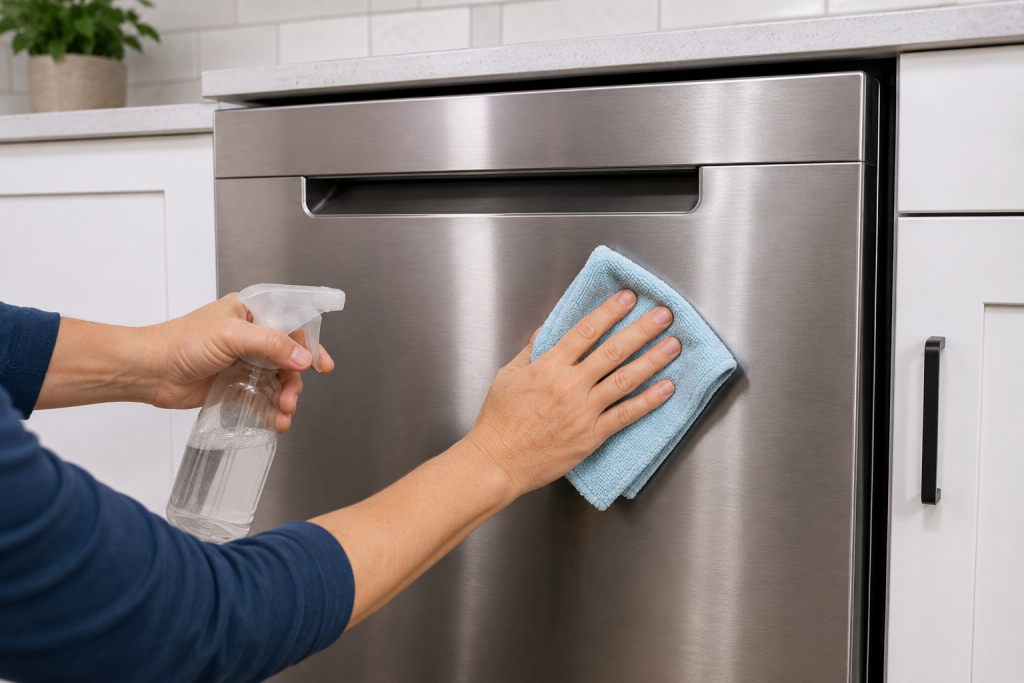
Don’t forget the outside of the appliance.
Cleaning the Exterior
- Wipe the control panel with a damp cloth.
- If your manufacturer permits it, use a stainless steel appliance cleaner compatible with your dishwasher’s exact finish. Follow the label directions and keep it off control markings and other surfaces it is not intended to clean.
- Remove fingerprints and smudges.
- Dry with a microfiber cloth.
A clean exterior helps keep your kitchen looking its best.
How Often Should You Clean a Dishwasher?
Cleaning frequency depends on how often you use the appliance.
Recommended Schedule
- Filter cleaning: Monthly
- Vinegar cleaning cycle: Monthly
- Spray arm cleaning: Every 3–6 months
- Deep cleaning: Every 3 months
Heavy-use households may benefit from more frequent cleaning.
Common Dishwasher Cleaning Mistakes
Avoid these common mistakes:
- Using bleach in stainless steel interiors
- Ignoring the filter
- Overusing detergent
- Forgetting the door gasket
- Skipping spray arm maintenance
- Waiting until odors develop
Regular maintenance is much easier than dealing with major buildup later.
Tips to Keep Your Dishwasher Clean Longer
Use these simple habits to reduce future buildup:
- Scrape large food particles from dishes
- Run hot water before starting a cycle
- Use the correct detergent
- Leave the door slightly open after cycles
- Clean the filter monthly
- Avoid overloading the dishwasher
These habits can significantly improve dishwasher performance.
Frequently Asked Questions
If you’re still learning how to clean a dishwasher, the answers below cover some of the most common questions homeowners ask.
Is Vinegar Safe for Dishwashers?
Yes. White vinegar is commonly used to remove grease, mineral deposits, and odors when used occasionally.
Can I Use Baking Soda and Vinegar Together?
For best results, run them separately. Use vinegar during one cycle and baking soda during a second cycle.
How Often Should I Clean My Dishwasher Filter?
Most manufacturers recommend cleaning the filter about once per month.
Why Does My Dishwasher Smell Bad?
Odors are typically caused by trapped food particles, grease buildup, mold, or standing water.
Can a Dirty Dishwasher Cause Poor Cleaning Performance?
Yes. Dirty filters and clogged spray arms can significantly reduce cleaning effectiveness.
Troubleshooting a different code? Browse our complete collection of appliance error-code guides.
Final Thoughts
Knowing how to clean a dishwasher is one of the easiest ways to improve appliance performance and extend its lifespan. By cleaning the filter, spray arms, door gasket, and running regular vinegar and baking soda cycles, you can keep your dishwasher running efficiently and your dishes sparkling clean.
A few minutes of maintenance each month can prevent odors, drainage issues, and costly repairs down the road.