
Last updated: October 14, 2026
By Home Repair Genie
If you have a half of outlet not working, the problem is often caused by a switched outlet, a tripped GFCI outlet, loose wiring, or a worn receptacle. In many cases, the issue can be diagnosed and fixed without replacing the entire circuit.
Quick Answer
When half of an outlet is not working, first check whether the outlet is controlled by a wall switch. If it is not, inspect nearby GFCI outlets, test the outlet for power, and look for loose wiring or a damaged receptacle. Replacing a worn outlet often resolves the problem.
Why Only Half of an Outlet Can Stop Working
Standard duplex outlets contain two separate receptacles connected by metal tabs. Depending on how the outlet is wired, one receptacle may be connected to a wall switch while the other remains powered at all times.
Other electrical problems can also affect only one half of the outlet, including:
- Switched outlet wiring
- Tripped GFCI protection
- Loose wire connections
- Damaged outlet terminals
- Broken connecting tabs
- Worn or failed receptacles
How to Fix Half of Outlet Not Working
Step 1: Check for a Wall Switch
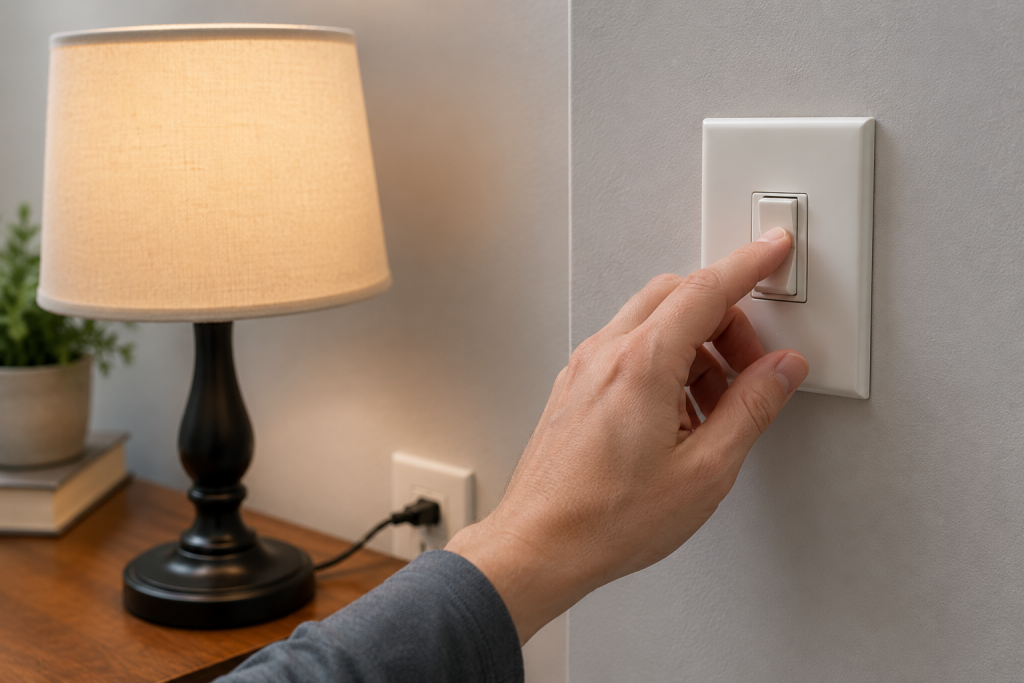
Many living rooms, bedrooms, and older homes use switched outlets to control lamps.
What to Do
- Plug a lamp into the non-working receptacle.
- Flip nearby wall switches on and off.
- Check whether the outlet becomes energized.
What It Means
If the outlet works when a switch is turned on, the outlet is functioning normally and does not require repair.
For more electrical troubleshooting tips, see our guide on Light Switch Not Working.
Step 2: Check Nearby GFCI Outlets
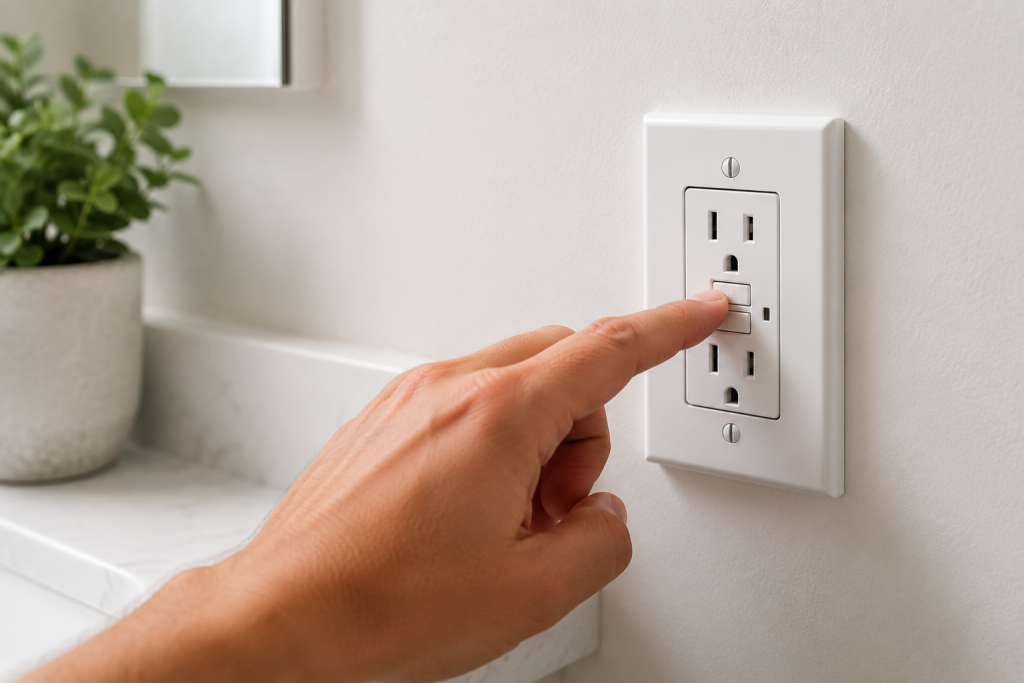
A tripped GFCI outlet can sometimes interrupt power to downstream outlets.
What to Do
- Locate nearby GFCI outlets in bathrooms, kitchens, garages, basements, or exterior locations.
- Press the RESET button on each GFCI outlet.
- Test the affected outlet again.
What It Means
If the outlet starts working after resetting a GFCI, the issue was caused by a tripped ground-fault circuit.
For additional outlet troubleshooting, see Outlet Works But No Power.
Step 3: Test the Outlet With Another Device
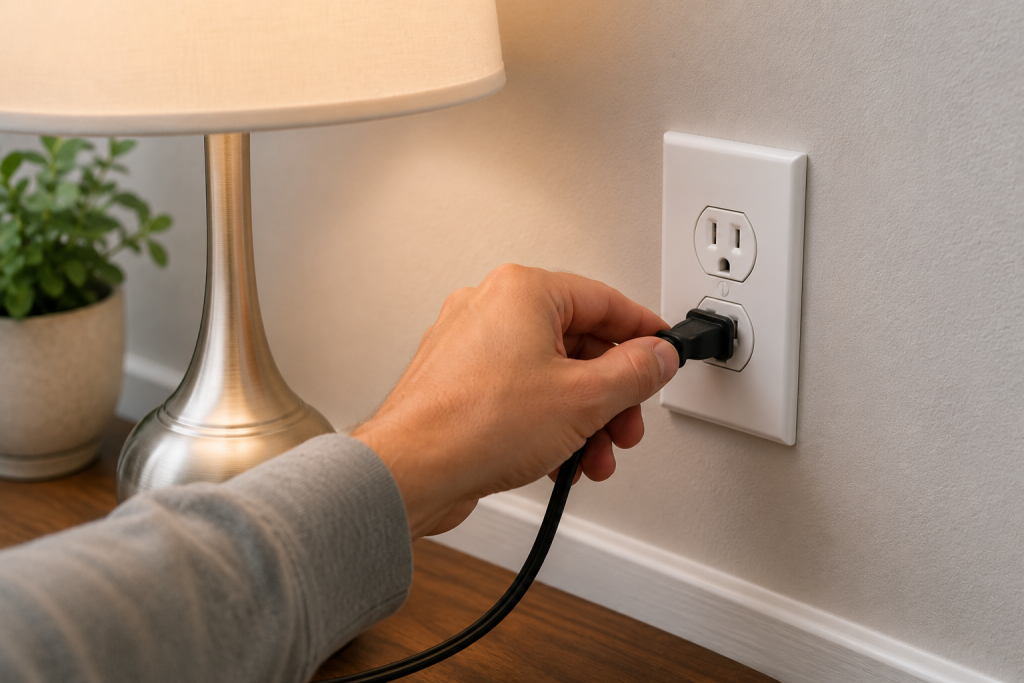
Sometimes the problem is actually the device rather than the outlet.
What to Do
- Plug a different appliance or lamp into both receptacles.
- Confirm which side is functioning.
- Verify that the device works in another outlet.
What It Means
This simple test eliminates the possibility of a defective appliance or power cord. As an Amazon Associate I earn from qualifying purchases.
A plug-in outlet tester can help identify common wiring faults in a standard three-prong receptacle. Test each half separately and follow the tester’s indicator chart. A normal reading does not rule out every electrical problem, and this tool should not be used alone to establish that wiring is safe to touch.
Step 4: Turn Off Power and Inspect the Outlet
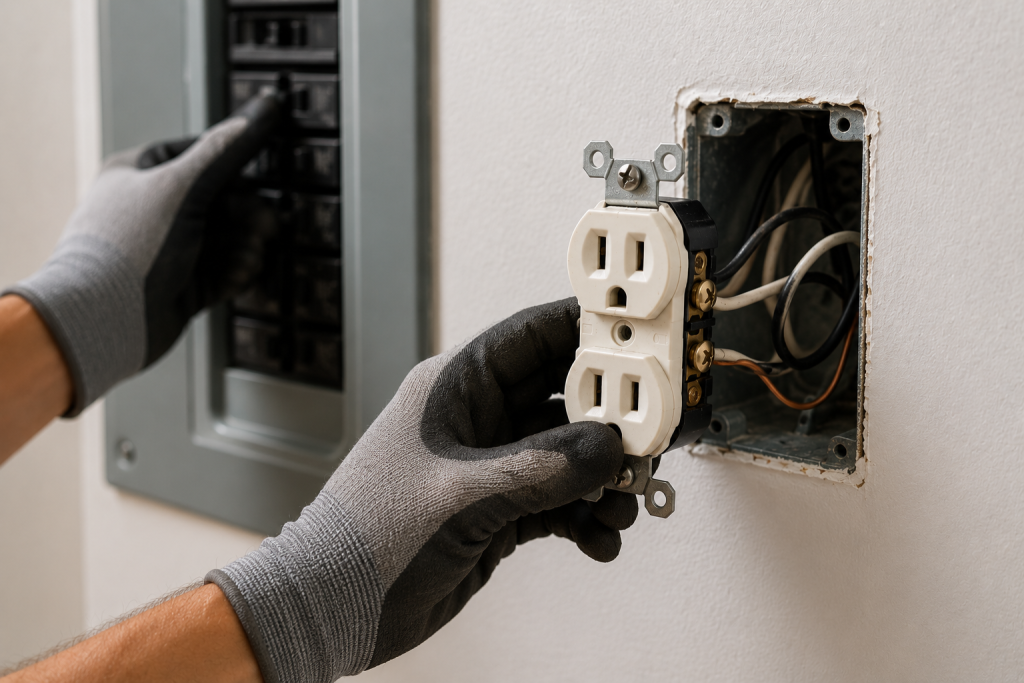
Loose wiring is one of the most common causes of a partially functioning outlet.
What to Do
- Turn off the breaker supplying the outlet.
- Remove the outlet cover plate.
- Pull the receptacle from the electrical box.
- Inspect all wire connections.
Look for:
- Loose terminal screws
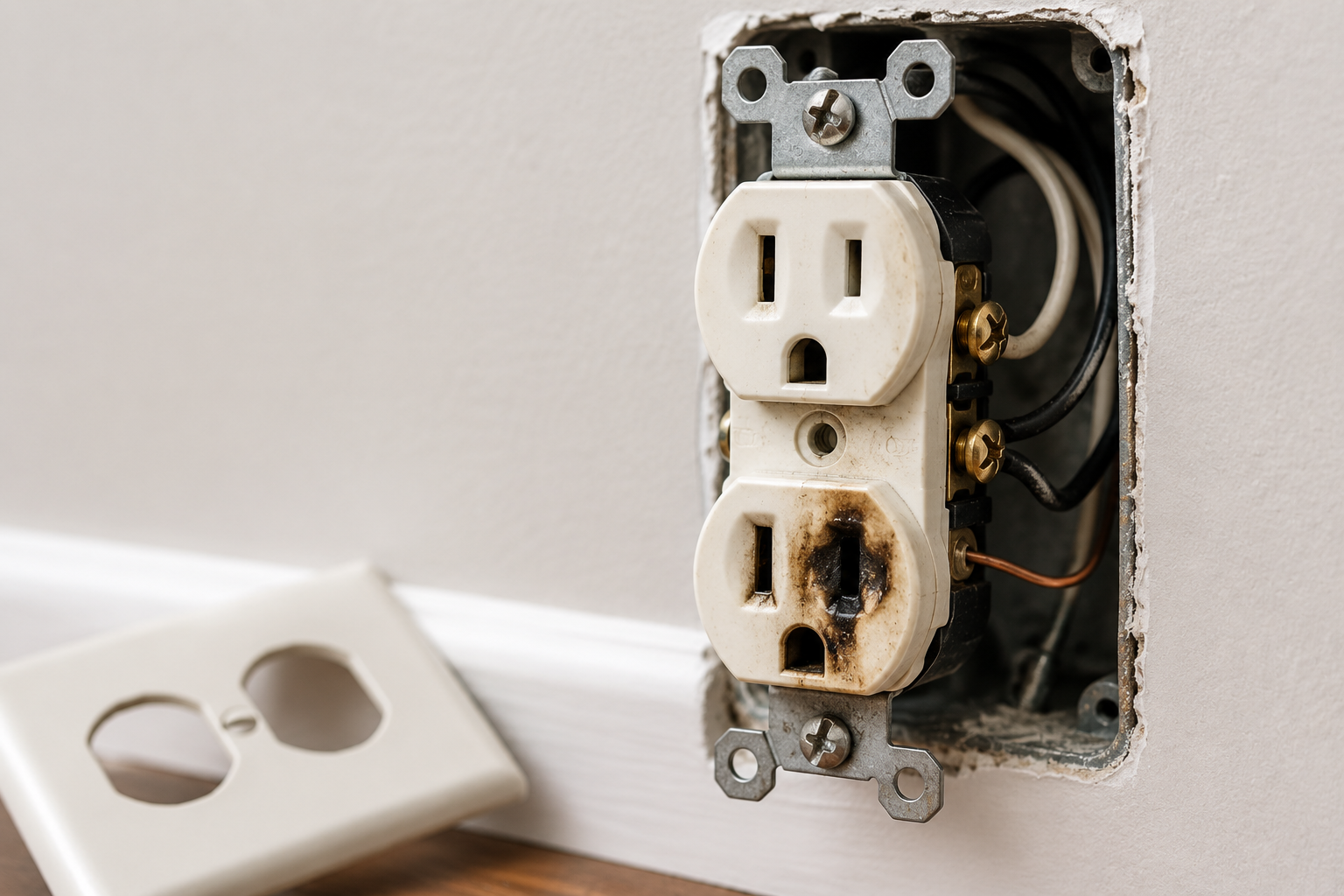
- Burned wires
- Melted insulation
- Damaged backstab connections
What It Means
A loose connection can interrupt power to one receptacle while allowing the other to continue working.
Step 5: Check for a Broken Connecting Tab
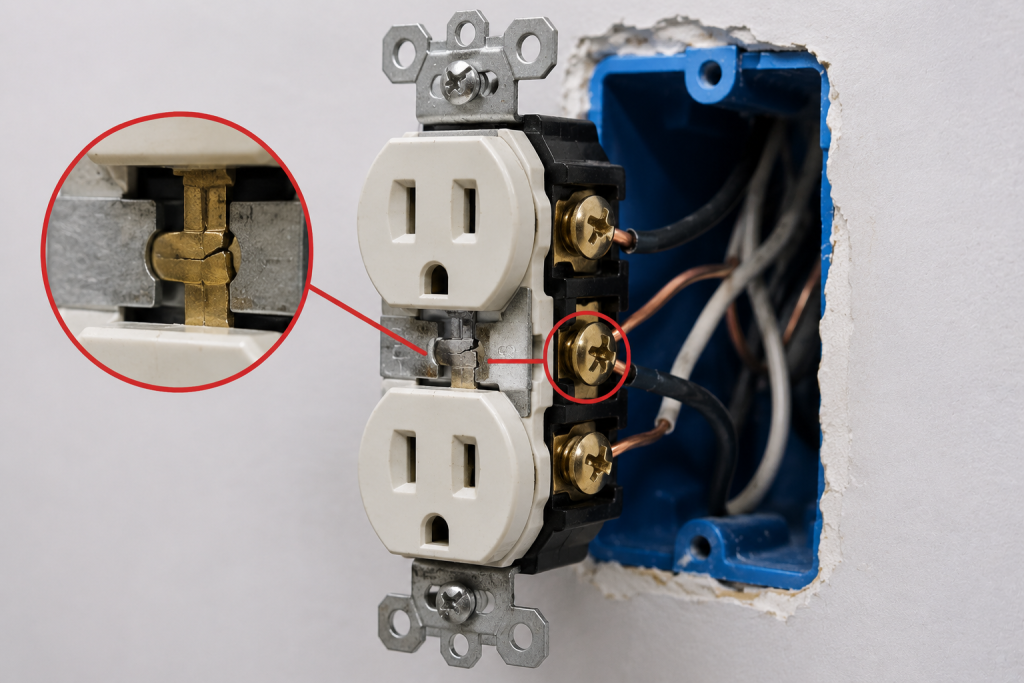
Duplex outlets contain metal tabs that connect the two receptacles.
What to Do
- With power disconnected, inspect the brass and silver tabs on the outlet.
- Look for signs of damage or breakage.
- Replace the outlet if a tab is damaged.
What It Means
A broken tab can cause only one half of the outlet to receive power.
Step 6: Replace the Outlet
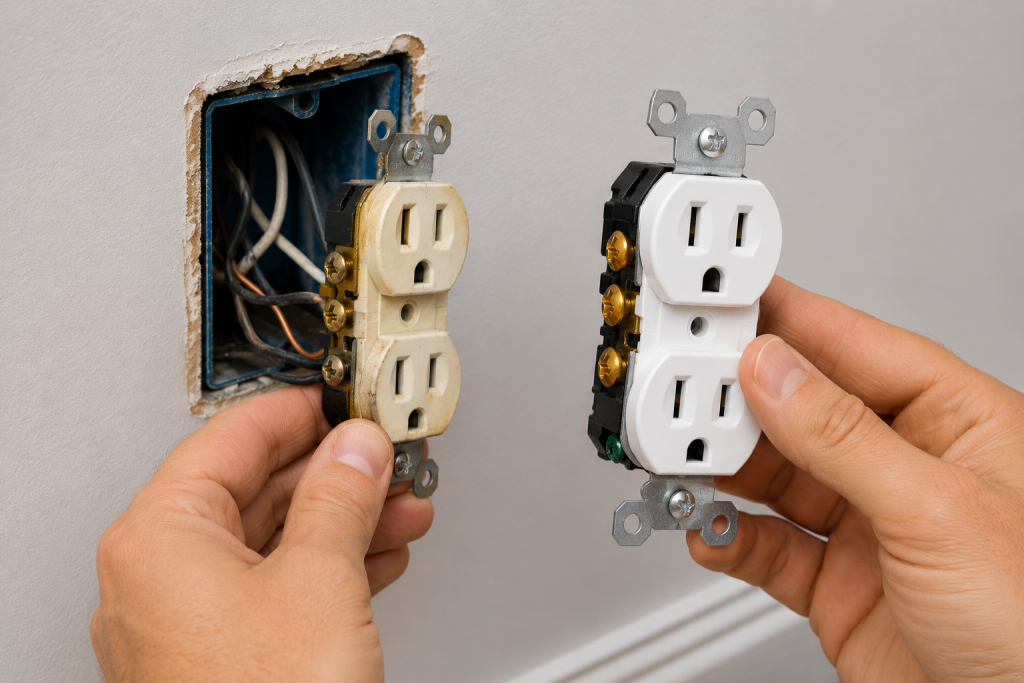
Outlets wear out over time and can develop internal failures.
What to Do
- Turn off the breaker.
- Disconnect the wires from the old outlet.
- Install a new receptacle with the same amperage rating.
- Secure the outlet and restore power.
If diagnosis confirms a defective outlet, browse replacement duplex receptacles on Amazon. Choose a receptacle suitable for the circuit, wiring, and installation location. Switched or split-wired outlets require the replacement to preserve the intended wiring and connecting-tab configuration. If you cannot confidently identify that configuration, have an electrician replace it.
What It Means
If internal contacts have failed, replacing the outlet usually restores normal operation.
The electrical safety experts at Electrical Safety Foundation International (ESFI) recommend replacing damaged or worn receptacles to reduce fire and shock hazards.
Step 7: Check the Circuit Breaker
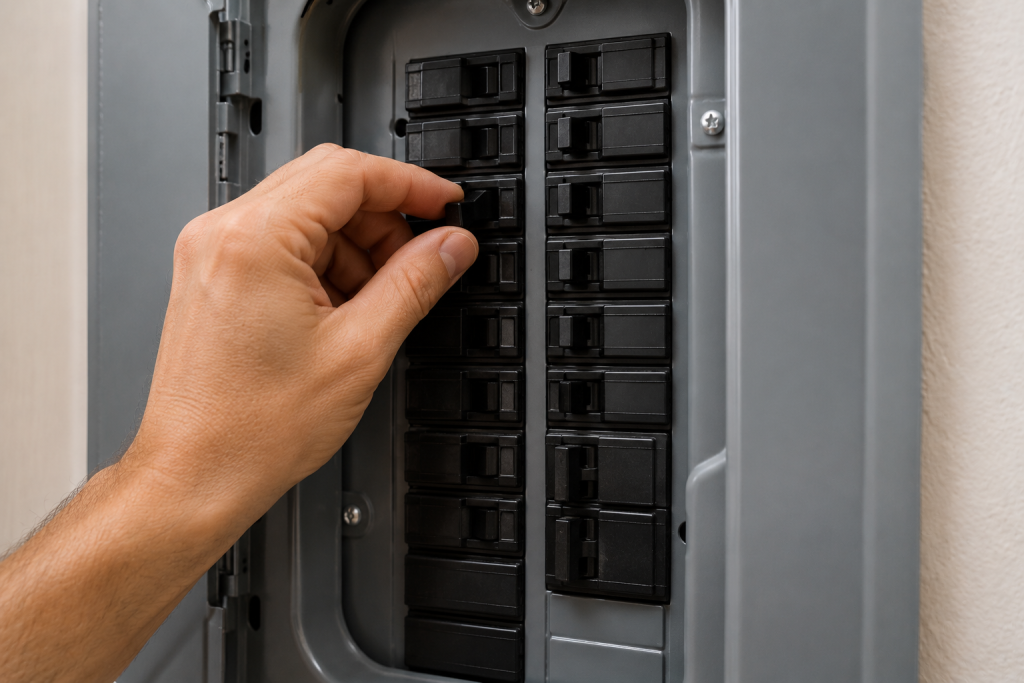
Although uncommon, a breaker issue can contribute to intermittent outlet operation.
What to Do
- Locate the breaker serving the circuit.
- Turn it fully OFF.
- Turn it back ON.
- Retest the outlet.
What It Means
A partially tripped breaker can sometimes create unusual electrical symptoms.
If multiple outlets have stopped working, read Fix Outlet Not Working for additional troubleshooting steps.
Signs the Outlet Should Be Replaced
Replace the outlet immediately if you notice:
- Burn marks
- Cracked plastic housing
- Loose plugs that fall out
- Sparking
- Excessive heat
- Melting or discoloration
These symptoms indicate a potentially unsafe outlet.
When to Call an Electrician for Half of Outlet Not Working
Contact a licensed electrician if:
- The breaker continues tripping
- You find burned wiring
- The outlet has no visible wiring issues but still fails
- Multiple outlets on the circuit are affected
- You are uncomfortable working around electrical wiring
Electrical problems can create shock and fire hazards if not repaired correctly.
Frequently Asked Questions
Why does only one plug work on my outlet?
The outlet may be configured as a switched outlet, have a broken connecting tab, or contain a loose wire connection affecting only one receptacle.
Can a bad outlet still partially work?
Yes. Internal contacts can wear out or fail, allowing one receptacle to function while the other stops working.
How do I know if the outlet is controlled by a switch?
Plug a lamp into the non-working receptacle and test nearby wall switches. If the lamp turns on, the outlet is switched by design.
Is it safe to use the working half of the outlet?
It is best to diagnose the problem first. If the outlet shows signs of overheating, sparking, or burning, discontinue use immediately.
Can a GFCI cause half of an outlet to stop working?
Yes. A tripped GFCI can interrupt power to outlets downstream on the same circuit, creating symptoms that appear to affect only part of the outlet.
Looking for help with another electrical problem? Browse our complete collection of electrical repair and troubleshooting guides.
Final Thoughts
When dealing with a half of outlet not working, start by checking for a wall switch or tripped GFCI outlet before moving on to wiring inspections. In many cases, a half of outlet not working is caused by a simple issue that can be corrected quickly without major electrical repairs.