
Last updated: October 10, 2026
By Home Repair Genie
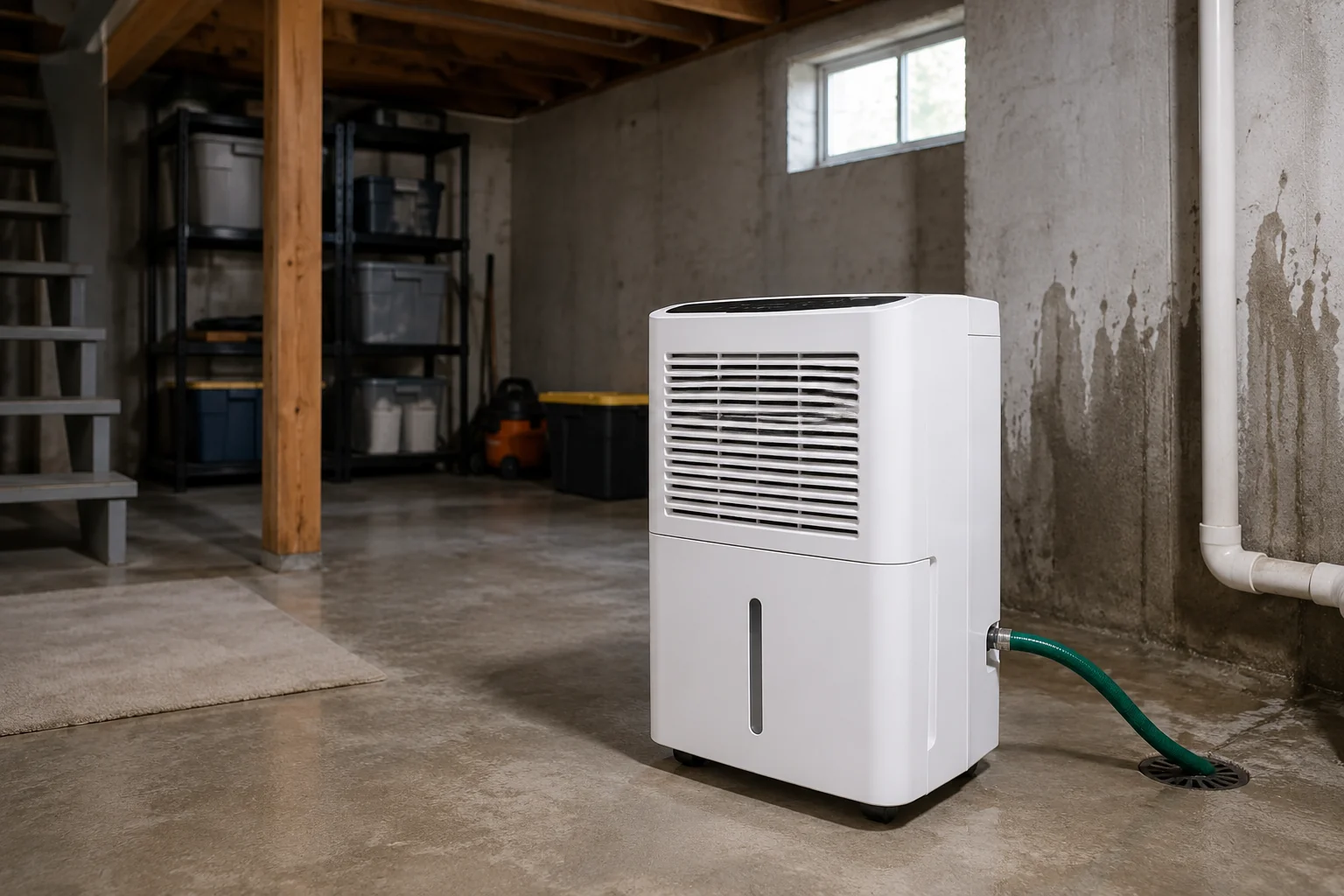
Basement humidity can lead to musty odors, mold growth, wood damage, and even rust on tools and appliances. Choosing the best dehumidifier for basement humidity helps protect your home while making your basement more comfortable year-round.
High indoor humidity can also cause condensation around AC vents, particularly when cold supply air lowers the temperature of the vent register. Check out our helpful guide Why Are My AC Vents Sweating? 7 Easy Fixes That Actually Work (Step-by-Step Guide)
Quick Answer
The best dehumidifier for basement humidity is one that can maintain indoor humidity between 30% and 50%, has enough capacity for your basement size, and offers features like continuous drainage, automatic humidity control, and auto restart after power outages. For most finished basements between 1,000 and 2,000 square feet, a 50-pint ENERGY STAR® dehumidifier is an excellent choice.
Why Basement Humidity Is a Problem
Basements naturally collect moisture because they are below ground level. During warm months, humid outdoor air enters through doors, windows, and small foundation gaps. When that humid air contacts cool basement surfaces, moisture condenses.
High humidity can cause:
- Mold and mildew growth
- Musty odors
- Warped wood framing
- Rust on tools and equipment
- Damage to stored belongings
- Increased dust mites and allergens
If you’ve noticed condensation or damp air, you may also want to read our guide on Why Does My House Smell Musty After Rain? 7 Hidden Causes
How Much Dehumidifier Capacity Do You Need?
Step 1: Measure Your Basement
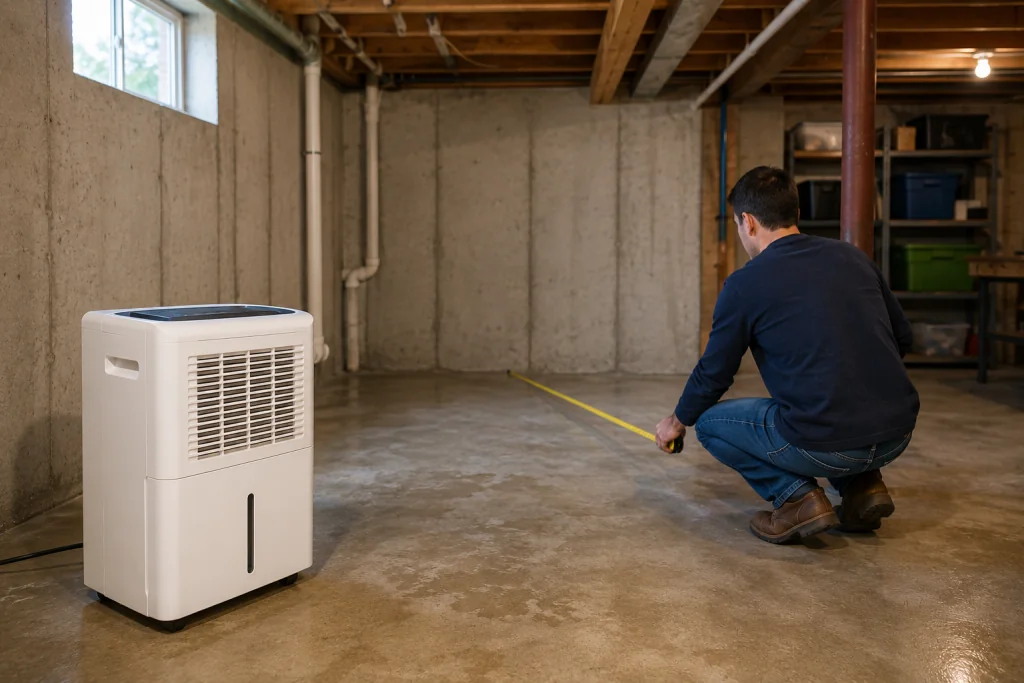
Measure the length and width of your basement to determine the square footage.
Examples:
- 20 × 30 ft = 600 sq ft
- 30 × 40 ft = 1,200 sq ft
- 40 × 50 ft = 2,000 sq ft
Step 2: Consider Moisture Levels
The wetter your basement is, the harder the dehumidifier must work.
Signs of moderate humidity include:
- Slight musty odor
- Condensation on windows
- Humidity above 55%
Signs of severe humidity include:
- Visible mold
- Water stains
- Persistent dampness
- Standing water after storms
Step 3: Choose the Right Capacity
General recommendations:
| Basement Size | Recommended Capacity |
|---|---|
| Up to 800 sq ft | 35–40 pint |
| 800–1,500 sq ft | 50 pint |
| 1,500–2,500 sq ft | 50–60 pint |
| Very damp basements | 50+ pint with continuous drain |
Today’s dehumidifiers are tested under newer standards, so many manufacturers recommend a quality 50-pint model for average residential basements.
Features to Look For Best Dehumidifier for Basement Humidity
Step 1: Continuous Drain Option
This is one of the most valuable features.
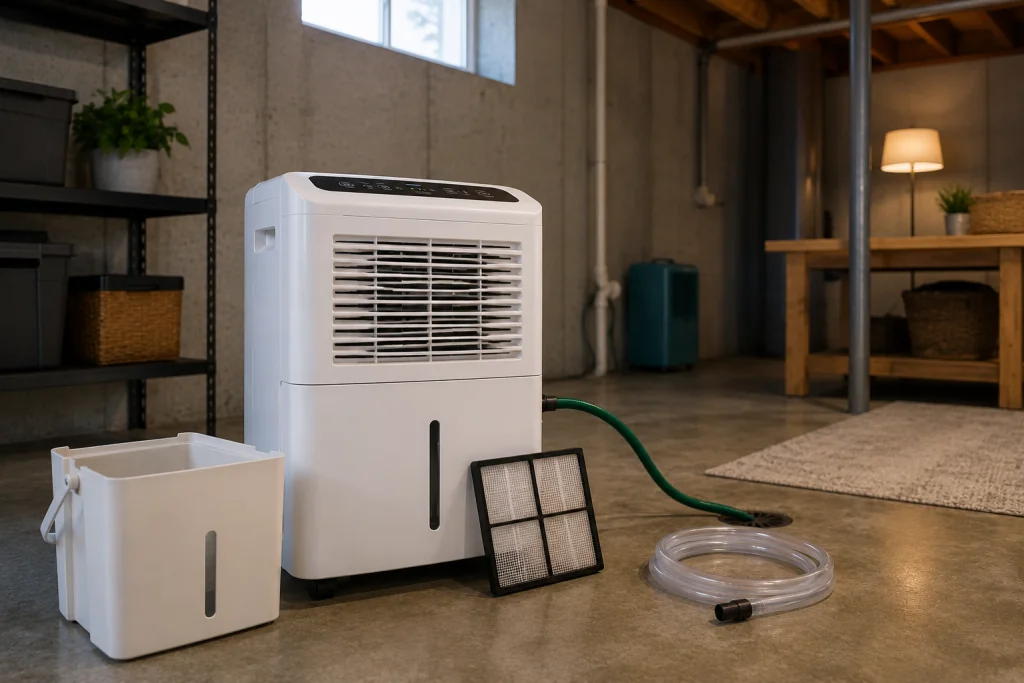
Instead of emptying the water bucket every day, connect a garden hose and let the water drain directly into:
- Floor drain
- Utility sink
- Condensate pump
Continuous drainage allows the unit to operate without interruption.
Step 2: Built-In Humidistat
Choose a unit with an adjustable humidistat.
You simply set your desired humidity—typically 45% to 50%—and the machine automatically cycles on and off.
This saves electricity while maintaining comfortable humidity.
Step 3: Auto Restart After Power Outages
If your home loses power during a storm, the best units automatically restart using the previous settings once electricity returns.
This feature is especially useful for finished basements.
Step 4: ENERGY STAR Certification
ENERGY STAR certified models remove moisture more efficiently while using less electricity.
You can compare certified models on the official ENERGY STAR Dehumidifier Finder:
https://www.energystar.gov/products/dehumidifiers
Step 5: Easy-to-Clean Air Filter
A washable air filter helps:
- Improve airflow
- Extend machine life
- Maintain efficiency
Clean the filter every few weeks during heavy summer use.
As an Amazon Associate I earn from qualifying purchases.
If you’re ready to buy a dehumidifier to get your basement’s humidity under control, you can start by looking at this highly rated dehumidifier.
Best Types of Basement Dehumidifiers
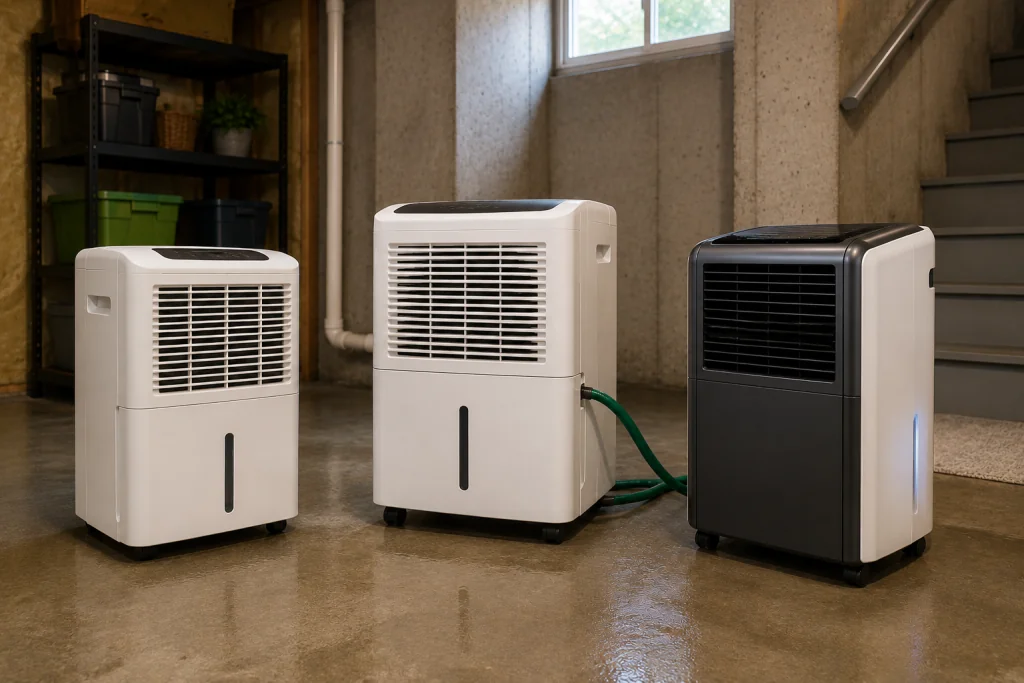
Standard Compressor Dehumidifier
Best for:
- Most homes
- Finished basements
- Large areas
Pros
- High moisture removal
- Lower operating cost
- Excellent summer performance
Dehumidifier With Built-In Pump
Best for:
- No nearby floor drain
- Finished basements
- Utility rooms
The pump automatically moves water vertically to a sink or drain.
Smart Wi-Fi Dehumidifier
Best for:
- Vacation homes
- Busy homeowners
- Remote monitoring
Many models allow you to:
- Check humidity
- Change settings
- Receive full bucket alerts
- Turn the machine on or off remotely
Where Should You Place a Basement Dehumidifier?
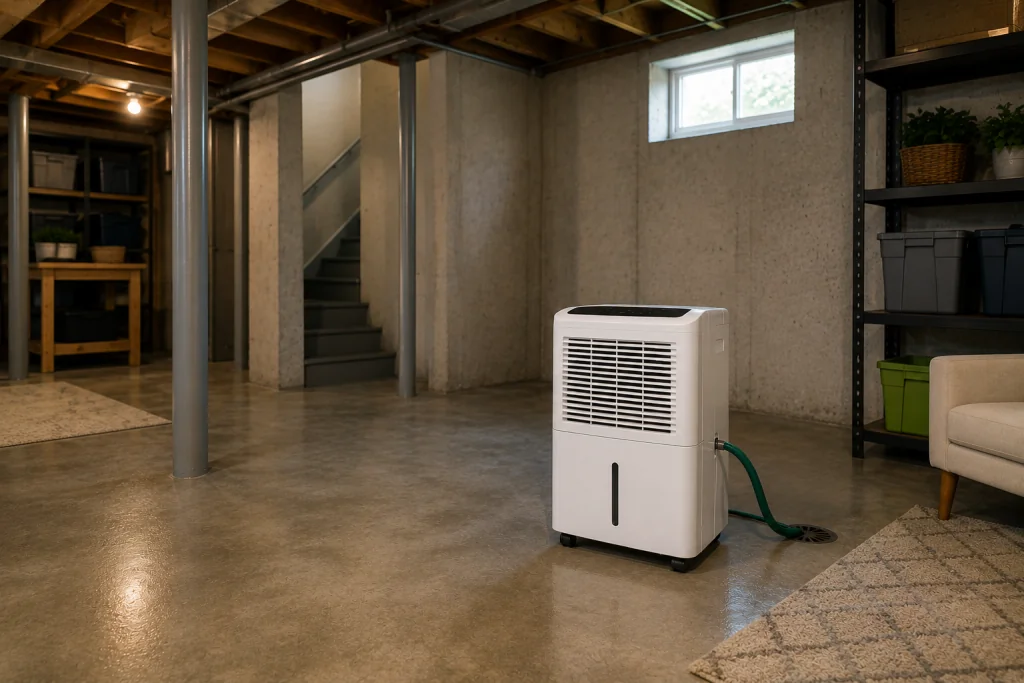
Step 1: Keep It Away From Walls
Leave approximately 12 inches of clearance around the air intake whenever possible.
Proper airflow improves efficiency.
Step 2: Place It Near the Center
Central placement allows better air circulation throughout the basement.
If your basement is very large, place it near the dampest area.
Step 3: Close Windows and Doors
Running a dehumidifier with basement windows open allows humid outdoor air to continually enter.
For best performance, keep windows closed during humid weather.
What Humidity Level Should You Set?
Most homeowners should target:
- 45–50% during summer
- 35–45% during winter
Humidity above 60% greatly increases the chance of mold growth.
If you’re unsure whether excess moisture is causing problems, check out our guide on Bathroom Fan Not Removing Moisture? 7 Easy Fixes That Actually Work.
How Much Does It Cost to Run a Basement Dehumidifier?
Actual operating costs depend on:
- Electricity rates
- Humidity level
- Basement size
- Unit efficiency
Many ENERGY STAR models cost only a few dollars per month during moderate use while significantly reducing moisture damage.
Maintenance Tips
Step 1: Clean the Filter
Wash the filter every 2 to 4 weeks.
Step 2: Empty the Bucket (If Needed)
If you’re not using continuous drainage, empty the bucket before it becomes completely full.
Step 3: Inspect the Drain Hose
If using continuous drainage, inspect the hose periodically for clogs or kinks.
Step 4: Vacuum the Air Intake
Dust buildup reduces airflow and efficiency.
Vacuum the exterior vents several times each year.
When Should You Replace a Basement Dehumidifier?
Most quality units last 5 to 10 years.
Consider replacement if:
- It no longer lowers humidity
- Ice forms on the coils
- The compressor runs constantly
- Repairs approach replacement cost
- It becomes excessively noisy
Frequently Asked Questions
What size dehumidifier is best for a basement?
For most finished basements between 1,000 and 2,000 square feet, a quality 50-pint model provides excellent moisture control.
Is 60% humidity too high for a basement?
Yes. Humidity above 60% increases the risk of mold, mildew, and musty odors.
Should I run my basement dehumidifier all the time?
Many homeowners leave the unit on continuously while allowing the built-in humidistat to cycle it on and off automatically.
Is a dehumidifier worth it in a basement?
Yes. It protects wood framing, stored belongings, flooring, and furniture while improving indoor comfort and reducing mold risk.
Can one dehumidifier handle an entire basement?
In many homes, yes. A properly sized unit placed centrally can effectively control humidity throughout most finished basements.
Looking for help with another heating or cooling problem? Browse our complete collection of HVAC repair and troubleshooting guides.
Final Thoughts
Choosing the best dehumidifier for basement humidity is about more than simply buying the largest unit. Matching the capacity to your basement size, selecting helpful features like continuous drainage and automatic humidity control, and performing regular maintenance will provide years of reliable moisture protection.
A quality dehumidifier helps prevent mold, protects your home’s structure, and creates a healthier, more comfortable basement for your family.