
Last updated: October 11, 2026
By Home Repair Genie
Quick Answer
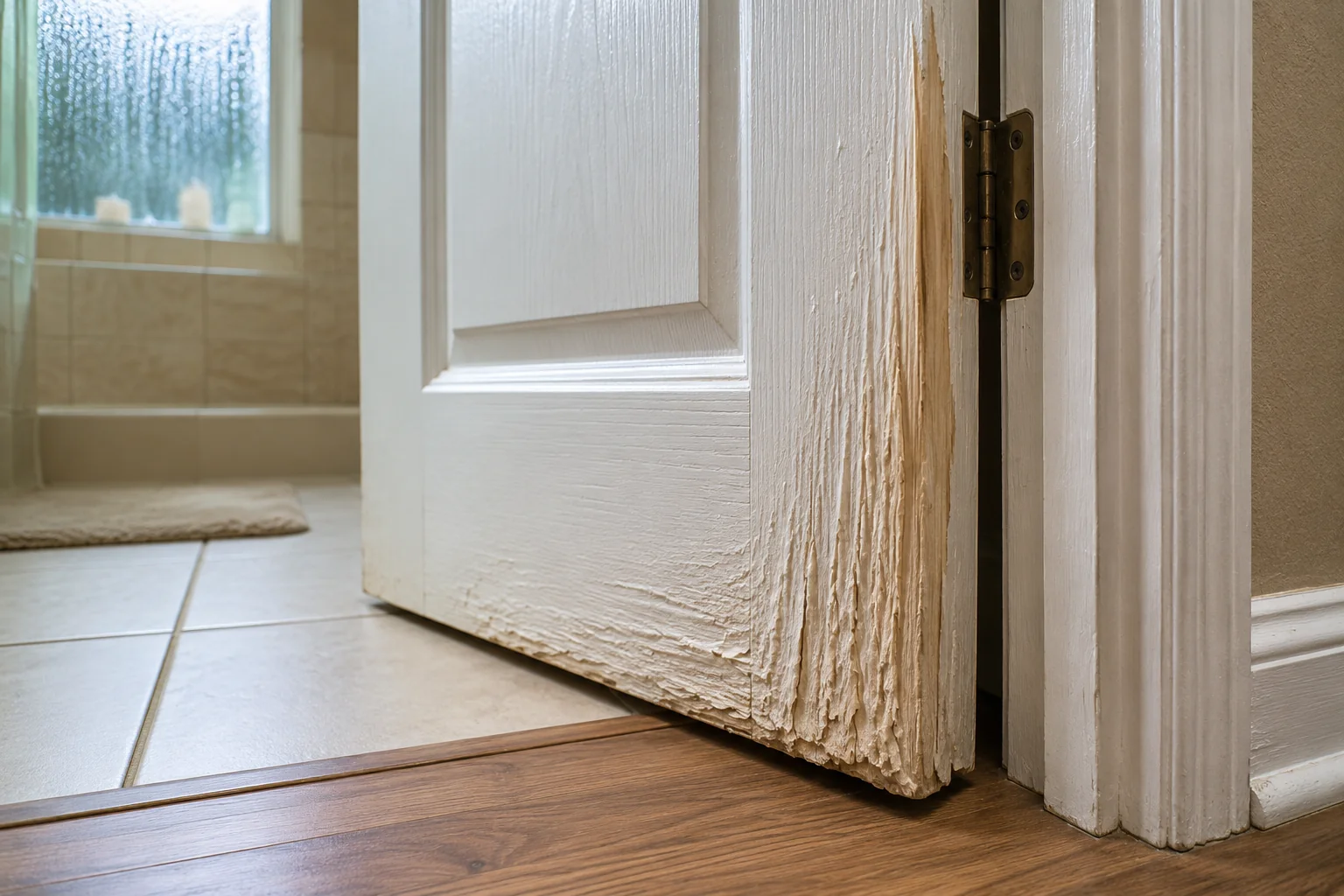
A door swollen from humidity expands as it absorbs moisture from the air. This causes the door to rub against the frame, making it difficult to open or close. In many cases, you can solve the problem by lowering indoor humidity, tightening loose hinges, lubricating moving parts, sanding swollen areas, and sealing exposed wood. If the door has become severely warped or damaged, replacement may be the best solution.
Why Does a Door Swell From Humidity?
Wood is a natural material that expands and contracts as humidity changes. When moisture levels rise, wood absorbs water from the air, causing the door to swell. Even solid-core and engineered wood doors can expand enough to stick against the frame.
Common causes include:
- High indoor humidity
- Rainy or humid weather
- Poor ventilation
- Bathrooms without working exhaust fans
- Damp basements
- Unsealed door edges
- Water leaks around the doorway
If your bathroom has excessive moisture, read our Bathroom Exhaust Fan Not Working? guide to improve ventilation and reduce humidity.
How to Tell If Humidity Is Causing the Problem
Before making repairs, make sure humidity is actually the issue.
Look for these signs:
- The door only sticks during humid weather.
- It worked normally during the winter.
- Multiple wood doors in your home are sticking.
- The rubbing location changes throughout the day.
- Indoor humidity is above 50%.
If these symptoms sound familiar, moisture is likely causing the door to swell.
As an Amazon Associate I earn from qualifying purchases.
Use an indoor hygrometer to check the humidity near the door. If the reading stays above 50% and the door sticks most during humid weather, moisture may be contributing to the problem.
7 Proven Fixes That Actually Work
1. Lower the Indoor Humidity
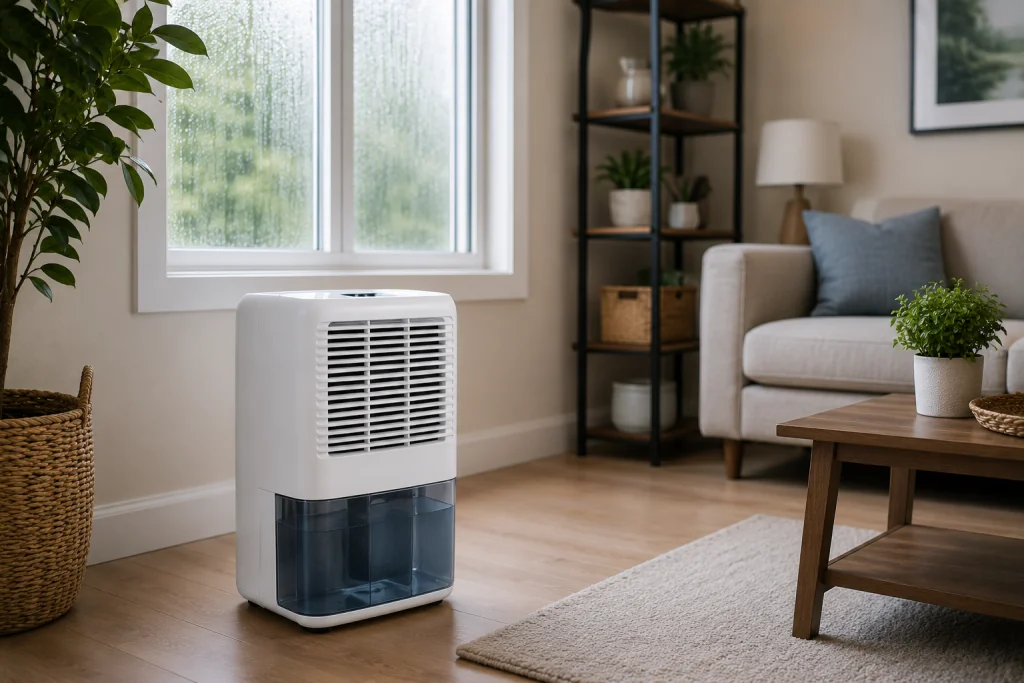
The first step is reducing the amount of moisture inside your home.
You can do this by:
- Running a dehumidifier
- Using bathroom exhaust fans
- Turning on the kitchen range hood while cooking
- Running your air conditioner during humid weather
Try to maintain indoor humidity between 30% and 50%.
If the wood has only absorbed moisture temporarily, the door may shrink back to its normal size after several days. If it appears the problem is a door swollen from humidity, allow the wood to dry before making permanent repairs.
If the room stays humid despite using your exhaust fans or air conditioner, a dehumidifier can help bring the moisture level down. Give the door several days to dry before deciding whether it needs sanding.
2. Tighten the Hinges
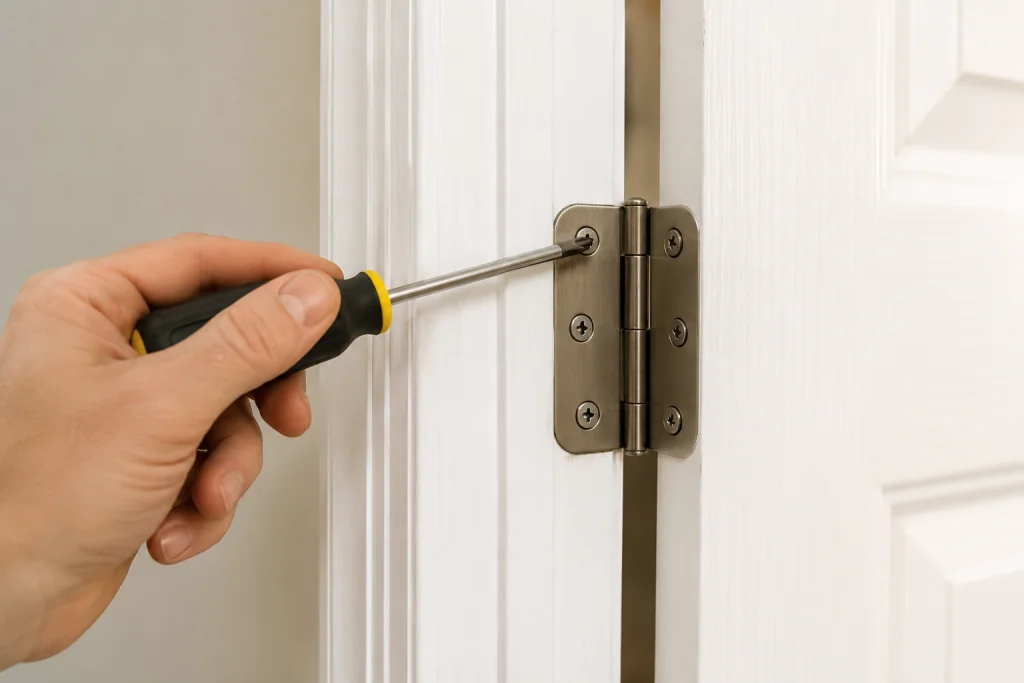
Loose hinges can cause the door to sag, making a minor swelling problem seem much worse.
Inspect every hinge screw.
If necessary:
- Tighten loose screws.
- Replace stripped screws.
- Install longer 3-inch screws to anchor the hinges into the wall framing.
Sometimes this simple adjustment restores proper alignment without additional repairs.
3. Find Exactly Where the Door Is Rubbing
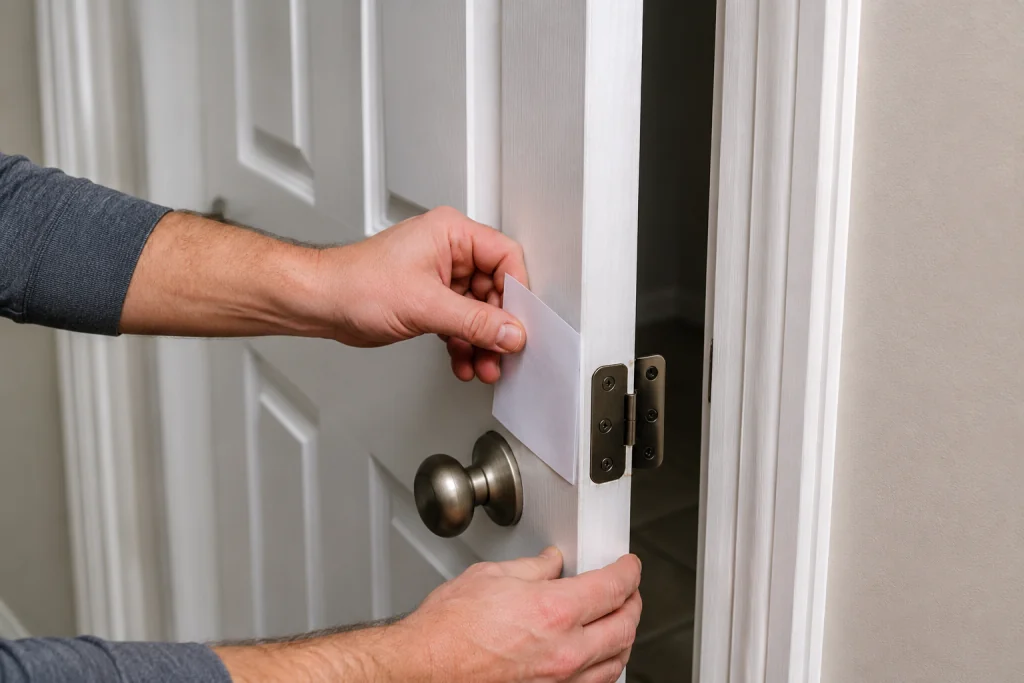
Don’t start sanding until you know where the problem is.
Slowly close the door while looking for:
- Shiny rub marks
- Paint scuffs
- Areas where paper won’t slide between the door and frame
Mark these locations with painter’s tape or a pencil.
Identifying the exact contact points prevents removing more material than necessary.
4. Sand the Swollen Area
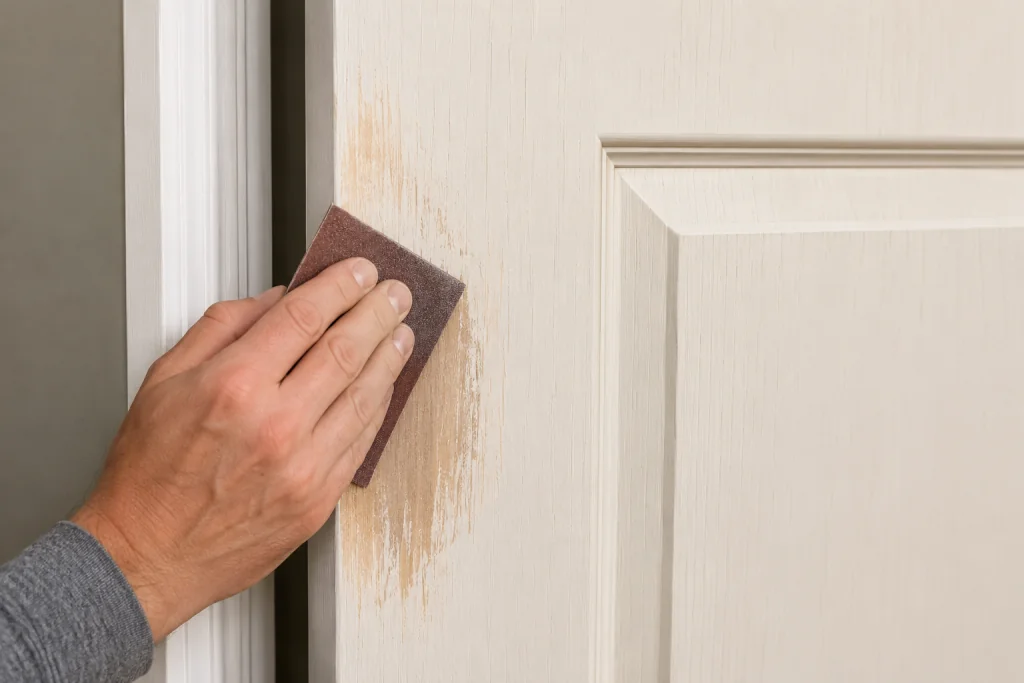
Before sanding, confirm the problem is a door swollen from humidity rather than sagging because of loose hinges.
Light sanding is often enough to eliminate sticking.
Use:
- 120-grit sandpaper
- Finish with 220-grit for a smooth surface
Remove only a small amount of wood before testing the door again.
Taking off too much material may leave noticeable gaps when humidity drops.
If your door is sagging, you may want to read our guide on: 7 Powerful Tricks on How to Fix a Sagging Door Without Removing It (DIY Guide).
5. Seal Any Bare Wood
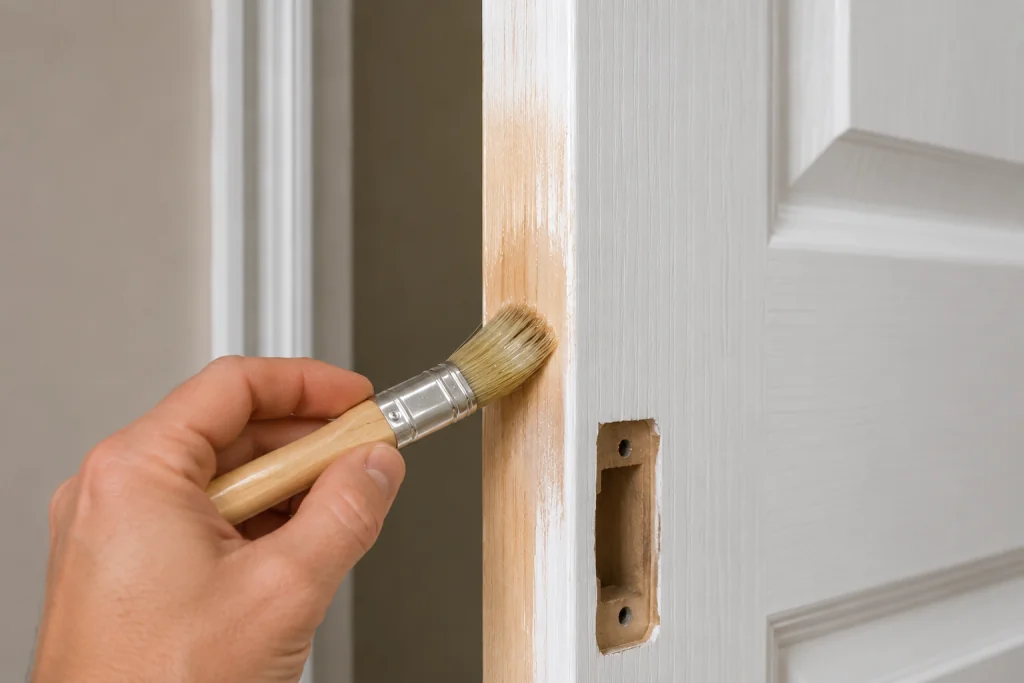
After sanding, protect the exposed wood.
Apply one of the following:
- Exterior paint
- Primer and paint
- Polyurethane
- Wood sealer
Sealing the wood helps prevent it from absorbing moisture again.
For more information about controlling indoor moisture, the U.S. Environmental Protection Agency provides helpful guidance on maintaining healthy humidity levels.
6. Lubricate Hinges and Moving Parts
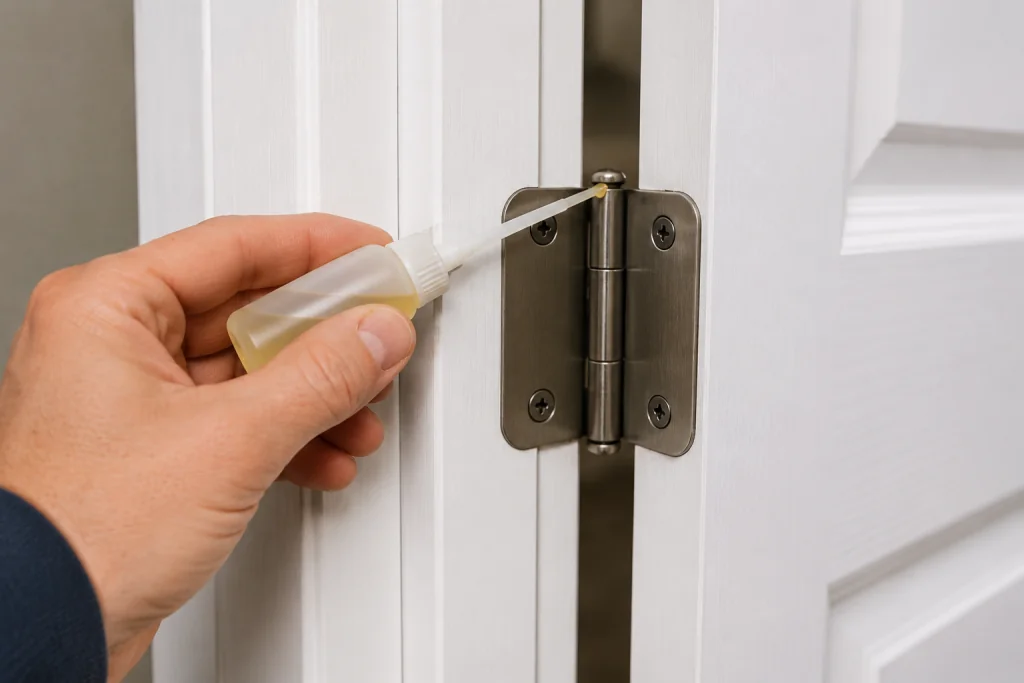
Sometimes friction makes the sticking feel worse than it actually is.
Apply a small amount of:
- Silicone spray
- Dry lubricant
Avoid heavy grease because it attracts dirt and dust.
Lubricating hinges and latch components helps the door operate more smoothly.
7. Plane the Door if Necessary
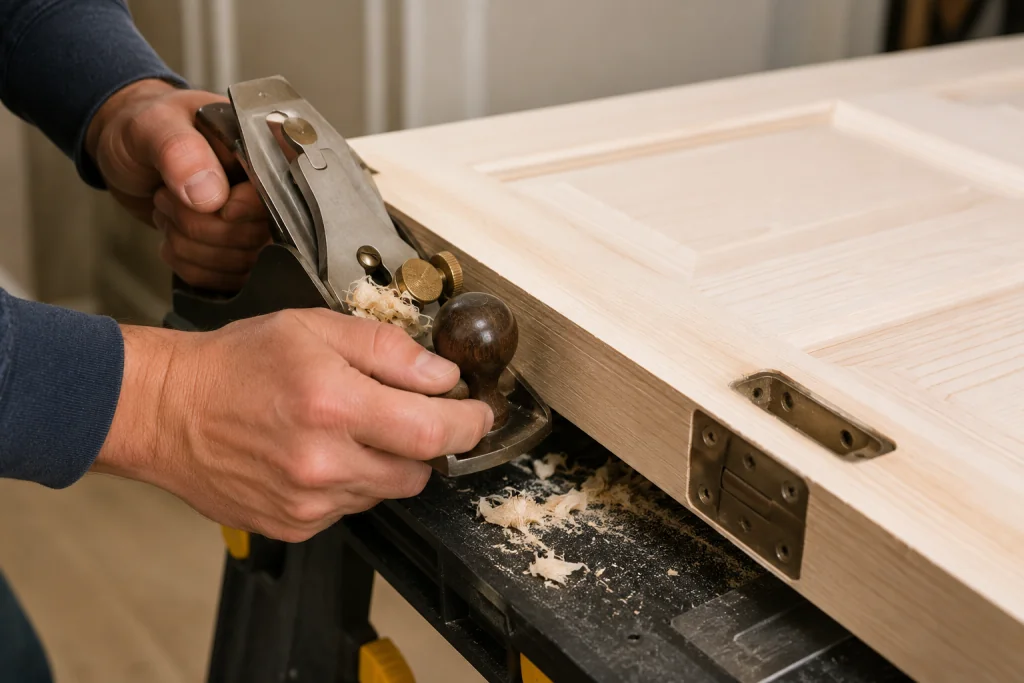
If sanding doesn’t provide enough clearance, carefully remove a little more material using a hand plane or power planer.
Only remove enough wood for the door to close properly.
Afterward:
- Sand the surface smooth.
- Prime any bare wood.
- Paint or seal all exposed edges.
If the door is severely warped or has water damage, replacement may be the better long-term solution.
Prevent Your Door From Swelling Again
Prevent future problems by following these maintenance tips:
- Keep indoor humidity below 50%.
- Seal all six sides of wooden doors.
- Repair water leaks promptly.
- Use bathroom exhaust fans after every shower.
- Install quality weatherstripping around exterior doors.
- Make sure gutters direct water away from your foundation.
You may also find our Exterior Home Maintenance Checklist helpful for preventing moisture-related problems throughout your home.
Common Mistakes to Avoid
Avoid these common errors:
- Sanding before identifying where the door rubs
- Removing too much wood
- Leaving freshly sanded wood unsealed
- Ignoring high indoor humidity
- Overlooking loose hinges
- Using oil-based lubricants that collect dirt
When to Replace the Door
Most swollen doors can be repaired, but replacement may be necessary if:
- The door is badly warped.
- Water damage has caused rot.
- The frame has shifted significantly.
- The door continues swelling despite proper sealing.
- Large cracks have developed.
A properly sealed replacement door should provide years of smooth operation.
Frequently Asked Questions for Door Swollen From Humidity
Will a swollen door shrink back when humidity drops?
Yes. If the swelling is caused by excess moisture, the wood will often shrink back as humidity decreases. This may take several days depending on indoor conditions.
What humidity level causes doors to swell?
Wood doors commonly begin expanding when indoor humidity remains above approximately 50–60% for extended periods.
Should I sand the door immediately?
Not necessarily. Try lowering the humidity first. If the door continues sticking after humidity returns to normal, light sanding is usually the next step.
Can a dehumidifier fix a swollen door?
Yes. A dehumidifier often removes enough moisture from the air for the wood to contract naturally.
Why does my door only stick during the summer?
Summer air contains more moisture than winter air. The wood absorbs that moisture, causing it to expand and stick against the frame.
Should I seal the top and bottom of my door?
Absolutely. The top and bottom edges are often left unfinished, making them especially vulnerable to moisture absorption.
Looking for help with another door or window problem? Browse our complete collection of door and window repair guides.
Final Thoughts
A door swollen from humidity is usually an easy repair rather than a major home improvement project. Start by lowering indoor humidity, tightening loose hinges, and locating the exact area where the door is rubbing. If necessary, lightly sand the swollen wood and seal the exposed surface to prevent future moisture absorption. With a little maintenance, you can restore smooth operation and help keep the problem from returning.