

Last updated: October 13, 2026
By Home Repair Genie
Quick Answer
An exterior home maintenance checklist helps homeowners prevent costly repairs, improve curb appeal, and protect their property from water damage, roof issues, siding deterioration, and foundation problems. Key tasks include inspecting the roof, cleaning gutters, checking siding, sealing cracks, maintaining landscaping, and inspecting outdoor plumbing and drainage systems.
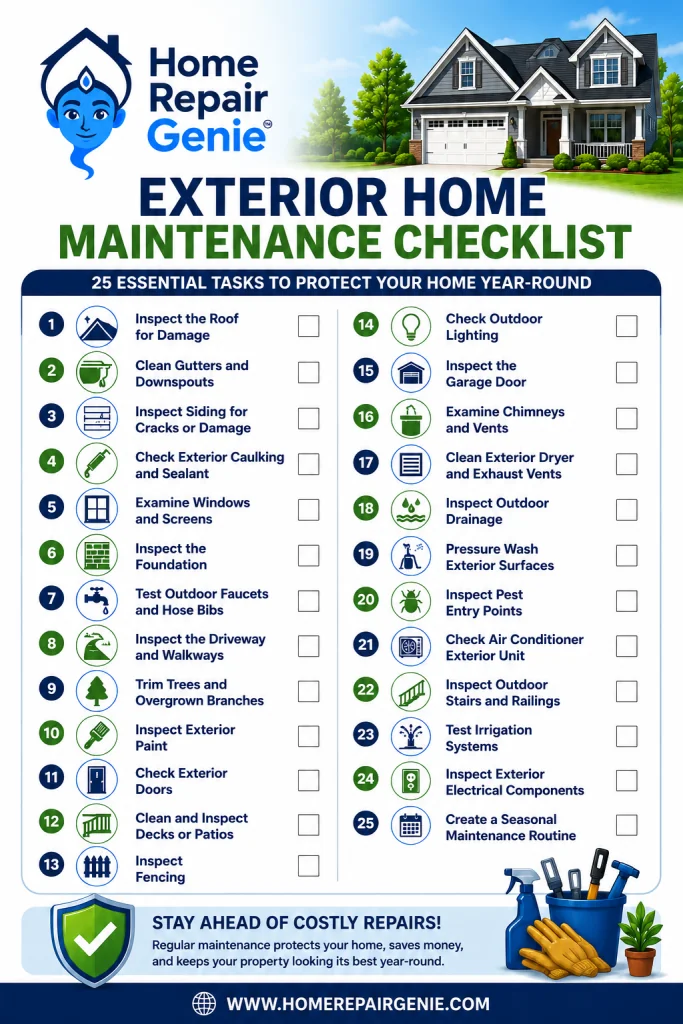
Recommended Tools for Exterior Home Maintenance
As an Amazon Associate I earn from qualifying purchases.
These are the tools we recommend that make annual home maintenance much easier.
- Extension Ladder
- Ladder Stabilizer
- Work Gloves
- Safety Glasses
- Gutter Scoop
- Caulk Gun
- Exterior Caulk
- HVAC Air Filters
- Pressure Washer
- Dryer Vent Cleaning Kit
Why Exterior Home Maintenance Matters
This exterior home maintenance checklist helps homeowners protect their property while avoiding expensive structural problems and seasonal repair issues. Small issues like clogged gutters, cracked caulk, or damaged siding can quickly turn into major repairs if ignored.
By following this exterior home maintenance checklist at least once or twice a year, homeowners can:
- Prevent water damage
- Extend the life of roofing and siding
- Improve energy efficiency
- Maintain property value
- Reduce emergency repair costs
1. Inspect the Roof for Damage
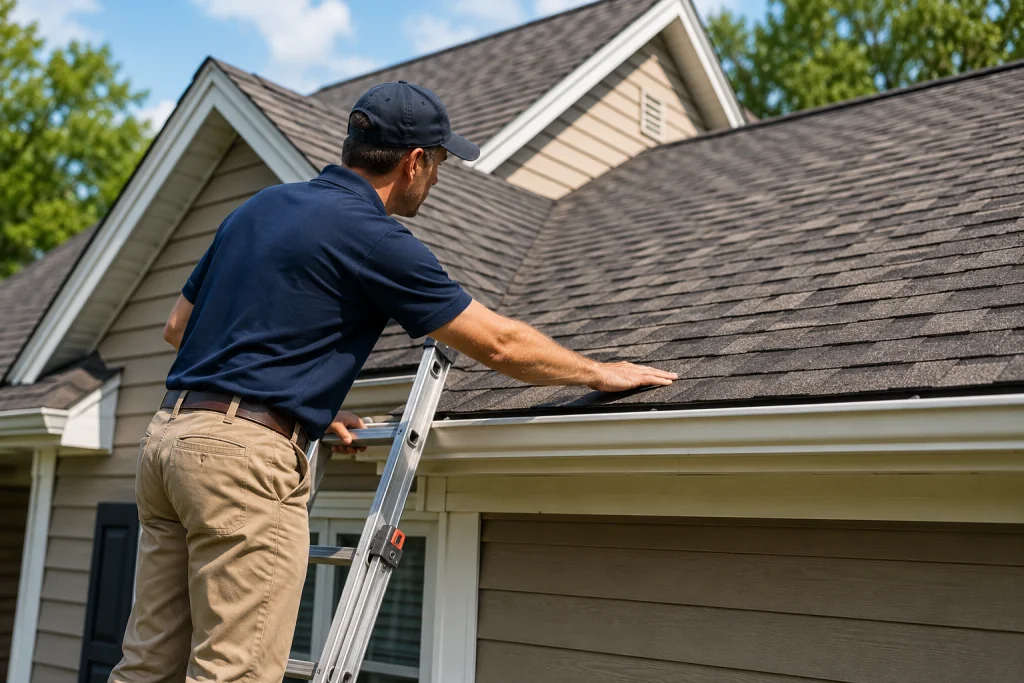
What to Look For
Check your roof for:
- Missing shingles
- Curling or cracked shingles
- Loose flashing
- Moss or algae growth
- Sagging areas
Look closely around chimneys, vents, and valleys where leaks often begin.
If you notice interior leaks, you may also want to read our guide on internal plumbing-related water issues like Low Water Pressure in Shower? 7 Easy Fixes That Actually Work.
2. Clean Gutters and Downspouts
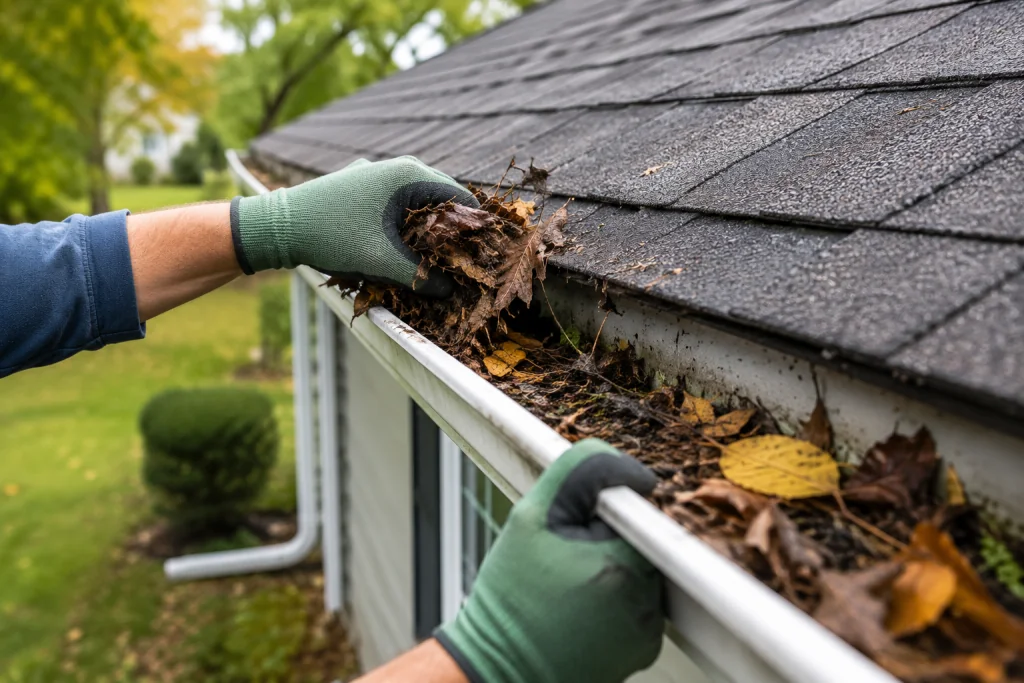
Remove Debris and Improve Drainage
Leaves and debris can clog gutters and cause water overflow that damages siding, landscaping, and foundations.
Make sure to:
- Remove leaves and debris
- Flush gutters with a hose
- Check for loose sections
- Ensure downspouts drain away from the home
For more seasonal upkeep, check out our Spring Home Maintenance Checklist: 25 Essential Tasks Every Homeowner Should Complete.
3. Inspect Siding for Cracks or Damage
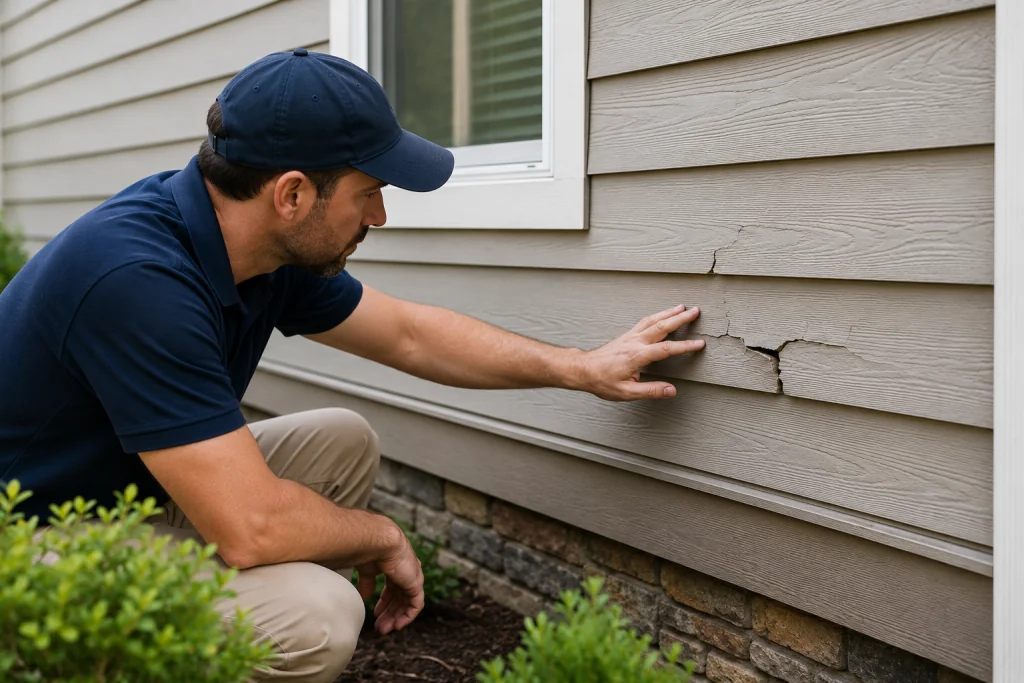
Check for Moisture Problems
Walk around your home and inspect siding for:
- Cracks
- Warping
- Rot
- Loose panels
- Mold or mildew
Damaged siding allows moisture to enter behind walls, which can lead to mold and structural issues.
4. Check Exterior Caulking and Sealant
Seal Gaps Around Openings
Inspect caulking around:
- Windows
- Doors
- Garage doors
- Utility penetrations
Replace cracked or missing caulk to improve energy efficiency and prevent moisture intrusion.
5. Examine Windows and Screens
Inspect for Damage and Drafts
Inspect windows for:
- Broken seals
- Drafts
- Cracked glass
- Damaged screens
Replace torn screens and clean tracks to keep windows operating properly.
6. Inspect the Foundation
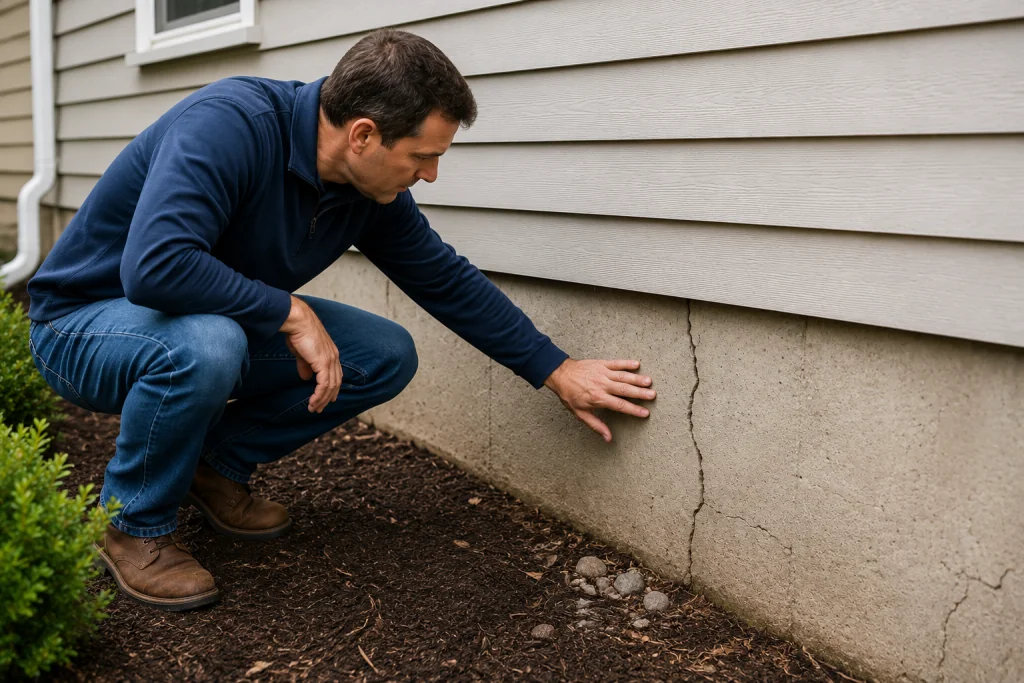
Look for Cracks and Drainage Issues
Walk around your home and look for:
- Cracks
- Uneven settling
- Water pooling
- Soil erosion
Small foundation cracks may be normal, but larger cracks should be inspected by a professional.
7. Test Outdoor Faucets and Hose Bibs
Check for Leaks and Pressure Problems
Turn on all outdoor faucets and check for:
- Leaks
- Low water pressure
- Dripping handles
- Burst pipes from winter freezing
If you notice pressure issues, read Low Water Pressure in Kitchen Sink? 7 Easy Fixes That Actually Work for troubleshooting ideas that may also apply outdoors.
8. Inspect the Driveway and Walkways
Repair Cracks Early
Check concrete and asphalt surfaces for:
- Cracks
- Uneven sections
- Drainage issues
- Trip hazards
Sealing small cracks early can prevent major damage later.
9. Trim Trees and Overgrown Branches
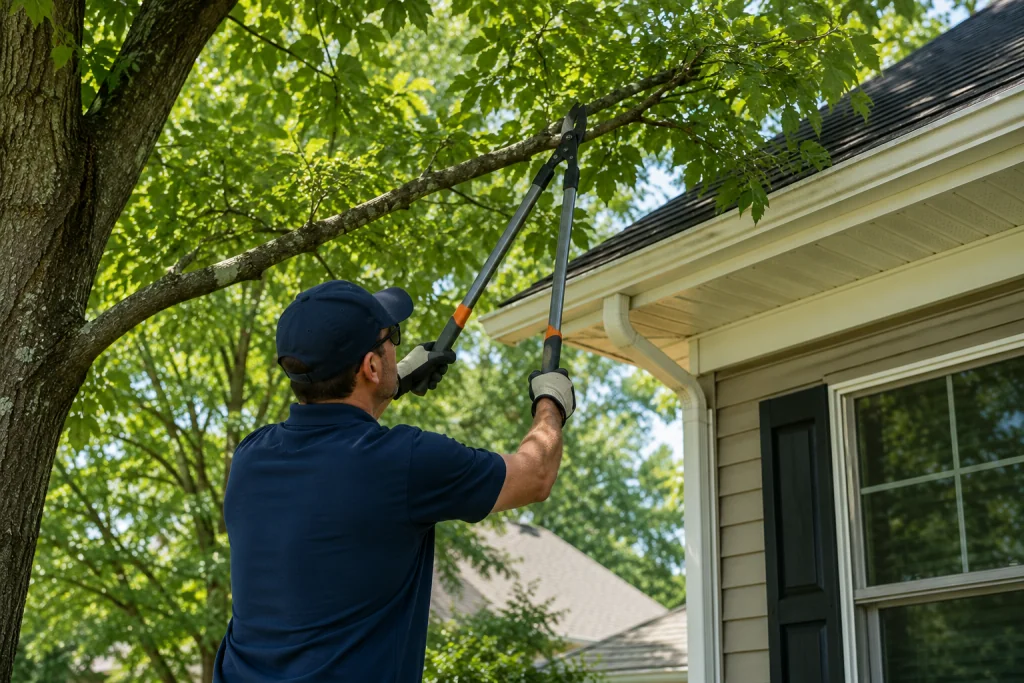
Prevent Roof and Siding Damage
Trim branches that:
- Touch the roof
- Hang over power lines
- Rub against siding
- Block gutters
Overgrown trees can damage roofing during storms and increase pest activity.
10. Inspect Exterior Paint
Watch for Peeling and Fading
Peeling or fading paint can expose wood and siding to moisture damage.
Watch for:
- Bubbling paint
- Peeling areas
- Exposed wood
- Water stains
Touch up problem areas before larger repainting becomes necessary.
11. Check Exterior Doors
Inspect Seals and Hardware
Inspect doors for:
- Damaged weatherstripping
- Loose hinges
- Drafts
- Rot around the frame
Lubricate hinges and locks as needed.
Learn how to fix door problems with our guides: 5 Easy Ways to Fix a Door That Won’t Latch Properly and 7 Proven Fixes: How to Fix a Door That Sticks When Closing (DIY Guide).
12. Clean and Inspect Decks or Patios
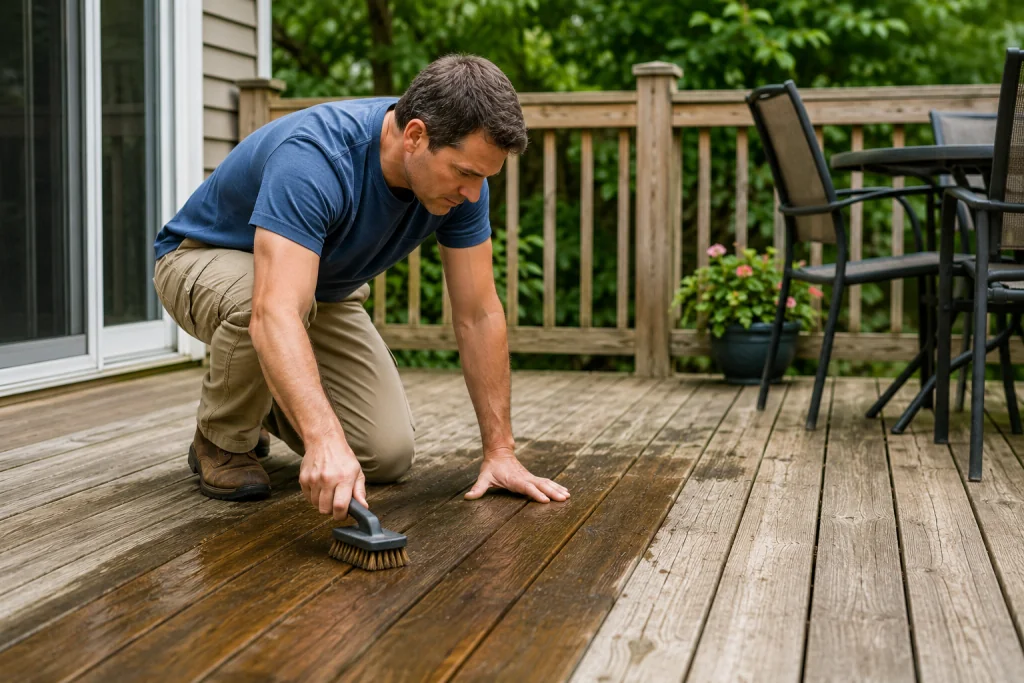
Look for Rot and Loose Boards
Wood decks should be checked for:
- Rot
- Loose boards
- Protruding nails
- Wobbly railings
Power wash surfaces and reseal wood when necessary.
13. Inspect Fencing
Repair Minor Damage Early
Check fences for:
- Loose posts
- Rotting wood
- Rusted hardware
- Leaning sections
Repairing minor fence damage early helps extend its lifespan.
14. Check Outdoor Lighting
Improve Safety and Security
Replace burned-out bulbs and inspect fixtures for:
- Water intrusion
- Loose wiring
- Corrosion
- Motion sensor problems
Outdoor lighting improves both safety and security.
15. Inspect the Garage Door
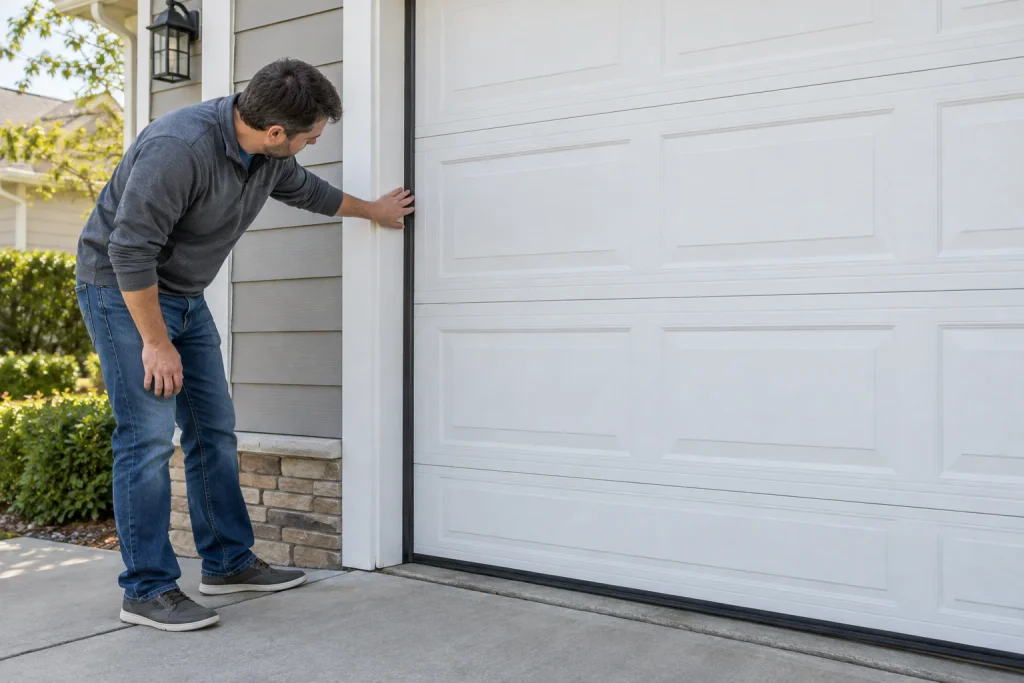
Test Door Operation and Safety Features
Test the garage door opener and inspect:
- Rollers
- Tracks
- Springs
- Weather seals
If your garage door has issues opening or closing, read Garage Door Won’t Close? 7 Easy Fixes That Actually Work and 7 Easy Fixes for a Garage Door Sensor Not Working.
16. Examine Chimneys and Vents
Look for Cracks and Blockages
Inspect chimneys and exterior vents for:
- Cracked mortar
- Missing caps
- Loose flashing
- Animal nests
Proper ventilation helps prevent moisture buildup and fire hazards.
17. Clean Exterior Dryer and Exhaust Vents
Remove Lint and Debris
Blocked exterior vents reduce airflow and increase fire risk.
Remove lint and debris regularly to keep appliances operating safely.
This guide could be helpful to you: How to Clean a Dryer Vent: 7 Simple Steps to Improve Dryer Performance.
18. Inspect Outdoor Drainage
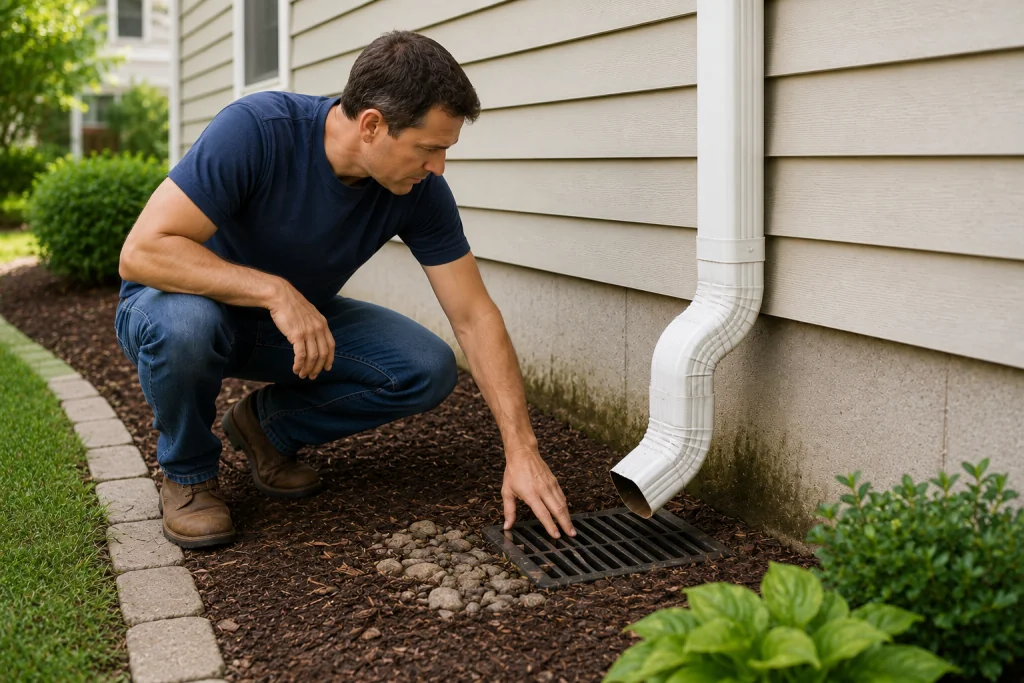
Make Sure Water Flows Away from the Home
Check for:
- Standing water
- Soil erosion
- Blocked drainage pipes
- Improper grading
Poor drainage is one of the leading causes of foundation problems.
19. Pressure Wash Exterior Surfaces
Remove Dirt and Mold Buildup
Pressure washing can remove:
- Dirt
- Mold
- Mildew
- Algae stains
Clean surfaces help preserve siding, decks, patios, and driveways.
20. Inspect Pest Entry Points
Seal Small Openings
Check around the exterior for:
- Gaps near pipes
- Open vents
- Cracks in siding
- Damaged soffits
Sealing small openings can help prevent rodents and insects from entering your home.
21. Check Air Conditioner Exterior Unit
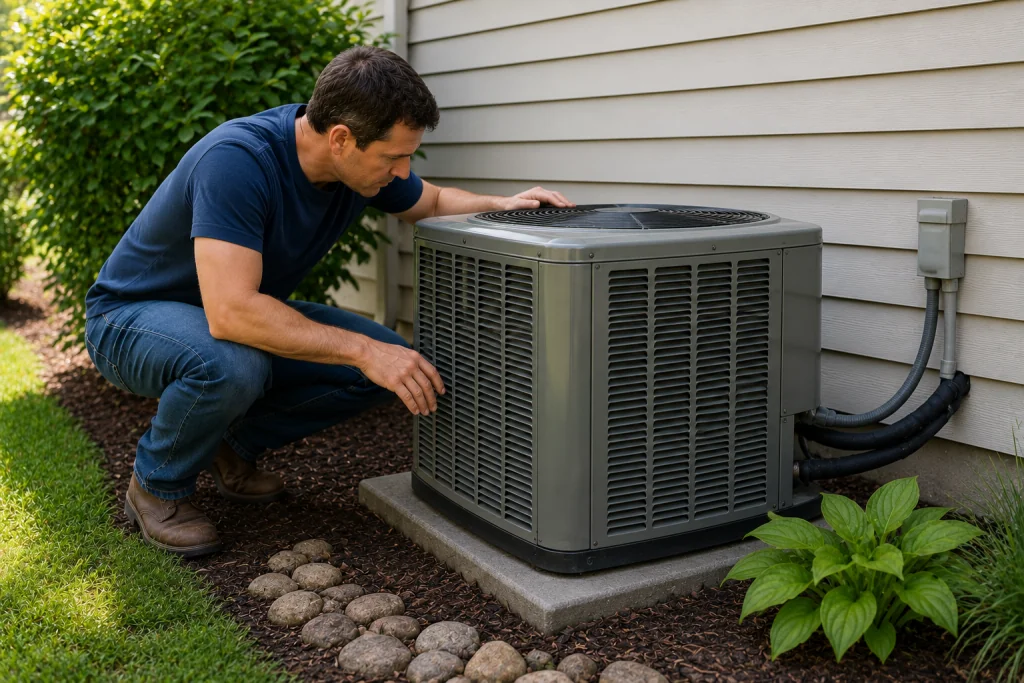
Improve Airflow and Efficiency
Inspect the outdoor AC condenser for:
- Debris buildup
- Bent fins
- Vegetation blocking airflow
Keep at least 2 feet of clearance around the unit.
You may also find our guide on 9 Proven Fixes for AC Not Cooling (Step-by-Step) helpful.
22. Inspect Outdoor Stairs and Railings
Improve Safety Around the Home
Loose railings and damaged steps can become safety hazards.
Tighten hardware and replace damaged boards or concrete sections.
23. Test Irrigation Systems
Check for Leaks and Overspray
Run sprinkler systems and inspect for:
- Broken sprinkler heads
- Leaks
- Uneven watering
- Overspray near the home
Poor irrigation placement can contribute to foundation moisture problems.
24. Inspect Exterior Electrical Components
Test Outdoor Outlets and Fixtures
Check outdoor:
- GFCI outlets
- Light fixtures
- Extension cords
- Electrical covers
Reset tripped GFCI outlets if necessary.
You may also want to read How to Fix an Outlet That’s Not Working (Step-by-Step Guide).
25. Create a Seasonal Maintenance Routine
Stay Ahead of Expensive Repairs
An exterior home maintenance checklist is easier when broken into seasonal tasks.
A good schedule includes:
- Spring inspections
- Summer repairs
- Fall gutter cleaning
- Winter weather preparation
Consistent upkeep helps homeowners catch small problems before they become expensive repairs.
Keep up with your maintenance by reading: Easy Monthly Home Maintenance Checklist: 21 Essential Tasks Every Homeowner Should Do.
Recommended Exterior Maintenance Schedule
| Task | Frequency |
|---|---|
| Roof inspection | Twice yearly |
| Gutter cleaning | Spring and fall |
| Pressure washing | Yearly |
| Caulking inspection | Yearly |
| AC condenser cleaning | Spring |
| Foundation inspection | Twice yearly |
| Tree trimming | As needed |
| Driveway crack sealing | Every 1–3 years |
When to Call a Professional
Signs You May Need Expert Help
Contact a professional if you notice:
- Large roof leaks
- Major foundation cracks
- Electrical hazards
- Severe siding damage
- Drainage issues causing flooding
- Unsafe trees near the home
FAQ
How often should an exterior home maintenance checklist be used?
Most exterior home maintenance tasks should be completed seasonally or at least once per year.
What exterior home maintenance checklist task is most important?
Roof and gutter maintenance are among the most important because they help prevent water damage.
Does using an exterior home maintenance checklist improve home value?
Yes. Regular maintenance improves curb appeal, protects structural components, and helps preserve resale value.
Can I do the tasks on an exterior home maintenance checklist myself?
Many tasks are DIY-friendly, including gutter cleaning, caulking, pressure washing, and inspecting siding. However, roof work and major repairs may require professionals.
What is included in an exterior home maintenance checklist?
An exterior home maintenance checklist typically includes roof inspections, gutter cleaning, siding inspections, drainage checks, landscaping maintenance, and seasonal exterior repairs.
Looking for another household maintenance guide? Browse our complete collection of home maintenance tips and projects
Final Thoughts
Following a complete exterior home maintenance checklist helps homeowners protect their investment, avoid costly repairs, and keep their property looking its best year-round. Consistent inspections and small repairs can dramatically extend the life of your home’s exterior systems.
For additional maintenance planning, the experts at This Old House offer another helpful seasonal home maintenance resource.