
Last updated: October 10, 2026
By Home Repair Genie
Quick Answer
A spring home maintenance checklist helps homeowners prepare their home after winter by inspecting roofing, gutters, HVAC systems, plumbing, landscaping, and other important areas. Completing seasonal maintenance can help prevent costly repairs while improving home safety and energy efficiency.
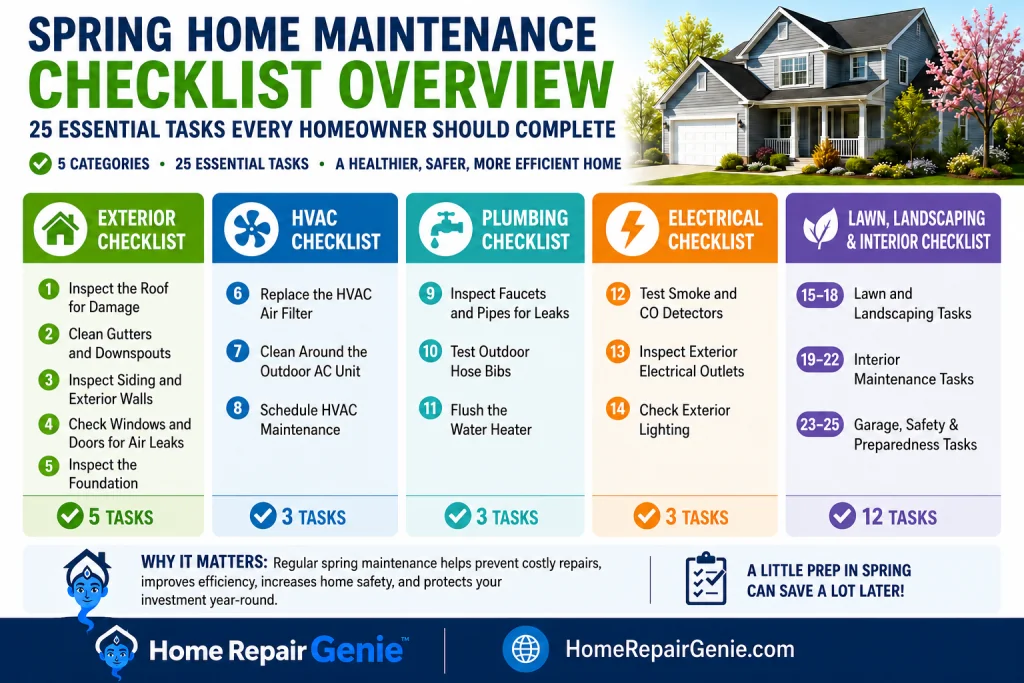
Why a Spring Home Maintenance Checklist Matters
Winter weather can be hard on a home. Snow, freezing temperatures, moisture, and wind often leave behind damage that may not be obvious right away.
Completing regular spring home maintenance can help:
- Prevent expensive repairs
- Improve energy efficiency
- Extend the life of home systems
- Reduce water damage risks
- Improve curb appeal
- Prepare your home for summer weather
Even simple seasonal maintenance tasks can save homeowners thousands of dollars over time.
Recommended Tools & Supplies
As an Amazon Associate I earn from qualifying purchases.
Exterior Spring Home Maintenance Checklist
1. Inspect the Roof for Damage
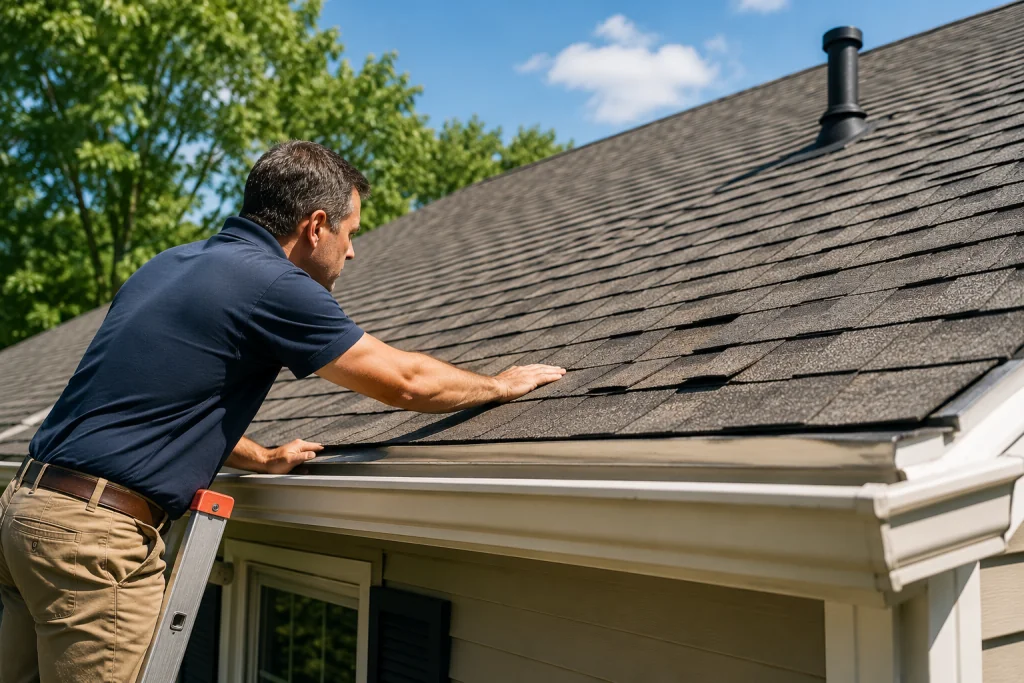
Check for:
- Missing shingles
- Cracked shingles
- Loose flashing
- Sagging areas
- Debris buildup
If you notice roof leaks or water stains, address them quickly before spring storms arrive.
2. Clean Gutters and Downspouts
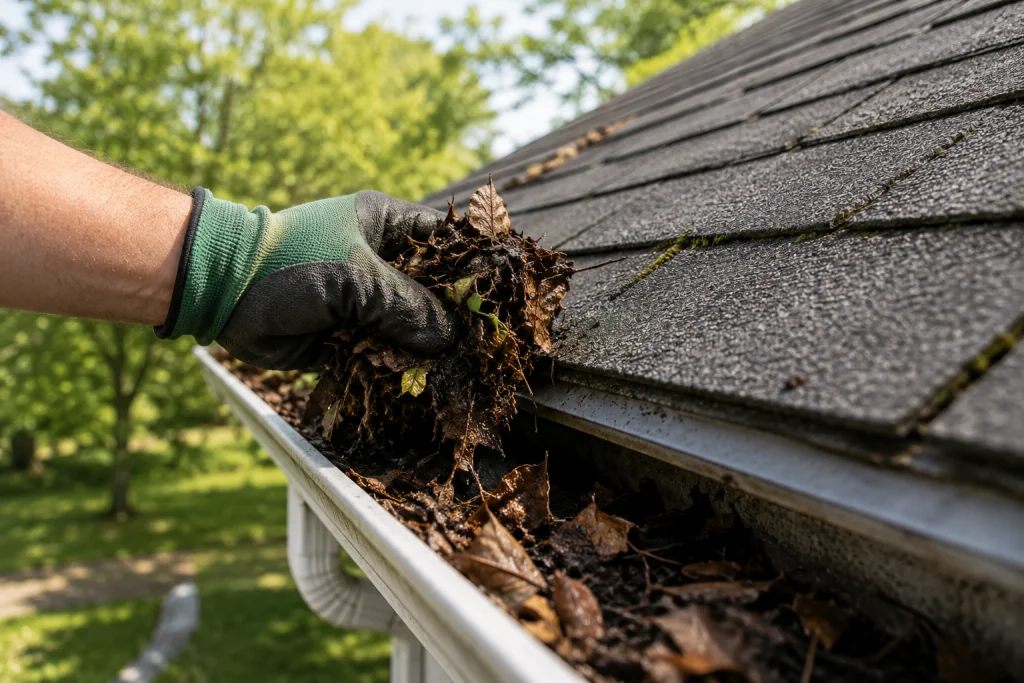
Leaves and debris can clog gutters during winter.
Clean out:
- Gutters
- Downspouts
- Splash blocks
Make sure water drains away from the foundation properly.
Check out: This Old House Spring Maintenance Checklist
3. Inspect Siding and Exterior Walls
Look for:
- Cracks
- Peeling paint
- Mold or mildew
- Loose siding
- Water stains
Catching small issues early helps prevent moisture damage later.
4. Check Windows and Doors for Air Leaks
Inspect caulking and weatherstripping around:
- Windows
- Exterior doors
- Sliding doors
- Garage doors
Replace damaged seals to improve energy efficiency before summer heat arrives.
You may find this helpful: 7 Proven Fixes: How to Fix a Door That Sticks When Closing (DIY Guide)
Read: 5 Easy Ways to Fix a Door That Won’t Latch Properly
5. Inspect the Foundation
Walk around your home and look for:
- New cracks
- Water pooling
- Soil erosion
- Signs of settling
Foundation problems are much easier to repair when caught early.
HVAC Spring Home Maintenance Checklist
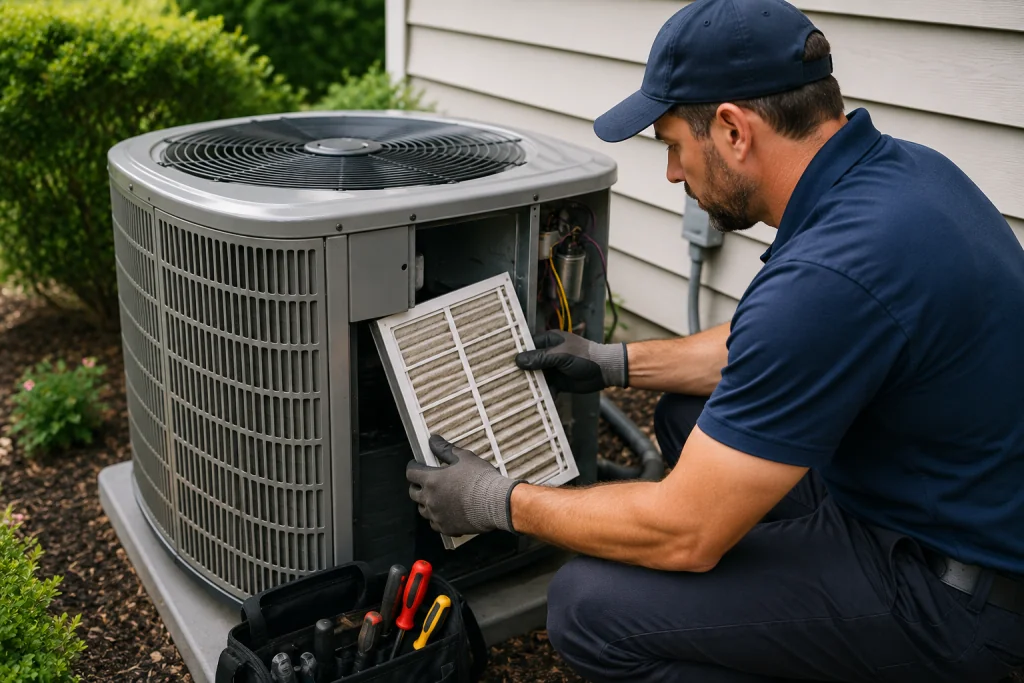
6. Replace the HVAC Air Filter
Dirty air filters reduce airflow and strain the HVAC system.
Replace the filter every 1–3 months during heavy-use seasons.
This could come in handy for you: 9 Proven Fixes for AC Not Cooling (Step-by-Step)
Read: 7 Proven Fixes: AC Not Turning On But Thermostat Is Working (Fast & Easy)
7. Clean Around the Outdoor AC Unit
Remove:
- Leaves
- Grass clippings
- Branches
- Dirt buildup
Maintain at least 2 feet of open space around the condenser unit.
8. Schedule HVAC Maintenance
A professional HVAC inspection can help:
- Improve efficiency
- Prevent breakdowns
- Extend system lifespan
- Catch refrigerant issues early
Spring is one of the best times to schedule maintenance before summer demand increases.
Plumbing Spring Home Maintenance Checklist
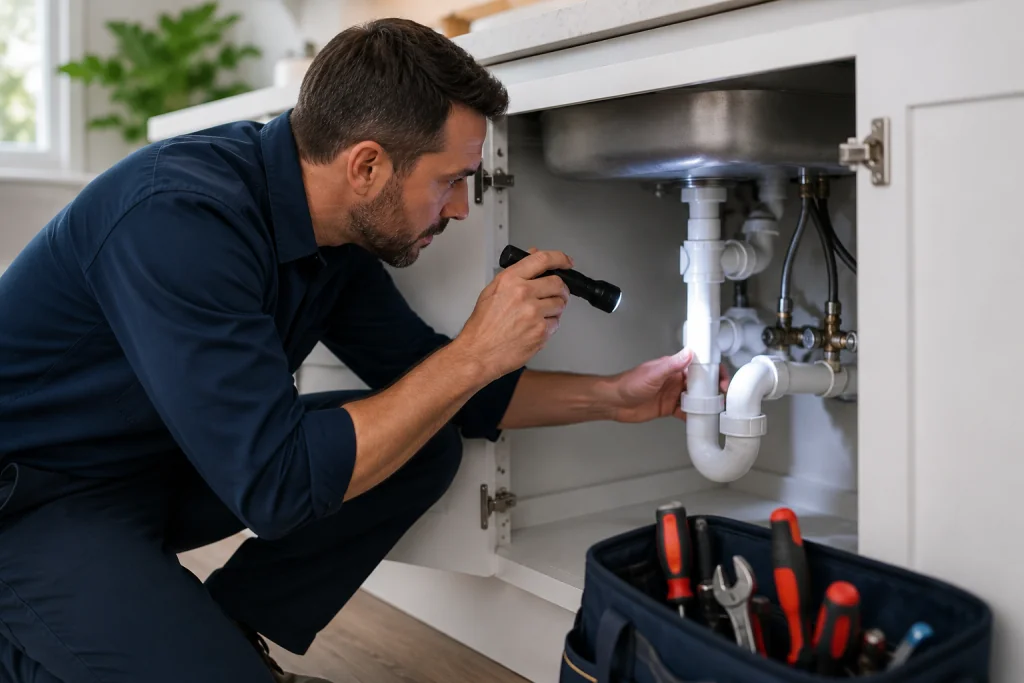
9. Inspect Faucets and Pipes for Leaks
Check:
- Under sinks
- Basement plumbing
- Outdoor spigots
- Water supply lines
Even small leaks can lead to mold growth and water damage.
Check out the following if you are interested in tackling your plumbing tasks:
How to Fix a Leaky Faucet: 7 Easy Fixes to Stop the Drip Fast
How to Fix a Running Toilet: 7 Easy Fixes That Actually Work
Low Water Pressure in Kitchen Sink? 7 Easy Fixes That Actually Work
10. Test Outdoor Hose Bibs
Frozen winter pipes sometimes damage outdoor faucets.
Turn on each hose bib and check for:
- Leaks
- Weak water pressure
- Dripping
- Water inside nearby walls
11. Flush the Water Heater
Sediment buildup reduces water heater efficiency over time.
Flushing the tank annually can:
- Improve performance
- Extend lifespan
- Reduce energy usage
Electrical Spring Home Maintenance Checklist
12. Test Smoke and Carbon Monoxide Detectors
Test every detector throughout the home and replace batteries if needed.
Monthly testing improves home safety and fire protection.
13. Inspect Exterior Electrical Outlets
Look for:
- Cracked covers
- Burn marks
- Loose outlets
- Moisture intrusion
Outdoor outlets should have weather-resistant covers installed.
These electrical articles could be of assistance to you:
How to Fix an Outlet That’s Not Working (Step-by-Step Guide)
Outlet Warm to Touch? 7 Easy Fixes That Actually Work (Step-by-Step Guide)
Outlet Sparks When Plugging In? 7 Easy Fixes That Actually Work (Step-by-Step Guide)
14. Check Exterior Lighting
Inspect outdoor lighting fixtures for:
- Burned-out bulbs
- Rust
- Loose wiring
- Water damage
Proper lighting improves both safety and curb appeal.
Lawn and Landscaping Checklist
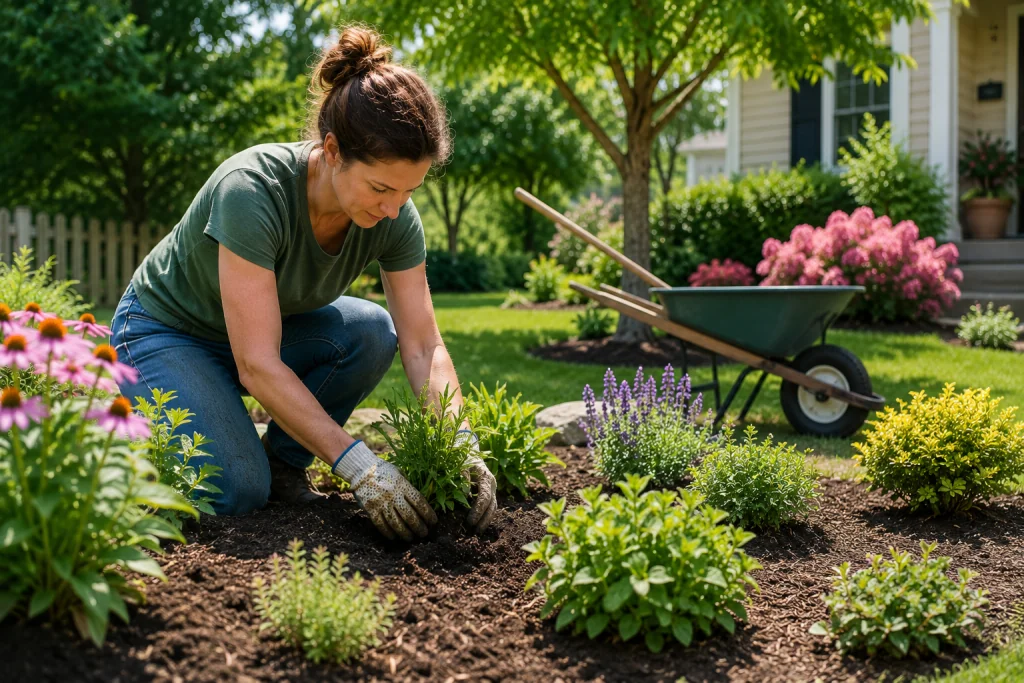
15. Remove Dead Plants and Debris
Clear away:
- Fallen branches
- Dead leaves
- Winter mulch buildup
Removing debris helps reduce pests and lawn disease.
16. Inspect Trees for Damage
Look for:
- Dead branches
- Cracks
- Leaning trees
- Fungus growth
Damaged trees can become hazardous during spring storms.
17. Fertilize the Lawn
Spring fertilization helps grass recover after winter dormancy.
Avoid over-fertilizing early in the season.
18. Check Irrigation Systems
Turn on sprinklers and inspect for:
- Broken sprinkler heads
- Leaks
- Uneven spraying
- Low water pressure
Early repairs help save water and protect landscaping.
Interior Spring Home Maintenance Checklist
19. Deep Clean Carpets and Floors
Spring cleaning helps remove:
- Dirt
- Pet hair
- Allergens
- Salt residue
Deep cleaning can improve indoor air quality.
20. Inspect Attic and Basement Areas
Look for:
- Moisture
- Mold
- Pest activity
- Insulation problems
These areas often reveal hidden home maintenance problems.
21. Check for Pest Activity
Warmer temperatures often increase pest activity.
Watch for:
- Ants
- Rodents
- Wasps
- Termites
Seal gaps around doors, windows, and foundations.
22. Clean Dryer Vents
Lint buildup is a major fire hazard.
Clean:
- Dryer lint trap
- Vent hose
- Exterior vent opening
Read: Dryer Taking Too Long to Dry Clothes? 7 Easy Fixes That Actually Work
23. Reverse Ceiling Fans
Set ceiling fans to rotate counterclockwise during warmer months to improve cooling airflow.
24. Inspect Garage Doors
Test:
- Safety sensors
- Springs
- Rollers
- Tracks
- Auto-reverse features
Lubricate moving parts if necessary.
A garage door can be tricky: Garage Door Closes Then Opens Again? 7 Easy Fixes That Actually Work (Step-by-Step Guide)
25. Organize Emergency Supplies
Review and restock:
Spring storms can arrive quickly in many areas.
Spring Home Maintenance Checklist Tips
To make seasonal maintenance easier:
- Break tasks into smaller projects
- Prioritize safety-related repairs first
- Keep a yearly checklist
- Schedule professional inspections early
- Document completed maintenance
Consistency is one of the best ways to protect your home long-term.
Frequently Asked Questions for Spring Home Maintenance Checklist
How often should spring home maintenance be done?
Most spring maintenance tasks should be completed once per year after winter weather ends.
What are the most important spring home maintenance checklist tasks?
Roof inspections, gutter cleaning, HVAC servicing, plumbing inspections, and leak detection are among the most important tasks because they help prevent costly repairs.
Should I hire professionals for my spring home maintenance checklist?
Many maintenance tasks can be completed by homeowners, but professionals may be needed for:
- Roofing repairs
- HVAC servicing
- Electrical work
- Tree removal
- Foundation repairs
When should I start my spring home maintenance checklist?
Most homeowners begin spring maintenance in March, April, or May depending on local weather conditions.
Looking for another household maintenance guide? Browse our complete collection of home maintenance tips and projects
Final Thoughts
Completing a spring home maintenance checklist is one of the best ways to protect your home and prevent expensive repairs later in the year.
By inspecting major systems, addressing small issues early, and performing regular seasonal maintenance, homeowners can improve safety, efficiency, and long-term property value.