Last updated: September 21, 2026
By Home Repair Genie
Quick Answer
If your AC fan runs but compressor won’t start, the most common causes include a failed capacitor, faulty contactor, a tripped breaker, an overheated compressor, thermostat problems, loose wiring, low refrigerant, or compressor failure. Start with the simplest and safest checks before assuming the compressor itself needs replacement.
If your air conditioner is blowing warm air even though the outdoor fan is spinning, you’re likely dealing with one of the most common HVAC problems homeowners experience. When the compressor fails to start, your system can’t circulate refrigerant, so it won’t remove heat from your home.
The good news is that many compressor startup problems are caused by inexpensive parts rather than a failed air conditioner. This guide explains the most likely reasons your AC fan runs but compressor won’t start and shows you what to check before calling an HVAC technician.
If your system is also blowing warm air, read our guide on 9 Simple Fixes for AC Blowing Warm Air (Step-by-Step Guide).
Why the Compressor Is So Important
The compressor is the heart of your air conditioning system. It compresses refrigerant and moves it through the evaporator and condenser coils so heat can be removed from your home.
If the compressor never starts, the condenser fan may continue running normally, but the air coming from your vents will remain warm or only slightly cool.
Common symptoms include:
- Warm air blowing from the vents
- Outdoor fan spinning normally
- Compressor completely silent
- Compressor clicks but never starts
- Outdoor unit humming
- Home temperature continues to rise
Turn Off the Air Conditioner
Shut Off Power
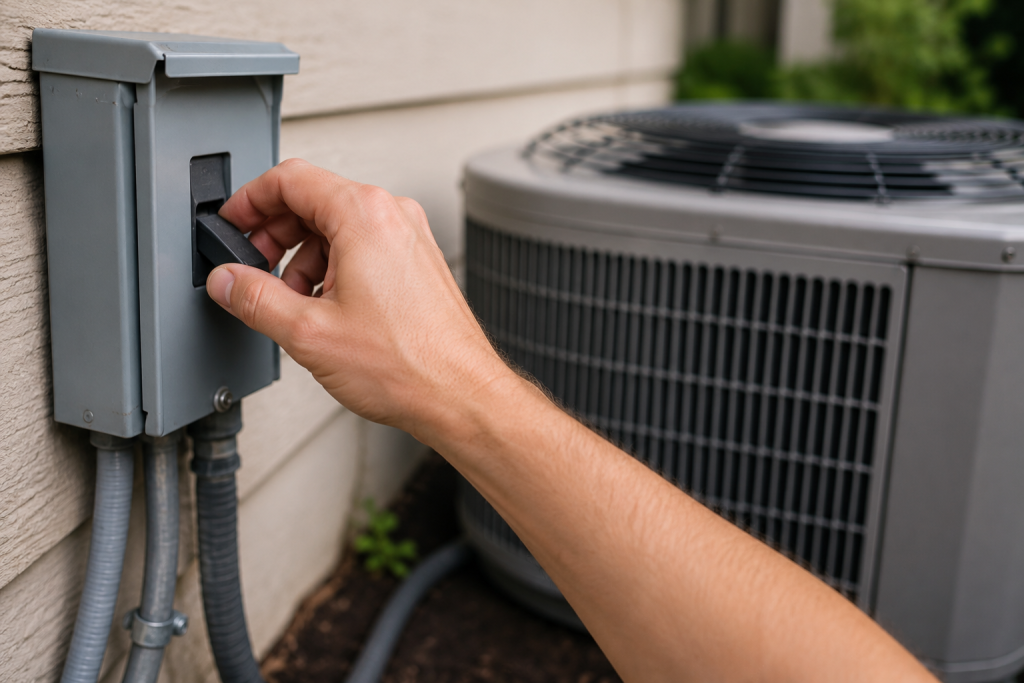
Before inspecting any outdoor AC components:
- Turn the thermostat to Off.
- Switch off the breaker that supplies power to the air conditioner.
- Pull the outdoor disconnect if your system has one.
Never remove access panels or touch electrical components while the unit is energized.
Check the Circuit Breaker
Inspect the Electrical Panel
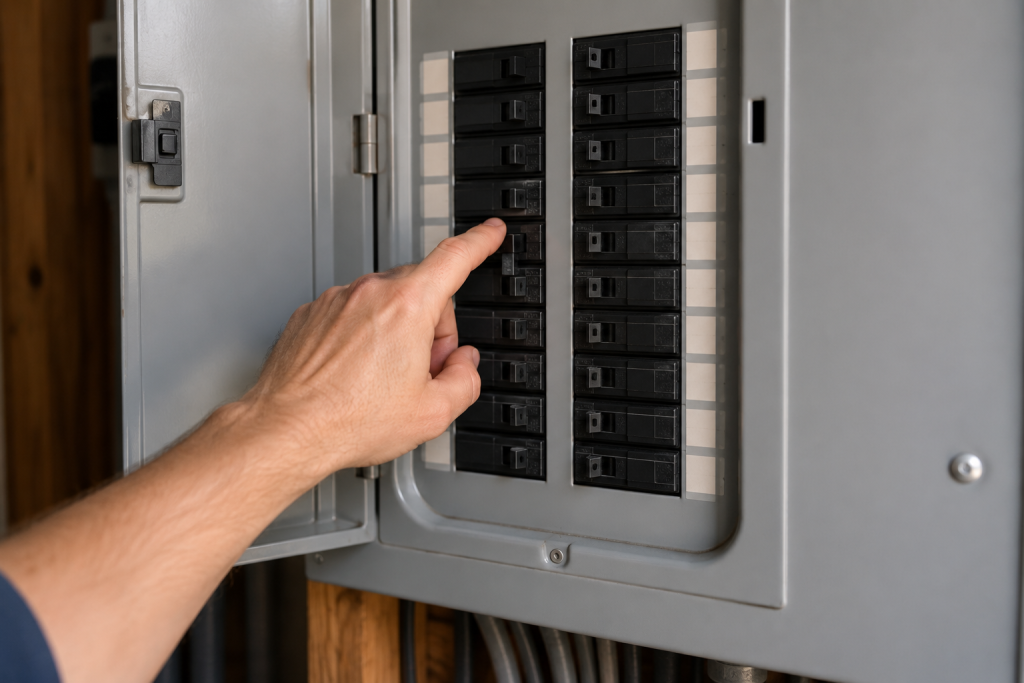
Sometimes the compressor breaker trips while the condenser fan continues operating.
Look for:
- A breaker in the middle position
- A breaker that won’t reset
- Burn marks or signs of overheating
Reset the breaker only once.
If it immediately trips again, discontinue troubleshooting and contact an HVAC professional.
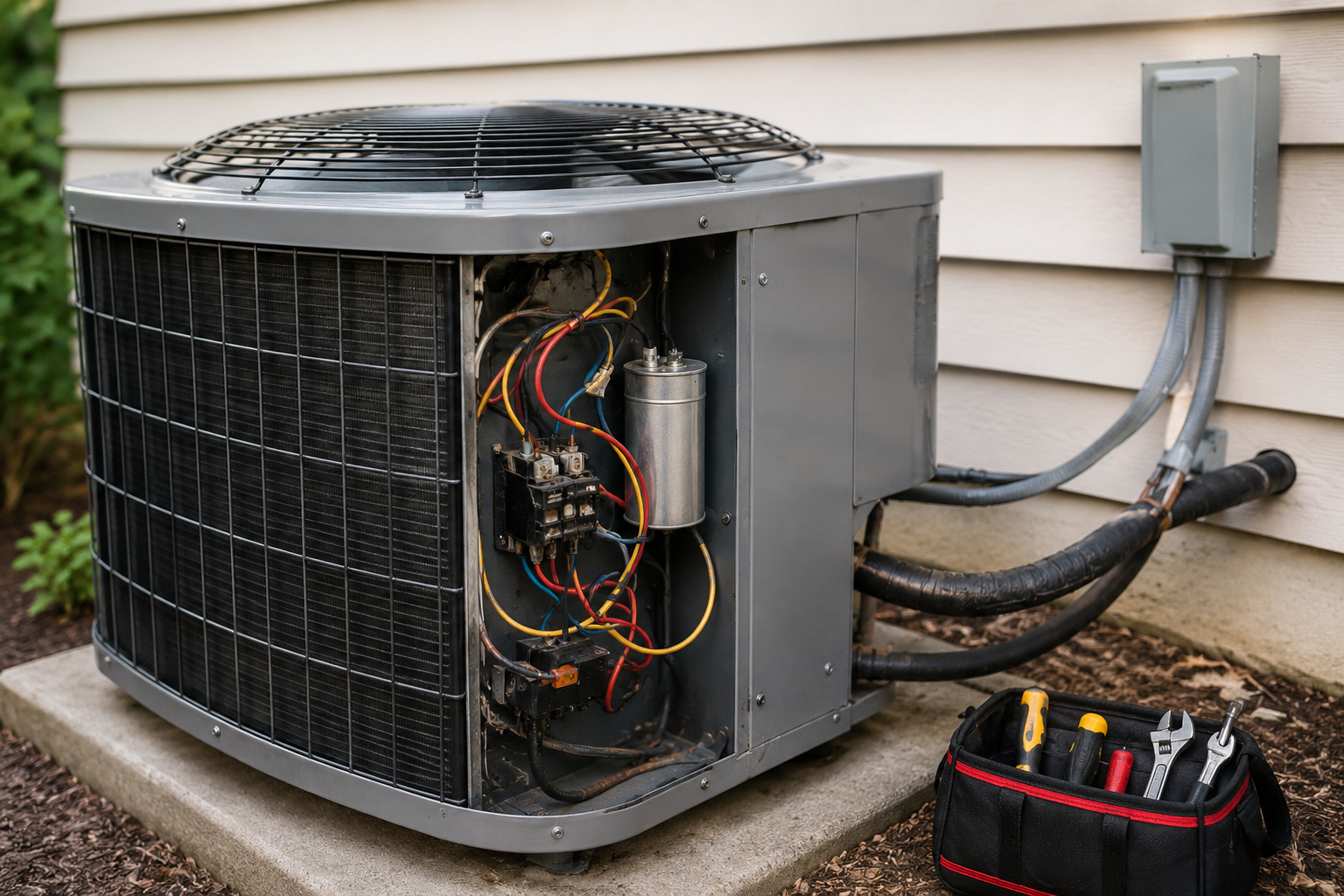
Inspect the Capacitor
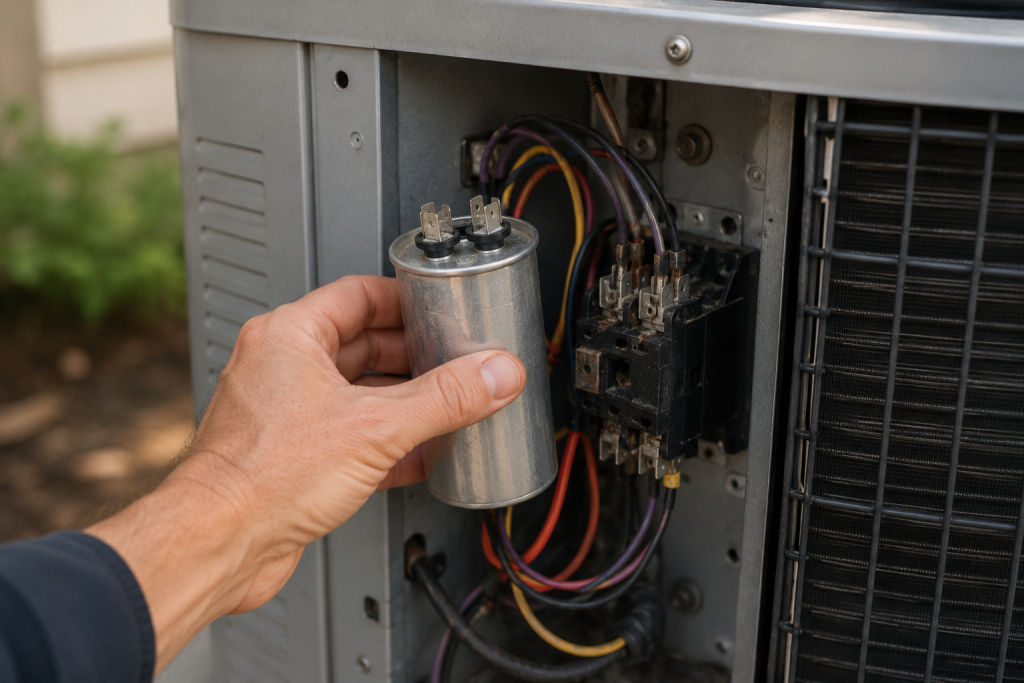
Look for Visible Damage
A dual-run capacitor powers both the condenser fan motor and the compressor. It’s possible for the fan side of the capacitor to continue working while the compressor side fails.
Signs of a failed capacitor include:
- Bulging top
- Oil leakage
- Rust
- Burn marks
A defective capacitor is one of the most common reasons an AC fan runs but compressor won’t start.
Listen for Clicking or Humming
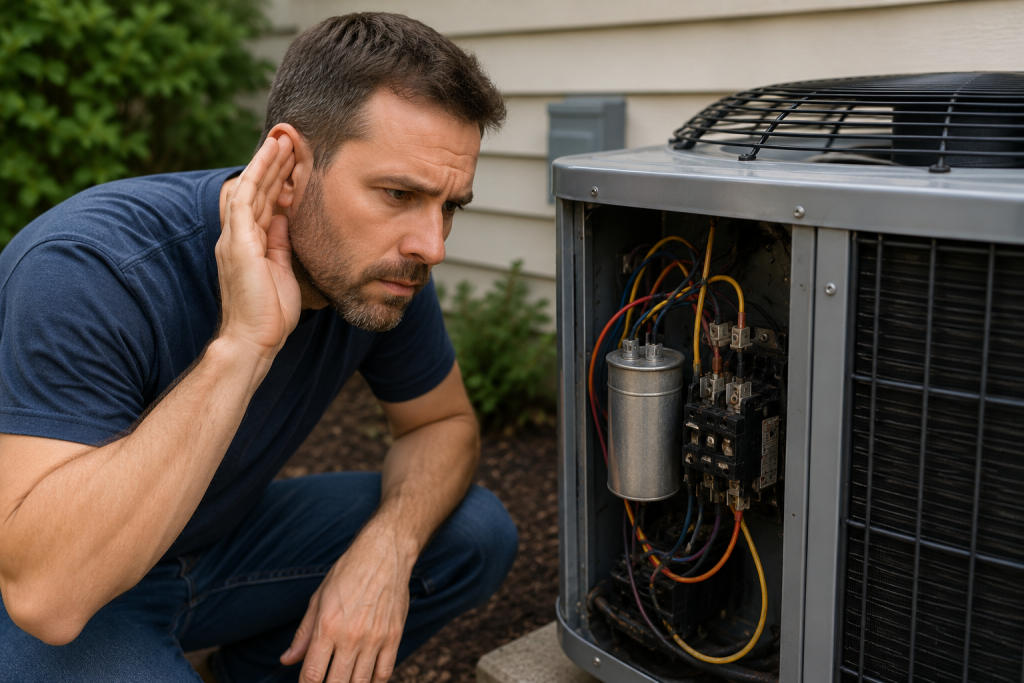
Identify Startup Problems
Restore power briefly and listen carefully.
Different sounds often indicate different problems.
A single click
The contactor is engaging, but the compressor isn’t starting.
A loud humming noise
The compressor is attempting to start but cannot.
Repeated clicking
The overload protector may be cycling because the compressor is overheating.
These symptoms frequently point toward a bad capacitor or a failing compressor.
Check the Thermostat Settings
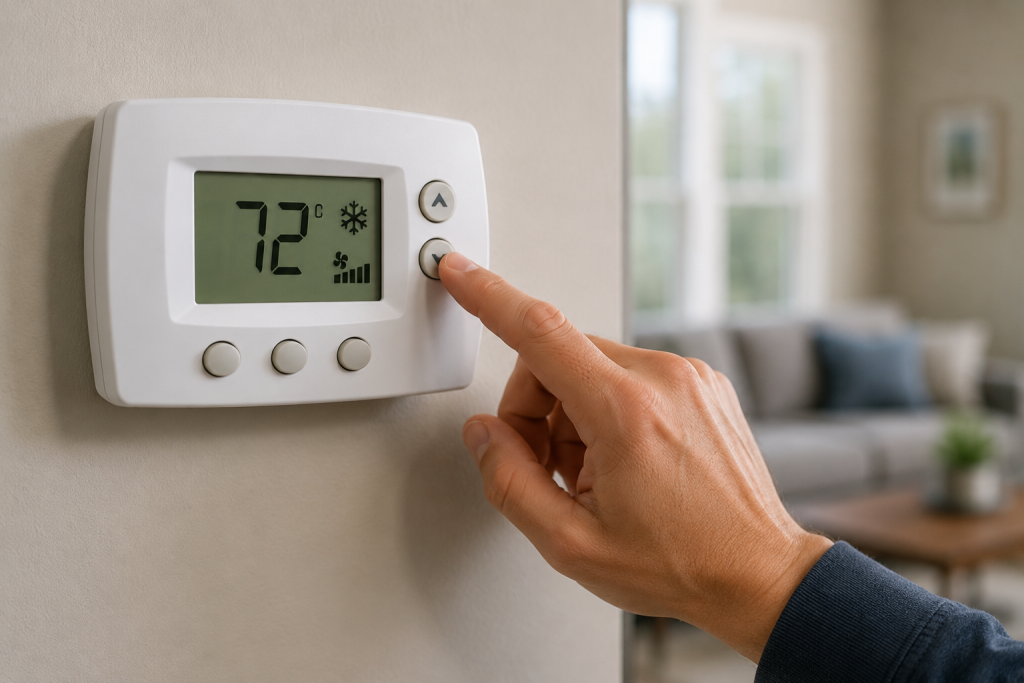
Verify Cooling Mode
Confirm that:
- The thermostat is set to Cool.
- The temperature setting is below the current room temperature.
- The batteries are fresh if your thermostat uses them.
- No scheduling or programming errors are preventing cooling.
If your thermostat display is blank, see our guide on Thermostat Blank Screen: 9 Proven Fixes to Restore Your Thermostat.
Clean Dirty Condenser Coils
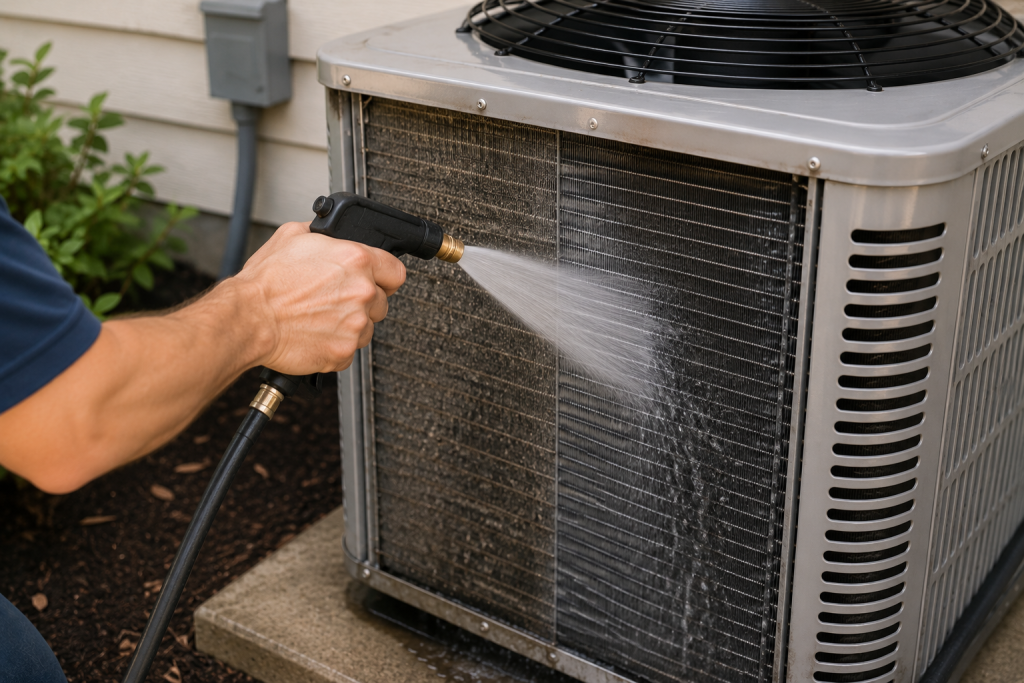
Remove Dirt and Debris
Dirty condenser coils trap heat, forcing the compressor to work much harder.
An overheated compressor may shut itself off using its internal thermal overload protection.
Inspect the outdoor unit for:
- Grass clippings
- Leaves
- Dirt buildup
- Cottonwood
- Restricted airflow
Disconnect power before gently rinsing the coils with a garden hose.
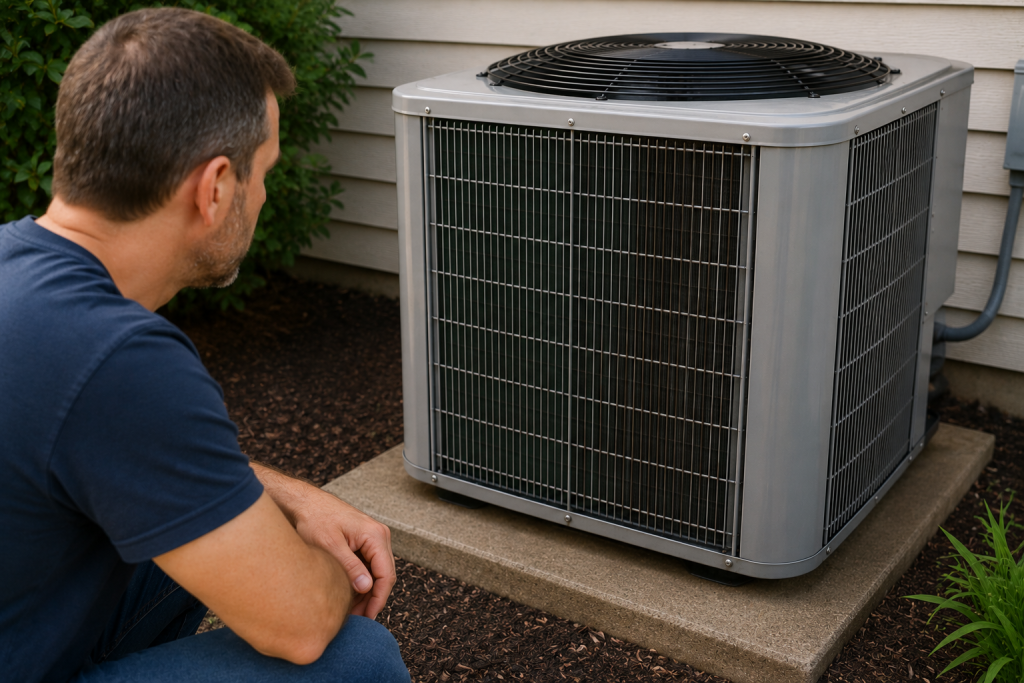
Allow an Overheated Compressor to Cool
Wait Before Restarting
During periods of extreme heat, compressors can overheat and temporarily shut down.
Turn the air conditioner off for 30 to 60 minutes before attempting another restart.
If the compressor works again after cooling but repeatedly overheats, additional diagnosis is necessary.
Restricted airflow from a dirty filter can contribute to overheating. Read 5 Best HVAC Air Filters for Cleaner Air and Better HVAC Performance.
Inspect the Contactor
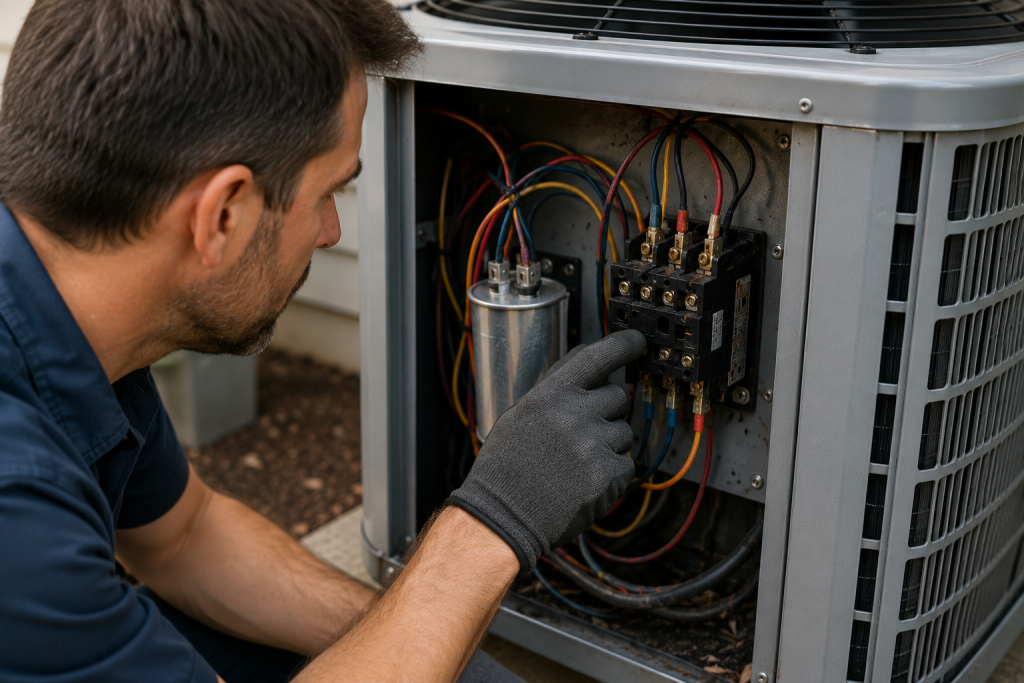
Check for Burned Contacts
The contactor sends high-voltage power to the compressor.
A defective contactor may prevent the compressor from receiving electricity.
Inspect for:
- Burned contacts
- Pitted contacts
- Loose wires
- A contactor that sticks open
Replacing a worn contactor is a common HVAC repair.
Consider Refrigerant Problems
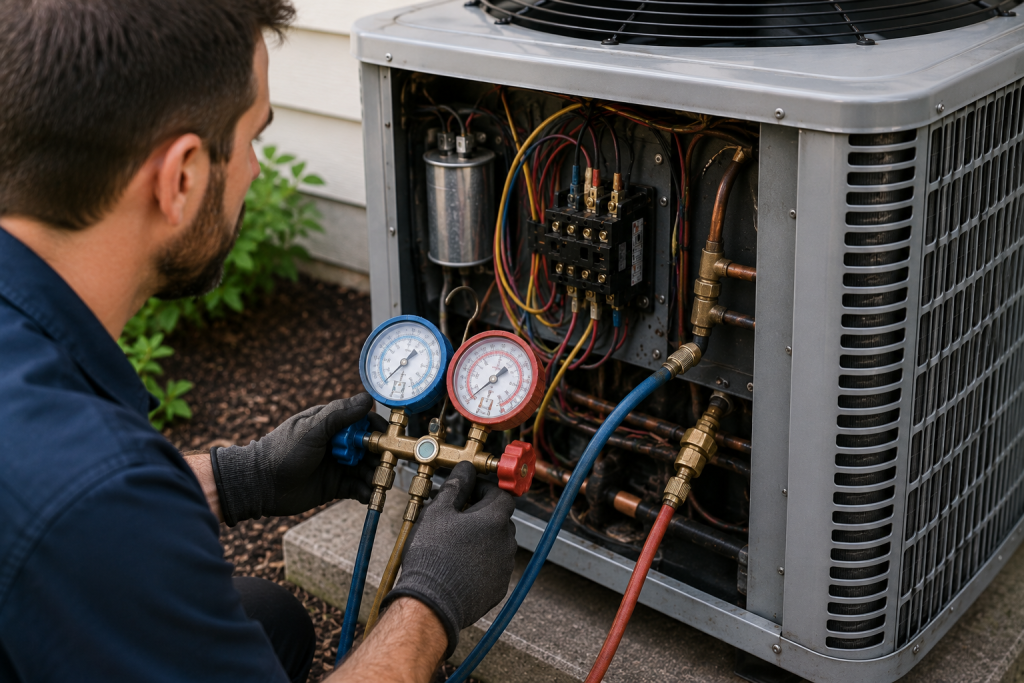
Watch for Warning Signs
Low refrigerant pressure can activate safety switches that prevent the compressor from operating.
Possible symptoms include:
- Ice forming on refrigerant lines
- Weak cooling performance
- Hissing sounds
- Longer cooling cycles
Only licensed HVAC technicians should diagnose and recharge refrigerant systems.
Determine Whether the Compressor Has Failed
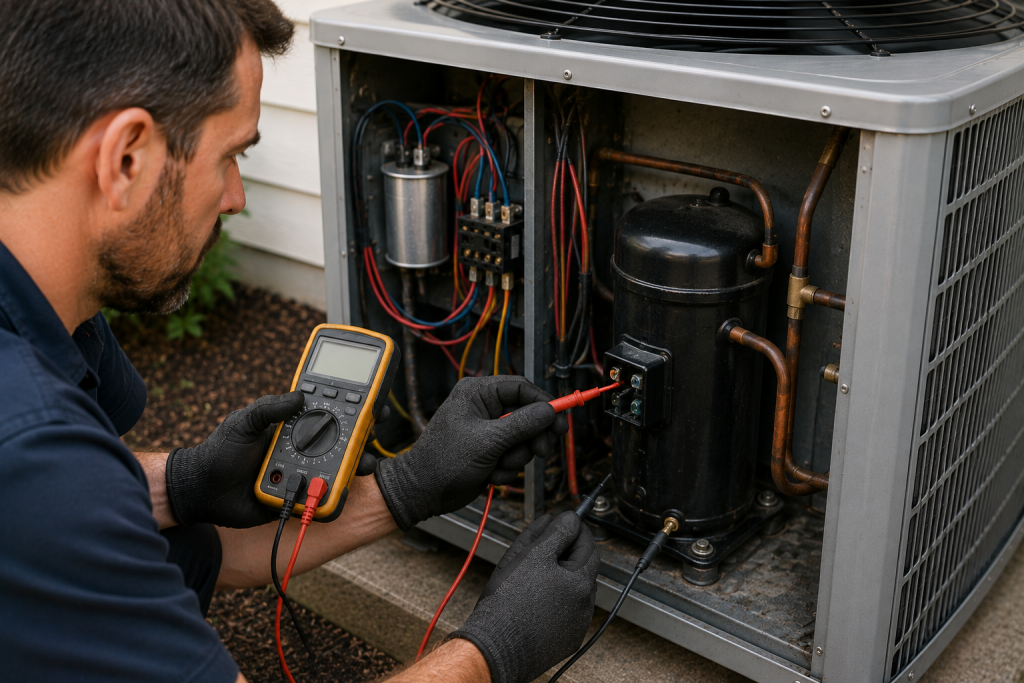
Recognize Compressor Failure
If every other component appears to be working correctly, the compressor itself may have failed.
Signs include:
- Loud buzzing
- Breaker trips repeatedly
- Burned electrical odor
- Compressor extremely hot to the touch
- Air conditioner more than 12 to 15 years old
Depending on the age of the system, replacing the outdoor condenser may provide better long-term value than replacing only the compressor.
When to Call an HVAC Professional
Professional service is recommended if:
- The breaker continues tripping.
- A new capacitor doesn’t solve the problem.
- Refrigerant issues are suspected.
- The compressor appears locked up.
- Electrical wiring is damaged.
- Compressor replacement is necessary.
These repairs require specialized equipment and training.
Prevent Future Compressor Problems
Routine maintenance greatly reduces the risk of compressor failure.
To keep your air conditioner operating efficiently:
- Replace air filters regularly.
- Keep the condenser coils clean.
- Trim vegetation around the outdoor unit.
- Schedule professional HVAC maintenance every year.
- Have capacitors inspected during routine service.
- Investigate unusual noises before they become major problems.
For another common air conditioning issue, read our guide on AC Drain Line Keeps Clogging? 9 Proven Fixes That Actually Work.
Learn More
The U.S. Department of Energy offers additional tips for improving air conditioner efficiency and extending system life.
Frequently Asked Questions
Why does my AC fan run but the compressor won’t start?
The most common causes include a failed capacitor, faulty contactor, tripped breaker, thermostat issues, overheating, low refrigerant, or compressor failure.
Can a bad capacitor cause the fan to run but not the compressor?
Yes. A dual-run capacitor contains separate sections for the condenser fan and compressor. One section can fail while the other continues working normally.
Is it safe to keep running the air conditioner?
No. Without the compressor operating, your system cannot cool your home and continued operation may place unnecessary strain on other components.
How much does it cost to replace an AC capacitor?
Most homeowners spend between $100 and $350 for professional capacitor replacement, depending on the unit and local labor costs.
Should I replace the compressor or the entire air conditioner?
If the unit is more than 12 to 15 years old or requires multiple major repairs, replacing the entire system is often the more economical long-term solution.
Looking for help with another heating or cooling problem? Browse our complete collection of HVAC repair and troubleshooting guides.
Final Thoughts
When your AC fan runs but compressor won’t start, the problem isn’t always as serious as it first appears. In many cases, a failed capacitor, worn contactor, or overheated compressor is responsible rather than complete compressor failure.
By starting with simple inspections and performing routine maintenance, you may be able to restore cooling quickly or at least identify the issue before scheduling professional service. Early diagnosis often saves money and helps prevent more expensive HVAC repairs.