
Last updated: September 20, 2026
By Home Repair Genie
Quick Answer
If you’re dealing with light switch buzzing, the most common causes include loose wire connections, a worn-out switch, an incompatible dimmer, an overloaded circuit, or a problem with the light fixture itself. While some older dimmer switches produce a slight hum, a loud or persistent buzzing sound should never be ignored because it can indicate an electrical hazard.
A light switch buzzing can be alarming, especially if it starts suddenly. Whether the buzzing only happens when the light is on or continues all the time, it’s a sign that something in the electrical circuit deserves attention.
Fortunately, many buzzing switches are caused by relatively simple problems that can be diagnosed safely. This guide explains the most common reasons a light switch buzzing occurs, how to troubleshoot it, and when it’s time to call a licensed electrician.
Why a Buzzing Light Switch Is a Concern
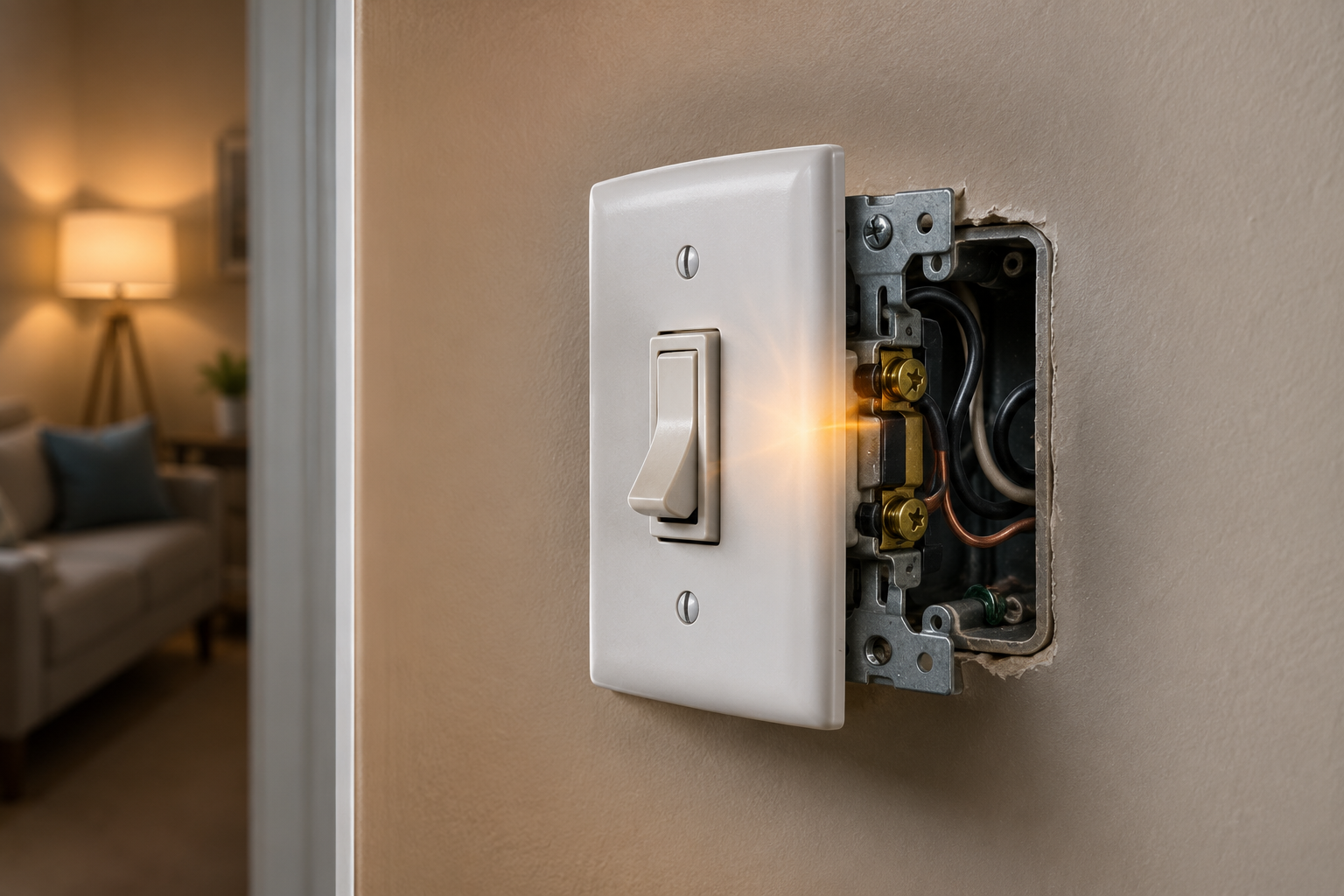
Light switch buzzing is often one of the earliest warning signs that a switch or wire connection needs attention. Electricity should move quietly through a properly functioning switch. When a switch begins buzzing, electricity may be arcing, vibrating, or encountering excessive resistance.
Ignoring the problem can lead to:
- Overheating
- Damaged wiring
- Flickering lights
- Premature switch failure
- Increased fire risk
If you notice a burning smell, sparks, discoloration, or excessive heat around the switch, turn off the breaker immediately.
Turn Off the Power
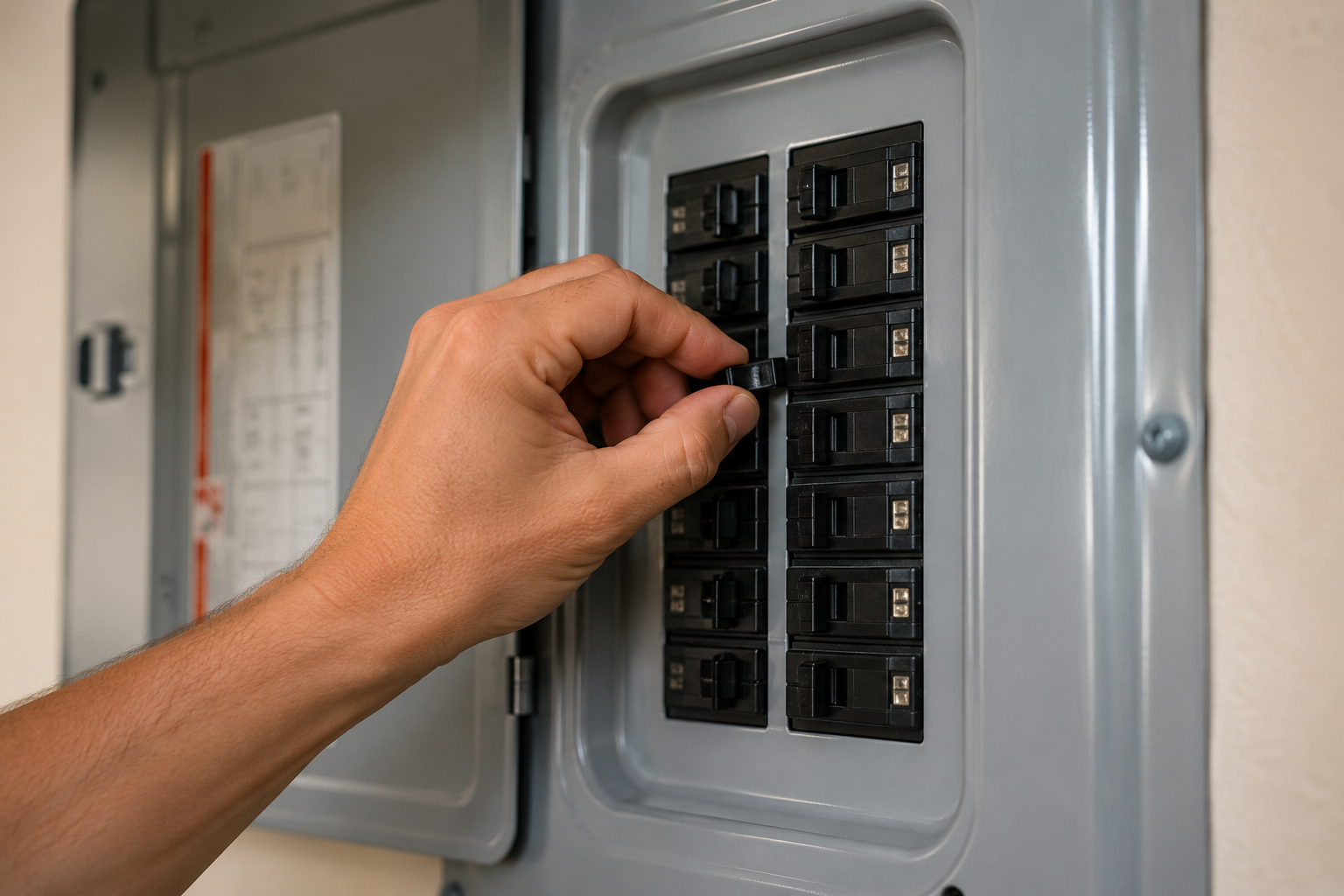
Shut Off the Circuit Breaker
Before inspecting any electrical switch:
- Turn off the correct breaker.
- Verify the power is off using a non-contact voltage tester.
- Never work on energized electrical wiring.
Safety should always be your first priority.
Determine Whether the Light Switch Buzzing Is Normal
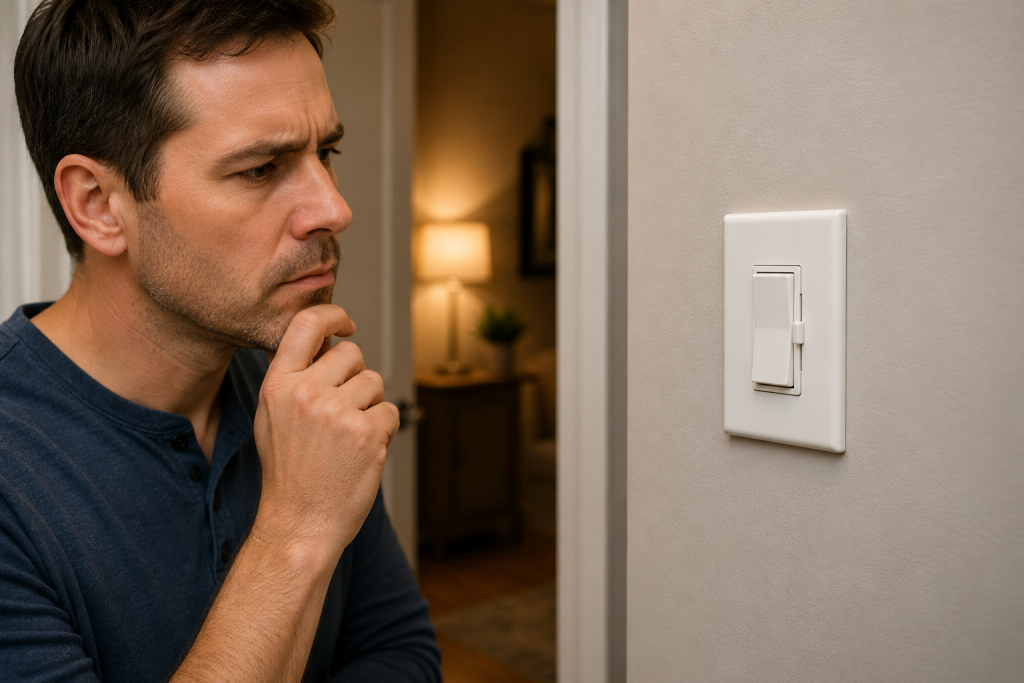
Identify the Type of Switch
Some older dimmer switches naturally produce a faint humming sound, especially when operating below full brightness.
However, buzzing is not considered normal if:
- It becomes louder over time.
- It occurs with a standard on/off switch.
- The lights flicker while buzzing.
- The switch feels warm.
- You hear crackling noises.
If your home uses LED bulbs with an older dimmer switch, compatibility issues may also create buzzing.
Tighten Loose Wire Connections
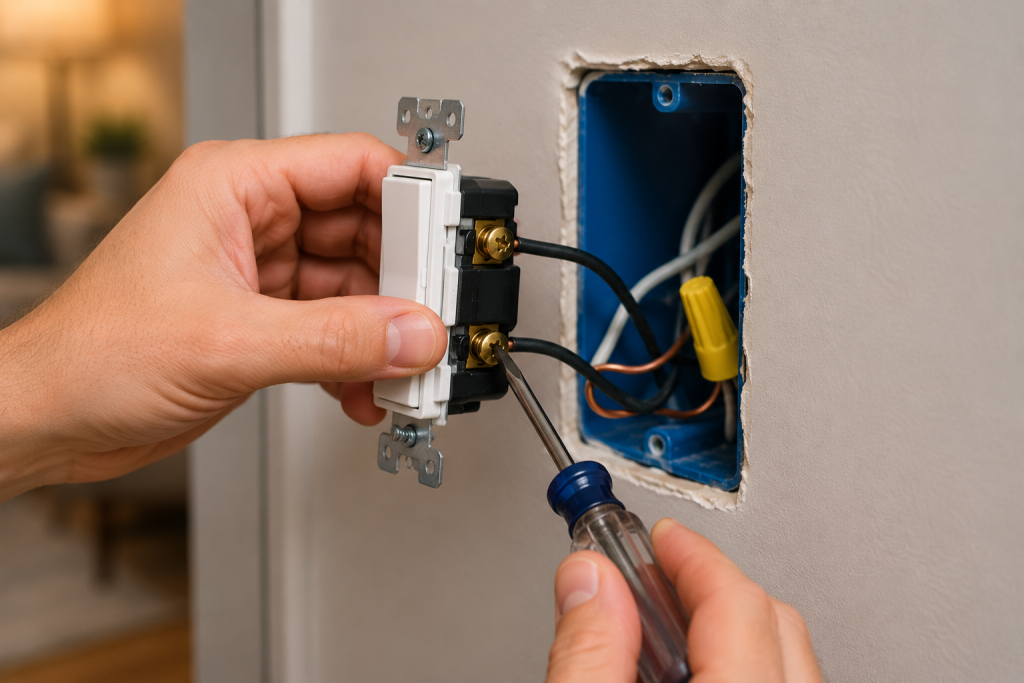
Inspect the Wiring
Loose electrical connections are one of the most common reasons for light switch buzzing.
After confirming the power is off:
- Remove the wall plate.
- Unscrew the switch from the electrical box.
- Inspect all terminal screws.
- Tighten any loose wire connections.
- Look for damaged insulation or signs of overheating.
Loose wires create resistance that produces heat and vibration, leading to buzzing sounds.
Check for a Faulty Switch
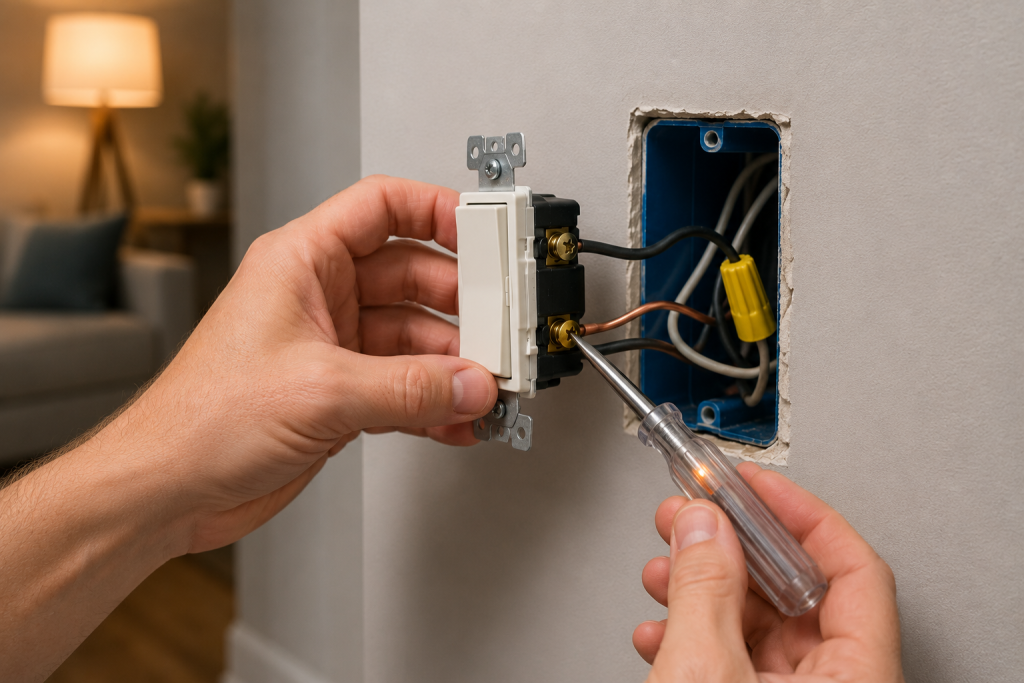
Replace a Worn Switch
Light switches wear out after years of regular use.
Common signs of failure include:
- Buzzing
- Crackling
- Loose toggle action
- Intermittent operation
- Warm switch faceplate
Replacing a standard switch is relatively inexpensive and often solves the problem.
Inspect the Dimmer Switch
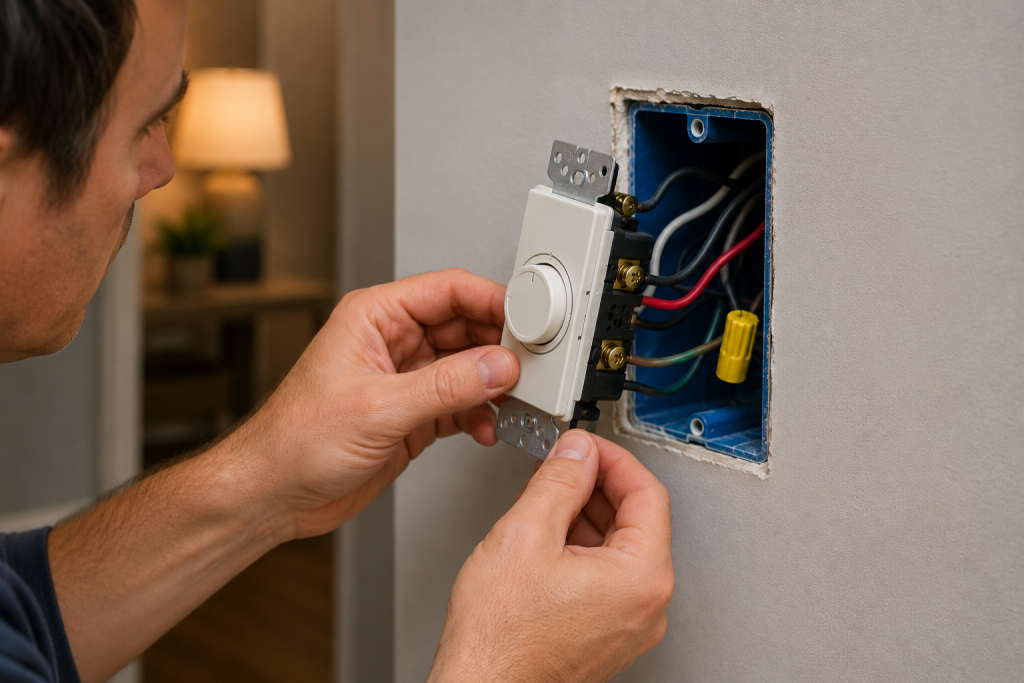
Verify Bulb Compatibility
Modern LED bulbs require compatible dimmer switches.
Problems often occur when:
- Older incandescent dimmers control LED bulbs.
- The dimmer is overloaded with too many lights.
- A low-quality dimmer is installed.
Installing an LED-rated dimmer frequently eliminates buzzing and improves performance.
Look for an Overloaded Circuit
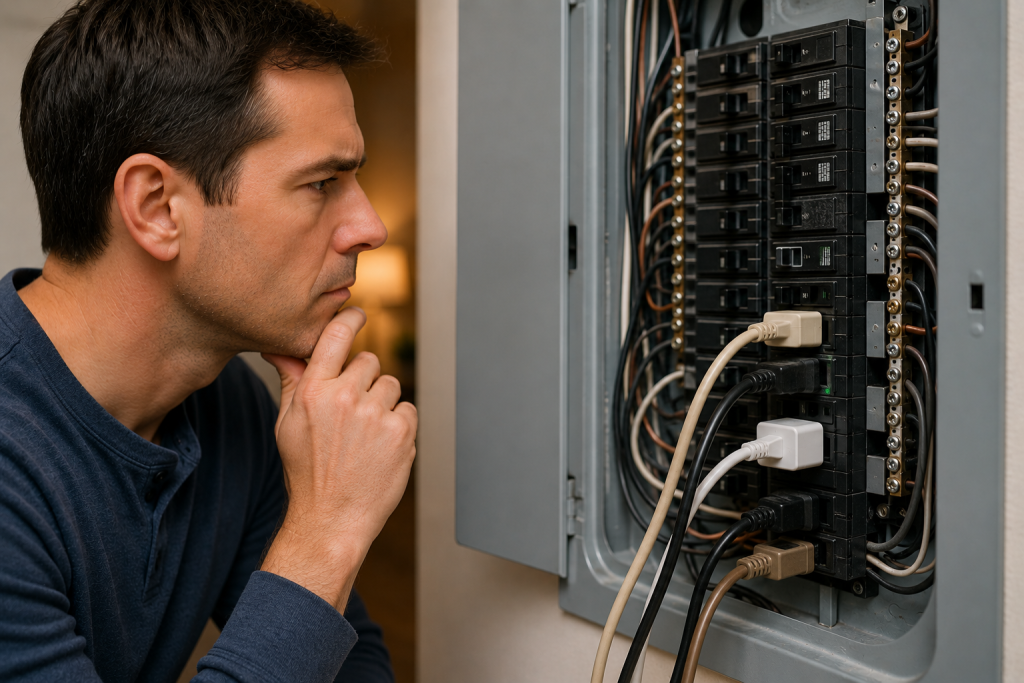
Reduce the Electrical Load
An overloaded circuit can place excessive stress on switches and other electrical components.
Consider whether the same circuit also powers:
- Portable heaters
- Window air conditioners
- Hair dryers
- Vacuums
- Other high-power appliances
If the breaker trips regularly, have the circuit evaluated by a qualified electrician.
Check the Light Fixture
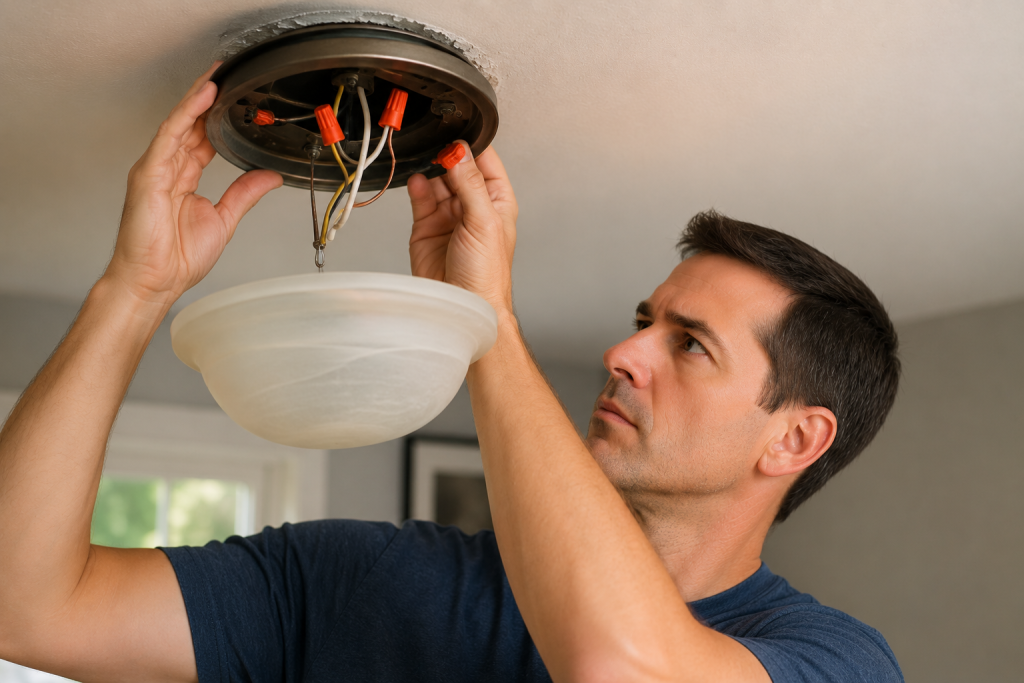
Rule Out Fixture Problems
Sometimes the buzzing comes from the light fixture rather than the switch.
Inspect for:
- Loose light bulbs
- Loose fixture wiring
- Failing fluorescent ballast
- Defective LED driver
Replacing damaged fixture components often resolves the issue.
Look for Signs of Electrical Arcing
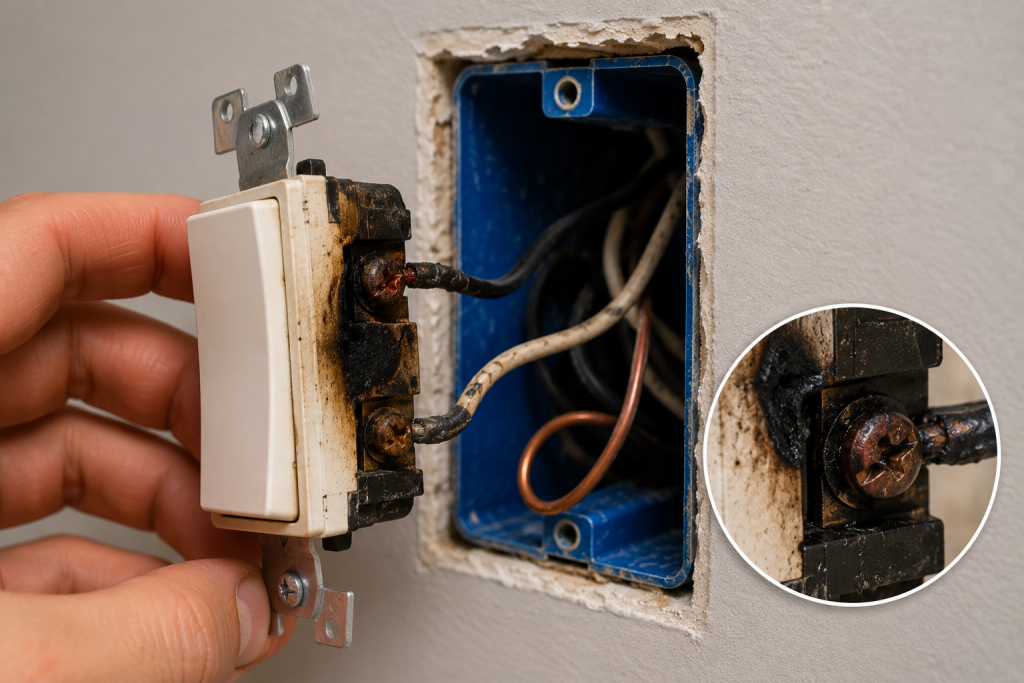
Watch for Warning Signs
Electrical arcing is dangerous and requires immediate attention.
Warning signs include:
- Loud buzzing
- Crackling
- Burning odor
- Black scorch marks
- Visible sparks
- Hot switch plate
Turn off the breaker immediately if you notice any of these symptoms.
Replace the Switch If Necessary
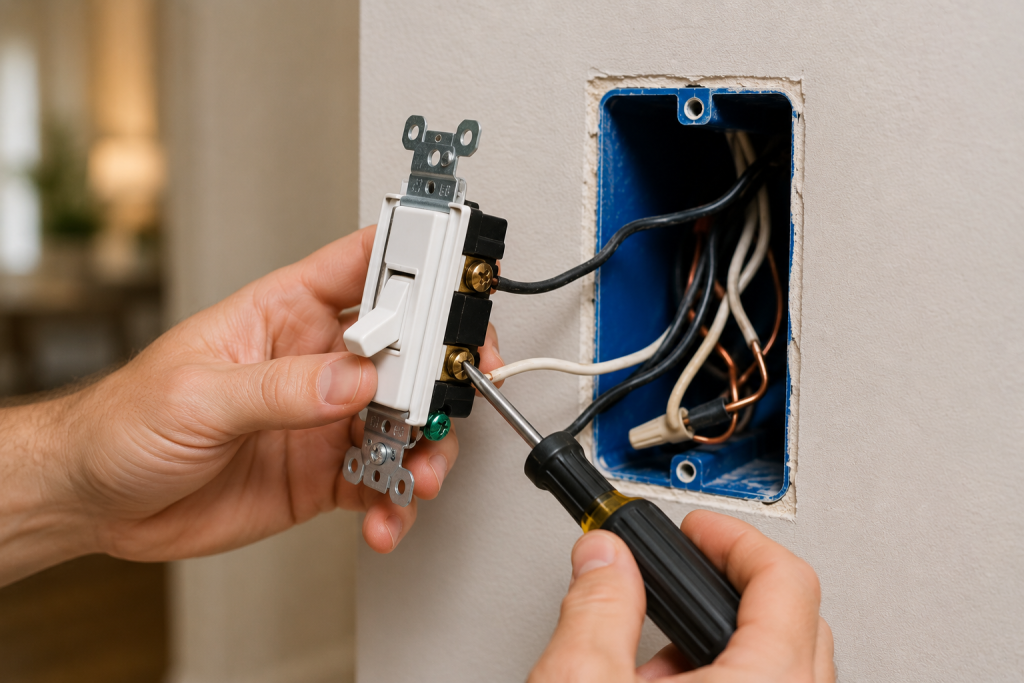
Install a New Switch
If the switch is worn or damaged, replacement is usually the safest solution.
Choose:
- The correct amperage rating.
- A high-quality replacement switch.
- Proper wiring connections.
If you’re uncomfortable working with household electrical wiring, hire a licensed electrician.
When to Call an Electrician
If light switch buzzing continues after basic troubleshooting, stop using the switch until the problem has been repaired.
Professional service is recommended if:
- The buzzing continues after replacing the switch.
- The breaker repeatedly trips.
- The switch becomes hot.
- You smell burning insulation.
- Wiring appears damaged.
- Multiple switches throughout the house are buzzing.
Electrical problems should never be ignored.
Prevent Future Switch Problems
Routine maintenance can help prevent buzzing switches and extend the life of your home’s electrical system.
Good practices include:
- Replace aging switches before they fail.
- Use LED-compatible dimmer switches.
- Avoid overloading circuits.
- Replace damaged light fixtures promptly.
- Inspect switches during remodeling projects.
You may also find these Home Repair Genie guides helpful:
- GFCI Outlet Not Resetting? 7 Easy Fixes That Actually Work (Step-by-Step Guide)
- Why Your Lights Are Flickering: 7 Common Causes and Fixes (Step-by-Step Guide)
- GFCI Outlet Keeps Tripping? 7 Easy Fixes That Actually Work (Step-by-Step Guide)
- How to Fix an Outlet That’s Not Working (Step-by-Step Guide)
Learn More
For additional home electrical safety recommendations, visit the National Fire Protection Association’s electrical safety resources.
Frequently Asked Questions
Why is my light switch buzzing?
The most common causes include loose wiring, worn switch contacts, faulty dimmer switches, overloaded circuits, or incompatible LED bulbs.
Is a light switch buzzing dangerous?
Yes. Although some older dimmers produce a slight hum, loud or persistent buzzing may indicate electrical arcing or loose wiring that could become a fire hazard.
Can LED bulbs cause a buzzing light switch?
Yes. LED bulbs paired with incompatible dimmer switches frequently create humming or buzzing sounds.
Should I replace a light switch buzzing?
If tightening loose connections doesn’t eliminate the buzzing, replacing the switch is usually the safest and most reliable solution.
Can I repair a light switch buzzing myself?
If you have experience working safely with residential electrical wiring and always turn off the breaker first, replacing a standard switch is often a manageable DIY repair. If you’re uncertain, contact a licensed electrician.
Looking for help with another electrical problem? Browse our complete collection of electrical repair and troubleshooting guides.
Final Thoughts
A light switch buzzing is more than an annoying sound—it can be an early warning of loose wiring, worn electrical components, overloaded circuits, or compatibility issues with dimmer switches. While some dimmers naturally produce a slight hum, loud buzzing, heat, crackling, or burning odors should always be investigated immediately.
By safely inspecting the switch, tightening loose connections, replacing worn components, and avoiding overloaded circuits, you can often resolve the issue before it develops into a more serious electrical problem.