
Last updated: September 21, 2026
By Home Repair Genie
Quick Answer
If your AC smells like vinegar, the most common causes are bacteria or mold growing in the evaporator coil or drain line, a clogged condensate drain, a dirty air filter, standing water, or an electrical problem. Most vinegar-like odors can be eliminated by cleaning the system, replacing the air filter, and addressing moisture buildup before it leads to larger HVAC issues.
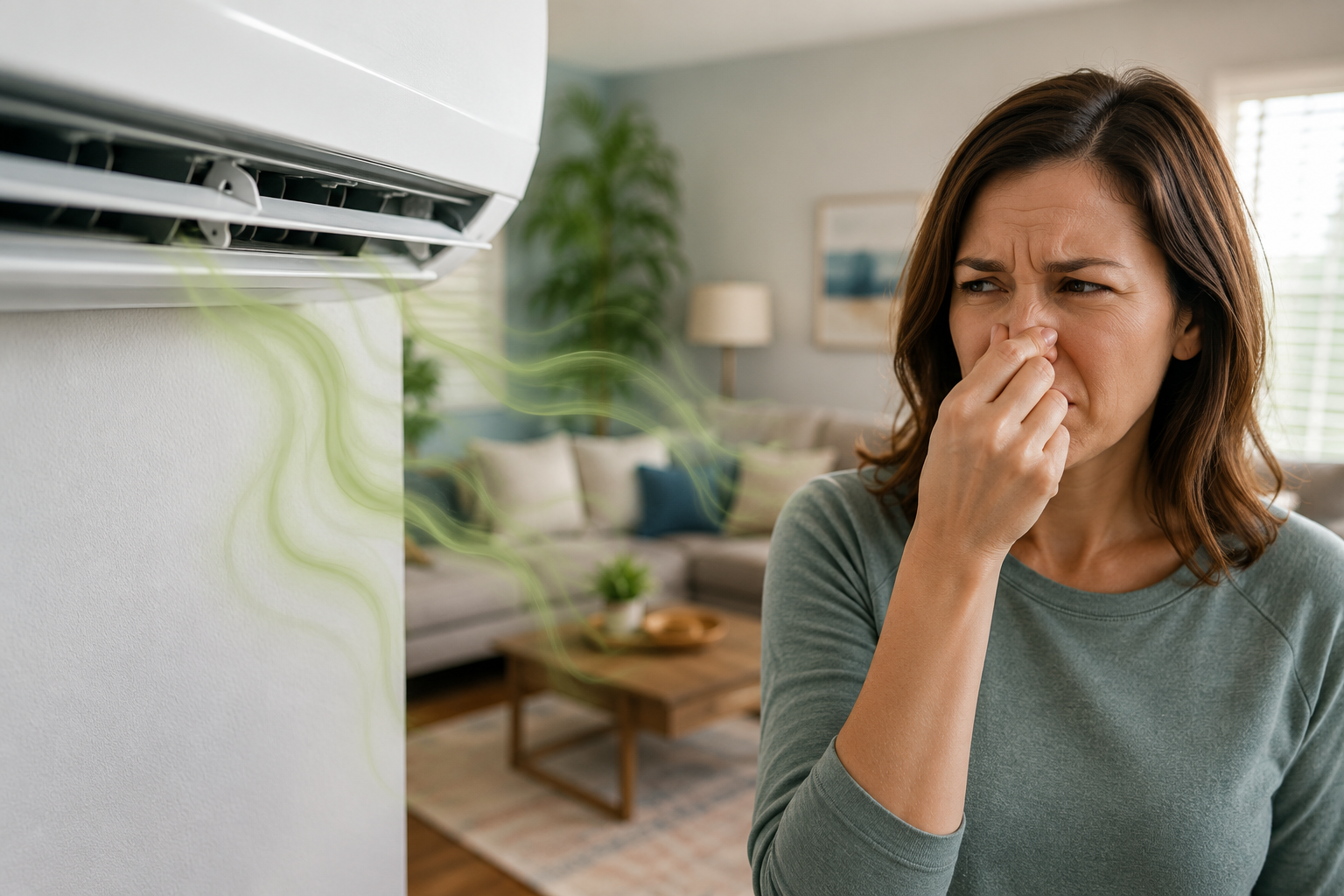
Walking into your home and noticing your AC smells like vinegar can be both unpleasant and concerning. While the odor often isn’t dangerous by itself, it usually indicates that something inside your HVAC system needs attention.
The good news is that most vinegar odors have straightforward causes. This guide explains why your AC smells like vinegar, how to identify the source, and what you can do to restore fresh-smelling air.
Why an Air Conditioner Can Smell Like Vinegar
Air conditioners remove heat and moisture from your home. Over time, moisture can combine with dust, dirt, and bacteria inside the system, creating acidic odors that many homeowners describe as my AC smells like vinegar.
Common causes include:
- Mold or mildew growth
- Bacteria inside the evaporator coil
- A clogged condensate drain
- Standing water
- Dirty air filters
- Dirty evaporator coils
- Electrical issues
- Contaminated ductwork
Ignoring the smell may allow the underlying problem to worsen.
Replace the Air Filter
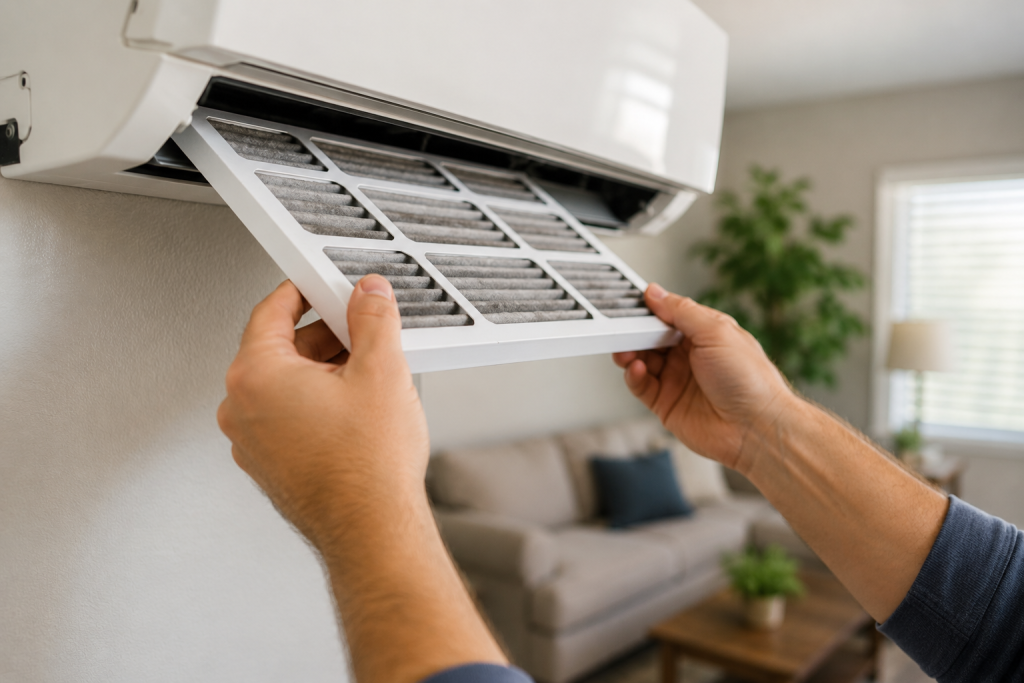
Install a Clean Filter
If your AC smells like vinegar, replacing a clogged air filter is one of the easiest and least expensive fixes to try first.
A dirty filter traps dust, pet hair, pollen, and moisture.
As airflow becomes restricted:
- Humidity increases.
- Bacteria multiply.
- Mold can begin growing.
- Odors become trapped inside the HVAC system.
Replace disposable filters every 1–3 months.
For better filtration, read our guide on 5 Best HVAC Air Filters for Cleaner Air and Better HVAC Performance.
Inspect the Condensate Drain Line
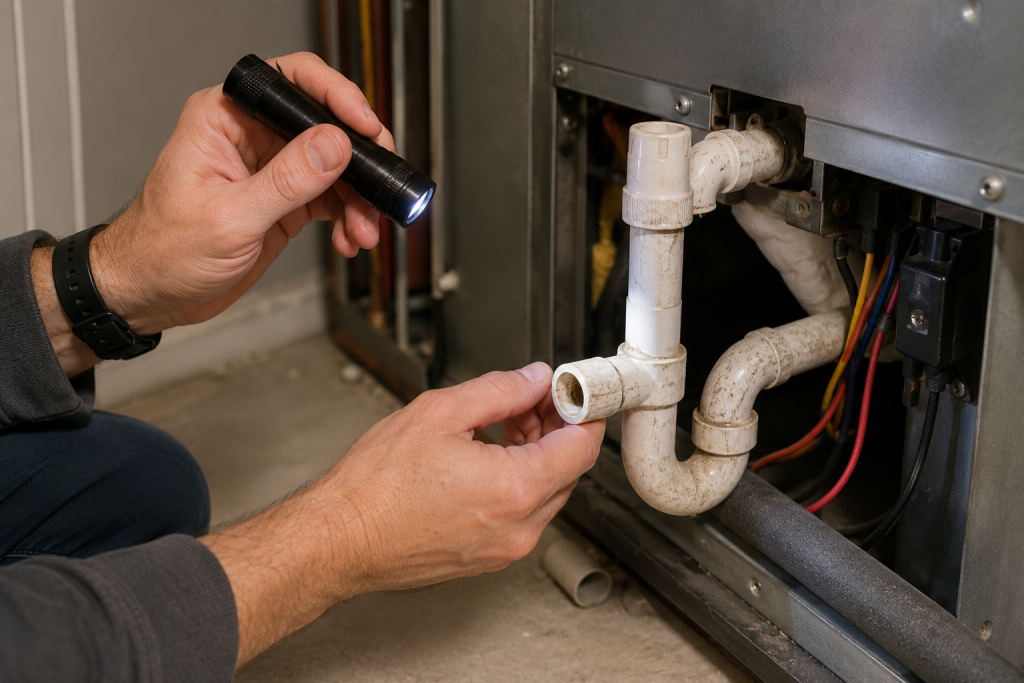
Check for Clogs
One of the most common reasons your AC smells like vinegar is a clogged drain line.
Signs include:
- Water around the indoor unit
- Musty or sour odors
- High indoor humidity
- Air conditioner shutting off unexpectedly
If the drain line is blocked, flush it or remove the clog.
For detailed instructions, see AC Drain Line Keeps Clogging? 9 Proven Fixes That Actually Work.
Clean the Evaporator Coil
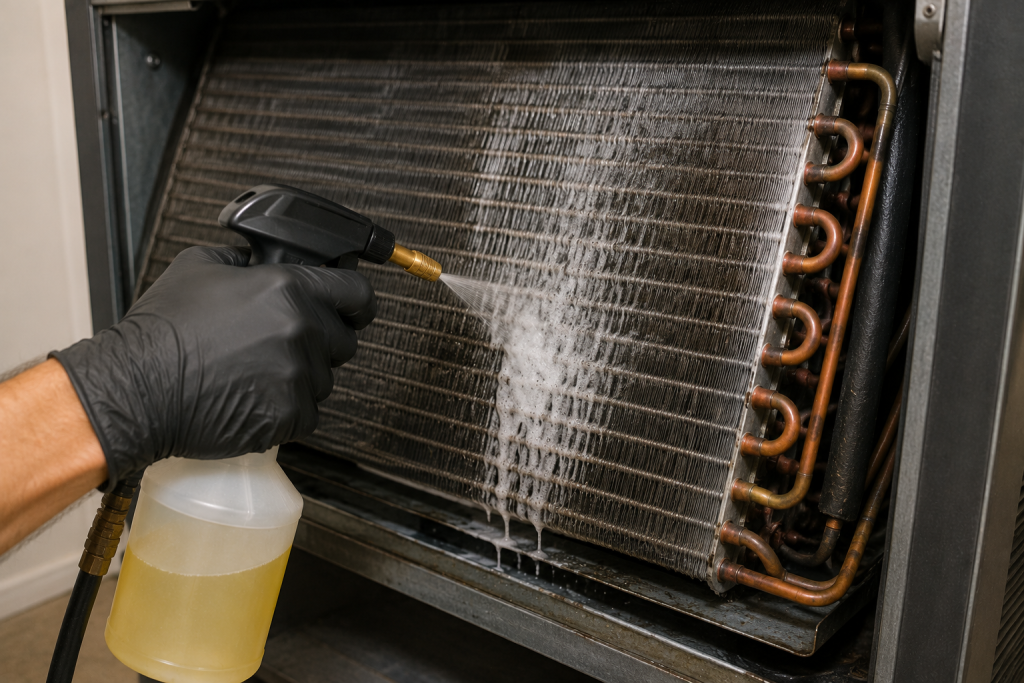
Remove Dirt and Biological Growth
The evaporator coil stays damp during normal operation.
Over time it can accumulate:
- Dust
- Mold
- Mildew
- Bacteria
Cleaning the coil often removes unpleasant odors while improving cooling efficiency.
Check the Condensate Drain Pan
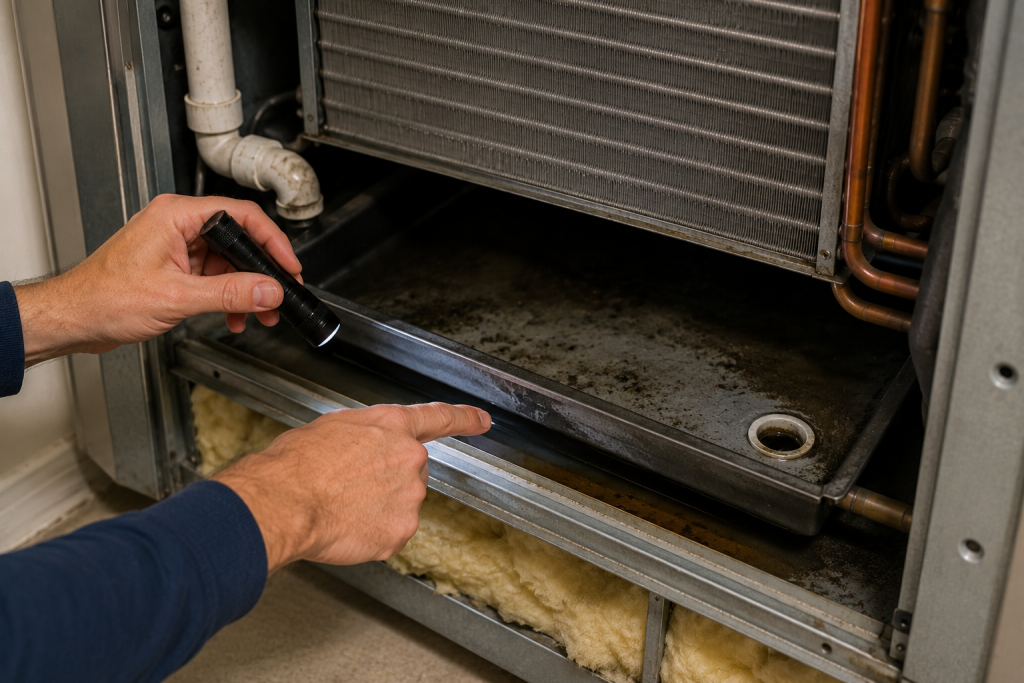
Remove Standing Water
Standing water beneath the evaporator coil creates an ideal environment for bacteria.
Inspect the drain pan for:
- Water accumulation
- Sludge
- Mold
- Rust
Clean the pan thoroughly before restarting the system.
Inspect the Air Ducts
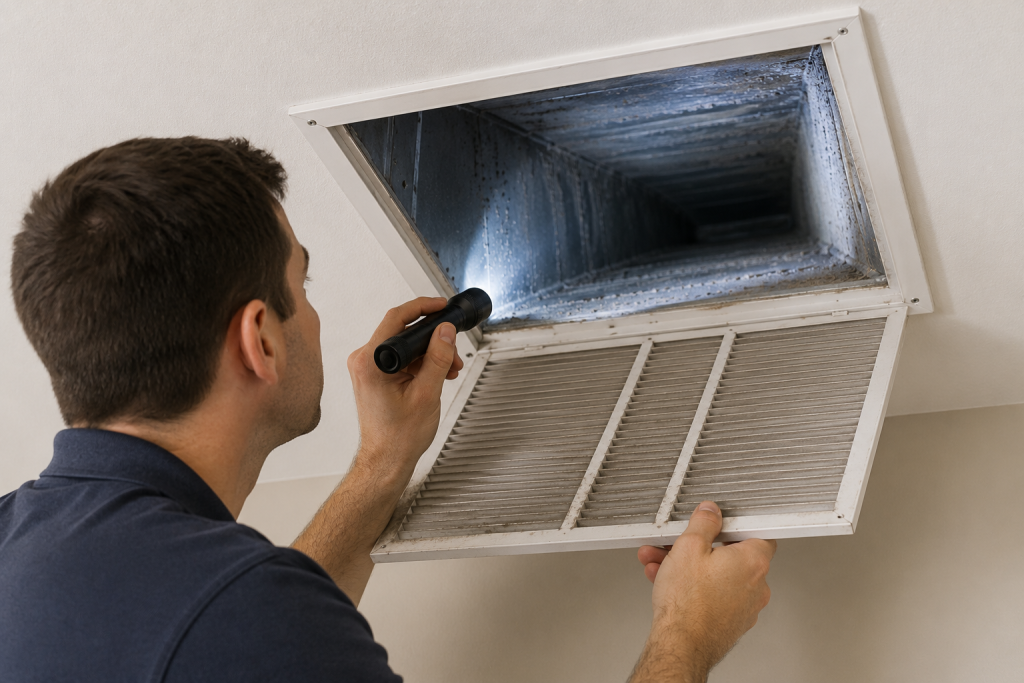
Look for Mold or Debris
Sometimes the odor doesn’t originate inside the air conditioner at all.
Dirty ductwork may contain:
- Mold
- Dust buildup
- Rodent contamination
- Moisture damage
If multiple rooms smell the same, ductwork should be inspected.
Check for Electrical Problems
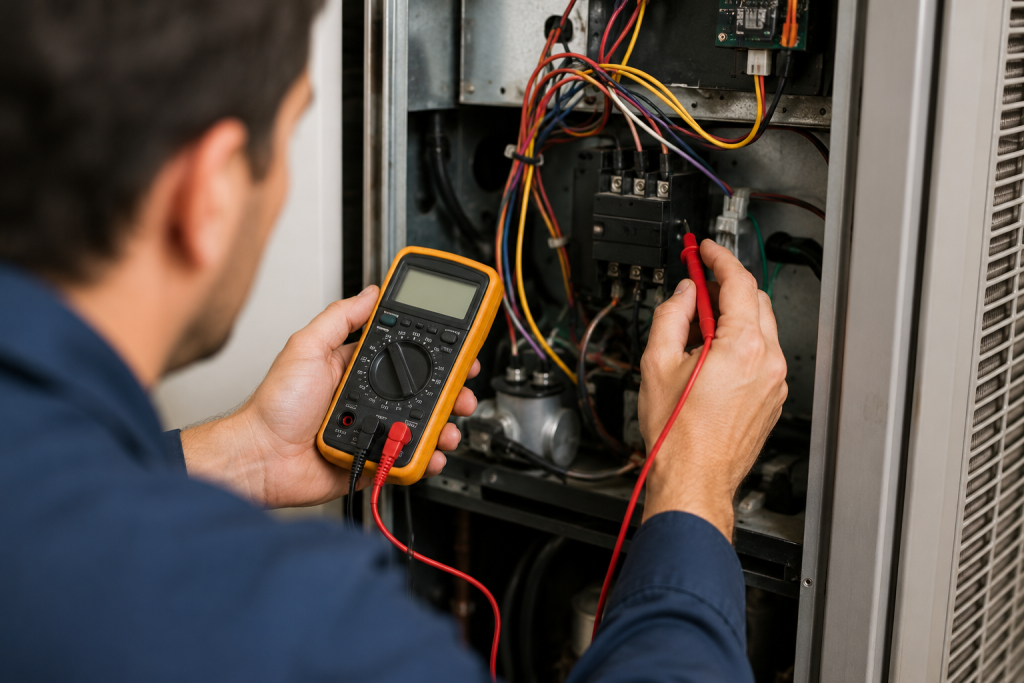
Look for Warning Signs
Although vinegar odors usually come from biological growth, electrical components can sometimes produce unusual acidic or chemical-like smells.
Watch for:
- Warm electrical panels
- Buzzing sounds
- Tripped breakers
- Burning odors
- Flickering lights
If you suspect an electrical issue, turn off the system and contact an HVAC technician immediately.
Clean Around the Outdoor Unit
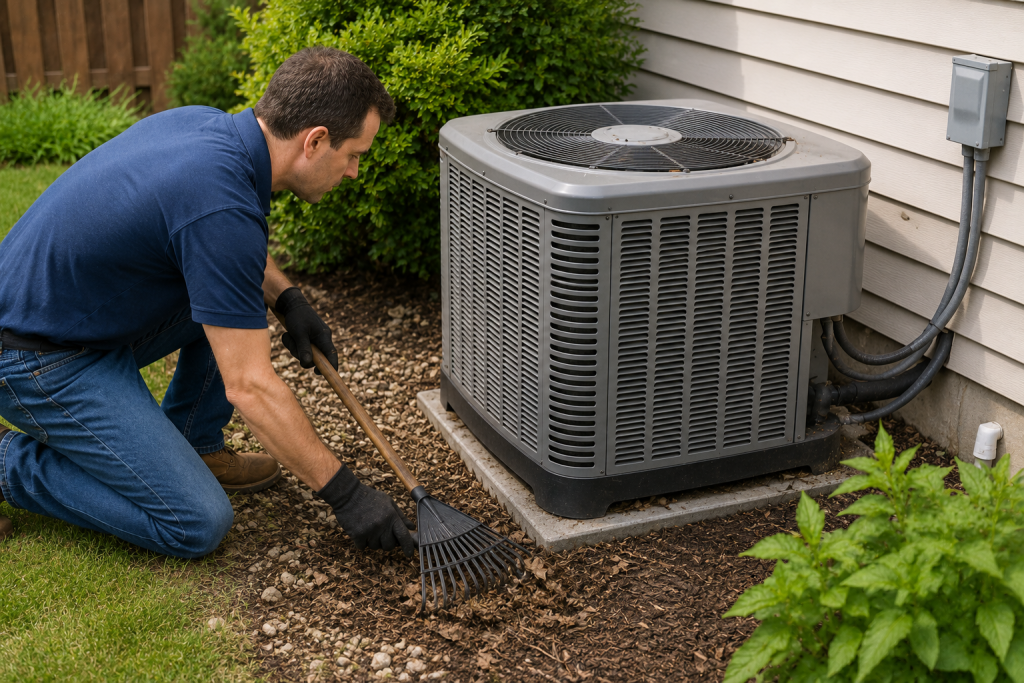
Remove Debris
Leaves, grass clippings, and organic debris around the condenser can trap moisture and contribute to an AC smells like vinegar problem.
Clear away:
- Leaves
- Mulch
- Grass
- Dirt
- Branches
Maintain at least two feet of clearance around the condenser.
Schedule Professional HVAC Maintenance
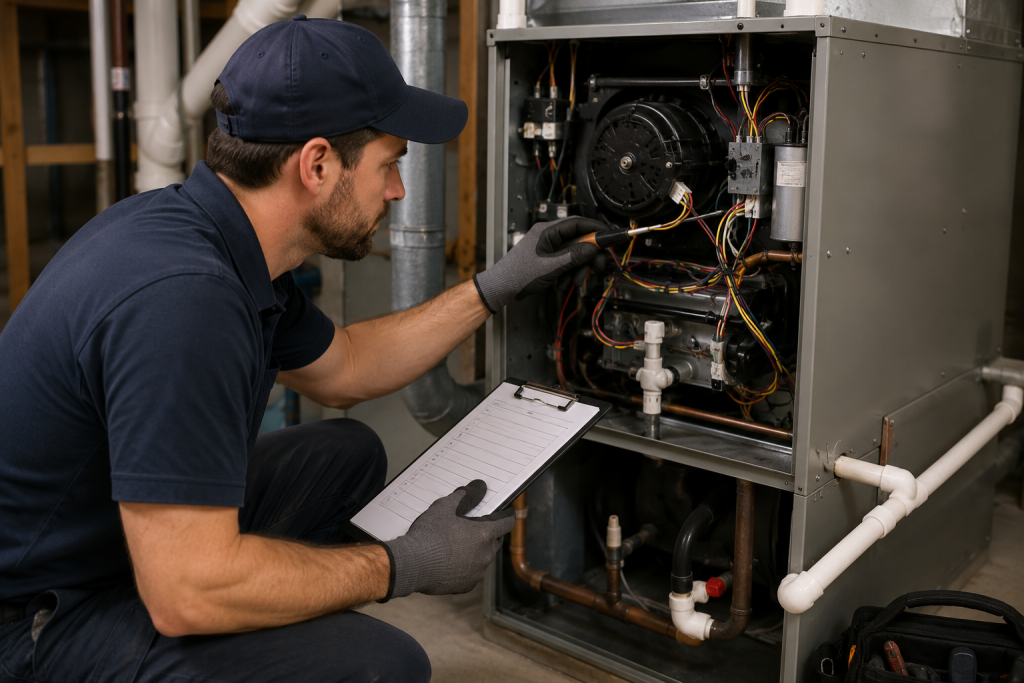
Have the Entire System Inspected
If your AC smells like vinegar even after basic cleaning, a professional inspection may reveal:
- Hidden mold growth
- Dirty blower components
- Refrigerant problems
- Damaged insulation
- Drainage issues
Annual maintenance helps prevent recurring odors.
Flush and Disinfect the Condensate Drain Line
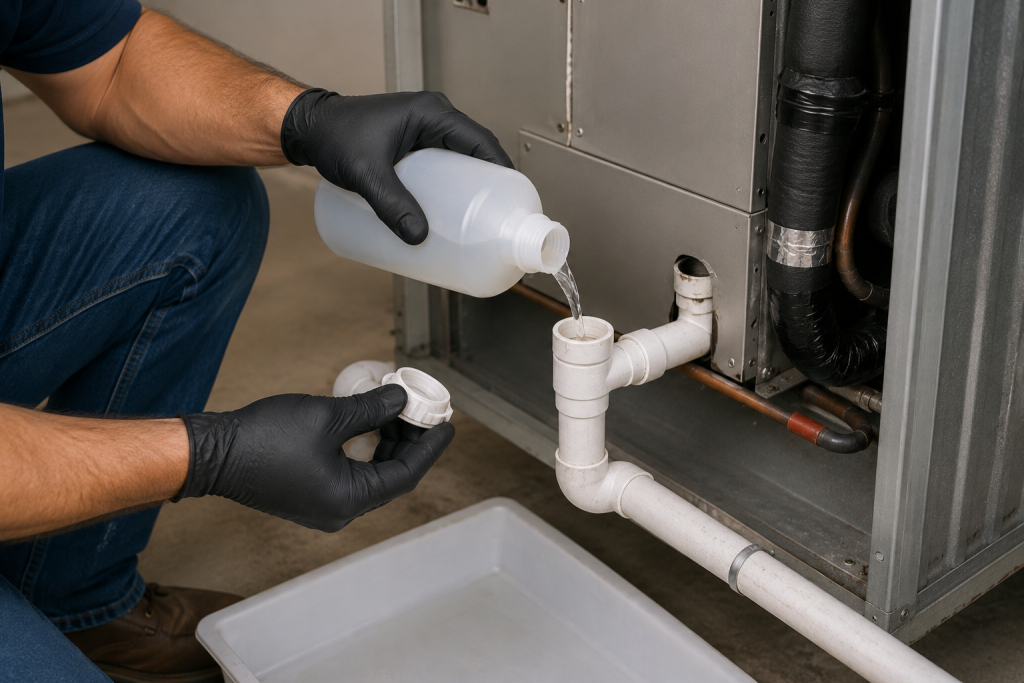
Remove Bacteria and Biofilm
This maintenance step often resolves cases where an AC smells like vinegar because bacteria and biofilm thrive inside damp drain lines. Even if the drain line isn’t completely clogged, bacteria and slime can build up inside the pipe and produce sour, vinegar-like odors.
To clean the drain line:
- Turn off the HVAC system.
- Locate the drain line access tee.
- Pour distilled white vinegar or an HVAC-approved drain line cleaner into the pipe.
- Allow it to sit for 30 minutes.
- Flush with warm water if recommended by the manufacturer.
- Restart the system and check whether the odor has improved.
Cleaning the drain line every few months helps prevent bacteria, mold growth, and recurring odors.
Prevent Vinegar Smells in the Future
Routine maintenance keeps your HVAC system clean and odor-free.
Good preventive habits include:
- Replace the air filter regularly.
- Clean the condensate drain line.
- Keep the drain pan clean.
- Schedule annual HVAC maintenance.
- Control indoor humidity.
- Keep the outdoor condenser free of debris.
You may also find these Home Repair Genie guides helpful:
- AC Freezing Up? 7 Easy Ways to Fix a Frozen Air Conditioner
- AC Fan Runs But Compressor Won’t Start? 9 Powerful Fixes That Actually Work
- Why Are My AC Vents Sweating? 7 Easy Fixes That Actually Work (Step-by-Step Guide)
- 9 Simple Fixes for AC Blowing Warm Air (Step-by-Step Guide)
- AC Not Cooling Below 75 Degrees? 9 Proven Fixes That Work
Learn More
For additional information about improving indoor air quality and HVAC maintenance, visit the U.S. Environmental Protection Agency.
Frequently Asked Questions
Why does my AC smell like vinegar?
The most common causes include bacterial growth, mold, mildew, a clogged condensate drain, standing water, or a dirty evaporator coil.
Is an AC that smells like vinegar dangerous?
Usually the odor itself is not dangerous, but it may indicate mold growth, excessive moisture, or another HVAC issue that should be corrected before it worsens.
Will replacing the air filter eliminate the smell?
Sometimes. If the filter is the primary source of trapped moisture and contaminants, replacing it may significantly reduce or eliminate the odor.
Can mold make it seem like my AC smells like vinegar?
Yes. Mold and mildew growing on the evaporator coil, drain pan, or inside ductwork commonly produce sour or vinegar-like odors.
When should I call an HVAC professional?
Call a technician if your AC smells like vinegar continues after replacing the air filter and cleaning the drain line, if you notice water leaks, or if the smell is accompanied by electrical issues or reduced cooling performance.
Looking for help with another heating or cooling problem? Browse our complete collection of HVAC repair and troubleshooting guides.
Final Thoughts
If your AC smells like vinegar, don’t ignore it. Sour odors are often caused by moisture, bacteria, mold, or clogged drainage components that become worse over time if left untreated. Fortunately, replacing the air filter, cleaning the evaporator coil, clearing the drain line, and scheduling regular maintenance can usually eliminate the smell and improve your system’s efficiency.
Addressing the problem early helps protect your HVAC equipment, improves indoor air quality, and keeps your home smelling fresh throughout the cooling season.