
Last updated: October 14, 2026
By Home Repair Genie
Quick Answer
If your AC freezing up problem isn’t addressed quickly, the ice buildup can reduce cooling performance and potentially damage expensive HVAC components. Turn the system off and allow the ice to melt completely before troubleshooting. Once thawed, inspect the air filter, vents, blower operation, and other components to identify the cause and prevent future freezing.
Why Is My AC Freezing Up?
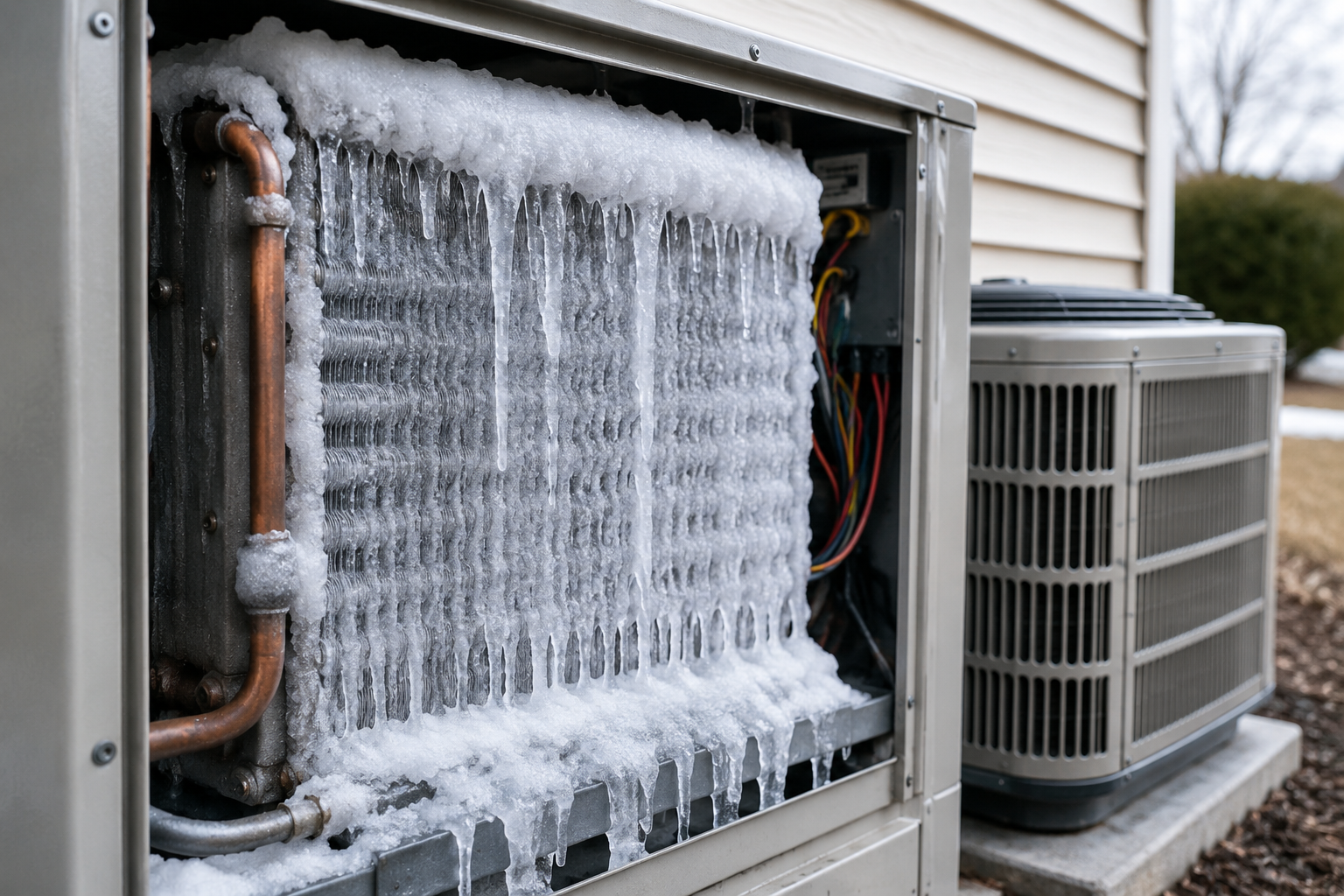
An air conditioner works by absorbing heat from inside your home. When airflow is reduced or refrigerant levels become too low, the evaporator coil can drop below freezing. Moisture in the air then freezes on the coil, eventually creating a layer of ice that prevents the system from cooling properly.
A frozen AC can lead to higher energy bills, poor cooling performance, and even compressor damage if left unresolved.
Signs Your AC Is Frozen
Common symptoms include:
- Ice buildup on the indoor evaporator coil
- Ice on refrigerant lines near the outdoor unit
- Weak airflow from vents
- Warm air coming from registers
- Excessive indoor humidity
- Water leaks after the ice melts
- Higher-than-normal utility bills
If you notice any of these symptoms, turn off the cooling mode immediately and allow the system to thaw.
Step 1: Replace or Clean the Air Filter
Why It Matters
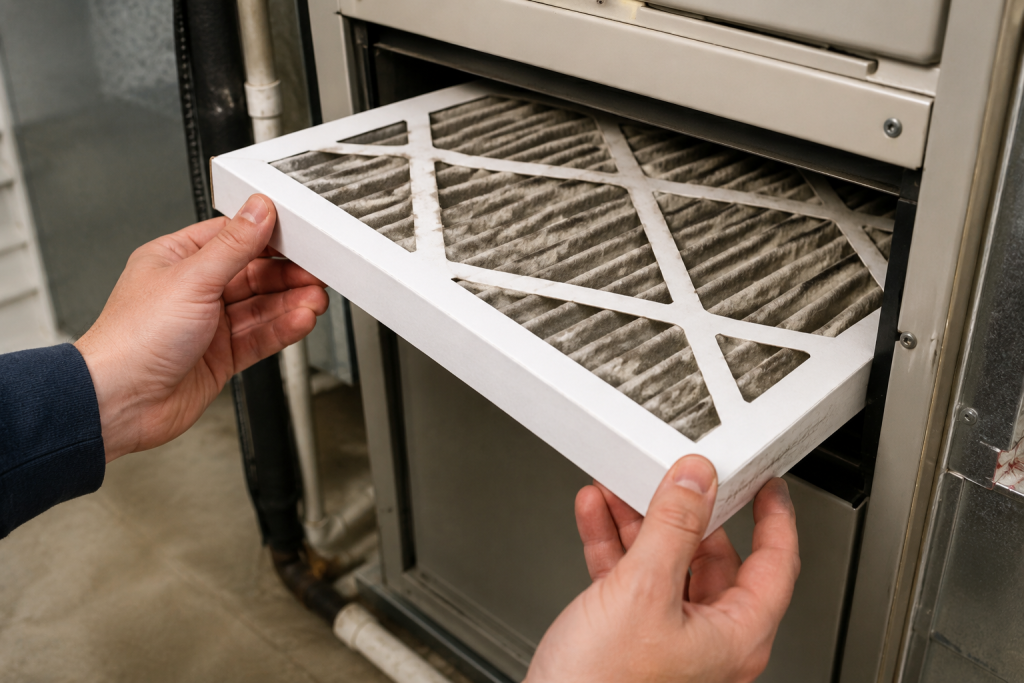
A clogged air filter is the most common cause of an AC freezing up. Restricted airflow prevents warm indoor air from passing over the evaporator coil, causing temperatures to drop below freezing.
How to Check the Filter
- Turn off the HVAC system.
- Remove the air filter from the return duct or air handler.
- Hold it up to a light source.
- Replace the filter if little light passes through.
As an Amazon Associate I earn from qualifying purchases.
Most filters should be replaced every 1 to 3 months depending on usage and household conditions.
If your disposable filter is dirty, browse replacement HVAC air filters on Amazon. Match your system’s required filter dimensions and use a filtration rating approved by the equipment manufacturer. A higher MERV rating is not automatically the best choice for every system.
For additional airflow-related issues, see our guide on 9 Proven Fixes for AC Not Cooling (Step-by-Step).
Step 2: Open and Inspect All Supply Vents
Why It Matters
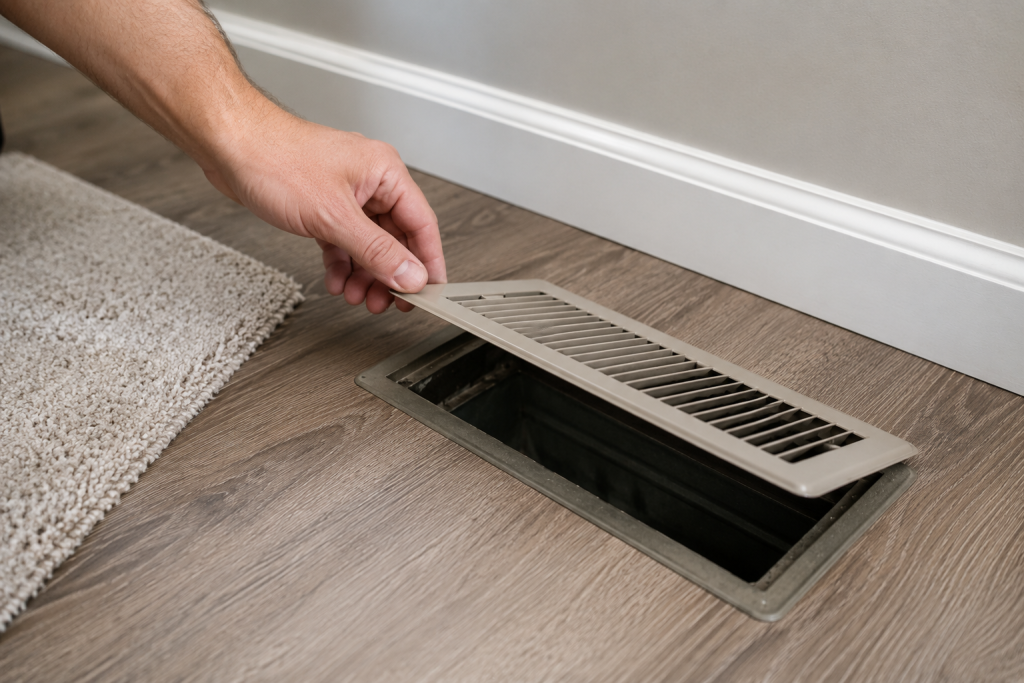
Closed or blocked supply vents reduce airflow through the system and can contribute to your AC freezing up.
How to Inspect the Vents
- Walk through every room.
- Verify that supply vents are fully open.
- Remove furniture or rugs blocking airflow.
- Check for excessive dust buildup inside vent openings.
Maintaining proper airflow throughout the home helps keep evaporator coil temperatures within the normal operating range.
Step 3: Check the Evaporator Coil for Dirt
Why It Matters
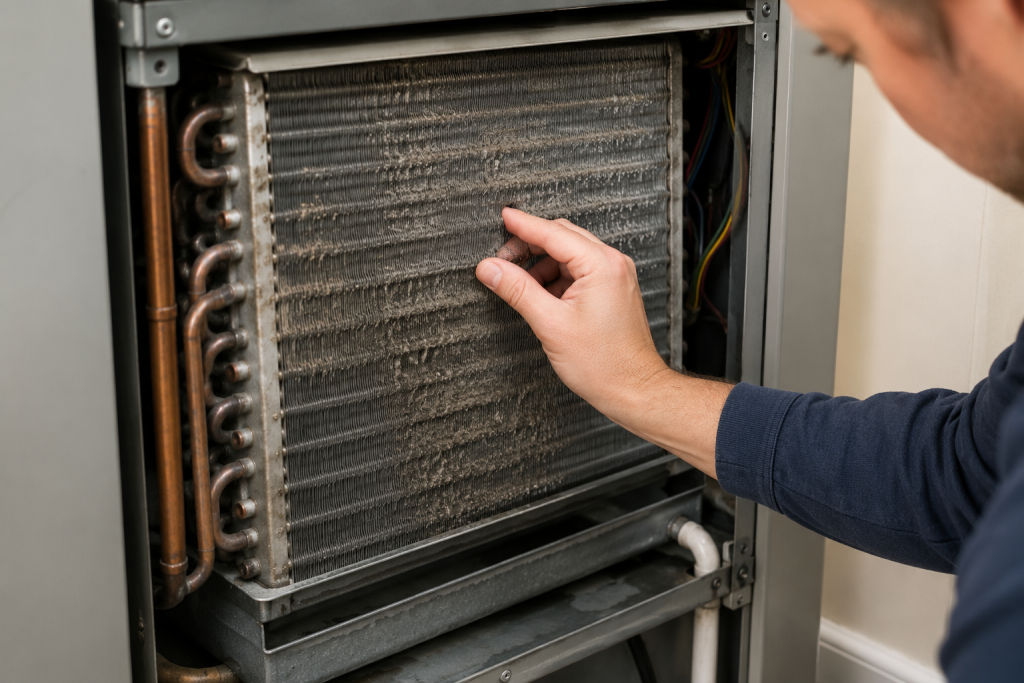
Dust and debris on the evaporator coil act as insulation, reducing heat transfer and increasing the likelihood of ice formation.
How to Inspect the Coil
- Shut off power to the air handler.
- Remove the access panel.
- Look for dirt, dust, or ice accumulation on the coil.
- Clean light debris with a soft brush or approved coil cleaner.
If your equipment manufacturer permits homeowner coil cleaning, browse evaporator-coil cleaners on Amazon and verify that the product is approved for your coil’s material and indoor application. Follow all rinsing and application instructions. If access requires substantial disassembly or the coil is heavily soiled, arrange professional cleaning.
If the coil is heavily contaminated, professional cleaning may be necessary.
You may also find our article on 9 Simple Fixes for AC Blowing Warm Air (Step-by-Step Guide) helpful.
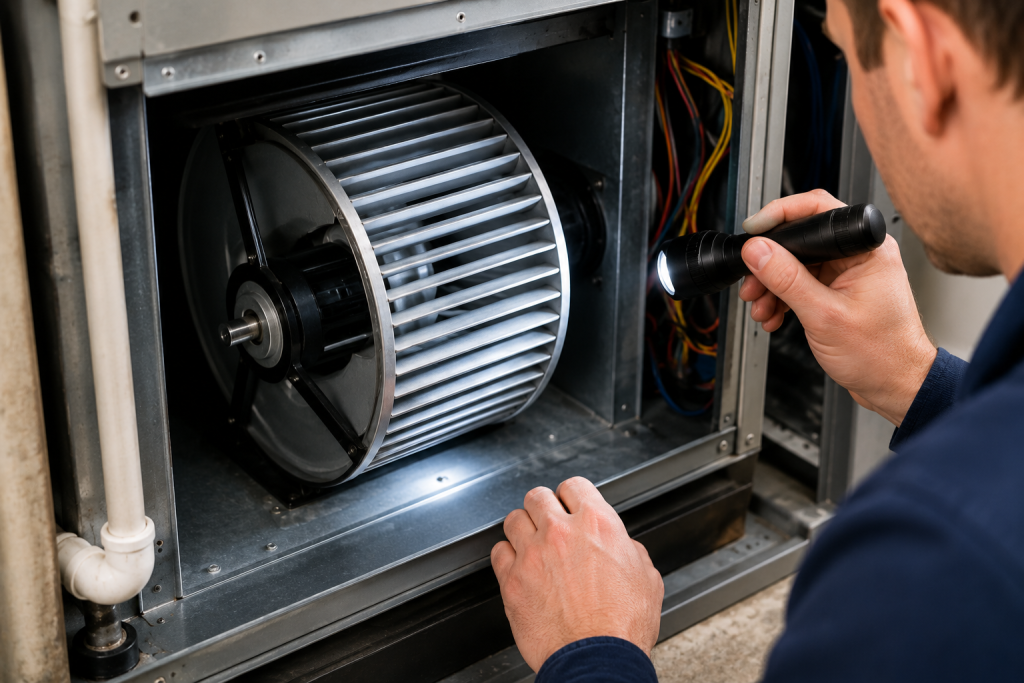
Step 4: Verify the Blower Fan Is Operating Correctly
Why It Matters
The blower fan circulates air across the evaporator coil. If it slows down or stops working, the coil temperature can quickly fall below freezing.
How to Check the Blower
- Set the thermostat fan setting to ON.
- Listen for blower operation.
- Check for weak airflow from vents.
- Inspect for unusual noises such as squealing or grinding.
A failing blower motor, damaged capacitor, or loose belt can all reduce airflow.
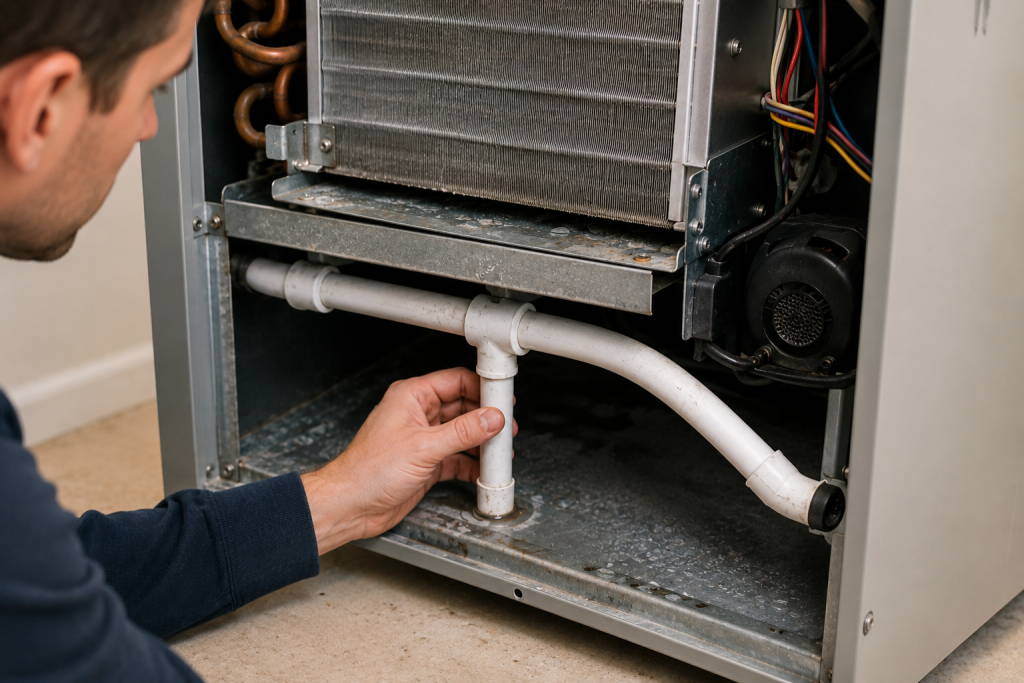
Step 5: Inspect the Condensate Drain Line
Why It Matters
While not always the direct cause of freezing, a clogged condensate drain can create moisture-related issues that contribute to ice buildup and water damage.
How to Check the Drain Line
- Locate the condensate drain near the air handler.
- Look for standing water around the unit.
- Verify water flows freely through the drain.
- Clear minor clogs with a wet/dry vacuum if needed.
If your system’s maintenance instructions recommend vacuuming an accessible condensate drain outlet, a compact wet/dry vacuum may help remove a minor blockage. Use a vacuum rated for liquid pickup and follow its wet-use setup instructions. If you already own a suitable wet/dry vacuum, you may not need another tool.
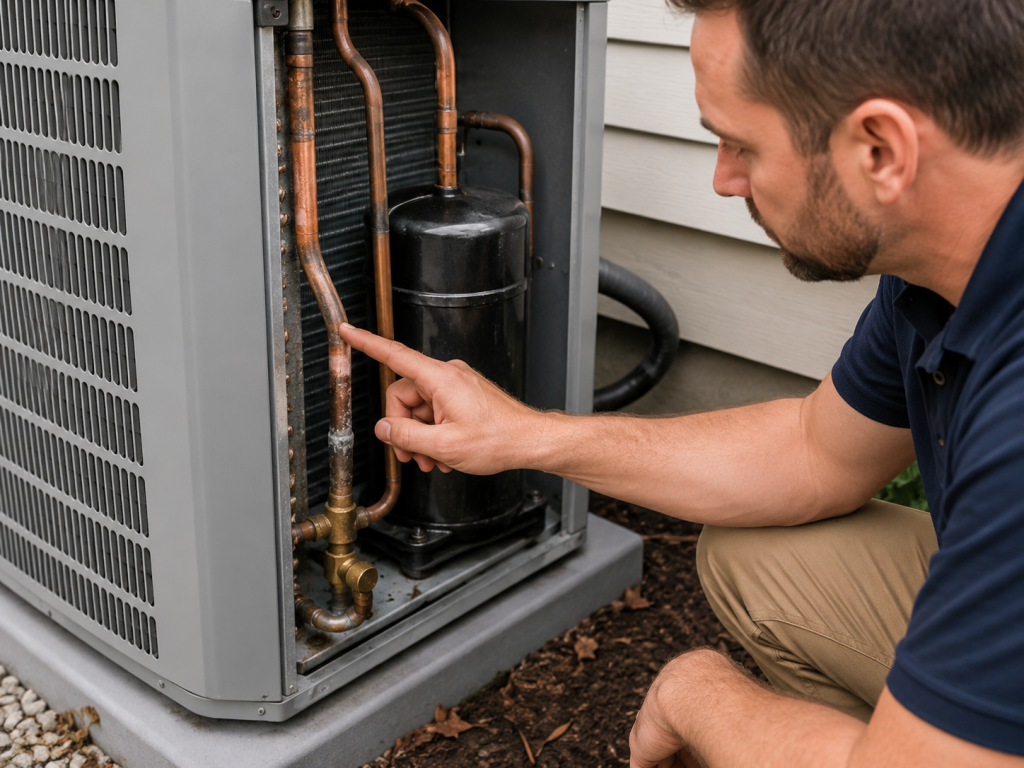
Step 6: Look for Signs of Low Refrigerant
Why It Matters
Low refrigerant pressure lowers coil temperatures and is a frequent cause of frozen evaporator coils.
Common Symptoms for AC Freezing Up
- Ice on refrigerant lines
- Hissing sounds
- Reduced cooling performance
- Long cooling cycles
- Higher utility costs
Because refrigerant systems are sealed, low refrigerant typically indicates a leak that requires professional repair.
The U.S. Department of Energy provides additional air conditioning maintenance guidance at Department of Energy Air Conditioner Maintenance Guide.
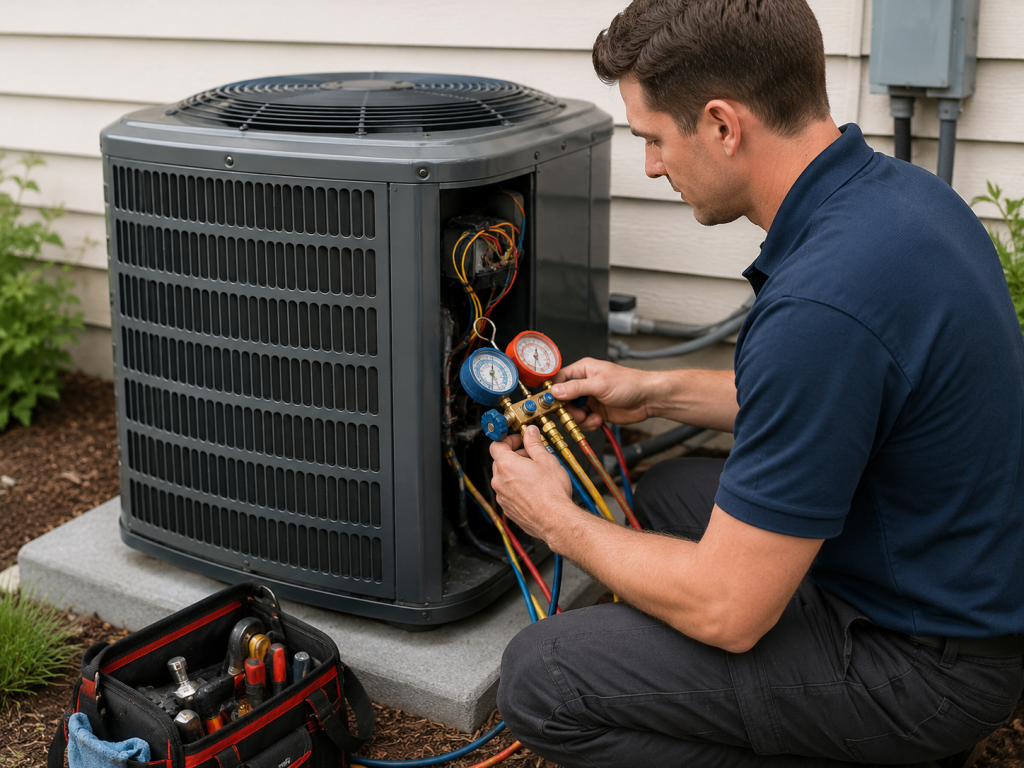
Step 7: Schedule Professional HVAC Service
Why It Matters
If airflow problems have been eliminated and the AC continues freezing up, professional diagnosis is recommended.
What a Technician May Check
- Refrigerant charge
- Refrigerant leaks
- Expansion valve operation
- Blower motor performance
- Evaporator coil condition
- Thermostat calibration
- Electrical components
Professional testing can identify issues that are difficult to diagnose without specialized equipment.
For related troubleshooting, read 7 Proven Fixes: AC Not Turning On But Thermostat Is Working (Fast & Easy) and AC Not Cooling Below 75 Degrees? 9 Proven Fixes That Work.
How to Prevent your AC Freezing Up
Preventive maintenance significantly reduces the risk of future freezing issues.
Best Practices
- Replace filters regularly
- Keep vents open and unobstructed
- Schedule annual HVAC maintenance
- Clean evaporator and condenser coils
- Inspect refrigerant lines periodically
- Keep the condensate drain clear
- Address cooling issues promptly
Routine maintenance helps improve efficiency, comfort, and equipment lifespan.
When to Call a Professional
Contact an HVAC technician if:
- Ice repeatedly returns after thawing
- Refrigerant leaks are suspected
- The blower motor is not operating
- The evaporator coil remains frozen
- Cooling performance continues to decline
Persistent freezing usually indicates an underlying mechanical issue that requires professional attention.
Frequently Asked Questions
Can I run my AC while it is frozen?
No. Running a frozen AC can damage the compressor and worsen the problem. Turn the system off and allow it to thaw completely.
How long does it take a frozen AC to thaw?
Most systems require 4 to 24 hours to thaw depending on the amount of ice buildup and indoor conditions.
Will changing the air filter fix a frozen AC?
If restricted airflow caused the freezing, replacing the filter may resolve the problem once the system has completely thawed.
Can low refrigerant cause an AC to freeze?
Yes. Low refrigerant pressure reduces evaporator coil temperature and commonly leads to ice formation.
Is a frozen AC an emergency?
Not usually, but it should be addressed quickly. Continued operation can damage expensive components and lead to costly repairs.
Looking for help with another heating or cooling problem? Browse our complete collection of HVAC repair and troubleshooting guides.
Final Thoughts
An AC freezing up is usually caused by airflow restrictions or refrigerant-related problems. Start by turning the system off and allowing the ice to melt completely. Then inspect the air filter, vents, evaporator coil, blower fan, and condensate drain. If the issue continues after these checks, professional HVAC service is the safest way to prevent further damage and restore proper cooling performance.