
Last updated: October 14, 2026
By Home Repair Genie
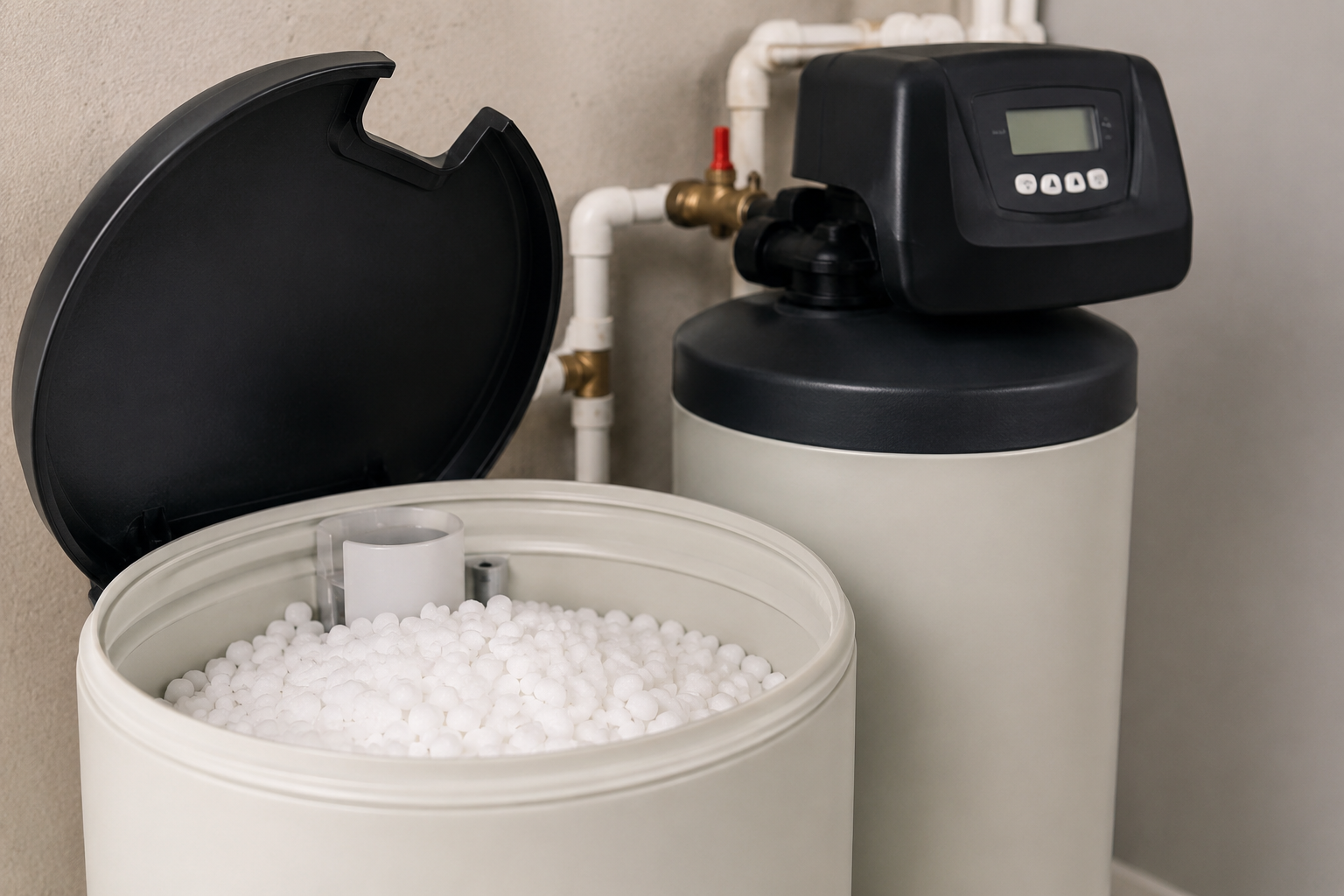
A water softener not using salt can no longer regenerate properly, allowing hard water minerals to pass through your plumbing system. Hard water can cause scale buildup, dry skin, spotted dishes, and reduced appliance efficiency. If your water softener is not using salt, the system may not be regenerating properly, allowing hard water to pass through your home’s plumbing. Fortunately, many causes can be identified and corrected without replacing the entire unit.
Quick Answer
If your water softener not using salt issue has persisted for several weeks, the most common causes include a salt bridge, clogged injector, blocked brine line, incorrect settings, or a failed regeneration cycle. Checking these components can often restore normal operation and improve water quality.
Why a Water Softener Uses Salt
Water softeners remove minerals such as calcium and magnesium through a process called ion exchange. During regeneration, the system uses a brine solution made from salt and water to recharge the resin beads inside the softener.
If the salt level remains unchanged for weeks, the regeneration process may not be functioning correctly.
You may also notice other symptoms such as:
- Hard water spots on dishes
- Soap not lathering well
- Dry skin after showering
- Scale buildup on fixtures
- Reduced appliance efficiency
1. Check for a Salt Bridge
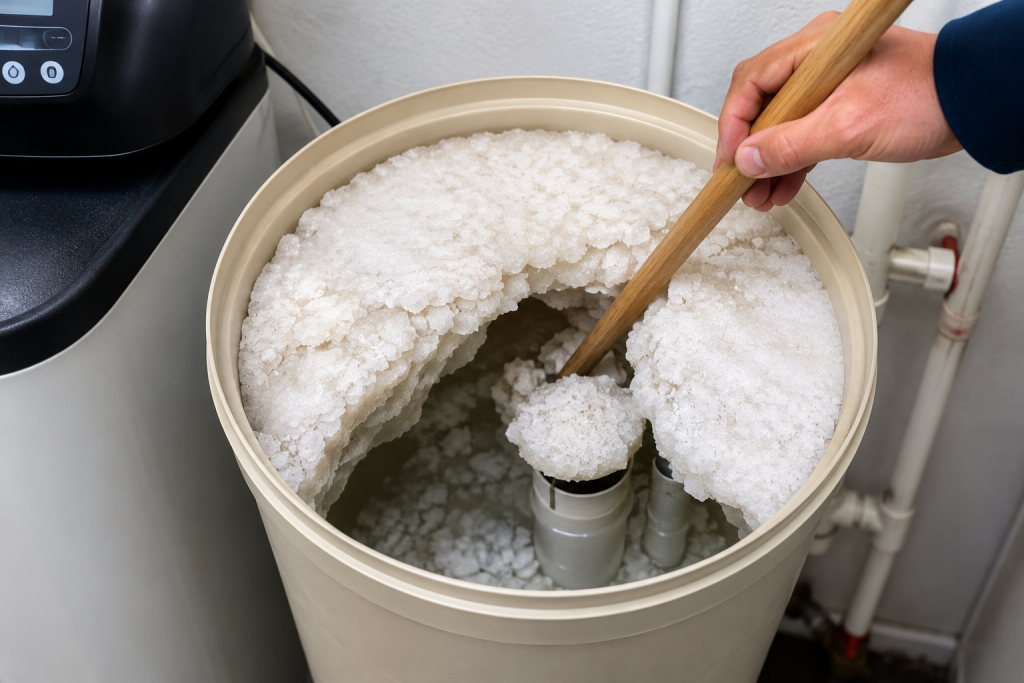
Step 1: Inspect the Salt Tank
A salt bridge is a hardened crust that forms above the water level in the brine tank. The tank may appear full of salt even though water cannot reach the lower salt layers.
Step 2: Break Up the Bridge
Use a broom handle or similar tool to gently tap the crust until it breaks apart.
Step 3: Remove Loose Chunks
Remove large pieces of hardened salt and refill the tank with fresh salt if necessary.
A salt bridge is one of the most common reasons a water softener stops consuming salt.
2. Inspect for a Salt Mushing Problem
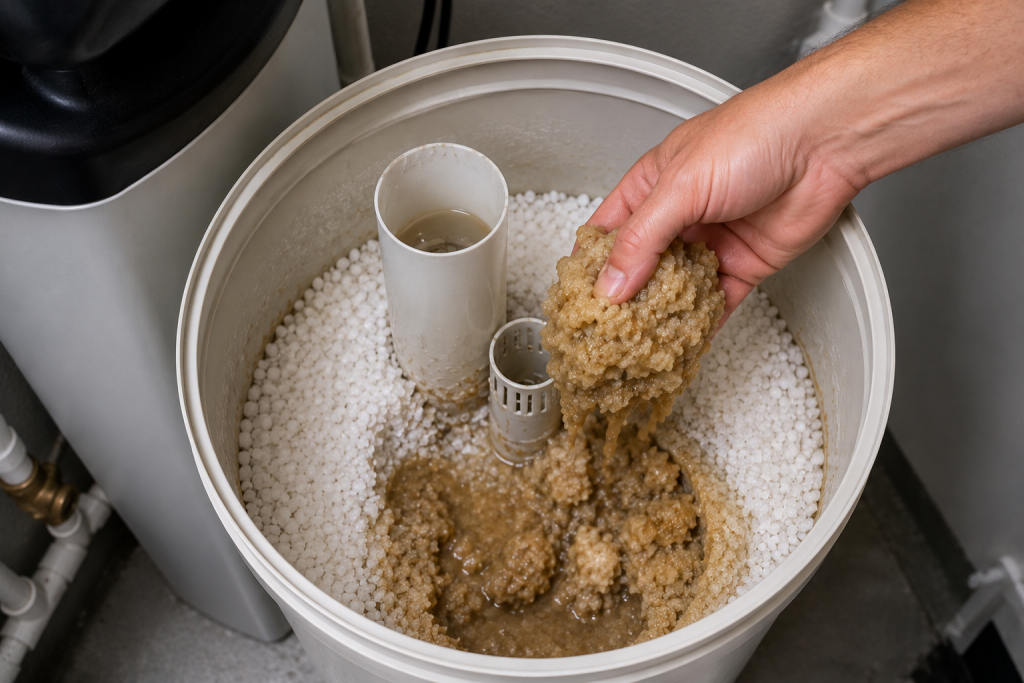
Step 1: Look at the Bottom of the Tank
Salt mush appears as a thick sludge at the bottom of the brine tank.
Step 2: Empty the Tank
Remove the remaining salt and inspect the bottom for compacted deposits.
Step 3: Clean the Tank
Wash out the tank thoroughly before adding new salt.
Using high-quality salt pellets can help prevent future mushing.
As an Amazon Associate I earn from qualifying purchases.
When refilling the cleaned tank, use the salt type recommended in your softener’s manual. If your model accepts pellets, you can browse water-softener salt pellets on Amazon. Compare the bag weight and delivered price with local options before purchasing.
3. Verify the Regeneration Settings
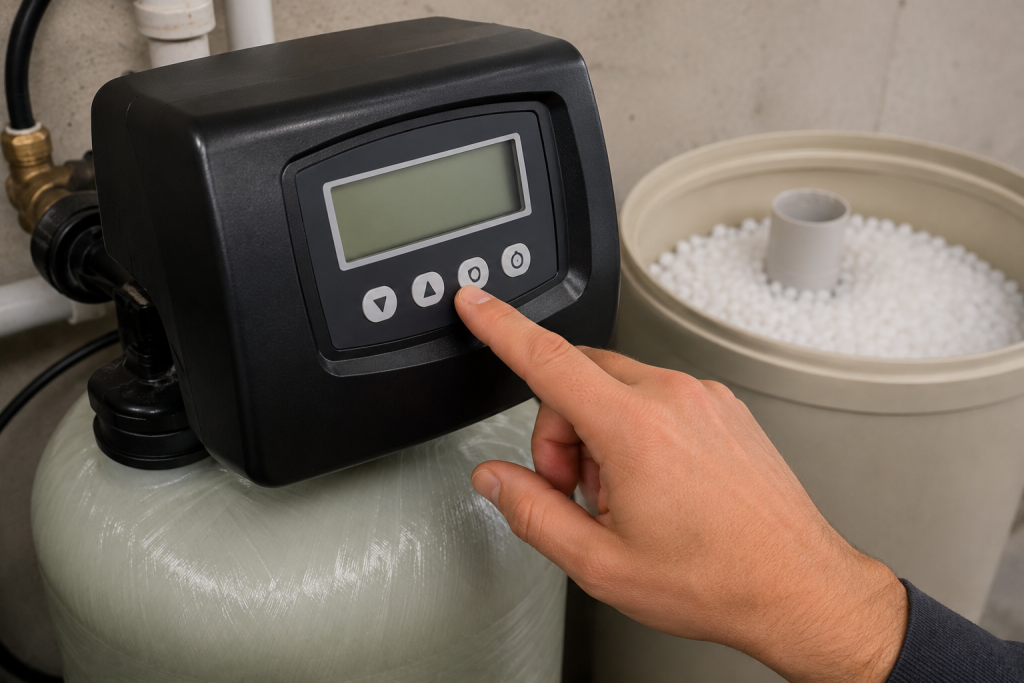
Step 1: Check the Control Head
Review the settings on the control panel.
Step 2: Confirm Water Hardness Settings
If the hardness setting is incorrect, the unit may regenerate too infrequently.
If you don’t know your incoming water hardness, a water-hardness test kit can help you check it before changing the softener’s settings. Test untreated water from a confirmed bypassed tap or another sampling point before the softener. Choose a kit that measures total hardness, rather than a TDS meter, and follow your softener’s instructions when entering the result.
Step 3: Review the Regeneration Schedule
Ensure the softener is programmed to regenerate at appropriate intervals.
If you’ve experienced a recent power outage, settings may have been reset.
For additional electrical troubleshooting, see our guide on Breaker Keeps Tripping? 7 Easy Fixes That Actually Work (Step-by-Step Guide).
4. Examine the Brine Line for Blockages
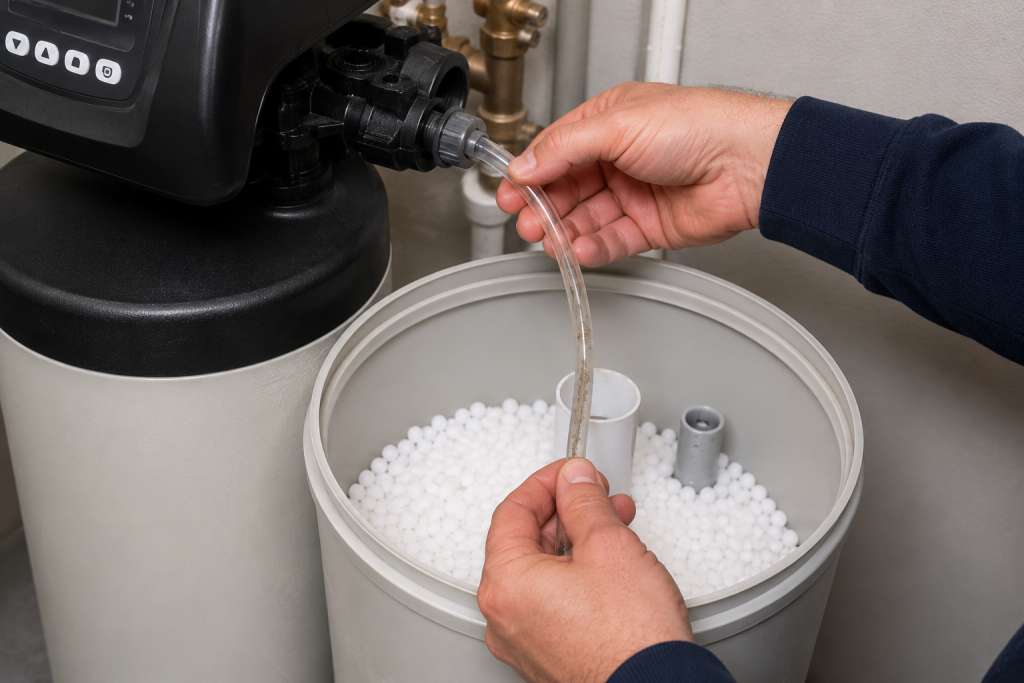
Step 1: Locate the Brine Line
The brine line connects the salt tank to the control valve.
Step 2: Inspect for Kinks
Look for bends, crimps, or damaged sections restricting water flow.
Step 3: Remove Debris
Disconnect and clean the line if sediment or salt buildup is present.
A blocked brine line prevents the softener from drawing saltwater during regeneration.
5. Clean the Injector and Venturi Assembly
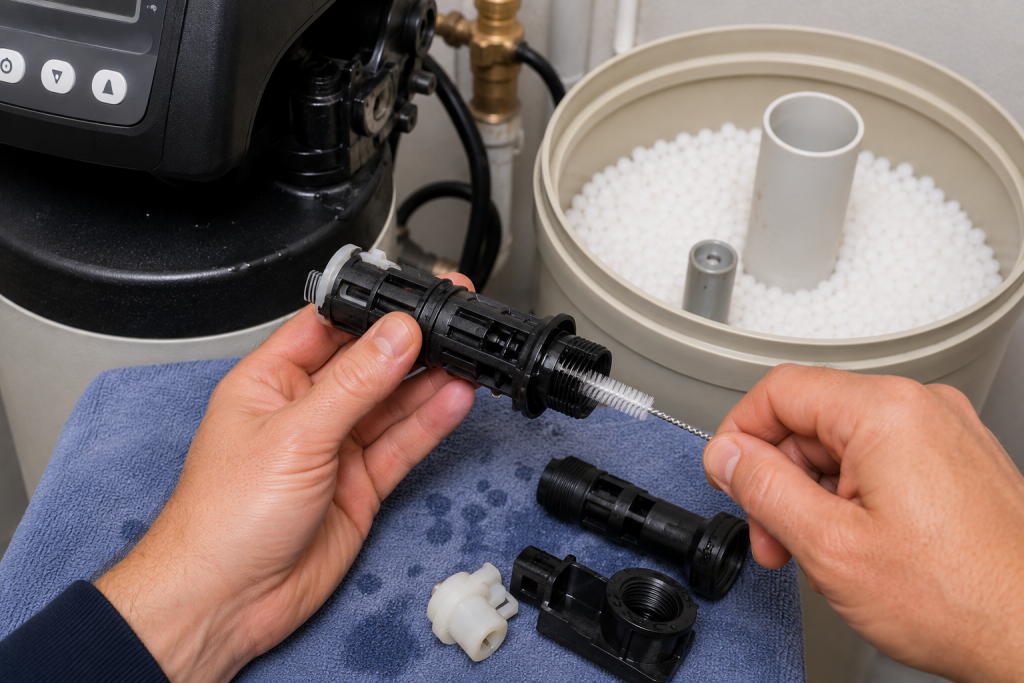
Step 1: Shut Off the Water Supply
Follow your manufacturer’s instructions before disassembly.
Step 2: Remove the Injector Components
The injector and venturi are usually located beneath a removable cap on the control head.
Step 3: Clean Mineral Deposits
Use warm water and a soft brush to remove buildup.
A small soft-bristle nylon cleaning brush can help remove deposits from accessible injector and venturi components. Follow your model’s disassembly and cleaning instructions, and avoid forcing bristles or tools into calibrated openings. A clean, soft toothbrush may also be sufficient.
Even small amounts of debris can prevent proper brine suction.
For more water system troubleshooting, check out our guide on Water Heater Leaking From Bottom? 7 Fixes to Stop the Leak.
6. Test the Regeneration Cycle
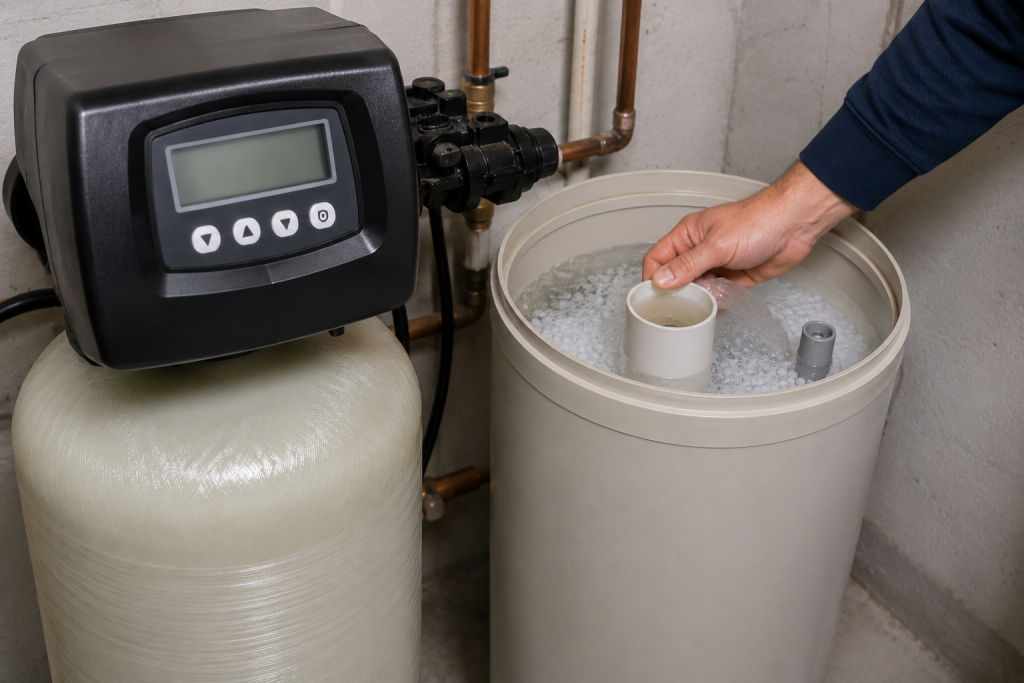
Step 1: Initiate a Manual Regeneration
Most systems allow a manual regeneration through the control panel.
Step 2: Observe Operation
Listen for water movement and monitor whether the water level changes in the brine tank.
Step 3: Check Salt Usage
After the cycle completes, verify that some salt has been dissolved.
If the system never enters regeneration, the control valve or timer may be defective.
7. Inspect the Control Valve
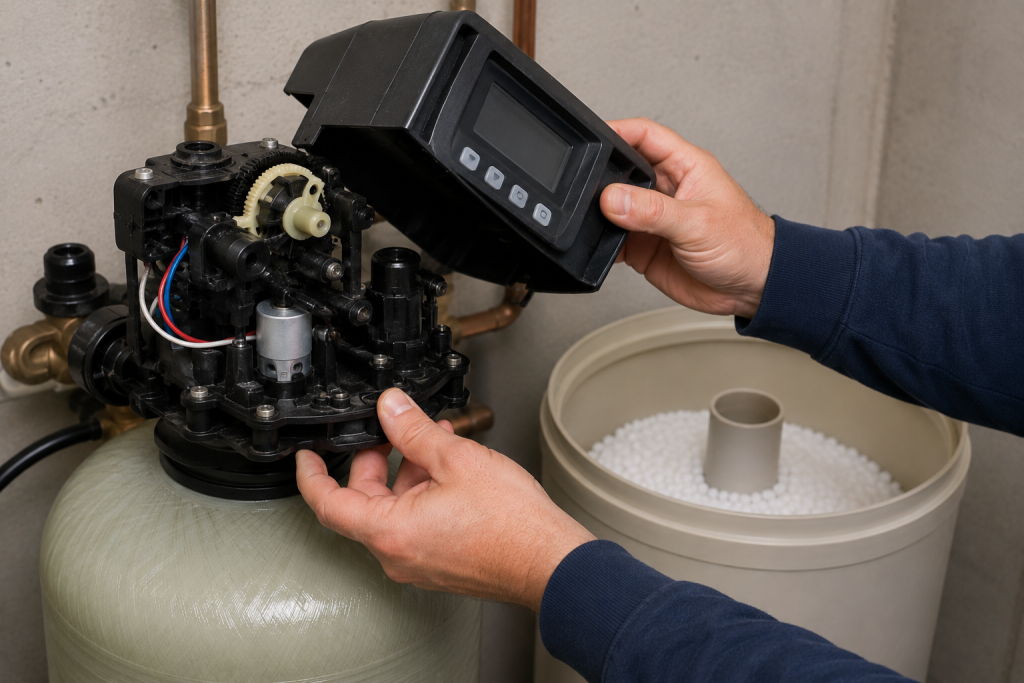
Step 1: Look for Error Codes
Many modern softeners display fault codes when problems occur.
Step 2: Check Valve Movement
The valve should shift through each regeneration stage.
Step 3: Review Manufacturer Instructions
Consult your owner’s manual for diagnostic procedures.
You can find additional water treatment resources through the Water Quality Association.
A failed control valve can prevent brine from being drawn into the system.
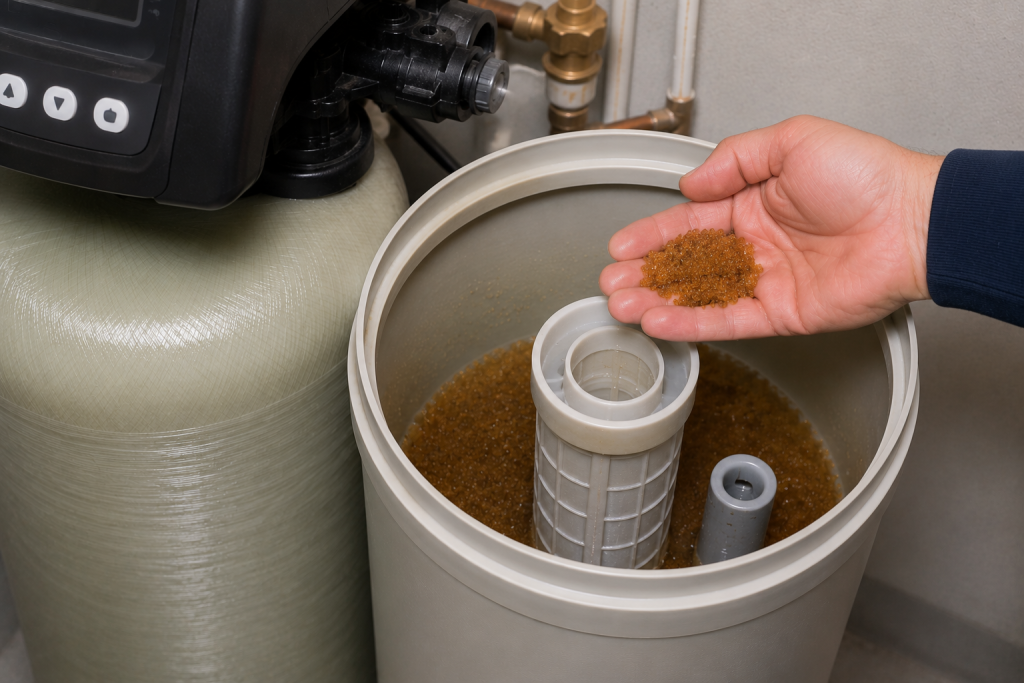
8. Check the Resin Bed Condition
Step 1: Determine the Age of the Softener
Resin typically lasts 10 to 15 years under normal conditions.
Step 2: Watch for Persistent Hard Water
If salt usage remains low and water remains hard, the resin may be exhausted.
Step 3: Consider Resin Replacement
Replacing worn resin can often restore performance without replacing the entire softener.
Signs Your Water Softener Is Working Again
After correcting the problem, watch for these improvements:
- Salt level gradually decreases
- Softer feeling water
- Reduced spotting on dishes
- Better soap lather
- Less scale buildup on fixtures
These signs indicate that the regeneration process has resumed properly.
When to Call a Professional
Consider contacting a water treatment specialist if:
- The control valve has failed
- Error codes continue to appear
- The resin bed requires replacement
- Internal components are damaged
- The unit still does not regenerate after troubleshooting
Professional diagnosis can prevent unnecessary replacement costs.
Frequently Asked Questions
Why is my water softener full of salt but not using any?
A salt bridge, clogged injector, blocked brine line, or failed regeneration cycle are the most common causes.
How often should a water softener use salt?
Most households notice a gradual decrease in salt levels over several weeks. Actual usage depends on water hardness and household consumption.
Can a power outage stop my water softener from using salt?
Yes. Some units lose their programmed settings after a power interruption, causing regeneration schedules to become incorrect.
How do I know if my water softener is regenerating?
You may hear water flowing through the unit during regeneration, and the water level inside the brine tank should change during the cycle.
Is it normal for salt usage to vary?
Yes. Water usage, hardness levels, and seasonal changes can all affect how quickly salt is consumed.
Looking for help with another plumbing problem? Browse our complete collection of plumbing repair and troubleshooting guides.
Final Thoughts
A water softener not using salt is usually caused by a salt bridge, clogged injector, blocked brine line, incorrect programming, or a failed regeneration cycle. By systematically checking these eight areas, many homeowners can restore proper operation and enjoy soft water again without replacing the entire system.