
Last updated: October 9, 2026
By Home Repair Genie
Quick Answer
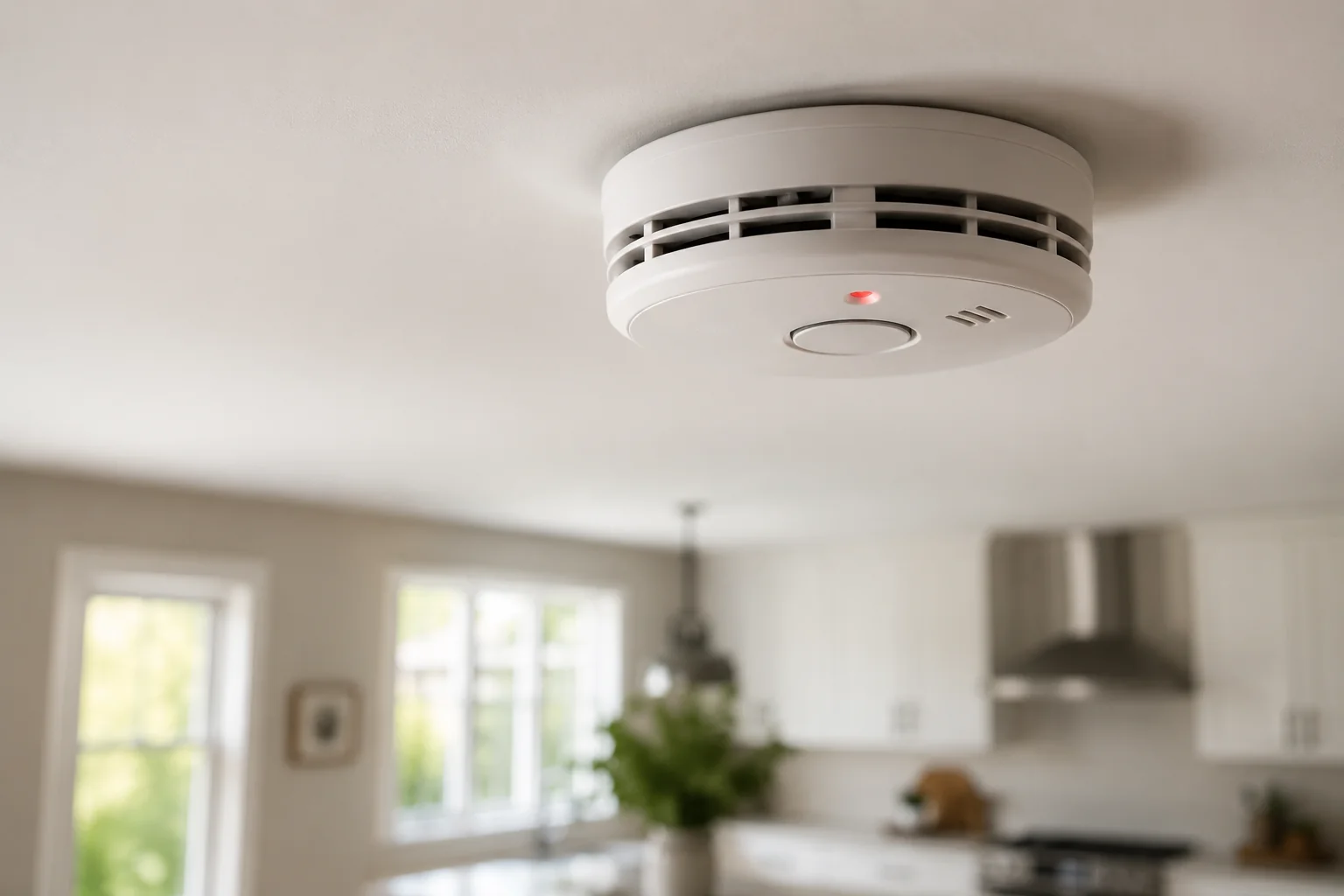
A smoke detector going off for no reason is usually caused by dust buildup, low batteries, humidity, steam, insects inside the detector, temperature changes, electrical issues, or an aging unit. Cleaning the detector, replacing the battery, and checking environmental factors often solve the problem without requiring replacement. Understanding why a Smoke Detector Going Off for No Reason happens can help you quickly identify the cause and prevent future false alarms.
Seeing a red light instead? Learn more about it with our guide: Smoke Detector Blinking Red? 8 Causes and Fixes
Why is my Smoke Detector Going Off for No Reason
A smoke detector is designed to alert you to smoke and fire, but false alarms can occur when the sensor detects other particles or experiences electrical problems. While it may seem like the alarm is going off for no reason, there is almost always an identifiable cause.
The troubleshooting steps below will help you find and fix the most common issues.
Clean Dust and Debris From the Detector
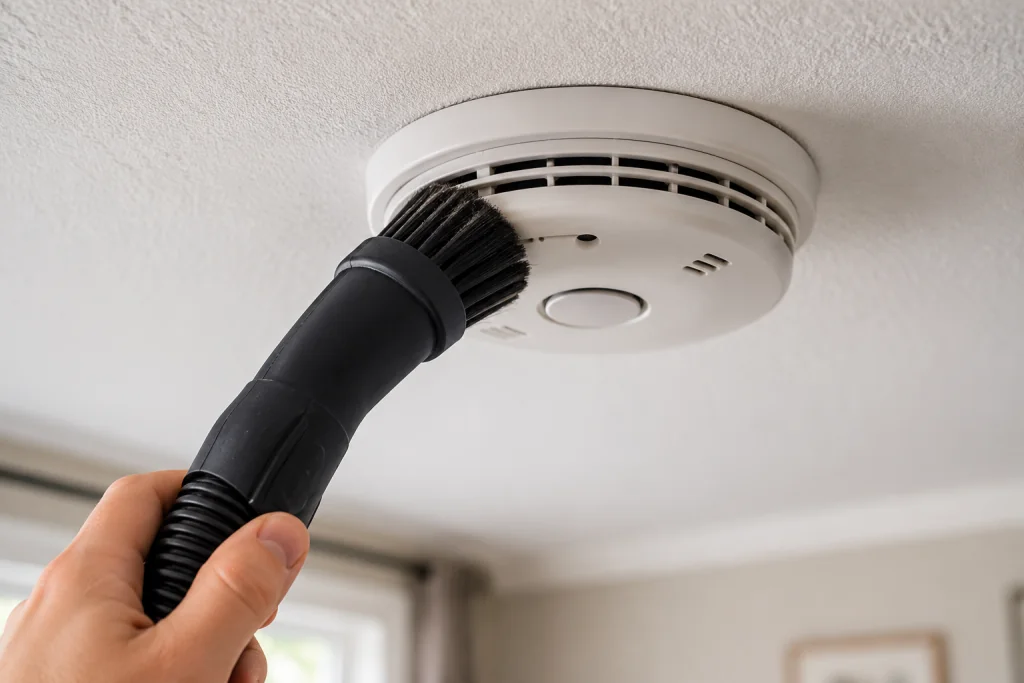
Dust is one of the leading causes of false smoke detector alarms. Over time, dust, dirt, and pet hair can enter the sensing chamber and interfere with normal operation.
How to Clean the Detector
As an Amazon Associate I earn from qualifying purchases.
- Turn off power to hardwired detectors if necessary.
- Remove the detector from its mounting bracket.
- Vacuum the exterior vents using a soft brush attachment. Browse brush attachments on Amazon.
- Blow compressed air through the openings.
- Reinstall the detector and perform a test.
Cleaning smoke detectors every six months can help prevent nuisance alarms.
Replace a Low Battery
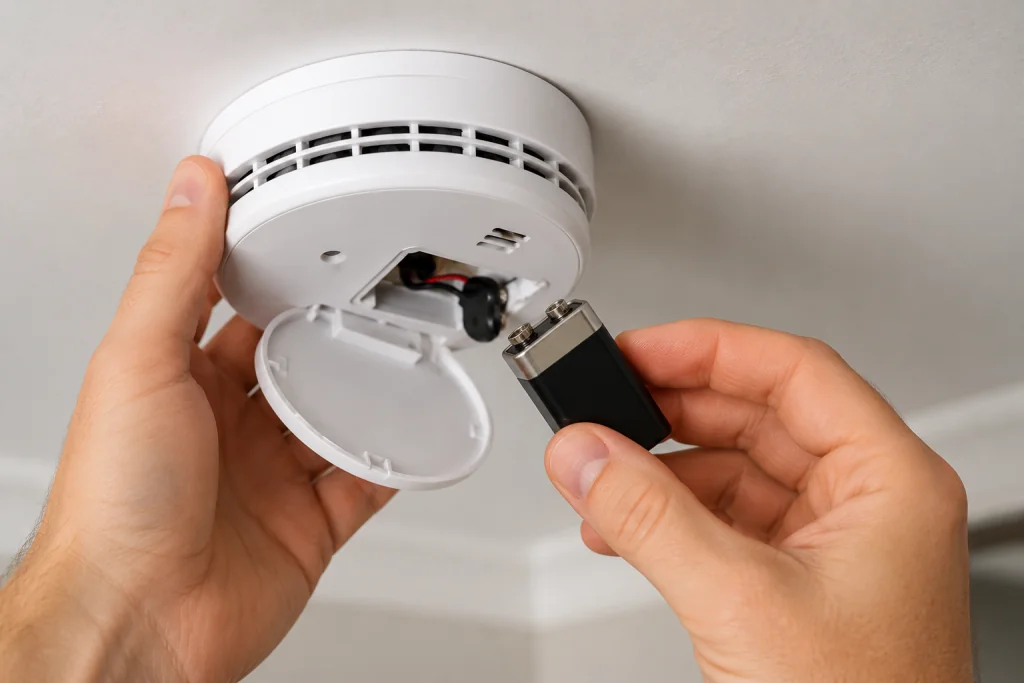
A weak battery is another common reason a smoke detector may sound unexpectedly. Even if the battery was replaced recently, it could be defective or improperly installed.
How to Replace the Battery
- Remove the detector from the ceiling or wall.
- Install a fresh battery from a trusted manufacturer. Check your alarm’s label for the required battery type. Browse replacement batteries on Amazon.
- Confirm the battery is seated correctly.
- Press the test button to verify operation.
Many homeowners are surprised to discover that a low battery can trigger alarms at random times, especially during the night. If your smoke detector continues chirping after installing a new battery, see our guide to smoke detector chirping after a battery change.
Check for Steam and Humidity
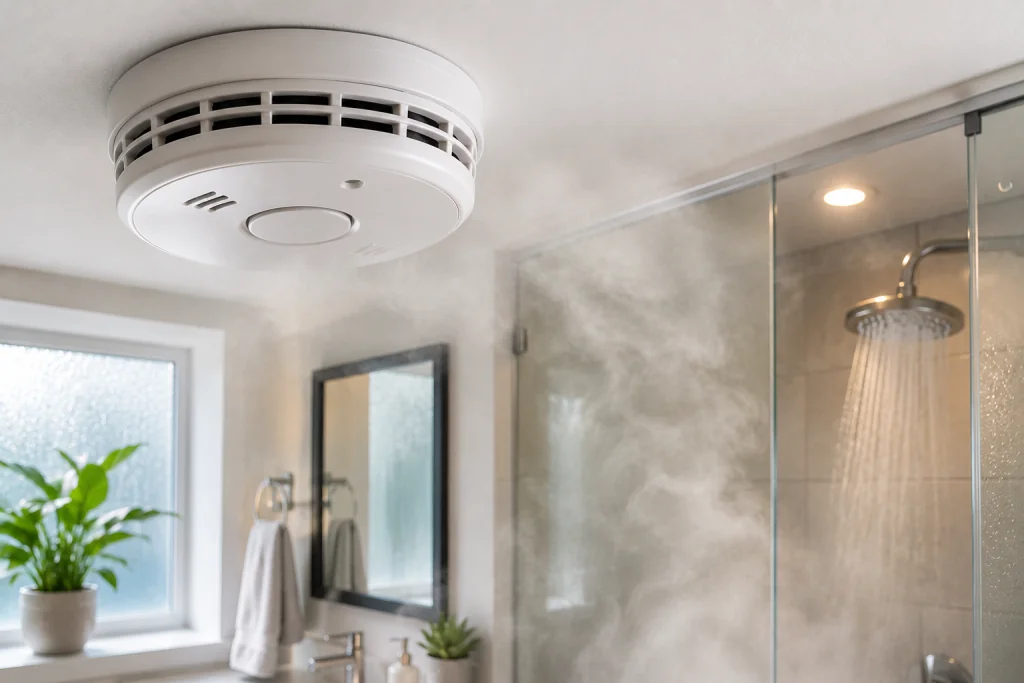
Steam from showers and humidity from bathrooms can sometimes trigger smoke detectors. Cooking steam may also affect detectors installed too close to kitchens.
How to Reduce Humidity-Related False Alarms
- Run bathroom exhaust fans during showers.
- Use range hoods when cooking.
- Improve ventilation in humid areas.
- Consider relocating detectors that are installed too close to moisture sources.
Proper placement helps reduce false alarms while maintaining safety.
Look for Insects Inside the Detector
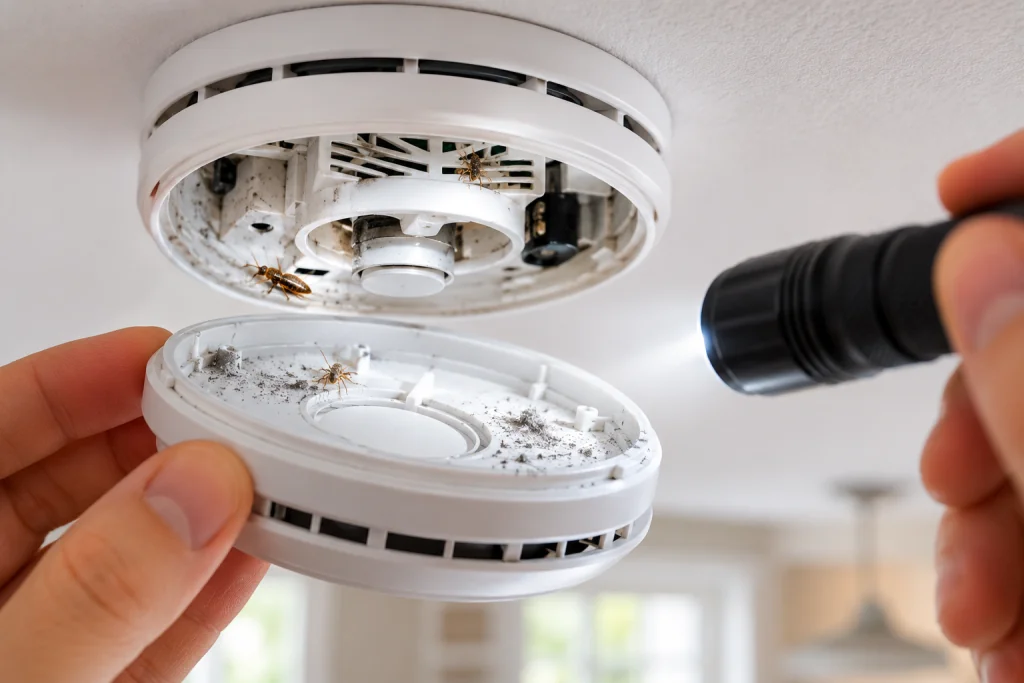
Small insects can crawl through the vent openings and interfere with the detector’s sensor chamber.
How to Inspect for Insects
- Remove the detector from its mounting plate.
- Inspect the vent openings carefully.
- Vacuum around the sensor openings.
- Reinstall and test the detector.
This problem is especially common during warmer months.
Evaluate Temperature Changes
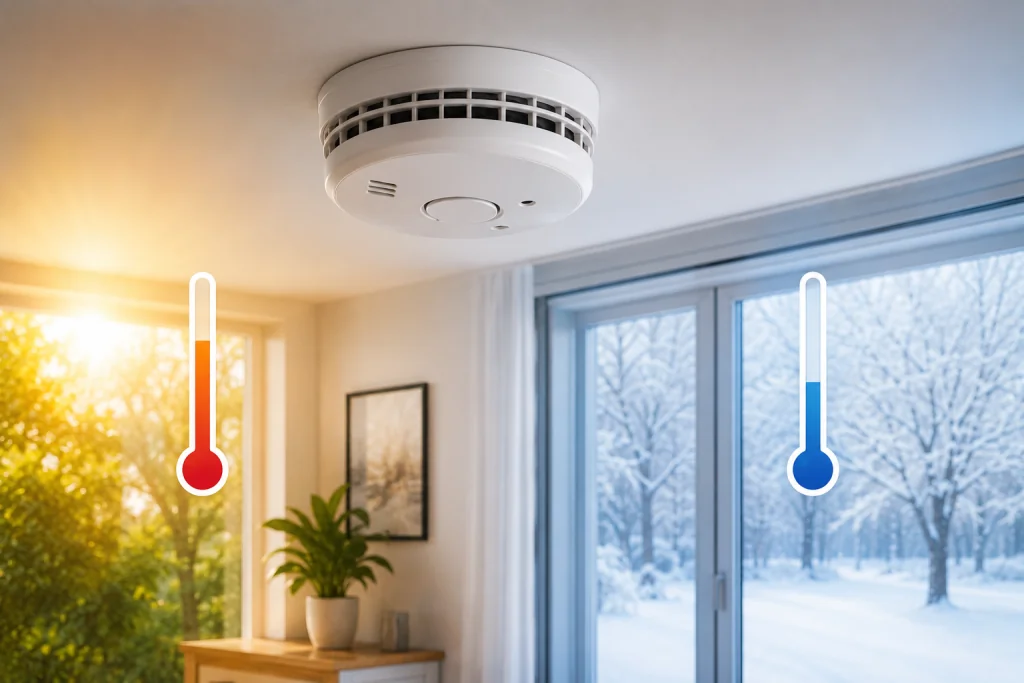
Rapid temperature fluctuations can occasionally trigger smoke detectors. This issue often occurs near attics, HVAC vents, garages, or poorly insulated spaces.
How to Address Temperature Issues
- Check the detector’s location.
- Inspect nearby HVAC supply vents.
- Seal gaps that allow hot or cold air to enter.
- Move the detector if needed.
Reducing temperature extremes can improve detector performance.
Check for Electrical Problems
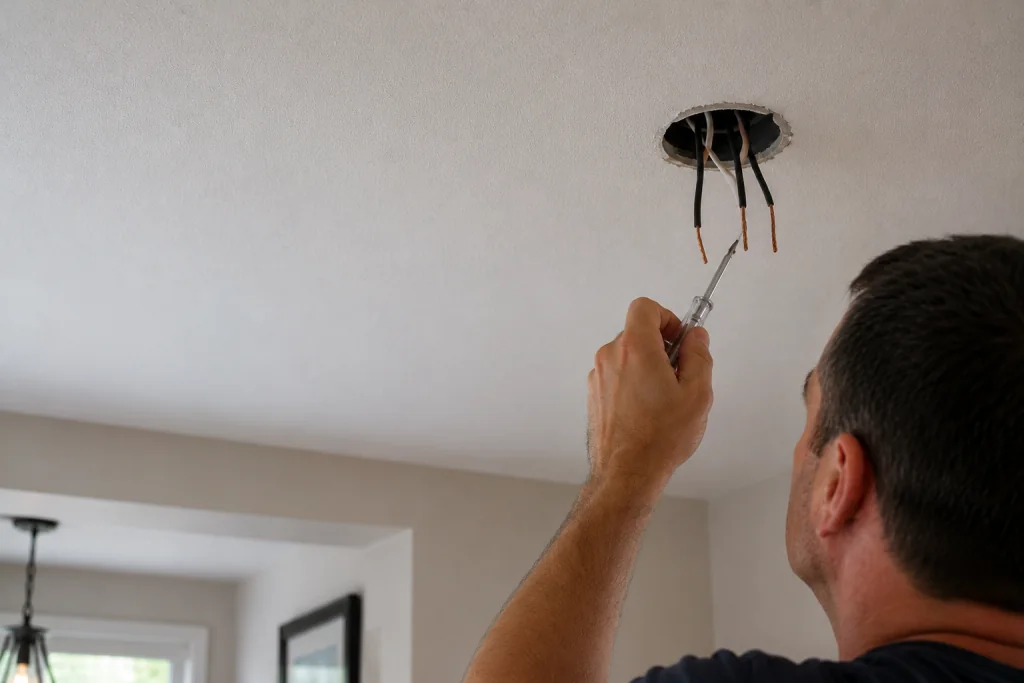
Hardwired smoke detectors can experience false alarms due to wiring issues or power fluctuations.
How to Inspect for Electrical Issues
- Turn off power at the breaker.
- Remove the detector from its mounting plate.
- Inspect wire connections for looseness.
- Look for corrosion or damaged wiring.
- Restore power and test the system.
If you’re uncomfortable working with electrical wiring, contact a qualified electrician.
For more electrical troubleshooting tips, see our guide on Light Switch Not Working.
Determine the Age of the Smoke Detector
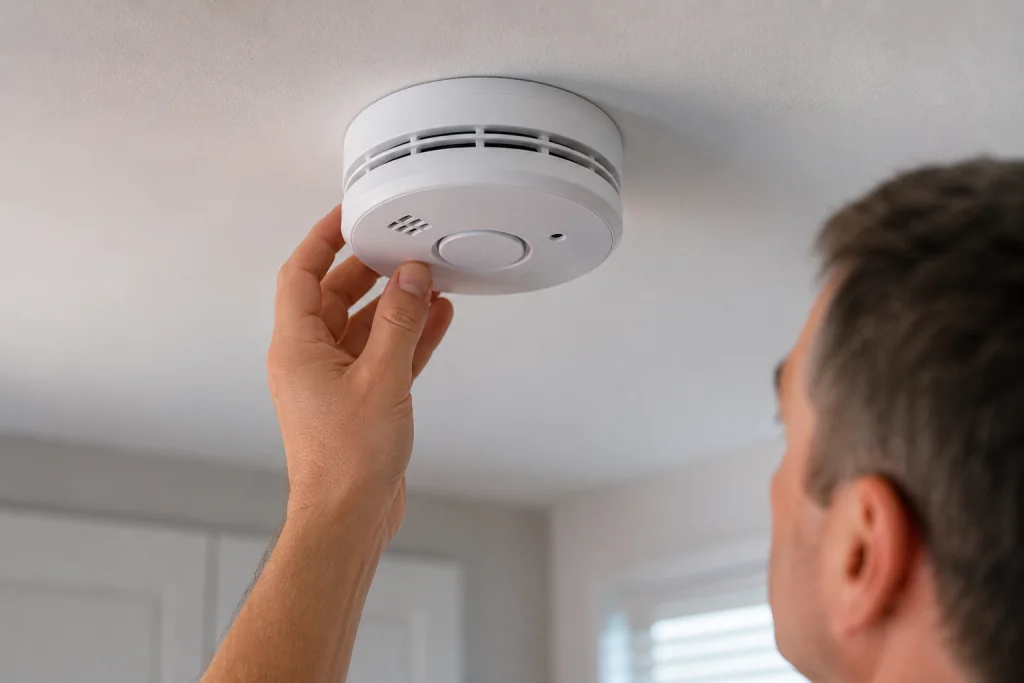
Smoke detectors become less reliable as they age. Most manufacturers recommend replacement every 10 years.
How to Check the Manufacturing Date
- Remove the detector.
- Locate the label on the back.
- Find the manufacturing date.
- Replace any detector older than 10 years.
An aging sensor can cause recurring false alarms even when no other problems are present.
If your alarm is over 10 years old, browse replacement smoke alarms on Amazon.
Reset the Smoke Detector
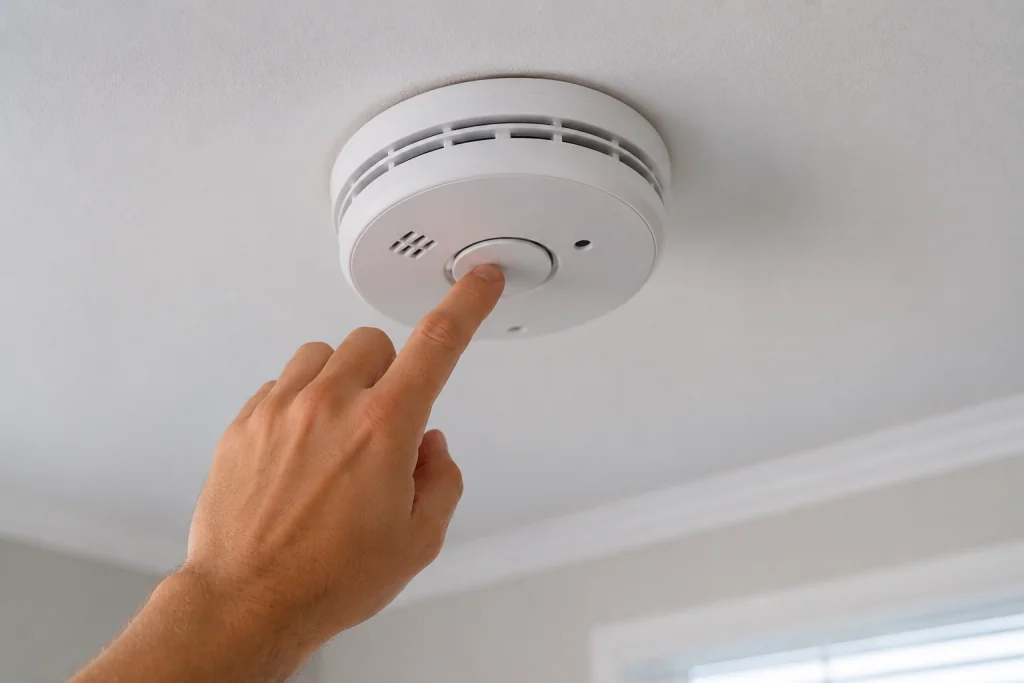
Sometimes a smoke detector simply needs to be reset after a power interruption or internal fault.
How to Reset the Detector
- Remove the battery.
- Disconnect power if the detector is hardwired.
- Hold the test button for 15 to 20 seconds.
- Reconnect power and reinstall the battery.
- Test the detector.
Resetting can clear temporary errors and restore normal operation.
Replace a Faulty Smoke Detector
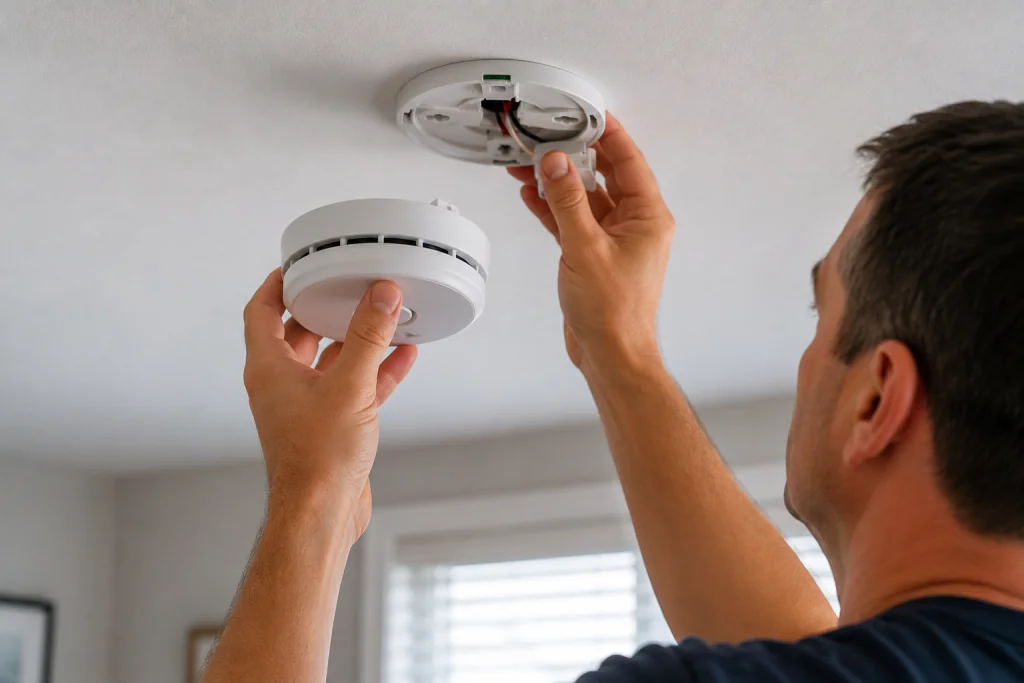
If the detector continues going off after cleaning, battery replacement, and troubleshooting, the unit may have failed internally.
Signs the Detector Should Be Replaced
- It is more than 10 years old.
- False alarms continue regularly.
- The detector fails testing procedures.
- Physical damage is visible.
- The model has been recalled.
If your alarm needs to be replaced, browse replacement smoke alarms on Amazon. Check the power source and, for an interconnected system, confirm compatibility with your existing alarms before buying.
For additional smoke alarm safety recommendations, review guidance from the National Fire Protection Association.
How to Prevent Future False Alarms
Routine maintenance can significantly reduce nuisance alarms.
Preventive Maintenance Tips
- Test smoke detectors monthly.
- Replace batteries as recommended.
- Vacuum detectors every six months.
- Replace units after 10 years.
- Keep detectors away from bathrooms and cooking appliances whenever possible.
Consistent maintenance improves reliability and safety.
Related Articles
You may also find these guides helpful:
- Best Smoke Detectors
- Outlet Not Working
- Circuit Breaker Keeps Tripping
- Doorbell Not Working
- Garage Door Sensor Not Working
Frequently Asked Questions
Can a smoke detector go off without smoke?
Yes. Dust, humidity, insects, low batteries, and electrical issues are among the most common causes of false alarms.
Why does my smoke detector go off in the middle of the night?
Low batteries, temperature changes, and dust buildup frequently cause nighttime false alarms.
How often should smoke detectors be replaced?
Most manufacturers recommend replacing smoke detectors every 10 years.
Can humidity trigger a smoke detector?
Yes. Excessive humidity and steam can enter the sensing chamber and create false alarms.
Should I replace a smoke detector that keeps going off?
If cleaning, battery replacement, and resetting do not solve the issue, replacing the detector is often the best solution.
Looking for help with another electrical problem? Browse our complete collection of electrical repair and troubleshooting guides.
Final Thoughts
A smoke detector going off for no reason is usually caused by dust, humidity, battery issues, insects, electrical problems, or an aging sensor. Working through these troubleshooting steps can often eliminate false alarms and help ensure your smoke detector provides reliable protection when it matters most.