
Last updated: October 14, 2026
By Home Repair Genie
Quick Answer
If your dishwasher not drying dishes problem has suddenly appeared, the most common causes are a disabled heated dry setting, improper loading, a faulty heating element, a broken vent, low rinse aid levels, or a malfunctioning thermostat. Start by checking the rinse aid dispenser and heated dry setting before moving on to more advanced troubleshooting.
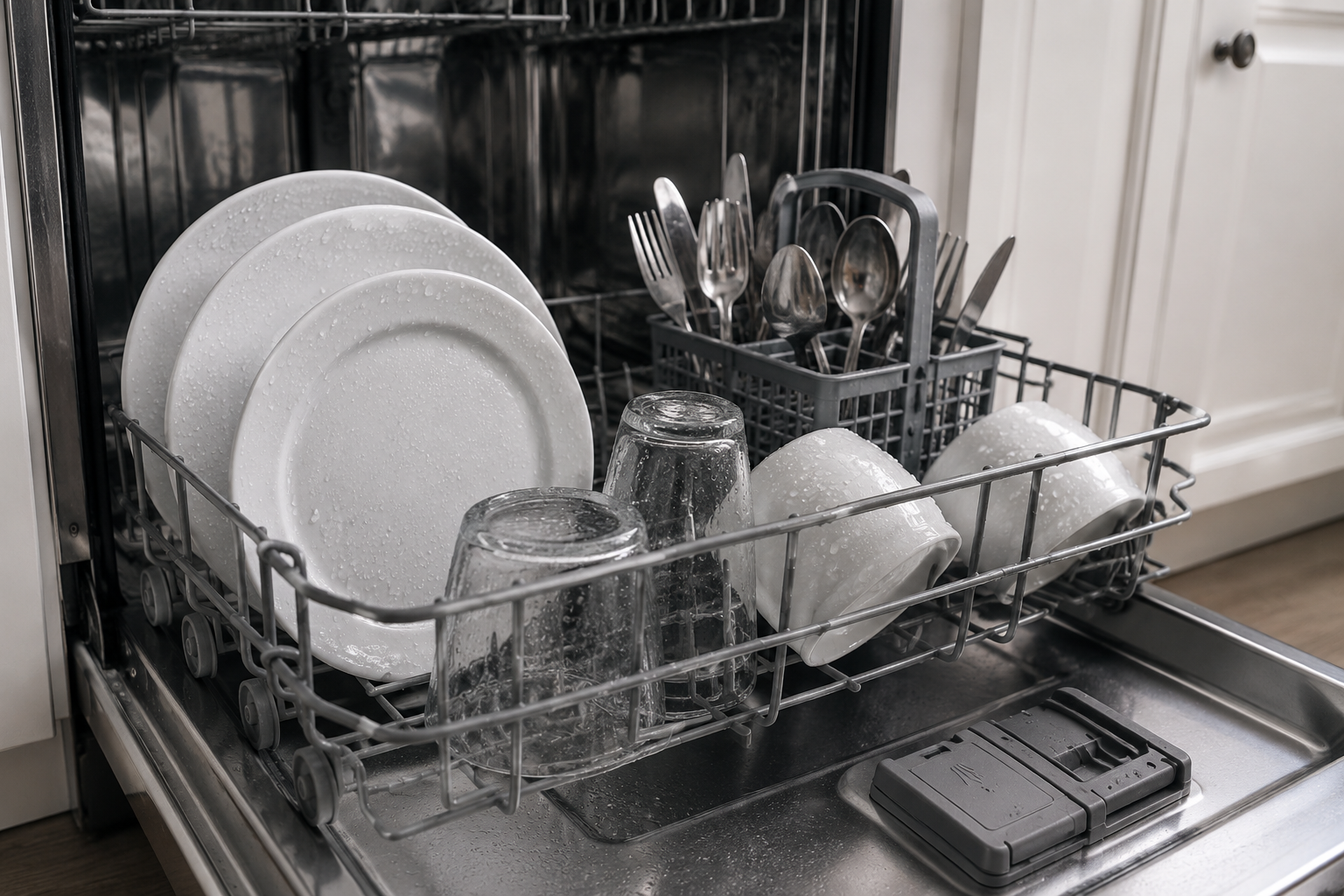
A dishwasher not drying dishes can be frustrating because dishes come out clean but still covered in water droplets. The good news is that most dishwasher drying problems are caused by a handful of common issues that homeowners can troubleshoot themselves.
Why a Dishwasher Not Drying Dishes Is a Common Problem
Modern dishwashers clean dishes effectively, but drying performance depends on several components working together. If even one part fails, you may find water droplets on dishes, wet plastic containers, or moisture remaining at the end of the cycle.
Fortunately, many drying issues can be resolved without replacing the entire appliance.
How Dishwasher Drying Systems Work
Most dishwashers use one or more of the following methods:
- Heated drying elements
- Condensation drying systems
- Automatic venting systems
- Rinse aid to improve water evaporation
When any of these systems stop functioning properly, dishes may remain wet after the cycle finishes.
For more dishwasher troubleshooting tips, see our Dishwasher Not Cleaning Dishes guide.
Fix 1: Make Sure Heated Dry Is Enabled
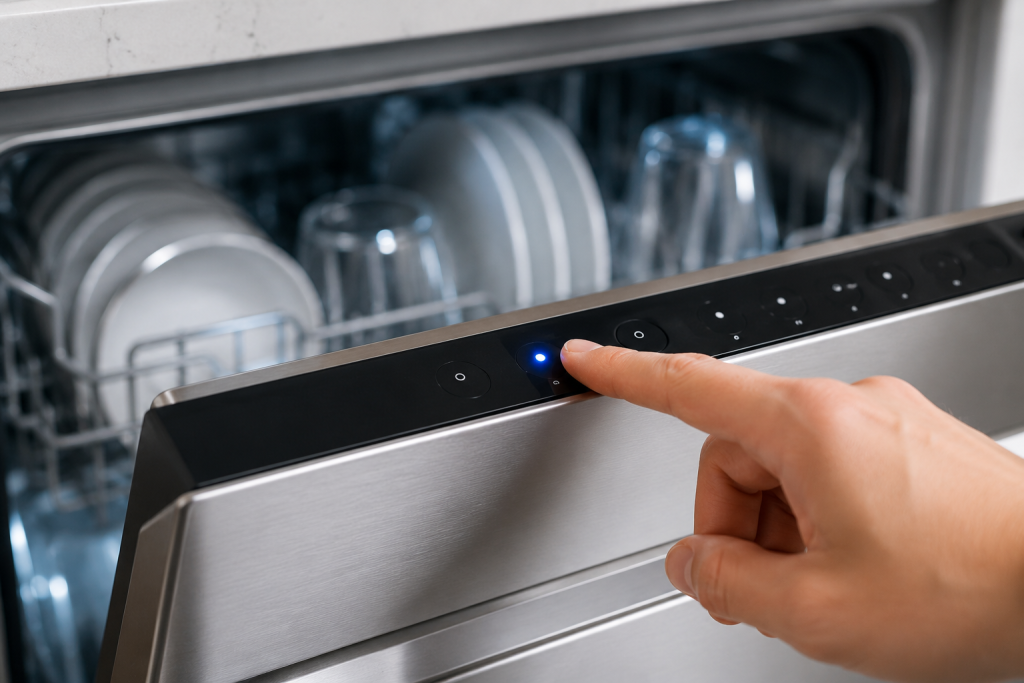
Step 1: Check the Control Panel
When a dishwasher not drying dishes issue occurs, one of the first things to check is whether the heated dry option has accidentally been turned off. Many dishwashers allow users to disable the heated drying feature.
Look for settings such as:
- Heated Dry
- Extra Dry
- Sanitize
- Dry Boost
If the option is turned off, dishes may remain wet even though the dishwasher is functioning normally.
Step 2: Run a Test Cycle
Turn the heated dry option on and run a normal wash cycle to see whether drying performance improves.
Fix 2: Refill the Rinse Aid Dispenser
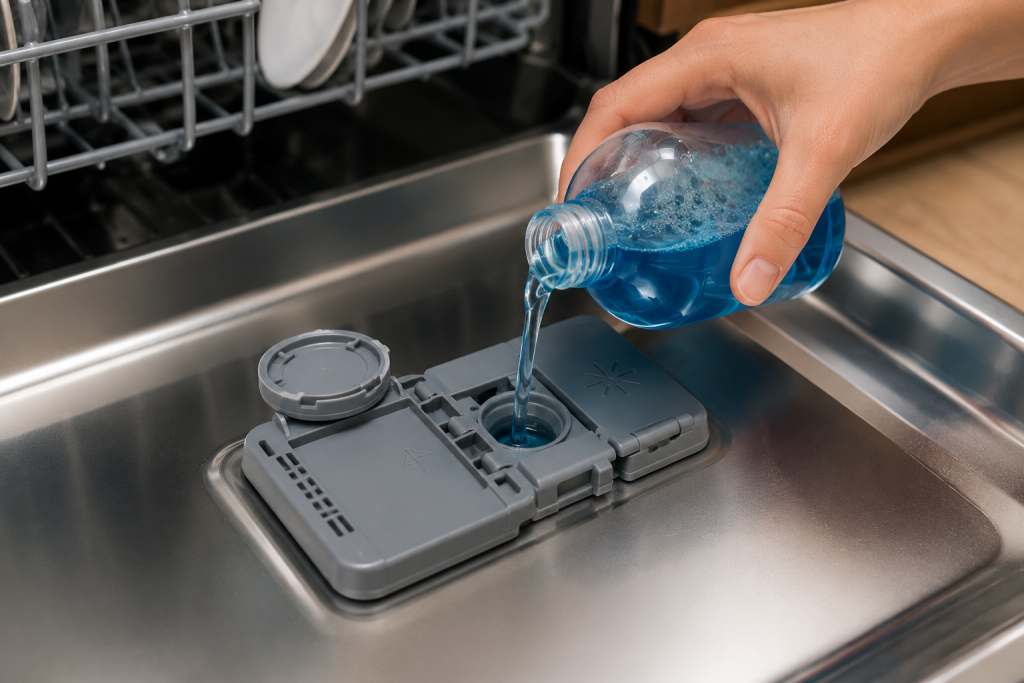
Step 1: Locate the Rinse Aid Compartment
Low rinse aid levels are one of the leading causes of a dishwasher not drying dishes complaint because water remains on dishes instead of evaporating properly. The rinse aid dispenser is usually mounted on the inside of the dishwasher door.
Step 2: Check the Fill Level
If the reservoir is empty, refill it according to the manufacturer’s recommendations.
Rinse aid helps water sheet off dishes instead of forming droplets, significantly improving drying performance.
As an Amazon Associate I earn from qualifying purchases.
If the dispenser is empty, refill it with dishwasher rinse aid according to your dishwasher’s instructions. Rinse aid helps water sheet off dishes instead of forming droplets, improving drying and reducing water spots. Avoid overfilling the dispenser.
You can learn more about rinse aid benefits from the official guidance provided by the Cascade Dishwasher Tips.
Step 3: Run Another Cycle
After refilling the dispenser, run another load and compare the results.
Fix 3: Load the Dishwasher Correctly
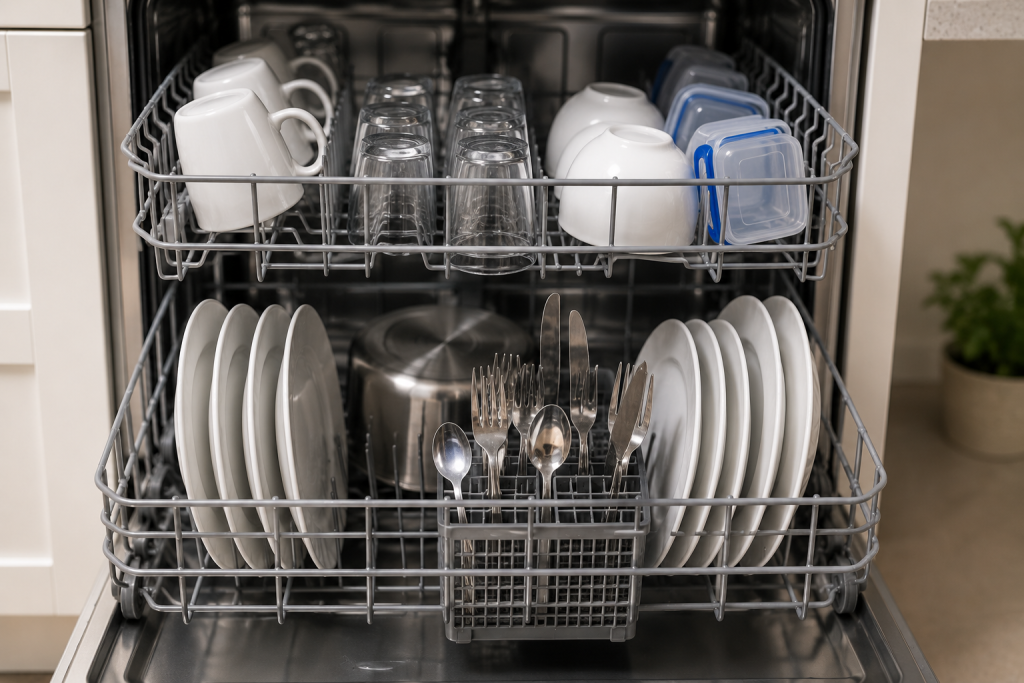
Step 1: Avoid Overloading
Overloaded racks restrict airflow and prevent moisture from evaporating.
Step 2: Separate Dishes
Avoid nesting bowls, cups, and containers together.
Step 3: Place Plastics Properly
Plastic items retain moisture longer than glass or ceramic dishes.
Place plastic containers on the upper rack where drying performance is often better.
For additional rack-loading advice, see our Dishwasher Leaving White Residue article.
Fix 4: Inspect the Heating Element
Step 1: Disconnect Power
Turn off power at the circuit breaker before inspecting internal components.
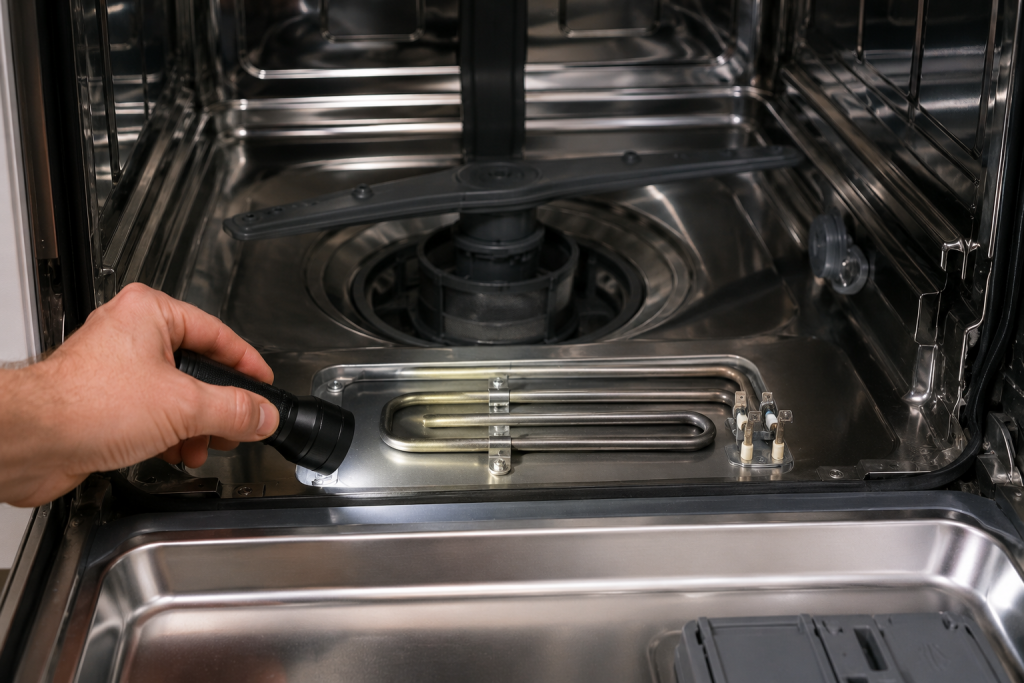
Step 2: Locate the Heating Element
Most heating elements are visible along the bottom of the dishwasher tub.
Step 3: Look for Damage
Inspect for:
- Cracks
- Blistering
- Burn marks
- Broken sections
A damaged heating element may no longer generate sufficient heat for drying.
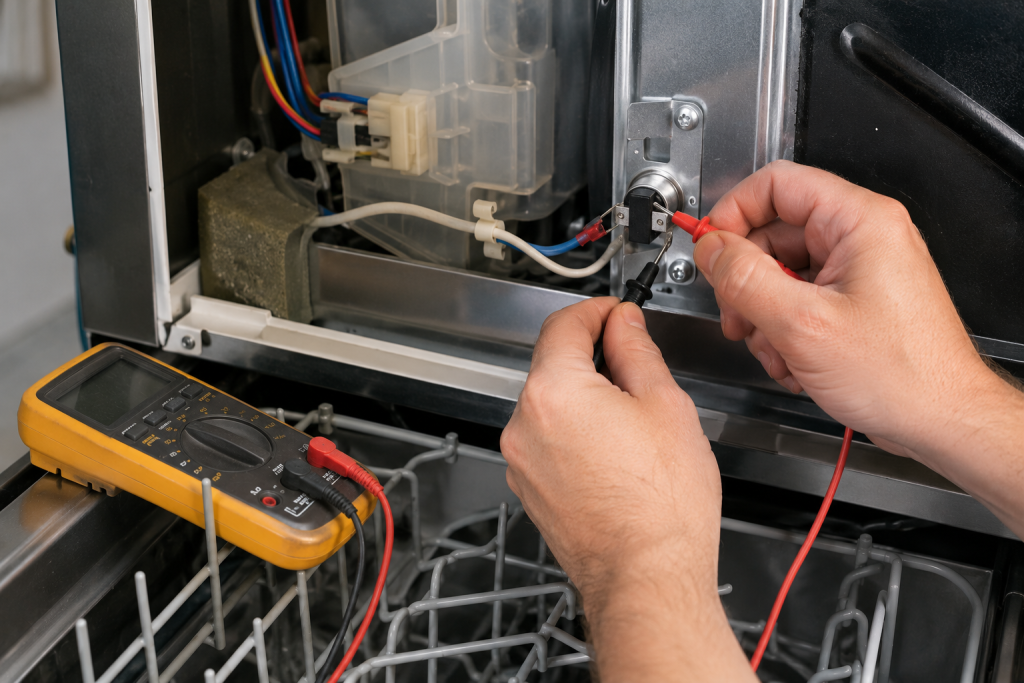
Step 4: Test with a Multimeter
For readers experienced with appliance electrical testing, a digital multimeter with resistance and continuity functions can help check a heating element using the manufacturer’s service procedure. Disconnect electrical power before testing, and never measure resistance or continuity on an energized circuit. If you’re unfamiliar with this work, contact an appliance technician.
If testing confirms that the heating element has failed, browse replacement dishwasher heating elements on Amazon. Match the manufacturer’s specified part number to your dishwasher’s full model number before ordering. Heating-system designs vary, so appearance alone is not a reliable compatibility check.
Fix 5: Check the Dishwasher Vent
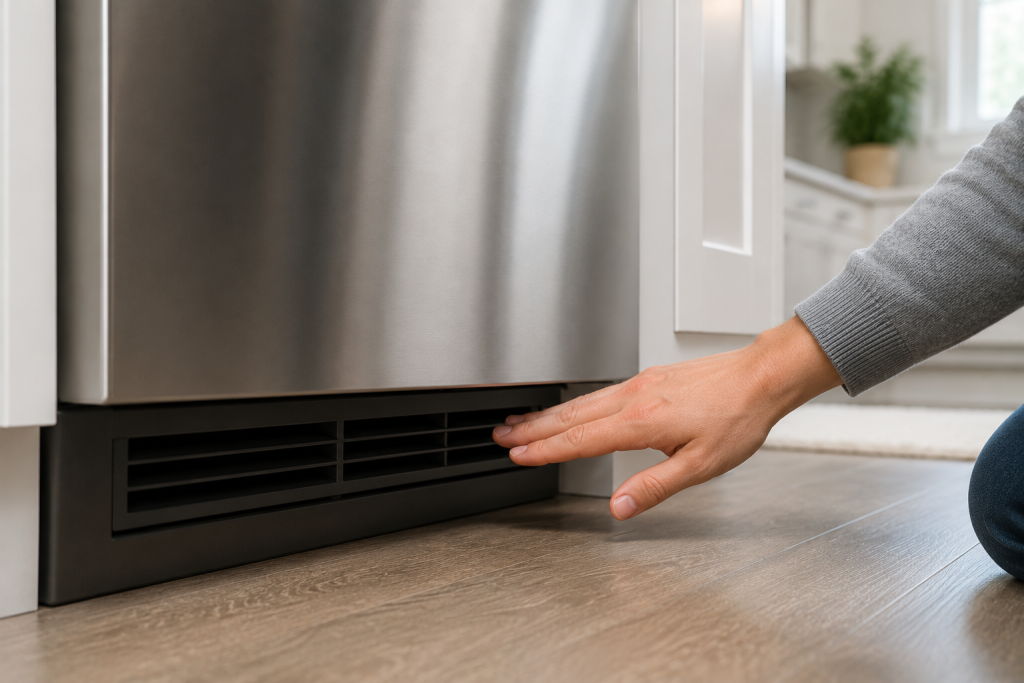
Step 1: Locate the Vent Assembly
Many dishwashers use a vent near the top of the door to release hot, moist air.
Step 2: Inspect for Obstructions
Food debris, detergent buildup, or mechanical failure can prevent the vent from opening.
Step 3: Verify Operation
Run a cycle and listen for vent activity during the drying phase.
A vent that remains closed can trap moisture inside the appliance.
Fix 6: Test the High-Limit Thermostat
Step 1: Disconnect Power
Always disconnect power before servicing internal components.
Step 2: Access the Thermostat
Consult your owner’s manual to locate the high-limit thermostat.
Step 3: Check Continuity
Use a multimeter to verify the thermostat is functioning properly.
A failed thermostat may prevent the heating element from activating.
For additional appliance troubleshooting, see our Dryer Not Heating guide.
Fix 7: Check for Control Board Problems
Step 1: Look for Error Codes
Many modern dishwashers display fault codes when a drying system malfunction occurs.
Step 2: Review the Owner’s Manual
Identify any drying-related error codes.
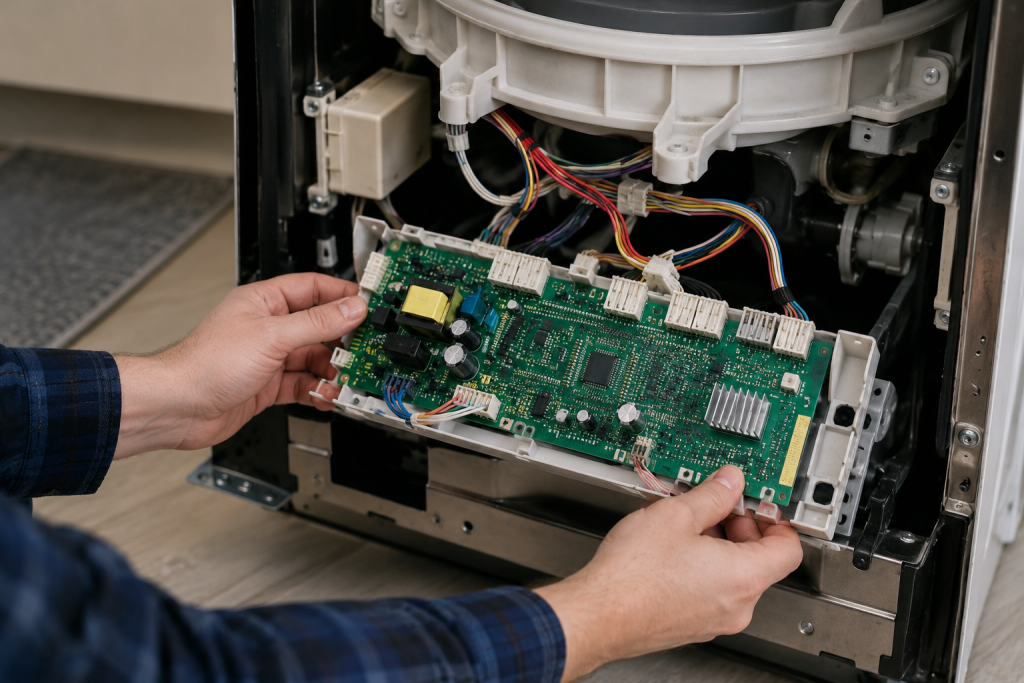
Step 3: Evaluate Control Board Operation
If the heating element, vent, thermostat, and rinse aid system all function properly, the electronic control board may not be sending power to the drying components.
Control board diagnosis is often best left to a qualified appliance technician.
When to Call a Professional
Professional service may be necessary if:
- The heating element tests bad
- The control board is malfunctioning
- The vent assembly has failed
- Electrical troubleshooting is required
- Error codes persist after repairs
Many drying issues are inexpensive to repair compared to replacing the dishwasher.
How to Prevent Dishwasher Drying Problems
- Keep rinse aid filled
- Avoid overcrowding racks
- Use the heated dry option when appropriate
- Clean filters regularly
- Use quality dishwasher detergent
- Inspect vents for debris buildup
- Perform routine maintenance
Preventive care can significantly improve drying performance and extend dishwasher lifespan.
Frequently Asked Questions
Why are my dishes clean but still wet?
This usually indicates a drying system issue rather than a washing problem. Common causes include low rinse aid, disabled heated dry settings, or a faulty heating element.
Why do plastic dishes stay wet?
Plastic retains heat poorly compared to glass and ceramic materials, making water less likely to evaporate during the drying cycle.
Does rinse aid really help dishes dry?
Yes. Rinse aid reduces water surface tension, helping water run off dishes more effectively and improving drying performance.
How do I know if my dishwasher heating element is bad?
Visible damage, lack of heat during the drying cycle, or failed continuity testing are common indicators of a defective heating element.
Is it normal for some water to remain after a cycle?
A small amount of moisture is normal, especially on plastic items. However, large amounts of standing water or consistently wet dishes indicate a problem.
Looking for help with another appliance problem? Browse our complete collection of appliance repair guides and error-code fixes.
Final Thoughts
A dishwasher not drying dishes is often caused by simple issues such as low rinse aid, improper loading, or disabled drying settings. Start with the easiest fixes before moving on to component testing. In many cases, restoring proper drying performance requires only a few minutes of troubleshooting and can save the cost of an unnecessary service call.