
Last updated: November 11, 2026
Quick Answer
Washing machine has no hot water? First, select a cycle that allows a hot wash and check the water temperature during the main wash fill. Some washers start with cold water, and the rinse can be cold even when you select a hot wash.
If the wash stays cold, run the hot tap at a nearby sink, make sure the washer’s hot-water shutoff valve is fully open, and check the hot inlet hose for a kink. If hot water reaches the washer with a strong flow, the next things to check are the hot inlet screen and the washer’s water inlet valve.
How to Troubleshoot a Washer That Only Gets Cold Water
Step 1: Check the Wash Cycle and Temperature Setting
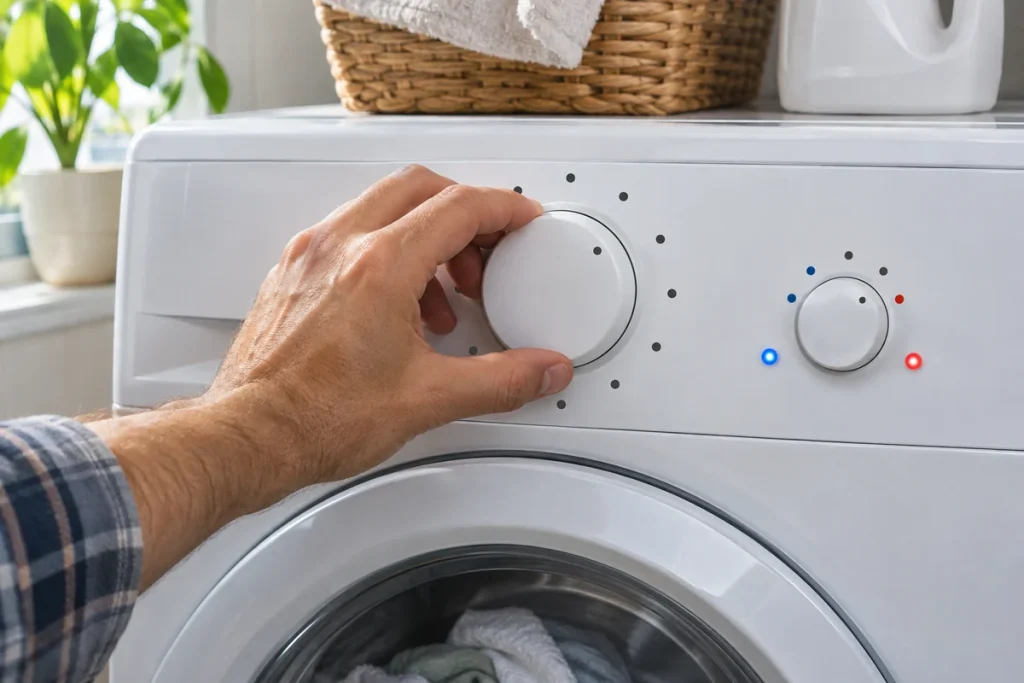
Choose Hot on a cycle that allows it, then observe the washer during the main wash fill. The first water you hear entering the machine may be cold. Some models start the fill with cold water and add hot water as needed to reach the selected temperature.
Your washer may also mix hot and cold water on the Hot setting, so the water in the drum can feel cooler than the hot water at the sink. Check your model’s manual for the temperatures available on each cycle. For an example of how automatic temperature control works, see Whirlpool’s guide to getting cold water when warm or hot was selected.
Step 2: Run the Hot Water at a Nearby Sink
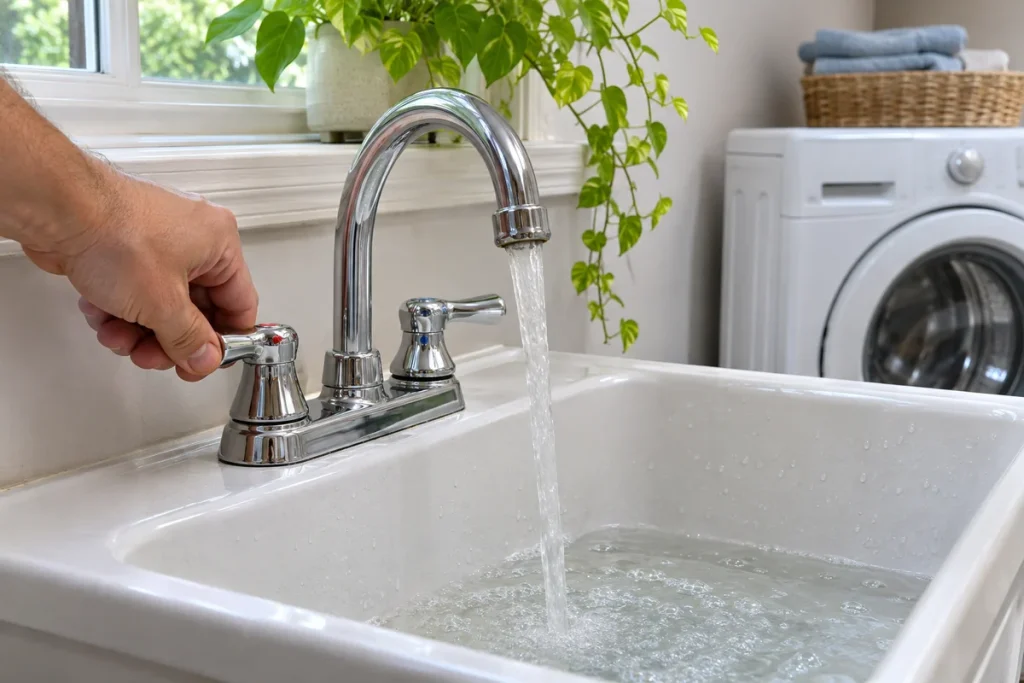
If your washing machine has no hot water, run the hot tap at a nearby sink and give it time to warm up. If it stays cold, try another fixture. If neither fixture gets hot, investigate the home’s hot-water supply before buying washer parts.
If the sink gets hot after a long wait, try running it until it warms up before starting the washer. This can help if the sink and washer share part of the same hot-water line and the washer finishes its initial fill before hot water arrives. If the sink gets hot quickly and the washer still fills cold, move on to the washer’s own supply.
Step 3: Check the Hot-Water Shutoff Valve and Hose
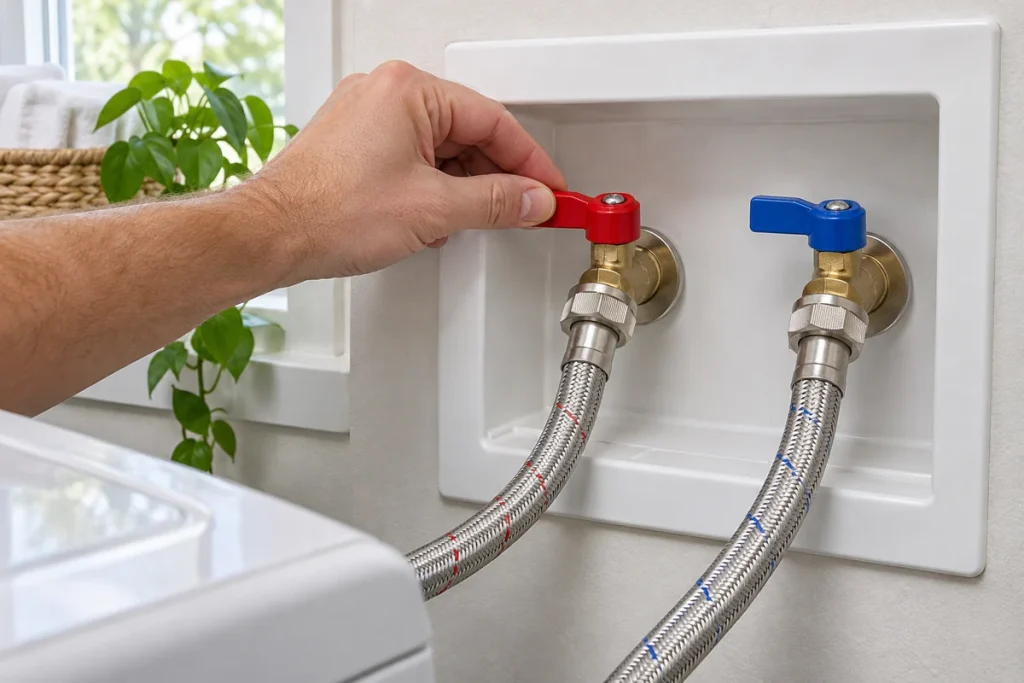
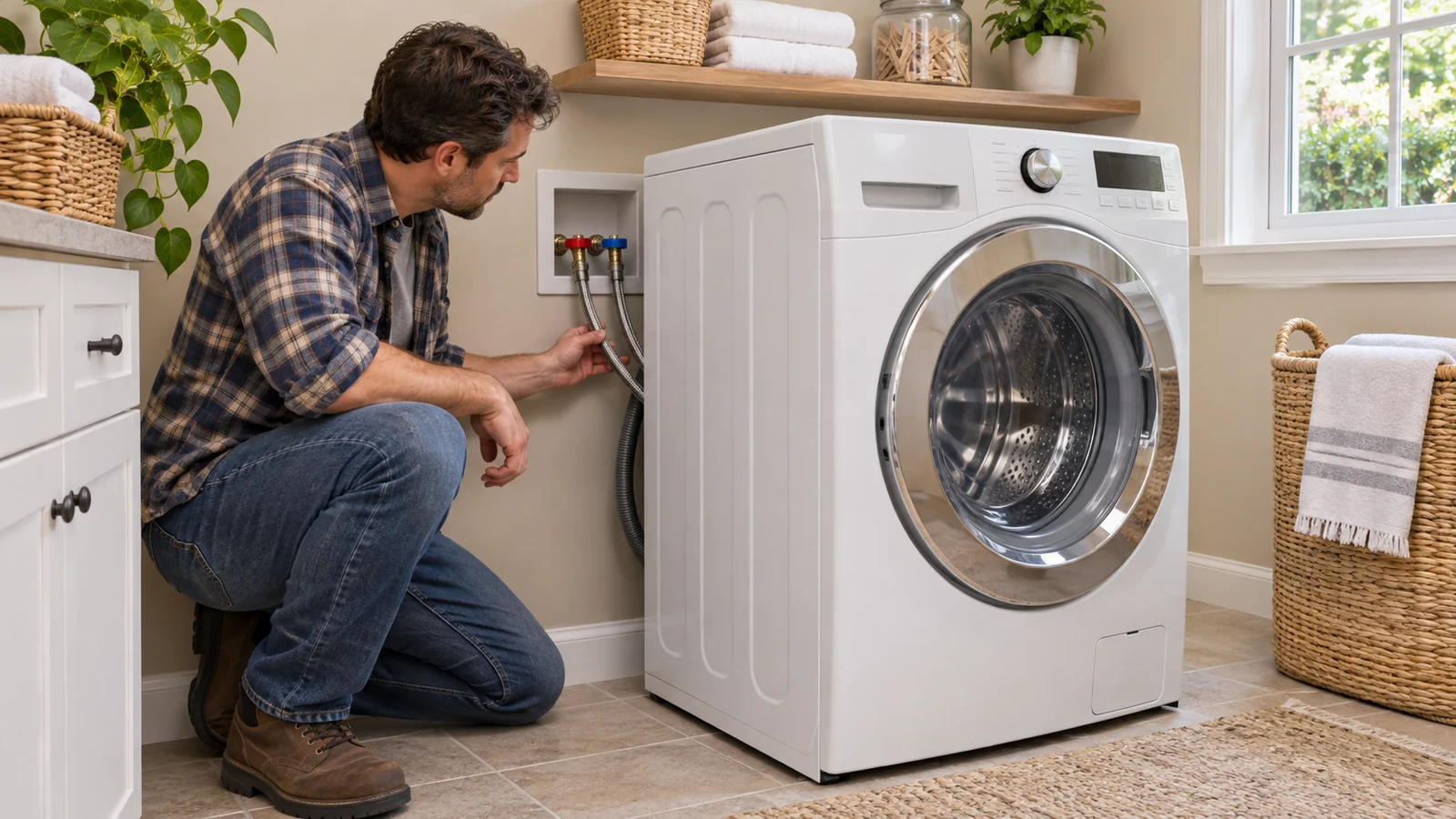
Find the hot-water shutoff valve behind the washer or inside the laundry hookup box. Make sure it’s fully open. If the valve is stuck or starts leaking when you turn it, stop there.
Follow the hot-water hose from the wall to the washer inlet marked H or HOT. Look for a sharp bend or a hose pinched behind the machine. If the washer was recently installed or moved, confirm that each hose connects to the correct inlet. Use the labels on the washer and trace each hose back to the wall.
As an Amazon Associate, I earn from qualifying purchases.
If the hose is damaged or stays sharply creased after you reposition it, replace it with a braided washing machine supply hose that matches your fittings and is long enough to curve gently behind the washer.
Step 4: Test the Hot-Water Flow Through the Hose
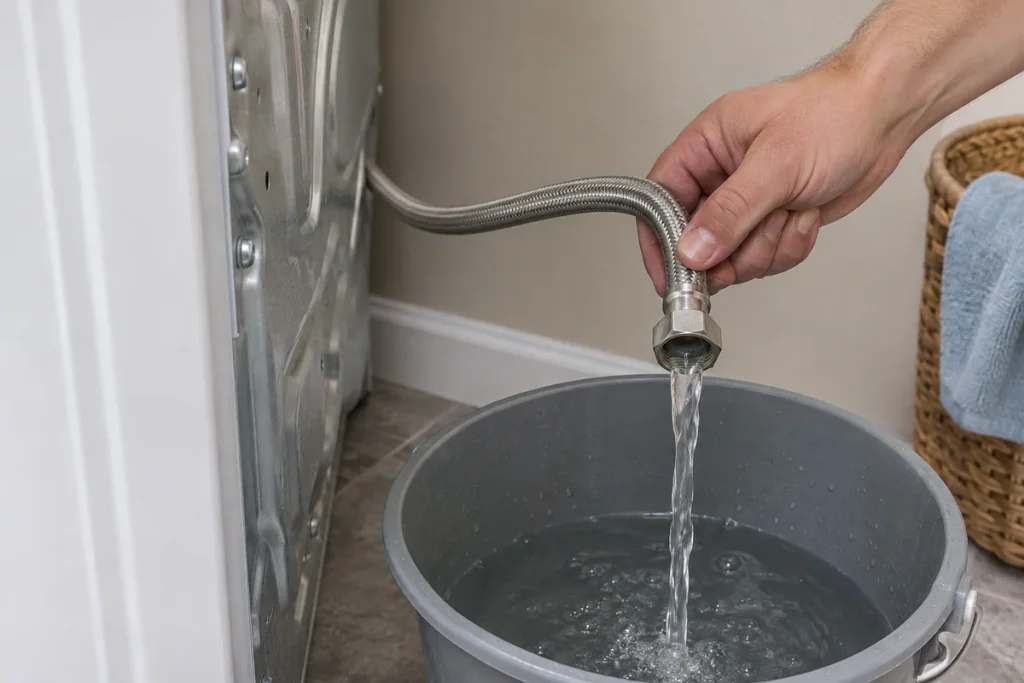
A nearby sink can have plenty of hot water even when the washer’s dedicated valve or hose has poor flow. If your washing machine has no hot water but the nearby sink does, a bucket test can show whether hot water reaches the washer through its supply hose.
- Unplug the washer and close both water supply valves.
- Place a bucket and towel behind the washer. Disconnect the hot-water hose at the washer end and place that end in the bucket.
- Hold the hose securely, then slowly crack open the hot-water valve. Keep your hands out of the stream because the water can be hot.
- Close the valve again after you’ve checked the flow.
A weak stream or trickle points to a restriction in the hose or the supply feeding it. A strong stream that warms up tells you hot water can reach the washer. If the stream stays cold after the line has had time to clear, verify that the hose is connected to the hot supply.
Step 5: Inspect the Hot-Water Inlet Screen
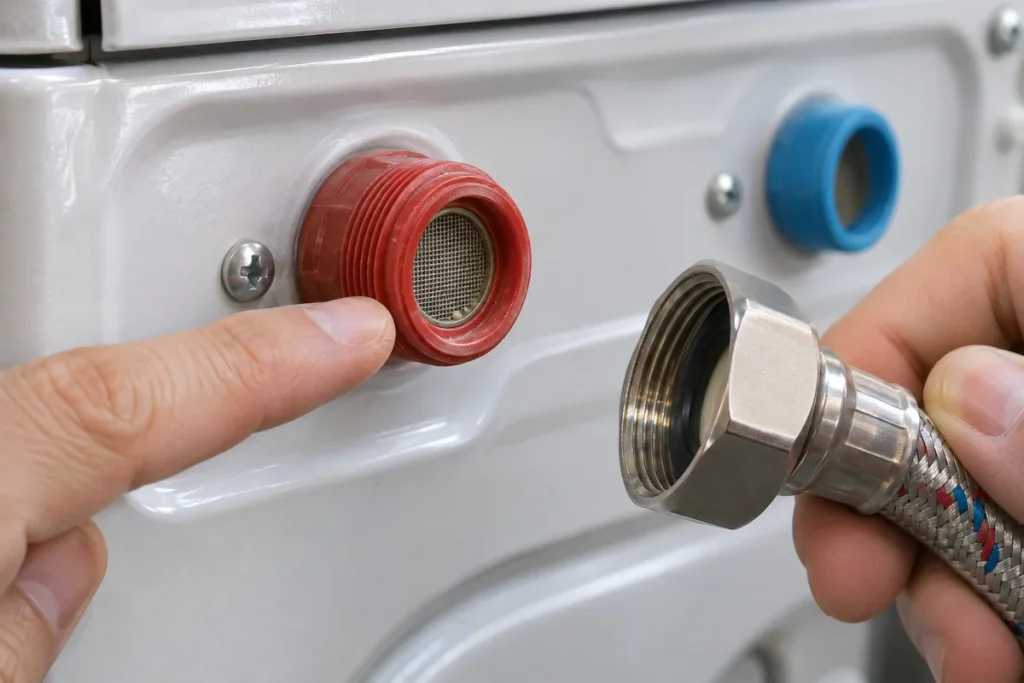
With the washer unplugged and both supply valves closed, look inside the hot inlet where the hose attaches. Many washers have a small mesh screen that catches sediment. A clogged screen can restrict the hot side while the cold side keeps working.
If you see buildup, check your manual for the approved cleaning method. Some screens are designed to stay in place. Prying one out can damage the valve or allow debris into it. After reconnecting the hose, open the supply valves slowly and check the connection for leaks.
If your Maytag washer also shows a fill error, see our guide to the Maytag washer F8 E1 error.
Step 6: Have the Hot-Water Inlet Valve Checked
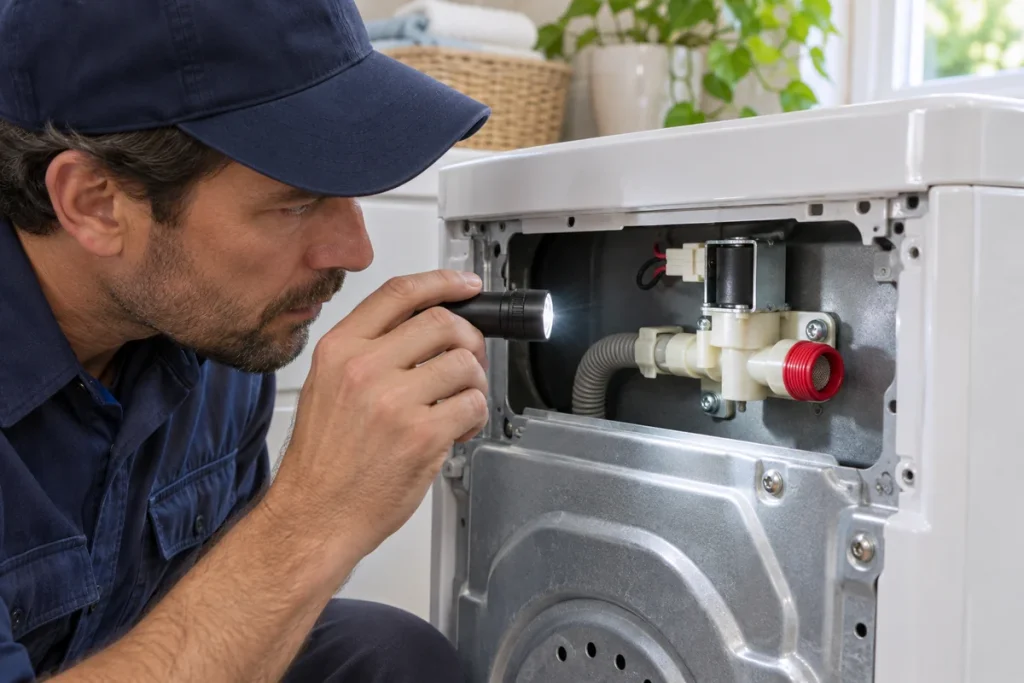
If your washing machine has no hot water even though the supply hose delivers a strong, hot stream and the inlet screen is clear, the hot side of the inlet valve may be failing. The cold side can keep working even when the hot side fails. A wiring, temperature sensor, or control issue can produce a similar symptom, so verify the cause before ordering a valve.
If a technician confirms the inlet valve has failed, use your washer’s full model number to find a compatible washing machine water inlet valve before ordering.
When the Problem Is Filling, Draining, or Spinning
Pay attention to when the water problem occurs. If cold water enters normally and the issue only happens on a hot wash, start with the hot-water supply checks above. If water remains in the drum after the cycle, see our GE washer not draining guide. If the washer fills but bangs or moves during the spin cycle, see why a washing machine shakes violently.
Frequently Asked Questions
Why does my washing machine start with cold water on the Hot setting?
Some washers start the fill with cold water and add hot water during the wash fill to reach the target temperature. Check what happens through the main wash fill before deciding the hot supply has failed.
Why are my clothes cold when I take them out after a hot wash?
Many washers use cold water for the final rinse. The temperature of the clothes at the end of the cycle tells you more about the rinse than the wash.
Can a clogged inlet screen affect only the hot water?
Yes. On a washer with separate hot and cold inlets, debris can restrict the hot inlet while the cold inlet continues to flow normally. If the hot hose delivers a strong stream, the screen is a sensible next check.
Why is my washer’s hot water colder than the water at the sink?
The washer may blend hot and cold water to reach its programmed wash temperature. A long supply line can also hold enough cooled water to affect a short fill, especially when the hot tap hasn’t been used for a while.
Should I replace the inlet valve if my washing machine has no hot water?
Check the hot supply, hose, and inlet screen first. If those checks pass and the washer still stays cold on a cycle that calls for hot water, have the inlet valve and its controls diagnosed before replacing parts.
Looking for help with another appliance problem? Browse our complete collection of appliance repair guides and error-code fixes.