
Last updated: September 20, 2026
By Home Repair Genie
Quick Answer
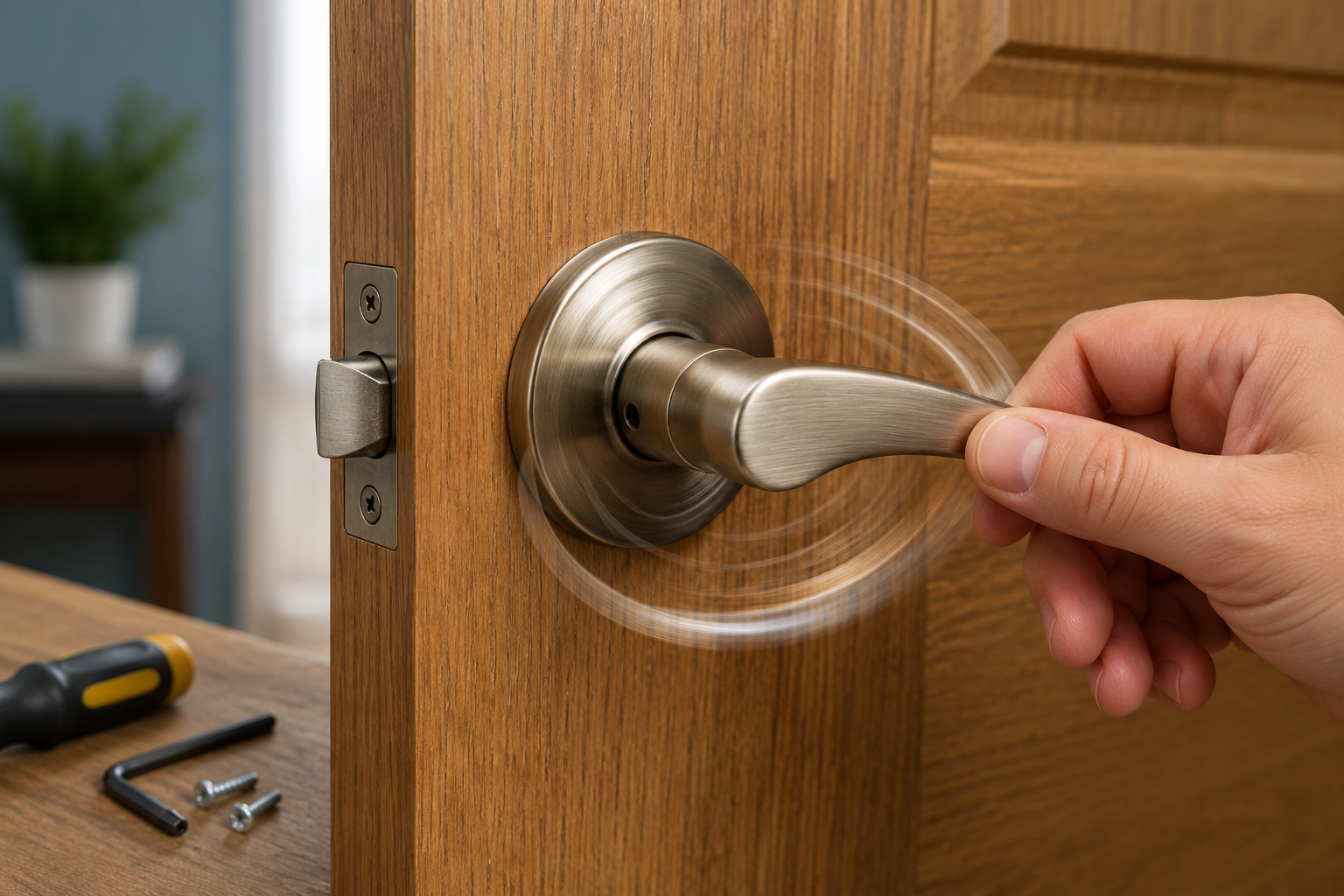
If your door handle keeps spinning, the most common causes are a loose set screw, a broken spindle, worn internal spring mechanism, stripped mounting hardware, or a failed latch assembly. Start by tightening the set screw and mounting screws before replacing any parts. Most spinning door handles can be repaired in under 30 minutes using basic hand tools.
A door handle that spins without opening or latching the door is more than just annoying—it can leave you locked out of a room or unable to secure your home. Fortunately, this problem is often caused by a loose or worn component that can be repaired without replacing the entire door.
In this guide, you’ll learn the most common reasons a door handle keeps spinning, how to diagnose the issue, and the steps to fix it.
Why Does a Door Handle Keep Spinning?
Understanding why a door handle keeps spinning makes it much easier to identify the correct repair before replacing any hardware. Most door handles rely on a spindle connected to an internal spring-loaded mechanism. When one of these components loosens, wears out, or breaks, the handle can rotate freely without engaging the latch.
Common causes include:
- Loose set screw
- Loose mounting screws
- Worn spindle
- Broken return spring
- Damaged latch mechanism
- Stripped screw holes
- Worn or broken door handle assembly
What You’ll Need
- Phillips screwdriver
- Flathead screwdriver
- Allen wrench (hex key)
- Needle-nose pliers
- Replacement screws (if needed)
- Replacement spindle or door handle (if necessary)
- Thread-locking compound (optional)
Fix 1 – Tighten the Set Screw
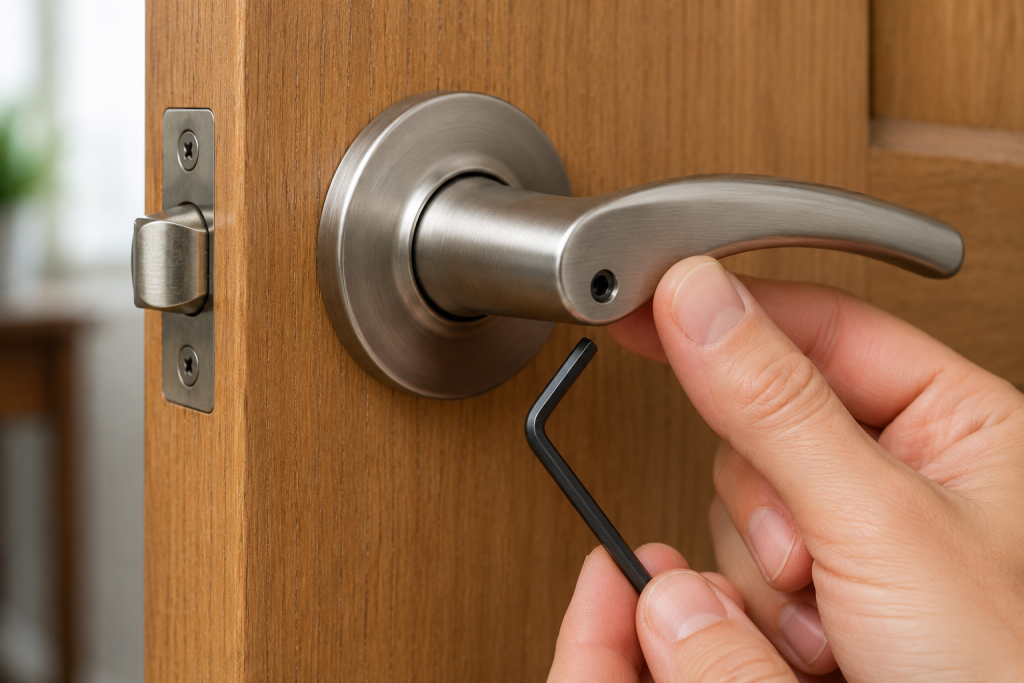
Locate the Set Screw
Many lever-style door handles have a small Allen set screw underneath the handle.
Tighten It Securely
Insert the correct Allen wrench and tighten the screw until the handle no longer slips on the spindle.
Avoid overtightening, which can strip the threads.
Fix 2 – Tighten the Mounting Screws
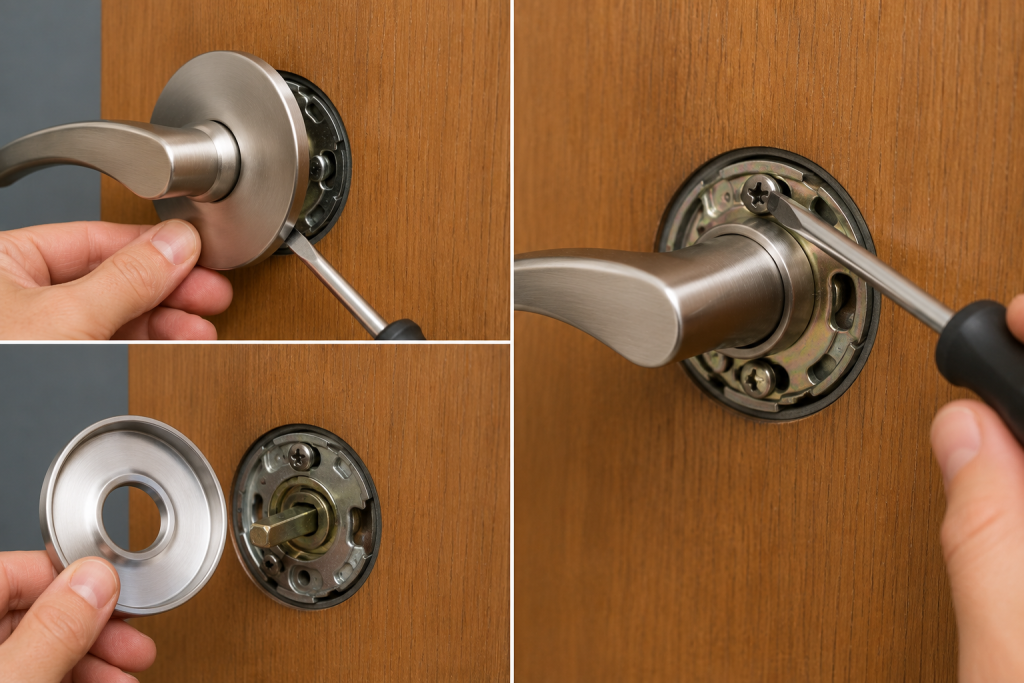
Remove the Decorative Cover
Some handles have a snap-on trim plate that hides the mounting screws.
Carefully pry it off using a flathead screwdriver.
Tighten Both Screws
Loose mounting screws allow the handle assembly to shift, preventing the spindle from engaging correctly.
Tighten both screws evenly.
Fix 3 – Inspect the Spindle
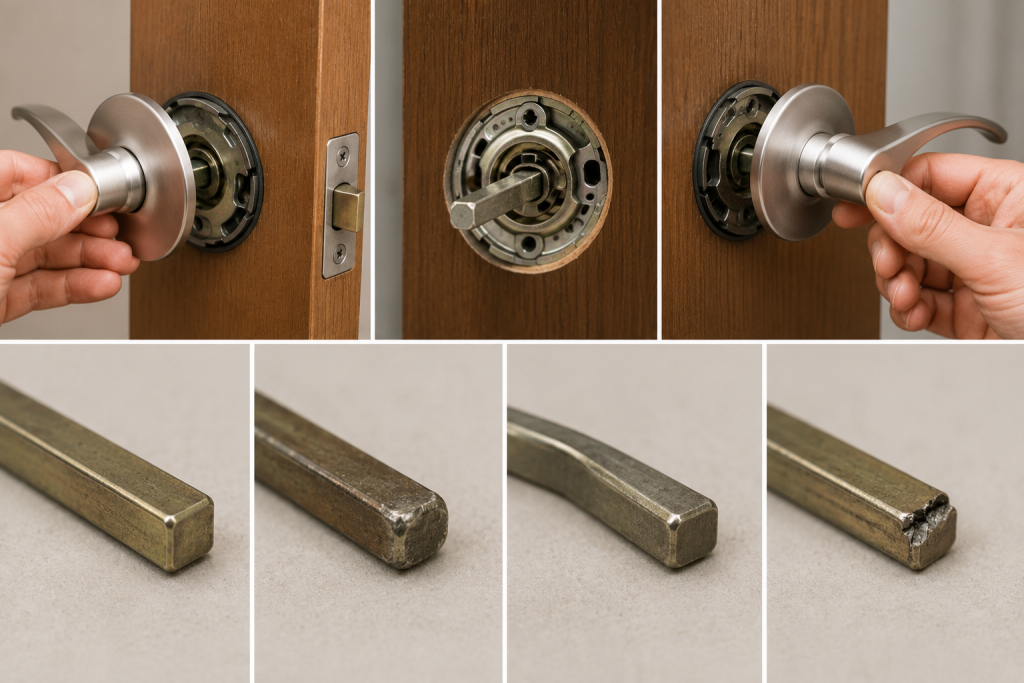
Remove Both Handles
Take both sides of the handle off the door.
Check for Wear
Look for:
- Rounded corners
- Bent spindle
- Broken spindle
- Excessive wear
If damaged, replace the spindle.
Fix 4 – Check the Return Spring
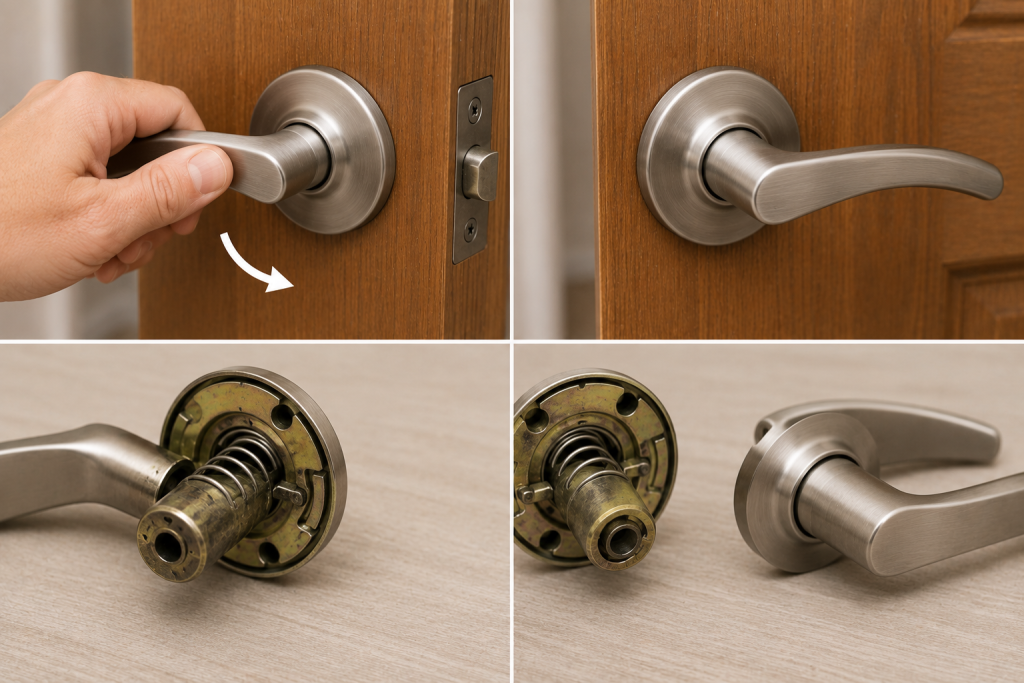
Test the Handle
After turning the handle, release it.
A healthy handle should spring back to its original position.
Replace the Handle if Needed
Most residential door handles have sealed spring mechanisms that cannot be repaired individually.
If the spring has failed, replacing the entire handle is usually the best solution.
Fix 5 – Inspect the Latch Mechanism
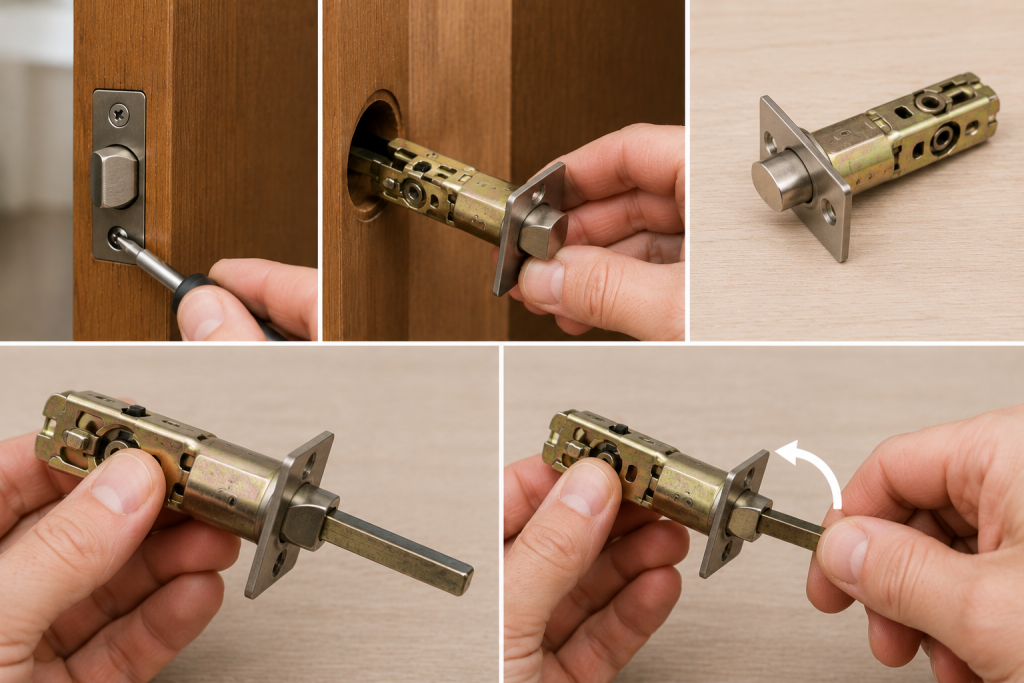
Remove the Latch
Unscrew the latch from the edge of the door.
Test It Manually
Insert the spindle into the latch and rotate it by hand.
If the latch doesn’t retract smoothly or feels loose internally, replace it.
For more latch troubleshooting, see our guide on 5 Easy Ways to Fix a Door That Won’t Latch Properly.
Fix 6 – Repair Stripped Screw Holes
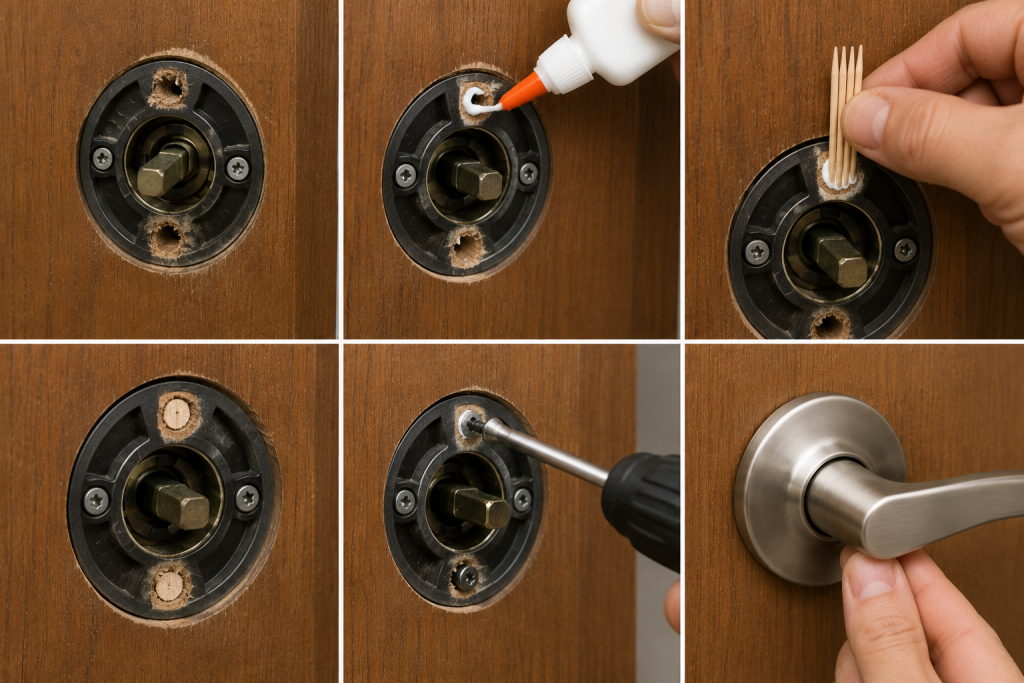
Check the Mounting Holes
If the screws won’t tighten, the wood may be stripped.
Repair the Holes
You can:
- Fill the holes with wood glue and toothpicks.
- Allow the glue to dry.
- Reinstall the screws.
This often restores a solid grip.
Fix 7 – Replace the Entire Door Handle
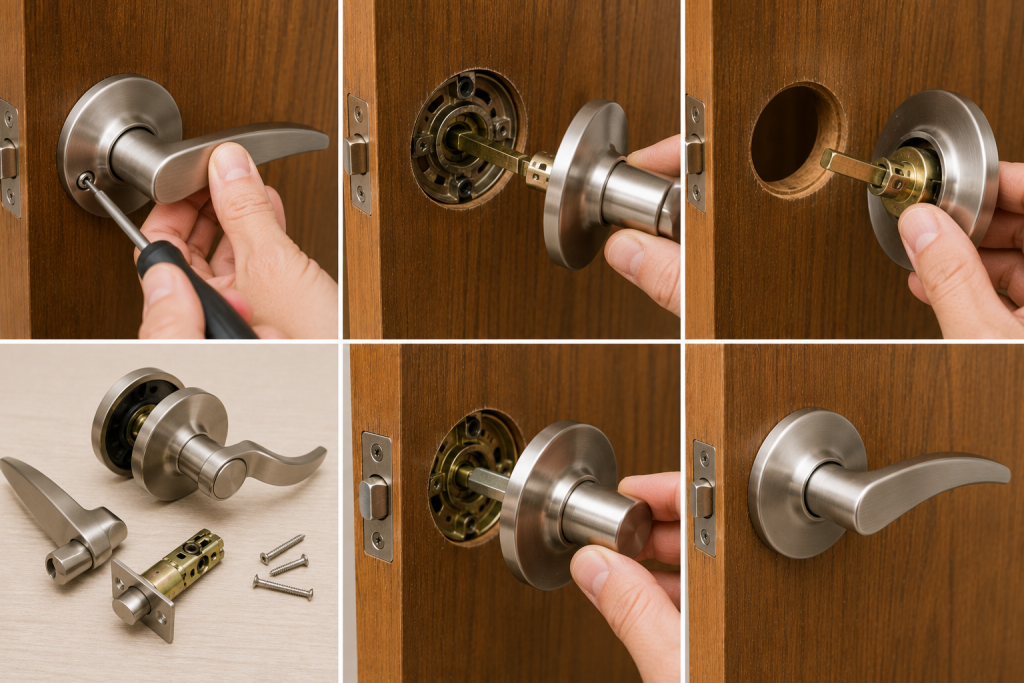
When Replacement Is Best
Replace the handle if you find:
- Broken internal components
- Cracked housing
- Worn spindle connection
- Failed spring mechanism
Most modern door handle sets install in less than 20 minutes.
How to Prevent a Door Handle From Spinning Again
Routine maintenance helps extend the life of your hardware.
Tips include:
- Tighten screws once or twice each year.
- Avoid forcing sticky doors.
- Lubricate the latch occasionally.
- Replace worn hardware before it fails completely.
- Use quality replacement hardware.
If your door is sticking, read our guide on Door Is Swollen From Humidity? 7 Proven Fixes That Actually Work.
When to Replace Instead of Repair
Sometimes a door handle keeps spinning because multiple internal components have worn out, making replacement the most practical solution. Replacing the entire handle is usually the better option if:
- The handle is over 15 years old.
- Internal springs have broken.
- Multiple components are worn.
- The finish is heavily corroded.
- Repair parts are unavailable.
A new quality handle often provides smoother operation and better security.
You may want to also read this guide: 7 Powerful Tricks on How to Fix a Sagging Door Without Removing It (DIY Guide).
When to Call a Professional
Consider hiring a locksmith if:
- The door won’t open.
- You’re locked out.
- The latch is stuck inside the door.
- The lock cylinder is also malfunctioning.
- The door frame has shifted significantly.
Frequently Asked Questions
Why does my door handle spin but not open the door?
This usually means the spindle has disconnected from the latch, the set screw is loose, or the latch mechanism has failed.
Can I fix a spinning door handle without replacing it?
Yes. Tightening loose screws or replacing the spindle often solves the problem.
Why does only one side of the handle spin?
One handle may have a loose set screw while the opposite side remains attached to the spindle.
Is it expensive to repair a spinning door handle?
Most repairs cost very little if only screws or the spindle need attention. Replacing the entire handle is still an affordable DIY repair.
Should I lubricate the door handle?
Lubricating the latch can improve operation, but it won’t fix worn internal components or a broken spring.
How long does it take to replace a door handle?
Most homeowners can replace a standard interior door handle in about 15 to 30 minutes.
Looking for help with another door or window problem? Browse our complete collection of door and window repair guides.
Final Thoughts
If your door handle keeps spinning, don’t assume you need a complete replacement. In many cases, tightening a loose set screw, securing the mounting hardware, or replacing a worn spindle restores normal operation in just a few minutes. Start with the simple fixes before purchasing new hardware, and inspect each component carefully to identify the true cause.
For additional guidance on maintaining doors and hardware, the Family Handyman offers excellent DIY repair advice.