
Last updated: October 9, 2026
By Home Repair Genie
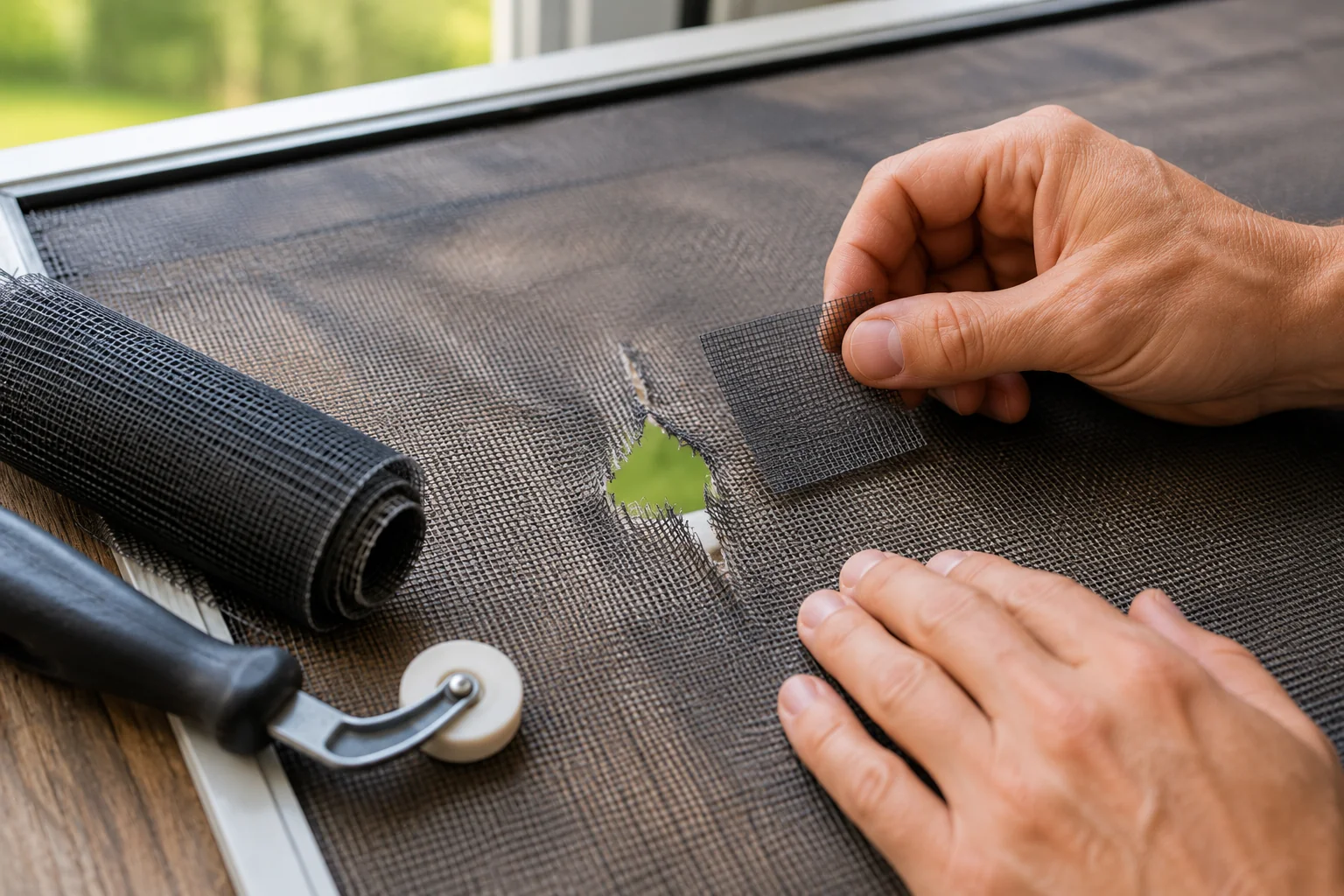
How to fix window screens with holes or tears is a common DIY repair that can help keep insects outside while improving airflow and the appearance of your windows. Most small holes and tears can be repaired quickly using inexpensive materials and a few simple tools.
Quick Answer
To fix a window screen with holes or tears, first inspect the damage and determine whether the screen can be patched or needs full replacement. Small holes can often be repaired with screen patches, while larger tears may require replacing the screen mesh entirely.
Common Causes of Damaged Window Screens
Window screens commonly develop damage over time due to:
- Pets scratching the screen
- Storm or wind damage
- Sun exposure weakening the mesh
- Accidental punctures
- Rusted or bent screen frames
- Improper storage during winter
Small tears can quickly spread if they are not repaired promptly.
Seasonal window inspections are an important part of routine home upkeep. You may also enjoy our spring home maintenance checklist article.
Tools and Materials You May Need
As an Amazon Associate I earn from qualifying purchases.
- Replacement screen mesh
- Screen repair patch
- Spline roller tool
- Utility knife
- Scissors
- Flathead screwdriver
- Replacement spline
- Cleaning cloth
To make things simple, you can purchase an all-in-one kit.
Step 1: Remove the Window Screen
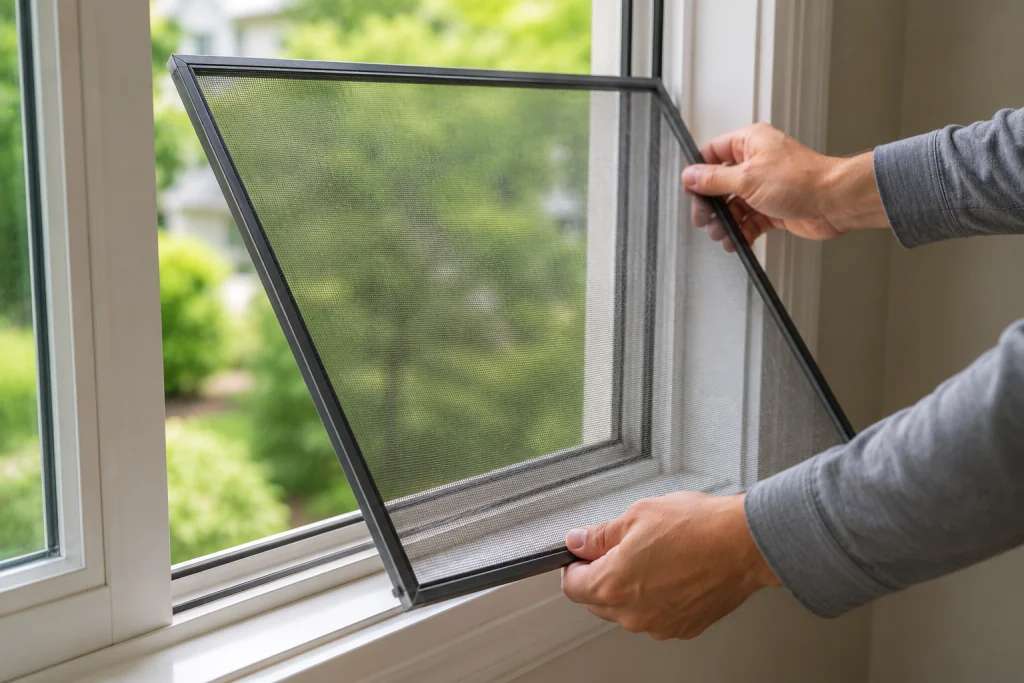
Carefully remove the screen from the window frame.
Most screens lift slightly and pull outward from the frame. Place the screen on a flat work surface where you can inspect the damage clearly.
While removing the screen, check the frame for bends or cracked corners that may also need repair.
If you’re having trouble keeping your window open, check out our guide: Window Won’t Stay Open? 7 Easy Fixes That Actually Work (Step-by-Step Guide).
Step 2: Inspect the Hole or Tear
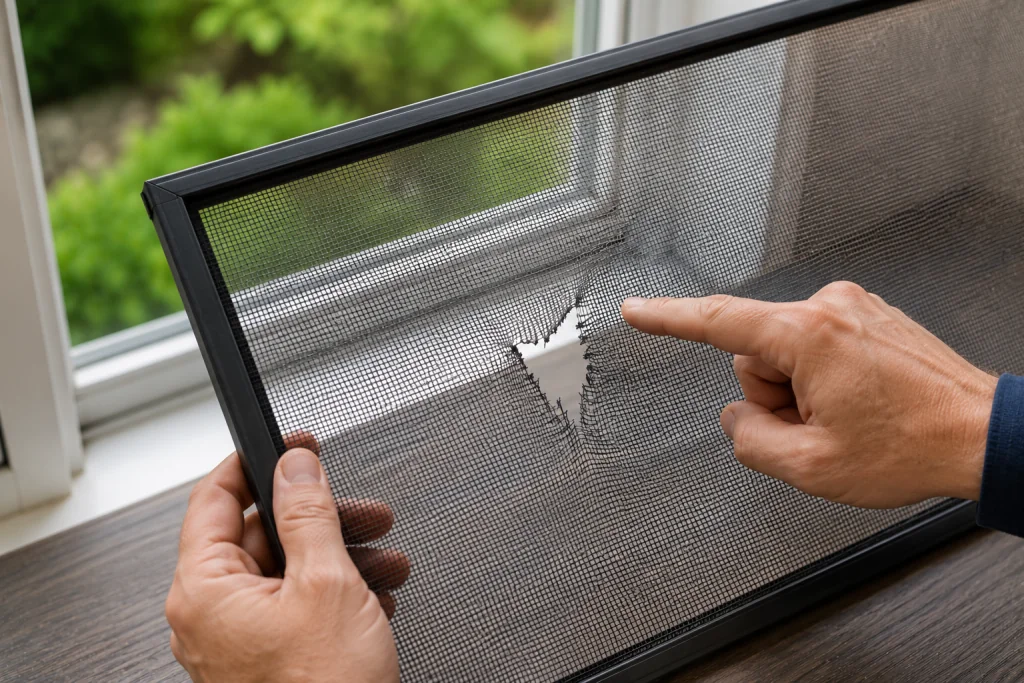
Understanding how to fix window screens with holes or tears starts with inspecting the size and location of the damage carefully. Examine the damaged area closely to determine the best repair method.
Small Holes
Tiny punctures or minor tears can often be fixed using an adhesive screen repair patch.
Larger Tears
Long tears or multiple damaged areas usually require replacing the screen mesh entirely.
If the screen material feels brittle or weak, replacing the entire screen may provide better long-term results.
Winter is coming, prepare by reading our guide: Window Drafts in Winter? 7 Easy Fixes That Actually Work (Step-by-Step Guide).
Step 3: Clean the Screen and Frame
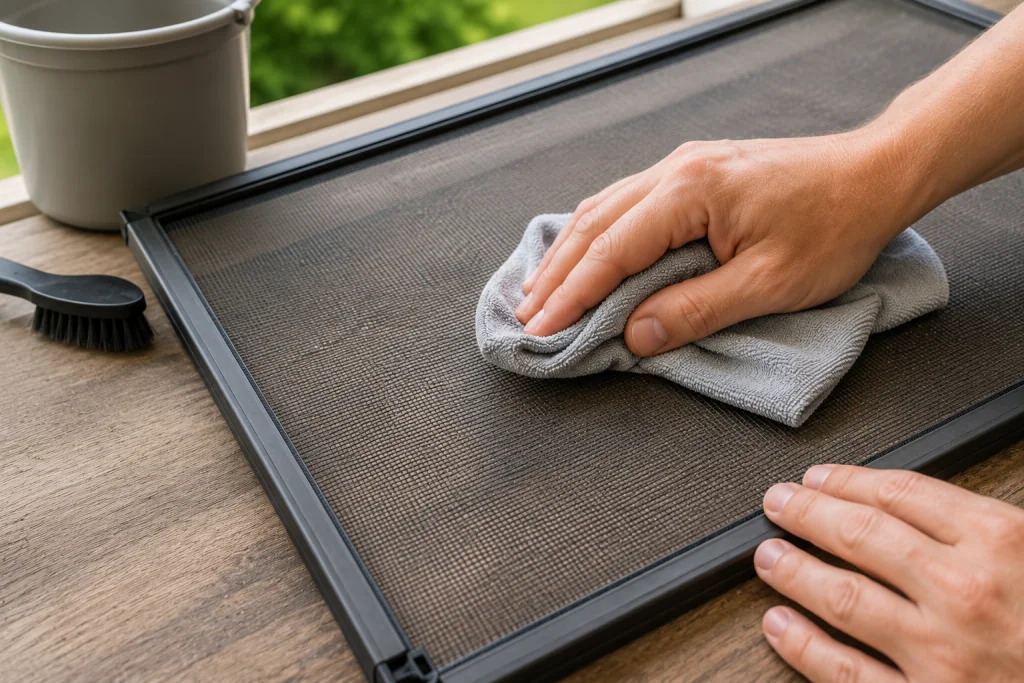
Before making repairs, clean the screen thoroughly.
Use a soft brush or cloth to remove:
- Dust
- Dirt
- Pollen
- Insect debris
Cleaning helps repair patches stick properly and makes it easier to work with replacement mesh.
Step 4: Apply a Screen Repair Patch for Small Holes
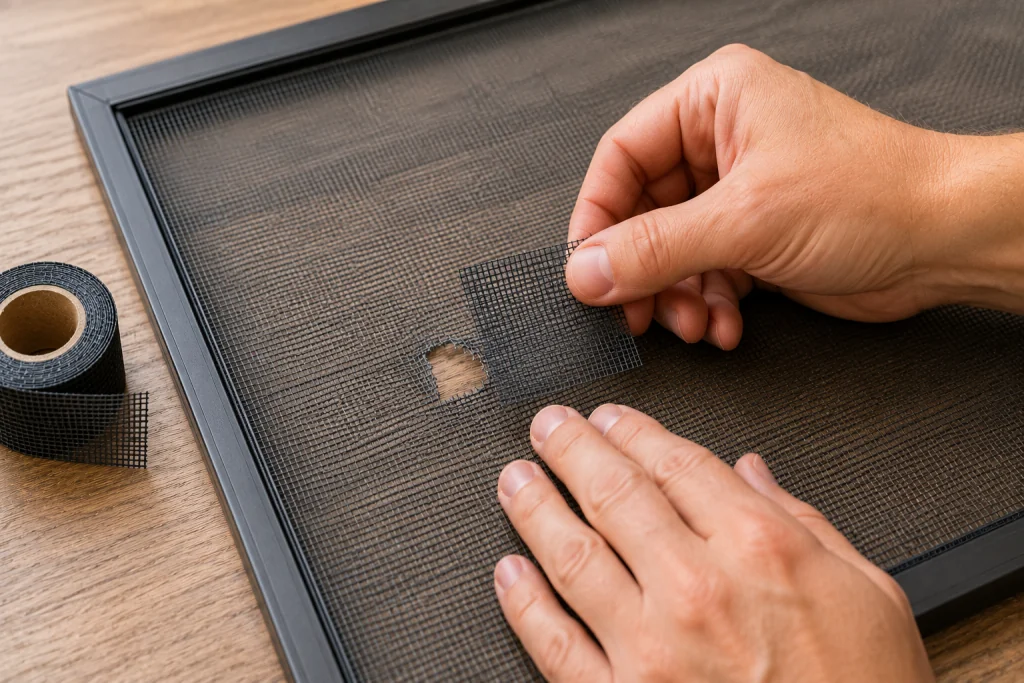
For small holes or tears, screen repair patches are often the quickest solution.
Cut the Patch to Size
Trim the repair patch slightly larger than the damaged area.
Apply the Patch
Carefully place the patch over the hole and press firmly to secure it.
Smooth the Edges
Flatten any lifted edges to help the patch blend with the screen mesh.
Most adhesive patches work best on clean, dry surfaces.
Step 5: Replace the Screen Mesh for Larger Tears
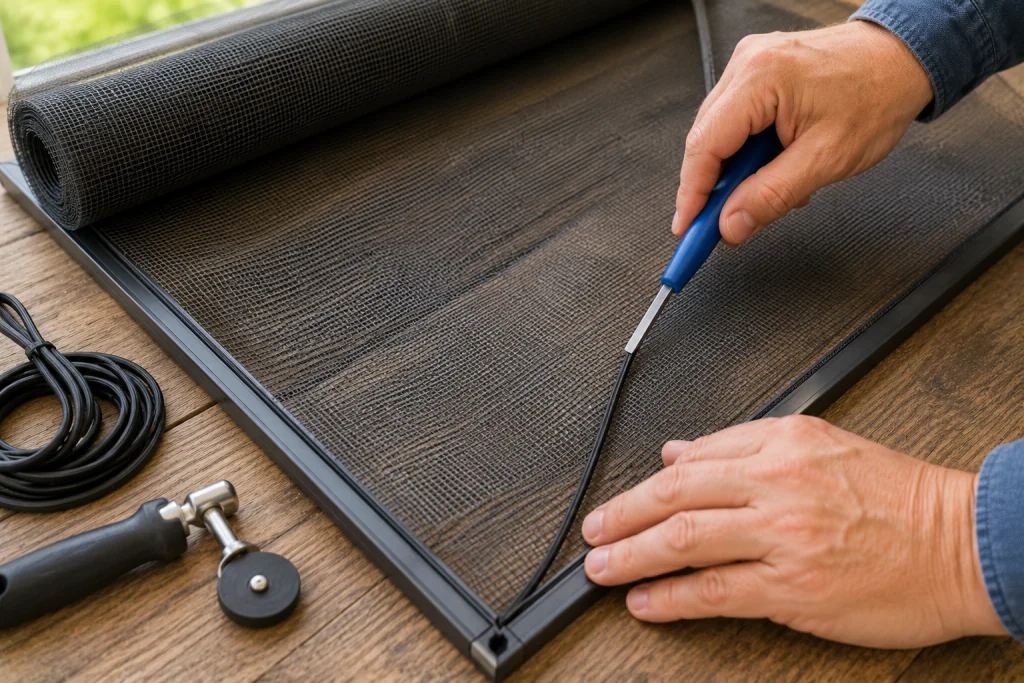
For homeowners learning how to fix window screens with holes or tears, replacing the mesh is often the best solution for larger damage. If the tear is too large for a patch, replacing the mesh is usually the best option.
Remove the Old Spline
Use a flathead screwdriver to lift the old spline from the groove around the screen frame.
Remove the Old Screen Material
Pull the damaged screen mesh away from the frame completely.
Lay the New Mesh Over the Frame
Cut the new screen mesh slightly larger than the frame opening.
Install the New Spline
Use a spline roller tool to press the spline and mesh securely into the frame groove.
Trim Excess Mesh
Carefully trim away extra screen material using a utility knife.
Step 6: Inspect the Screen Frame for Damage
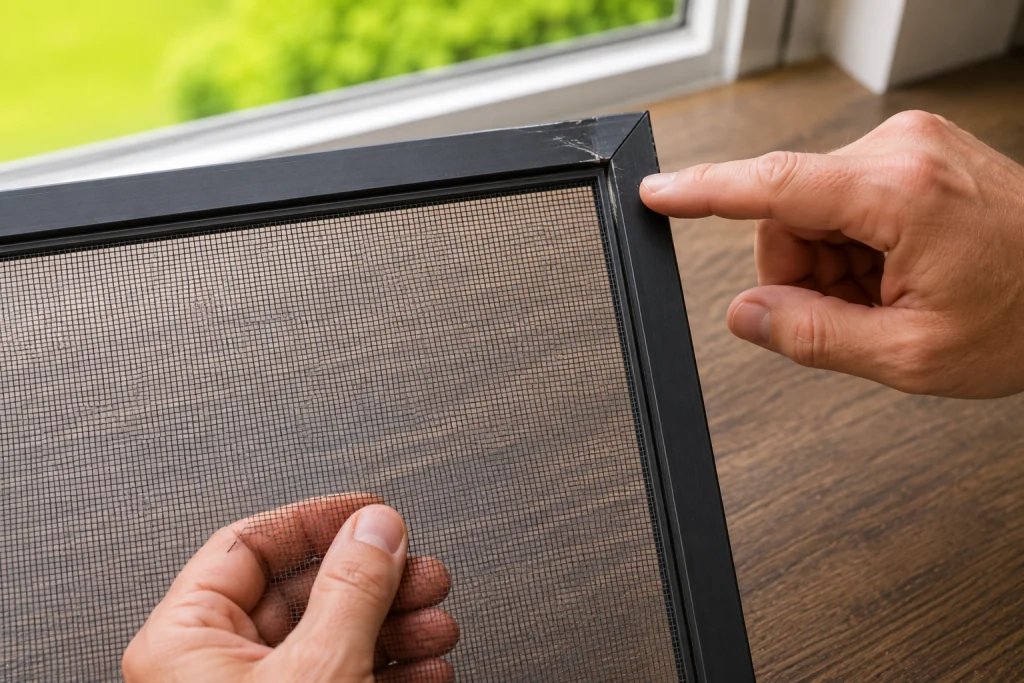
Before reinstalling the screen, inspect the frame carefully.
Look for:
- Bent frame sections
- Loose corners
- Rust
- Cracks
- Warped edges
Damaged frames may prevent the screen from fitting securely back into the window.
Step 7: Reinstall and Test the Window Screen
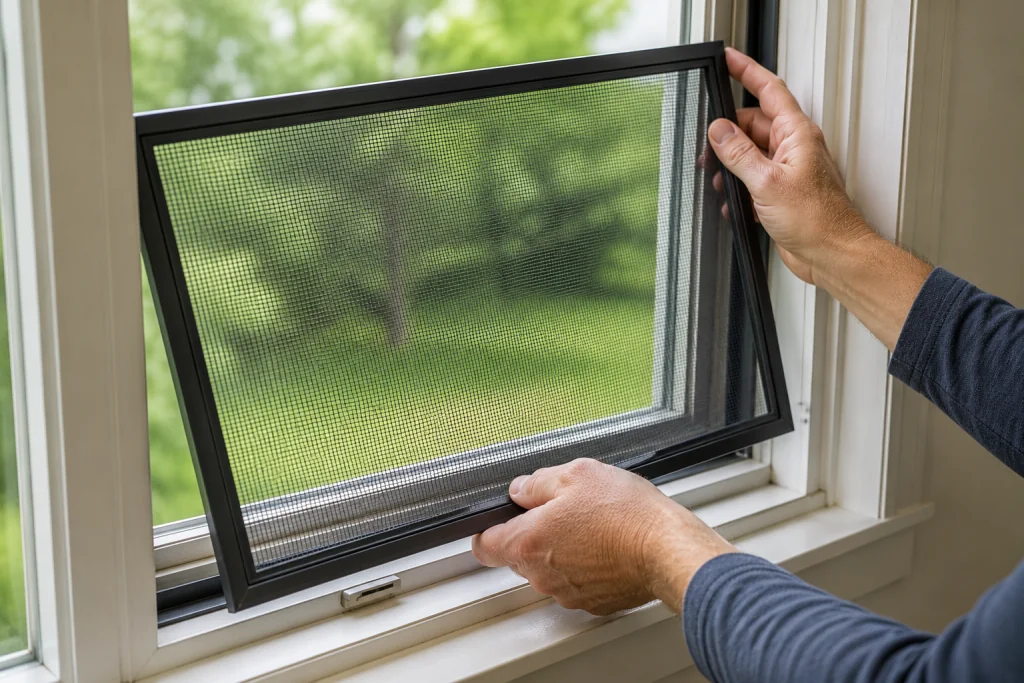
Place the repaired screen back into the window frame carefully.
Make sure the screen:
- Fits tightly
- Sits evenly
- Does not bow outward
- Locks securely into place
Check for any remaining gaps where insects could enter.
When to Replace the Entire Screen
Sometimes full replacement is the better option.
You may want to replace the screen if:
- Multiple tears are present
- The mesh is brittle from sun damage
- The frame is severely bent
- Repairs keep failing
- The screen no longer fits tightly
New replacement screens are often inexpensive and can improve the appearance of older windows.
Screens that do not fit tightly can sometimes be related to alignment issues. See our guide on window won’t lock for additional troubleshooting tips.
How to Prevent Future Screen Damage
Regular maintenance can help extend the life of your window screens.
Helpful Prevention Tips
- Keep pets away from screens
- Remove screens carefully during storms
- Clean screens seasonally
- Store extra screens flat and dry
- Avoid pushing on the mesh
Routine inspections can help catch small holes before they become larger tears.
If your windows also feel drafty or difficult to operate, see our guide on how to fix drafty windows.
The experts at This Old House provide additional window maintenance and repair advice for homeowners.
Frequently Asked Questions
Can I repair a window screen without replacing it?
Yes. Small holes and minor tears can often be repaired using adhesive screen patches.
What is screen spline?
Spline is the flexible rubber cord that holds the screen mesh inside the frame groove.
How long does window screen repair take?
Most simple screen repairs can be completed in under an hour.
Should I replace aluminum or fiberglass screen mesh?
Fiberglass mesh is flexible and easy to install, while aluminum mesh is more durable and resistant to sagging.
Can damaged screens let bugs into the house?
Yes. Even small tears can allow insects and debris to enter your home.
Looking for help with another door or window problem? Browse our complete collection of door and window repair guides.
Final Thoughts
Learning how to fix window screens with holes or tears can help improve airflow, keep insects outside, and extend the life of your existing screens. Small holes are often easy to patch, while larger tears may require replacing the screen mesh entirely.
With a few affordable tools and materials, most homeowners can complete window screen repairs themselves in a single afternoon.