
Last updated: October 17, 2026
By Home Repair Genie
Quick Answer
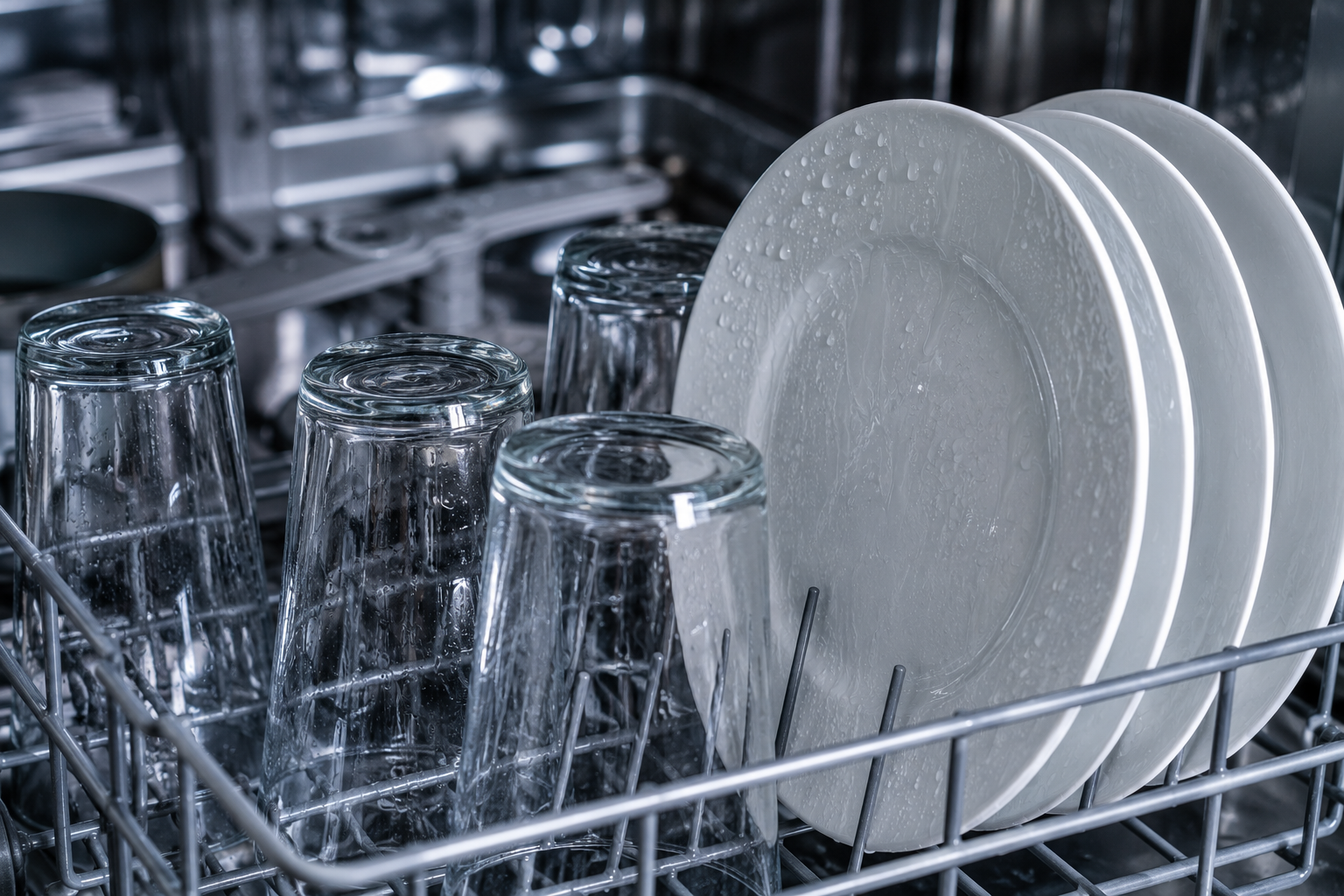
If you are wondering why do dishes look cloudy after washing, the issue is usually caused by hard water deposits, detergent residue, or poor dishwasher performance. In many cases, fixing why dishes look cloudy after washing only requires adjusting detergent usage, adding rinse aid, and cleaning the dishwasher thoroughly.
Why Do Dishes Look Cloudy After Washing?
Cloudy dishes are usually caused by mineral deposits or etching on the surface of glasses and dishes.
Common causes include:
- Hard water minerals
- Excess dishwasher detergent
- Low water temperature
- Dirty dishwasher spray arms or filter
- Lack of rinse aid
- Poor loading techniques
- Etching caused by harsh detergents
Understanding the cause can help you restore clear, spotless dishes.
How to Tell if Cloudiness Is Hard Water or Etching
Before troubleshooting, determine whether the cloudiness can be removed.
Signs of Hard Water Buildup
- White chalky film
- Spots on glasses
- Residue wipes off with vinegar
- Mineral deposits inside dishwasher
Signs of Etching
- Permanent cloudy appearance
- Surface feels rough or scratched
- Cannot be removed with vinegar
Unfortunately, etching permanently damages glassware.
Step 1: Test for Hard Water Deposits
Why Hard Water Causes Cloudy Dishes
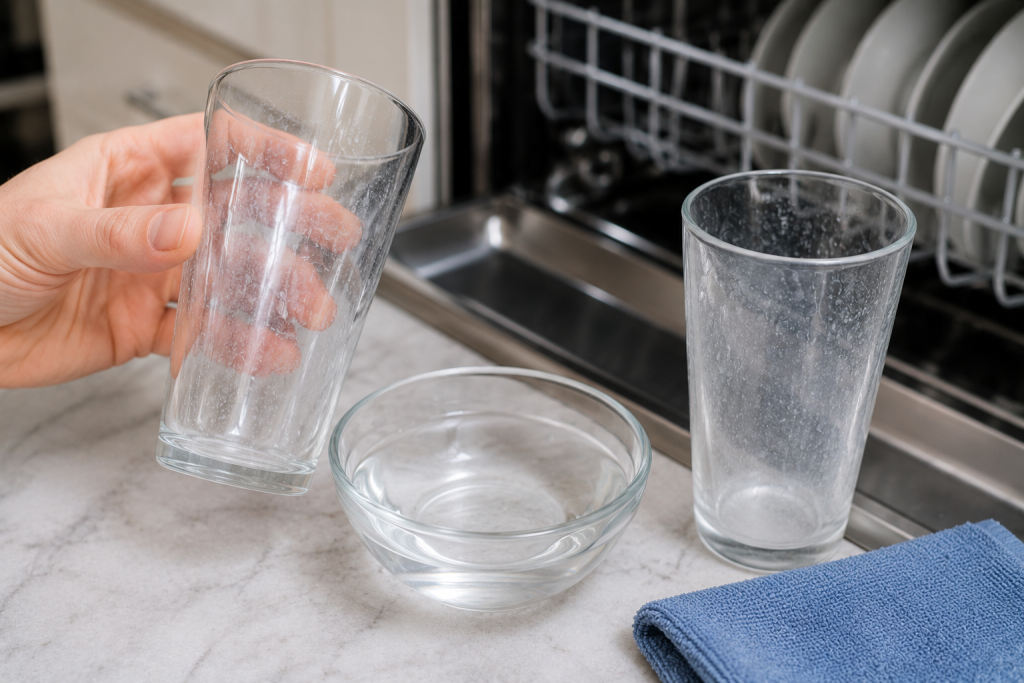
Hard water minerals are one of the biggest reasons why dishes look cloudy after washing in many homes. Hard water contains minerals like calcium and magnesium that remain on dishes after drying.
How to Test for Hard Water
- Soak a cloudy glass in white vinegar for 5 minutes.
- Wipe the glass clean with a soft cloth.
- Check whether the cloudiness disappears.
If the cloudiness clears, hard water buildup is the problem.
As an Amazon Associate I earn from qualifying purchases.
To check the water itself, use total water-hardness test strips that report results in grains per gallon or ppm. Follow the package instructions and compare the result with your dishwasher’s detergent recommendations. The vinegar test checks for removable deposits; hardness strips measure the water supply.
If you also notice residue buildup inside your dishwasher, read our guide on Dishwasher Not Cleaning Dishes Properly? 7 Easy Fixes That Actually Work.
Step 2: Use Less Dishwasher Detergent
Why Too Much Detergent Causes Cloudiness
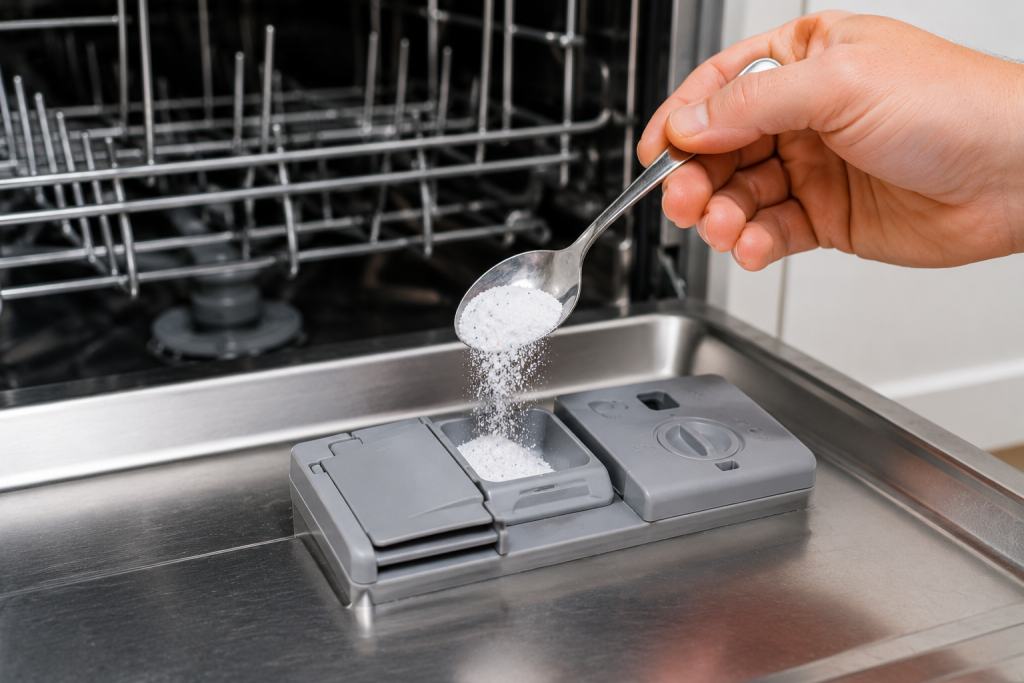
Using excessive detergent is another common reason why do dishes look cloudy after washing, especially when combined with soft water.
How to Fix It
- Reduce detergent slightly during the next wash cycle.
- Use high-quality dishwasher detergent.
- Avoid overfilling the detergent compartment.
Using too much detergent is one of the most overlooked causes of cloudy dishes after washing.
Step 3: Add or Refill Rinse Aid
Why Rinse Aid Helps
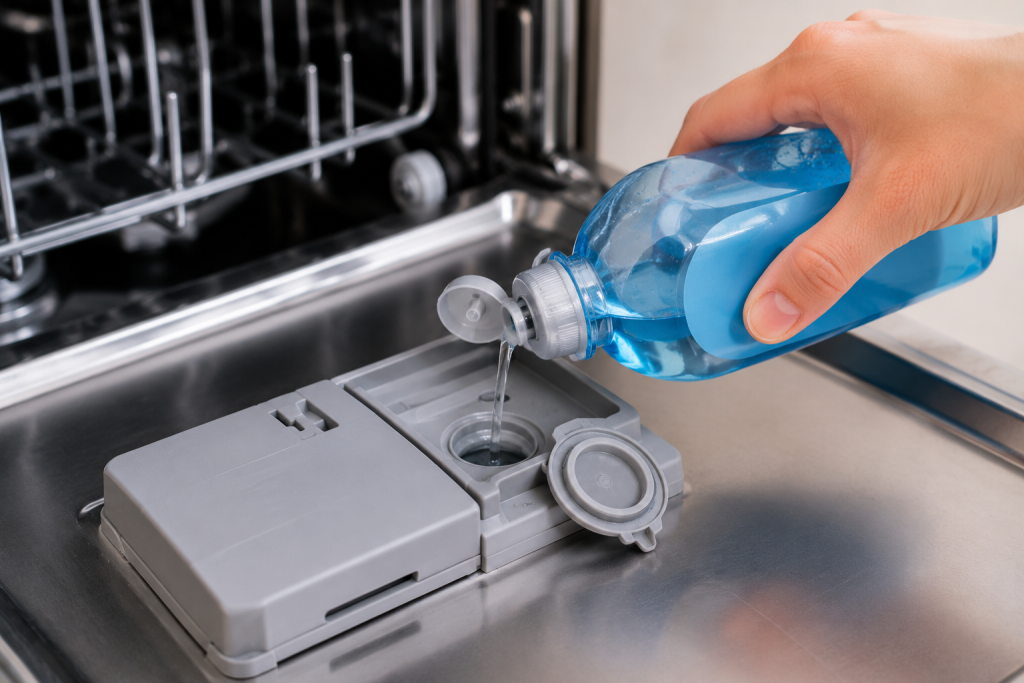
Rinse aid helps water sheet off dishes instead of drying into spots and residue.
How to Add Rinse Aid
- Open the rinse aid dispenser.
- Fill it to the recommended level.
- Adjust the dispenser setting if needed.
Rinse aid can dramatically improve glass clarity and drying performance.
Refill the dispenser with dishwasher rinse aid according to your owner’s manual. It helps water sheet off dishes and reduces drying spots, but it cannot reverse permanent glass etching. Adjust the dispenser setting only as directed for your machine.
According to Cascade Dishwasher Tips, rinse aid and proper detergent use can help prevent cloudy glasses and hard water spotting.
Step 4: Check the Water Temperature
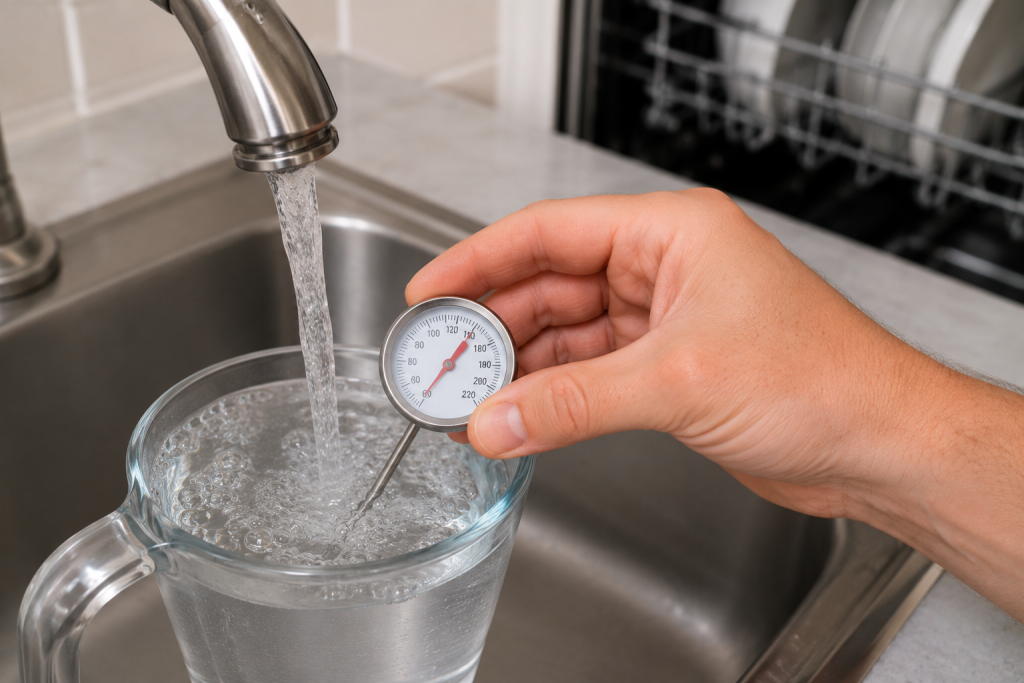
Why Water Temperature Matters
Dishwashers clean best with water temperatures around 120°F.
How to Check Water Temperature
- Run hot water at the kitchen sink.
- Fill a cup with water.
- Measure the water with a digital probe thermometer suitable for liquids, keeping the probe away from the cup’s sides and bottom. Compare the reading with your dishwasher’s specified incoming-water temperature.
Low water temperatures can leave detergent residue on dishes and glasses.
If your dishwasher also struggles with dirty dishes or residue, see Dishwasher Not Cleaning Dishes Properly? 7 Easy Fixes That Actually Work.
Step 5: Clean the Dishwasher Filter and Spray Arms
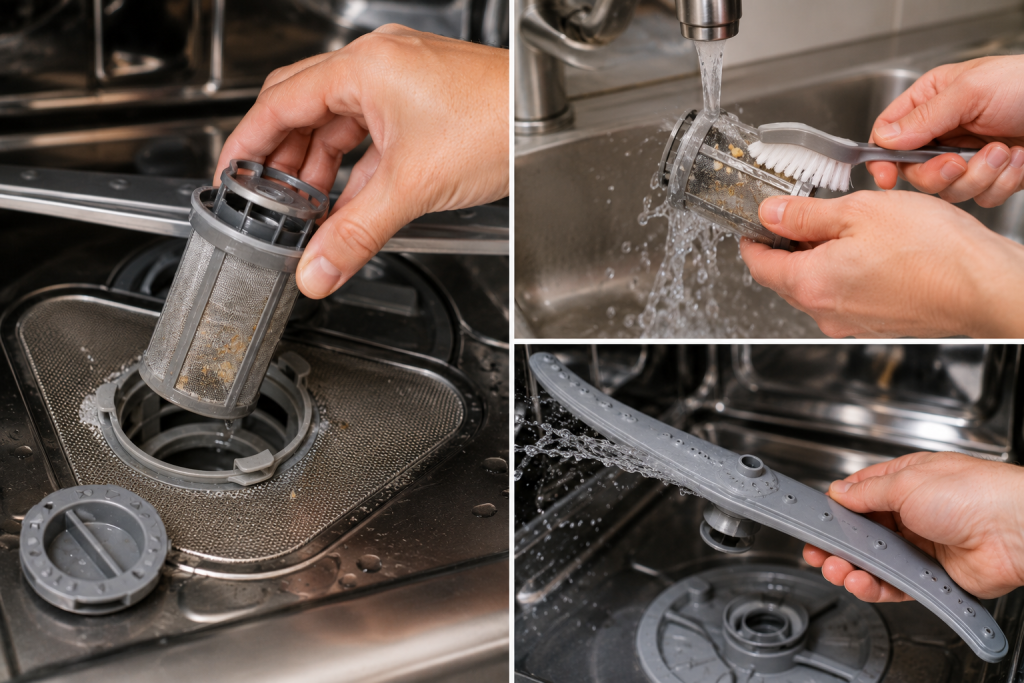
Why Dirty Components Cause Cloudiness
Restricted water flow reduces rinse performance and allows residue to remain on dishes. Dirty spray arms and filters can contribute to why dishes look cloudy after washing by reducing rinse performance.
How to Clean the Filter and Spray Arms
- Remove and rinse the dishwasher filter.
- Inspect spray arm holes for debris.
- Use a toothpick to clear clogged spray holes.
- Reinstall all components securely.
Routine maintenance improves dishwasher cleaning performance significantly.
Step 6: Remove Mineral Buildup Inside the Dishwasher
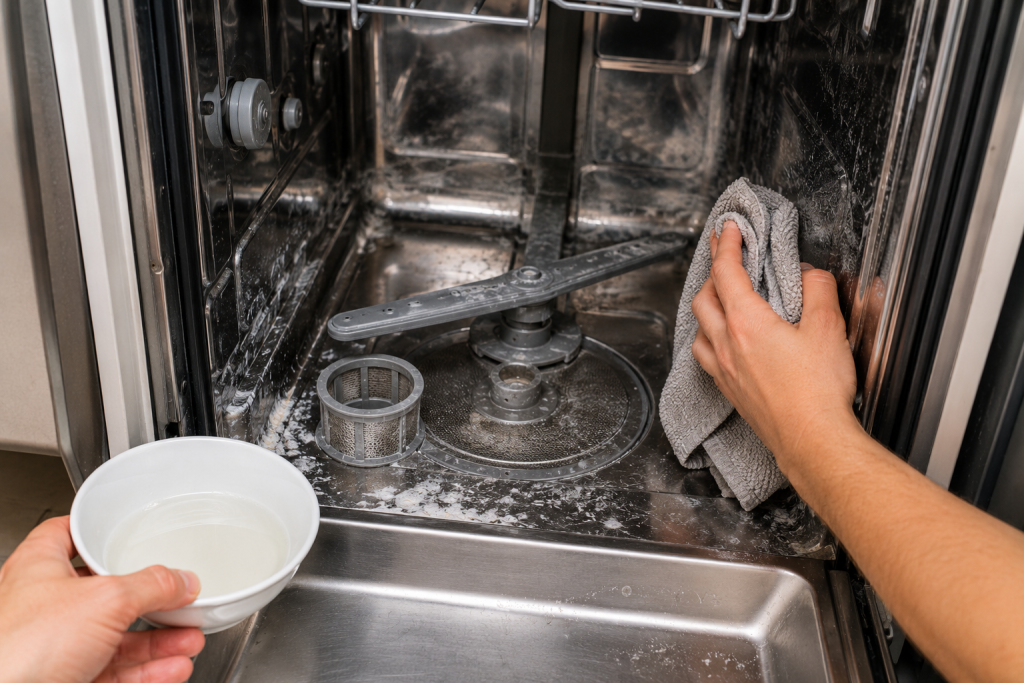
Why Mineral Deposits Matter
Hard water buildup inside the dishwasher can continuously redeposit minerals onto dishes.
How to Clean the Dishwasher
- Place a bowl of white vinegar on the top rack.
- Run a hot empty cycle.
- Sprinkle baking soda inside afterward.
- Run a short rinse cycle.
This helps dissolve mineral deposits and odors.
If you prefer a purpose-made product, affresh dishwasher cleaner tablets offer an alternative for removing interior mineral buildup and residue. Confirm compatibility with your dishwasher and follow the label directions. Use the cleaner separately from vinegar, baking soda, and other cleaning chemicals.
Step 7: Avoid Overloading the Dishwasher
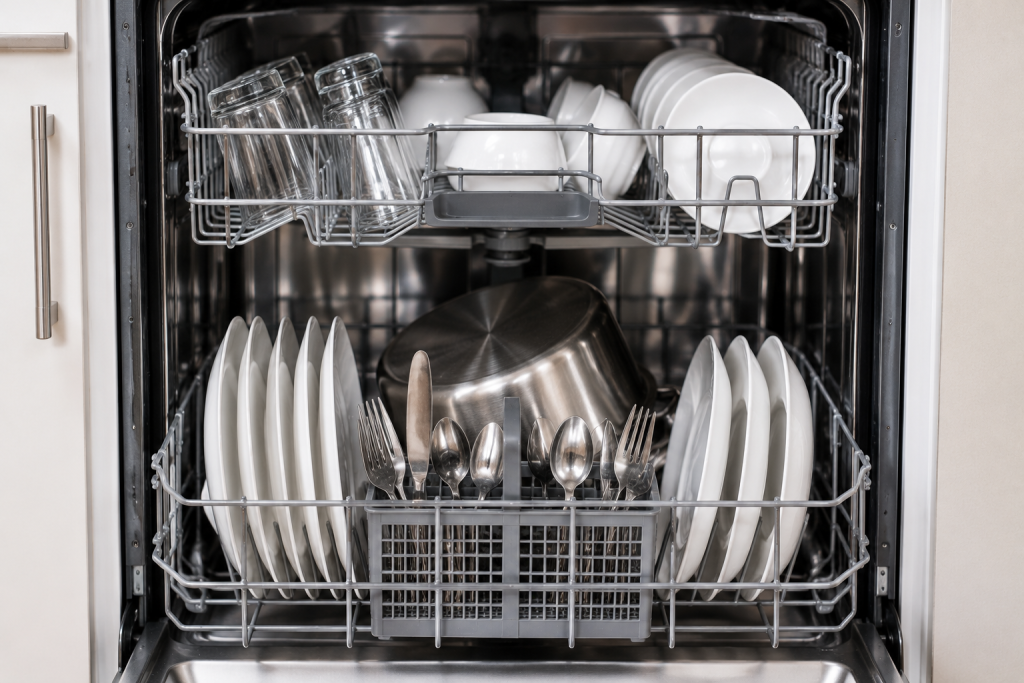
Why Loading Technique Matters
Crowded dishes block water spray and prevent proper rinsing.
Proper Loading Tips
- Leave space between glasses
- Face dirty surfaces inward
- Keep large items from blocking spray arms
- Avoid nesting bowls together
Improper loading can cause cloudy dishes even when the dishwasher is working correctly.
How to Prevent Cloudy Dishes in the Future
To keep dishes crystal clear:
- Use rinse aid regularly
- Clean the dishwasher monthly
- Avoid excessive detergent
- Run hot water before starting cycles
- Use dishwasher cleaner periodically
- Install a water softener if needed
Preventive maintenance helps avoid recurring cloudy residue problems.
When to Replace Glassware
You may need to replace glasses if:
- Cloudiness cannot be removed
- The surface feels rough
- Glasses appear scratched or frosted
- Etching has permanently damaged the glass
Etched glassware cannot usually be restored.
FAQ
Why do my glasses look cloudy after dishwasher cycles?
Cloudy glasses are usually caused by hard water buildup, detergent residue, or permanent etching.
Can vinegar remove cloudy film from dishes?
Yes. Vinegar can dissolve hard water mineral deposits and help restore clarity to glasses and dishes.
Does hard water damage dishwashers?
Over time, hard water can create mineral buildup inside spray arms, filters, and dishwasher components.
Why do dishes look cloudy after washing even with rinse aid?
If you still wonder why dishes look cloudy after washing after adding rinse aid, hard water deposits, excessive detergent, or low water temperatures may still be causing residue buildup.
What causes permanent cloudy glasses?
Permanent cloudiness is usually caused by etching from harsh detergents, excessive heat, or soft water combined with too much detergent.
How often should I clean my dishwasher?
Most dishwashers benefit from monthly cleaning to remove grease, food debris, and mineral buildup.
Looking for help with another appliance problem? Browse our complete collection of appliance repair guides and error-code fixes.
Final Thoughts
If you have been asking why do dishes look cloudy after washing, the problem is usually related to hard water, detergent residue, rinse performance, or dishwasher maintenance. Fortunately, most cloudy dish problems can be solved with simple adjustments like reducing detergent, adding rinse aid, cleaning the dishwasher filter, and removing mineral buildup. Regular maintenance can help keep dishes, glasses, and silverware looking clear and spotless after every wash cycle.
For more appliance troubleshooting tips, visit Home Repair Genie