
Last updated: October 17, 2026
By Home Repair Genie
Quick Answer
Why is my dishwasher leaving white residue? In most cases, white residue on dishes is caused by hard water minerals, too much detergent, clogged spray arms, low water temperature, or rinse aid problems. Cleaning the dishwasher and adjusting detergent usage usually solves the issue.
Why Does a Dishwasher Leave White Residue?
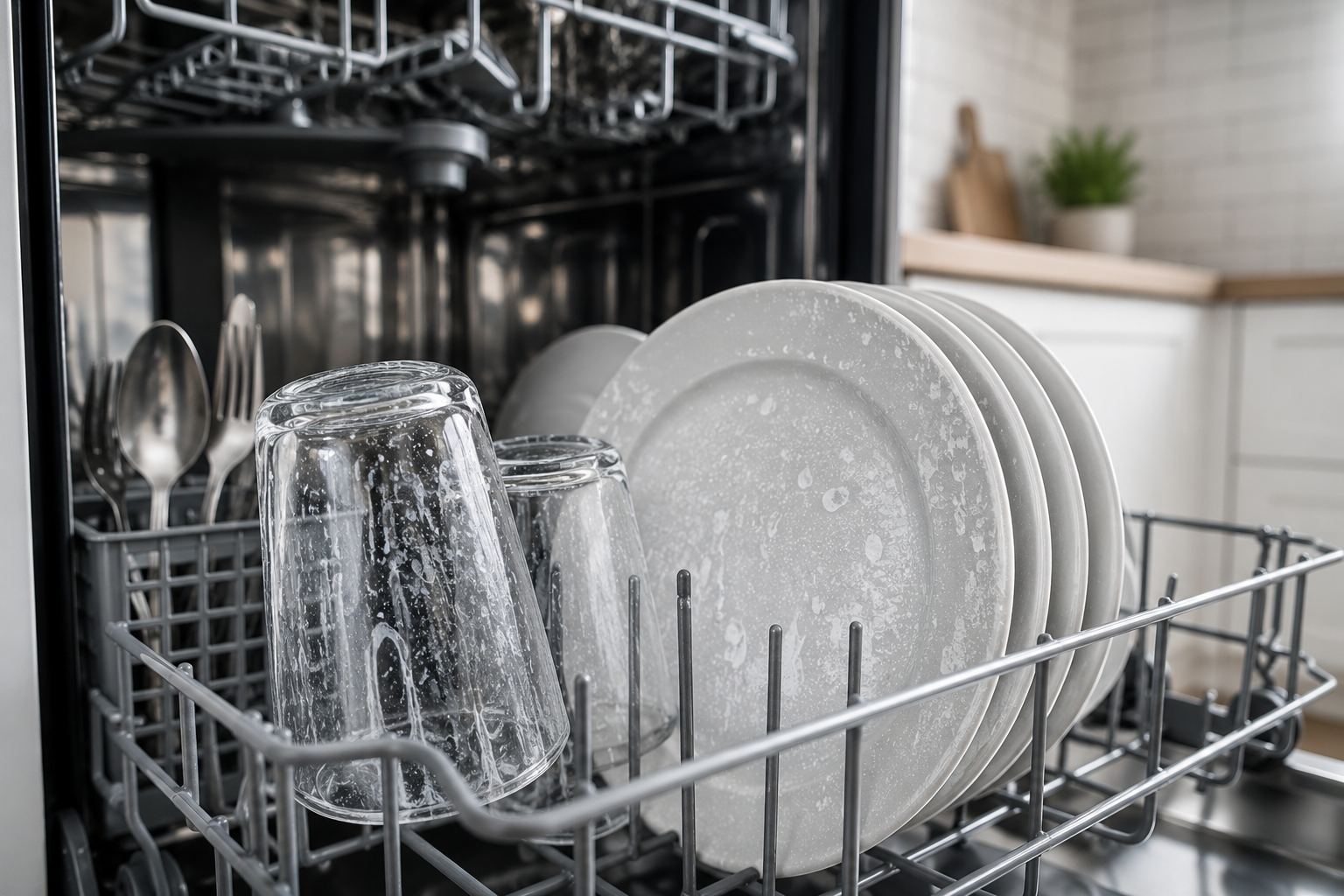
White residue is usually caused by mineral deposits left behind after the wash cycle. Hard water contains calcium and magnesium that can stick to dishes, glassware, and the dishwasher interior.
Common causes include:
- Hard water buildup
- Too much dishwasher detergent
- Low water temperature
- Empty rinse aid dispenser
- Clogged spray arms
- Dirty dishwasher filter
- Poor water circulation
The residue may appear chalky, cloudy, powdery, or filmy depending on the underlying cause.
Why Is My Dishwasher Leaving White Residue?
If you are wondering, “Why is my dishwasher leaving white residue?” the answer is often related to hard water minerals or detergent buildup inside the appliance. The problem can become worse over time if the dishwasher is not cleaned regularly.
Step 1: Reduce Dishwasher Detergent Usage
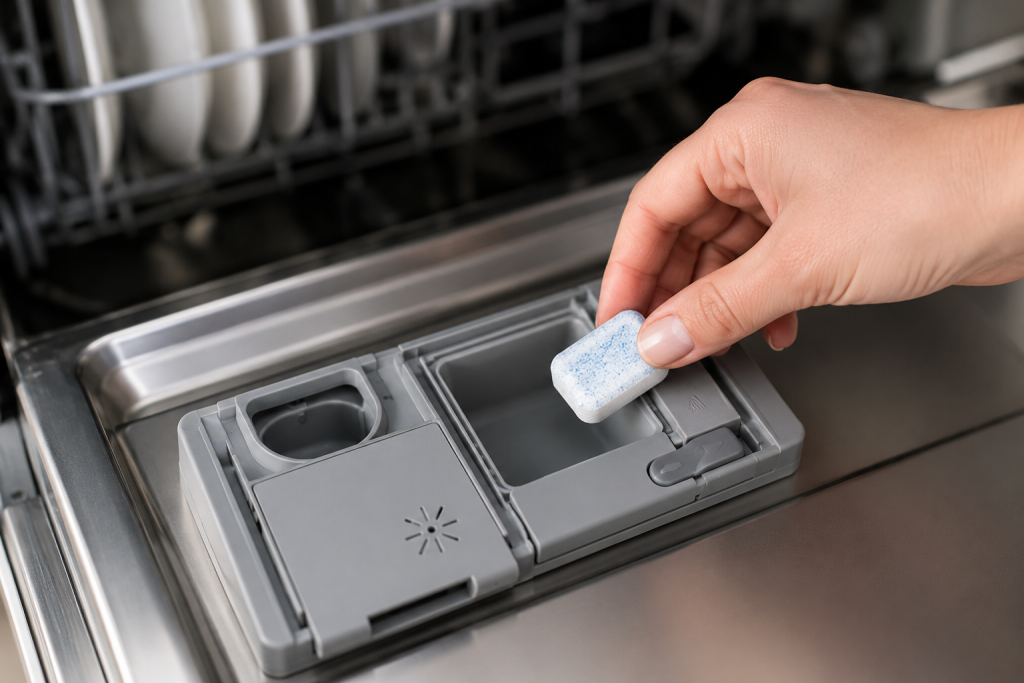
Too Much Detergent Can Leave Residue Behind
Using excessive detergent is one of the most common causes of white film on dishes.
Try these adjustments:
- Use slightly less detergent
- Switch to a high-quality dishwasher detergent
- Avoid overfilling the detergent compartment
- Use detergent designed for hard water if necessary
Modern dishwashers often require less detergent than older models.
If your dishwasher also is not cleaning properly, check out our guide on dishwasher not cleaning dishes properly.
Step 2: Refill the Rinse Aid Dispenser
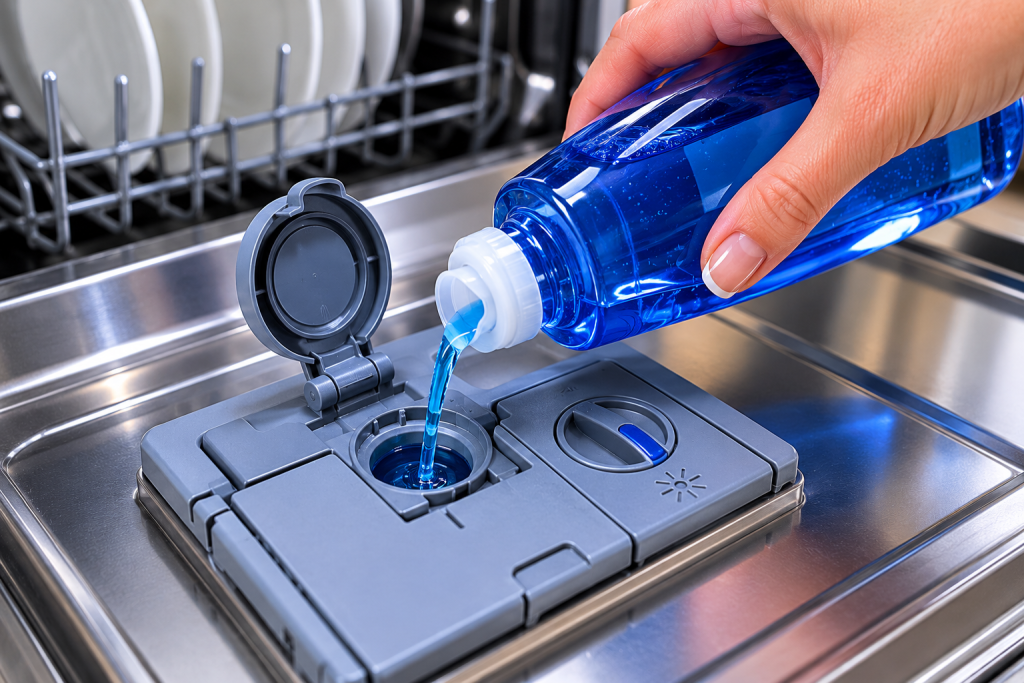
Rinse Aid Helps Prevent Mineral Spots
Rinse aid improves water sheeting during the drying cycle and helps reduce mineral deposits.
As an Amazon Associate I earn from qualifying purchases.
To check it:
- Open the rinse aid compartment
- Refill it with dishwasher rinse aid if low or empty
- Adjust the rinse aid setting if residue continues
Low rinse aid levels are especially problematic in homes with hard water.
Step 3: Check for Hard Water Problems
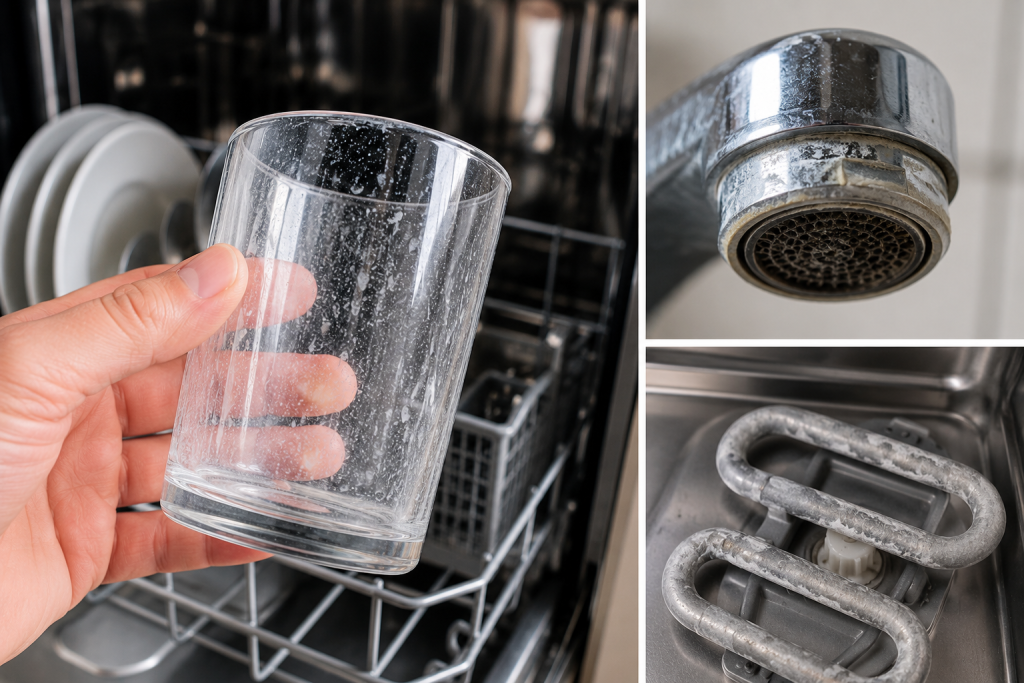
Hard Water Minerals Cause White Film
Hard water is one of the biggest reasons dishes develop cloudy or chalky residue.
Signs of hard water include:
- White spots on glassware
- Chalky dishwasher interior
- Soap scum around faucets
- Mineral buildup on showerheads
Use water-hardness test strips to check whether your tap water contains elevated levels of hardness minerals. Choose strips that measure total hardness in grains per gallon or ppm, and follow the timing instructions carefully. Use the result alongside your dishwasher and detergent instructions.
A water softener may help reduce long-term buildup problems.
You can also read our article on why your dishes look cloudy after washing.
Step 4: Clean the Dishwasher Filter
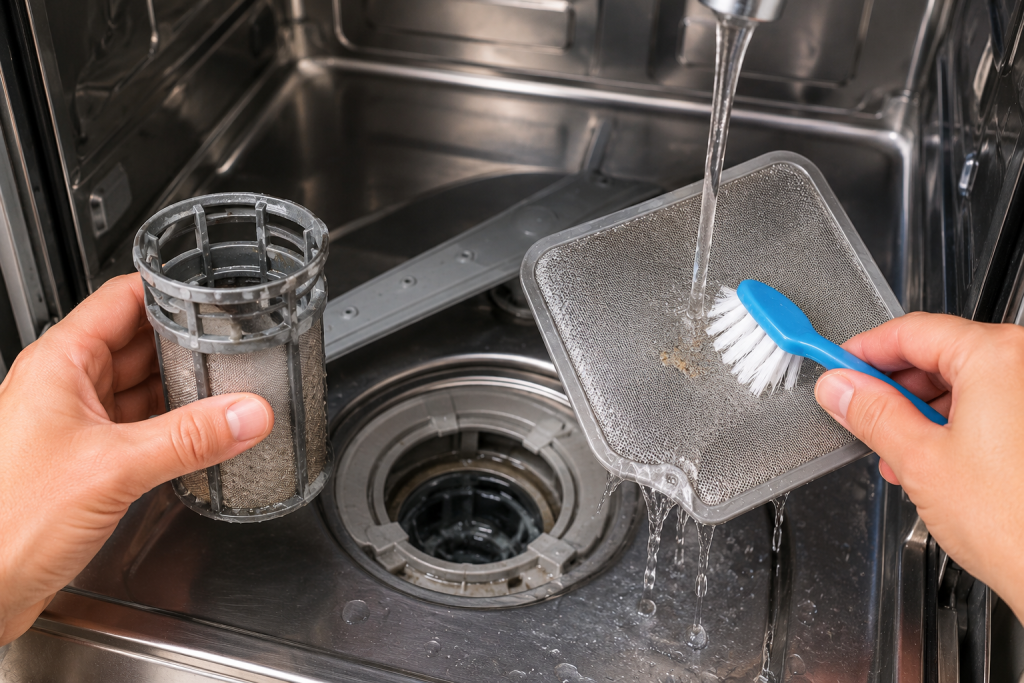
A Dirty Filter Restricts Water Flow
Food debris and mineral buildup can reduce cleaning performance and leave residue behind.
To clean the filter:
- Remove the lower rack
- Twist out the dishwasher filter
- Rinse it under warm water
- Scrub away buildup gently
- Reinstall the filter securely
Most dishwasher filters should be cleaned monthly.
Does your dishwasher smell? If so, this guide can help you: Dishwasher Smells Bad? 7 Easy Fixes That Actually Work Fast (Step-by-Step Guide)
Step 5: Inspect and Clean the Spray Arms
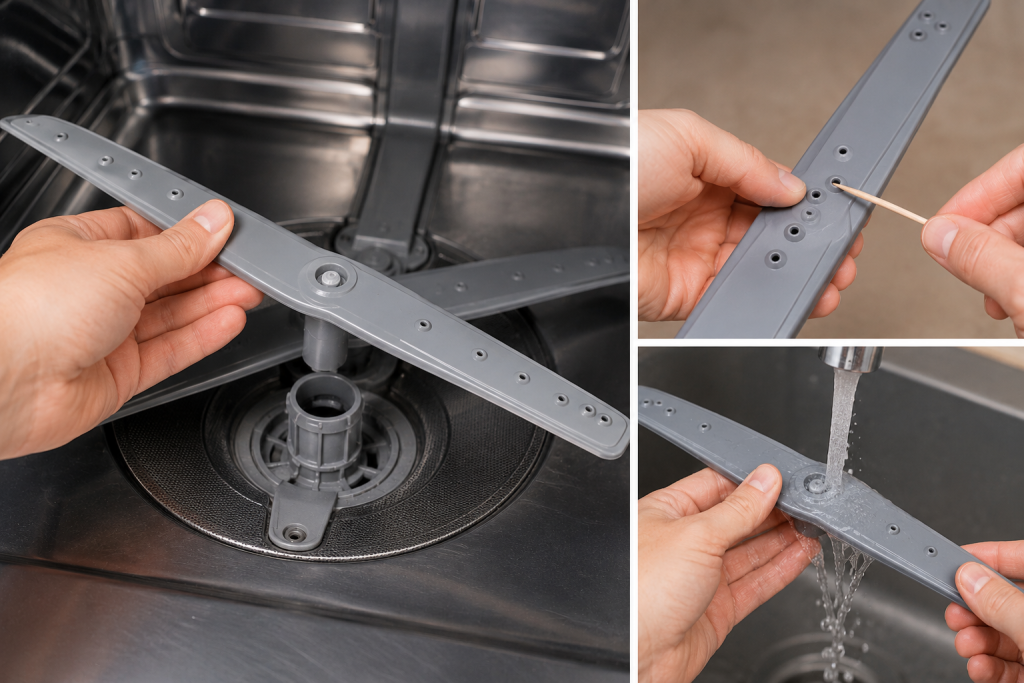
Mineral Deposits Can Block Water Jets
Spray arm holes can clog with calcium buildup or food particles.
Inspect for:
- Blocked spray holes
- Cracks or damage
- Reduced spinning movement
Use a toothpick or small brush to clear clogged openings.
For additional dishwasher maintenance information, visit Whirlpool Dishwasher Maintenance Tips
Step 6: Verify the Water Temperature
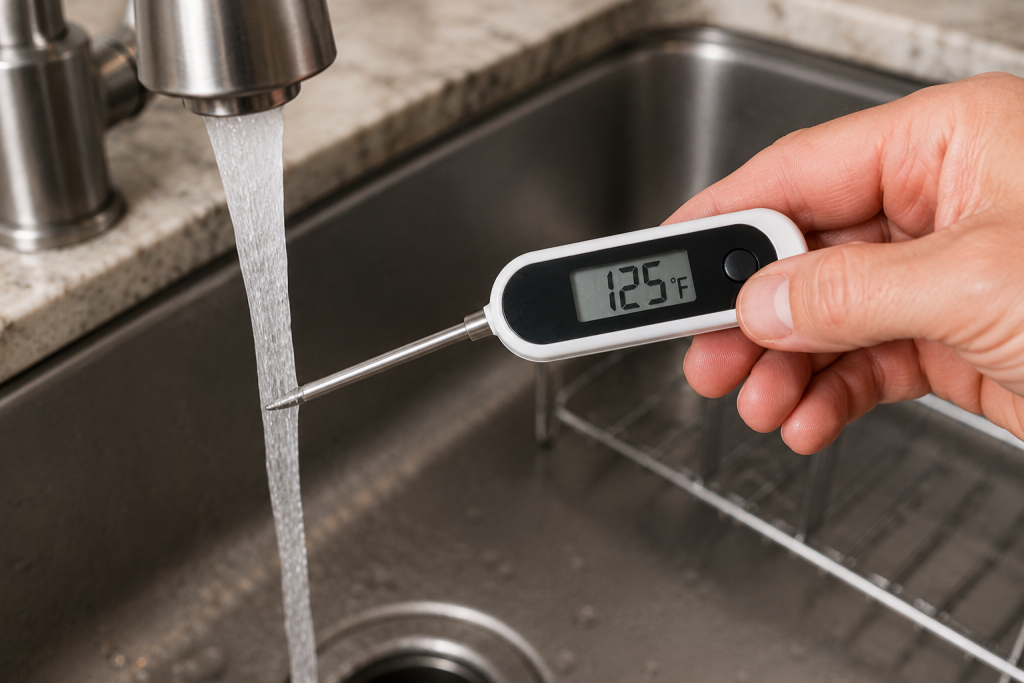
Hot Water Dissolves Detergent Better
Dishwashers typically perform best with water temperatures around 120°F.
To improve performance:
- Run hot water at the sink before starting the dishwasher
- Check the water heater setting
- Avoid using too much hot water elsewhere during cycles
To check incoming water temperature, run the kitchen faucet until hot, fill a heat-safe cup, and measure it with a digital probe thermometer suitable for liquids. Compare the reading with your dishwasher’s specified inlet-water temperature.
Cool water can prevent detergent from dissolving completely.
Step 7: Run a Dishwasher Cleaning Cycle
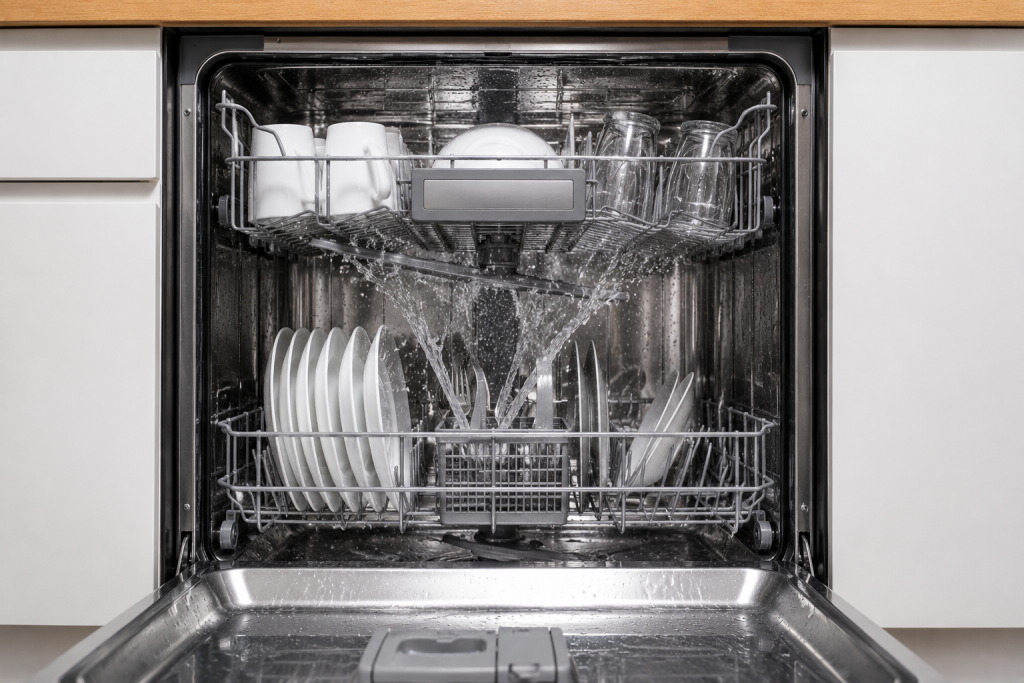
Remove Built-Up Mineral Deposits
Mineral buildup inside the dishwasher can continue transferring residue onto dishes.
To clean the dishwasher:
- Place a dishwasher-safe cup of white vinegar on the top rack
- Run a hot cleaning cycle
- Sprinkle baking soda inside afterward if needed
- Wipe down seals and interior surfaces
A purpose-made cleaner such as affresh dishwasher cleaner tablets offers an alternative for removing interior mineral buildup and residue. Confirm compatibility with your dishwasher and follow the package directions. Use it separately from vinegar, baking soda, and other cleaning products.
Routine cleaning helps prevent recurring residue problems.
Why the White Residue Gets Worse Over Time
White residue often becomes more noticeable as mineral buildup accumulates inside the dishwasher.
Over time:
- Spray arms clog more easily
- Filters become restricted
- Heating performance may decline
- Water circulation weakens
Regular cleaning and maintenance can prevent long-term issues.
Signs You May Need Professional Service
You may need professional dishwasher repair if:
- White residue continues despite cleaning
- Dishes remain cloudy after multiple fixes
- Water is not heating properly
- Spray arms stop spinning
- The circulation pump becomes noisy
- Water pressure inside the dishwasher is weak
Mechanical or heating issues sometimes contribute to residue problems.
FAQ
Why is my dishwasher leaving chalky white residue?
Chalky residue is usually caused by hard water minerals or excess detergent buildup.
Can hard water damage a dishwasher?
Yes. Hard water can clog spray arms, coat heating elements, and reduce dishwasher efficiency over time.
Will vinegar remove white residue from dishes?
Yes. Vinegar can help dissolve mineral deposits and reduce hard water buildup inside the dishwasher.
Why do my glasses look cloudy after washing?
Cloudy glasses are often caused by hard water deposits or detergent residue left behind during drying.
Does rinse aid help with white residue?
Yes. Rinse aid helps water drain more evenly from dishes and reduces spotting and mineral deposits.
Looking for help with another appliance problem? Browse our complete collection of appliance repair guides and error-code fixes.
Final Thoughts
If your dishwasher is leaving white residue, the problem is usually related to hard water minerals, detergent buildup, or poor cleaning performance. Cleaning the filter, checking the spray arms, adjusting detergent usage, and running a cleaning cycle often solve the issue.
Understanding why your dishwasher is leaving white residue can help prevent long-term buildup and keep dishes looking clean and clear.