
Last updated: October 17, 2026
By Home Repair Genie
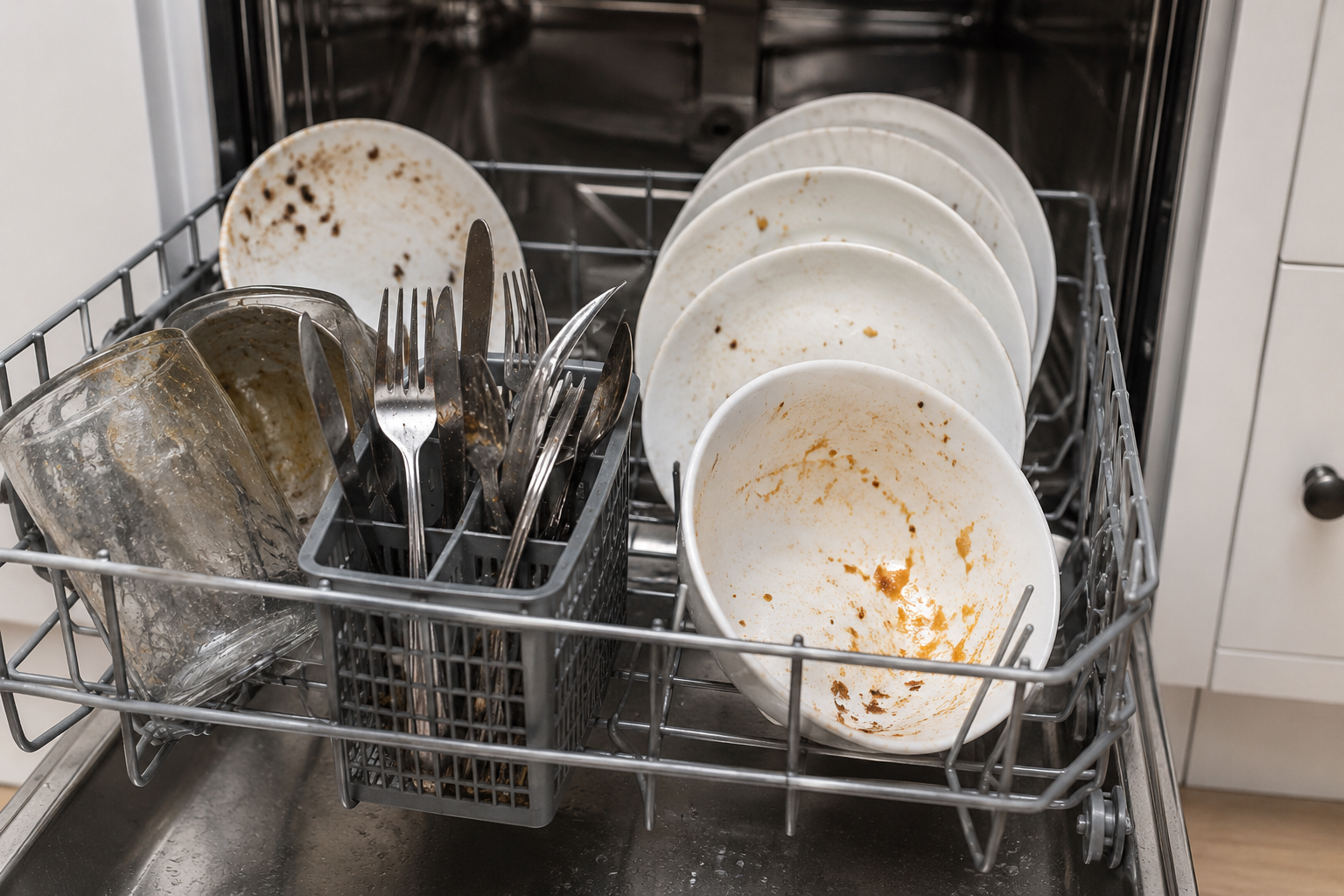
If your dishwasher not cleaning dishes properly issue is leaving food, grease, or cloudy residue behind, several common problems could be reducing cleaning performance. In many cases, a dishwasher not cleaning dishes properly can be fixed by cleaning the filter, unclogging the spray arms, and improving water temperature.
Quick Answer
A dishwasher that leaves dishes dirty, cloudy, greasy, or covered in residue usually has restricted water flow or poor washing conditions. Start by cleaning the dishwasher filter and spray arms, checking the water temperature, and making sure dishes are loaded correctly. If the problem continues, inspect the water inlet valve, circulation pump, or detergent dispenser.
Why Is Your Dishwasher Not Cleaning Dishes Properly?
Before troubleshooting, identify the symptoms your dishwasher is showing.
Typical signs include:
- Food particles left on dishes
- Cloudy glasses
- Greasy residue
- White chalky buildup
- Dishes still wet or dirty after a cycle
- Weak spray pressure
- Bad odors inside the dishwasher
If your dishwasher also is not draining correctly, check out our guide on Dishwasher Not Draining? 7 Easy Fixes That Actually Work.
What Causes a Dishwasher to Stop Cleaning Properly?
Several issues can reduce dishwasher cleaning performance:
- Clogged spray arms
- Dirty dishwasher filter
- Hard water mineral buildup
- Incorrect detergent usage
- Low hot water temperature
- Overloaded racks
- Failing circulation pump
- Weak water supply
The good news is that most of these problems are easy to fix without calling a technician.
Step 1: Clean the Dishwasher Filter
Why the Filter Matters
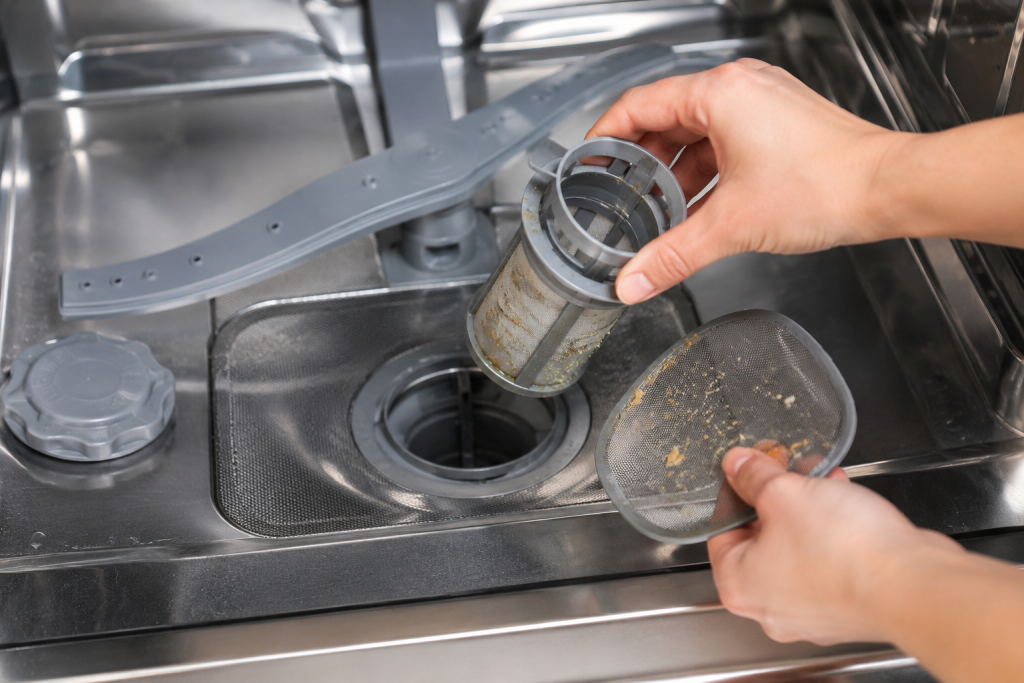
The dishwasher filter traps food particles during the wash cycle. When it becomes clogged, dirty water circulates back onto your dishes.
As an Amazon Associate I earn from qualifying purchases.
How to Clean the Filter
- Remove the bottom dish rack.
- Locate the filter assembly at the bottom of the dishwasher.
- Twist and remove the filter.
- Rinse it under warm water.
- Gently remove stubborn residue with a small soft-bristle cleaning brush. An old soft toothbrush also works. Avoid wire brushes and abrasive pads that could damage the filter, and reinstall it securely according to your model’s instructions.
- Reinstall the filter securely.
A dirty filter is one of the most common reasons a dishwasher stops cleaning effectively.
Step 2: Inspect and Clean the Spray Arms
Why Spray Arms Cause Cleaning Problems
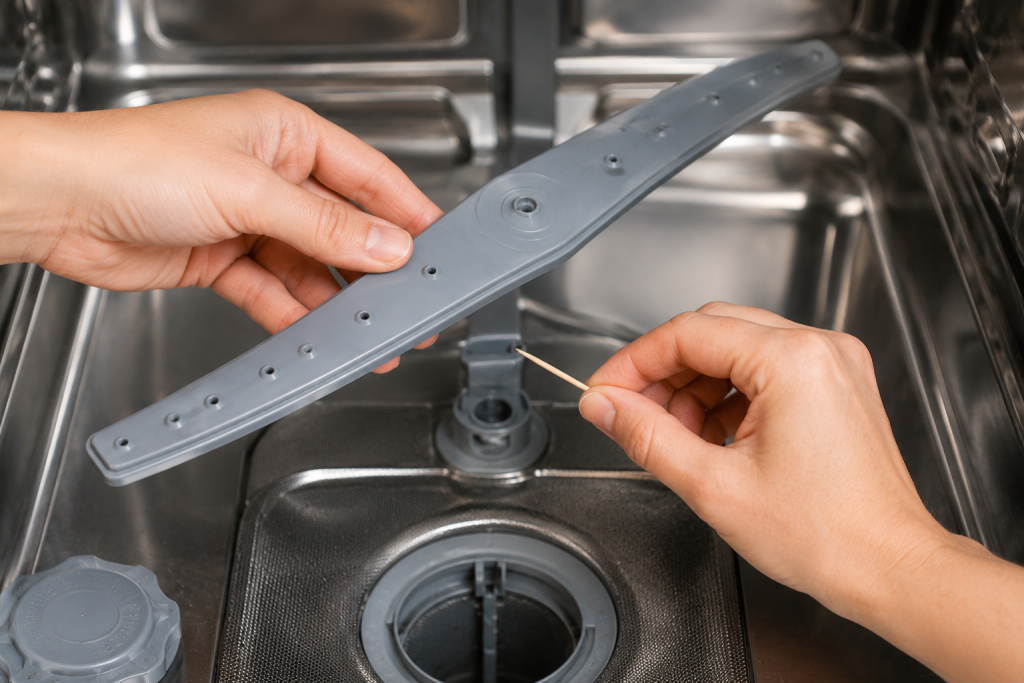
Clogged spray arms are one of the most common reasons a dishwasher not cleaning dishes properly problem develops. The spray arms distribute water throughout the dishwasher. Food particles and hard water deposits can clog the tiny spray holes.
How to Clean the Spray Arms
- Remove the upper and lower spray arms if possible.
- Rinse them under warm water.
- Use a toothpick or small brush to clear clogged holes.
- Spin the spray arms by hand to verify smooth movement.
- Reinstall the spray arms.
If the spray arms cannot rotate freely, dishes may come out dirty.
Step 3: Check the Water Temperature
Why Hot Water Is Important
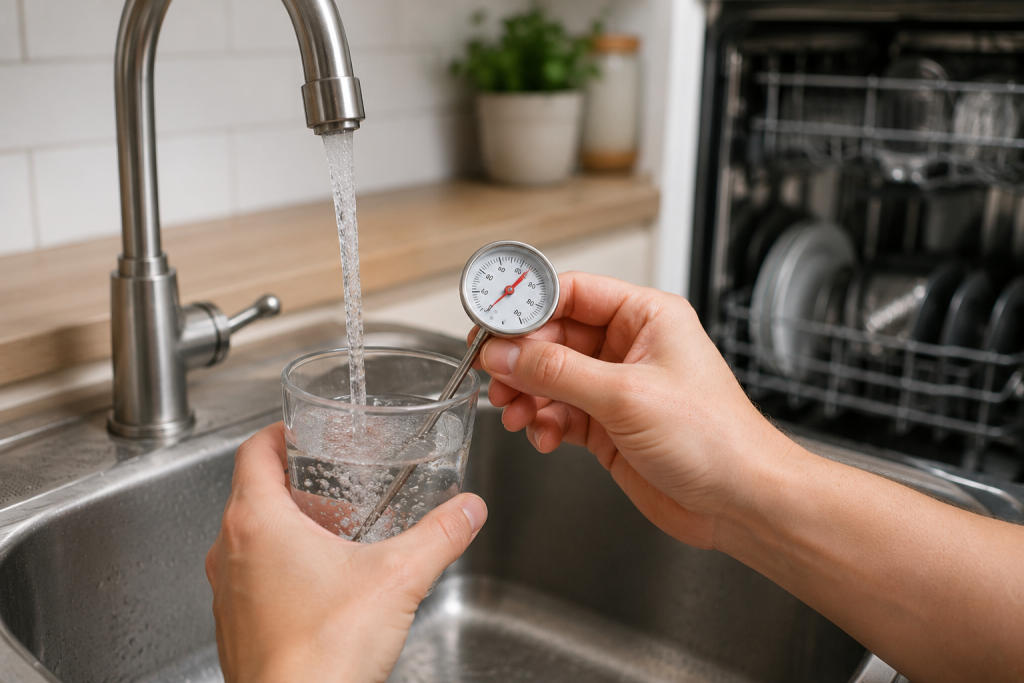
Dishwashers clean best when water temperatures reach at least 120°F.
How to Test Water Temperature
- Run hot water at the kitchen sink for one minute.
- Fill a cup with water.
- Measure the water with a digital probe thermometer suitable for liquids, keeping the probe away from the cup’s sides and bottom. Compare the reading with the incoming-water temperature specified in your dishwasher’s manual.
If the water is below 120°F:
- Increase your water heater setting slightly
- Run hot water at the sink before starting the dishwasher
According to Whirlpool Dishwasher Help, insufficient hot water can significantly reduce dishwasher cleaning performance.
Step 4: Load the Dishwasher Correctly
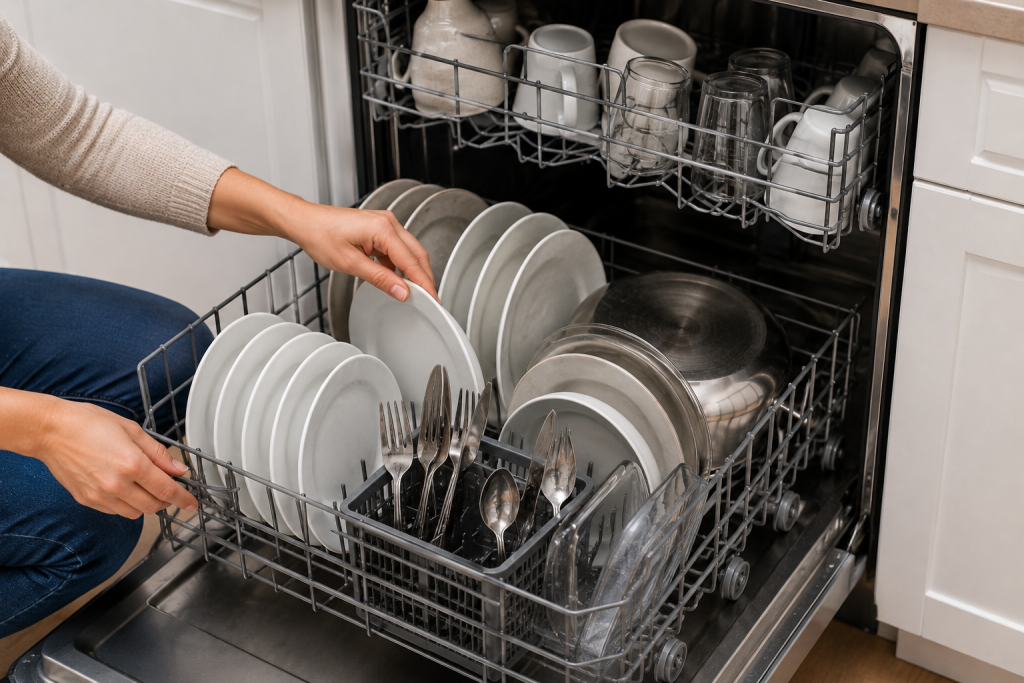
Why Loading Matters
Overloading blocks water spray and prevents detergent from reaching all dishes.
Proper Loading Tips
- Avoid nesting bowls and spoons together
- Keep large pans away from spray arms
- Face dirty surfaces toward the center
- Do not block the detergent dispenser
- Leave space between dishes
Improper loading can quickly lead to a dishwasher not cleaning dishes properly situation, even if the appliance itself is working correctly.
Step 5: Remove Hard Water Buildup
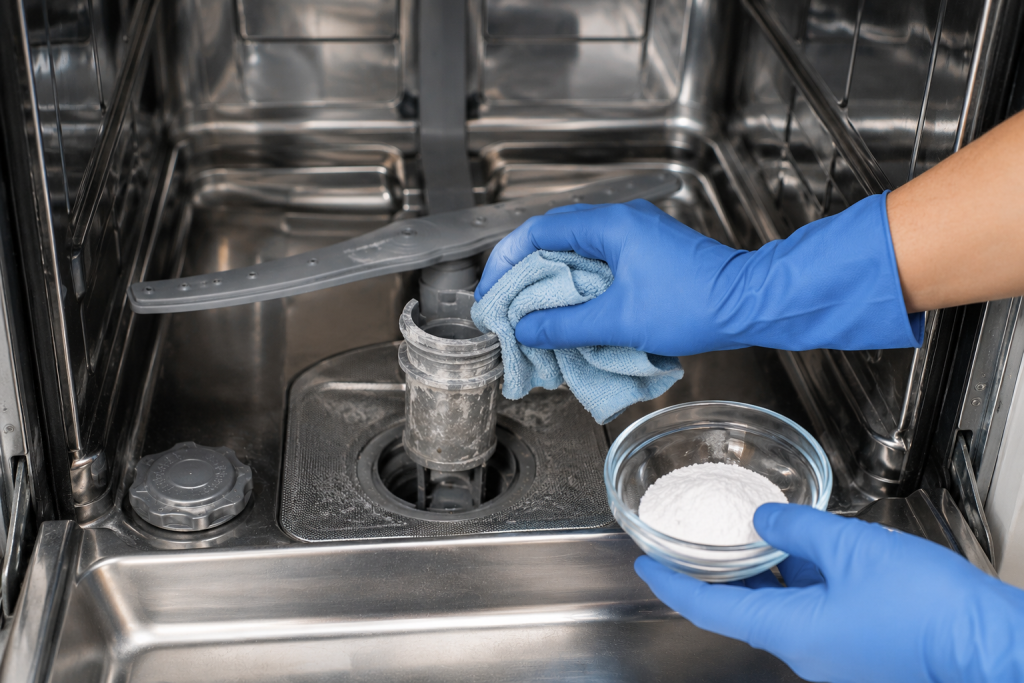
Signs of Hard Water
Hard water often leaves:
- White residue
- Cloudy glasses
- Mineral deposits
- Chalky buildup inside the dishwasher
How to Remove Mineral Deposits
- Place a dishwasher-safe bowl filled with white vinegar on the top rack.
- Run a hot wash cycle with no dishes inside.
- Sprinkle baking soda on the bottom of the dishwasher afterward.
- Run a short rinse cycle.
If dishes have water spots or dry poorly, check the dispenser and refill it with dishwasher rinse aid as directed by your owner’s manual. Rinse aid helps water sheet off dishes during drying; it does not clear clogged spray arms or repair weak water circulation.
A purpose-made product such as affresh dishwasher cleaner tablets offers an alternative for removing interior mineral buildup and residue. Confirm compatibility with your dishwasher and follow the package directions. Use the cleaner separately from vinegar, baking soda, and other cleaning products.
If you notice water supply issues elsewhere in your kitchen, you may also want to read Low Water Pressure in Kitchen Sink? 7 Easy Fixes That Actually Work.
Step 6: Inspect the Detergent Dispenser
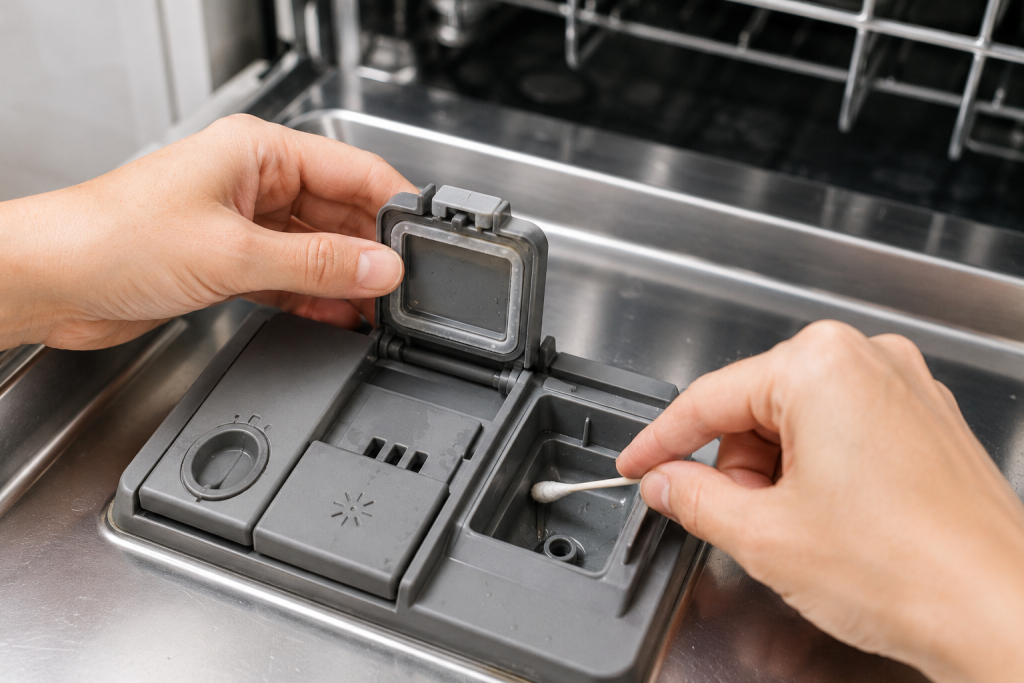
Why the Dispenser Matters
A broken or blocked dispenser may prevent detergent from releasing during the wash cycle.
How to Inspect It
- Open and close the dispenser door manually.
- Check for hardened detergent buildup.
- Clean residue with warm water.
- Verify the latch opens freely during cycles.
Also make sure you are using fresh dishwasher detergent. Old detergent loses effectiveness over time.
Step 7: Check the Water Inlet Valve or Circulation Pump
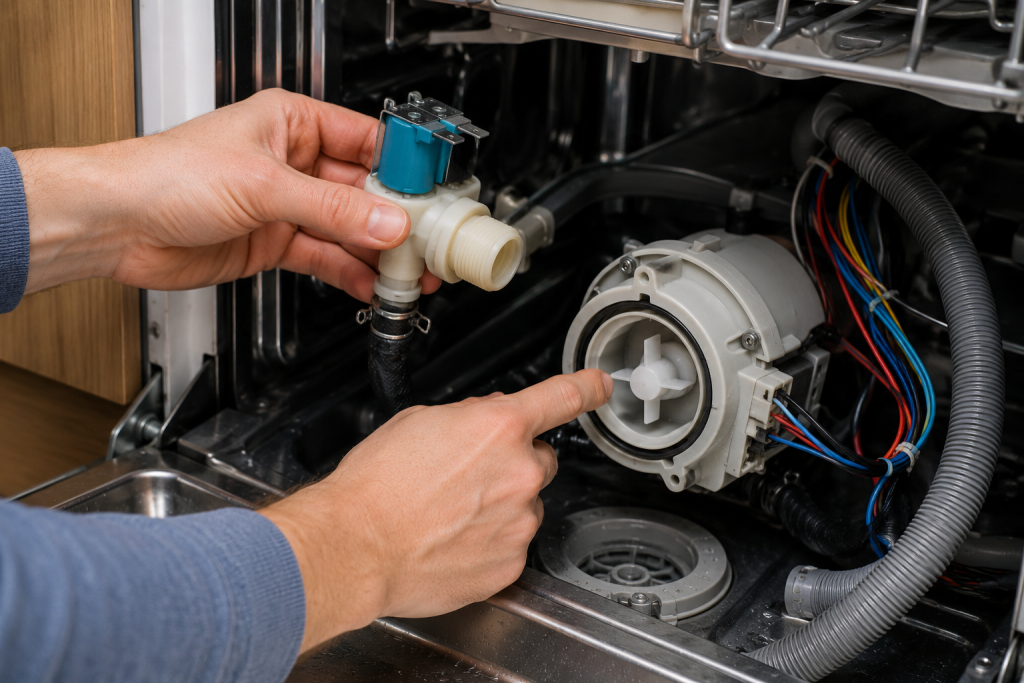
When Mechanical Parts May Be Failing
If your dishwasher still does not clean properly after performing the previous steps, a component failure may be reducing water pressure or circulation.
Possible Failing Parts
- Water inlet valve
- Circulation pump
- Wash motor
- Control board
Signs of these problems include:
- Weak spray action
- Humming noises
- Dishwasher filling slowly
- Incomplete wash cycles
At this point, professional diagnosis may be necessary.
Preventing Future Dishwasher Cleaning Problems
You can help keep your dishwasher cleaning properly by:
- Cleaning the filter monthly
- Running hot water before starting cycles
- Using rinse aid
- Avoiding overloads
- Cleaning spray arms regularly
- Running dishwasher cleaner every few weeks
Regular maintenance can greatly extend dishwasher performance and lifespan.
When to Replace Your Dishwasher
You may want to replace the dishwasher if:
- Repairs exceed half the replacement cost
- The unit is over 10–12 years old
- The circulation pump has failed
- Multiple components are malfunctioning
- Cleaning performance continues to decline
Modern dishwashers are usually more energy efficient and quieter than older models.
FAQ
Why is my dishwasher leaving food particles on dishes?
Food particles are commonly caused by a clogged filter, blocked spray arms, or overloading the dishwasher.
Why are my glasses cloudy after washing?
Cloudy glasses are often caused by hard water deposits or too much detergent.
Can low water pressure affect dishwasher cleaning?
Yes. Weak water pressure can reduce spray arm performance and prevent dishes from getting fully clean.
How often should I clean my dishwasher filter?
Most dishwasher filters should be cleaned once per month for best performance.
Why is my dishwasher not cleaning dishes properly even after cleaning the filter?
If your dishwasher is not cleaning dishes properly after cleaning the filter, the spray arms, circulation pump, detergent dispenser, or water inlet valve may still have issues restricting water flow or cleaning performance.
Does rinse aid really help?
Yes. Rinse aid improves drying performance and helps prevent water spots and cloudy residue.
Why is my dishwasher not cleaning the top rack?
The upper spray arm may be clogged, damaged, or not receiving enough water pressure.
Looking for help with another appliance problem? Browse our complete collection of appliance repair guides and error-code fixes.
Final Thoughts
A dishwasher not cleaning dishes properly is usually caused by clogged spray arms, dirty filters, hard water buildup, or weak water circulation. Fortunately, most dishwasher cleaning problems can be fixed with basic maintenance and a few simple troubleshooting steps. By regularly cleaning the filter, checking water temperature, and avoiding overloaded racks, you can keep your dishwasher cleaning effectively and prevent future performance problems.
For more appliance troubleshooting tips, visit Home Repair Genie