
Last updated: October 19, 2026
By Home Repair Genie
Quick Answer
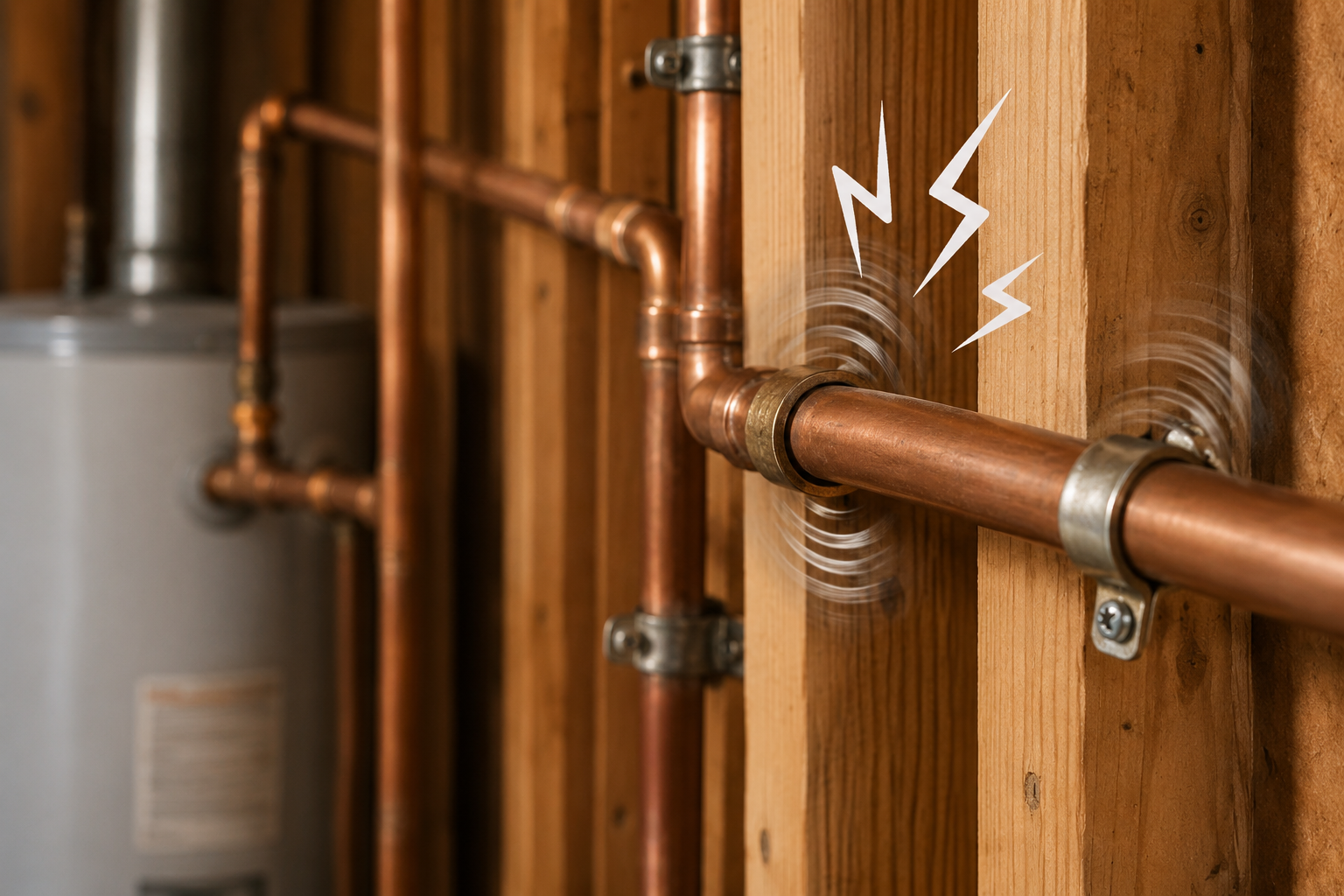
If you’re wondering why are my pipes banging, the problem is usually caused by water hammer, loose pipe supports, trapped air, or high water pressure. Banging pipes can happen suddenly or grow worse over time, especially when faucets, dishwashers, or washing machines shut off quickly.
Why Are My Pipes Banging?
Banging pipes can be loud, annoying, and sometimes alarming. The noise may happen when you turn faucets on or off, flush a toilet, run the dishwasher, or use the washing machine.
The good news is that pipe banging is usually fixable without major plumbing work.
Below are the most common causes of banging pipes and the best ways to stop the noise.
Step 1: Identify When the Banging Happens
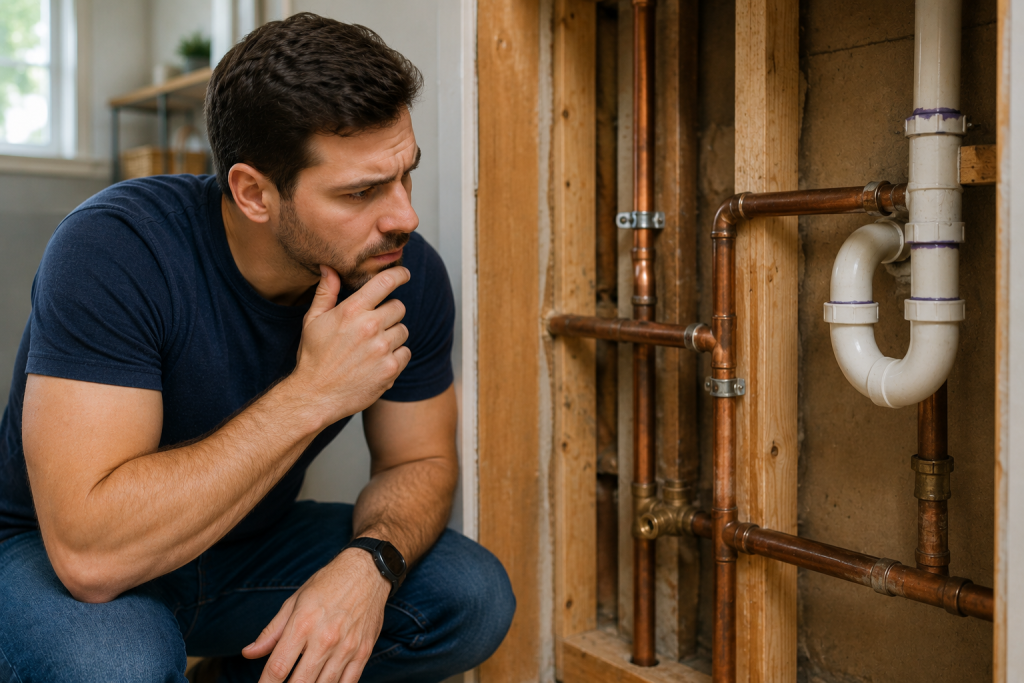
Before making repairs, figure out exactly when the noise occurs.
Common patterns include:
- Loud bang when shutting off water quickly
- Knocking sounds while hot water is running
- Repetitive tapping behind walls
- Vibrating pipes during appliance use
- Banging after flushing a toilet
This helps narrow down the cause of the problem.
If your toilet is making unusual noises too, read: How to Fix a Running Toilet: 7 Easy Fixes That Actually Work.
Step 2: Check for Water Hammer
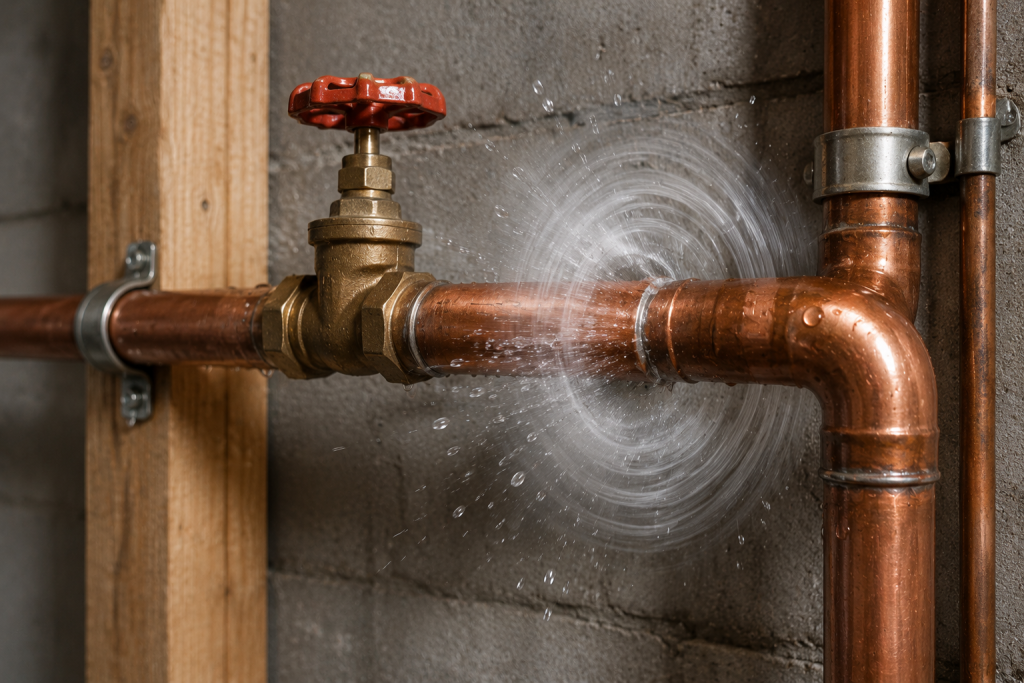
If you’re asking why are my pipes banging whenever water shuts off suddenly, water hammer is one of the most likely causes.
It happens when water flow suddenly stops and creates a shockwave inside the plumbing system. Fast-closing valves in dishwashers, washing machines, and ice makers often trigger this problem.
Signs of water hammer include:
- A single loud bang
- Noise after shutting off water
- Pipes shaking or vibrating
How to Fix Water Hammer
You can often fix water hammer by:
- Installing water hammer arrestors
- Securing loose pipes
- Reducing water pressure
- Draining air chambers in older plumbing systems
Water hammer arrestors are inexpensive and usually install near appliances that use quick-closing valves.
As an Amazon Associate I earn from qualifying purchases.
If banging happens when your washing machine stops filling, washing machine water hammer arrestors may help absorb the pressure shock. Choose arrestors with connections that match your washer hookups, and follow the manufacturer’s sizing and installation instructions.
Step 3: Tighten Loose Pipe Supports
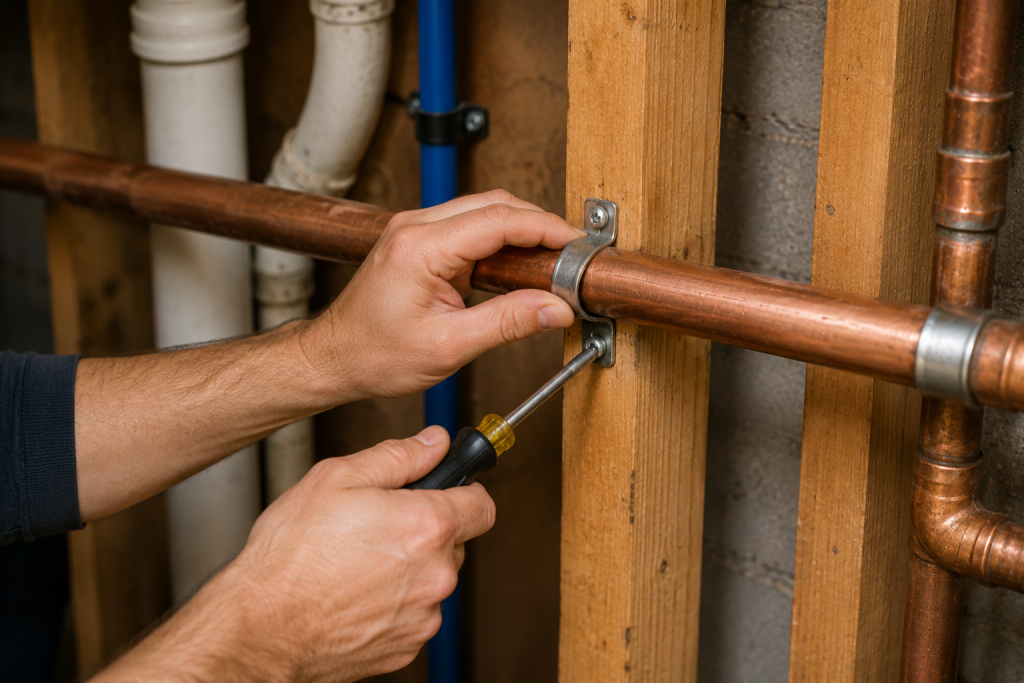
Loose pipes can move and slam against framing whenever water flows through them.
Check exposed pipes in:
- Basements
- Crawl spaces
- Utility rooms
- Under sinks
If pipes move when water runs, they may need additional support brackets or pipe straps.
Use foam pipe insulation or plastic pipe clamps to reduce noise and vibration.
For accessible loose pipes, choose cushioned pipe support clamps sized for the pipe’s outside diameter and compatible with its material. Follow the pipe manufacturer’s support requirements, allowing for thermal movement rather than clamping every section rigidly.
If you also notice weak flow, read: Low Water Pressure in Kitchen Sink? 7 Easy Fixes That Actually Work.
Step 4: Test Your Home’s Water Pressure
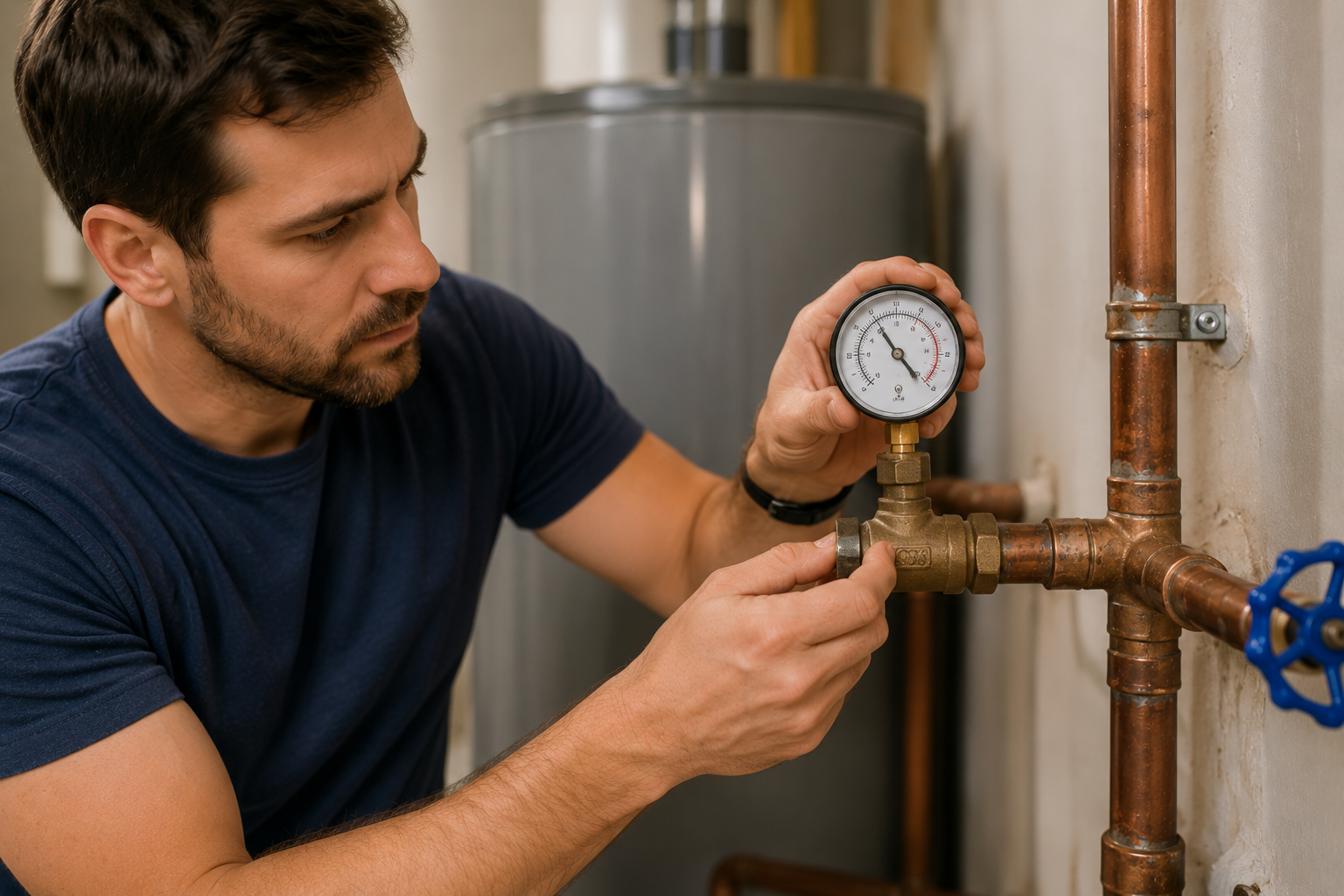
High water pressure can make plumbing noisy and increase the risk of water hammer.
Most homes should have water pressure between 40 and 60 PSI.
If pressure exceeds 80 PSI, pipes and fixtures may become noisy or damaged over time.
How to Check Water Pressure
Use a water pressure test gauge with a hose-thread connection to measure pressure at a compatible outdoor faucet or laundry hookup. A model with a maximum-reading hand can also show the highest pressure reached between checks.
If the pressure is too high, install or adjust a pressure-reducing valve (PRV).
Step 5: Look for Expanding Hot Water Pipes
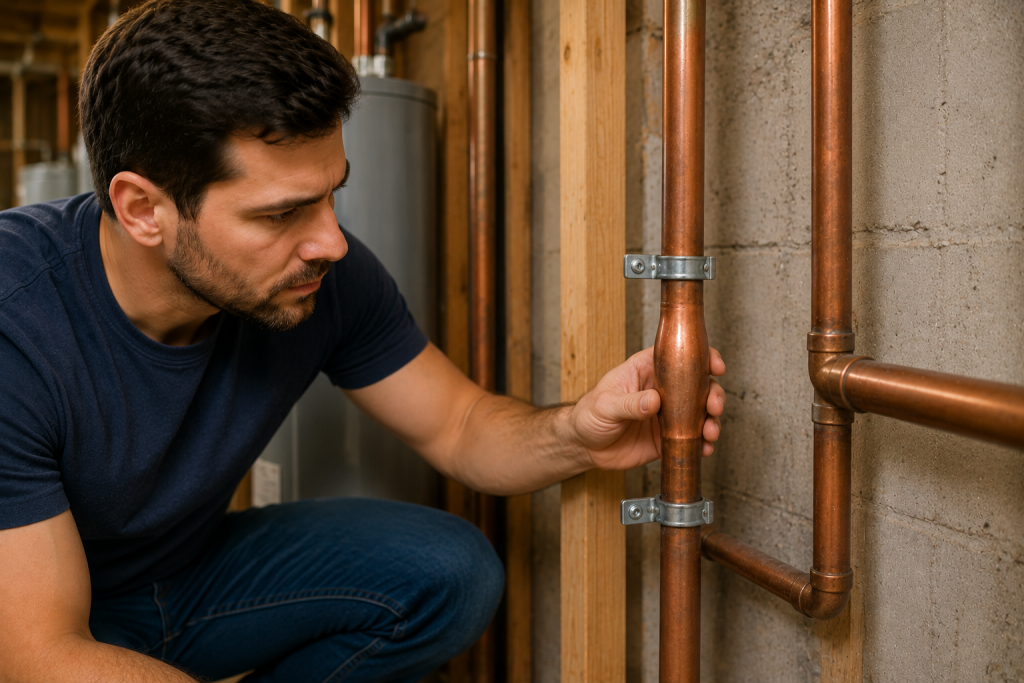
Copper pipes naturally expand when hot water flows through them.
If the pipes rub against wood framing or pass tightly through wall openings, they can create:
- Popping sounds
- Ticking noises
- Banging inside walls
This is especially common during winter or after long hot showers.
How to Reduce Expansion Noise
Possible fixes include:
- Adding pipe insulation
- Increasing clearance around framing holes
- Using plastic sleeves where pipes pass through wood
- Securing loose sections of pipe
Where accessible pipes contact surrounding surfaces, properly fitted foam pipe insulation sleeves may help cushion contact and reduce noise. Match the sleeve to the pipe’s outside diameter and operating temperature. Insulation does not correct excessive pressure or replace proper pipe supports.
If the noise occurs near your water heater, read: Water Heater Not Producing Hot Water? 7 Easy Fixes That Actually Work (Step-by-Step Guide).
Step 6: Bleed Air From the Plumbing System
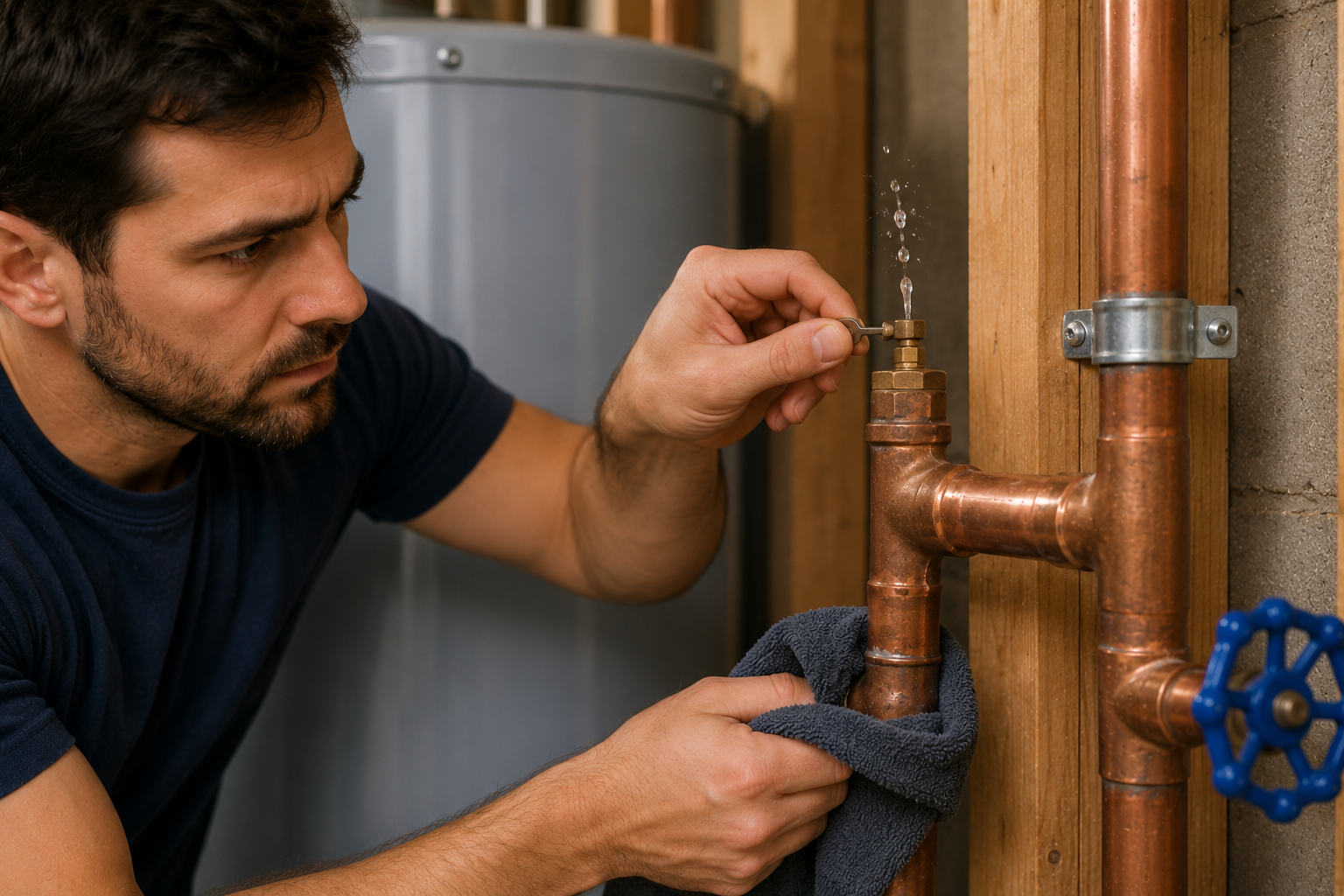
Air trapped inside pipes can sometimes cause knocking or sputtering sounds.
This may happen after:
- Plumbing repairs
- Water shutoffs
- New fixture installations
How to Remove Air From Pipes
- Turn off the main water supply.
- Open all faucets in the house.
- Flush toilets to drain remaining water.
- Turn the water supply back on slowly.
- Let faucets run until sputtering stops.
This helps clear trapped air from the plumbing system.
Step 7: Call a Plumber for Persistent Pipe Noise
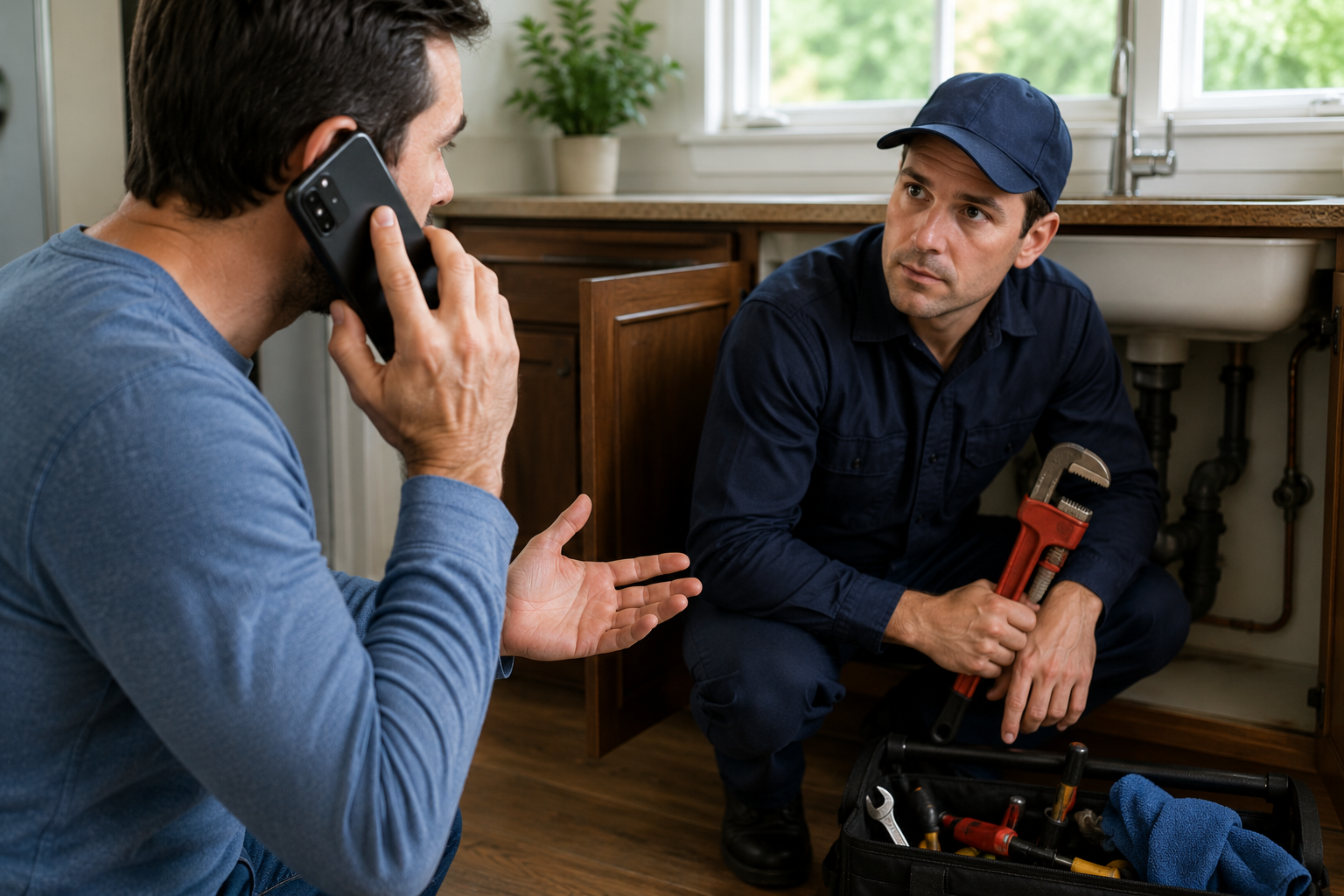
If pipe banging continues after trying these fixes, you may have:
- Severely loose plumbing
- Faulty pressure regulators
- Hidden pipe damage
- Improperly installed plumbing
- Excessively high municipal water pressure
A licensed plumber can inspect the system and recommend permanent repairs.
For additional guidance on noisy plumbing systems, see the plumbing tips from This Old House.
Frequently Asked Questions
Are banging pipes dangerous?
Occasional pipe banging is usually not dangerous, but repeated water hammer can damage plumbing joints, valves, and appliances over time.
Why do my pipes bang when I flush the toilet?
This often happens because the toilet fill valve shuts off quickly, creating water hammer inside the pipes.
Can high water pressure cause banging pipes?
Yes. Excessively high water pressure can make pipes vibrate, bang, and wear out faster.
Why do pipes bang at night?
Pipes may bang at night due to automatic appliance cycles, water softeners, ice makers, or thermal expansion from temperature changes.
Should I worry about banging pipes behind walls?
If the noise is frequent or getting louder, it’s a good idea to investigate. Loose pipes behind walls can eventually wear against framing or fittings.
Looking for help with another plumbing problem? Browse our complete collection of plumbing repair and troubleshooting guides.
Final Thoughts
If you’ve been asking why are my pipes banging, the issue is often related to water hammer, loose plumbing supports, trapped air, or expanding hot water pipes. Identifying the source of the noise early can help prevent plumbing damage and reduce annoying pipe sounds throughout your home.
With these simple troubleshooting steps, most homeowners can successfully diagnose and fix banging plumbing pipes before the problem gets worse.
Catching the issue early can help prevent long-term plumbing damage and keep your home quieter.