Last updated: September 22, 2026
By Home Repair Genie
Quick Answer
If your AC drain line keeps clogging, the most common causes are algae buildup, mold, dirt from the evaporator coil, a clogged drain pan, improper drain line slope, or a dirty air filter. Most homeowners can clear the blockage using a wet/dry vacuum or a plumber’s snake and help prevent future clogs with routine maintenance.
Why Your AC Drain Line Keeps Clogging
Understanding why your AC drain line keeps clogging makes it much easier to choose the right repair instead of treating the symptoms. Your air conditioner removes moisture from the air while it cools your home. That moisture drips into the condensate drain pan and flows through the drain line to the outside.
Over time, dirt, dust, mold, algae, and slime can accumulate inside the pipe, restricting water flow. When the blockage becomes severe, the drain line backs up and may trigger a safety float switch that shuts down your air conditioner.
Ignoring repeated clogs can lead to ceiling stains, water damage, mold growth, and costly HVAC repairs.
Signs Your AC Drain Line Is Clogged
When your AC drain line keeps clogging, you’ll often notice water leaks, high humidity, or your air conditioner shutting off unexpectedly.
Before troubleshooting, look for these common symptoms:
- Water leaking around the indoor HVAC unit
- Standing water in the drain pan
- AC suddenly stops cooling
- Float switch shuts the system off
- Musty odors from vents
- High indoor humidity
- Visible algae around the drain outlet
- Gurgling sounds from the drain pipe
If you’re also dealing with poor cooling performance, check out our guide on Why Is My AC Running But Not Cooling?
As an Amazon Associate I earn from qualifying purchases.
Tools You May Need
- Wet/dry vacuum
- White vinegar
- Warm water
- Funnel
- Small wire brush
- Flexible drain brush
- Plumber’s snake
- Flashlight
- Garden hose
- Replacement air filter (Make sure you pick the right size for your system)
- Gloves
- Safety glasses
Fix 1 – Turn Off the HVAC System
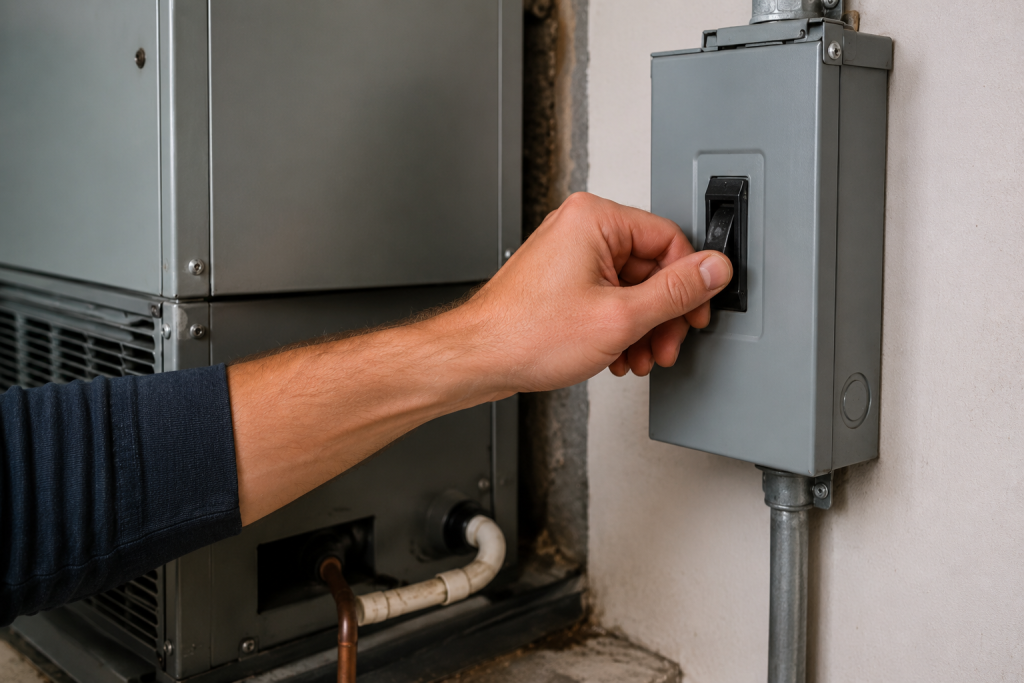
Shut Off Power
Always turn off the thermostat and disconnect power to the indoor air handler before working on the drain line.
This prevents accidental system operation and reduces electrical hazards.
Fix 2 – Locate the Drain Line
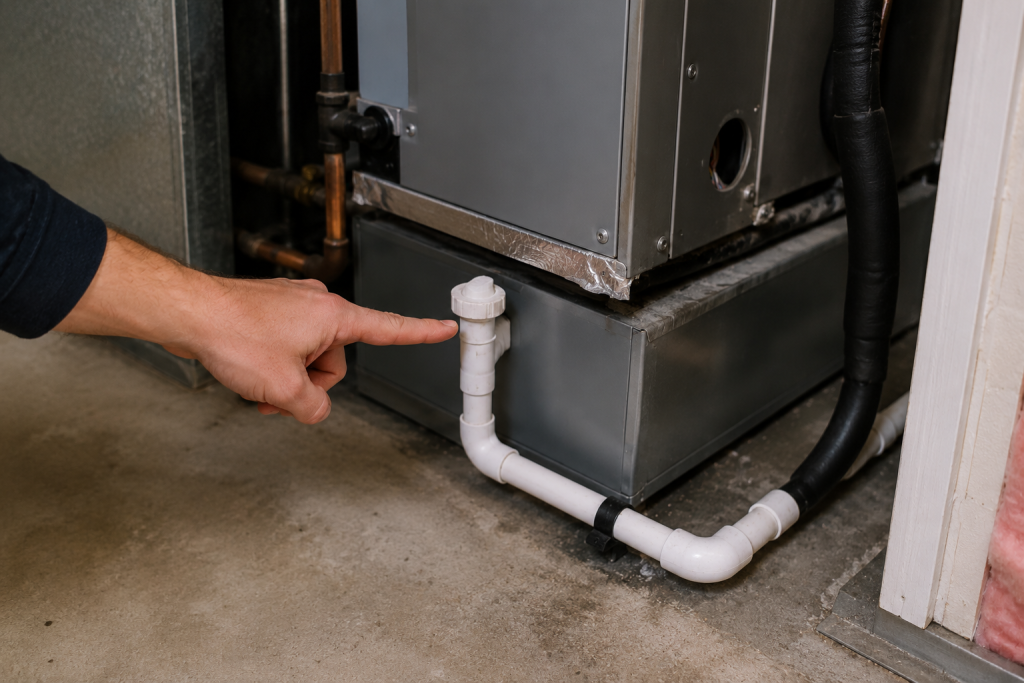
Find the PVC Pipe
The condensate drain is usually a 3/4-inch white PVC pipe connected to the indoor air handler.
Look for:
- A cleanout cap near the unit
- The drain pan underneath the evaporator coil
- The outdoor drain pipe termination
Removing the cleanout cap provides access for cleaning.
Fix 3 – Vacuum Out the Clog
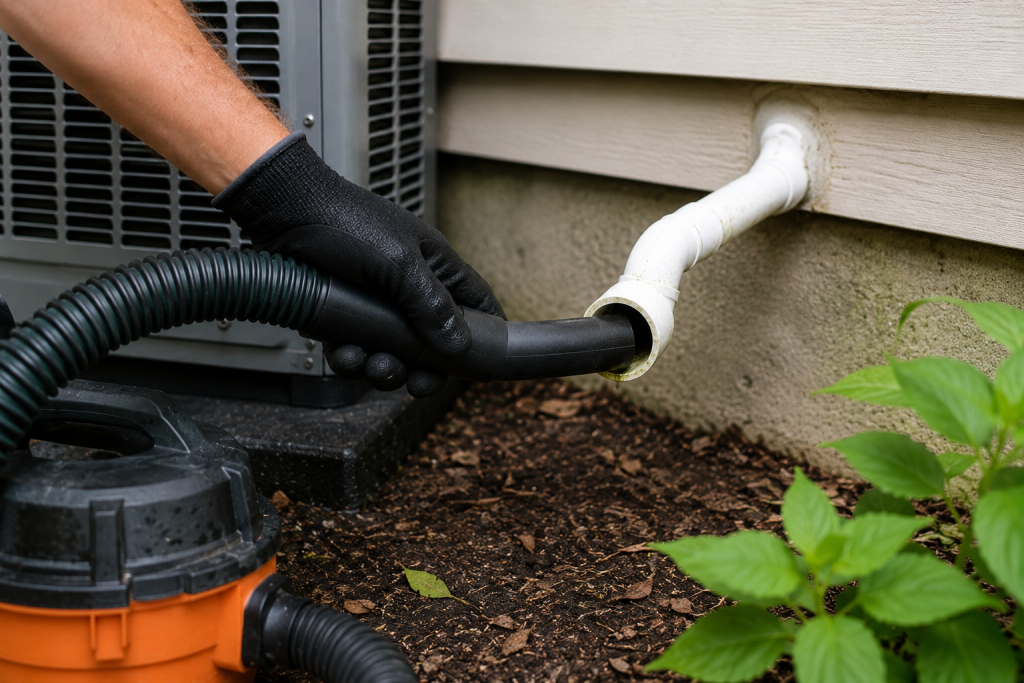
Use a Wet/Dry Vacuum
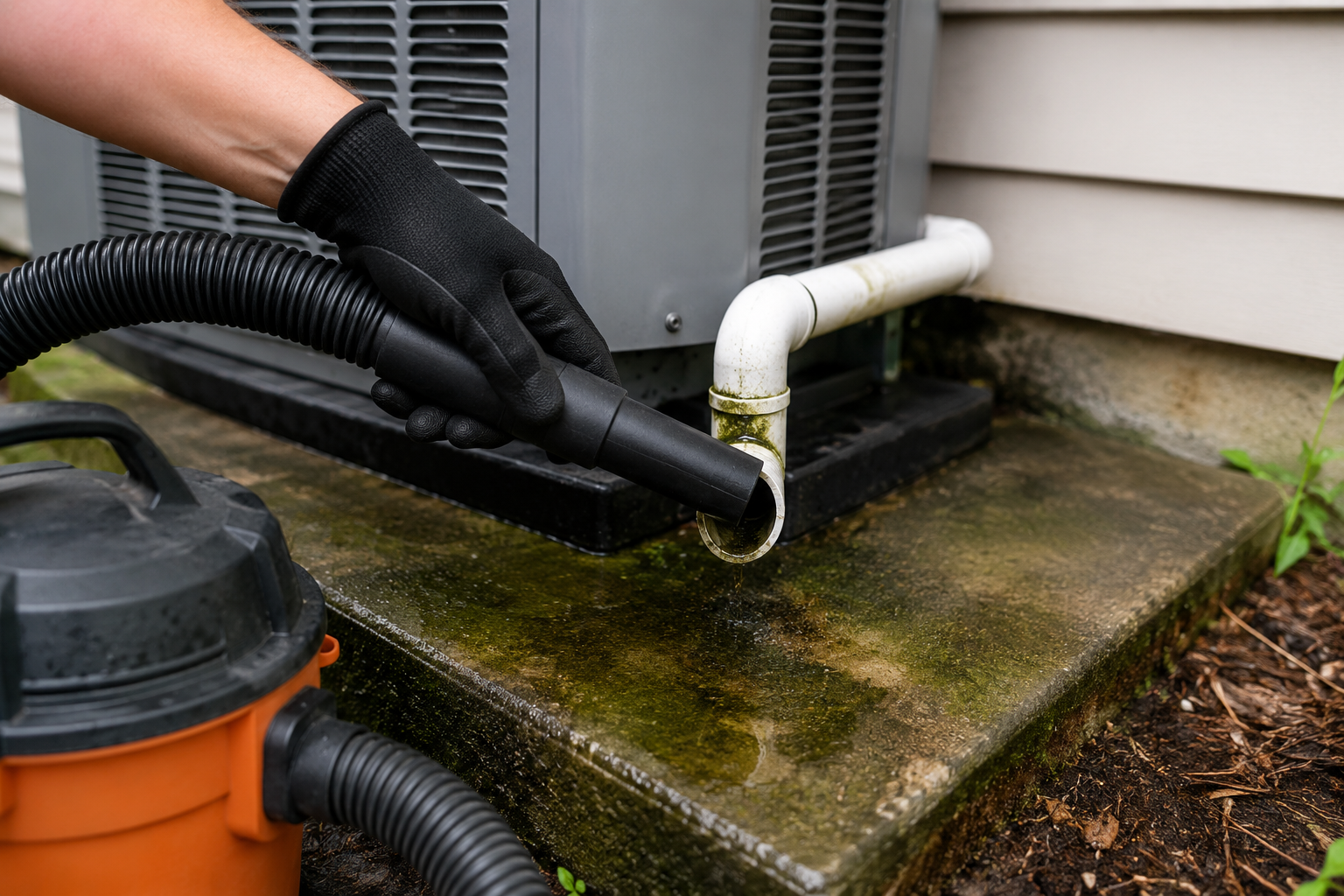
One of the easiest ways to clear an AC drain line that keeps clogging is with a wet/dry vacuum. If you don’t already have one, you can find a compact wet/dry vacuum on Amazon here.
- Go outside where the drain exits.
- Connect the vacuum hose tightly over the pipe.
- Seal around it with a rag or duct tape.
- Run the vacuum for 1–3 minutes.
Many clogs consist of algae, slime, and debris that are easily removed this way.
Check out our guide: AC Freezing Up? 7 Easy Ways to Fix a Frozen Air Conditioner.
Fix 4 – Flush the Drain Line
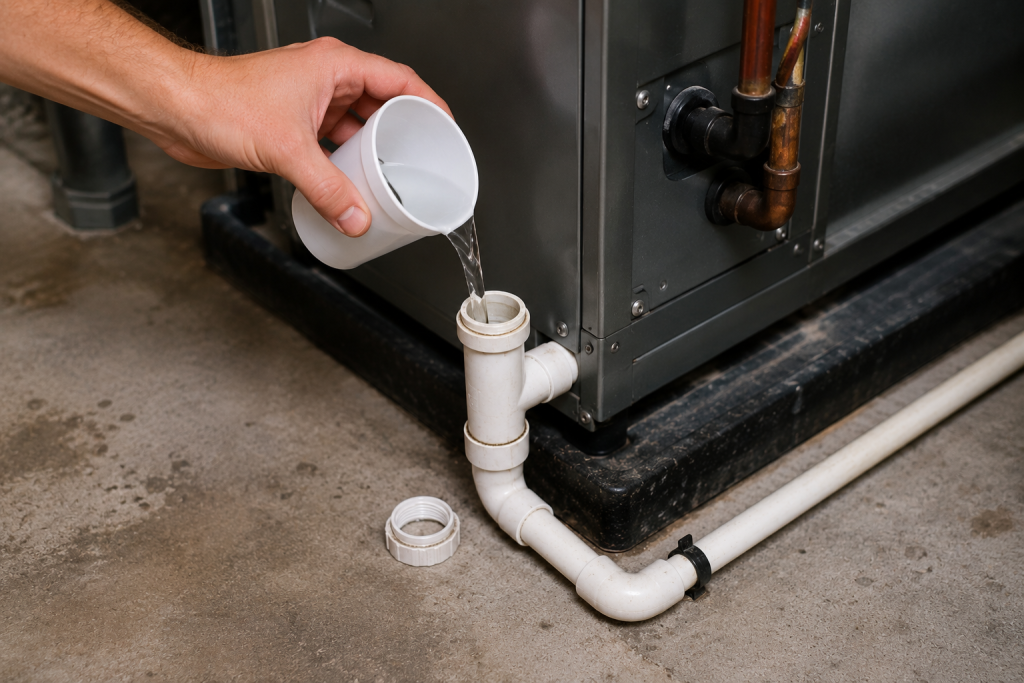
Pour Vinegar Through the Cleanout
After removing the clog:
- Remove the cleanout cap.
- Pour one cup of distilled white vinegar into the pipe.
- Let it sit for 30 minutes.
- Flush with warm water.
The vinegar helps dissolve slime and discourages algae growth.
Avoid using bleach unless your HVAC manufacturer specifically recommends it, as bleach can damage certain components or create harmful fumes.
Fix 5 – Clean the Drain Pan
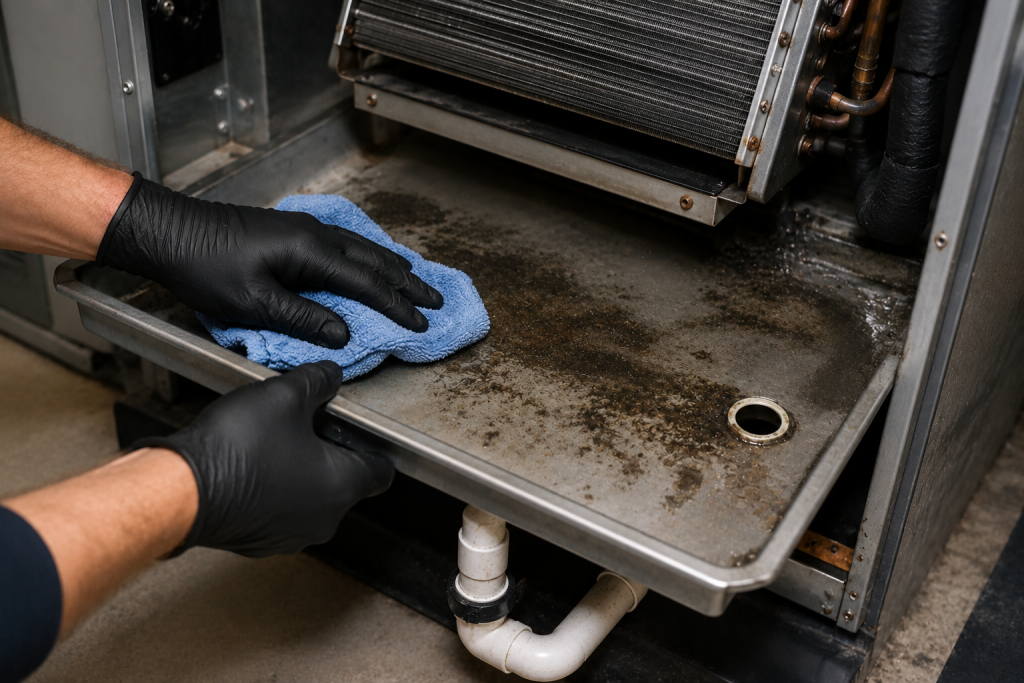
Remove Standing Water
Inspect the drain pan beneath the evaporator coil.
Clean out:
- Dirt
- Rust flakes
- Mold
- Slime
- Standing water
A dirty drain pan continually feeds debris into the drain line.
Fix 6 – Replace a Dirty Air Filter
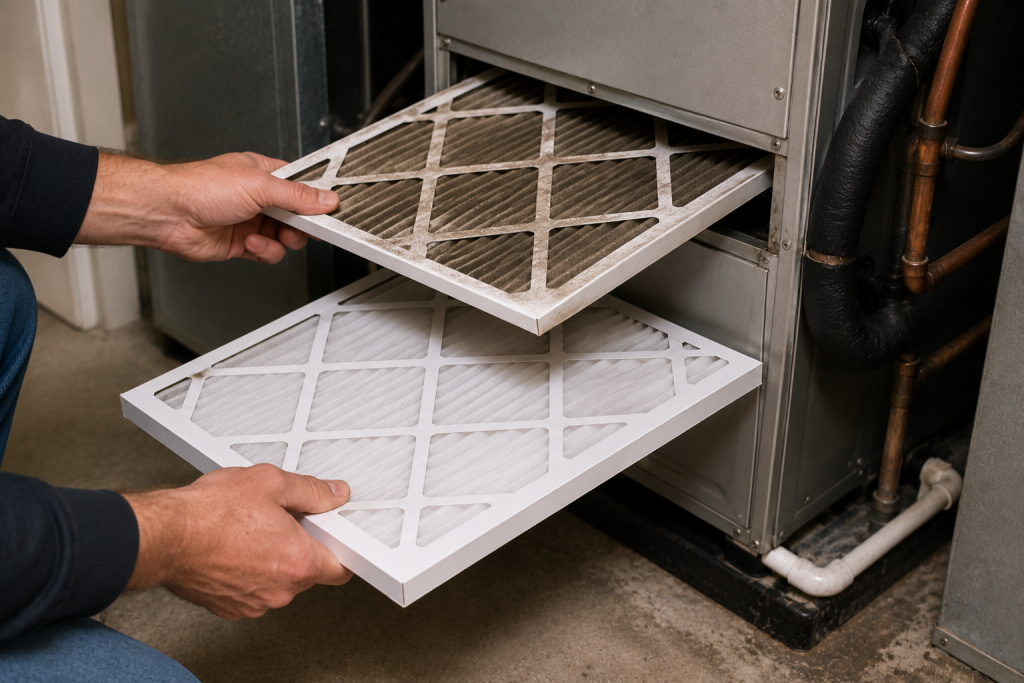
Reduce Dirt Entering the System
A clogged air filter allows dust to bypass the filter and settle on the evaporator coil.
As condensation forms, that dirt washes into the drain line.
Replace disposable filters every 1–3 months depending on usage. Check the dimensions printed on your existing filter, then find the correct replacement HVAC air filter on Amazon.
You may also find our guide on Best HVAC Air Filters for Cleaner Air and Better HVAC Performance helpful.
Fix 7 – Check the Drain Line Slope
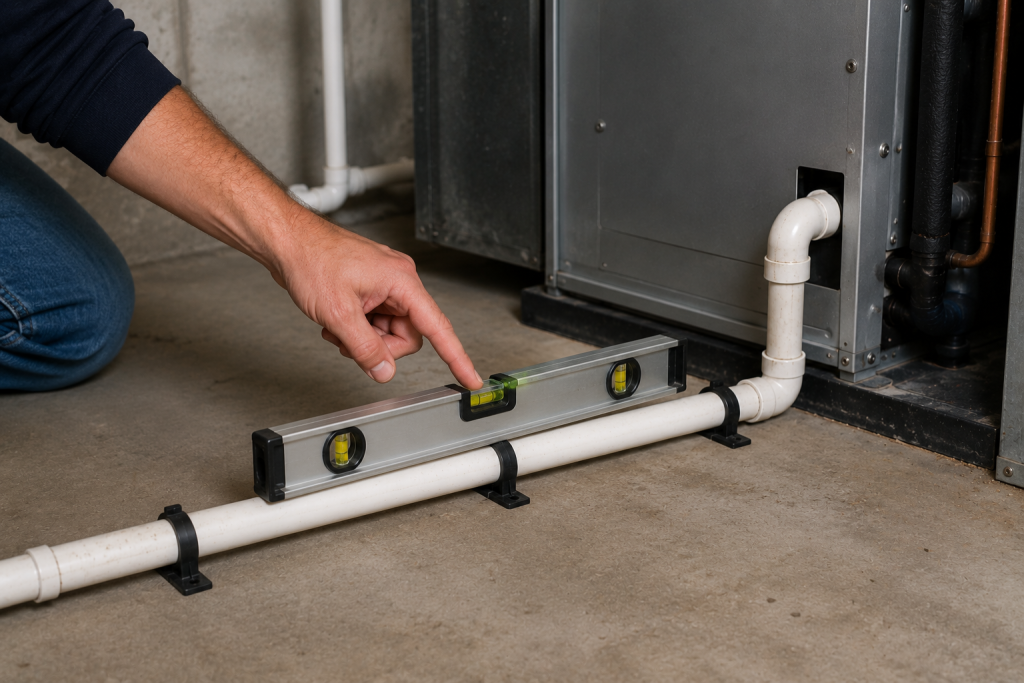
Make Sure Water Can Flow
The drain pipe should slope continuously downward toward the discharge point.
Problems include:
- Sagging pipe
- Standing water
- Improper installation
- Pipe settling over time
Correcting the slope helps prevent recurring blockages.
Fix 8 – Inspect the Float Switch
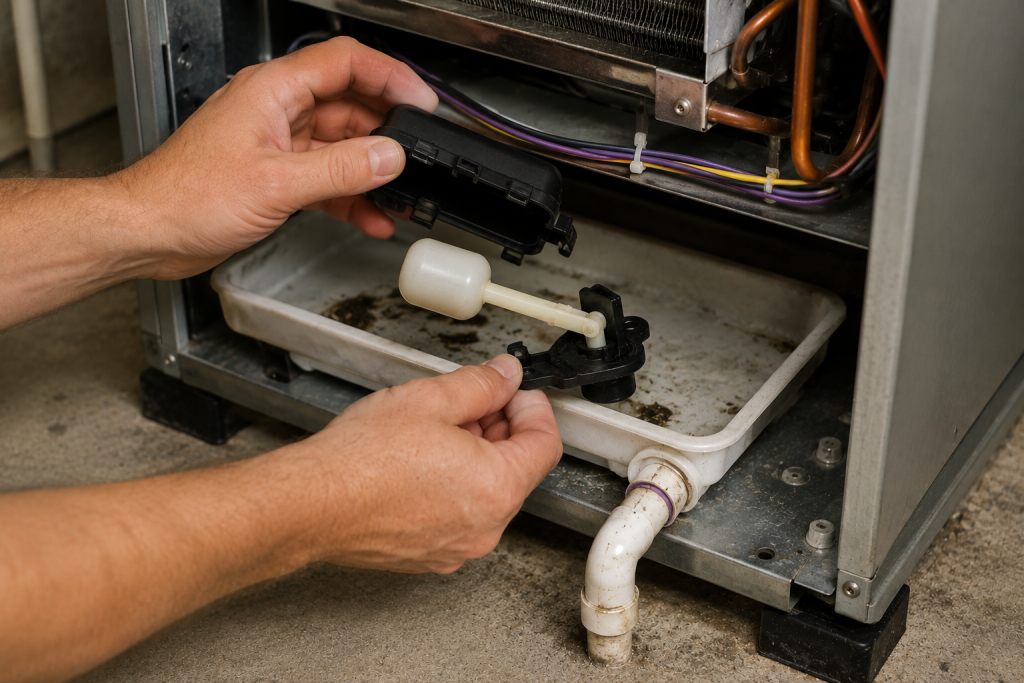
Make Sure It Moves Freely
Many modern systems include a condensate float switch.
If the drain line clogs, the float rises and shuts off the air conditioner before water overflows.
Inspect for:
- Dirt buildup
- Sticking movement
- Corrosion
- Damaged wiring
Clean the switch if necessary.
Fix 9 – Schedule Professional Maintenance
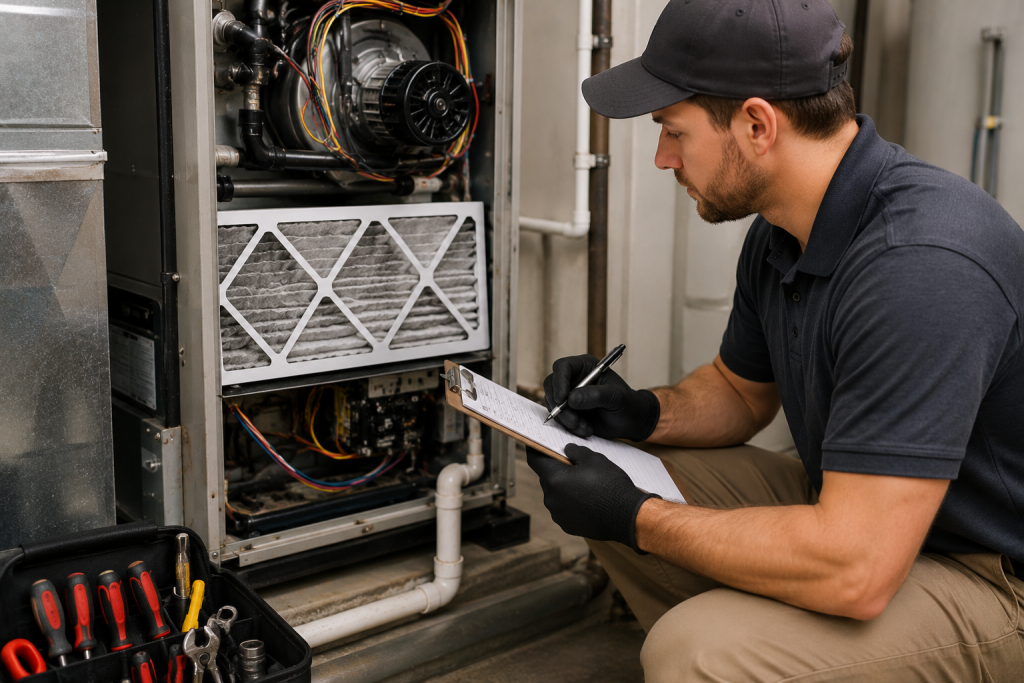
Clean the Entire System
If your AC drain line keeps clogging despite regular cleaning, a technician should inspect:
- Evaporator coil
- Drain pan
- Drain trap
- Condensate pump
- Blower assembly
- Airflow
- System installation
Repeated clogs often indicate a larger maintenance issue.
You may find this guide helpful: Why Are My AC Vents Sweating? 7 Easy Fixes That Actually Work (Step-by-Step Guide).
How to Prevent Future Drain Line Clogs
If your AC drain line keeps clogging, preventive maintenance is the best way to stop recurring blockages before they become serious.
Preventive maintenance is much easier than dealing with water damage.
Follow these tips:
- Replace air filters regularly.
- Flush the drain line with vinegar every few months.
- Keep the outdoor drain opening clear.
- Schedule annual HVAC maintenance.
- Keep the evaporator coil clean.
- Check the drain pan periodically.
- Address small leaks promptly.
When to Call a Professional
If your AC drain line keeps clogging even after cleaning it several times, the problem may involve the evaporator coil, drain pan, or condensate pump.
Contact an HVAC technician if:
- Water continues leaking after cleaning.
- The drain line repeatedly clogs within weeks.
- The float switch continually shuts off the system.
- You suspect a frozen evaporator coil.
- Mold growth is extensive.
- The drain line is inaccessible.
- The condensate pump has failed.
Frequently Asked Questions
Why does my AC drain line keep clogging?
If your AC drain line keeps clogging, the most common causes are algae, mold, dirt from the evaporator coil, a dirty drain pan, poor maintenance, or an improperly sloped drain line.
Can I pour vinegar into my AC drain line?
Yes. Distilled white vinegar is commonly recommended to help dissolve slime and discourage algae growth. Follow your HVAC manufacturer’s maintenance recommendations.
Is a clogged AC drain line dangerous?
The clog itself is usually not dangerous, but it can cause water damage, mold growth, and automatic system shutdown if ignored.
How often should I clean my AC drain line?
Many homeowners benefit from cleaning it every three to six months, especially in humid climates where algae grows more quickly.
Can a dirty air filter clog the drain line?
Yes. A dirty filter allows more dust to accumulate on the evaporator coil, which eventually washes into the condensate drain.
Will bleach unclog an AC drain line?
Bleach may kill algae, but many HVAC professionals prefer vinegar because it is less likely to damage components or create harmful fumes. Always follow your system manufacturer’s guidance.
Looking for help with another heating or cooling problem? Browse our complete collection of HVAC repair and troubleshooting guides.
Final Thoughts
If your AC drain line keeps clogging, addressing the problem early can prevent water damage, mold growth, and costly HVAC repairs. In many cases, clearing the blockage with a wet/dry vacuum, flushing the line with vinegar, replacing a dirty air filter, and maintaining the system regularly are enough to keep the condensate flowing properly.
However, if clogs continue to return, it’s a sign that a deeper issue—such as a dirty evaporator coil, poor drainage design, or failing component—needs professional attention. A little preventive maintenance today can save you from expensive repairs and an unexpected loss of cooling later.
For additional condensate drain maintenance guidance, see the Leak saver’s air conditioner maintenance recommendations.