
Last updated: November 14, 2026
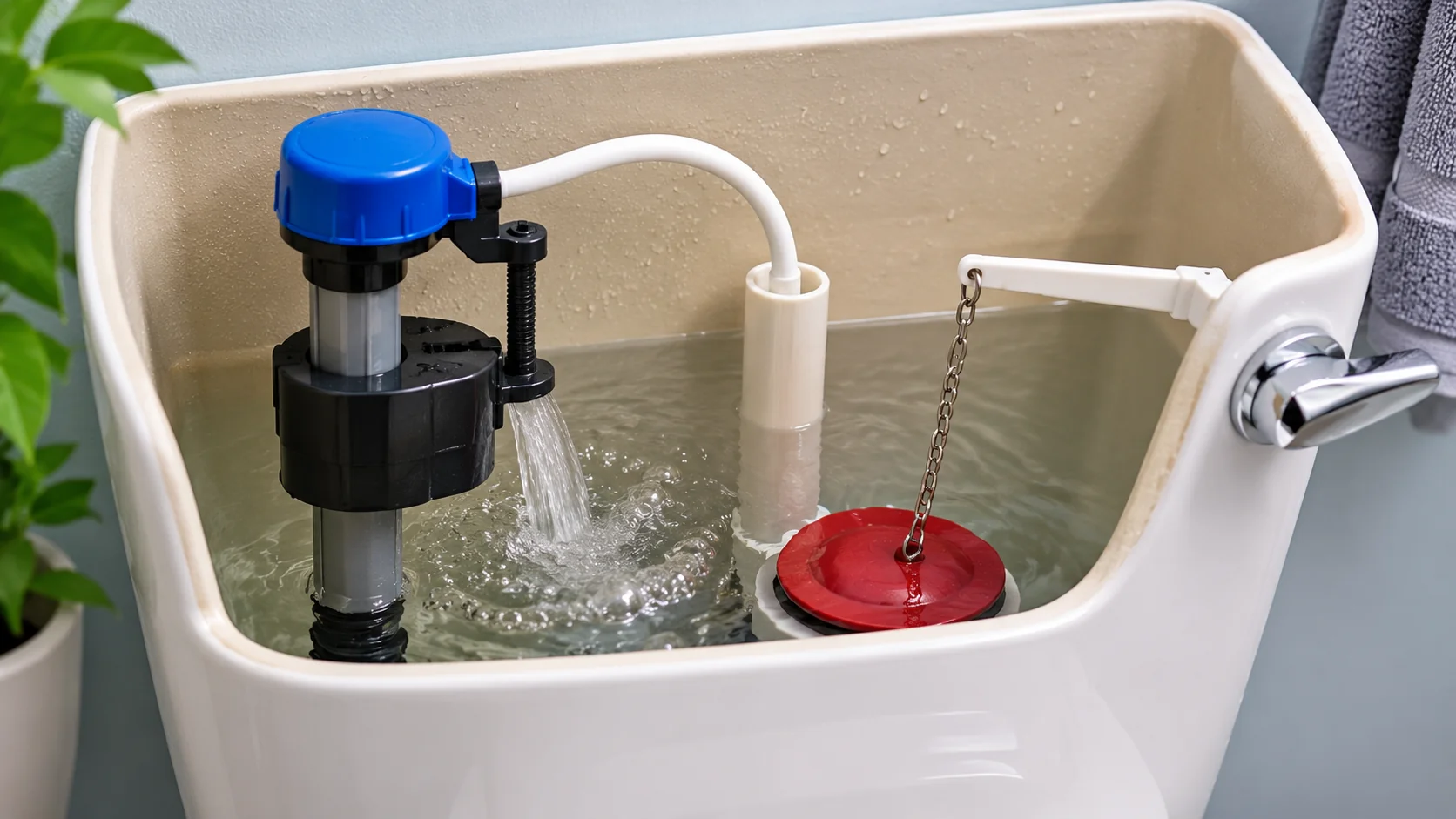
Is your toilet making a hissing noise even when nobody is using it? A faint hissing sound during the refill cycle is often normal, but a toilet that continues hissing long after flushing may have a problem with its fill valve, float, flapper, or water supply.
Understanding why your toilet making hissing noise problem occurs can help you identify the faulty component before purchasing replacement parts.
Although the noise may seem harmless, a constantly hissing toilet can waste water, increase your utility bills, and indicate that an internal component needs attention.
Fortunately, many toilet hissing problems are relatively easy to diagnose and repair without hiring a plumber.
In this Home Repair Genie guide, we’ll explain six common causes of a toilet making a hissing noise, how to identify the problem, and the steps you can take to fix it.
Quick Answer
A toilet making a hissing noise is usually caused by a worn or clogged fill valve, an incorrectly adjusted float, a leaking flapper, or water continuously flowing into the overflow tube.
If the hissing only occurs while the tank refills after flushing, it may be normal. However, if the noise continues after the tank is full, remove the tank lid and check whether water is still entering the tank.
Start by inspecting the fill valve and water level. If the toilet continues hissing, cleaning or replacing the fill valve often resolves the problem.
As an Amazon Associate I earn from qualifying purchases.
If your toilet isn’t refilling properly, see our guide on how to fix a toilet tank that is not filling for additional troubleshooting steps.
Why Is My Toilet Making a Hissing Noise?
A toilet makes a hissing sound when water flows through a relatively narrow opening, usually somewhere in the fill valve or supply system.
The fill valve controls how water enters the tank after flushing. As the tank fills, a float rises with the water level and eventually signals the valve to shut off.
When everything works correctly, the water stops flowing once the tank reaches its intended level.
However, worn components, mineral deposits, incorrect adjustments, and leaks can prevent the fill valve from shutting off properly.
This can produce a continuous hissing sound.
The timing of the noise can help identify the cause.
| When the Hissing Happens | Possible Cause |
|---|---|
| Only immediately after flushing | Normal tank refilling |
| Continuously, even when not flushing | Faulty fill valve or incorrect float adjustment |
| Every few minutes | Leaking flapper causing periodic refilling |
| While the tank fills very slowly | Clogged fill valve or restricted water supply |
| When water enters the overflow tube | Float set too high or fill valve failing to shut off |
| Near the shutoff valve or supply line | Restricted or deteriorating water supply component |
Understanding when the noise occurs can save time and help you avoid replacing parts unnecessarily.
6 Common Causes of a Toilet Making a Hissing Noise
1. The Toilet Fill Valve Is Worn Out
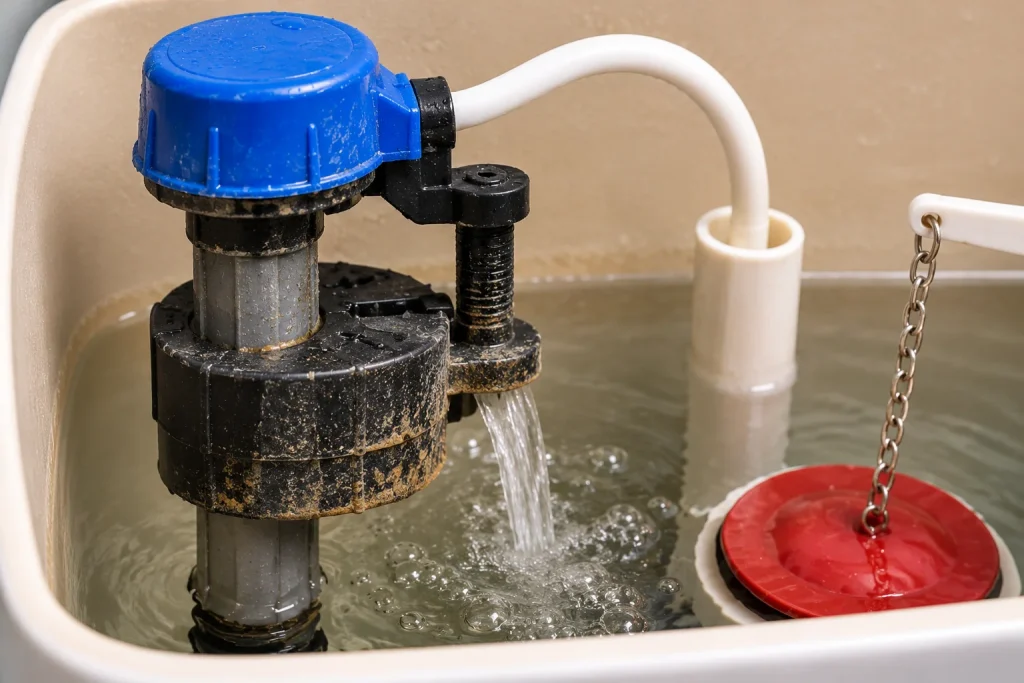
A failing fill valve is one of the most common causes of a toilet making a hissing noise.
The fill valve controls the flow of water into the toilet tank. Over time, its internal seals and moving components can wear out.
When the valve can no longer close completely, water may continue flowing through a small opening.
This creates a persistent hissing sound.
Signs of a faulty fill valve include:
- Hissing continues after the tank is full.
- Water enters the tank even when nobody has flushed.
- The toilet takes longer than normal to refill.
- The water level rises too high.
- The fill valve occasionally makes squealing or whistling noises.
How to fix it:
Remove the tank lid and observe the fill valve while the tank refills.
If the water reaches the correct level but the valve continues allowing water into the tank, the valve may need cleaning or replacement.
If your toilet continues hissing after the tank reaches its normal water level, the fill valve may need replacement. A general replacement fill valve is a popular option for many standard toilets. Check compatibility before purchasing.
A replacement toilet fill valve is generally inexpensive and can often be installed with basic tools.
Make sure the replacement is compatible with your toilet model.
2. The Float Is Adjusted Too High
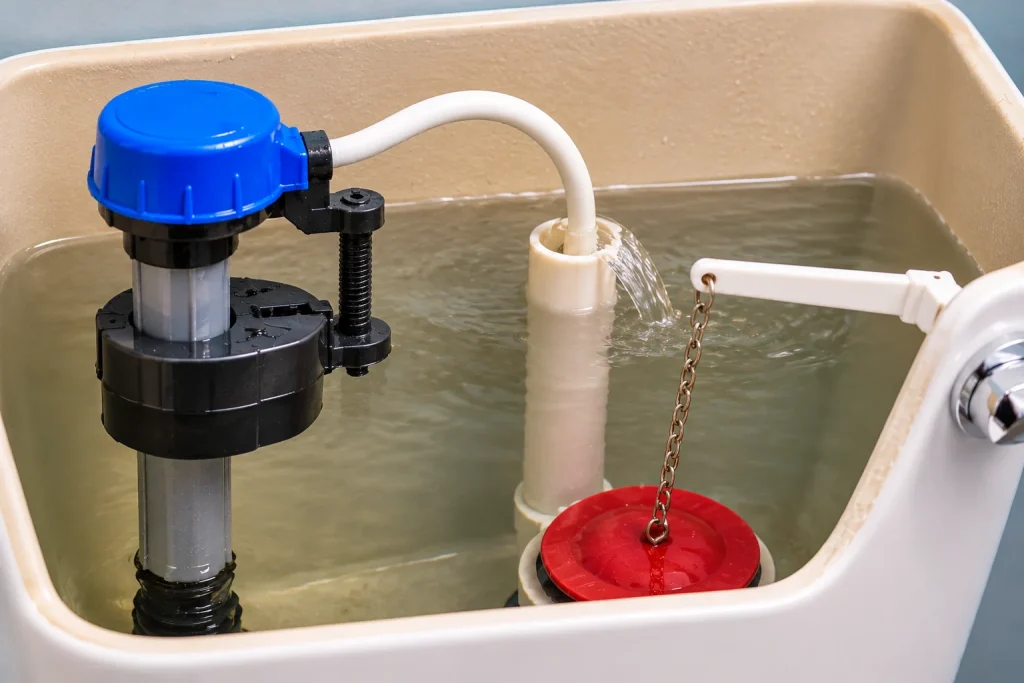
The float tells the fill valve when to stop adding water.
If the float is adjusted too high, the tank may continue filling until water spills into the overflow tube.
Because water keeps leaving the tank through the overflow tube, the fill valve may remain open and produce a constant hissing noise.
Signs of an incorrectly adjusted float include:
- Water continuously flowing into the overflow tube
- A tank water level that is too high
- Hissing that continues after flushing
- A toilet that seems to run constantly
How to fix it:
Locate the float mechanism inside the tank.
Modern toilets often have a float cup that moves vertically along the fill valve. Older toilets may use a floating ball attached to a metal or plastic arm.
Adjust the float according to the manufacturer’s instructions so the water shuts off at the marked fill line, typically below the top of the overflow tube.
Flush the toilet and confirm that the water stops at the correct level.
If the float is properly adjusted but the water continues running, the fill valve may be defective.
3. The Toilet Flapper Is Leaking
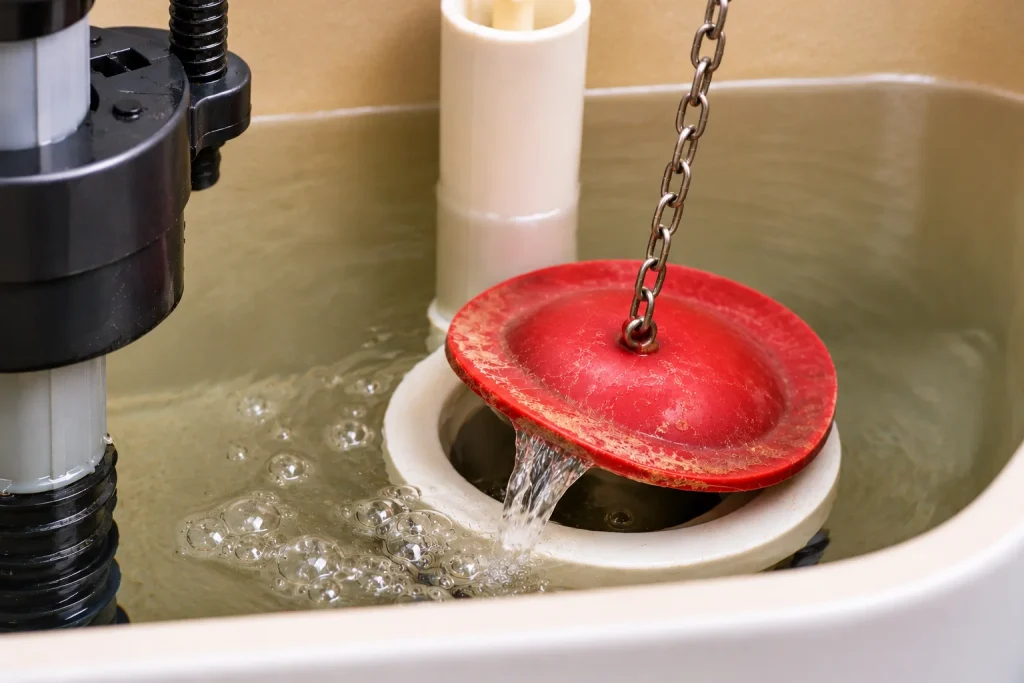
The flapper is the rubber seal at the bottom of the toilet tank.
When you flush, the flapper lifts and allows water to flow into the bowl. It then closes so the tank can refill.
Over time, the flapper can become worn, warped, brittle, or covered with mineral deposits.
When it no longer seals properly, water slowly leaks from the tank into the toilet bowl.
As the water level drops, the fill valve opens to replace the lost water.
This can cause repeated hissing noises even when nobody is using the toilet.
Signs of a leaking flapper include:
- The toilet refills randomly.
- Hissing starts every few minutes.
- The water level slowly drops between flushes.
- You notice movement in the toilet bowl water.
- The toilet runs intermittently throughout the day.
How to fix it:
Inspect the flapper for damage, warping, or mineral buildup.
Make sure the chain has enough slack to allow the flapper to close completely.
You can also perform a simple dye test:
- Remove the toilet tank lid.
- Add several drops of food coloring to the tank water.
- Wait approximately 15–20 minutes without flushing.
- Check whether colored water appears in the toilet bowl.
If color enters the bowl, water is leaking past the flush-valve seal or another component.
A worn flapper is a common cause, but some toilets use canister-style seals instead.
If the flapper is warped, cracked, or no longer seals properly, replacing it may stop the toilet from repeatedly refilling. A Fluidmaster 502 replacement toilet flapper is an option for compatible toilets with 2-inch flush valves.
For more detailed instructions, see our guide on how to fix a running toilet.
4. Mineral Buildup Is Restricting the Fill Valve
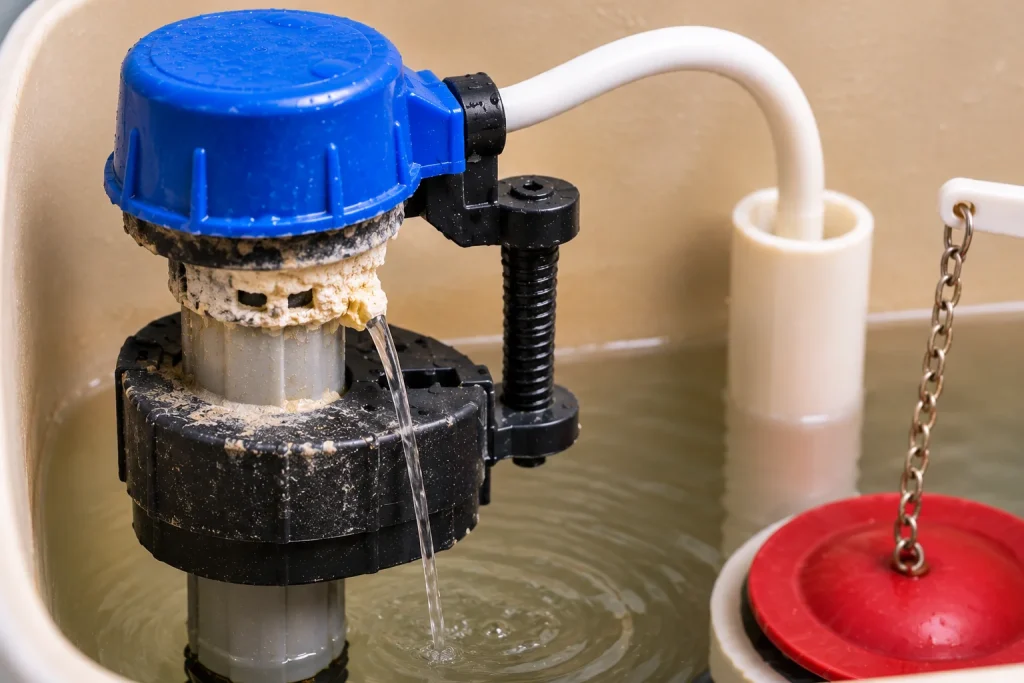
Hard water contains dissolved minerals that can accumulate inside plumbing fixtures.
Over time, mineral deposits and sediment can collect around the fill valve’s internal openings.
When water passes through these restricted passages, it may create a hissing, whistling, or squealing sound.
The toilet may also refill more slowly than usual.
Signs of mineral buildup include:
- A hissing noise during refilling
- Slower-than-normal tank filling
- Visible white or chalky deposits
- Inconsistent water flow
- Noise that becomes louder over time
How to fix it:
Turn off the toilet’s water supply before inspecting the fill valve.
If the manufacturer allows the valve cap to be removed for cleaning, follow the instructions for your specific model.
Some fill valves can be flushed to remove sediment trapped inside the valve.
Avoid forcing parts apart or using sharp tools that could damage internal seals.
If cleaning does not restore normal operation, replacing the fill valve may be the simplest solution.
5. The Water Supply Valve or Supply Line Is Restricted
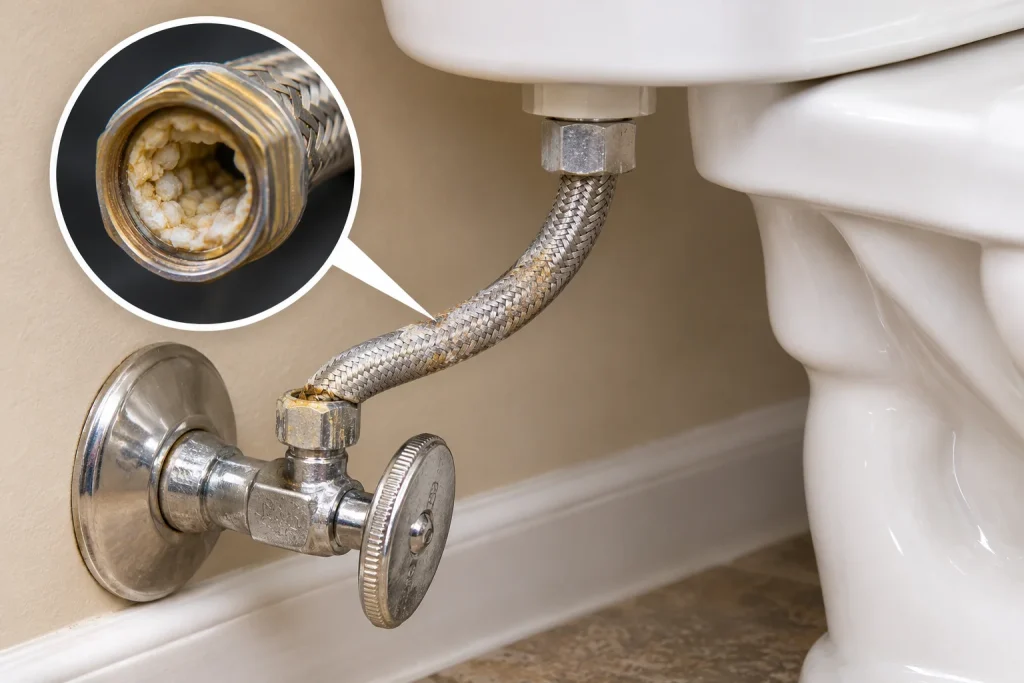
The shutoff valve behind the toilet controls the water entering the tank.
If the valve is partially closed, damaged, or internally restricted, water may flow through a narrowed opening and create a hissing or whistling sound.
A kinked or deteriorating supply line can cause similar symptoms.
Signs of a restricted water supply include:
- Hissing near the base of the toilet
- A tank that refills unusually slowly
- Reduced water flow
- Visible corrosion around the shutoff valve
- A kinked or damaged supply hose
How to fix it:
Check the shutoff valve and supply line for visible problems.
Make sure the supply line is not sharply bent or kinked.
If the shutoff valve operates smoothly and shows no signs of leakage or damage, verify that it is fully open according to its design.
Do not force an old or corroded valve. Forcing a deteriorated shutoff valve can cause leaks.
If the valve is damaged or water flow remains restricted, a plumber may need to replace the valve or supply line.
If the toilet receives very little water, our toilet tank not filling troubleshooting guide explains how to identify additional water supply problems.
6. The Refill Tube or Overflow System Is Not Working Properly
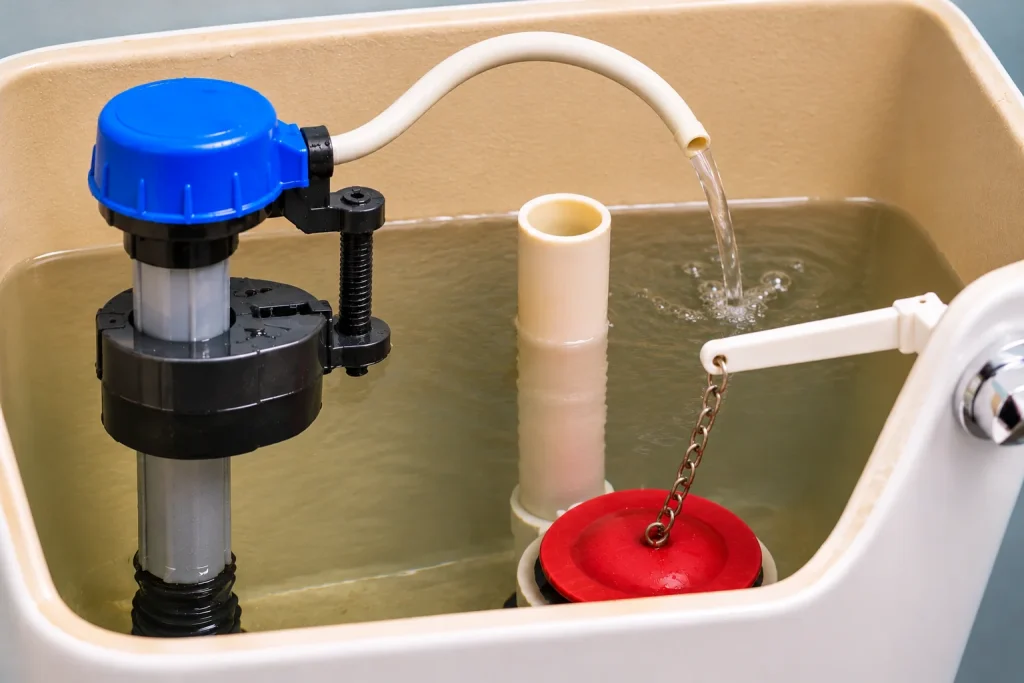
The refill tube is the small flexible tube connected to the fill valve.
It directs a portion of the incoming water into the overflow tube, helping restore the proper water level in the toilet bowl after flushing.
If the refill tube is incorrectly positioned or the fill valve allows water to rise above the overflow tube, the toilet may continue running.
This can create a persistent hissing noise.
Signs of an overflow or refill tube problem include:
- Water continuously entering the overflow tube
- A refill tube positioned incorrectly
- A tank water level above the intended fill line
- Hissing that continues after the toilet should stop filling
How to fix it:
Inspect the refill tube and confirm that it is attached and positioned according to the toilet manufacturer’s instructions.
The refill tube should generally discharge into the overflow tube through the appropriate clip, with an air gap rather than being pushed deeply inside.
Check the tank water level.
If water is spilling over the top of the overflow tube, adjust the float.
If several components inside your toilet tank are worn out, a complete toilet tank repair kit may be more practical than purchasing each replacement part separately. Make sure the kit matches your toilet’s flush-valve size and tank configuration.
How to Fix a Toilet Making a Hissing Noise: Step-by-Step
Now that you understand the possible causes, follow these steps to identify and correct the problem.
Step 1: Determine When the Hissing Occurs
Start by listening carefully.
Does the toilet hiss only after flushing, or does the sound continue when the tank is full?
A brief hissing sound during refilling is often normal.
However, a toilet making a hissing noise continuously may indicate a fill valve problem or an internal water leak.
If the sound occurs every few minutes, suspect a leaking flapper or flush-valve seal.
Identifying the timing helps narrow down the cause.
Step 2: Remove the Toilet Tank Lid
Carefully lift the tank lid and place it on a stable surface.
Toilet tank lids are heavy and can crack if dropped.
Look inside the tank and identify the main components:
- Fill valve
- Float
- Flapper or flush-valve seal
- Overflow tube
- Refill tube
- Flush handle and chain
Watch what happens when you flush.
The fill valve should open, refill the tank, and shut off when the water reaches the correct level.
Step 3: Check the Water Level and Float
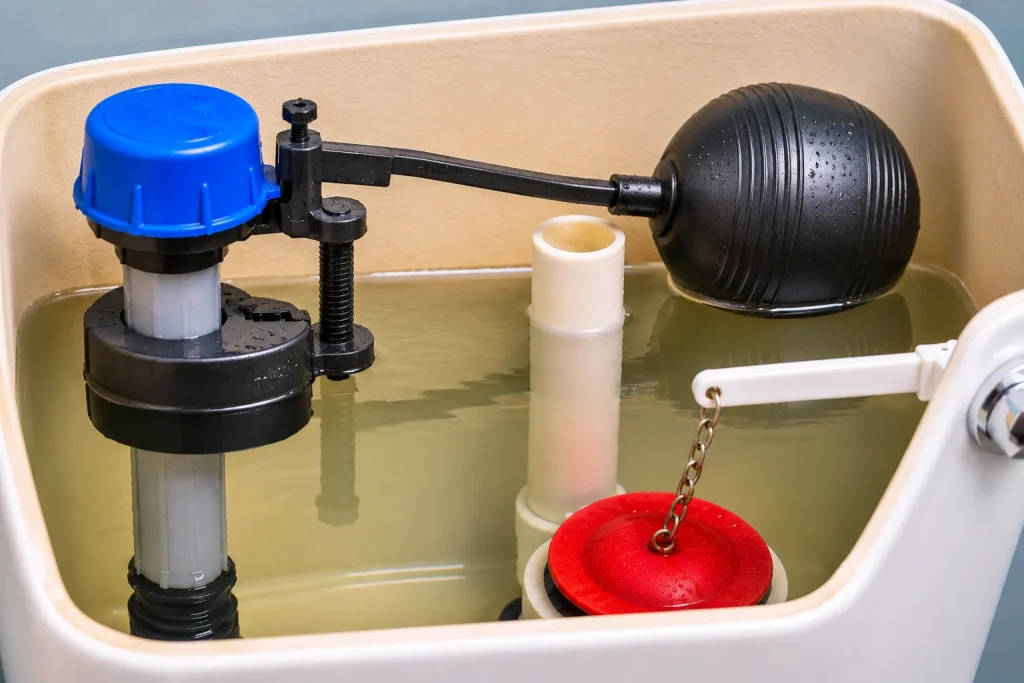
Inspect the water level after the tank finishes refilling.
The water should stop at the manufacturer’s designated fill line.
If the water level is too high, adjust the float downward according to the valve’s instructions.
Flush again and observe whether the water shuts off correctly.
If the hissing continues despite the correct water level, the fill valve may not be sealing properly.
Step 4: Inspect the Flapper for Leaks
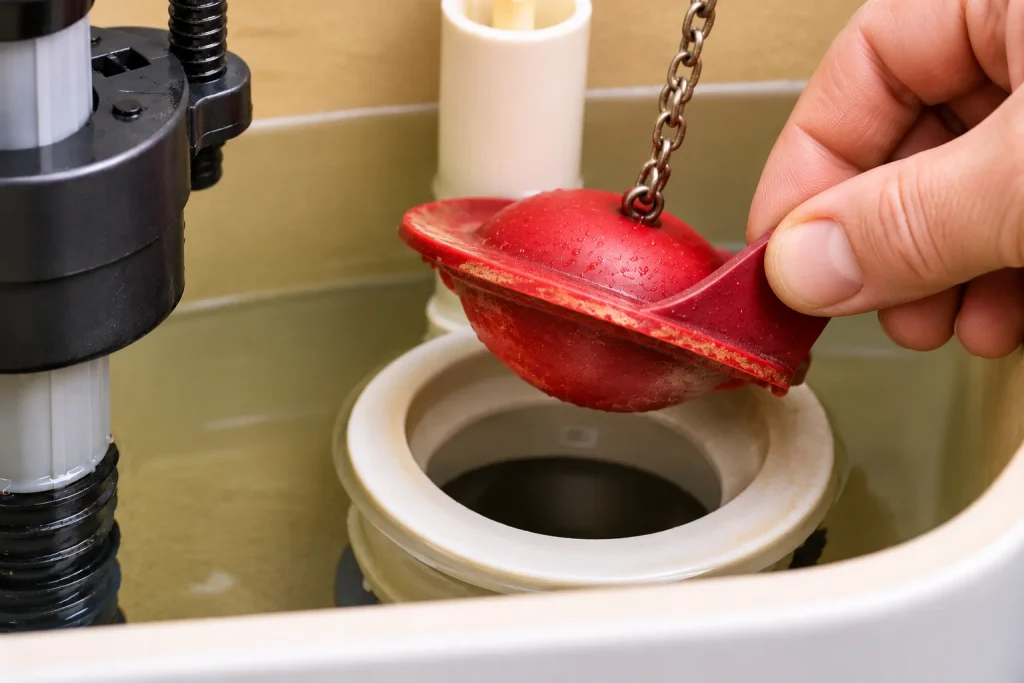
If the toilet hisses periodically rather than continuously, check the flapper.
Look for:
- Cracks or deterioration
- Mineral deposits
- A twisted or overly tight chain
- A flapper that does not sit evenly
- Damage to the flush-valve seat
Perform the food-coloring test described earlier if you suspect a slow leak.
Replace a damaged flapper or seal with a compatible replacement.
Step 5: Clean the Fill Valve
If the toilet makes a hissing noise while refilling slowly, debris inside the fill valve may be restricting water flow.
Turn off the water supply and flush the toilet to lower the tank water level.
Follow the manufacturer’s cleaning procedure.
For fill valves designed to be serviced, this may involve removing the cap and flushing sediment from the valve.
Use a towel or suitable container to control water during the process, and follow all manufacturer instructions before briefly restoring the water supply.
Reassemble the valve and test the toilet.
If the noise continues, replacement may be necessary.
Step 6: Replace the Fill Valve if Necessary
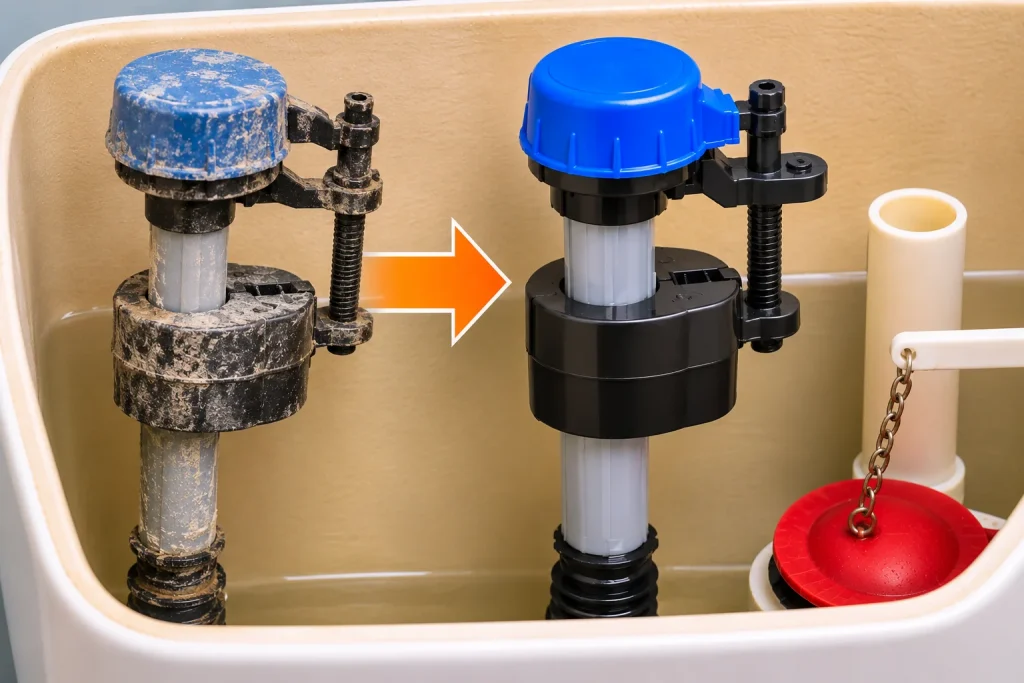
If cleaning and adjusting the fill valve do not resolve the problem, installing a replacement may be the best option.
Before purchasing a replacement, verify the toilet’s make and model and confirm that the valve is compatible.
To replace a typical bottom-entry fill valve:
- Turn off the toilet water supply.
- Flush the toilet and remove remaining water from the tank.
- Place towels or a shallow container beneath the supply connection.
- Disconnect the supply line.
- Remove the retaining nut beneath the tank.
- Remove the old fill valve.
- Install the replacement according to its instructions.
- Reconnect the supply line without overtightening.
- Restore the water supply slowly.
- Check for leaks and adjust the water level.
After installation, flush the toilet several times.
Make sure the tank fills normally, the valve shuts off completely, and there are no leaks around the connections.
A compatible replacement fill valve can often restore normal operation without replacing the entire toilet.
Is It Normal for a Toilet to Make a Hissing Noise After Flushing?
Yes. A toilet may make a hissing or rushing-water sound while the tank refills after flushing.
During this process, water moves through the fill valve and into the tank.
The sound should stop when the tank reaches its normal water level.
However, pay attention if:
- The hissing continues after the tank is full.
- The noise becomes noticeably louder.
- The toilet takes much longer to refill.
- The sound occurs when nobody has flushed.
- Water continuously flows into the overflow tube.
These symptoms suggest that the toilet may need maintenance or repairs.
Toilet Making Hissing Noise When Not in Use
A toilet making a hissing noise when not in use is more concerning than one that briefly hisses after flushing.
When nobody has flushed, the fill valve should normally remain closed.
If water continues moving through the valve, there may be an internal leak or a defective shutoff mechanism.
A common cause is a leaking flapper.
As water escapes from the tank into the bowl, the fill valve periodically opens to replace it.
Another possibility is a worn fill valve that never closes completely.
To narrow down the problem, remove the tank lid and observe the water level.
If water is flowing into the overflow tube, inspect the float and fill valve.
If the water level gradually drops and the tank refills periodically, check the flapper or flush-valve seal.
Toilet Making Hissing Noise but Not Filling
If your toilet is making a hissing noise but the tank isn’t filling, the problem may involve a restricted fill valve, a blocked supply line, or a malfunctioning float.
Start by checking whether the shutoff valve is open and water is reaching the toilet.
Next, inspect the fill valve for sediment or mineral buildup.
If the valve is receiving water but very little enters the tank, the internal valve may be clogged or defective.
A stuck float can also prevent the valve from opening correctly.
For a more detailed diagnosis, read Toilet Tank Not Filling? 7 Easy Fixes That Actually Work.
Can a Hissing Toilet Increase Your Water Bill?
Yes, if the hissing indicates that water is continuously leaking or flowing through the toilet.
A properly functioning toilet stops filling once the tank reaches its intended level.
However, a leaking flapper or faulty fill valve can allow water to run continuously.
Even a small internal leak can waste a substantial amount of water over time.
The U.S. Environmental Protection Agency recommends checking toilets for leaks using food coloring in the tank.
For additional information on identifying and repairing household water leaks, visit the EPA’s Fix a Leak Week resource.
If your toilet is hissing continuously, addressing the issue promptly can help prevent unnecessary water waste.
When Should You Replace the Toilet Fill Valve?
Consider replacing the fill valve if:
- The toilet continues hissing after the tank is full.
- Cleaning does not restore normal water flow.
- The valve fails to shut off consistently.
- Internal components are worn or damaged.
- The float moves freely but the valve still malfunctions.
- The toilet repeatedly refills despite a properly sealing flapper.
A replacement fill valve is usually much less expensive than replacing the entire toilet.
Many common replacement valves are designed for straightforward installation, although compatibility varies by toilet model.
If the tank or toilet is otherwise in good condition, replacing the fill valve is often a practical repair.
When to Call a Plumber
Although many toilet hissing problems can be fixed by homeowners, some situations require professional assistance.
Consider contacting a licensed plumber if:
- The water shutoff valve is leaking or severely corroded.
- The toilet continues hissing after replacing the fill valve.
- Water pressure is unusually high or inconsistent.
- The supply line or plumbing connections are damaged.
- Water leaks onto the bathroom floor.
- You cannot identify where the noise originates.
- Multiple plumbing fixtures are making unusual noises.
A plumber can inspect the water supply, pressure, and internal toilet components to determine the cause.
If your toilet is also having flushing problems, our guide on why your toilet won’t flush explains several common mechanical problems that can affect toilet operation.
How to Prevent Toilet Hissing Problems
Routine maintenance can help prevent fill valve problems, leaks, and unusual noises.
A few simple habits can make a difference.
Inspect the toilet tank periodically. Look for deteriorating seals, loose connections, and mineral buildup.
Check for silent leaks. Use the food-coloring test occasionally to identify water escaping from the tank into the bowl.
Watch the water level. Make sure the tank stops filling at the manufacturer’s designated level.
Address slow filling promptly. A toilet that gradually takes longer to refill may have sediment accumulating inside the fill valve.
Avoid harsh in-tank cleaning tablets. Some chemical cleaners can damage rubber seals and other toilet components.
Replace worn components. Flappers, fill valves, and other internal parts eventually wear out.
These simple maintenance practices can help keep your toilet operating efficiently.
Frequently Asked Questions
Why is my toilet making a hissing noise constantly?
A toilet making a hissing noise constantly usually has a fill valve that is not shutting off properly, an incorrectly adjusted float, or water continuously entering the overflow tube. Inspect the water level and fill valve to identify the cause.
Why does my toilet hiss when nobody is using it?
If the toilet hisses when nobody is using it, water may be leaking from the tank into the bowl. A worn flapper can cause the tank to refill periodically. A faulty fill valve can also allow water to flow continuously.
How do I stop my toilet from hissing?
Remove the tank lid and check the water level, float, flapper, and fill valve. Adjust the float if the water level is too high, replace a leaking flapper, or clean or replace a faulty fill valve.
Is a hissing toilet dangerous?
A hissing toilet is generally not dangerous by itself, but continuous hissing may indicate a water leak or plumbing problem. Ignoring the issue can waste water and increase utility bills. External leaks should be addressed promptly to prevent water damage.
Why does my toilet hiss for a few seconds after flushing?
A brief hissing sound after flushing is usually normal because water is moving through the fill valve to refill the tank. The sound should stop when the tank reaches its intended water level.
Can a bad flapper cause a toilet to hiss?
Yes. A leaking flapper allows water to escape from the tank into the bowl. As the tank water level drops, the fill valve opens to replace the lost water, which can produce a hissing sound.
How much does it cost to fix a hissing toilet?
The cost depends on the problem. A float adjustment or cleaning may cost nothing if you already have the necessary supplies. Replacement flappers and fill valves are generally inexpensive, while professional plumbing repairs cost more depending on labor rates and the issue.
Should I replace the entire toilet if it keeps hissing?
Usually not. Most hissing problems involve internal components such as the fill valve, float, or flapper. Replacing the defective component is typically more economical than replacing the entire toilet.